
Reviewed · HISTORICAL TOURS
2-Days Tour (The Best Historical of Khmer Empire)
Angkor is at its best when you can slow down long enough to understand what you are seeing. This private tour gives you two full days, a driver, and an English-speaking guide to connect the famous temples with lesser-known stops such as Preah Palilay and the Roluos Group.
I like the flexible private format, especially for families or groups that want help with photographs, walking pace, and temple choices. I also like the practical touches: a comfortable air-conditioned vehicle, cold water, and chilled towels, which matter under Cambodia’s strong sun. The main drawback is the pace. The schedule covers a lot of ground, and entrance passes, meals, tips, and shopping are extra.
In This Review
- Key points to know before booking
- A private way to make sense of Angkor
- Day one: faces, galleries, and a countryside sunset
- The quieter corners of Angkor Thom
- Banteay Srei and Banteay Samre
- Pre Rup and the sunset question
- Day two: Angkor Wat and Ta Prohm
- The Roluos Group and the first Khmer capital
- Old Market and Artisans Angkor
- Transport, walking, and daily comfort
- What the $145 price really buys
- Who should book this tour?
- Should you book the two-day Angkor tour?
- FAQ
- Is this tour private?
- Is hotel pickup included?
- Is the Angkor entrance pass included?
- Are meals included?
- What temples are visited on day one?
- What places are visited on day two?
- Is sunset at Pre Rup guaranteed?
- What should I wear?
- Can people with limited mobility participate?
Key points to know before booking
- Two very full days: You cover Angkor Thom, Banteay Srei, Pre Rup, Angkor Wat, Ta Prohm, and the Roluos temples.
- Private touring: Only your group takes part, so the guide can adjust the pace and answer your questions directly.
- Strong guide service: Guides named in past bookings include Veasna, Vutha, Sophea, and Bunthe, with Vandy among the drivers.
- Sunset option at Pre Rup: The temple offers a high view across the countryside, though sunset timing and access can depend on conditions.
- Entrance pass is extra: You must buy the Angkor Archaeological Site pass separately in US dollars.
- Dress and walking matter: Cover your shoulders and knees, and expect uneven paths, stairs, heat, and plenty of time on foot.
A private way to make sense of Angkor
At $145 per person, this tour is not the cheapest way to see Angkor, but it can be good value if you want a private vehicle and a guide for two demanding sightseeing days. The cost does not include the Angkor pass, meals, accommodation, or gratuities, so you should calculate the final total before booking.
The private setup is the biggest advantage. You do not need to wait for a large group, and your guide can explain a carving when you want more detail or keep moving when the heat begins to wear you down. Families can request a gentler pace, while keen photographers can ask for help with angles and timing.
The service has earned praise for guides such as Veasna and Vutha. Veasna is described as warm, funny, and very good at explaining the temples, while Vutha has helped with photographs as well as history. Sophea Kas and Bunthe were also singled out for attentive guiding. Your assigned guide may be different, but these names give you a sense of the standard the company aims for.
Drivers matter here, too. The roads between temple groups take time, and stepping back into an air-conditioned Lexus SUV or similar vehicle is a welcome break. Cold water and wet towels are provided during the day. That sounds minor until you have spent an hour climbing hot stone steps.
More temple and heritage days near Siem Reap:
- 2 Days Guided Historical Tour in Angkor
5.0 · 855 reviews - Siem Reap: Banteay Srei and Grand Circuit Heritage Tour
4.9 · 163 reviews - Banteay Srei and Grand Circuit Heritage Tour from Siem Reap
5.0 · 142 reviews
Day one: faces, galleries, and a countryside sunset
The first morning begins at Angkor Thom, the great walled city that served as a major Khmer capital. You start at Bayon Temple, where towers carry the famous calm stone faces. The listed visit is about 40 minutes, enough for an introduction and the main views, though you may want longer if you enjoy photographing the changing expressions and close-up carvings.
Bayon is not a simple walk-through monument. Its upper levels, narrow passages, and crowded galleries can make it hard to understand without help. A good guide can point out how the temple combines Buddhist imagery with scenes of daily life, battles, and royal power.
Next comes Baphuon, a three-tiered temple mountain dedicated to Shiva. It predates Angkor Wat and gives you a useful comparison: this is an earlier expression of the temple-mountain idea that later reached a grander scale. The approach and steps can be tiring, and the visit is planned for about 30 minutes, so wear shoes with a firm grip.
The Terrace of the Elephants follows. This long ceremonial platform is decorated with elephants and garudas, and it once formed part of the public face of Angkor Thom. The stop lasts about 20 minutes, making it more of a focused look than a full exploration.
At the Terrace of the Leper King, you can see tightly carved nagas, demons, and mythical figures on a double wall. The name comes from the figure placed above the terrace and from later stories connected with the site. It is a short stop of about 15 minutes, but the carvings reward a close look.
The quieter corners of Angkor Thom
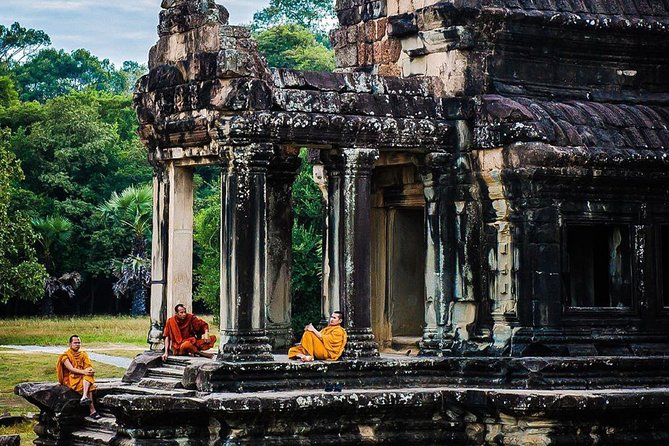
Preah Palilay brings a welcome change of mood. Its sandstone and laterite tower sits in a shaded forest setting, and the eastern entrance has Buddhist carvings. This is one of the tour’s more appealing choices for anyone who wants something beyond the standard Angkor circuit.
Phimeanakas is another earlier monument, a pyramid temple in the center of the former royal enclosure. The visit also relates to the old palace walls, giving you a sense of how temples fitted into a larger royal complex rather than existing as isolated ruins.
These smaller stops are valuable because Angkor can otherwise become a parade of famous names. They also give your guide room to explain how royal, religious, and ceremonial spaces worked together. Do not expect every temple to be fully restored or visually dramatic. Their interest comes from setting, age, and the details you might miss without context.
Banteay Srei and Banteay Samre
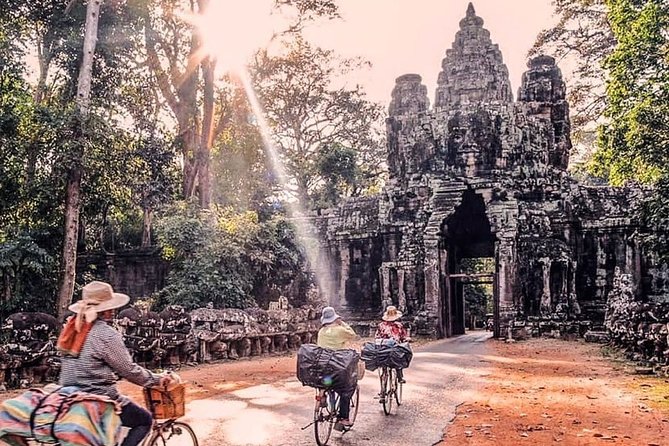
After lunch, you head toward Banteay Srei. Lunch is not included, and the schedule does not specify a particular restaurant, so you should plan to pay for your own meal and allow enough time to eat.
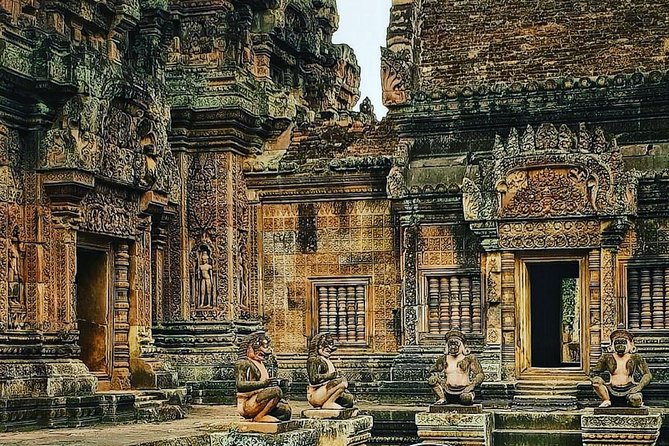
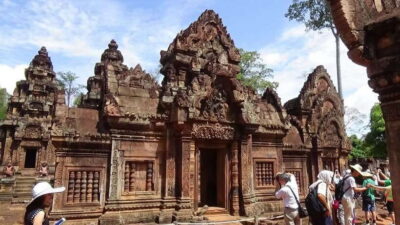
Banteay Srei translates as citadel of women, a modern name linked to the delicacy of its carvings. The temple is smaller than Angkor Wat but famous for its finely cut sandstone decoration. You have about an hour and a half here, which is one of the longer stops on day one.
This is a place where a guide earns the fee. The carvings are dense, and mythical figures, floral patterns, and scenes from Hindu stories can blur together if you rush. The stonework is also easier to appreciate at close range than from a broad viewpoint.
The drawback is distance. Banteay Srei lies away from the central Angkor temples, so the drive adds time to an already full day. If your priority is a slow, unhurried visit to Angkor Wat, you may find this first day tiring. If you want a wider picture of Khmer art, the journey is worthwhile.
Banteay Samre is another useful contrast. It is a large, flat temple with Angkor Wat-style architecture and decoration, but it usually feels less central to the standard sightseeing route. The planned visit is about 45 minutes, enough to walk around the main structure and inspect the carvings without turning the stop into a long climb.
Other Siem Reap experiences to weigh up
- Siem Reap: Angkor Wat 2-Day Tour with Sunrise and Sunset
4.9 · 4,429 reviews - Angkor 2-Day Sunset & Sunrise Small-Group Tour
5.0 · 2,567 reviews - 2 Days Exclusive Temple Highlights with Sunset and Sunrise Tour
5.0 · 1,157 reviews - Siem Reap: Angkor Sunrise 1- or 2-Day Guided Temples Tour
4.9 · 1,132 reviews
Pre Rup and the sunset question
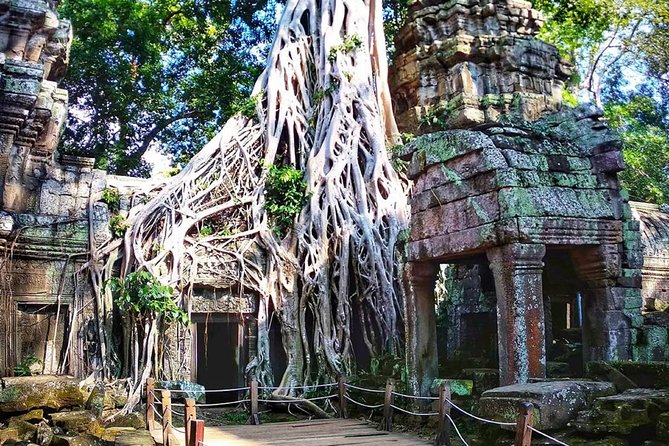
The day ends with an optional visit to Pre Rup. This temple mountain has strong upper-level views over the surrounding countryside and finely carved false doors. Its shape is easy to read from a distance, making it a satisfying final monument after a day of smaller details.
Sunset here is not guaranteed to be peaceful or spectacular. Conditions, crowds, and access can change, and the tour describes it as optional. Still, Pre Rup is a sensible place to try because the elevated platform gives you a broad view and the late light can bring out the warm tones of the stone.
Ask your guide about timing on the day itself. You may prefer to leave before the final rush, especially after visiting Banteay Srei and Banteay Samre. The private format gives you more say in that choice.
Day two: Angkor Wat and Ta Prohm
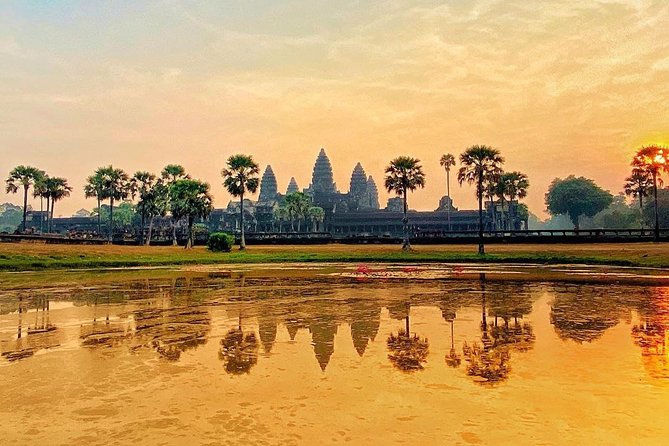
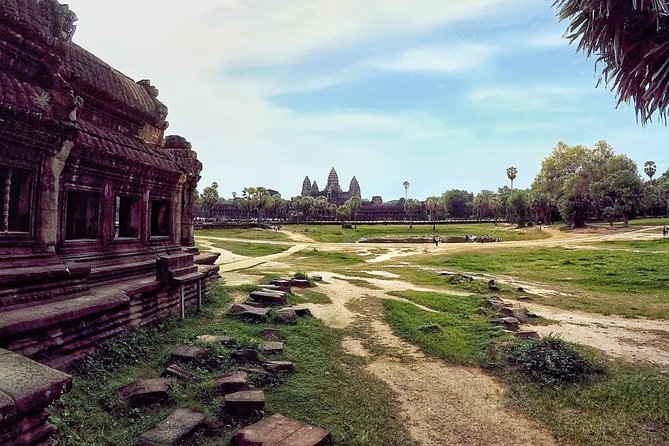
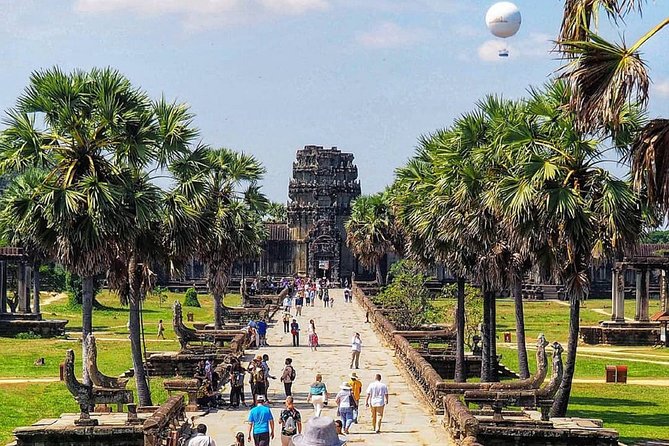
Day two begins with Angkor Wat, the monument most closely associated with Cambodia. The visit is planned for about two hours, which gives you time to approach the temple, study its galleries, and see the towers and courtyards from several angles.
Angkor Wat is enormous, so two hours is an introduction rather than a complete examination. The outer bas-reliefs alone deserve far more time, and the heat can slow your pace. Your guide can help you choose the most important sections instead of leaving you to wander without a plan.
Dress carefully here. Shoulders should be covered, and clothing should fall below the knees. Some areas, including Baphuon and other major temple sites, enforce strict rules. A hat, sunglasses, and high-SPF sunblock are useful even on cloudy days.
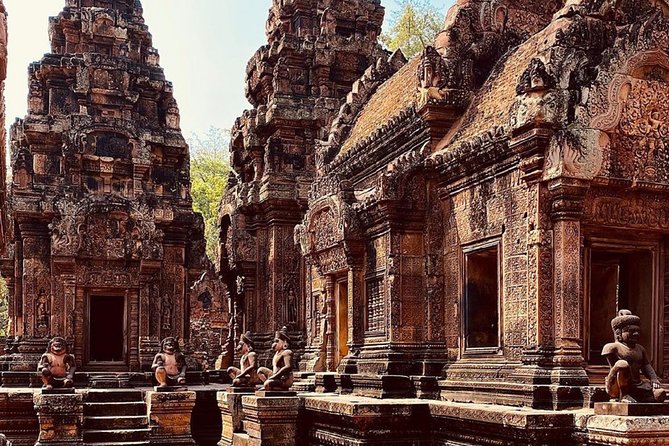
Ta Prohm receives another two hours. This sprawling monastic complex is only partly cleared of jungle growth, and its roots, towers, and galleries create the famous tree-and-temple views. The setting is memorable, but it is not just a photo stop. The remaining vegetation also shows why conservation at Angkor is a constant balance between safety, access, and atmosphere.
Ta Prohm can be awkward underfoot. Expect uneven stones and narrow passages, and take care with cameras and phones around trees, dust, and humidity. The company advises protecting electronic equipment from natural elements, and that is sensible advice.
The Roluos Group and the first Khmer capital
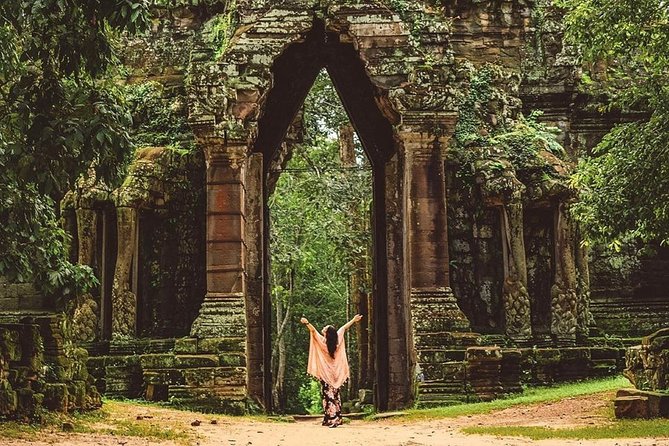
After lunch, the tour turns to the Roluos Group, an important change of scale and setting. Bakong is the largest and most impressive of the three listed temples. It is described as the first sandstone temple mountain built by Khmer rulers, and its broad stepped form helps you see the early design ideas that later developed at Angkor.
Lolei is a smaller Hindu temple that once stood on an island in the middle of a large reservoir, or baray. The reservoir is now dry, but the site helps explain the Khmer ability to combine water engineering with royal and religious planning. The visit lasts about 20 minutes.
Preah Ko, or Sacred Bull, is one of the early major temples of the empire. Its connection with Hariharalaya, the early capital, gives the afternoon a clear historical thread. Instead of seeing only the grand monuments of Angkor’s peak, you are looking at the beginning of the architectural tradition.
The Roluos stops are less famous than Angkor Wat and Ta Prohm, which is exactly why they matter. They also add another drive and another round of walking. If you have limited stamina, tell the guide early and ask which parts deserve the most time.
Old Market and Artisans Angkor
The final part of the day moves from ancient stone to present-day Siem Reap. Psar Chaa, or Old Market, is a busy place for souvenirs, curios, and everyday shopping. You have about an hour, so you can browse without needing to make it the center of your trip.
Prices and bargaining are not specified, and shopping is entirely your own expense. Keep the stop practical: compare items, check what you actually want to carry, and avoid feeling obliged to buy simply because a shop is part of the route.
Artisans Angkor adds more substance to the afternoon. It functions as a training center for rural young people in handicraft skills, including work connected with local production. The visit gives you a look at a modern effort to support livelihoods through craft rather than simply another shopping stop.
This pairing works well. Old Market shows the commercial side of Siem Reap, while Artisans Angkor focuses on training and workmanship. Neither replaces time at the temples, but both help connect the ancient sites with the city you are staying in now.
Transport, walking, and daily comfort
Pickup and return transfers are included for people staying in and inside Siem Reap. You are responsible for providing correct hotel details, and accommodation changes within 24 hours may require approval. A private, air-conditioned vehicle is provided with a professional driver.
The tour is not physically extreme for most people, but you will walk on uneven surfaces and may climb temple steps. The company says most people can take part, while also warning that some walking is required. Comfortable shoes are more important than stylish ones.
Bring:
- Sunblock with a high SPF
- Sunglasses and a hat or cap
- Water-friendly protection for cameras and phones
- Clothing covering shoulders and knees
- Cash for meals, drinks, tips, and purchases
The tour includes cool water and wet towels, but lunch is on your own arrangement. There is also no hotel accommodation included, and travel insurance is recommended but not supplied.
What the $145 price really buys
The $145 per-person price buys two days of private transport, a licensed English-speaking guide, a professional driver, water, towels, and applicable taxes and service charges. It does not buy temple admission, meals, tips, shopping, accommodation, or insurance.
The value is strongest for couples, families, and groups that would otherwise hire a vehicle and guide separately. An eight-person family group, for example, can spread the private-tour cost across the party while keeping the schedule for itself. Solo visitors should check for any single supplement.
The price is less attractive if you only want a quick Angkor Wat visit or prefer to explore without a guide. It becomes more reasonable if you want Banteay Srei, the Roluos Group, sunset at Pre Rup, and explanations at each stop.
Free cancellation is available up to 24 hours before the start time. Within 24 hours, the payment is not refunded, and changes are not accepted. Poor weather may lead to another date or a full refund because the experience requires suitable conditions.
Who should book this tour?
I would choose this tour if you want the major temples plus early Khmer sites in a single organized plan. It suits families particularly well because the guide can respond to children’s needs, and the private vehicle makes breaks easier.
It also fits first-time visitors who want historical explanations rather than a driver who simply drops them at gates. The mix of Bayon, Baphuon, Angkor Wat, Ta Prohm, Banteay Srei, Pre Rup, and Roluos gives you a broad introduction to Khmer architecture.
I would hesitate if you dislike full days, long drives, or structured sightseeing. The plan is ambitious, and lunch breaks are not built into the price. You should also confirm the available guide language if you need something other than English, since other languages depend on availability and may cost extra.
Should you book the two-day Angkor tour?
Book it if private service, strong guiding, and a wide temple selection matter more to you than a slow pace. The best parts are the knowledgeable local explanations associated with guides such as Veasna and Vutha, the comfort of the private vehicle, and the chance to see both Angkor’s famous monuments and the earlier Roluos capital.
Skip it if you want to choose every stop spontaneously or spend most of a day at one temple. Before paying, add the Angkor entrance pass, meals, and tips to the $145 price, then ask the operator to confirm pickup, guide language, and the exact vehicle. For a first visit to Siem Reap, this is a well-rounded, energetic plan with enough flexibility to make the long days manageable.
FAQ
Is this tour private?
Yes. Only your group participates, and the tour operates with a private vehicle, driver, and English-speaking guide.
Is hotel pickup included?
Pickup and return transfers are included for people staying in and inside Siem Reap. You must provide correct hotel information.
Is the Angkor entrance pass included?
No. You must purchase the Angkor Archaeological Site pass separately in US dollars. Children under 12 enter free of charge.
Are meals included?
No. Lunch is excluded on both days, and you arrange and pay for meals yourself.
What temples are visited on day one?
Day one includes Bayon, Baphuon, the Terrace of the Elephants, the Terrace of the Leper King, Preah Palilay, Phimeanakas, Banteay Srei, Banteay Samre, and an optional sunset visit to Pre Rup.
What places are visited on day two?
Day two includes Angkor Wat, Ta Prohm, Bakong, Lolei, Preah Ko, Psar Chaa Old Market, and Artisans Angkor.
Is sunset at Pre Rup guaranteed?
No. Sunset at Pre Rup is listed as optional, and the timing or visit may depend on conditions.
What should I wear?
Wear clothing that covers your shoulders and falls below your knees. Some temples enforce a strict dress code.
Can people with limited mobility participate?
The tour information says most people can participate, but some walking is required. Temple paths and steps may be uneven, so discuss your needs with the operator before booking.
Fresh reviews from around Siem Reap
- Full-Day Tour Preah Vihea & Koh Ker Temple 3.7 · 3 reviews
- Savor the Countryside: Tours with Authentic Cooking Classes” 5.0 · 3 reviews
- Angkor Grand Circuit Tour & Banteay Srei 5.0 · 3 reviews
- Guided Private Tuk Tuk Tour Angkor Wat and Small Circle and Five Extras 5.0 · 3 reviews
- Angkor Wat Sunrise TukTuk Tour 5.0 · 3 reviews
- Siem Reap Temple Tour 2-Day with Sunrise/Sunset 3.7 · 3 reviews
- Bangkok to Angkor Wat 2 Days 1 Night by Flight 4.5 · 3 reviews
- Kompong Pluk Tour 5.0 · 3 reviews
Historical Tours, compared.
Banteay Srei and Grand Circuit Heritage Tour from Siem Reap
Read our review →
Private Angkor Wat Tour & Angkor Park/Heritage With Local Guide
Read our review →
Kulen Mountain Waterfall and Historical Wonders Private Tour
Read our review →
Browse the lists this tour appears in