
Reviewed · BANTEAY SREI TOURS
Angkor Grand Circuit Tour & Banteay Srei
Angkor’s Grand Circuit is where the temple park begins to feel quieter, stranger, and more personal. Instead of repeating the best-known stops, you visit Preah Khan, Neak Pean, Ta Som, and East Mebon, then continue to Banteay Samré and the finely carved Banteay Srei.
I like the mix of large ruins and smaller, more intimate temples. I also like that guide Mr K is praised for adjusting the day to match your interests and for explaining life beyond the temple gates. The main drawback is cost: the $50 tour fee does not include the $37 Angkor Pass, so one person pays $87 before any group discount.
In This Review
- Key points at a glance
- Why the Grand Circuit is worth your time
- Preah Khan, a broad ruin with many layers
- Neak Pean, an island temple reached across the water
- Ta Som and its famous tree-entwined gate
- East Mebon and the five-tower layout
- Banteay Samré, a two-hour change of pace
- Banteay Srei, the day’s finest carving
- What the private vehicle and guide add
- Is the $50 price good value?
- Timing, pace, and who should book
- Should you book this Angkor tour?
- FAQ
- How long does the Angkor Grand Circuit and Banteay Srei tour last?
- What is the price of the tour?
- Is the Angkor Pass included?
- What is included in the tour?
- Is this a private tour?
- Which temples are visited?
- Is hotel pickup available?
- Who operates the tour?
- Can I cancel for a full refund?
Key points at a glance
- Tree-wrapped Ta Som: A small late-12th-century temple with a dramatic gate partly claimed by a large tree.
- Banteay Srei’s tiny scale: This 10th-century Shiva temple uses pinkish sandstone for unusually fine, three-dimensional carvings.
- A private touring setup: Only your group takes part, with hotel pickup, drop-off, an English-speaking guide, and an air-conditioned vehicle.
- A useful second day at Angkor: The route works especially well after seeing the main temples and wanting quieter places.
- Six substantial stops: The schedule allows about one hour at the first four sites, then two hours each at Banteay Samré and Banteay Srei.
- A guide who shapes the day: Mr K is specifically praised for choosing temples and timing based on your interests.
Why the Grand Circuit is worth your time
Many first visits to Angkor focus on the most famous temples. That makes sense, but the Grand Circuit gives you a different view of the park. You move away from the central concentration of major monuments and spend more time with places that feel less crowded and less predictable.
The route is not simply a longer version of a standard temple tour. It has its own rhythm. Preah Khan gives you a large, maze-like ruin. Neak Pean changes the mood with its island setting. Ta Som offers a small-scale encounter with stone and trees. East Mebon brings you back to a formal temple mountain, while Banteay Samré and Banteay Srei add a separate excursion east and north of the main group.
I would choose this day after visiting Angkor Wat and the central Angkor Thom area, not before. You will already understand the basic Khmer temple layout, so your guide can spend more time pointing out differences in design, belief, construction, and decoration.
The private format matters here. You are not locked into a large group’s pace. Mr K can focus on the details that interest you, and the praise for his service centers on attentiveness, safety, cultural explanation, and knowing which temple suits the moment.
More Banteay Srei visits:
- Full-Day Banteay Srei & 4 Temples – Grand Tours Join-in Tour
5.0 · 1,155 reviews - Siem Reap Tour: Angkor Wat Sunrise, Bayon, Ta Prohm, Banteay Srei
5.0 · 931 reviews - 2-Day Angkor Wat With Small, Big Circuit and Banteay Srei Tour
5.0 · 545 reviews
Preah Khan, a broad ruin with many layers
Your first stop is Preah Khan, built in the 12th century by King Jayavarman VII in honor of his father. It sits northeast of Angkor Thom, near the former Jayatataka baray, or reservoir.
Allow about an hour. That is enough time to get a sense of the temple’s long corridors, courtyards, doorways, and sculpted stone without trying to inspect every corner. Preah Khan is a good opening stop because it gives you scale, but it is less formal than the grandest temple mountains.
I like the way Preah Khan mixes the feeling of a religious complex with the feel of a lived-in ruin. You can look for changes in light as you move through the passages and ask your guide how the temple related to the nearby reservoir and surrounding buildings.
The practical catch is that Preah Khan requires your Angkor Pass. Admission is not included in the tour price, so plan for the additional $37 per person cost unless you already have the required pass.
Neak Pean, an island temple reached across the water
Neak Pean changes the pace completely. This Buddhist temple sits on a circular island in the Jayatataka baray, an artificial reservoir associated with Preah Khan.
The temple itself is not large. The approach is part of the experience, since you walk out toward the island and see the monument in relation to the surrounding water. Expect about an hour here, including time for photographs and an explanation of the site’s design.
Neak Pean is useful for understanding how water shaped Khmer sacred architecture. Rather than presenting another enormous block of stone, it connects the temple to an artificial island and reservoir. That gives the stop a calmer, more open character.
Do not expect a long interior exploration. The appeal is the setting and the contrast with Preah Khan. If you have mobility concerns, ask the operator for current details before booking, since the supplied information only says that most travelers can participate and does not describe the walking surface or access in detail.
Ta Som and its famous tree-entwined gate
Ta Som is one of the most memorable stops because of its size and mood. King Jayavarman VII built this small temple in the late 12th century and dedicated it to his father.
The main draw is the tree-entwined gate. Roots and branches have grown into the stonework, creating the image many people hope to see on the Grand Circuit. The effect is less monumental than Angkor Wat and more intimate. You are looking at the long meeting of architecture and plant growth in a compact setting.
Give Ta Som about an hour. That leaves enough time to see the gate, walk through the temple, and notice the details your guide points out. I would ask Mr K to explain what is original, what has been repaired, and how the temple fits into Jayavarman VII’s building program.
Ta Som can be a better photographic stop than a long historical lecture. Its scale makes it easy to understand quickly, and the tree-covered entrance gives the day a strong visual highlight early on.
More Angkor temple itineraries:
- Angkor Wat Sunrise or Sunset Tour with Guide from Siem Reap
5.0 · 12,109 reviews - Siem Reap: Angkor Wat: Small-Group Sunrise or Sunset Tour
5.0 · 9,444 reviews - Siem Reap: Angkor Wat 2-Day Tour with Sunrise and Sunset
4.9 · 4,429 reviews - Siem Reap: Full-Day Angkor Wat Guided Tour with Sunset
4.9 · 3,803 reviews
East Mebon and the five-tower layout
East Mebon brings a more ordered, geometric style to the route. The temple has five towers arranged like the dots on a die, set on a three-tiered base. It is surrounded by three enclosures, and the towers represent the five peaks of Mount Meru in Hindu belief.
You have about an hour here. That is enough to study the elevated arrangement and see how the temple was designed as a symbolic center. Compared with Neak Pean, which uses water and an island, East Mebon feels solid, formal, and strongly tied to the temple-mountain tradition.
The site is useful because it shows how different Khmer rulers and religious ideas produced different designs. Your guide can help connect the five towers to Hindu cosmology rather than leaving you with a collection of attractive stones.
I would not treat East Mebon as a quick photo stop. The layout makes more sense when you take a moment to look from the outer enclosure toward the central towers. The value comes from understanding the plan, not just seeing the carvings.
Banteay Samré, a two-hour change of pace
Banteay Samré is one of the longer stops, with about two hours allotted. The temple lies east of the East Baray and was built in the early 12th century during the reigns of Suryavarman II and Yasovarman II. It is a Hindu temple.
The extra time makes sense. Banteay Samré is not just a brief stop between larger attractions. You can look closely at the enclosure, towers, galleries, and carvings while your guide explains how the temple differs from the Jayavarman VII sites earlier in the day.
I like this part of the route because it keeps the tour from becoming a checklist. After four temples, you get time to slow down and study one place. The setting also helps you feel that the Angkor area extends well beyond the most photographed central monuments.
The drawback is the length of the day. With six stops and a schedule of up to eight hours, Banteay Samré may feel tiring if you have already spent several days walking temple grounds. Good footwear, sun protection, and water matter, even though cold drinking water is included.
Banteay Srei, the day’s finest carving
Banteay Srei is the reason many people choose this tour rather than a Grand Circuit alone. The 10th-century temple is dedicated to Shiva and lies about 25 kilometers northeast of the main Angkor temple group, near Phnom Dei.
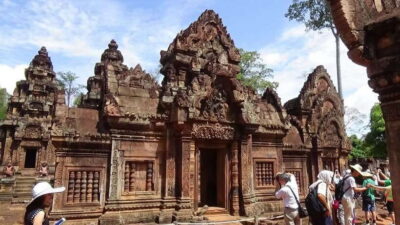
Its name is often translated as Citadel of the Women, and it is also called the jewel of Khmer art. The unusual craftsmanship explains why. Banteay Srei uses soft, pinkish sandstone that allowed its sculptors to create delicate, three-dimensional carvings with remarkable detail.
The temple is also much smaller than many of Angkor’s headline monuments. That miniature scale makes the decoration easier to appreciate. Instead of stepping back to take in a huge structure, you can focus on lintels, pediments, figures, and ornamental patterns.
The two-hour allocation is generous and useful. Banteay Srei deserves a slow look, especially if you want your guide to explain the Hindu imagery and the workmanship. It was not commissioned by a king, but by a Brahman courtier, which adds an important wrinkle to the usual story of royal Khmer building projects.
The distance is the tradeoff. Banteay Srei sits away from the main temple group, so the tour spends more time on the road than a compact circuit inside the central park. In exchange, you get a site with a very different character from Preah Khan, Ta Som, and East Mebon.
What the private vehicle and guide add
The tour includes hotel pickup and drop-off, an air-conditioned vehicle, an English-speaking guide, and cold drinking water. Those basics have real value in Siem Reap’s heat, especially on a six to eight-hour temple day.
The private format means only your group participates. That gives you room to ask questions, pause at a detail, or tell the guide when you need a shorter walk. It also avoids waiting for strangers at every entrance and exit.
Mr K receives especially strong praise for being informative and attentive. He is also credited with knowing which temples would interest his group and what time of day suited each place. That is a useful skill on a route with both famous details and quieter corners.
He also explains the area outside the temples and brings clear affection for Cambodia to the day. I would use the private setting to ask about village life, religion, local customs, and the purpose of the reservoirs and temple roads. Those conversations can turn a sequence of ruins into a clearer picture of Cambodian culture.
The operator is Easy Angkor Trip. Confirmation is provided at booking, and a mobile ticket is available. The tour is described as suitable for most travelers, though the available details do not give a specific accessibility plan.
Is the $50 price good value?
The listed tour price is $50 per person. The Angkor Pass costs an additional $37 per person, making the stated combined cost $87 per person before any group discount.
That price is easier to justify if you value private transport and a guide who can shape the day around your interests. You are paying for a full route, not just a ride to one or two temples. Hotel pickup, an air-conditioned vehicle, water, drop-off, and English-language guiding are included.
Group discounts are offered, but the activity itself is private, with only your own group taking part. Ask for the current group rate when booking, since no discount amount is provided.
The tour is less attractive if you only want a quick introduction to Angkor or have not yet seen the central temples. In that case, a shorter first-day route may give you a better foundation. For a second or later day, the Grand Circuit and Banteay Srei offer more variety.
Timing, pace, and who should book
The stated duration is about six to eight hours. The stop schedule totals around eight hours: one hour each at Preah Khan, Neak Pean, Ta Som, and East Mebon, followed by two hours at Banteay Samré and Banteay Srei.
That is a full day. You will spend time walking, standing, climbing around temple areas, and riding between sites. The air-conditioned vehicle helps during transfers, but it does not make the monuments themselves cool.
I would book this tour if you have already seen Angkor Wat and want a quieter, more varied day. It also suits anyone who cares about stone carving, temple design, and the contrast between royal monuments and smaller religious sites.
Families or small groups may like the private setup because the pace can be discussed with Mr K. The day may be less suitable if you want only the biggest temples, dislike long touring days, or prefer to stay close to central Siem Reap.
Free cancellation is available if you cancel at least 24 hours before the start time. Changes or cancellations made less than 24 hours before departure are not accepted for a refund.
Should you book this Angkor tour?
Yes, if you want more than the standard Angkor highlights. The strongest reasons are the intimate scale of Ta Som, the island setting of Neak Pean, the formal design of East Mebon, and the remarkable carving at Banteay Srei.
I would book it as a second temple day and ask for Mr K if available. The extra admission fee should be part of your budget, and you should be ready for a long outing. If those points work for you, this is a well-rounded way to see the quieter side of Angkor while gaining useful cultural context along the way.
FAQ
How long does the Angkor Grand Circuit and Banteay Srei tour last?
The tour lasts approximately 6 to 8 hours. The listed stop times add up to about eight hours.
What is the price of the tour?
The tour costs $50 per person. Group discounts are offered, though the discount amount is not specified.
Is the Angkor Pass included?
No. The Angkor Pass costs $37 per person and must be paid separately.
What is included in the tour?
The tour includes an English-speaking guide, hotel pickup and drop-off, an air-conditioned vehicle, and cold drinking water.
Is this a private tour?
Yes. Only your group participates in the activity.
Which temples are visited?
The route visits Preah Khan, Neak Pean, Ta Som, East Mebon, Banteay Samré, and Banteay Srei.
Is hotel pickup available?
Yes. Pickup and drop-off are included.
Who operates the tour?
The experience is operated by Easy Angkor Trip. Mr K is the guide named in the available tour information.
Can I cancel for a full refund?
Yes, if you cancel at least 24 hours before the experience starts. Cancellations or changes made less than 24 hours before the start time are not accepted for a refund.
Fresh reviews from around Siem Reap
- Full-Day Tour Preah Vihea & Koh Ker Temple 3.7 · 3 reviews
- Savor the Countryside: Tours with Authentic Cooking Classes” 5.0 · 3 reviews
- Angkor Wat Sunrise TukTuk Tour 5.0 · 3 reviews
- Guided Private Tuk Tuk Tour Angkor Wat and Small Circle and Five Extras 5.0 · 3 reviews
- Siem Reap Temple Tour 2-Day with Sunrise/Sunset 3.7 · 3 reviews
- Bangkok to Angkor Wat 2 Days 1 Night by Flight 4.5 · 3 reviews
- Kompong Pluk Tour 5.0 · 3 reviews
- Siem Reap: Prek Toal Tonle Sap Biosphere Reserve Tour 3.1 · 3 reviews
Banteay Srei Tours, compared.
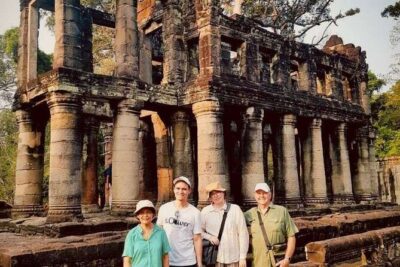
Full-Day Banteay Srei & 4 Temples – Grand Tours Join-in Tour
Read our review →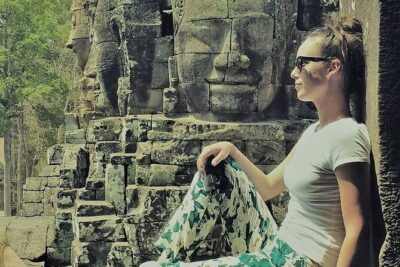
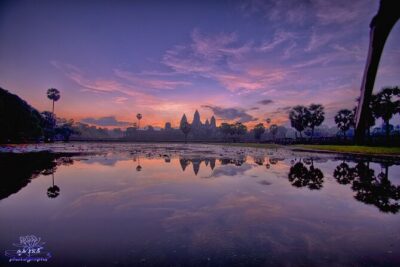
2-Day Angkor Wat With Small, Big Circuit and Banteay Srei Tour
Read our review →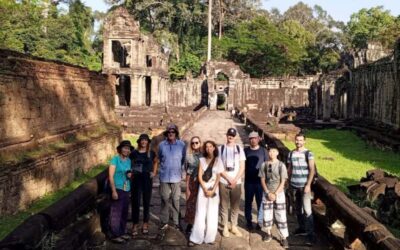
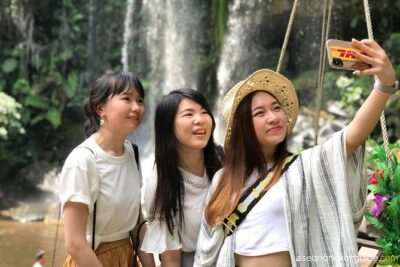
3-Days Discovery Of Angkor: Waterfalls,Floating Village and Banteay Srei temple
Read our review →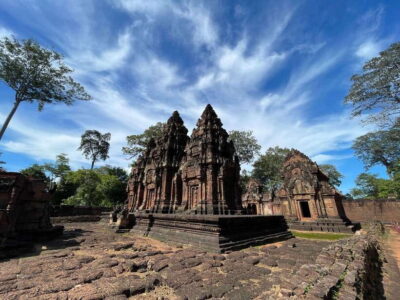
Browse the lists this tour appears in