
Reviewed · ANGKOR WAT SUNRISE TOURS
2 Days Exclusive Temple Highlights with Sunset and Sunrise Tour
Angkor Wat at sunrise is the headline, but the clever part of this tour is the order: you finish the second morning with the great temple rather than rushing through it on day one. Across two full days, you also reach Banteay Srei, Preah Khan, Ta Prohm, Bayon, and quieter corners such as Ta Nei.
I like the well-spaced two-day plan and the care taken with basic comfort. Guides such as Pal Saruon, Chhay, Sokpee, and Nang are praised for clear explanations, photo help, and leaving time to explore. Cold water, cool towels, and an air-conditioned vehicle matter in Cambodia’s heat.
The main consideration is the pace. This is a packed temple tour, not a lazy wander, and meals are not included. The $49 price also excludes the required $62 temple pass, so budget for that before you book.
In This Review
- Key points at a glance
- Why this two-day route works
- Day one: Pre Rup and Banteay Srei
- Neak Pean and the atmospheric ruins of Preah Khan
- Sunset in rice fields or at Bakheng Mountain
- Day two begins before dawn at Angkor Wat
- Ta Prohm, where trees meet stone
- Ta Nei offers a quieter change of pace
- Angkor Thom, Bayon, and the royal city
- What the guide and driver add
- Comfort, meals, and the real cost
- Who should book this Angkor tour?
- Practical advice before you go
- Should you book it?
- FAQ
- Is the temple pass included in the tour price?
- Does the tour include hotel pickup and drop-off?
- Is this a private tour or a small-group tour?
- What happens at sunrise at Angkor Wat?
- Are meals included?
- What should I wear to the temples?
- Is the tour suitable for children?
Key points at a glance
- Angkor Wat at sunrise: Enter from the eastern side before dawn, and bring a torch for the dark corridors.
- A strong mix of temples: See grand monuments, jungle-covered ruins, delicate carvings, and less-visited sites in one trip.
- Guides who add context: Guides including Pal, Chhay, Sokpee, and Nang explain temple design, religion, Cambodian history, and daily life.
- Comfort between stops: Air-conditioning, bottled water, and cool towels make long hot days easier.
- Two sunset choices: The small-group option includes sunset at Bakheng Mountain, while the private option includes a rice-field sunset at Baitang Siem Reap.
- Extra cost to plan for: The two to three-day temple pass costs $62 per person and is paid directly at the site.
Why this two-day route works
The Angkor complex is too large for a sensible one-day visit if you want more than Angkor Wat and a quick look at Ta Prohm. This plan gives you two days, with time for both the famous temples and several places you might skip when planning alone.
Day one reaches the farther and more detailed temples. Day two focuses on Angkor Wat, Ta Prohm, Ta Nei, and Angkor Thom. That division gives the trip a useful rhythm: ornate carvings and broad temple ruins first, then the most famous monuments when you are already familiar with the Khmer style.
You also avoid cramming every major site into one long daylight stretch. The schedule is still energetic, but several people specifically appreciated having enough time at each temple. A good guide also controls the pace, explaining a site before giving you time to look around on your own.
The exact transport arrangement depends on the option you choose. Hotel pickup and drop-off are included when that option is selected. The experience is offered as a small-group tour, with a private upgrade available for travelers who want to move at their own pace. Check the option details carefully, since the sunset location and vehicle arrangement differ.
More sunrise departures to Angkor Wat:
- Angkor Wat Sunrise or Sunset Tour with Guide from Siem Reap
5.0 · 12,109 reviews - Siem Reap: Angkor Wat: Small-Group Sunrise or Sunset Tour
5.0 · 9,444 reviews - Siem Reap: Angkor Wat 2-Day Tour with Sunrise and Sunset
4.9 · 4,429 reviews
Day one: Pre Rup and Banteay Srei
The first temple is Pre Rup, a Hindu temple mountain built by Khmer king Rajendravarman and dedicated in 961 or early 962. Its brick, laterite, and sandstone construction gives it a different look from the larger sandstone monuments later in the trip.
You have about an hour here. Pre Rup is a good early introduction to the idea of a temple mountain, with its raised levels and strong geometric form. Your guide can help explain how the temple’s layout connected religious belief with royal power.
The next stop is Banteay Srei, where you spend about two hours. This smaller sandstone temple is famous for unusually fine carvings. The scale is more intimate than Angkor Wat, but the detail can be astonishing, especially in the relief work around the doorways and walls.
I would not treat Banteay Srei as a quick photo stop. Its appeal is in looking closely. This is also one of the places where a guide adds real value, since the figures, stories, and religious symbols can be difficult to read without some explanation.
The drawback is the admission cost. Temple tickets are not included at any of the main temple stops, so the required pass is an extra expense rather than a minor add-on.
Neak Pean and the atmospheric ruins of Preah Khan
Neak Pean takes about an hour and is built on an artificial island. It is a Buddhist temple with a setting that feels quite different from the massive temple mountains. The approach itself is part of the visit, and the water-centered design gives your guide a chance to explain the site’s religious purpose.
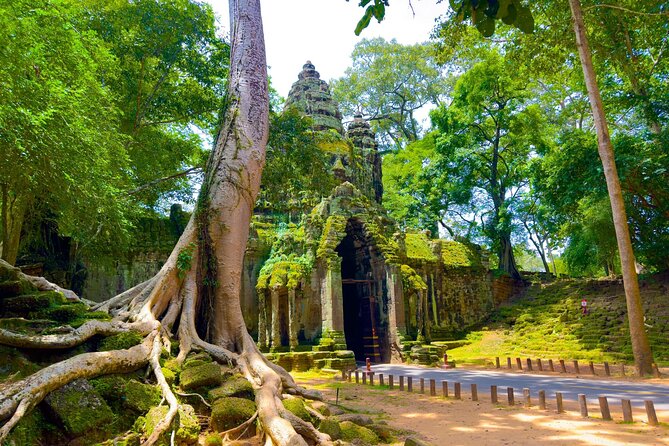
After that comes Preah Khan, with around two hours to explore. This is one of the most atmospheric stops on the route. Trees, roots, broken galleries, and crumbling stone create the feeling of a temple slowly being reclaimed by the forest.
Preah Khan is not simply a smaller Angkor Wat. Its long passages and ruined spaces reward patient exploring, and the damage helps you see how the site has changed over time. It is also a useful counterpoint to Banteay Srei. One is prized for fine carving; the other for scale, decay, and mood.
The ground at these sites can be uneven, so wear comfortable walking shoes. You will be in and out of the vehicle repeatedly, and the heat can make even a one-hour stop feel longer than expected.
Sunset in rice fields or at Bakheng Mountain
The sunset plan depends on the booking choice. For the private option, the schedule includes a peaceful stop at Baitang Siem Reap in the rice fields. You can sit with a cold drink and a light local snack while the sun drops over the countryside.
That stop offers something different from temple sightseeing. It gives you a look at rural life around Siem Reap and a chance to slow down after the first day’s ruins. Food and drinks are not generally included, so plan to pay for anything you choose at the stop.
The small-group option includes sunset at Bakheng Mountain. This is a more temple-focused finish, with a popular elevated viewpoint. The site can be busy, and access may depend on conditions and timing, so do not assume you will have a quiet private view.
The two options suit different tastes. Choose the rice-field stop if you want a calmer countryside break. Choose the Bakheng option if a temple sunset matters more to you. If this moment is important, confirm the exact sunset arrangement before booking.
Other Siem Reap experiences to weigh up
- Sunset tour of Kampong Phluk stilts home village on the Tonle Sap
5.0 · 4,865 reviews - Siem Reap: Full-Day Angkor Wat Guided Tour with Sunset
4.9 · 3,803 reviews - Angkor Wat Sunset Small Group Tour with Lunch Included
5.0 · 3,059 reviews - Angkor 2-Day Sunset & Sunrise Small-Group Tour
5.0 · 2,567 reviews
Day two begins before dawn at Angkor Wat
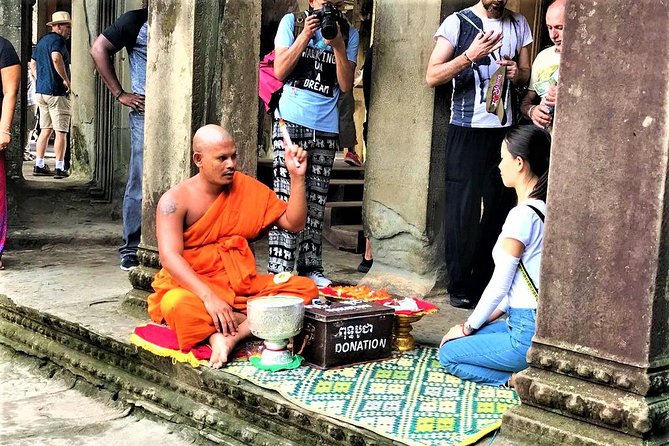
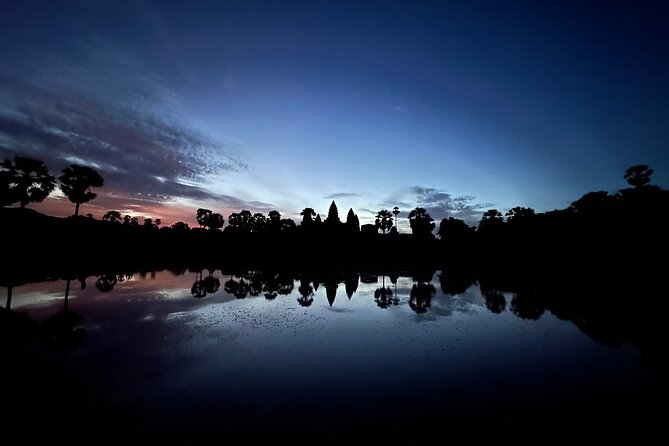
The second day starts very early for sunrise at Angkor Wat. You enter in darkness from the eastern side, which is described as less visited, and walk through old cloistered corridors. Bring a torch. Your phone light may help, but a proper small flashlight is the safer choice.
The early start is not optional if you want the full sunrise experience. You will need to accept a short night and arrive before daylight. The payoff is seeing Angkor Wat change from a dark outline into a detailed stone monument as the sky brightens.
You have about three hours at the site, enough to watch the sunrise and explore beyond the first view. Your guide can explain the temple’s religious purpose and design, then give you space for photographs and personal exploration.
This is also the most emotionally powerful part of the program, but it comes with practical limits. Sunrise is popular, and the best viewpoints may not feel secluded. A guide who knows the route can help you reach a good position and avoid wasting time, but no tour can control the weather or the crowd.
The schedule’s decision to place Angkor Wat on the second day suits anyone who wants to end the main temple sightseeing with the complex’s most famous monument. It also means you should not plan a late night before this morning.
Ta Prohm, where trees meet stone
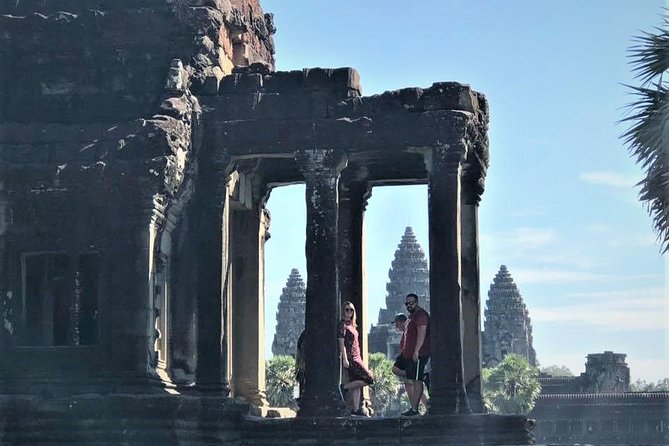
After Angkor Wat, you move to Ta Prohm for roughly two hours. This is the temple most associated with jungle-covered ruins and is often linked with the film Tomb Raider. Its appeal comes from the meeting of stone walls, tree roots, narrow passages, and open courtyards.
Ta Prohm was once home to 2,740 monks, a detail that helps you picture it as a working religious center rather than a picturesque ruin. Your guide can point out how the temple functioned and explain the carvings and layout.
The site is visually dramatic, but it is not always easy to explore quickly. Roots and stones create uneven footing, and the narrow areas can slow the group. Two hours gives you a fair chance to see the important parts without treating the whole visit as a hurried circuit.
I would save some energy for Ta Prohm. The combination of heat, early rising, and walking can catch up with you by this point. Drink the water provided and use the vehicle breaks wisely.
Ta Nei offers a quieter change of pace
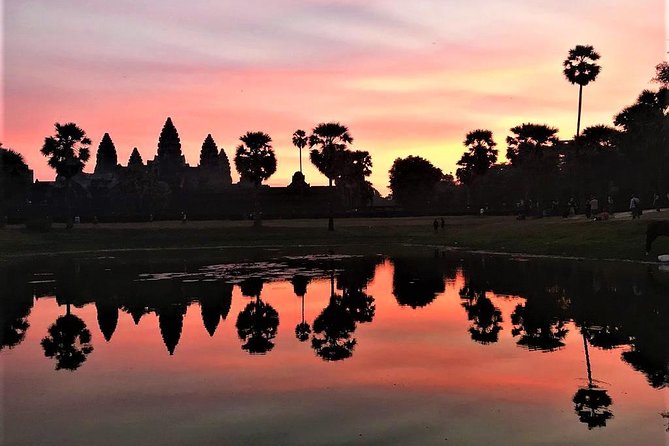
The afternoon visit to Ta Nei lasts about an hour. This late 12th-century stone temple is located within Angkor but is less famous than Ta Prohm or Angkor Wat.
That makes it useful in the itinerary. After two major sites, Ta Nei can feel like a quieter look at the wider Angkor area. You get another example of Khmer temple construction without the same pressure to photograph every corner.
Do not expect Ta Nei to provide the scale of Angkor Wat or the dramatic tree roots of Ta Prohm. Its value is contrast. The tour is not only collecting famous names; it is showing you that Angkor is a large group of sites with different moods and levels of preservation.
Angkor Thom, Bayon, and the royal city
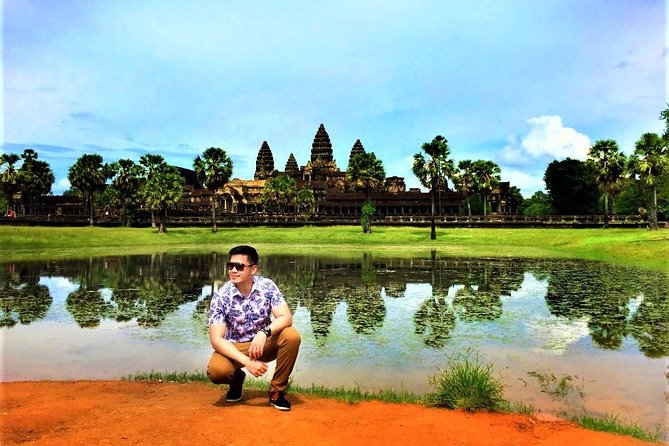
The next major section is Angkor Thom, the former capital of the Khmer Empire. You spend about 90 minutes in the area, with the route including Bayon and views or passes by the Terrace of the Elephants and the Terrace of the Leper King.
Bayon is the main draw. Its towers and carved faces create a very different impression from the clean symmetry of Angkor Wat. Here, the stone can feel crowded and complex, with galleries and towers demanding a slower look.
Angkor Thom also gives the tour a broader civic setting. You are not only seeing a temple; you are considering the scale of a royal capital. The guide’s explanation helps connect the gates, terraces, and temple center to the city that once occupied this area.
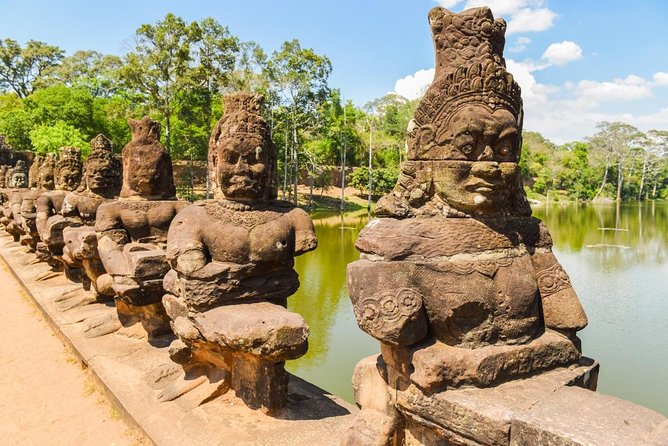
The itinerary also includes about 30 minutes at the South Gate. This is a good place to appreciate the approach to Angkor Thom, including the monumental figures lining the causeway. Since the South Gate is a separate stop in the schedule, expect a short, focused visit rather than a long exploration.
You will pass by the Terrace of the Elephants and the Terrace of the Leper King rather than receive the same extended time as at Bayon. If one of those terraces is a personal priority, tell your guide early and ask how much viewing time the group can allow.
What the guide and driver add
The temples are impressive on their own, but this tour depends heavily on the people leading it. Guides named in the feedback include Pal Saruon, Chhay, Sokpee, Nang, Sak, Sokha, Bun, Vantha, and Vongsetha. The repeated strengths are clear explanations, patience, good time management, and a willingness to answer questions about Cambodian life as well as temple history.
Pal Saruon is particularly noted for helping with photographs and giving people time to explore. Chhay is praised for explaining who built each temple, when it was built, and its religious purpose. Sokpee is described as friendly and informative, while Vantha is noted for helping visitors find good sunrise and sunset viewpoints.
The driver matters just as much during a hot two-day program. Drivers named in the feedback include So, Vichet, Seyha, Mao, Ro, Keal, and Benly. The useful details are simple: air-conditioning, cautious driving, regular bottled water, and cool towels at temple stops.
You should not expect every guide to use exactly the same style. Some may give longer explanations, while others may move more quickly to photographs and independent exploration. If you need more time at a particular temple, say so clearly. One useful strength of this tour is that the guide can adjust small parts of the day, especially on a private booking.
Comfort, meals, and the real cost
The advertised tour price is $49 per person, which is a low starting price for two days of guided transport and temple sightseeing. But the required temple pass costs another $62 per person, paid directly at the site. That brings the basic tour and pass total to $111 per person before meals and drinks.
The value depends on what you would otherwise arrange yourself. You are paying for an English-speaking guide, transport between widely separated sites, hotel pickup and drop-off when selected, bottled water, cool towels, and someone to manage the sunrise timing. For a first visit, that can be a sensible deal.
Food is not included. Some versions of the tour stop at a breakfast or lunch restaurant, but you choose and pay for your own food. One practical criticism concerns meal stops that can feel expensive for the quality compared with restaurants in central Siem Reap.
You can avoid surprises by carrying some cash and treating the meal stops as convenient breaks, not included dining. The tour is built around temples, not food.
Who should book this Angkor tour?
I would recommend it most strongly to first-time visitors with two days in Siem Reap. You get the essential sites plus several less obvious stops, and the guide supplies the historical and cultural background that can be hard to gather while walking in the heat.
It also suits families and anyone who prefers not to manage early transport, temple routes, and ticket details alone. A family traveling with children used the tour successfully, and the regular water and bathroom opportunities help on long days.
The small-group option is a good fit if you like meeting other people and want a lower price. A small group can still feel personal, but you will follow the set route and keep to the group’s timing.
Choose the private upgrade if you want more control over breaks, photo stops, or the amount of time at each temple. It is also the better choice if the rice-field sunset appeals more than Bakheng Mountain.
This is less suitable if you want a slow, deeply focused visit to only two or three temples. You will see a lot, but the schedule has many stops and requires stamina. It is also not ideal for anyone unwilling to wake before dawn for Angkor Wat.
Practical advice before you go
Wear shoes you can walk in for several hours. The sites include stone paths, steps, uneven ground, and exposed areas. Bring a torch for the pre-dawn entrance at Angkor Wat.
Dress respectfully for every temple. Your shoulders and knees must be covered, for both men and women. A scarf used only to cover the shoulders is not accepted, so wear suitable clothing rather than relying on a quick cover-up.
Carry sunscreen, a hat, and some cash for food and drinks. Bottled water and cool towels are provided, but meals are not.
Hotel transfers are included if you select that option. Confirmation is provided at booking, and the activity is listed as suitable for most participants, with children required to travel with an adult.
Free cancellation is available up to 24 hours before the start time. Cancellations or changes made inside that window are not accepted for a refund.
Should you book it?
Book this tour if you want a well-organized first look at Angkor, especially if sunrise at Angkor Wat is high on your list. The route covers the major monuments, adds Banteay Srei, Preah Khan, Neak Pean, and Ta Nei, and gives you the benefit of a guide who can explain more than the dates carved in a brochure.
The $49 headline price is appealing, but use the real figure of $111 per person after adding the temple pass, then allow extra for meals. I would also confirm the group or private option and the sunset location before paying.
For many people, the strongest reason to book is not simply the number of temples. It is the combination of an early Angkor Wat start, dependable transport, water and cool towels, and guides such as Pal, Chhay, or Sokpee who help make a large and complicated site easier to understand.
FAQ
Is the temple pass included in the tour price?
No. The two to three-day temple pass costs $62 per person and must be paid directly at the site.
Does the tour include hotel pickup and drop-off?
Hotel transfers are included when the pickup and transfer option is selected.
Is this a private tour or a small-group tour?
The experience is offered in a small-group format, with a private upgrade available. Check the option you select because the sunset arrangement differs.
What happens at sunrise at Angkor Wat?
You leave before dawn and enter Angkor Wat from the eastern side in darkness. Bring a torch, then spend about three hours at the temple for sunrise and exploration.
Are meals included?
No. Food and drinks are not included. Stops for breakfast, lunch, or refreshments may be part of the day, but you pay for your own choices.
What should I wear to the temples?
Your shoulders and knees must be covered for both men and women. A scarf used to cover the shoulders is not accepted, and unsuitable clothing may lead to refused entry.
Is the tour suitable for children?
Most travelers can participate, but children must be accompanied by an adult. Comfortable walking shoes are recommended for the temple visits.
More 2-Day Experiences in Siem Reap
- Siem Reap: Angkor Sunrise 1- or 2-Day Guided Temples Tour
4.9 · 1,132 reviews - 2 Days Guided Historical Tour in Angkor
5.0 · 855 reviews - 2-Day Angkor Wat With Small, Big Circuit and Banteay Srei Tour
5.0 · 545 reviews - Siem Reap: 2-Day Temple Highlights Sunrise and Sunset Option
4.9 · 445 reviews
More Morning in Siem Reap
- Angkor Wat Sunrise tour with Small – Group and Guide tours
5.0 · 3,655 reviews - Angkor Wat Highlights and Sunrise Guided Tour from Siem Reap
5.0 · 3,213 reviews - Full-Day Angkor Wat Sunrise Private Tour with Guide from Siem Reap
5.0 · 2,920 reviews - Angkor Wat Sunrise & 3 Main Temples with Breakfast – Small Group
5.0 · 2,857 reviews
Fresh reviews from around Siem Reap
- Full-Day Tour Preah Vihea & Koh Ker Temple 3.7 · 3 reviews
- Savor the Countryside: Tours with Authentic Cooking Classes” 5.0 · 3 reviews
- Angkor Grand Circuit Tour & Banteay Srei 5.0 · 3 reviews
- Guided Private Tuk Tuk Tour Angkor Wat and Small Circle and Five Extras 5.0 · 3 reviews
- Angkor Wat Sunrise TukTuk Tour 5.0 · 3 reviews
- Siem Reap Temple Tour 2-Day with Sunrise/Sunset 3.7 · 3 reviews
- Bangkok to Angkor Wat 2 Days 1 Night by Flight 4.5 · 3 reviews
- Kompong Pluk Tour 5.0 · 3 reviews
Angkor Wat Sunrise Tours, compared.

Angkor Wat Sunrise or Sunset Tour with Guide from Siem Reap
Read our review →


Angkor Wat Sunrise tour with Small – Group and Guide tours
Read our review →
Angkor Wat Highlights and Sunrise Guided Tour from Siem Reap
Read our review →
Full-Day Angkor Wat Sunrise Private Tour with Guide from Siem Reap
Read our review →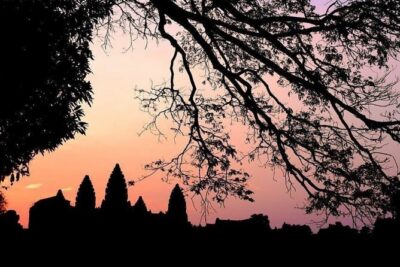
Angkor Wat Sunrise & 3 Main Temples with Breakfast – Small Group
Read our review →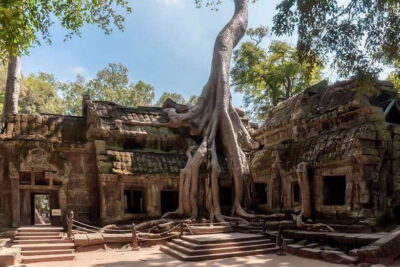
Browse the lists this tour appears in