
Reviewed · ANGKOR WAT SUNRISE TOURS
Angkor 2-Day Sunset & Sunrise Small-Group Tour
Angkor Wat at sunrise is the headline here, but the clever part is the two-day plan. You visit quieter temples such as Banteay Srei, then return before dawn to Angkor Wat with transport already arranged. I like the air-conditioned vehicle, too. After a dusty walk in Cambodia’s heat, cold water and a cool towel feel like a small luxury.
I also like the guide service. Guides such as Pal, Sak, Sokpee, Pi, Bun, and Chhay are praised for bringing temple stories to life and helping with photographs, especially for solo visitors. The main drawback is the pace: day one can run from 8 a.m. to about 7 p.m., while day two may begin at 4:10 or 4:30 a.m. This is a sightseeing workout, not a lazy holiday.
In This Review
- Key points before you book
- Why two days works well at Angkor
- Day one begins with Preah Khan
- Neak Pean and the old reservoir
- Banteay Srei is the day one highlight
- Pre Rup brings day one toward sunset
- Angkor Wat before dawn
- Angkor Thom and the South Gate
- The Terraces of the Elephants and Leper King
- Ta Prohm finishes the temple circuit
- What the guide and driver add
- The real price and practical value
- Who should book this two-day Angkor tour?
- Should you book it?
- FAQ
- Does the $49 price include the Angkor temple pass?
- What time does the tour start?
- Is hotel pickup included?
- How large is the group?
- Are meals included?
- What should I wear and bring?
Key points before you book
- Sunrise starts around 4:10 to 4:30 a.m. The early departure helps you reach Angkor Wat before the main morning crowd.
- Banteay Srei adds a quieter rural stop. Its small scale and fine sandstone carvings contrast with Angkor’s huge temple mountains.
- The vehicle has air-conditioning. That matters after long walks on dusty paths under strong sun.
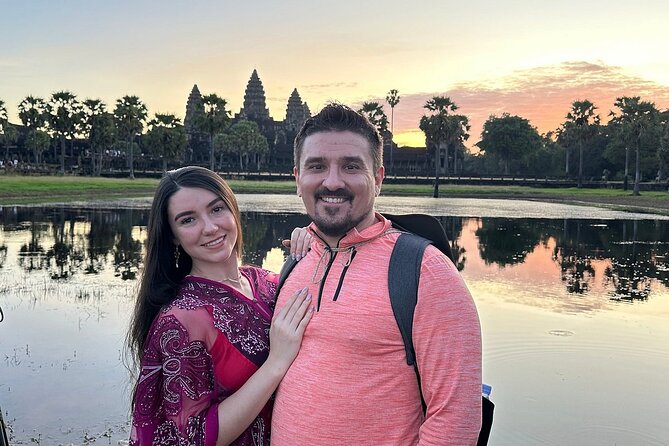
- The guide often helps with photos. Pal, Sak, Pi, and other guides are noted for finding good angles and taking pictures for solo visitors.
- The $49 price is not the full cost. Add the required $62 temple pass, plus meals purchased during the day.
- The group can include up to 15 people. That is still smaller and easier to manage than a large coach tour, but it is not a private outing.
Why two days works well at Angkor
Angkor is not one temple. It is a huge archaeological area with monuments spread across roads, forest, reservoirs, and countryside. Trying to see the major sites in one long day can leave you with a blur of carved faces and stone stairways.
This tour splits the experience into two different days. Day one reaches the farther temples, including Banteay Srei, and finishes with sunset. Day two focuses on Angkor Wat, Angkor Thom, and Ta Prohm after the pre-dawn start.
I like this arrangement because the temples do not all look alike. Banteay Srei is intimate and finely carved. Preah Khan feels tangled and atmospheric. Angkor Wat is monumental, while Ta Prohm is known for its trees and crumbling galleries.
The schedule is still ambitious. One day may include four temples, while another may cover nine or even more sites depending on timing and the final route. You will get a strong overview, but you should expect plenty of walking, uneven ground, dusty paths, and repeated climbs.
The small-group format helps. The maximum is 15 people, and some departures may be smaller. You travel with others, but the guide can still answer questions, keep track of the group, and help you find a good photo spot without the impersonal feel of a large bus tour.
More sunrise departures to Angkor Wat:
- Angkor Wat Sunrise or Sunset Tour with Guide from Siem Reap
5.0 · 12,109 reviews - Siem Reap: Angkor Wat: Small-Group Sunrise or Sunset Tour
5.0 · 9,444 reviews - Siem Reap: Angkor Wat 2-Day Tour with Sunrise and Sunset
4.9 · 4,429 reviews
Day one begins with Preah Khan
The first stop is Preah Khan, a ruined temple complex with a wonderfully rough character. Stone corridors, broken walls, and tree roots give the site a feeling of age and abandonment that polished monuments do not provide.
You have about an hour here. That is enough to walk through the main areas and hear how the temple functioned, but not enough for a slow, wandering exploration of every corner.
This is where a guide earns the fee. Without context, Preah Khan can look like a pile of weathered stone. With an explanation of its religious role, carved figures, and layout, the site becomes easier to read.
Wear shoes with a firm sole. The paths are not a smooth museum floor, and the heat begins to build early. The temple pass is not included in the tour price, so have the separate admission cost in mind from the start.
Neak Pean and the old reservoir
Neak Pean is a very different stop. The temple sits on a circular island reached across a long raised walkway in the Jayatataka Baray, an artificial reservoir.
The visit lasts about 40 minutes. The approach is part of the experience, giving you a sense of how water shaped Khmer religious architecture and city planning.
Neak Pean is smaller than the headline temples, so do not arrive expecting another Angkor Wat. Its appeal is the setting and the unusual design. After the scale of Preah Khan, the island temple provides a change of rhythm.
This stop also shows why the air-conditioned vehicle matters. You walk outside between each monument, then return to a cool interior with bottled water and a cool towel. That simple break helps you keep going through the rest of the day.
Banteay Srei is the day one highlight
Banteay Srei sits farther out in the countryside and takes about 90 minutes to visit. It is smaller than the main Angkor temples, but its detailed sandstone reliefs are among the finest associated with the site.
The carvings are the reason to make the trip. Look closely at the figures, floral patterns, and carefully cut details. The smaller scale lets you study the workmanship without feeling swallowed by a giant structure.
I especially like that this stop breaks up the familiar Angkor circuit. You still see famous monuments, but Banteay Srei gives the day a more varied feel and takes you beyond the core cluster of temples.
The tradeoff is time on the road. If you have only one day in Siem Reap, Banteay Srei can feel like a long detour. With two days, it makes sense, since the schedule gives you room for both the distant temple and the major central sites.
Some departures also offer an optional visit to the Landmine Museum, with a separate admission fee. You are not required to enter, and you may wait at the café or in the air-conditioned vehicle. The museum adds difficult modern Cambodian history to a day otherwise focused on ancient monuments.
More Angkor temple itineraries:
- Siem Reap: Full-Day Angkor Wat Guided Tour with Sunset
4.9 · 3,803 reviews - Angkor Wat Sunrise tour with Small – Group and Guide tours
5.0 · 3,655 reviews - Angkor Wat Highlights and Sunrise Guided Tour from Siem Reap
5.0 · 3,213 reviews - Angkor Wat Sunset Small Group Tour with Lunch Included
5.0 · 3,059 reviews
Pre Rup brings day one toward sunset
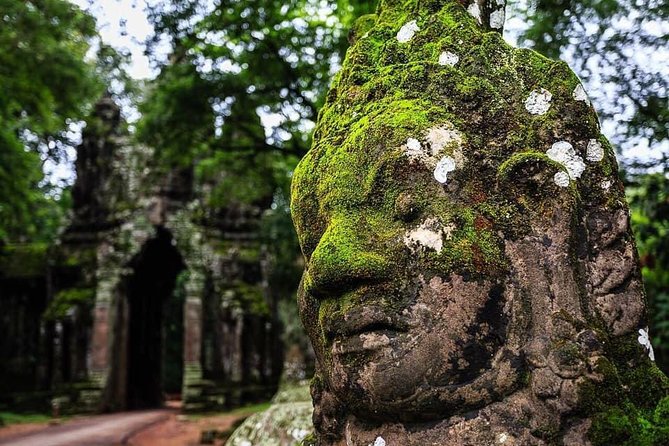
Pre Rup is a temple mountain built from brick, laterite, and sandstone. It was constructed as the state temple of King Rajendravarman and dedicated in 961 or early 962.
You have about 90 minutes here, including time around the structure and the sunset portion of the day. The upper levels give the monument a strong sense of height, but the climb can be tiring in heat, dust, or poor air quality.
This is the part of the tour where you should be realistic about conditions. Sunset color is never guaranteed. Smog or heavy cloud can reduce the view, and the incline may be uncomfortable if you have asthma or breathing problems.
Still, Pre Rup is a memorable place to end a long day. Its brick towers catch changing light, and the high position gives you a broad view over the surrounding area. Bring patience, water, and a willingness to accept whatever the sky offers.
Day one can be much longer than the basic description suggests. Plan for roughly 8 a.m. until 7 p.m. if sunset is included. Lunch is not included, though a meal stop may offer inexpensive food that you buy yourself.
Angkor Wat before dawn
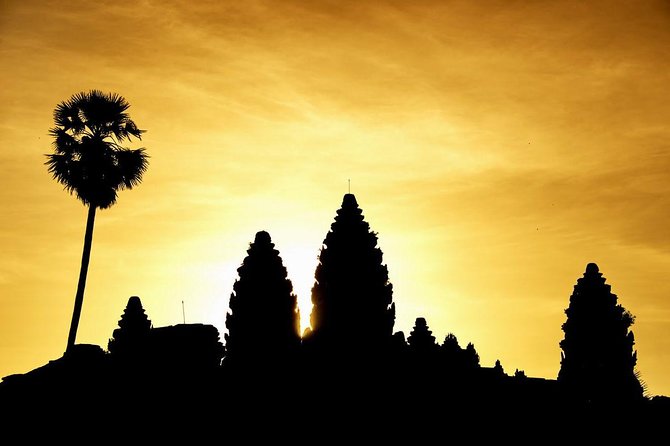
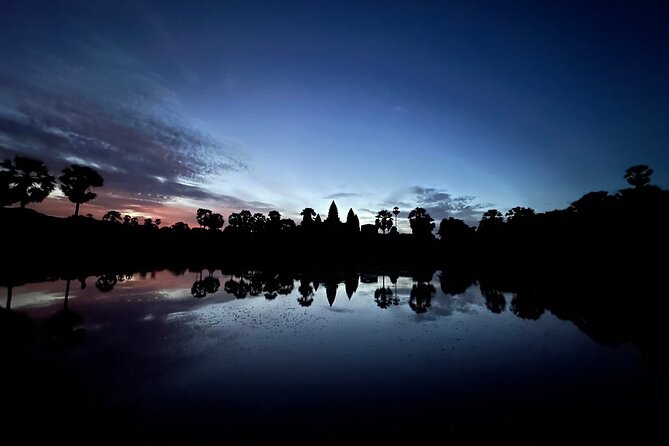
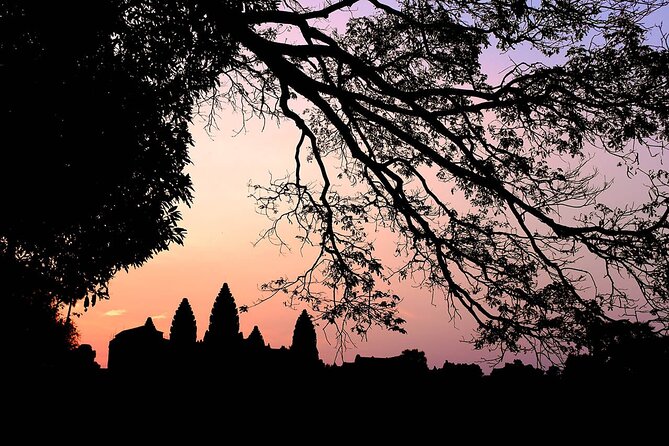
Day two begins very early, usually between 4:10 and 4:30 a.m., depending on the season. The vehicle collects you at your Siem Reap hotel and takes you to Angkor Wat for sunrise.
The temple is approached in darkness, using the eastern side, which is less used than the familiar western entrance. You may wait on the grounds for about 90 minutes before the sun appears, so bring something to sit on if possible and expect a quiet, patient start.
The waiting is part of the deal. You may stand or sit in the dark, sometimes using a phone light to find your way. If the morning is cloudy or rainy, the sky may not turn bright orange, but Angkor Wat in the dim pre-sunrise light can still be calm and beautiful.
After sunrise, you spend about three hours at Angkor Wat. This gives you time to move from the famous exterior view into the galleries and interior spaces, rather than taking a quick photograph and leaving.
The early start is worth it for many people, but do not underestimate the sleep loss. One person may find it useful to rest during a rainy morning wait, and you may want a nap after the tour. If your body does not handle very early starts well, ask about the flexible swap-day option when arranging your dates.
Angkor Thom and the South Gate
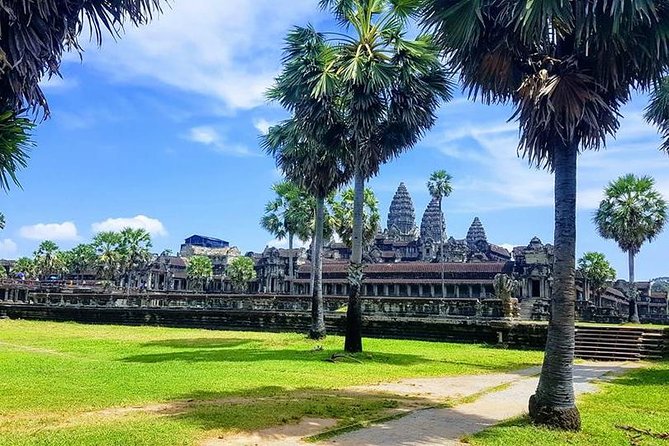
After Angkor Wat, the tour moves to Angkor Thom, the former Khmer imperial capital. The scale changes again. Instead of one temple, you enter a walled city with monumental gates and several major structures.
The South Gate receives a separate stop of about 30 minutes. Its approach, bridge, and large carved figures make it one of the best introductions to Angkor Thom.
You then spend about 90 minutes exploring Angkor Thom itself, including the Bayon area. The carved faces and crowded galleries require time to absorb. A good guide can point out details you would likely walk past, explain the religious images, and keep the group moving without turning the visit into a race.
The heat can be intense by this point. Drink before you feel thirsty, take the offered water and cool towel, and use the vehicle break wisely. The guide may allow some freedom to wander, but you must return on time for the group.
The Terraces of the Elephants and Leper King
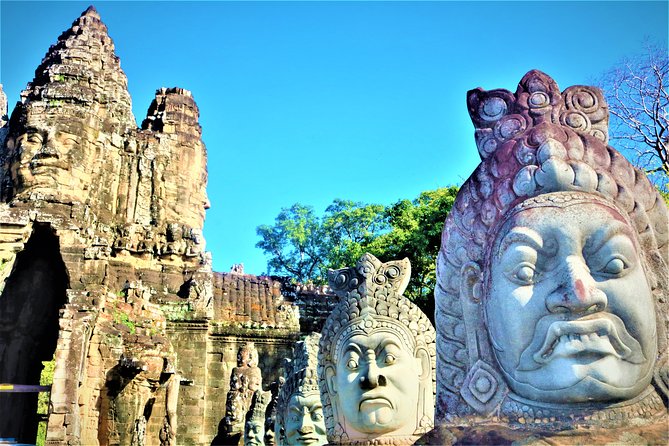
The tour passes the Terrace of the Leper King and the Terrace of the Elephants, monumental platforms linked to the royal center of Angkor Thom.
You have about 90 minutes listed for this part of the route, although some of the itinerary wording describes the terraces as a pass-by stop. Confirm the exact order with your guide on the morning, since the schedule may shift to manage traffic, heat, and group timing.
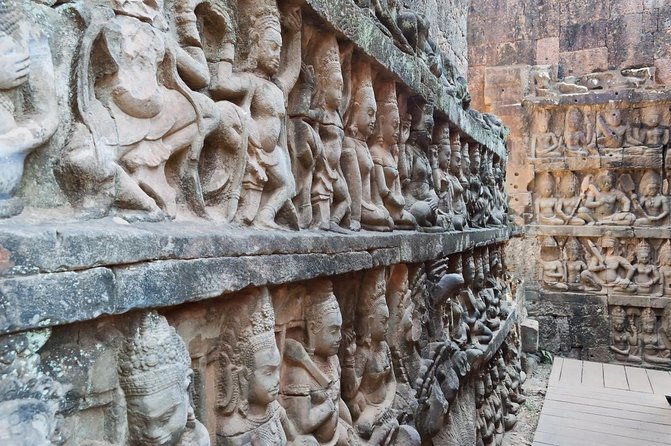
The terraces are valuable because they help you picture Angkor Thom as a royal city, not just a collection of isolated temples. Look for the carved elephants and layered figures along the walls.
This is also one of the less enclosed parts of the tour. There is little shade compared with a gallery or forested temple, so a hat, covered shoulders, and a light layer of clothing can make a real difference.
Ta Prohm finishes the temple circuit
Ta Prohm is one of Angkor’s most atmospheric monuments. Trees grow around and over parts of the structure, while galleries and stone blocks show the effects of centuries of weather and neglect.
The temple once housed 2,740 monks. Today, its roots and ruined corridors create the image many people carry home from Angkor, but it is more than a photo stop.
You have about an hour here. That is enough to see the main route, study the carved doorways, and take photographs at the well-known tree-covered sections. The paths can be narrow, and the site may feel crowded at popular angles.
Ta Prohm works well at the end because it offers a different mood from Angkor Wat’s order and grandeur. Here, nature and architecture seem to compete for space. Your guide can also help you find less obvious angles instead of sending everyone to the same picture point.
What the guide and driver add
The guide is not just there to lead you from gate to gate. Guides named in the tour feedback include Pal, Sak, Sokpee, Pi, Bun, Chhay, Sarak, and others. Their strengths include clear English, temple history, Hindu stories, Cambodian culture, and help with questions.
Several guides use an iPad with pictures, videos, or written material. That can help when a carved deity or damaged relief is hard to understand from the stone alone.
The photo help is unusually useful. If you are traveling alone, the guide may take pictures for you. Guides such as Pal and Pi are also praised for finding good angles, which saves you from returning home with only arm’s-length phone shots.
The driver plays a quieter but important role. Drivers such as Naro, Mao, Ha, Keal, Sha, and Vichet are described as punctual and safe, with cold water and cool or mint-scented towels ready when you return to the vehicle.
The air-conditioned ride is not just a comfort feature. It gives your body a chance to cool down between long walks. Roads can be rough in places, but the vehicle provides a welcome break from the heat and dust.
The real price and practical value
The advertised tour cost is $49 per person. You must add $62 for the required two or three-day Angkor temple pass, bringing the known total to $111 before meals.
That changes how you judge the deal. The $49 covers two days of transport, hotel pickup and drop-off, an English-speaking guide, bottled water, cool towels, and the organized sunrise and sunset schedule. The temple admission is a separate government-site cost, not an optional extra if you plan to follow the itinerary.
Meals are not included. You choose and pay for food along the way, so keep cash available for lunch and drinks beyond the supplied water.
For the price, I see good value if you want a broad introduction without arranging separate drivers, temple routes, and a pre-dawn pickup. A private car could give you more control, but this option lowers the cost and adds the social ease of a small international group.
Who should book this two-day Angkor tour?
I would choose this tour if you have limited time in Siem Reap and want the major monuments explained in a sensible order. It also suits solo visitors, families with older children, and first-time visitors who prefer not to negotiate transport or study temple maps.
Children must be accompanied by an adult, and children younger than five are not allowed. Families with children around seven or eight can manage it, but the long first day and early second morning still require stamina.
This is less suitable if you want a slow photographic study of each temple. The schedule covers many sites, and the group must stay on time. It is also a poor fit if you dislike heat, dust, stairs, or waking before sunrise.
Wear comfortable walking shoes and clothing that covers shoulders and knees inside the temples. Bring a phone or camera, but do not forget that the most important equipment is patience. Sunrise may be cloudy, sunset may be hazy, and neither can be ordered from a timetable.
The tour offers free cancellation up to 24 hours before the start time. Changes made inside that window are not accepted, so settle your dates before the final day.
Should you book it?
Book this Angkor tour if you want to see a lot in two days, value a strong English-speaking guide, and welcome the comfort of an air-conditioned vehicle. The combination of Banteay Srei, the central temples, sunset, and Angkor Wat sunrise gives you a well-rounded first look at the area.
I would book it with three warnings in mind: the $62 pass is extra, day one may last until evening, and day two begins around 4:10 to 4:30 a.m. Accept those conditions, and the tour offers an efficient, comfortable way to meet Angkor’s biggest sights while still reaching quieter corners.
FAQ
Does the $49 price include the Angkor temple pass?
No. The required temple pass costs an additional $62 per person for the two or three-day visit and is paid directly to the site.
What time does the tour start?
The regular day one start time is 8:00 a.m. Day two uses a pre-dawn hotel pickup, usually between 4:10 and 4:30 a.m., depending on the time of year.
Is hotel pickup included?
Yes. Pickup and drop-off at Siem Reap hotels are included.
How large is the group?
The activity allows a maximum of 15 people. The actual group may be smaller.
Are meals included?
No. Meals are not included, though food is available for you to purchase during the day.
What should I wear and bring?
Wear comfortable walking shoes. Shoulders and knees must be covered inside the temples. Bring suitable clothing for heat, dust, and an early morning wait, and be ready for substantial walking.
More Morning in Siem Reap
- Full-Day Angkor Wat Sunrise Private Tour with Guide from Siem Reap
5.0 · 2,920 reviews - Angkor Wat Sunrise & 3 Main Temples with Breakfast – Small Group
5.0 · 2,857 reviews - Siem Reap: Angkor Wat Sunrise and Full-Day Sightseeing Tour
4.9 · 2,828 reviews - Angkor Wat: Highlights and Sunrise Guided Tour
4.9 · 1,586 reviews
More Evening Experiences in Siem Reap
- Sunset tour of Kampong Phluk stilts home village on the Tonle Sap
5.0 · 4,865 reviews - Siem Reap: Angkor Wat Sunrise or Sunset Guided Tour
4.9 · 2,123 reviews - Siem Reap Floating Village Kampong Phluk Sunset with Boat
5.0 · 1,962 reviews - Full-Day Guided Sunset Tour of Angkor Wat
5.0 · 1,507 reviews
Fresh reviews from around Siem Reap
- Full-Day Tour Preah Vihea & Koh Ker Temple 3.7 · 3 reviews
- Savor the Countryside: Tours with Authentic Cooking Classes” 5.0 · 3 reviews
- Angkor Wat Sunrise TukTuk Tour 5.0 · 3 reviews
- Angkor Grand Circuit Tour & Banteay Srei 5.0 · 3 reviews
- Guided Private Tuk Tuk Tour Angkor Wat and Small Circle and Five Extras 5.0 · 3 reviews
- Siem Reap Temple Tour 2-Day with Sunrise/Sunset 3.7 · 3 reviews
- Bangkok to Angkor Wat 2 Days 1 Night by Flight 4.5 · 3 reviews
- Kompong Pluk Tour 5.0 · 3 reviews
Angkor Wat Sunrise Tours, compared.

Angkor Wat Sunrise or Sunset Tour with Guide from Siem Reap
Read our review →


Angkor Wat Sunrise tour with Small – Group and Guide tours
Read our review →
Angkor Wat Highlights and Sunrise Guided Tour from Siem Reap
Read our review →
Full-Day Angkor Wat Sunrise Private Tour with Guide from Siem Reap
Read our review →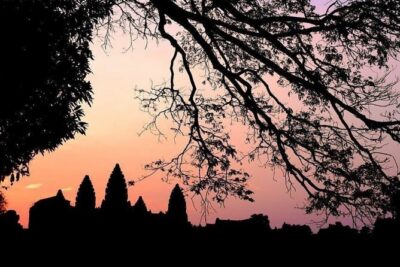
Angkor Wat Sunrise & 3 Main Temples with Breakfast – Small Group
Read our review →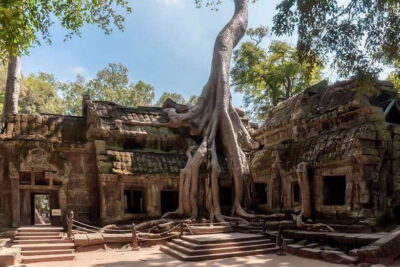
Browse the lists this tour appears in