
Reviewed · HISTORICAL TOURS
Private Angkor Wat Tour & Angkor Park/Heritage With Local Guide
Angkor Wat is only the opening act here. This private day takes you from the grand temple itself to the giant stone faces of Bayon, the quiet jungle setting of Ta Nei, and the tree-covered ruins of Ta Prohm. You ride between sites by tuk tuk, which makes the route feel more connected to Siem Reap than a sealed tour vehicle would.
I like the private format, since you can ask questions, pause for rests, and keep the day at a sensible pace. I also like the combination of famous sights and a quieter stop at Ta Nei. Guide Ben/Yen was praised for clear explanations and frequent rest breaks, while driver Bo helped make the tuk tuk rides part of the fun.
The main thing to check before paying is the temple admission fee. It is not included in the $60 tour price. Lunch, snacks, and drinks are described in the tour details, but the formal inclusions specifically list drinking water, so confirm exactly what your booking covers.
In This Review
- Key points at a glance
- Why this private Angkor route works well
- Starting with Angkor Wat’s grand design
- Walking through Angkor Thom’s old capital
- Bayon and its famous stone faces
- Twenty quiet minutes at Ta Nei
- A lunch break beside Srah Srang
- Ta Prohm and the power of the jungle ruins
- What the $60 price really covers
- The pace, comfort, and practical tradeoffs
- Who should book this Angkor day
- Should you book this private Angkor tour?
- FAQ
- Is the Angkor Archaeological Park entrance fee included?
- How long does the tour last?
- Is this a private tour?
- What transport is provided?
- Is an English-speaking guide included?
- Are lunch, snacks, and drinks included?
Key points at a glance
- Private tuk tuk touring: Your group travels alone with an English-speaking guide and driver.
- Six useful stops: The route covers Angkor Wat, Angkor Thom, Bayon, Ta Nei, Srah Srang, and Ta Prohm.
- A relaxed pace: The guide can explain the sites and stop for breaks rather than rushing from temple to temple.
- Quiet Ta Nei visit: You get about 20 minutes at a less visited jungle temple.
- Lunch beside Srah Srang: The midday break is planned near the reservoir, with time to rest.
- Admission is extra: The Angkor Archaeological Park entrance fee is not part of the $60 price.
Why this private Angkor route works well
Angkor is not one temple. It is a huge park of monuments spread across several roads, and the distances can make an unplanned visit tiring. This tour gives you a clear route through the major sights without leaving you to work out the order, transport, and timing yourself.
The private setup matters most when the heat begins to build. You are not tied to the wishes of a large group, so you can ask your guide to explain a carving, stop for a rest, or spend more time at a place that catches your eye. The tour lasts about 7 to 8 hours, long enough for a proper look but still manageable as one day.
I also like the choice of transport. A tuk tuk keeps you close to the sounds and air of the park, and getting from one temple to the next becomes part of the outing. It is less enclosed than a car, though you should expect sun, dust, and open-air travel between stops.
Hotel pickup and drop-off in Siem Reap are offered, which removes one of the day’s small hassles. The tour is fully private, and the booking information says only your group will participate. That makes this a better choice than a fixed group outing if you value flexibility.
More Angkor temple itineraries:
- Angkor Wat Sunrise or Sunset Tour with Guide from Siem Reap
5.0 · 12,109 reviews - Siem Reap: Angkor Wat: Small-Group Sunrise or Sunset Tour
5.0 · 9,444 reviews - Siem Reap: Angkor Wat 2-Day Tour with Sunrise and Sunset
4.9 · 4,429 reviews
Starting with Angkor Wat’s grand design
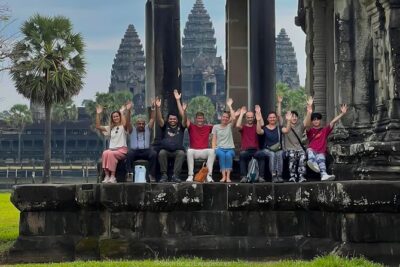
The day begins with about two hours at Angkor Wat, the park’s most famous monument and one of the world’s largest religious structures. The scale can be hard to grasp from photographs. You approach a broad complex of towers, galleries, courtyards, reliefs, and carefully balanced stone forms.
A guide adds real value here because the site can otherwise feel like a series of impressive walls. You can expect commentary on the temple’s layout, proportions, sculptures, and carved scenes. The stated description highlights Angkor Wat’s balance and precision, and those are exactly the details worth slowing down to notice.
Two hours gives you a solid first visit, though it is not an exhaustive study of every gallery. If you want long photography sessions or a very detailed look at the carvings, the schedule may feel brisk. The private format helps, but the day still has five more stops.
Angkor Wat is also the place where the entrance requirement matters most. Admission is not included, and you need to budget for the separate Angkor Archaeological Park ticket. The tour price covers the guide and transport, not access to the temples themselves.
Walking through Angkor Thom’s old capital
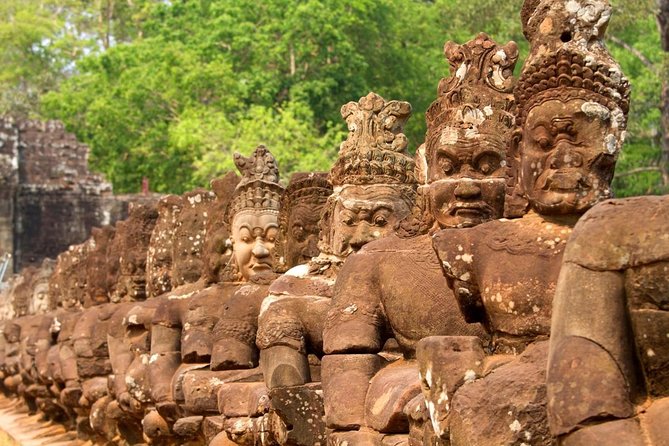
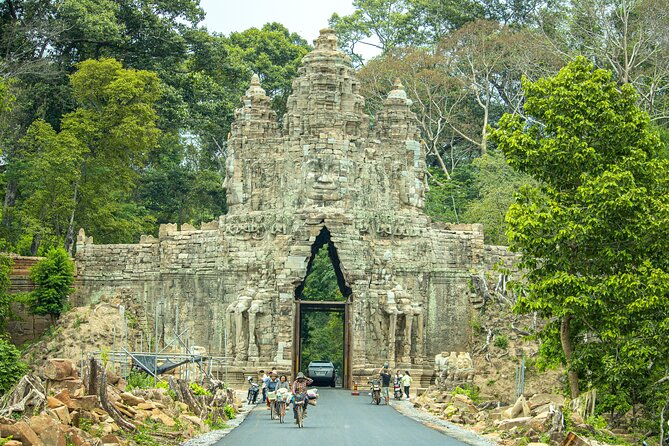
The next major stop is Angkor Thom, the last and longest-lasting capital of the Khmer Empire. The site covers a large area and contains several important structures, including Bayon and Baphuon.
The value of this stop is its scale. Angkor Wat feels like a monumental temple complex, while Angkor Thom helps you picture a capital with roads, walls, gates, and several major buildings. A guide can help you connect the separate ruins into one larger setting instead of treating each stone structure as an isolated photo stop.
The schedule gives Angkor Thom about an hour. That is enough to get an introduction and see key areas, but you should not expect to inspect every structure inside the enormous enclosure. Since Bayon receives its own hour afterward, the division keeps the visit focused.
The tuk tuk is particularly useful here because the area is too broad to treat as one short walk. You will ride between parts of the park, then continue on foot at the individual monuments. Comfortable shoes and water are sensible, even though drinking water is supplied throughout the day.
Bayon and its famous stone faces
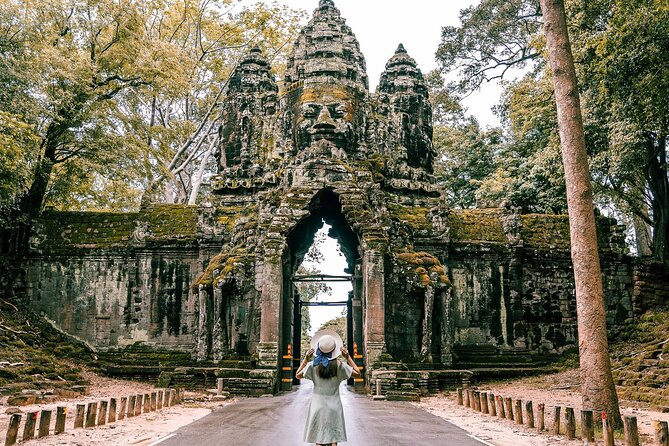
Bayon sits in the heart of Angkor Thom and receives another hour. Built in the 12th century as a state temple for King Jayavarman VII, it is known for its towers carved with large human faces.
This is one of the most rewarding places for a guide’s explanation. The towers can seem confusing at first, with passageways, galleries, and stone faces appearing from different angles. A good guide can point out how the temple is arranged and explain why Bayon is regarded as a high point of Khmer artistic work.
The one-hour visit should suit you if you want the main experience without turning the day into a specialist archaeology tour. The narrow passages and uneven surfaces may slow your pace, so take the guide’s lead and use the private arrangement to pause when needed.
The guide named in one detailed booking account was Ben/Yen. That account praised the amount of explanation and the regular rest stops, but guide assignments are not guaranteed in the supplied information. You should regard Ben/Yen as a useful reference, not a promise that this will be your guide.
More temple and heritage days near Siem Reap:
- 2 Days Guided Historical Tour in Angkor
5.0 · 855 reviews - Siem Reap: Banteay Srei and Grand Circuit Heritage Tour
4.9 · 163 reviews - Banteay Srei and Grand Circuit Heritage Tour from Siem Reap
5.0 · 142 reviews - Angkor World Heritage with Sunrise – Small Group
5.0 · 32 reviews
Twenty quiet minutes at Ta Nei
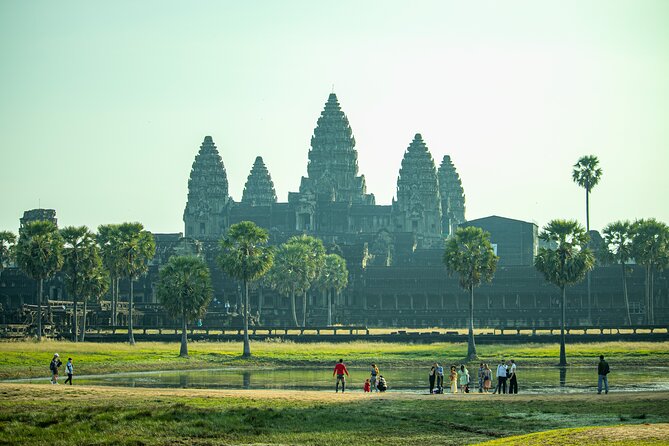
Ta Nei is a modest temple tucked into the jungle area of Angkor, and the planned visit lasts about 20 minutes. It is a sharp contrast to Angkor Wat and Bayon.
You will not spend as long here, and that is part of the appeal. Ta Nei gives the day a quieter pause, with less emphasis on grand scale and more on the atmosphere of a smaller ruin among trees. The short stop also prevents the schedule from becoming too heavy.
Do not book this tour expecting every temple to receive equal time. Ta Nei is an atmospheric interlude rather than a full exploration. If you prefer only the biggest and most polished monuments, this stop may seem brief. If you like a quieter corner and a change of pace, it earns its place.
A lunch break beside Srah Srang
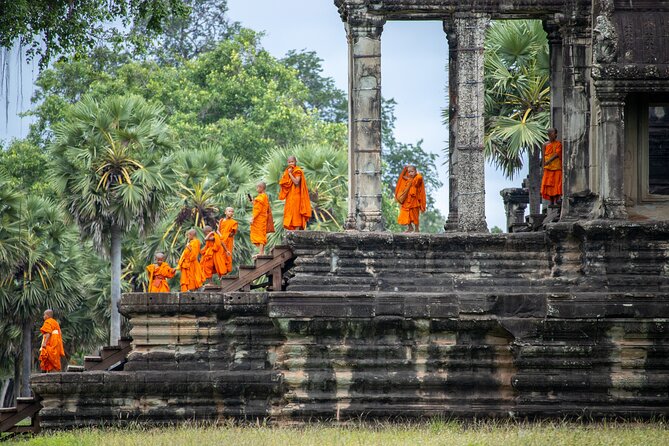
After the first major temple visits, the tour pauses for about 1 hour and 30 minutes at Srah Srang. The reservoir provides a calmer setting for lunch and a break from walking.
This pause is important on a full day in the park. Angkor can be tiring, and a proper sit-down break gives you time to cool down before Ta Prohm. The schedule is not simply a chain of quick photo stops, and the frequent rests praised in the booking account support that more comfortable rhythm.
The tour overview says lunch at a restaurant, snacks, and drinks are included. The formal inclusion list names tuk tuk transport, an English-speaking guide, and drinking water throughout the day. Because those details do not match perfectly, ask the provider to confirm the lunch and snack arrangements before booking.
Srah Srang itself is presented as a place to relax with a view of the reservoir. It is not described as a major temple visit, so treat it as your midday reset rather than another monument to check off.
Ta Prohm and the power of the jungle ruins
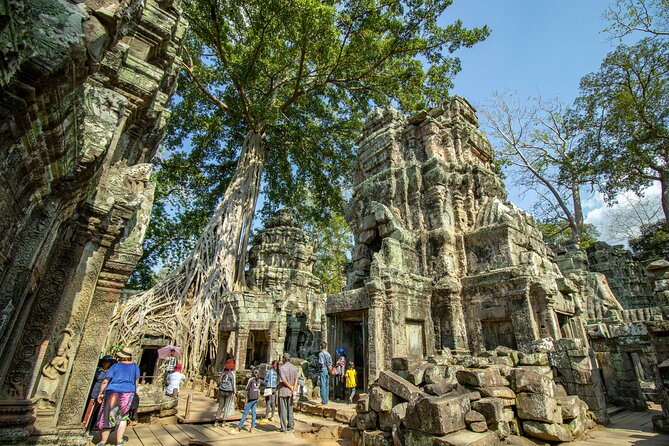
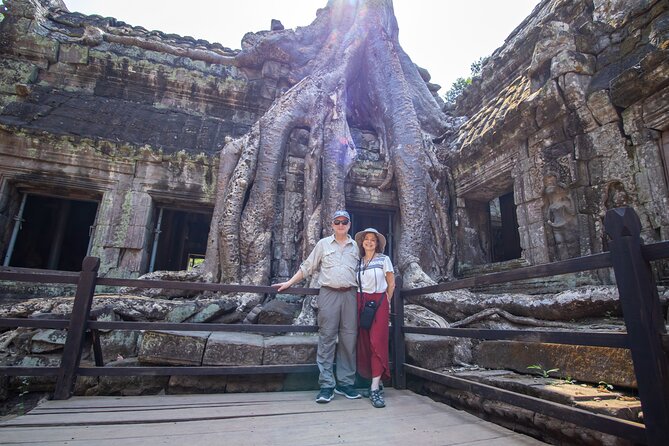
The last temple stop is Ta Prohm, with about 1 hour and 30 minutes planned. Known internationally as the Tomb Raider temple, it is famous for enormous tree roots growing over and through the old stonework.
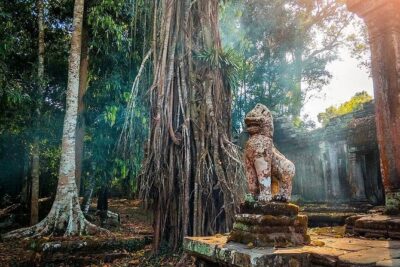
Ta Prohm feels different from Angkor Wat and Bayon. At Angkor Wat, the design and symmetry command your attention. At Ta Prohm, nature and ruin compete for the frame. Roots press against walls, courtyards feel enclosed, and broken galleries create a strong sense of age.
The film connection explains why this temple is so popular, but it should not be the only reason you visit. The real attraction is the meeting of architecture and jungle growth. Your guide can help you look past the famous photo points and notice the temple’s layout and carved details.
An hour and a half is generous compared with the 20 minutes at Ta Nei. It gives you room to walk through the main areas, take photographs, and listen to explanations without racing. The drawback is that Ta Prohm can be the busiest-feeling part of the route, though the supplied information does not promise a specific crowd level or special timing.
What the $60 price really covers
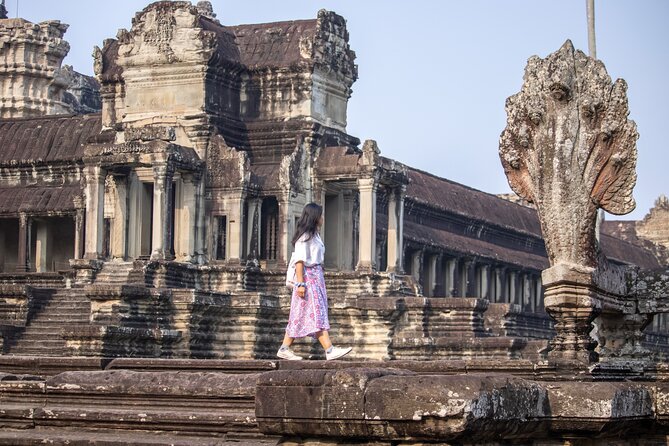
At $60 for a private experience lasting 7 to 8 hours, the price is strongest for couples, families, or small groups that can share the cost. You are paying for a private tuk tuk, an English-speaking guide, hotel pickup and drop-off, and a structured route through the park.
Group discounts are offered, but the exact discount is not stated. Ask for the current group rate if you are booking with several people. The value improves as the group grows, provided everyone is comfortable traveling together in the assigned tuk tuk.
The separate park admission changes the final cost. Since the entrance fee is not included, compare the full expense rather than treating $60 as the complete price. Lunch is also worth confirming because the overview and inclusion list describe it differently.
For a self-guided visit, you would still need transport and a way to organize the temples. This tour’s value lies in saving that planning time and giving you commentary along the route. If you already have a tuk tuk driver and prefer to explore alone, the guide fee may feel less essential. If Angkor is new to you, the explanations and private schedule make the price easier to justify.
The pace, comfort, and practical tradeoffs
The itinerary totals roughly 7 hours and 20 minutes at the listed stops, before allowing for rides between temples. That explains the advertised 7 to 8 hour duration and tells you to expect a full day rather than a casual morning outing.
A past booking specifically praised the guide for stopping to rest frequently. That detail matters more than it may first appear. You will walk over uneven temple surfaces, spend time outdoors, and move through a warm park, so a guide who keeps an eye on the pace can make the day far more pleasant.
Drinking water is included throughout the day. Hotel pickup and return add convenience, and confirmation is provided at booking. The tour is near public transportation, though you do not need to arrange public transport if you use the offered pickup.
Most people can participate according to the supplied information, but no detailed accessibility information is provided. If you have mobility concerns, ask the provider about walking surfaces, steps, and how close the tuk tuk can get to each entrance.
The cancellation policy is friendly if your plans may change: you can receive a full refund by canceling at least 24 hours before the start time. Changes or cancellations made less than 24 hours before the tour are not accepted for a refund.
Who should book this Angkor day
I would point this tour toward first-time visitors who want the essential temples with a local guide and do not want to negotiate transport at every turn. The private format also suits families and small groups that need regular rests or want to ask plenty of questions.
It works well for anyone who likes a mix of major sights and quieter corners. Angkor Wat, Bayon, and Ta Prohm provide the headline monuments, while Ta Nei and the Srah Srang break give the day some variety.
You may want another plan if you prefer slow, specialist visits to one or two temples. The schedule covers six stops, so the route favors breadth over close study. It is also less suitable if you want admission, meals, and all costs bundled into one price, since the park ticket is extra and the lunch details need confirmation.
Should you book this private Angkor tour?
Book it if you want a well-paced private introduction to Angkor with tuk tuk transport, hotel pickup, a local English-speaking guide, and the park’s main temples in one day. The strongest features are the flexible private format, the variety of stops, and the guide’s reported habit of explaining clearly and allowing rest breaks.
Before booking, confirm the Angkor admission cost and ask exactly what lunch, snacks, and drinks include. If you are comfortable with those extra details and want an organized day without a large group, this $60 experience offers solid value. If you want to linger at every monument, choose a slower itinerary instead.
FAQ
Is the Angkor Archaeological Park entrance fee included?
No. The entrance fee to Angkor Archaeological Park is not included in the tour price.
How long does the tour last?
The tour lasts approximately 7 to 8 hours. The listed stops add up to about 7 hours and 20 minutes, not counting travel between temples.
Is this a private tour?
Yes. Only your group participates in the activity.
What transport is provided?
Round-trip transport by tuk tuk is included, along with hotel pickup and drop-off.
Is an English-speaking guide included?
Yes. An English-speaking guide is included. One booking account names Ben/Yen as the guide and Bo as the driver, but those names are not guaranteed for every departure.
Are lunch, snacks, and drinks included?
The tour details describe lunch at a restaurant, snacks, and drinks. The formal inclusion list specifically confirms drinking water throughout the day, so you should confirm the exact meal and snack arrangements before booking.
Fresh reviews from around Siem Reap
- Full-Day Tour Preah Vihea & Koh Ker Temple 3.7 · 3 reviews
- Savor the Countryside: Tours with Authentic Cooking Classes” 5.0 · 3 reviews
- Angkor Wat Sunrise TukTuk Tour 5.0 · 3 reviews
- Angkor Grand Circuit Tour & Banteay Srei 5.0 · 3 reviews
- Guided Private Tuk Tuk Tour Angkor Wat and Small Circle and Five Extras 5.0 · 3 reviews
- Siem Reap Temple Tour 2-Day with Sunrise/Sunset 3.7 · 3 reviews
- Bangkok to Angkor Wat 2 Days 1 Night by Flight 4.5 · 3 reviews
- Kompong Pluk Tour 5.0 · 3 reviews
Historical Tours, compared.
Banteay Srei and Grand Circuit Heritage Tour from Siem Reap
Read our review →
Kulen Mountain Waterfall and Historical Wonders Private Tour
Read our review →
Browse the lists this tour appears in