
Reviewed · ANGKOR WAT SUNRISE TOURS
Siem Reap: Angkor Wat 2-Day Tour with Sunrise and Sunset
Angkor Wat at sunrise is the headline, but the real strength of this two-day temple tour is the range. You start before dawn, see the famous monuments while the air is cooler, then return for a second day of smaller, quieter temples that many first-time visitors skip. Guides such as Sary, Sok, Sam, Vone, and Pheap are praised for clear history, good humor, and finding useful photo spots.
I like two things especially: the air-conditioned minibus, a welcome refuge in Cambodia’s heat, and the way the guides connect carvings, kings, religion, and daily life instead of treating every temple as a pile of old stones. The main drawback is simple: these are long, hot days, with day one running roughly 4:30 a.m. to 1 p.m. and day two from 10:30 a.m. to 7 p.m.
In This Review
- Key points worth knowing before you book
- Why two days works better than one
- Day one begins before dawn at Angkor Wat
- Ta Prohm shows nature and stone in collision
- Bayon and Ta Keo add scale and effort
- Day two reaches the quieter temples
- East Mebon and Pre Rup explain old Khmer design
- Sunset brings a fitting finish
- Guides make the difference
- Heat, clothes, and practical comfort
- What you are really paying for
- Who should book this two-day Angkor plan?
- Should you book it?
- FAQ
- Does the tour include the Angkor temple pass?
- How early does the first day start?
- What time does the second day finish?
- Which temples are included?
- Are meals included?
- What clothing is required?
- Is the tour suitable for wheelchair users?
Key points worth knowing before you book
- Sunrise starts around 4:30 a.m. and puts Angkor Wat first, when the light and temperature are at their best.
- Eleven temples are covered over two days, including Angkor Wat, Ta Prohm, Bayon, Preah Khan, Ta Som, and Pre Rup.
- Day two often feels calmer, with several eastern temples offering more breathing room than the major sites.
- English-speaking guides add real value, explaining Khmer rulers, Hindu and Buddhist ideas, temple design, and carved stories.
- Cold bottled water and wipe towels are supplied during the day, small comforts that matter in the heat.
- The $34 price excludes your temple pass and meals, but transport, guiding, hotel pickup, and two full days of sightseeing make it a strong value.
Why two days works better than one
Angkor is not a single monument. It is a huge archaeological area with temples spread across roads and forest, and each site has a different mood and purpose. A one-day visit can cover the headline trio, but it leaves little room for context or lesser-known stops.
This tour uses two distinct days. The first is the classic circuit: sunrise, Angkor Wat, Ta Prohm, Bayon, Ta Keo, and the South Gate of Angkor Thom. The second moves through Preah Khan, Neak Pean, Ta Som, East Mebon, Pre Rup, and Phnom Bakheng, with a sunset finish.
That split makes sense. Day one gives you the essential monuments while your energy is highest. Day two is still full, but its temples are more varied and often less crowded. If you buy a three-day temple pass, the unused third day gives you options. You can rest, revisit a favorite, or hire a tuk-tuk to see another site with the background already in place.
At $34 per person, the arrangement is hard to beat for visitors who want structure. You are paying for two days of transport and guiding, not for the archaeological pass or food. Add the government temple ticket separately when you plan your budget.
More sunrise departures to Angkor Wat:
- Angkor Wat Sunrise or Sunset Tour with Guide from Siem Reap
5.0 · 12,109 reviews - Siem Reap: Angkor Wat: Small-Group Sunrise or Sunset Tour
5.0 · 9,444 reviews - Angkor Wat Sunrise tour with Small – Group and Guide tours
5.0 · 3,655 reviews
Day one begins before dawn at Angkor Wat
Pickup begins early, around 4:30 a.m. You should be ready at least 30 minutes before the stated start time and provide the correct hotel address. The early departure is not a minor detail. It is the price of reaching Angkor Wat before the heat builds and of getting a useful position for the sunrise view.
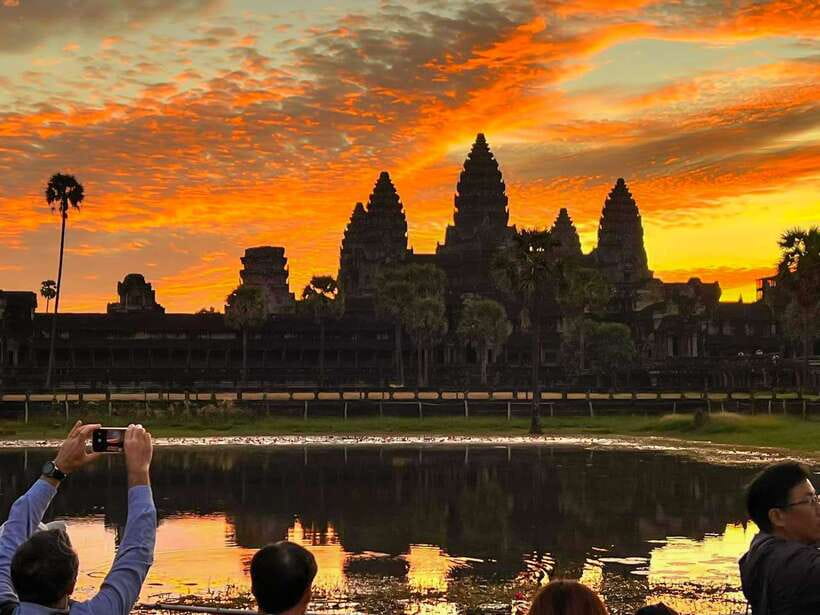
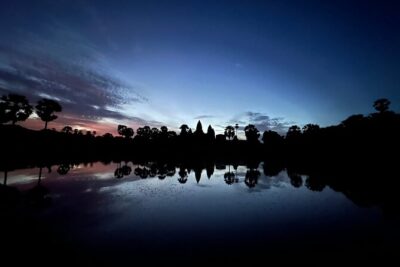
Sunrise itself depends on the weather. Some mornings produce a glowing reflection and a clean outline of the towers. Other mornings are gray or cloudy. I would treat the sunrise as a bonus rather than a promise, because even a disappointing sky still puts you inside Angkor Wat at the quietest and coolest part of the day.
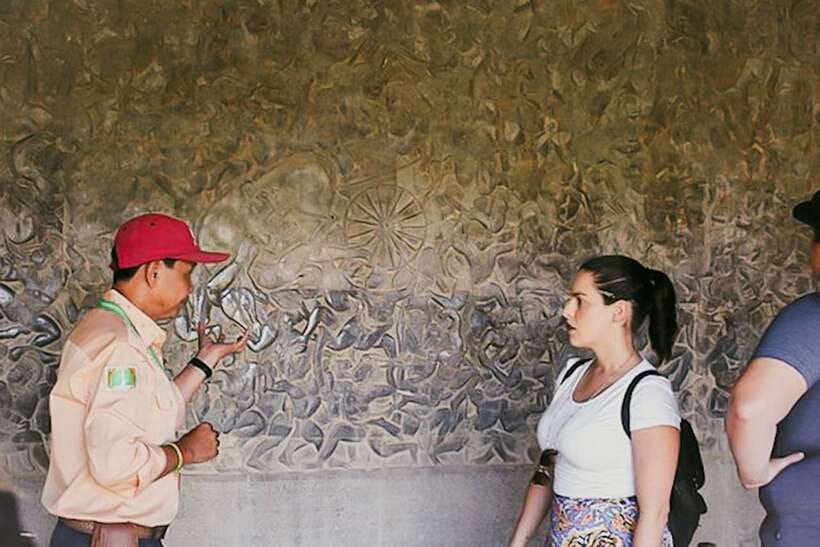
After the sky brightens, the guide takes you through Angkor Wat rather than leaving you with only a photo stop. This is where a good guide earns the fee. The temple was built under the Khmer Empire as a Hindu sanctuary dedicated to Vishnu, and its galleries, towers, courtyards, and reliefs carry ideas about kingship, faith, and the universe.
The strongest guides adjust their explanations to the group. Pheap has been praised for lively storytelling and useful photo help, while Sayon is noted for explaining history and pointing out details that are easy to miss. You may have a different guide, but the repeated pattern is clear: expect a guide-led visit, not a silent transfer between monuments.
Ta Prohm shows nature and stone in collision
Ta Prohm is the day’s movie-famous stop, but its appeal is older than its appearance in Tomb Raider. Trees push over walls and roots wind through doorways, giving you a vivid sense of how the forest can reclaim a great religious complex.
The temple is also full of carved figures and narrow passages. Your guide can help you see the difference between damage caused by time, weather, vegetation, and human activity. Go slowly here. The uneven stone and tight spaces make Ta Prohm more tiring than a simple walk around an open courtyard.
Arriving earlier than some larger groups is one of the useful aims of the morning schedule. It cannot remove every visitor, but timing helps. If you want photographs without a crowd filling every doorway, listen when your guide suggests a particular angle or waits for a gap.
Bayon and Ta Keo add scale and effort
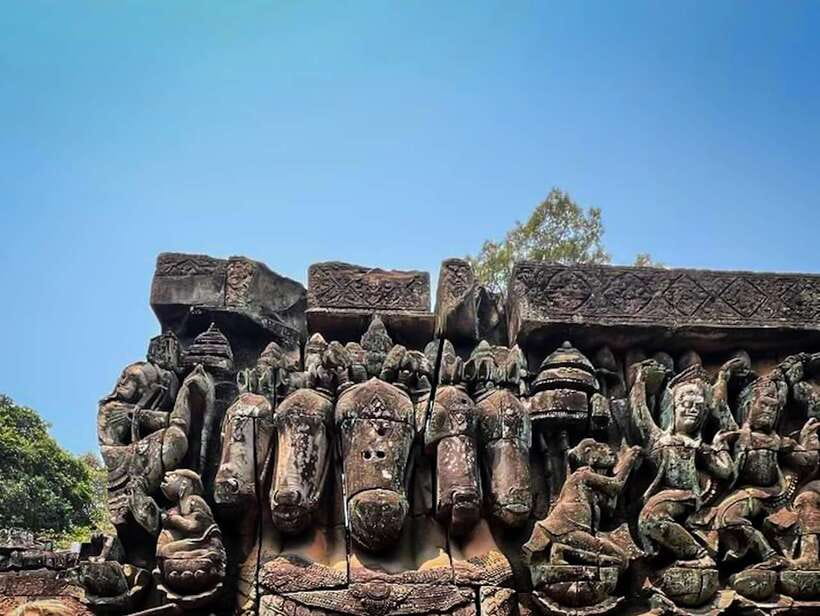
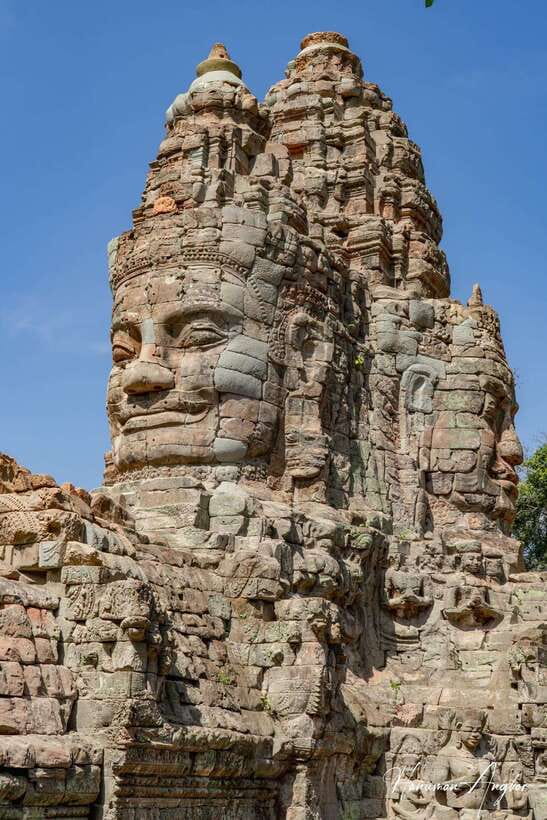
Bayon, at the center of Angkor Thom, is famous for its enormous smiling faces. The towers can feel almost playful from a distance, then more mysterious as you walk among them and see faces looking in several directions.
The temple was built during the reign of Jayavarman VII and is associated with Buddhist royal power. Its layers can be confusing without help, since later changes and mixed religious imagery appear across the site. A clear guide turns those changes into a story about how temples were used and reshaped over time.
Ta Keo provides a different experience. This is a mountain temple built in the 10th century, and you climb between steep stone levels to understand its design. The stairs and uneven ground require care, especially after several hours in the sun. Wear proper walking shoes and do not treat this as a quick photo stop.
The day closes at the South Gate of Angkor Thom. The approach is memorable: rows of gods and demons pull at the body of a seven-headed naga, creating a dramatic bridge over the moat. It is one of the best places to appreciate how Khmer builders used sculpture to frame an entrance, not merely decorate a wall.
You return around 1 p.m., though exact timing can vary. That early finish gives you a chance to eat, cool down, and recover before the next day.
More Angkor temple itineraries:
- Siem Reap: Full-Day Angkor Wat Guided Tour with Sunset
4.9 · 3,803 reviews - Angkor Wat Highlights and Sunrise Guided Tour from Siem Reap
5.0 · 3,213 reviews - Angkor Wat Sunset Small Group Tour with Lunch Included
5.0 · 3,059 reviews - Full-Day Angkor Wat Sunrise Private Tour with Guide from Siem Reap
5.0 · 2,920 reviews
Day two reaches the quieter temples
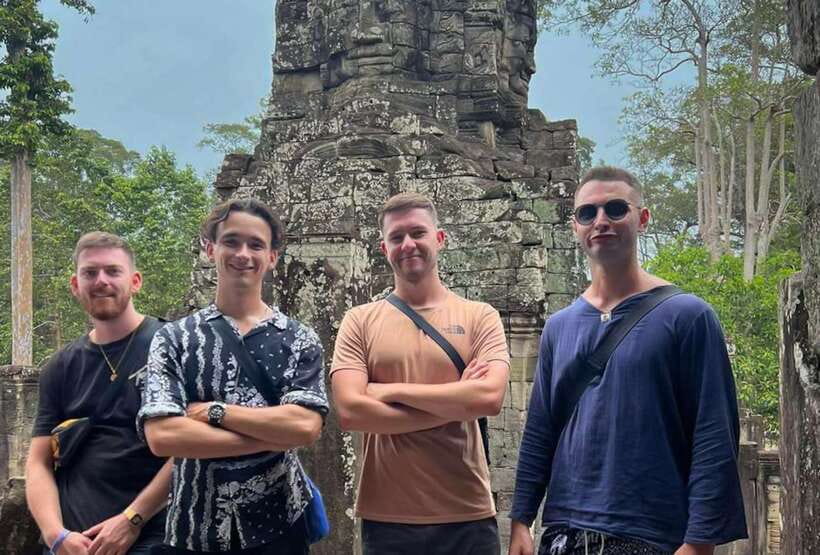
The second day starts later, around 10:30 a.m., and finishes near 7 p.m. This is kinder to your sleep, though the later hours bring more heat. The day visits the temples on the grand circuit, where the stops feel less repetitive because each has a clear character.
Preah Khan is one of the largest temples on this route. It was built by Jayavarman VII for his father and contains long galleries, courtyards, carvings, and a sense of movement through several layers of stone. Give yourself time to notice how the complex opens and narrows as you walk.
Neak Pean is smaller and more unusual. The central island temple sits within a system of water, which was used for bathing and health during the Angkor period. The walk toward it helps you understand the importance of water engineering in the ancient city, even before you reach the structure itself.
Ta Som is a favorite for visitors who like atmospheric details. A large tree covers the east gate, and the temple has sculptures of dancers with long hair. It was built for the king’s sister, giving the guide a chance to explain how royal family members were remembered through religious buildings.
Several people find day two more rewarding than expected because these sites can feel less crowded than Angkor Wat, Bayon, and Ta Prohm. That does not mean you will have every temple to yourself, but the pace can feel more relaxed. You get room to look, ask questions, and photograph details instead of following a dense stream of people.
East Mebon and Pre Rup explain old Khmer design
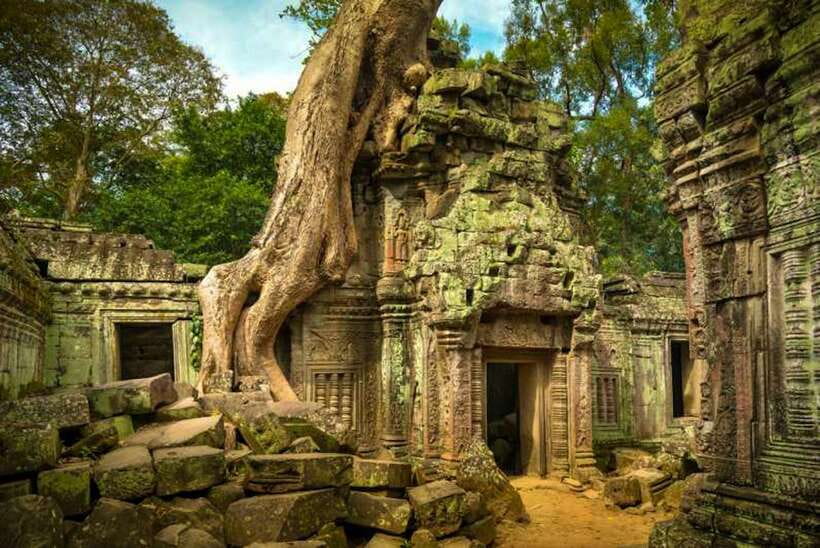
East Mebon was built for the ancestors and once sat in the middle of a reservoir. Today, the water is gone, so it takes a guide’s explanation to help you picture the original setting.
The temple dates as early as the 10th century and gives you a useful contrast with the later work of Jayavarman VII. Elephants, towers, and carved stone details help show how Khmer temple design changed across different reigns and religious settings.
Pre Rup was built by a king for himself. Its name and form have led some people to mistake it for a crematorium, but the stone structure that resembles a coffin was used by Hindus for meditation during the full moon.
This is a good example of why the guide matters. Without an explanation, you may notice a staircase, tower, or carved figure and move on. With context, the structure becomes part of a larger story about royal power, ritual, ancestors, and the relationship between earthly life and the heavens.
Sunset brings a fitting finish
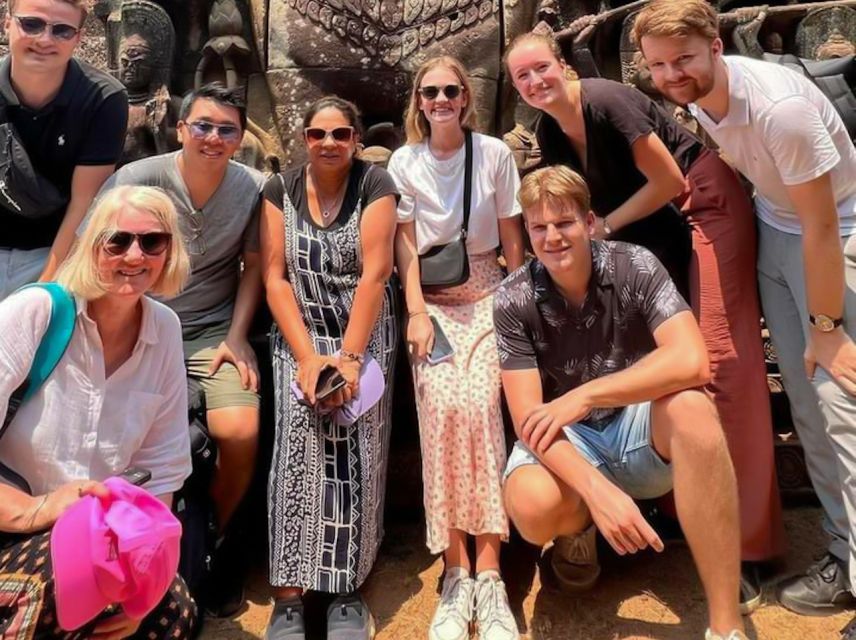
The final stop is Phnom Bakheng, a hilltop temple with 33 towers representing the heavens. Reaching the top requires a walk uphill, and the sunset timing means you may be tired by then.
Still, the finish has a clear emotional logic. After two days of moving through temples built for gods, kings, ancestors, and family members, you end above the trees as the light fades. The view and the temple’s symbolic design give the trip a closing moment rather than ending at an ordinary roadside stop.
Sunset is just as weather-dependent as sunrise. Plan for a beautiful scene, but do not judge the whole experience by the sky. The climb, the temple design, and the final explanation remain worthwhile even when clouds soften the colors.
Guides make the difference
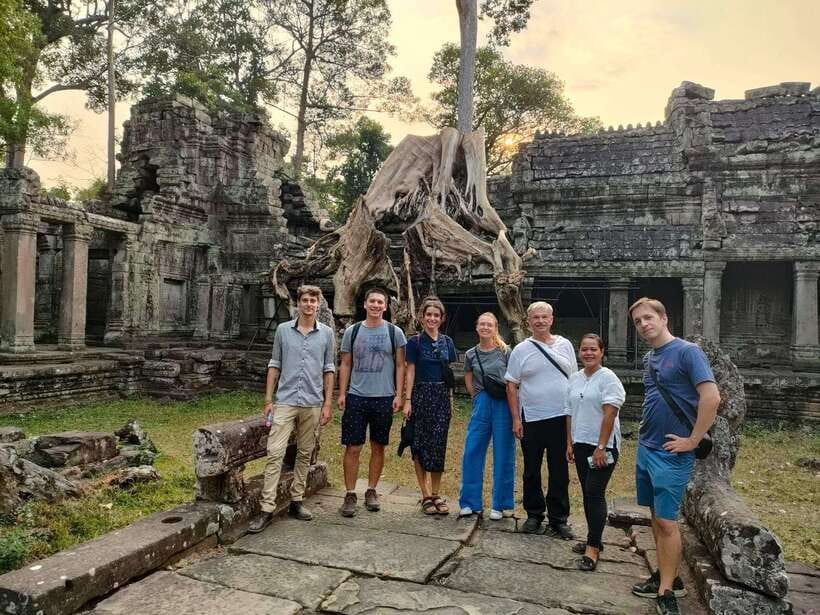
This tour’s strongest feature is the human one. Guides including Sam, Sok, Sary, Vone, John, Nick Kosal, Pheap, Heang, Sayon, and Pip are praised for different strengths: history, humor, photography, organization, and patience.
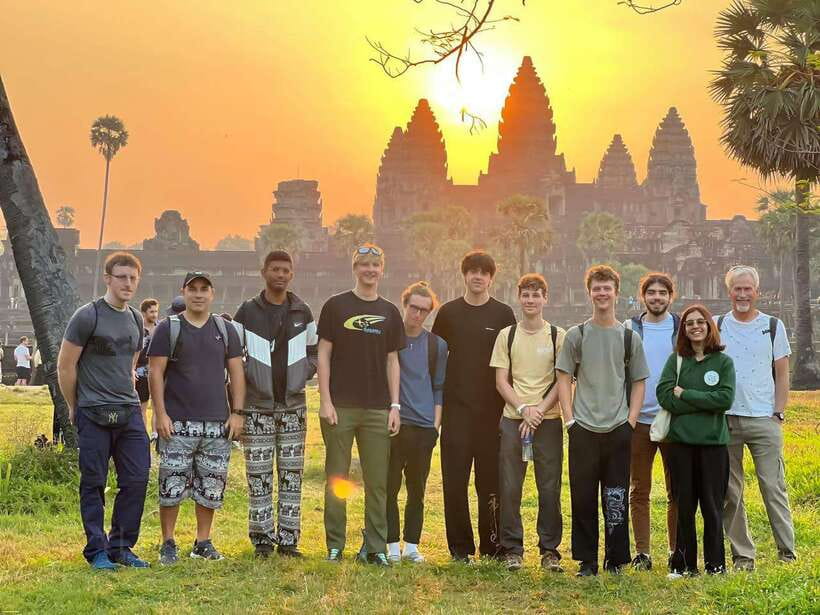
Nick Kosal is noted for keeping the day moving and using humor during the early start. Vone is praised for explaining temple design, symbolism, religion, and Cambodian culture in a clear way. Several guides help with group photos, and some carry a sharp eye for the best viewing points.
That matters because two full temple days can become a blur. You need someone to mark the difference between a Hindu sanctuary, a Buddhist state temple, a royal foundation, and an ancestor site. You also need someone who knows when to stop talking and let you look.
The guides also appear attentive to physical limits. One guide slowed down for a child struggling with heat, while another helped visitors with knee and foot problems manage steps. That does not make the tour easy, but it suggests you can ask for a slower pace when needed.
Heat, clothes, and practical comfort
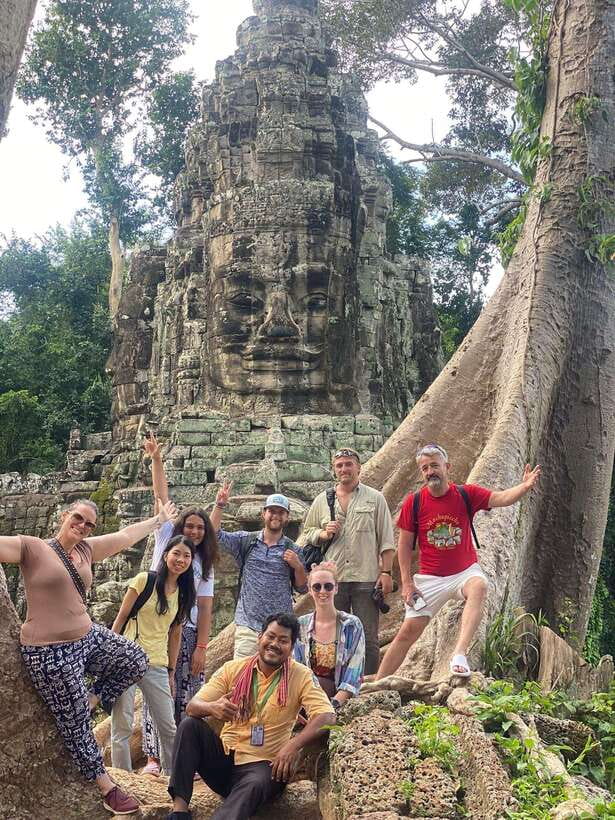
The air-conditioned minibus is more than a transport detail. After walking across sunlit stone, stepping into a cool vehicle can restore you for the next stop. Cold water and refreshing wipe towels are also provided, often after stops, and several visitors found these small items especially useful.
Bring sunglasses, sunscreen, comfortable clothes, and a charged smartphone. You should also carry the right temple clothing. Shorts, short skirts, and sleeveless shirts are not allowed, so choose clothing that covers your shoulders and knees.
Meals are not included. Food and rest breaks are built into the long days, but you pay for what you eat. One practical caution: lunch can take longer than some people want, so tell your guide if you would rather keep the break brief and spend more time at the temples.
The tour is listed as wheelchair accessible in one section, but it is also marked as not suitable for wheelchair users, and the schedule includes uneven ground, stairs, hills, and long walks. I would contact the provider before booking if you use a wheelchair or have serious mobility limits. It is also not recommended for people over 70, according to the provided conditions.
What you are really paying for
The $34 fee covers hotel pickup and drop-off, an air-conditioned minibus, an English-speaking guide on two separate days, visits to 11 temples, water, wipe towels, and local tax. You still need to buy the Angkor Archaeological Park pass yourself, either online through the government website or at the ticket office after pickup. Meals are extra.
For two long days with a guide and transport, that is strong value. You avoid arranging separate rides between widely spaced temples, and you gain explanations that are difficult to assemble on your own in the heat.
The tradeoff is a fixed schedule. You will see many sites, but you cannot linger indefinitely at one favorite temple. Private or small-group options are available, so choose the smaller format if you value questions and a more flexible feel.
Who should book this two-day Angkor plan?
I would choose this tour if you have limited time in Siem Reap, want the main temples explained properly, or prefer not to negotiate transport each morning. It is also a good fit for solo visitors who want company without committing to a large sightseeing coach.
Families can manage it if children tolerate early mornings, heat, walking, and stairs. The guide’s ability to slow down can help, but the days remain demanding.
I would think twice if you dislike early starts, group schedules, long walks, or hot weather. You might prefer a private tuk-tuk and shorter visits spread over more days. If you have mobility concerns, confirm the conditions before paying.
Cancellation is free up to 24 hours before the activity, and you can reserve now and pay later. Pickup requires an accurate hotel address and an early readiness time.
Should you book it?
Book this tour if you want a well-organized introduction to Angkor and value clear explanations over complete freedom. The first day delivers the essential icons, while the second adds quieter temples, varied architecture, and a sunset ending.
Skip it if you want to set your own pace or spend an entire morning at one monument. For most visitors who want to understand what they are seeing, $34 is a sensible starting point, provided you budget separately for the temple pass, food, and the physical effort of two full days.
FAQ
Does the tour include the Angkor temple pass?
No. You must purchase the Angkor Archaeological Park entry ticket separately, either online through the government website or at the ticket office after pickup.
How early does the first day start?
Day one starts around 4:30 a.m. for the Angkor Wat sunrise. You should be ready at least 30 minutes before the stated pickup time.
What time does the second day finish?
Day two runs approximately from 10:30 a.m. to 7:00 p.m., including the sunset portion of the visit.
Which temples are included?
The two days cover 11 temples and sites, including Angkor Wat, Ta Prohm, Bayon, Ta Keo, the South Gate of Angkor Thom, Preah Khan, Neak Pean, Ta Som, East Mebon, Pre Rup, and Phnom Bakheng.
Are meals included?
No. Meals are not included, although the schedule includes occasional food and rest breaks.
What clothing is required?
Shorts, short skirts, and sleeveless shirts are not allowed. Bring comfortable clothing that covers your shoulders and knees, along with sunglasses and sunscreen.
Is the tour suitable for wheelchair users?
The information is conflicting: the activity is marked wheelchair accessible in one place but also listed as unsuitable for wheelchair users. Because the route includes uneven temple ground, steps, and a hill, contact the provider before booking if you use a wheelchair.
More Morning in Siem Reap
- Angkor Wat Sunrise & 3 Main Temples with Breakfast – Small Group
5.0 · 2,857 reviews - Siem Reap: Angkor Wat Sunrise and Full-Day Sightseeing Tour
4.9 · 2,828 reviews - Angkor Wat: Highlights and Sunrise Guided Tour
4.9 · 1,586 reviews - Kompong Phluk Floating Village Half-Day Tour ( Morning / Sunset )
5.0 · 1,494 reviews
More Evening Experiences in Siem Reap
- Sunset tour of Kampong Phluk stilts home village on the Tonle Sap
5.0 · 4,865 reviews - Angkor 2-Day Sunset & Sunrise Small-Group Tour
5.0 · 2,567 reviews - Siem Reap: Angkor Wat Sunrise or Sunset Guided Tour
4.9 · 2,123 reviews - Siem Reap Floating Village Kampong Phluk Sunset with Boat
5.0 · 1,962 reviews
Fresh reviews from around Siem Reap
- Full-Day Tour Preah Vihea & Koh Ker Temple 3.7 · 3 reviews
- Savor the Countryside: Tours with Authentic Cooking Classes” 5.0 · 3 reviews
- Angkor Wat Sunrise TukTuk Tour 5.0 · 3 reviews
- Angkor Grand Circuit Tour & Banteay Srei 5.0 · 3 reviews
- Guided Private Tuk Tuk Tour Angkor Wat and Small Circle and Five Extras 5.0 · 3 reviews
- Siem Reap Temple Tour 2-Day with Sunrise/Sunset 3.7 · 3 reviews
- Bangkok to Angkor Wat 2 Days 1 Night by Flight 4.5 · 3 reviews
- Siem Reap: Prek Toal Tonle Sap Biosphere Reserve Tour 3.1 · 3 reviews
Angkor Wat Sunrise Tours, compared.

Angkor Wat Sunrise or Sunset Tour with Guide from Siem Reap
Read our review →

Angkor Wat Sunrise tour with Small – Group and Guide tours
Read our review →
Angkor Wat Highlights and Sunrise Guided Tour from Siem Reap
Read our review →
Full-Day Angkor Wat Sunrise Private Tour with Guide from Siem Reap
Read our review →
Angkor Wat Sunrise & 3 Main Temples with Breakfast – Small Group
Read our review →
Browse the lists this tour appears in