
Reviewed · HISTORICAL TOURS
2 Days Guided Historical Tour in Angkor
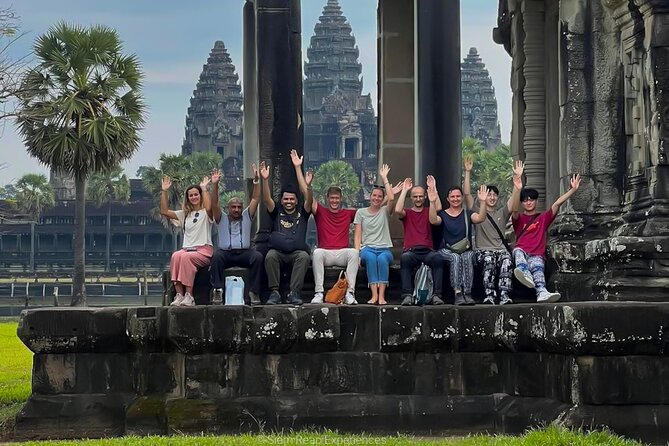
Angkor Wat at sunrise is only the opening act here. Over two days, you move from the grand towers of Angkor Wat to Bayon’s giant stone faces, Ta Prohm’s tree-covered ruins, and quieter temples such as Ta Som and Preah Khan. Guides including Sam, Vone, Heang, and Sayon are praised for clear stories, humor, patience, and help with photographs.
I like the broad temple mix and the practical care: hotel pickup, an air-conditioned vehicle, cold water, and wet towels matter when the heat builds. I also like the small-group limit of 15, which gives you a better chance to ask questions than on a large coach tour.
The main drawback is the early start and physical demand. You leave around 4:30 a.m., walk across uneven temple grounds, and pay an extra $62 for the Angkor temple pass. Meals are also separate, and one scheduling complaint shows that you should confirm pickup details carefully.
In This Review
- Key points to know before booking
- Why two days works better than one
- The 4:30 a.m. start and Angkor Wat sunrise
- Angkor Thom South Gate and Bayon’s smiling faces
- Ta Keo, breakfast, and Ta Prohm
- Pre Rup brings a different kind of temple
- Ta Som and Neak Pean
- Preah Khan deserves its two hours
- The short Phnom Bakheng stop and sunset plan
- What the $35 price really covers
- Comfort, walking, and group pace
- Pickup details and one caution
- Who should book this Angkor tour?
- Should you book the two-day Angkor circuit?
- FAQ
- How long is the tour?
- What time does the tour start?
- Is hotel pickup included?
- How many people can join the group?
- Is the Angkor temple ticket included?
- Are meals included?
- What is included in the tour price?
- Which temples are included?
- Can I cancel for a full refund?
Key points to know before booking
- Sunrise begins at Angkor Wat: You start before dawn and then spend about two hours inside Cambodia’s best-known temple.
- Two different temple days: Day one covers the famous central sights, while day two focuses more on outlying and less crowded ruins.
- Guides add real value: Sam, Vone, Heang, Pheap, Sem, and Sayon are among the named guides praised for history, stories, humor, and patience.
- Comfort is built into the price: Hotel pickup, an air-conditioned vehicle, cold water, and wet towels are included.
- The advertised cost is not the final cost: The tour is $35 per person, but the temple ticket costs $62 per person and meals are not included.
- Expect heat and walking: The schedule is full, though the vehicle gives you regular chances to cool down and rest.
Why two days works better than one
Angkor is not a single monument. It is a huge archaeological area with temples spread across a broad zone outside Siem Reap. A rushed one-day visit can cover the famous names, but it often leaves little time to understand how the temples differ.
This tour gives you a useful split. The first day is built around the major sights most people want to see: Angkor Wat, Angkor Thom, Bayon, Ta Keo, and Ta Prohm. The second day moves farther through the complex, with Pre Rup, Ta Som, Neak Pean, Preah Khan, and Phnom Bakheng.
That mix matters. You get the iconic photographs, but you also see smaller sites where the scale feels calmer. Day two is especially useful if you want more than a quick visit to Angkor Wat itself.
The pace is still active. The schedule allows roughly six to seven hours of temple visits each day, before driving and breaks. You will not spend every minute walking, but you should be comfortable being on your feet for long stretches in hot weather.
More Angkor temple itineraries:
- Angkor Wat Sunrise or Sunset Tour with Guide from Siem Reap
5.0 · 12,109 reviews - Siem Reap: Angkor Wat: Small-Group Sunrise or Sunset Tour
5.0 · 9,444 reviews - Siem Reap: Angkor Wat 2-Day Tour with Sunrise and Sunset
4.9 · 4,429 reviews
The 4:30 a.m. start and Angkor Wat sunrise
Pickup begins at about 4:30 a.m. from your hotel or the stated meeting area near the Pub Street and Angkor Night Market zone. That early departure is necessary for sunrise, but it is not gentle. Arrange your clothes, shoes, and water bottle the night before so you can leave without fuss.
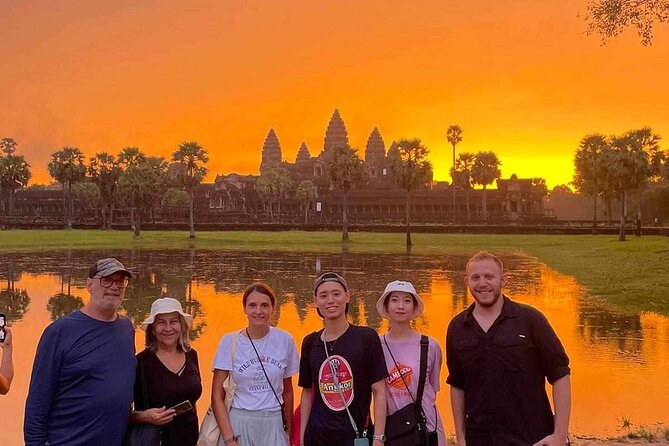
At Angkor Wat, you watch the sky brighten behind the temple towers before entering with your guide. The experience then shifts from photography to close inspection of the galleries, carvings, courtyards, and monumental layout.
Allow about two hours here. Your guide explains the temple’s design and religious purpose, then gives you time to look around and take photographs. That balance is important. A nonstop lecture can make a large site tiring, while too little explanation leaves you staring at stone without context.
A flashlight is useful for the pre-dawn walk. One French-speaking visitor found the English explanations difficult to follow, so ask in advance if a Francophone guide is essential for you. The supplied details do not promise language choice, so do not assume it is available.
Angkor Thom South Gate and Bayon’s smiling faces
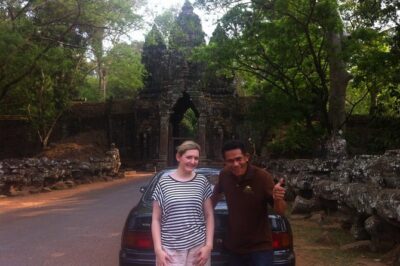
After Angkor Wat, the route heads to the South Gate of Angkor Thom. This 12th-century entrance has a causeway lined with stone figures and a gate decorated with carved faces. It is a short stop, around 30 minutes, but it helps you understand that Angkor was a planned royal city, not just a collection of isolated temples.
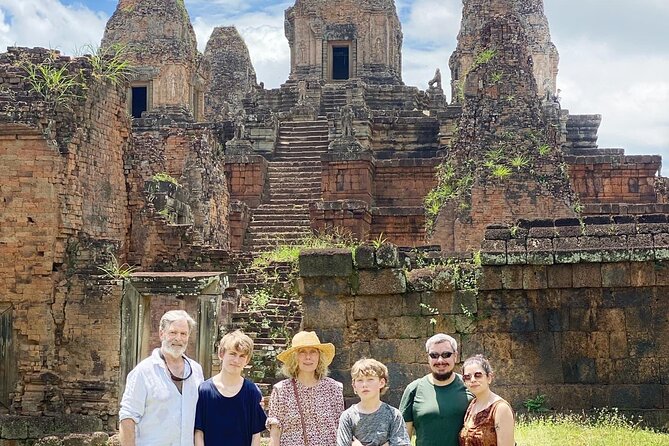
Bayon receives much more time, about two hours. This is one of the most distinctive stops in the complex, thanks to its towers carved with enormous faces. The temple is associated with Buddhism and was built in the late 12th or early 13th century as the state temple of its period.
Bayon can feel confusing at first. Towers, galleries, narrow passages, and carvings overlap in a compact space. A good guide makes a difference here by pointing out details you might miss and explaining how the temple’s arrangement differs from Angkor Wat.
The named guides Sam and Heang are particularly associated with detailed explanations of Cambodian and Khmer history. Vone is also praised for adding humor, taking photographs, and noticing small details. Guide quality can vary by departure, but the operator has several well-regarded guides in its rotation.
Ta Keo, breakfast, and Ta Prohm
Ta Keo is a steep temple-mountain built largely from sandstone. Its hard, geometric form feels different from the carved galleries at Angkor Wat and the crowded towers of Bayon.
The schedule includes a breakfast break before entering Ta Keo. Breakfast is not included, so bring cash or plan to buy food at the stop. This break is welcome after the early morning, although the extra cost is worth remembering when you compare the tour’s low headline price.
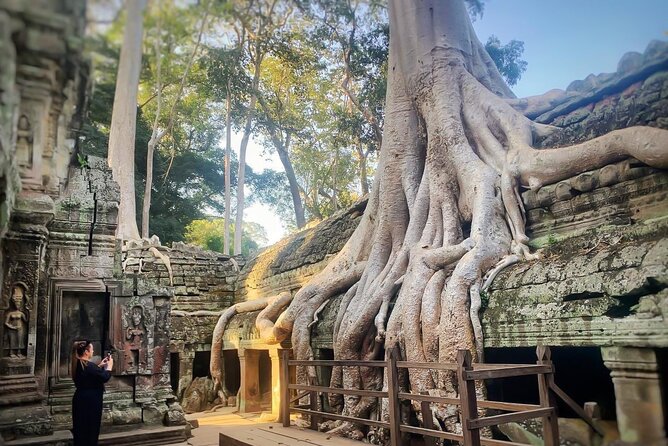
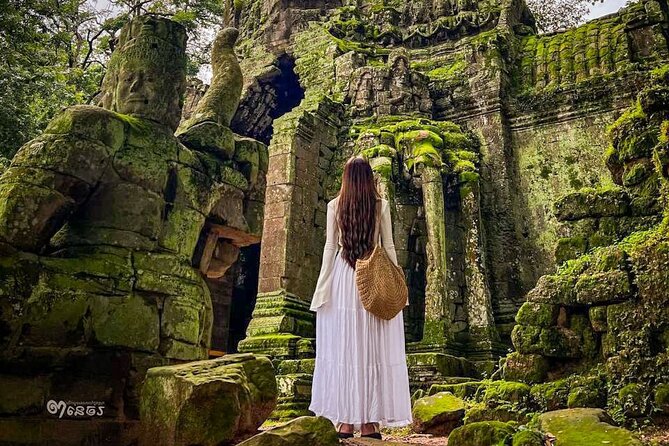
Ta Prohm is the day’s most atmospheric stop. The temple is known for its stone corridors and trees growing around, over, and through the ruins. The setting helped make it famous, but the temple is more than a photo backdrop. Your guide can help you see its structure and carvings beneath the roots and shadows.
You get about one hour at Ta Prohm. That is enough for a focused visit, though you may wish it were longer if photography is your main goal. The route is designed to keep moving, so do not count on wandering every corner.
Day one is the more demanding morning. You start before dawn, visit several major temples, stop for breakfast, and continue through the heat. The vehicle, cold water, and wet towel help, but they do not remove the need for sensible footwear, sun protection, and a realistic pace.
More temple and heritage days near Siem Reap:
- Siem Reap: Banteay Srei and Grand Circuit Heritage Tour
4.9 · 163 reviews - Banteay Srei and Grand Circuit Heritage Tour from Siem Reap
5.0 · 142 reviews - Angkor World Heritage with Sunrise – Small Group
5.0 · 32 reviews - 3-Day Tour (The Historical of Khmer Empire)
5.0 · 20 reviews
Pre Rup brings a different kind of temple
Day two begins at Pre Rup, a Hindu temple built in the 10th century as the state temple of King Rajendravarman. It is a temple-mountain made with brick, laterite, and sandstone, giving it a different color and texture from the later stone monuments.
The planned visit lasts about two hours. That is generous enough to study the structure and climb only as far as you comfortably can. Pre Rup is also linked with sunset views in many Angkor itineraries, but this tour lists it as the first stop on day two and reserves the final part of the day for Phnom Bakheng.
The second day generally feels less crowded and less frantic than the first. If you prefer photographs without people in every background, this is one of the tour’s strongest features, particularly outside the busiest season.
Ta Som and Neak Pean
Ta Som is a smaller temple built at the end of the 12th century for King Jayavarman VII. Its scale makes it a useful contrast with Angkor Wat and Bayon. You can focus on the details instead of trying to take in another vast complex.
The visit is scheduled for about one hour. That gives you time to walk through the site, listen to the guide, and take photographs without the same sense of overload found at larger temples.
Neak Pean is unusual because it sits on an artificial island in a former reservoir. The temple is associated with Jayavarman VII and forms part of a water-based design rather than a conventional temple-mountain plan.
You spend about an hour here. The approach and setting are part of the appeal, so this stop rewards patience. It is less about entering a huge monument and more about seeing how water, sacred space, and royal planning worked together.
Preah Khan deserves its two hours
Preah Khan is one of the most substantial stops on day two. Built in the 12th century by King Jayavarman VII in honor of his father, it lies northeast of Angkor Thom near the large Jayatataka reservoir.
Two hours gives you room to appreciate its long corridors, courtyards, carved stonework, and changing light. The ruins can feel more open and less immediately familiar than Ta Prohm, but that is exactly why a guide helps.
Sam is often praised for explaining the Khmer Empire and Cambodian history in a way that goes beyond dates and names. Sem is known for mixing historical facts with personal stories, which can make a long temple visit easier to follow. You should still expect the guide to speak to the group as a whole, not provide a private lecture.
Preah Khan is also where the tour’s broad route pays off. Instead of spending both days only at the most famous monuments, you get time at a site with its own character and historical role.
The short Phnom Bakheng stop and sunset plan
Phnom Bakheng is a Hindu temple-mountain dedicated to Shiva and built near the end of the 9th century under King Yasovarman. The listed schedule allows only two minutes here, which is plainly too short for a full temple visit.
Treat this as a sunset viewpoint stop or a brief final look rather than a detailed exploration. The tour description says you stay to watch the sunset, but the exact access and viewing time may depend on conditions and crowd management at the site. Ask your guide how much time is available once you arrive.
This is the least clearly described part of the schedule. If a long sunset visit at Phnom Bakheng is your main reason for booking, confirm the plan before departure. If you mainly want a full two-day circuit with sunset included as a bonus, the uncertainty matters less.
What the $35 price really covers
At $35 per person, the tour is inexpensive for two days of transport and guiding. The price includes an air-conditioned vehicle, hotel pickup and drop-off, a guide, cold water, wet towels, and visits to the listed temples.
The important catch is the temple admission fee. The Angkor pass costs $62 per person and is not included. Add that to the tour and your basic cost becomes $97 per person, before breakfast, lunch, or other meals.
That is still reasonable if you value transport and explanations. Hiring separate transport for two long days may cost less or more depending on your arrangement, but you would need to organize the route and find your own guide. Here, the main value is convenience and structure.
The small-group cap of 15 is another plus. It is not a private tour, and 15 people can still feel like a crowd at narrow temple passages. But it is more manageable than a full-size coach, especially when you need to hear instructions or regroup.
Comfort, walking, and group pace
You should expect heat, steps, uneven ground, and plenty of walking. One participant who managed only the first day still found that day worthwhile, but also described temperatures near 40 degrees and the need to rest in the vehicle.
The practical support is strong. Cold water is distributed during the day, wet towels help you cool down, and clean toilet breaks are built into the route. The air-conditioning gives you a proper reset between sites rather than leaving you exposed all day.
Guides such as Vone and Sayon are praised for keeping the group moving while allowing time for photographs and independent looking. That balance matters. You want enough structure to see the temples, but not such a tight schedule that every stop becomes a hurried checklist.
Wear shoes suited to walking and bring sun protection. The operator includes water, but meals are not included, so plan for food during the breakfast and lunch breaks.
Pickup details and one caution
Hotel pickup and drop-off are included in the Siem Reap area. The stated meeting point is behind the Angkor Night Market near Pub Street, and drop-off can be arranged at your hotel or somewhere around Pub Street.
Confirm the exact pickup time and location before the morning of the tour. One poor experience involved a guide calling only after leaving the hotel, followed by missed meetings at several temple stops. That appears to be an exception among otherwise strong feedback, but a 4:30 a.m. pickup is not the time to rely on vague instructions.
The booking confirmation is issued at the time of reservation. Most people can take part, and the group maximum is 15. Free cancellation is available if you cancel at least 24 hours before the local start time. Changes or cancellations inside that window are not accepted for a refund.
Who should book this Angkor tour?
I would choose this for a first visit to Angkor when you want the major sights plus a meaningful selection of smaller temples. It suits people who prefer a guide’s explanation but still want time to explore and take photographs on their own.
It is also a good fit if you do not want to arrange tuk-tuks, drivers, temple order, and meal stops yourself. The air-conditioned vehicle and regular water supply are especially useful during hot months.
I would think twice if you want a slow photographic itinerary, a private guide, or complete control over how long you stay at each site. The schedule is fixed, the group can reach 15 people, and the final Phnom Bakheng timing needs clarification.
Should you book the two-day Angkor circuit?
Book it if you want an affordable, well-organized introduction to Angkor with sunrise, sunset, the famous temples, and quieter sites included. The guides named Sam, Vone, Heang, Sayon, Pheap, and Sem are a strong part of the experience, especially for visitors who want more than a quick walk past old stones.
Budget for the $62 temple pass and meals, confirm your pickup details, and prepare for early mornings and heat. With those conditions understood, this is a practical way to see a large and complicated historic site without spending your entire trip arranging transport.
FAQ
How long is the tour?
The experience lasts two days, with each day including several temple stops and transportation between sites.
What time does the tour start?
The stated start time is 4:30 a.m., allowing you to reach Angkor Wat for sunrise on the first day.
Is hotel pickup included?
Yes. Hotel pickup and drop-off in Siem Reap are included. Drop-off can also be arranged at a hotel or another location around Pub Street.
How many people can join the group?
The maximum group size is 15 travelers.
Is the Angkor temple ticket included?
No. The temple admission ticket is separate and costs $62 per person.
Are meals included?
No. Meals are not included. A breakfast break is scheduled before visiting Ta Keo, and food costs are paid separately.
What is included in the tour price?
The $35 price includes an air-conditioned vehicle, a tour guide, cold water, wet towels, hotel pickup and drop-off, and visits to the listed temples.
Which temples are included?
The schedule includes Angkor Wat, Angkor Thom South Gate, Bayon, Ta Keo, Ta Prohm, Pre Rup, Ta Som, Neak Pean, Preah Khan, and Phnom Bakheng. The tour is advertised as covering 11 temples.
Can I cancel for a full refund?
Yes, if you cancel at least 24 hours before the experience start time. Cancellations or changes made less than 24 hours in advance are not accepted for a refund.
More 2-Day Experiences in Siem Reap
- Angkor 2-Day Sunset & Sunrise Small-Group Tour
5.0 · 2,567 reviews - 2 Days Exclusive Temple Highlights with Sunset and Sunrise Tour
5.0 · 1,157 reviews - Siem Reap: Angkor Sunrise 1- or 2-Day Guided Temples Tour
4.9 · 1,132 reviews - 2-Day Angkor Wat With Small, Big Circuit and Banteay Srei Tour
5.0 · 545 reviews
Fresh reviews from around Siem Reap
- Full-Day Tour Preah Vihea & Koh Ker Temple 3.7 · 3 reviews
- Savor the Countryside: Tours with Authentic Cooking Classes” 5.0 · 3 reviews
- Angkor Wat Sunrise TukTuk Tour 5.0 · 3 reviews
- Angkor Grand Circuit Tour & Banteay Srei 5.0 · 3 reviews
- Guided Private Tuk Tuk Tour Angkor Wat and Small Circle and Five Extras 5.0 · 3 reviews
- Siem Reap Temple Tour 2-Day with Sunrise/Sunset 3.7 · 3 reviews
- Bangkok to Angkor Wat 2 Days 1 Night by Flight 4.5 · 3 reviews
- Kompong Pluk Tour 5.0 · 3 reviews
Historical Tours, compared.
Banteay Srei and Grand Circuit Heritage Tour from Siem Reap
Read our review →
Private Angkor Wat Tour & Angkor Park/Heritage With Local Guide
Read our review →
Kulen Mountain Waterfall and Historical Wonders Private Tour
Read our review →
Browse the lists this tour appears in