
Reviewed · 2-DAY EXPERIENCES
2-Days in temples and other areas
Angkor is far more than one famous temple. This two-day private outing links the grand ceremonial spaces of Angkor Wat and Angkor Thom with quieter ruins, a small island temple, Banteay Srei’s fine carvings, and a boat trip on Tonle Sap. The guide, Narin, is also willing to adjust the pace and route to suit your group.
I like the private format, since you are not tied to a large bus group or a fixed pace. I also like the chance to reach less-visited ruins and add places such as the landmine museum when the guide can fit them in. The main caution is cost: at $261, you still pay separately for temple admission, meals, and the Tonle Sap boat.
In This Review
- Key points to know before booking
- Two days that show you more than Angkor Wat
- Day one: Angkor Thom, Bayon, Angkor Wat, and Ta Prohm
- Day two: Preah Khan and the eastern temple route
- Banteay Srei and its finely cut stone
- Tonle Sap and the floating villages
- What Narin adds to the experience
- Is $261 a fair price?
- Who should choose this private temple tour?
- Should you book it?
- FAQ
- How long is the tour?
- Where does the tour start?
- Is this a private tour?
- Which temples are visited on day one?
- Which temples are visited on day two?
- Are temple tickets included?
- Are meals included?
- Is the Tonle Sap boat included?
- What is provided during the tour?
- What should I wear for Angkor Wat?
- Can I cancel for a full refund?
Key points to know before booking
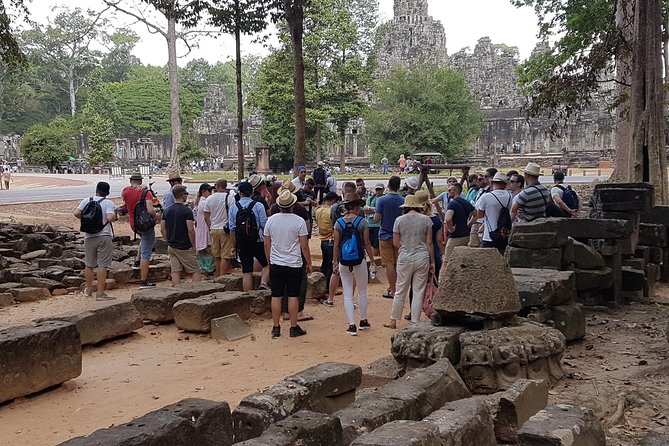
- Angkor Wat and Ta Prohm come first: Day one covers the essential temple circuit, including Angkor Thom, Bayon, Angkor Wat, and Ta Prohm.
- Banteay Srei adds a different style: This 10th-century shrine dedicated to Shiva and Parvati is known for especially fine carved detail.
- The second day reaches farther out: Preah Khan, Neak Pean, Pre Rup, and Banteay Srei give you a wider view of the Angkor area.
- Tonle Sap is an optional-cost finish: The floating villages are included in the plan, but the boat fee is paid by you.
- Narin gets strong praise: He is described as friendly, flexible, helpful, and good at explaining the temples and the area.
- Bring appropriate clothing: One visitor arrived in shorts and found that Angkor Wat requires covered knees and shoulders.
Two days that show you more than Angkor Wat
If you have only one day around Siem Reap, you can see Angkor Wat and a few major temples. Two days give you room to understand how broad the old Khmer capital was. You move from royal city gates and giant stone faces to quiet courtyards, laterite towers, carved lintels, and the water world of Tonle Sap.
The tour is private, with pickup from your hotel in Siem Reap, a guide, car or van, and drinking water. That matters in Cambodia’s heat. You can ask to slow down, move on, or change the order of stops rather than waiting for a full coach group.
The exact length is described as two days, with the second day listed at about seven hours. Day one follows the core Angkor sights. Day two reaches farther from the center and then heads to Tonle Sap. Since the schedule includes several major sites, expect full days rather than a casual temple stroll.
Other Siem Reap experiences to weigh up
- Siem Reap: Angkor Wat 2-Day Tour with Sunrise and Sunset
4.9 · 4,429 reviews - Angkor 2-Day Sunset & Sunrise Small-Group Tour
5.0 · 2,567 reviews - 2 Days Exclusive Temple Highlights with Sunset and Sunrise Tour
5.0 · 1,157 reviews
Day one: Angkor Thom, Bayon, Angkor Wat, and Ta Prohm
The first morning begins with hotel pickup and a visit to Angkor Thom, the enormous walled city associated with King Jayavarman VII. The city is not a single temple. It is a broad royal complex containing several important monuments, so your guide’s explanations help turn scattered ruins into a clear picture of how the center once worked.
Inside Angkor Thom, Bayon is the main attraction. Its towers carry the famous large stone faces, and the tight arrangement of galleries and towers makes it feel different from Angkor Wat. Look closely at the bas-reliefs as you walk. They show scenes of battles and daily life, giving you more than a grand view from a distance.
From there, the route includes Angkor Wat, the best-known monument in Cambodia and the centerpiece of most first visits. The scale can be hard to grasp at first. You have broad galleries, long sight lines, towers, courtyards, and detailed carvings to take in. A guide is particularly useful here because it is easy to spend your time taking pictures without noticing how the temple’s parts fit together.
Dress is not just a matter of comfort. Angkor Wat requires covered knees and shoulders. One person on this tour arrived in shorts and needed help finding suitable clothing, so pack a light cover-up and avoid assuming that hot weather changes the rules.
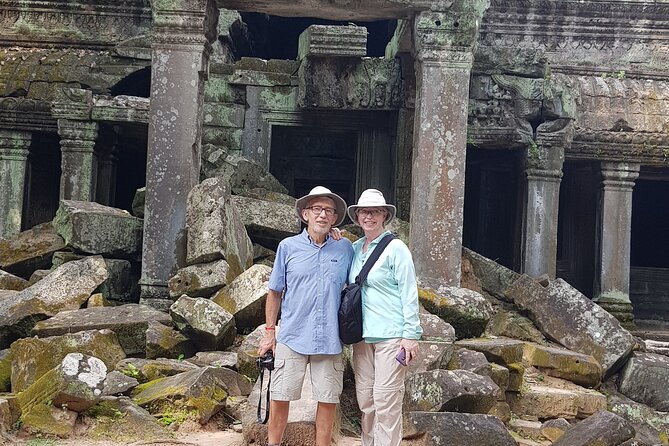
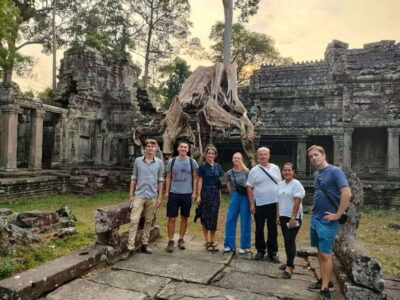
Ta Prohm provides a strong contrast to Angkor Wat’s formal design. The temple is known for its trees and partly enclosed ruins, with roots and stone sharing the same visual space. It is one of the most atmospheric stops, though it can also be one of the busiest. Your private guide can help you spend your time where the structure and carvings are most interesting instead of simply following the crowd.
Lunch takes place in the Angkor Archaeological Park, but the meal is not included. That gives you flexibility, but it also means the $261 price is not the final cost of the day. Ask your guide about the lunch stop and check prices before ordering.
After the temples, you return to your hotel. The evening is left open. The tour company suggests a traditional Khmer dance show or a Khmer circus, as well as local restaurants. These are optional activities and are paid for separately, but they make sense if you want to add a cultural performance without squeezing it into the temple schedule.
Day two: Preah Khan and the eastern temple route
Day two begins with Preah Khan, built by Jayavarman VII and dedicated in AD 1191. It probably served as a temporary royal residence while Angkor Thom was under construction. That detail gives the site a useful place in the larger story: it was not an isolated monument, but part of an active period of building and political change.
Preah Khan has long corridors, courtyards, and a mixture of religious and architectural features. It can feel less immediately familiar than Angkor Wat, which is part of its appeal. You have more room to notice the layout and decorative details without trying to take in one overwhelming central monument.
Next comes Neak Pean, an island temple in the center of the Jayatataka baray, or reservoir. The water setting makes it unlike the other stops. The temple is smaller, and the approach across the water gives you a change of pace after larger complexes. Do not judge this stop by size alone. Its position and design are the point.
Pre Rup is a Hindu temple built as the state temple of King Rajendravarman and dedicated in 961 or early 962. Its brick towers and raised form provide another clear change from the later Buddhist monuments associated with Jayavarman VII. If you want to compare periods and religious traditions, this is one of the most useful stops on the second day.
The itinerary uses the name Preruk in one place, but this refers to Pre Rup. Make sure you recognize it when checking your route or discussing the day with your guide.
Banteay Srei and its finely cut stone
Banteay Srei is a 10th-century Hindu temple dedicated to Shiva and Parvati. It is smaller than Angkor Wat, but its carved decoration is a major reason to include it. The detail is particularly fine, with carefully worked doorways, lintels, and decorative figures.
This temple also makes the second day feel different from the first. Day one gives you the giant scale of the central monuments. Banteay Srei is more intimate and precise. You will want time to look closely rather than rush through for a wide photograph.
The tour description does not promise a fixed amount of time at each site, which is one reason the private arrangement can help. Tell Narin what interests you. If you care about carvings, you can ask for more explanation at Banteay Srei. If heat or fatigue is becoming a problem, you can discuss the pace.
One useful point comes from the way this tour has been handled for past groups: Narin has adapted start times, route choices, and the amount of time spent at places according to the group. That is not a guarantee of every request, but it is a good reason to state your priorities early.
A different pace for your next Siem Reap morning:
- Angkor Wat Sunrise or Sunset Tour with Guide from Siem Reap
5.0 · 12,109 reviews - Siem Reap: Angkor Wat: Small-Group Sunrise or Sunset Tour
5.0 · 9,444 reviews - From Siem Reap: Kampong Phluk Floating Village Tour by Boat
4.9 · 6,979 reviews - Sunset tour of Kampong Phluk stilts home village on the Tonle Sap
5.0 · 4,865 reviews
Tonle Sap and the floating villages
After lunch, you head to Tonle Sap Lake and its famous floating villages. The boat is not included, so you pay that charge yourself. The lake visit is therefore best viewed as an add-on to the temple program, not a fully covered part of the $261 price.
Tonle Sap gives you a look at a different side of life in the Siem Reap area. The temples show royal power, religious practice, and stone construction. The lake shows communities shaped by water and boat travel. That contrast is valuable after two days among ruins.
The available details do not specify which floating village you visit, the boat type, or the length of the ride. Ask about those points before committing to the boat fee. Conditions and the experience can vary, and you should know the additional price in advance.
If your main goal is temple history, you may prefer a longer stop at the ruins and a shorter lake visit. If you want to see more of modern local life, Tonle Sap adds a useful change of subject. The private setup makes that preference easier to discuss.
What Narin adds to the experience
The guide can make or break a temple visit. Angkor is too large for a quick walk with no context, and the best details are often small: a carved scene, a change in religious use, or the reason a king built one monument beside another.
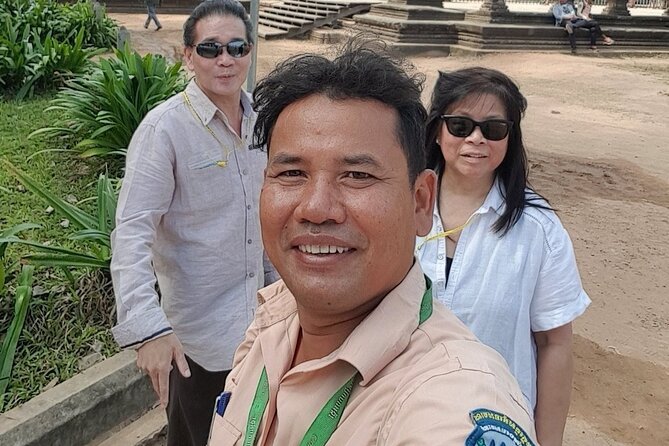
Narin is the named guide associated with this experience. He is described as friendly, flexible, helpful, and well informed about the temples and the surrounding area. He has also taken groups to remote temples that large groups do not usually reach, and one group visited the landmine museum with him.
That museum is not listed as a guaranteed stop in the main plan, so treat it as a possible extra rather than part of the promise. Still, it shows the kind of local adjustment worth asking about. If you have already seen the main circuit or want Cambodia’s modern history included, ask whether a side visit can fit.
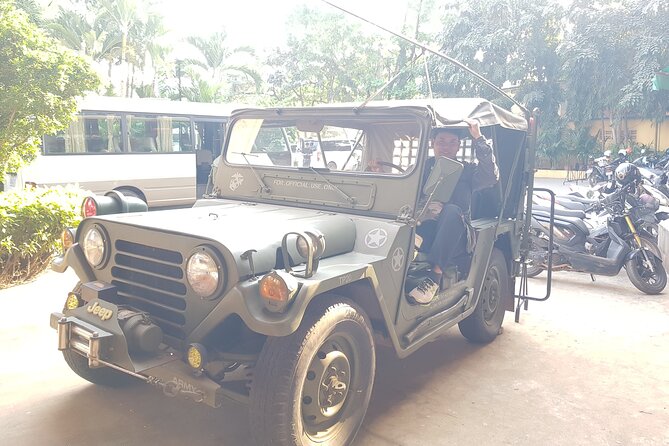
Transport includes a car or van and water. The driver is described as helpful, and the ride as comfortable. Since the tour is private, you are traveling only with your own group rather than sharing the day with strangers. That is especially useful for families and small groups with different walking speeds.
You should still expect a moderate level of physical fitness. The tour involves walking around temple grounds, uneven surfaces, and time outdoors. No special accessibility details are provided, so contact the operator before booking if mobility is a concern.
Is $261 a fair price?
The value depends on group size and how much flexibility matters to you. The price covers a private two-day service with a guide, car or van, water, and hotel pickup. It does not cover temple tickets, food, or the Tonle Sap boat, so you need to budget for those separately.
For a couple or family, a private vehicle and guide can be worth more than a cheaper shared outing. You get direct help with questions, a route shaped around your interests, and less time waiting for other people. The strongest value comes when you use that flexibility instead of treating the tour like a fixed bus itinerary.
For a solo participant, $261 may feel less attractive because the private cost is carried by one person. For a small group, the cost can make more sense, especially if you want a guide who can work at your pace.
The tour has a 5 out of 5 rating from 101 reviews and a 100 percent recommendation figure. Those numbers point to a very strong satisfaction record, especially for the guide, private format, transport, and willingness to adapt. They do not remove the need to check the extra costs.
Free cancellation is available if you cancel at least 24 hours before the start time. Changes made less than 24 hours ahead are not accepted, and poor weather may lead to a new date or a full refund.
Who should choose this private temple tour?
I would choose this for a first visit to Siem Reap when you want the main temples but also want more than a one-day highlight reel. The combination of Angkor Wat, Bayon, Ta Prohm, Banteay Srei, and Tonle Sap gives you a broad introduction.
It also suits families and small groups. Narin’s flexible approach can help if one person wants more explanation while another needs a break. The private car removes the pressure of matching a large group’s schedule.
You should think twice if you want every expense included in one upfront price. Temple admission, meals, and the boat cost extra. You may also prefer a shorter, more focused temple tour if two full days outdoors sounds tiring.
Tell the guide what matters to you before the first morning. You might want carvings, architecture, royal history, quieter ruins, photography, or a lake visit. The more specific you are, the more useful the private format becomes.
Should you book it?
Book this tour if you want a private two-day overview of Angkor with a named guide, hotel pickup, transport, and room to adjust the pace. It covers the major first-visit temples while adding Preah Khan, Neak Pean, Pre Rup, Banteay Srei, and Tonle Sap.
The best reasons to choose it are Narin’s reported flexibility, the chance of reaching less-visited sites, and the comfort of having your own vehicle. Before booking, confirm the temple ticket price, lunch arrangements, Tonle Sap boat charge, clothing rules, and any extra stops you hope to add.
FAQ
How long is the tour?
The experience lasts approximately two days. The second day is listed as seven hours, while the exact length of day one is not specified.
Where does the tour start?
Pickup starts in Krong Siem Reap, Cambodia, with hotel pickup offered.
Is this a private tour?
Yes. Only your own group participates in the private activity.
Which temples are visited on day one?
Day one includes Angkor Thom, Bayon, Angkor Wat, and Ta Prohm.
Which temples are visited on day two?
Day two includes Preah Khan, Neak Pean, Pre Rup, and Banteay Srei. The plan also includes Tonle Sap and its floating villages.
Are temple tickets included?
No. The temple ticket is not included in the tour price.
Are meals included?
No. Lunch and other food costs are paid separately by you.
Is the Tonle Sap boat included?
No. The boat cost is paid separately by you.
What is provided during the tour?
The tour includes a guide, car or van, and water. A paper ticket is also listed among the features.
What should I wear for Angkor Wat?
You should wear clothing that covers your knees and shoulders. Angkor Wat requires this standard of dress.
Can I cancel for a full refund?
Yes, if you cancel at least 24 hours before the experience start time. Cancellations made less than 24 hours ahead are not refunded.
Fresh reviews from around Siem Reap
- Full-Day Tour Preah Vihea & Koh Ker Temple 3.7 · 3 reviews
- Savor the Countryside: Tours with Authentic Cooking Classes” 5.0 · 3 reviews
- Angkor Wat Sunrise TukTuk Tour 5.0 · 3 reviews
- Angkor Grand Circuit Tour & Banteay Srei 5.0 · 3 reviews
- Guided Private Tuk Tuk Tour Angkor Wat and Small Circle and Five Extras 5.0 · 3 reviews
- Siem Reap Temple Tour 2-Day with Sunrise/Sunset 3.7 · 3 reviews
- Bangkok to Angkor Wat 2 Days 1 Night by Flight 4.5 · 3 reviews
- Siem Reap Countryside Sunset Vespa Tour or Tuk Tuk 4.5 · 3 reviews
2-Day Experiences, compared.



2 Days Exclusive Temple Highlights with Sunset and Sunrise Tour
Read our review →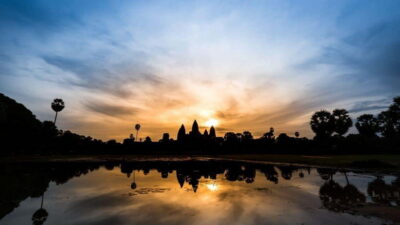
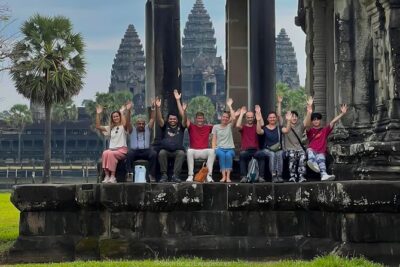
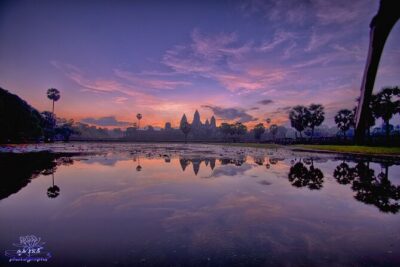
2-Day Angkor Wat With Small, Big Circuit and Banteay Srei Tour
Read our review →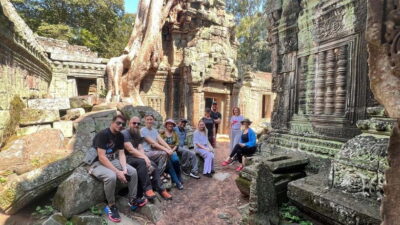
Angkor Wat 2-Day complex Sun rise & Sun set with Guided Tour
Read our review →Browse the lists this tour appears in