
Reviewed · ANGKOR TEMPLE TOURS
Angkor Wat 2-Day complex Sun rise & Sun set with Guided Tour
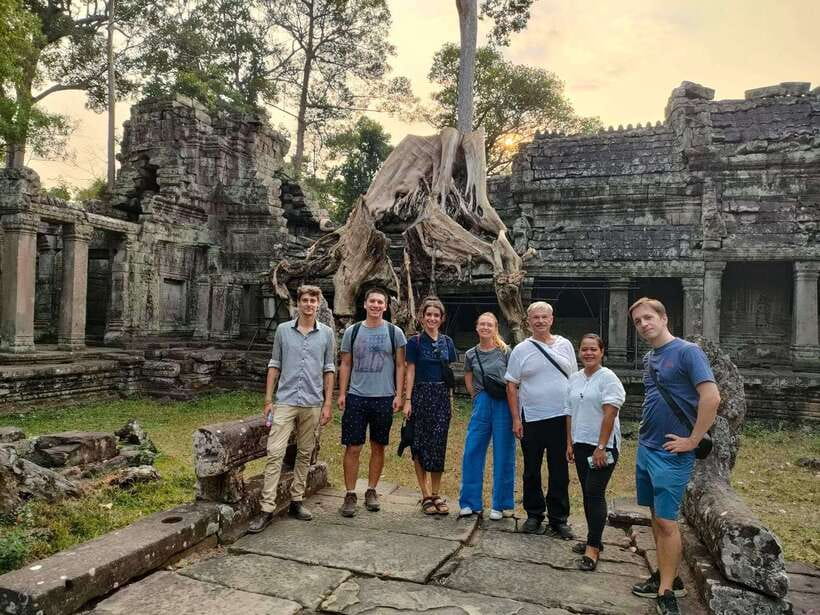
Angkor Wat is at its most memorable when the first sunlight reaches across the temple towers, but this tour gives you much more than one famous photograph. Over two days, you visit 11 temples, from the smiling faces of Bayon to tree-covered Ta Som and the hilltop towers of Phnom Bakheng.
I like the split between a sunrise small tour and a sunset big tour. I also like the air-conditioned minibus, cold water, and guides such as Sam, Sayon, John, and Nick, who are praised for clear history lessons and taking good photos. The main drawback is the very early first pickup. Some departures begin around 4:00am, which can leave you waiting in the dark before sunrise.
The $30 price is excellent for transport, guiding, water, towels, and two full days in the park. You still need to buy your Angkor Archaeological Park pass separately, and the long, hot days call for modest clothing, sunscreen, and sensible shoes.
In This Review
- Key points at a glance
- Two days that make sense at Angkor
- Before dawn at Angkor Wat
- Angkor Thom, Bayon, and the small tour
- Food, water, and the midday finish
- Day two reaches the outer temples
- Pre Rup and the wait for sunset
- Guides who add real value
- What the $30 price really covers
- Clothing, comfort, and who should book
- Small details that improve the experience
- Should you book the Angkor two-day tour?
- FAQ
- How long does the Angkor Wat tour last?
- What time is pickup on the first day?
- What time is pickup on the second day?
- Is the Angkor Archaeological Park ticket included?
- How many temples does the tour visit?
- Is food included?
- Is transportation provided?
- What language is the tour conducted in?
- What clothing should I wear?
- Can I cancel the booking?
Key points at a glance
- Sunrise at Angkor Wat: Arrive before dawn for the classic view across the temple pools and towers.
- Two different temple circuits: Day one covers the small tour, while day two follows the big tour with a sunset finish.
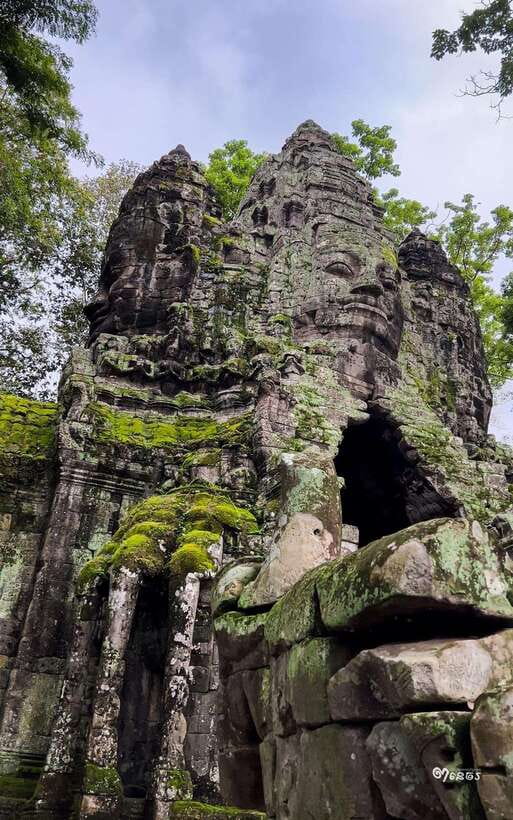
- Eleven temples included: You see major landmarks and quieter sites, including Banteay Kdei, Preah Khan, Ta Som, and East Mebon.
- Small groups of up to 13: The group size leaves room for questions and personal help with photographs.
- Air-conditioned transport: The cool minibus is a real benefit after walking in Cambodia’s heat.
- Pass not included: Budget separately for the Angkor ticket, priced at $37 for one day or $62 for two or three days.
Two days that make sense at Angkor
Angkor is too large for a quick visit, and this two-day format gives you a useful first look without forcing every temple into one exhausting day. Day one starts before sunrise and finishes around 1:00pm to 1:30pm. Day two begins around 10:00am to 10:30am and ends near 7:00pm.
That split matters. You get the best light at two famous viewpoints, but you also have time to listen, ask questions, and wander. The first day concentrates on the central temples. The second reaches farther around the park and has a more relaxed late-morning start.
The tour uses a different guide on each day. That can be a plus, since you hear two teaching styles and two views of Cambodian culture. Names frequently associated with this service include Sam, Sayon, John, Nick, Vone, Rith, Sary, and Pheap. You cannot assume a particular guide will be assigned, but the strongest comments consistently praise friendly explanations, humor, history, and help with photos.
More Angkor temple itineraries:
- Angkor Wat Sunrise or Sunset Tour with Guide from Siem Reap
5.0 · 12,109 reviews - Siem Reap: Angkor Wat: Small-Group Sunrise or Sunset Tour
5.0 · 9,444 reviews - Siem Reap: Angkor Wat 2-Day Tour with Sunrise and Sunset
4.9 · 4,429 reviews
Before dawn at Angkor Wat
Your first pickup is scheduled between 4:00am and 4:20am, with some departures described as early as 3:00am. You wait in your hotel lobby, then ride in an air-conditioned minibus to Angkor Wat. The driver holds a sign with your last name and waits no more than five minutes after the scheduled pickup, so be ready early.
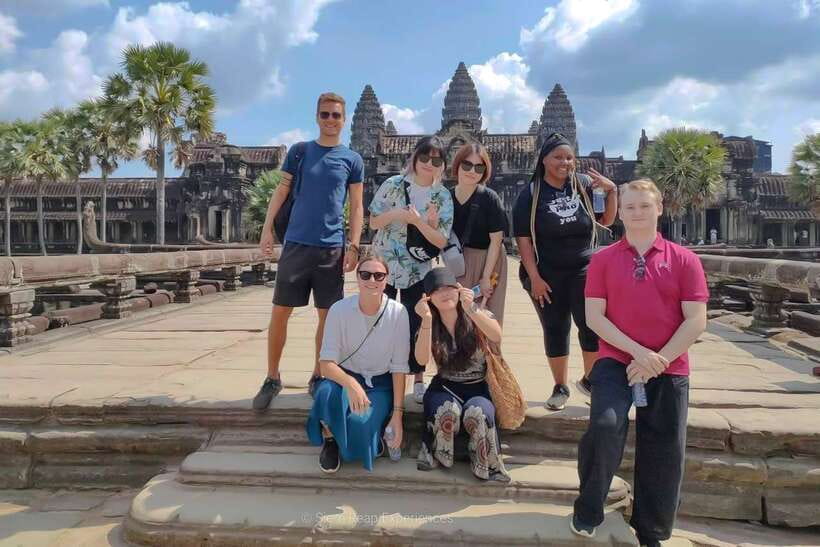
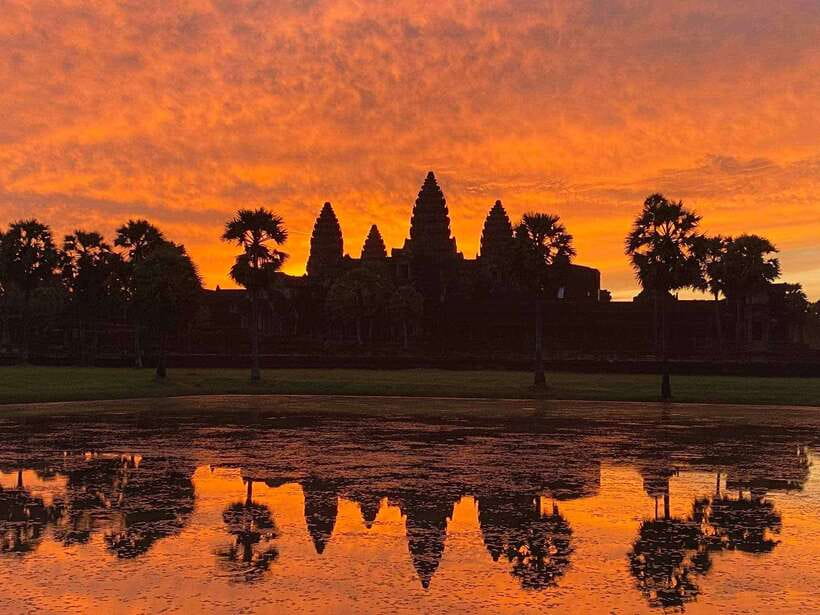
The point of this early start is clear: sunrise over Angkor Wat is one of Cambodia’s great sights. The temple towers appear in silhouette as the sky changes color, and the reflection across the water can produce the image you came to Siem Reap hoping to see.
There is a practical catch. Pickup times can be earlier than the actual sunrise by a wide margin. In winter, the sun may rise around 6:30am, and some people find themselves standing for about 90 minutes in darkness. Rainy-season cloud can also soften or hide the sunrise.
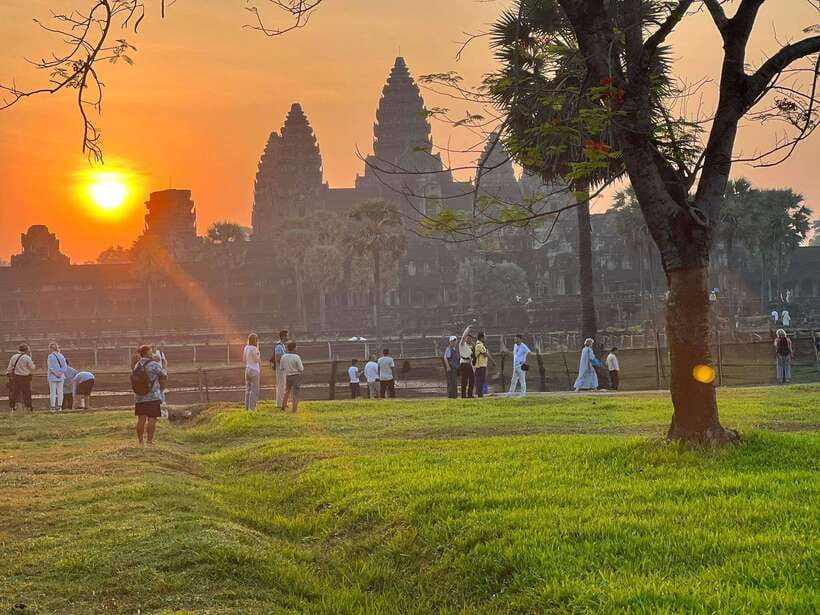
Bring a small flashlight or use your phone carefully, since paths can be uneven before daylight. You should also expect a crowd at this famous stop. Your guide can help position the group and suggest places for photographs, but no sunrise at Angkor Wat is likely to feel private.
Once the light improves, the guide explains the temple’s layout, carvings, and role in the Khmer empire. You get more from the enormous stone complex when someone points out what you are seeing instead of leaving you to walk past carvings without context.
Angkor Thom, Bayon, and the small tour
After Angkor Wat, day one continues to Angkor Thom, the great walled city that includes Bayon. The setting changes from a single monumental temple to a broad ceremonial center, and the scale can be hard to grasp without a guide.
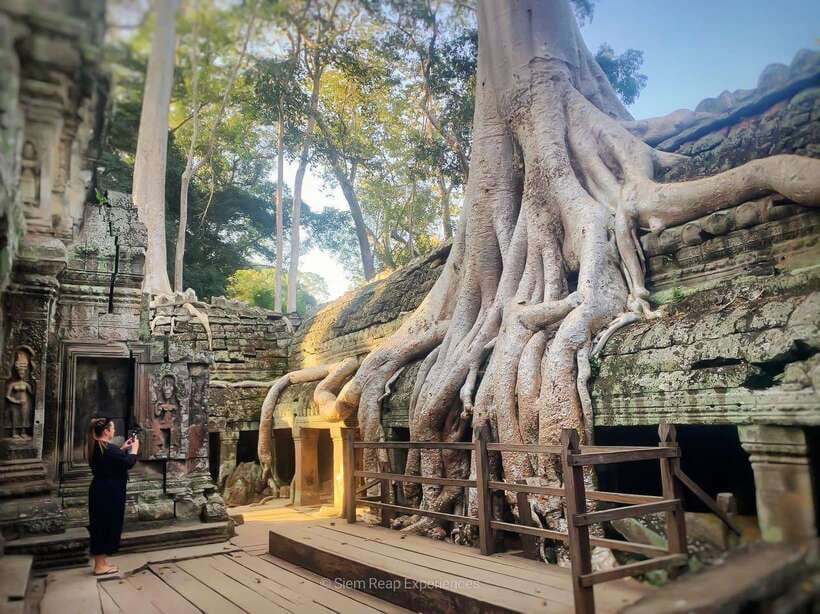
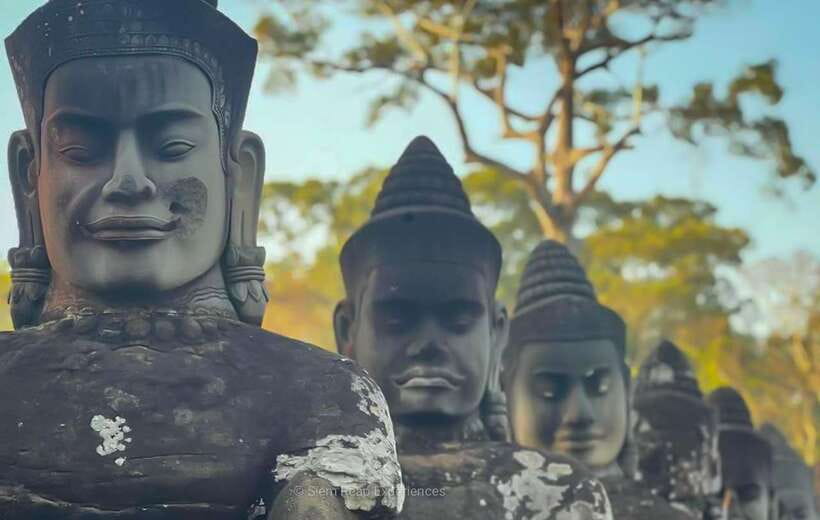
Bayon is the visual star here. Its towers carry large carved faces with calm, smiling expressions. The faces appear from different angles as you walk, creating one of the most striking encounters in the Angkor complex.
This is also the area associated with the Tomb Raider film, though the real appeal is older and far more substantial than its movie connection. You get architecture, religious symbolism, and a sense of how the city functioned under Khmer rulers.
The small tour then includes Banteay Kdei, a Buddhist temple with a more open and worn character than Angkor Wat. Monks still use the site, which gives it a living religious connection rather than making it feel like a purely abandoned monument.
Ta Keo follows. This tenth-century mountain temple is built from strong, simple stone forms and rises in a pyramid shape. It is less decorated than some other stops, but that restraint helps you notice its height, structure, and role as a symbolic mountain.
Day one includes time for photographs and some independent wandering. That balance is important. A guide can explain the carvings, but you also need a few quiet minutes to look around at your own pace.
Food, water, and the midday finish
Food is not included, but breakfast or lunch can be bought at local restaurants near the temples. Plan to carry cash. One meal stop received criticism for slow service and incorrect orders, so do not count on a restaurant break being perfectly timed.
The tour does provide chilled bottled water and a refreshing towel. In Cambodia’s heat and humidity, those are not decorative extras. They help you recover between walks, especially when the stone paths and open courtyards offer little shade.
The air-conditioned minibus is another major advantage. You walk outside for much of the sightseeing, then return to a cool vehicle. That repeated relief makes the two-day schedule far more manageable than arranging every transfer yourself in a hot tuk-tuk.
Bathroom breaks are built into the day, and the bathrooms in the Angkor complex are described as clean and comfortable. Still, use the facilities when your guide offers a stop, rather than assuming another one will appear immediately.
Other Siem Reap experiences to weigh up
- Angkor 2-Day Sunset & Sunrise Small-Group Tour
5.0 · 2,567 reviews - 2 Days Exclusive Temple Highlights with Sunset and Sunrise Tour
5.0 · 1,157 reviews - Siem Reap: Angkor Sunrise 1- or 2-Day Guided Temples Tour
4.9 · 1,132 reviews - 2 Days Guided Historical Tour in Angkor
5.0 · 855 reviews
Day two reaches the outer temples
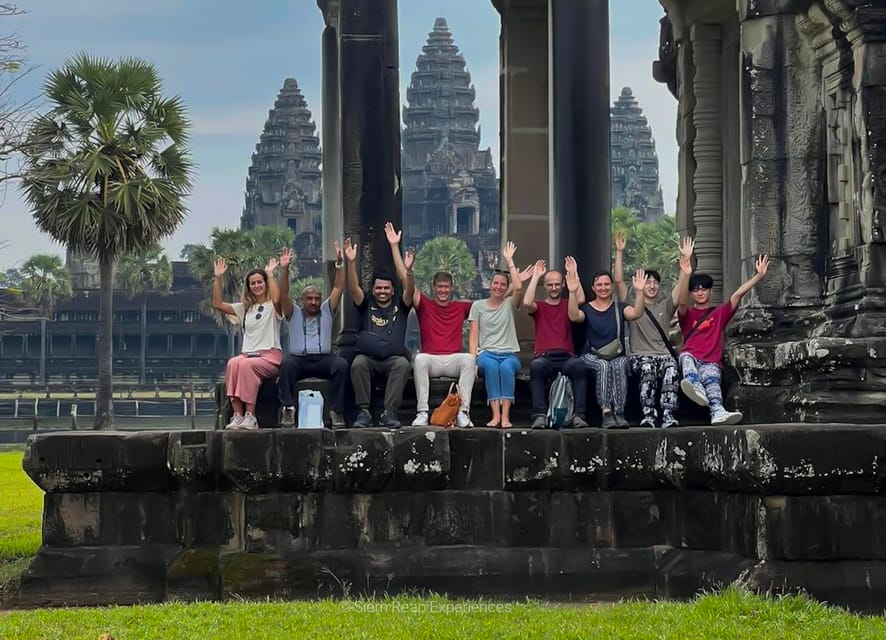
Day two begins much later, with pickup between 10:00am and 10:20am. This is a welcome change after the pre-dawn start. You return to the park in the air-conditioned minibus and begin with Preah Khan.
Preah Khan is the largest temple on this loop. It was built by King Bayon for his father and offers long corridors, courtyards, carved details, and a feeling of considerable depth. The size can make it easy to lose your sense of direction, so the guide’s route and meeting instructions matter.
Neak Pean is a very different stop. The small island temple sits amid water that was used for bathing during the Angkor period. Its design and setting make it a useful reminder that Angkor was not only a collection of temples. Water management and ceremonial bathing were central to life in the area.
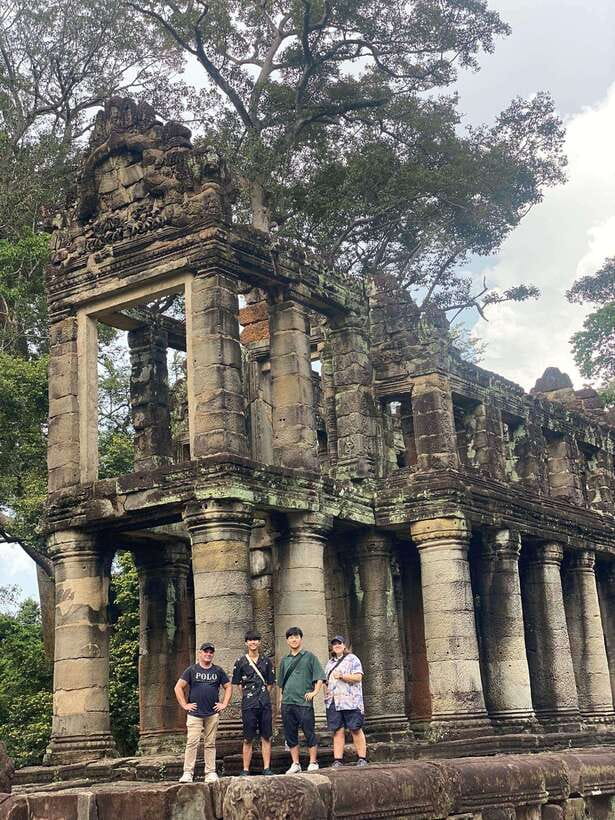
At Ta Som, look for the distinctive tree growing over the East Gate. Nature and stone meet here in a way that is visually powerful, but it is worth remembering that the tree is not simply a convenient photo prop. Its growth also shows how time and weather affect these structures.
East Mebon once stood on an artificial island in a reservoir. The reservoir is now dry, so the temple’s original setting is harder to picture. A guide helps bridge that gap by explaining how the water changed the way people approached and experienced the monument.
Pre Rup and the wait for sunset
The final daytime temple is Pre Rup, a substantial stone structure linked with Hindu meditation on the full moon. Its stepped form gives you a sense of ascent and ceremony, and the upper levels provide a broad view across the surrounding area.
You then head to Phnom Bakheng for sunset. This hilltop temple has 33 towers representing the heavens, and its position makes it one of the best-known sunset points in the Angkor area.
Sunset at Phnom Bakheng requires patience. The approach includes a hill, the temple is popular, and the best positions may be limited. You may wait before the light reaches its best color, so bring water and protect yourself from the sun during the earlier part of the stop.
The payoff is a different mood from sunrise. Angkor Wat at dawn is about reflection and symmetry. Phnom Bakheng at dusk is about height, fading light, and the temple’s symbolic connection with the sky.
You return to your hotel around 7:00pm. After two long days, that late finish may feel tiring, especially if you have an early departure the next morning. On the other hand, it lets you see a full sunset without arranging a separate ride back through the park.
Guides who add real value
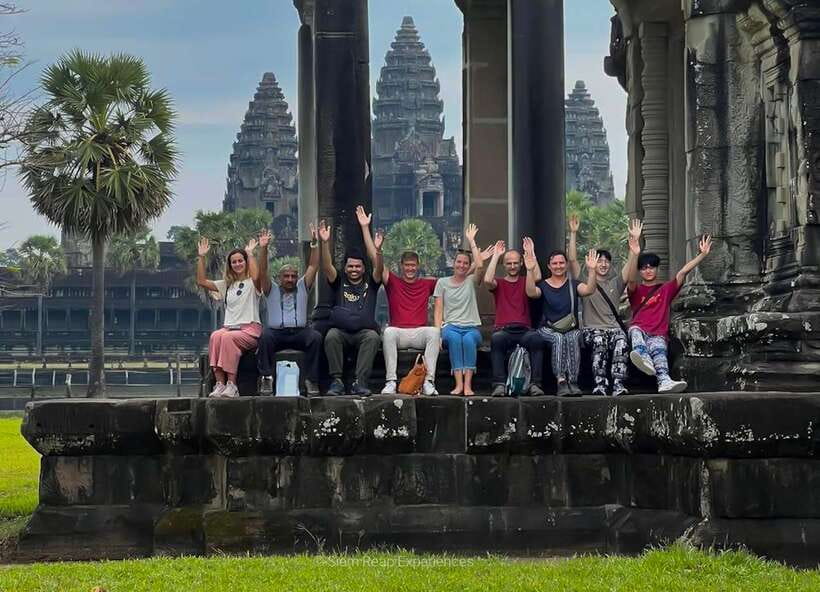
A guided Angkor visit is worth considering because the temples are visually impressive but not self-explanatory. The best guides on this tour make the carvings easier to read, explain the differences between Hindu and Buddhist sites, and connect the monuments to Cambodian life.
Sam is repeatedly praised for his calm, organized manner, detailed explanations, and former experience as a monk. Sayon is known for keeping groups together, finding good photo spots, and explaining temple history clearly. John brings humor and stories about growing up in Cambodia, while Nick is praised for a steady pace, local wildlife observations, and clear plans for each day.
Pheap has a memorable way of explaining carvings through traditional instrument sounds and music. Vone, Rith, Sary, and other guides are also described as friendly and helpful. The guide lineup can change, so book this service for the structure and local interpretation rather than to guarantee a named person.
Photography help is a useful extra. Guides often take pictures for you and point out better angles. That is especially helpful for solo visitors and couples who do not want to rely on hurried phone exchanges with strangers.
What the $30 price really covers
At $30 per person, this is strong value for a two-day guided visit. You receive hotel pickup and drop-off, an air-conditioned minibus, an English-speaking guide, chilled water, a towel, local tax, and access to 11 temple stops as part of the planned route.
The important price detail is the park ticket. It is not included. A one-day pass costs $37, while a two or three-day pass costs $62, so your total cost for the two-day experience is higher than the advertised tour price.
Even after adding the two or three-day temple pass, the arrangement can make financial sense. You avoid paying for separate daily transport and get an organized route, which is valuable when the park covers a large area and the heat makes improvised travel less appealing.
Meals and soft drinks are also extra. Carry cash for restaurants and small purchases. The tour supplies water, but you should still bring sunscreen, a hat, and enough money for food.
Clothing, comfort, and who should book
Angkor is an active religious site, so your clothing must cover your knees and shoulders. Pack long pants or a long skirt, a shirt with sleeves, and a sarong if you need an easy cover-up. Shorts, short skirts, and sleeveless shirts are not permitted at the temples.
Wear shoes suited to uneven stone surfaces. The early morning paths can be difficult to see, and the later heat can make every climb feel harder. A camera, sunscreen, hat, cash, and water-friendly patience belong in your day bag.
The tour suits first-time visitors who want a broad introduction to Angkor without planning every temple and transfer. It also suits solo visitors, couples, and small groups who value a guide’s help with photographs and historical details.
It is less suitable if you dislike early starts, long walking days, group schedules, or popular viewpoints. Babies under one year, people over 95, and wheelchair users are excluded from the activity as described.
The group is limited to 13 participants, though some groups may feel closer to 10 to 15 people in practice. That is small enough for questions, but you still need to follow meeting times and stay aware of the group.
Small details that improve the experience
Buy your temple ticket online through the official Angkor Enterprise website at least one day before the activity, or in advance. Having the pass ready helps avoid a slow start on day one.
Wait in your hotel lobby 30 minutes before pickup. Give the operator the exact hotel name and address, since an incorrect pickup detail can cause trouble when the vehicle is working to a tight schedule.
Expect two different guides, one for each day. This is normal for the format and can be enjoyable. Tell your guide if you need more time for photographs, a slower pace, or a bathroom stop, but remember that the group schedule still has to work.
Sunrise and sunset depend on weather. The temples remain worthwhile in cloudy conditions, but you should not book this solely for a perfect orange sky. The strongest reason to choose the tour is the broad temple coverage with transport and interpretation.
The activity has free cancellation up to 24 hours before departure and allows you to reserve now and pay later. It is available in English only, and no passport is required.
Should you book the Angkor two-day tour?
I would book this tour if you want to see the main Angkor temples and several outer sites without arranging transport, tickets, guides, and timing on your own. The combination of sunrise at Angkor Wat, sunset at Phnom Bakheng, 11 temples, cool transport, and a small group offers a lot for the $30 tour fee.
I would hesitate only if you need a quiet, flexible visit or cannot tolerate a pre-dawn departure. The sunrise pickup may begin earlier than seems necessary, and the park’s famous viewpoints can be crowded.
For most first visits to Siem Reap, the two-day plan is the better choice than trying to compress Angkor into one rushed day. Buy the correct park pass, dress for temple rules, bring cash and sun protection, and accept that the early alarm is part of the deal.
FAQ
How long does the Angkor Wat tour last?
The experience takes place over two separate days. Day one runs from about 4:30am to 1:00pm, with hotel arrival around 1:00pm to 1:30pm. Day two runs from about 10:30am to 7:00pm.
What time is pickup on the first day?
Pickup is scheduled between 4:00am and 4:20am, although some information lists departures as early as 3:00am. Wait in your hotel lobby 30 minutes before the scheduled time.
What time is pickup on the second day?
Day two pickup is scheduled between 10:00am and 10:20am at your hotel lobby.
Is the Angkor Archaeological Park ticket included?
No. You must buy the park ticket separately. The listed prices are $37 for one day and $62 for two or three days.
How many temples does the tour visit?
The tour includes 11 temples across the two days. These include Angkor Wat, Angkor Thom, Bayon, Banteay Kdei, Ta Keo, Preah Khan, Neak Pean, Ta Som, East Mebon, Pre Rup, and Phnom Bakheng.
Is food included?
No. Food and soft drinks are not included. Breakfast or lunch can be purchased at local restaurants near the temples.
Is transportation provided?
Yes. Hotel pickup and drop-off are included in a comfortable air-conditioned minibus.
What language is the tour conducted in?
The live tour guide speaks English.
What clothing should I wear?
You need to cover your knees and shoulders when visiting the temples. Avoid shorts, short skirts, and sleeveless shirts. Long pants and a sarong are useful choices.
Can I cancel the booking?
You can cancel up to 24 hours in advance for a full refund. The activity also offers a reserve-now, pay-later option.
Fresh reviews from around Siem Reap
- Full-Day Tour Preah Vihea & Koh Ker Temple 3.7 · 3 reviews
- Savor the Countryside: Tours with Authentic Cooking Classes” 5.0 · 3 reviews
- Angkor Wat Sunrise TukTuk Tour 5.0 · 3 reviews
- Angkor Grand Circuit Tour & Banteay Srei 5.0 · 3 reviews
- Guided Private Tuk Tuk Tour Angkor Wat and Small Circle and Five Extras 5.0 · 3 reviews
- Siem Reap Temple Tour 2-Day with Sunrise/Sunset 3.7 · 3 reviews
- Bangkok to Angkor Wat 2 Days 1 Night by Flight 4.5 · 3 reviews
- Kompong Pluk Tour 5.0 · 3 reviews
Angkor Temple Tours, compared.

Angkor Wat Sunrise or Sunset Tour with Guide from Siem Reap
Read our review →



Angkor Wat Sunrise tour with Small – Group and Guide tours
Read our review →
Angkor Wat Highlights and Sunrise Guided Tour from Siem Reap
Read our review →

Full-Day Angkor Wat Sunrise Private Tour with Guide from Siem Reap
Read our review →Browse the lists this tour appears in