
Reviewed · BANTEAY SREI TOURS
2-Day Angkor Wat Tour with Banteay Srei and Floating Village
Angkor Wat is best seen as part of a larger story, not as a single box to tick. This two-day private tour takes you from the giant faces of Bayon and tree-covered Ta Prohm to the fine carvings of Banteay Srei, then out to Tonle Sap Lake for a look at life in Kampong Phluk.
I like the private car and flexible schedule, which let you slow down at a temple or trim a stop when the heat sets in. I also like the small comforts: cold water and towels after temple walks, plus a guide who can help with photos and explain what you are seeing. The main drawback is cost creep. The advertised $130 does not include the $62 Angkor admission pass, meals, or the optional $15 Tonle Sap pass and boat ride.
In This Review
- Key points at a glance
- Why two days works well at Angkor
- Day 1: entering Angkor Thom through its grand monuments
- Bayon and its famous stone faces
- Baphuon, the Terrace of the Elephants, and the Leper King
- Angkor Wat and the optional Phnom Bakheng sunset
- Day 2: sunrise, Ta Prohm, and the smaller eastern temples
- Pre Rup, East Mebon, Ta Som, and Neak Pean
- Preah Khan and the best carvings at Banteay Srei
- Kampong Phluk and the changing Tonle Sap experience
- The private vehicle, guide, and small comforts
- Who should book this two-day Angkor tour?
- My verdict on the $130 package
- FAQ
- How long is the tour?
- Is hotel pickup included?
- Is this a private tour?
- Is the Angkor admission fee included?
- Is the Tonle Sap boat trip included?
- Are meals included?
- Which temples are included?
- What should I bring?
- Can I cancel for a full refund?
Key points at a glance
- Two sunrise chances at Angkor Wat: Day 2 begins with a 4:40 AM hotel pickup, while Day 1 may finish with sunset at Phnom Bakheng.
- A full spread of Angkor temples: Bayon, Baphuon, Angkor Wat, Ta Prohm, Preah Khan, Banteay Srei, and several quieter monuments are included.
- Private touring makes a difference: Your guide can adjust the pace, stops, and photo time for your group.
- Kampong Phluk is optional and seasonal: The Tonle Sap visit costs extra and changes noticeably as water levels fall from late March through July.
- Comfort matters in Cambodia’s heat: Air-conditioning, chilled water, and cool towels make long temple days easier.
- Strong guide service is central: Sean, Seila, Raman, Makara, Mony, Saylor, Phanne, and other guides have been praised for clear English, local history, flexibility, and picture-taking.
Why two days works well at Angkor
The Angkor Archaeological Park is too large for a hurried half-day visit. In two days, you get the famous monuments along with smaller temples that help you see how Khmer architecture changed across several centuries.
The tour is private, so you are not locked into a rigid group schedule. That is useful when one person wants more time for carvings, another needs a rest, or the morning heat calls for a shorter stop. Guides such as Sean and Seila are repeatedly singled out for clear English and a friendly manner, while Makara is praised for making the subject interesting even for preteen children.
You should still expect long days. The first day includes Angkor Thom, Angkor Wat, lunch, and a possible sunset climb. The second starts before dawn and continues through several temples, Banteay Srei, and the floating village. This is a serious sightseeing plan, not a gentle introduction.
The quoted price is $130 per person, with group discounts available. For a private vehicle, driver, English-speaking guide, two days of touring, Day 2 breakfast, water, and towels, that can be fair value. But calculate the real total before booking. The Angkor pass is listed at $62 per person, the Tonle Sap pass and private boat at $15 per person, and food and soft drinks are extra.
More Banteay Srei visits:
- Full-Day Banteay Srei & 4 Temples – Grand Tours Join-in Tour
5.0 · 1,155 reviews - Siem Reap Tour: Angkor Wat Sunrise, Bayon, Ta Prohm, Banteay Srei
5.0 · 931 reviews - 2-Day Angkor Wat With Small, Big Circuit and Banteay Srei Tour
5.0 · 545 reviews
Day 1: entering Angkor Thom through its grand monuments
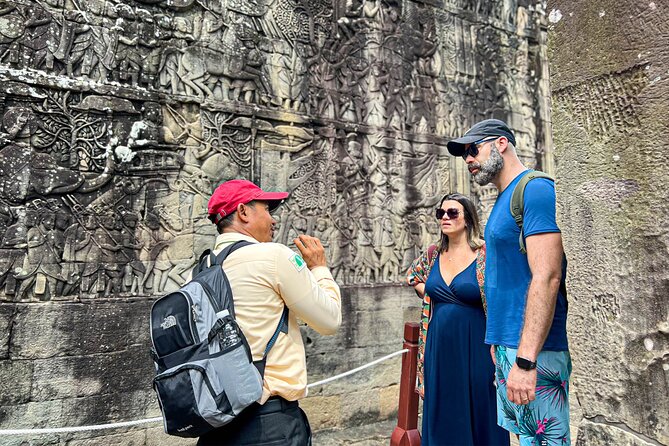
The first day begins with Angkor Thom, the walled royal city founded by Jayavarman VII. It was the capital of his empire and the center of a huge building program. A guide adds real value here because the stones can otherwise blur into one long procession of gateways, towers, and courtyards.
Bayon and its famous stone faces
Bayon gets 45 minutes, enough for a useful first look at its towers and carved faces. Built in the late 12th or early 13th century as a state temple for the Mahayana Buddhist king Jayavarman VII, it feels unlike Angkor Wat.
The best approach is to let your guide point out the changing views as you move among the towers. The faces appear from different angles, and the lower galleries contain scenes of battles and daily life. Forty-five minutes is a reasonable starting visit, though you may want more time if photography matters to you.
Baphuon, the Terrace of the Elephants, and the Leper King
Baphuon is a three-tiered temple mountain from the mid-11th century. Its height and long approach give you a sense of the scale of an Angkor royal monument, though the climb and uneven surfaces can be tiring in the heat. The planned 30 minutes keeps this stop focused.
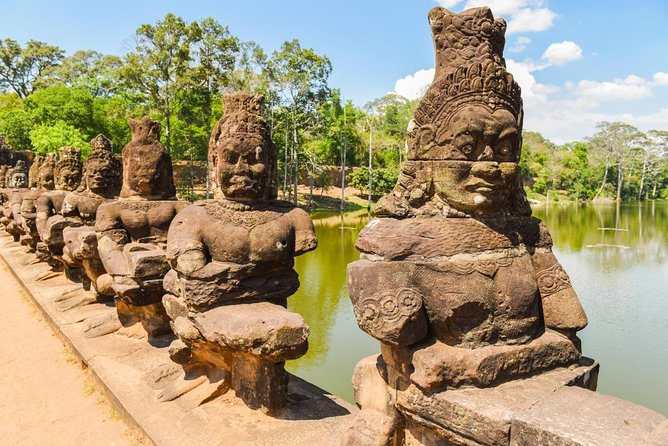
The Terrace of the Elephants takes 15 minutes. It was used as a viewing platform by Jayavarman VII, and its elephant carvings are the main reason to stop. The nearby Terrace of the Leper King gets only 10 minutes, but its layered carved walls reward a close look if your guide has time to explain them.
These shorter stops are not throwaways. They break up the larger temples and show how Angkor functioned as a royal city, not merely a collection of religious buildings.
More floating village visits:
- From Siem Reap: Kampong Phluk Floating Village Tour by Boat
4.9 · 6,979 reviews - Sunset tour of Kampong Phluk stilts home village on the Tonle Sap
5.0 · 4,865 reviews - Siem Reap: Kampong Phluk Floating Village Tour with Boat
4.9 · 3,843 reviews - Siem Reap Floating Village Kampong Phluk Sunset with Boat
5.0 · 1,962 reviews
Angkor Wat and the optional Phnom Bakheng sunset
After a lunch break of roughly 45 to 60 minutes at a local restaurant in the park, you visit Angkor Wat for about 90 minutes. Food and drinks are not included, so plan to pay directly at lunch.
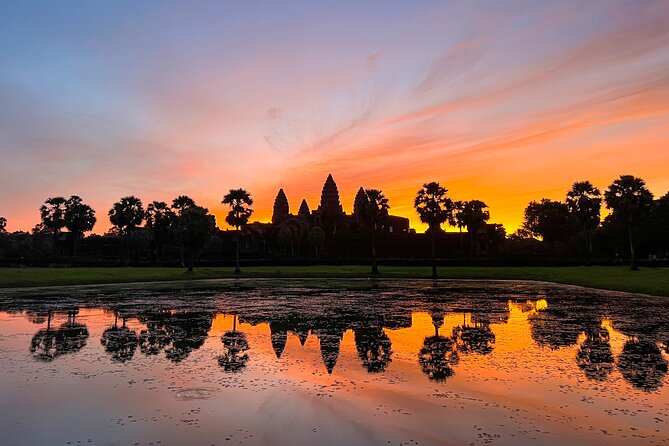
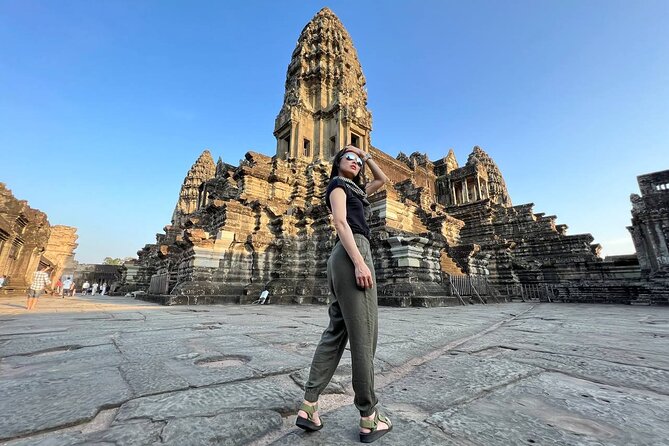
Angkor Wat was originally built as a Hindu temple dedicated to Vishnu and later became a Buddhist site. Its scale can be hard to grasp from photographs. The long causeway, huge towers, galleries, and carved scenes unfold slowly, and your guide can explain the temple’s layout rather than leaving you to wander without a plan.
Ninety minutes gives you a solid overview, but it is not enough for every corner. If Angkor Wat is your main reason for coming to Siem Reap, tell your guide. A private tour gives you a better chance of adjusting the balance.
Phnom Bakheng is offered late in the day if weather and energy allow. The planned visit is about 45 minutes. Sunset here can be appealing, but it involves a climb and comes after a demanding temple schedule. I would treat it as a bonus, not a promise. If you are exhausted, skipping it may make the early start tomorrow easier.
Day 2: sunrise, Ta Prohm, and the smaller eastern temples
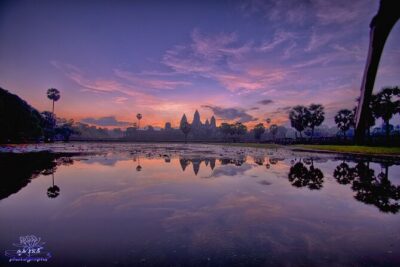
Day 2 begins at about 4:40 AM from your hotel lobby. You go to Angkor Wat for sunrise, then have breakfast before continuing. This is the tour’s most demanding timing, but also one of its most memorable arrangements.
Sunrise is weather dependent. Clouds can soften the scene or hide the color altogether, and the area can be busy at this hour. The private guide is useful for helping you manage the early start and choose a practical place to watch from. You should bring a light layer if needed, though the supplied information mainly recommends sunscreen, insect repellent, a sun hat, and comfortable shoes.
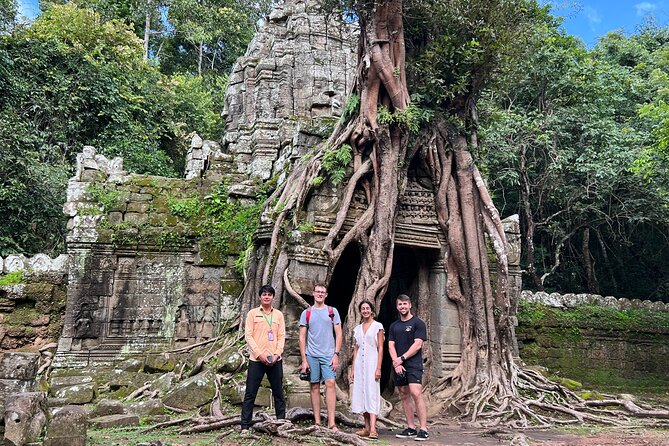
Breakfast is included on Day 2. The schedule then moves to Ta Prohm, the temple famous for trees and giant roots growing through its structures. The site was left in a more natural state than many restored monuments, which gives it a dramatic look. One hour is enough to see the main sections without turning the visit into a long, hot trek.
Ta Prohm is also one of the most photographed places in the park. Your guide may help with framing and timing. Several guides, including Makara and Saylor, are praised for finding good photo positions and taking portraits or panoramic shots. That service can be surprisingly useful when you want a picture that includes both people and architecture.
Pre Rup, East Mebon, Ta Som, and Neak Pean
Pre Rup receives about 40 minutes. Built as the state temple of King Rajendravarman and dedicated to a Hindu tradition, it has the strong, brick temple-mountain form that contrasts with the later Buddhist monuments.
East Mebon gets 30 minutes. It was built in the 10th century on an artificial island in the center of the now-dry East Baray reservoir. The dry reservoir is an important part of the story: these temples were tied to vast water systems that supported the Angkor capital.
Ta Som is a smaller late-12th-century temple associated with Jayavarman VII. Its quieter scale makes it a welcome change after Angkor Wat and Ta Prohm. You have about 30 minutes here, enough to examine the carvings and tree growth without rushing.
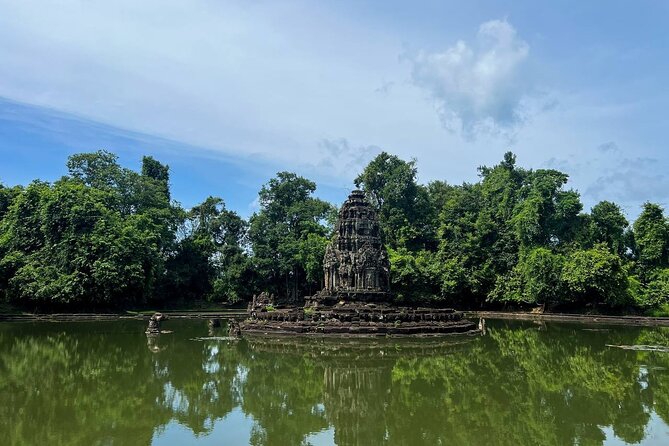
Neak Pean is also scheduled for 30 minutes. Built during Jayavarman VII’s reign, it is associated with a set of pools and a central island shrine. The approach and water setting make it different from the temple mountains earlier in the day. Water levels and access can affect how the site feels, so your guide’s explanation helps put the remains in context.
Preah Khan and the best carvings at Banteay Srei
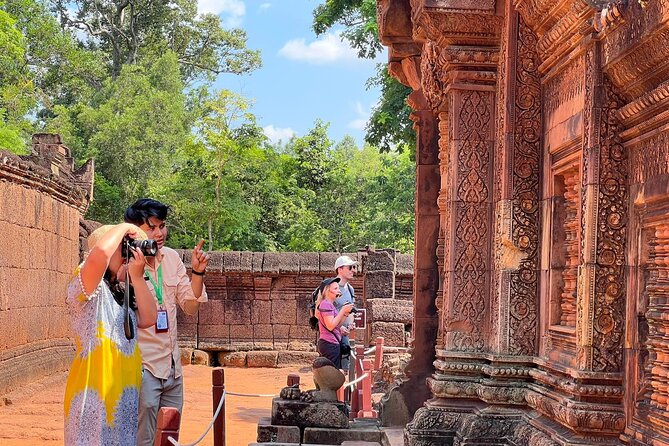
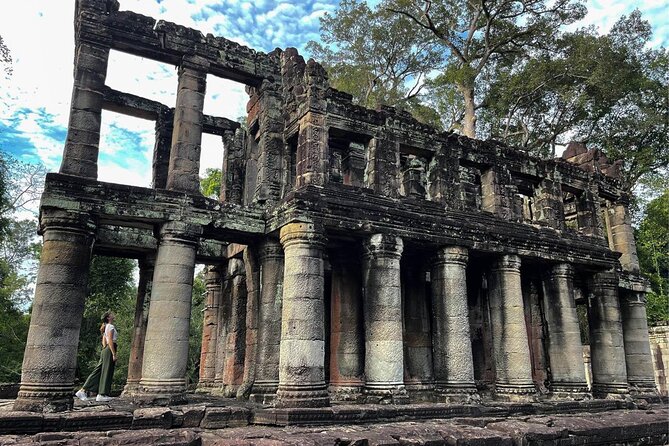
Preah Khan gets one hour before lunch. Built in the 12th century for Jayavarman VII to honor his father, it is large enough to reward a slower walk. Corridors, courtyards, and partially restored sections give you a sense of how complex these temple compounds were.
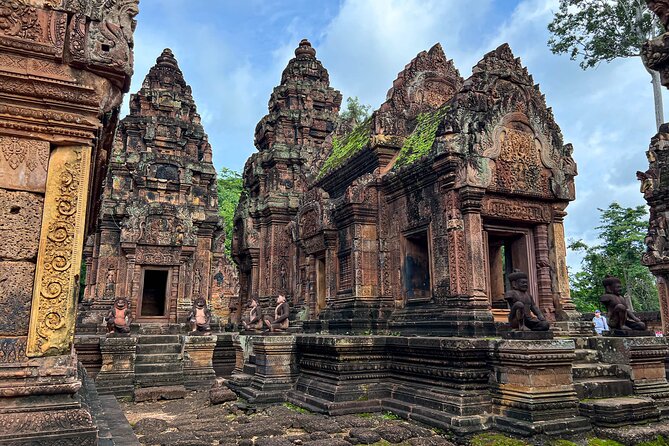
After another meal break at a local restaurant, the tour drives to Banteay Srei. This temple is smaller than Angkor Wat, but its sandstone carvings are among the finest in the area. The detail is the point: figures, floral patterns, and relief work are easier to appreciate here because the structure is more compact.
The planned stop is 45 minutes. That is enough for the main view, though you should not expect the same amount of wandering time available at Preah Khan. The admission information lists Banteay Srei as free within this itinerary, while the main Angkor admission is not included. Confirm current ticket arrangements when booking, since temple access rules and prices can change.
The drive to Banteay Srei also breaks up the temple circuit. You are not looking at one monument after another without pause, and the guide can explain why this outlying temple is so prized for its workmanship.
Kampong Phluk and the changing Tonle Sap experience
The final major stop is Kampong Phluk, about 21 kilometers from Siem Reap. It is a flooded fishing village on Tonle Sap Lake, reached by local boat from the lake port. The boat trip is listed at about 90 minutes.
This is not simply another photo stop. You see a community shaped by seasonal water levels, fishing, and movement between land and lake. The character of the visit changes during the dry season. From the end of March through July, the water recedes, some boats may become stuck, and smaller canoes may not be able to enter the flooded forest.
That means Kampong Phluk may not look like the classic high-water pictures during this period. I would not treat the lower water as a failed visit. It can show a different side of daily life, though you should book the boat only if you are comfortable with a less polished, less predictable setting.
The Tonle Sap pass and private boat cost $15 per person extra. Since the village visit is optional, this is the clearest part of the tour to add or skip based on your interests. Choose it if you want a local community experience beyond the temples. Skip it if your priority is more time inside Angkor or if a long second day already sounds too full.
The private vehicle, guide, and small comforts
The air-conditioned car or minivan is one of the tour’s practical strengths. You repeatedly return to the vehicle after walking in the sun, so cooling down between monuments matters more than it may sound on paper.
Cold bottled water and cool towels are provided during the tour. Drivers named Mark, Savong, Phat, Trea, Kim, and others are praised for being ready with these items and keeping to the schedule. I would still carry your own water bottle, sunscreen, and insect repellent.
The guide makes the biggest difference. Names associated with this experience include Sean, Seila, Raman, Makara, Mony, Saylor, Phanne, Sa, Veesna, and Sam. Their strongest qualities are consistent: clear English, temple and Cambodian history, patience, flexibility, and help with photographs.
Because this is a private activity, only your own group participates. That does not mean every stop will be completely quiet, especially at sunrise or at popular Angkor Wat viewpoints. It does mean you can ask questions, change the pace, and request more or less time at a monument.
Who should book this two-day Angkor tour?
I would choose this tour if you have only two full sightseeing days in Siem Reap and want the major temples plus Banteay Srei and Tonle Sap. It is also a good fit for families, couples, and small groups that value a private guide instead of a fixed coach schedule.
The itinerary suits first-time visitors especially well because it covers the familiar names and several less famous temples. Repeat visitors can also benefit from a guide who adds detail and changes the order or emphasis.
I would think twice if you dislike early mornings, long walking days, or set lunch stops outside the tour price. The sunrise requires a 4:40 AM pickup, and Day 2 packs in many monuments before the boat ride. You can ask for changes, but you should not expect a slow, relaxed pace unless you remove some stops.
Cancellation is free up to 24 hours before the start time. Changes or cancellations inside that window are not accepted for a refund.
My verdict on the $130 package
This is a strong choice for seeing Angkor efficiently while keeping control of your day. The guide service, private transport, water, towels, and broad temple coverage give the base price real value, especially when shared by a small group.
Still, the final bill matters. Add the $62 Angkor pass, optional $15 boat and Tonle Sap fee, meals, and drinks. If you want the floating village, the total rises well above the headline price.
Book it if you want a well-supported introduction to Angkor and appreciate having someone explain the carvings, find good photo spots, and adjust the plan. If you mainly want Angkor Wat at your own slow pace, choose a shorter private temple tour and arrange Tonle Sap separately. For most people with a tight Siem Reap schedule, this two-day plan offers an efficient and genuinely varied look at Cambodia’s temple center and lake communities.
FAQ
How long is the tour?
The experience lasts approximately two days, with temple visits and the optional Kampong Phluk boat trip spread across both days.
Is hotel pickup included?
Yes. Pickup is offered, and Day 2 pickup is scheduled from your hotel lobby at about 4:40 AM before sunrise.
Is this a private tour?
Yes. Only your group participates, using a private air-conditioned car or minivan with a guide and driver.
Is the Angkor admission fee included?
No. The listed Angkor admission fee is $62 per person and is not included in the tour price.
Is the Tonle Sap boat trip included?
No. The Tonle Sap pass and private boat ride cost an additional $15 per person. The floating village visit is optional.
Are meals included?
Food and soft drinks are not included. Breakfast is included on Day 2, while lunch stops are made at local restaurants at your own expense.
Which temples are included?
The schedule includes Bayon, Baphuon, the Terraces of the Elephants and Leper King, Angkor Wat, Ta Prohm, Pre Rup, East Mebon, Ta Som, Neak Pean, Preah Khan, and Banteay Srei.
What should I bring?
Bring insect repellent, sunscreen, a sun hat, and comfortable shoes.
Can I cancel for a full refund?
Yes, if you cancel at least 24 hours before the experience start time. Cancellations or changes made less than 24 hours ahead are not accepted for a refund.
More 2-Day Experiences in Siem Reap
- Angkor 2-Day Sunset & Sunrise Small-Group Tour
5.0 · 2,567 reviews - 2 Days Exclusive Temple Highlights with Sunset and Sunrise Tour
5.0 · 1,157 reviews - Siem Reap: Angkor Sunrise 1- or 2-Day Guided Temples Tour
4.9 · 1,132 reviews - 2 Days Guided Historical Tour in Angkor
5.0 · 855 reviews
More Angkor Temple Itineraries
- Angkor Wat Sunrise or Sunset Tour with Guide from Siem Reap
5.0 · 12,109 reviews - Siem Reap: Angkor Wat: Small-Group Sunrise or Sunset Tour
5.0 · 9,444 reviews - Siem Reap: Angkor Wat 2-Day Tour with Sunrise and Sunset
4.9 · 4,429 reviews - Siem Reap: Full-Day Angkor Wat Guided Tour with Sunset
4.9 · 3,803 reviews
Fresh reviews from around Siem Reap
- Full-Day Tour Preah Vihea & Koh Ker Temple 3.7 · 3 reviews
- Savor the Countryside: Tours with Authentic Cooking Classes” 5.0 · 3 reviews
- Angkor Wat Sunrise TukTuk Tour 5.0 · 3 reviews
- Angkor Grand Circuit Tour & Banteay Srei 5.0 · 3 reviews
- Guided Private Tuk Tuk Tour Angkor Wat and Small Circle and Five Extras 5.0 · 3 reviews
- Siem Reap Temple Tour 2-Day with Sunrise/Sunset 3.7 · 3 reviews
- Bangkok to Angkor Wat 2 Days 1 Night by Flight 4.5 · 3 reviews
- Kompong Pluk Tour 5.0 · 3 reviews
Banteay Srei Tours, compared.
Full-Day Banteay Srei & 4 Temples – Grand Tours Join-in Tour
Read our review →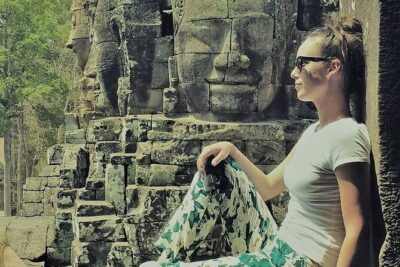
2-Day Angkor Wat With Small, Big Circuit and Banteay Srei Tour
Read our review →
3-Days Discovery Of Angkor: Waterfalls,Floating Village and Banteay Srei temple
Read our review →
Browse the lists this tour appears in