
Reviewed · COUNTRYSIDE & VILLAGE TOURS
2-Day ‘Angkor & Village’ Tour
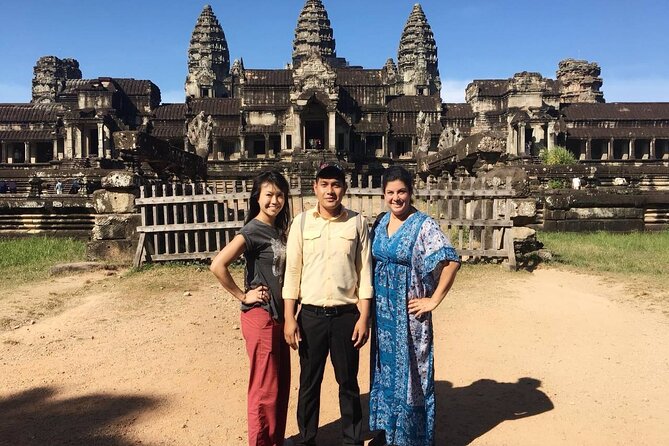
Angkor Wat gets the headlines, but this private two-day tour gives you the bigger picture: royal city gates, giant stone faces at Bayon, tree-wrapped Ta Prohm, delicate carvings at Banteay Srei, and life on Tonle Sap. You also return to Angkor Wat for sunrise, which makes the temple feel different the second time around.
I like the private air-conditioned vehicle and the fact that your guide can shape the pace around your group. I also like the mix of major temples and everyday Cambodian life at Kompong Phluk, where a motorized boat carries you through villages built largely on stilts.
The main caution is physical. You will walk on uneven ground and climb temple steps, sometimes for long stretches. The timing is full, and the total cost is higher than the tour price once you add the Angkor pass and meals.
In This Review
- Key points
- Why this two-day Angkor plan works
- Day one: Bayon, Baphuon, Ta Prohm, and Angkor Wat
- Bayon and the stone faces of Angkor Thom
- Baphuon and the climb to the temple mountain
- Ta Prohm, where trees share the frame
- The Terrace of the Elephants
- Angkor Wat in the afternoon
- Phnom Bakheng and a demanding finish
- Day two: Angkor Wat at sunrise
- Banteay Srei and Banteay Samre
- Banteay Srei’s fine sandstone carvings
- Banteay Samre’s Angkor Wat style
- Pre Rup and its brick-and-stone construction
- Kompong Phluk by motorized boat
- The alternative temple route
- Walking, heat, and the real pace
- Who should book this private Angkor tour?
- Should you book the 2-Day Angkor and Village Tour?
- FAQ
- What is included in the $130 tour price?
- Is the Angkor temple pass included?
- Does the tour include meals?
- Is this a private tour?
- Can I visit Kompong Phluk or more temples on day two?
- Is the tour suitable for people with limited mobility?
Key points
- Two full private days: Your own group travels with an English-speaking guide and driver.
- Angkor Wat twice: Visit the great temple in daylight, then return early for sunrise.
- A strong temple mix: Bayon, Baphuon, Ta Prohm, Banteay Srei, Banteay Samre, and Pre Rup each offer a different view of Khmer architecture.
- Kompong Phluk by boat: The motorized boat fee is included for the Tonle Sap village visit.
- Comfort between ruins: Hotel pickup, bottled water, cold towels, and air conditioning matter in Cambodia’s heat.
- A demanding schedule: Expect plenty of walking, climbing, and early starts.
Why this two-day Angkor plan works
A short Angkor visit can feel like a blur of towers and stone corridors. This itinerary gives you two full days, enough time to see the famous monuments without treating every stop as a quick photo break.
The private format is the biggest practical advantage. You are not tied to the needs of a large bus group, so your guide can explain a carving, pause for water, or adjust the order of stops for your group. The available guides include Seng and Choup, both praised for making the temple visits feel personal and keeping the days enjoyable.
Your vehicle is air-conditioned, with hotel pickup and drop-off included. That may sound routine, but it is valuable here. Siem Reap’s temple zone requires repeated rides between sites, and a cool vehicle gives you a place to recover before the next round of walking.
The tour costs $130, but that is not the full price. You must buy an Angkor pass separately. The supplied details list a two-day pass at $67 per person, while the ticket-office information also lists a three-day pass at $62 and a seven-day pass at $72. Confirm the current price at Angkor Enterprise before you go, since the figures presented for the pass do not match. Meals, soft drinks, and alcohol are also extra.
More countryside rides around Siem Reap:
- Sunset tour of Kampong Phluk stilts home village on the Tonle Sap
5.0 · 4,865 reviews - Tonle Sap Lake & Kampong Phluk Village Half-Day Tour
5.0 · 1,045 reviews - Siem Reap Countryside Bike Tour / E-Bike or Tuk Tuk
5.0 · 935 reviews
Day one: Bayon, Baphuon, Ta Prohm, and Angkor Wat
The first morning begins with pickup from your accommodation at about 8:30 a.m. Your guide can help you reach the Angkor Enterprise ticket office, where each person needs an individual pass. Keep the pass safe, since it is needed for the temple visits.
Bayon and the stone faces of Angkor Thom
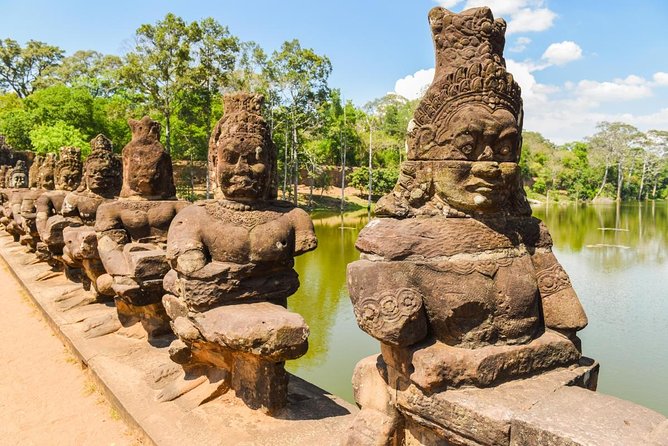
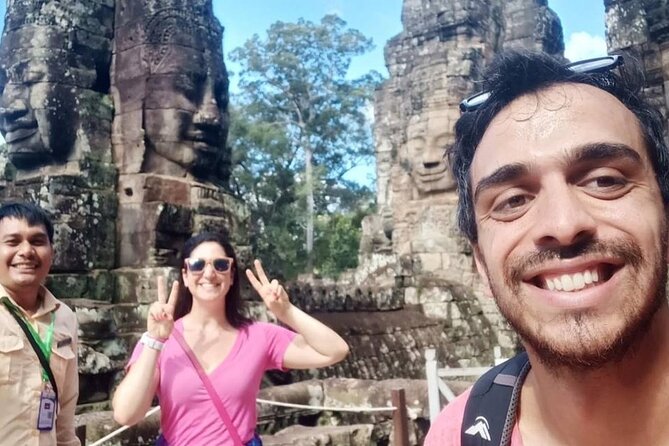
Bayon is one of the best places to begin because it immediately shows how different Angkor can be from the grand symmetry of Angkor Wat. The temple is known for its huge carved faces, set among towers and narrow passageways.
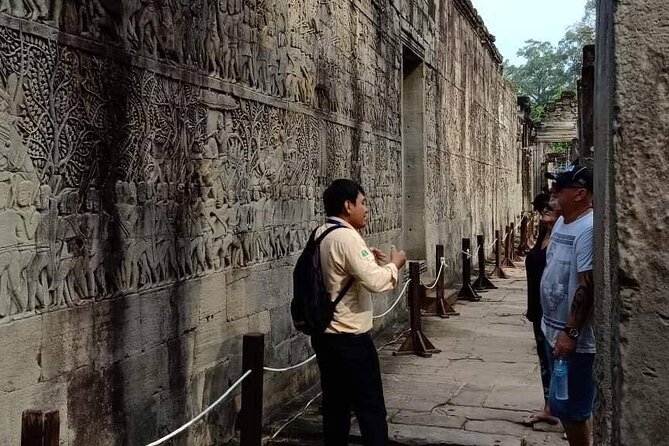
Your guide can explain Bayon’s connection to King Jayavarman VII and its original role as a Mahayana Buddhist state temple. Give yourself the full hour here. The upper levels, galleries, and carved scenes reward a slower look, although the stairs and uneven surfaces require care.
Baphuon and the climb to the temple mountain
Baphuon lies northwest of Bayon inside Angkor Thom. Built in the mid-11th century as a Hindu temple dedicated to Shiva, it has the shape of a three-tiered temple mountain.
This stop adds a physical challenge early in the day. You climb toward higher sections and walk across exposed stone, so comfortable shoes and water are important. The reward is a clearer sense of how Khmer rulers used height, symmetry, and long approachways to create a ceremonial setting.
More Angkor temple itineraries:
- Angkor Wat Sunrise or Sunset Tour with Guide from Siem Reap
5.0 · 12,109 reviews - Siem Reap: Angkor Wat: Small-Group Sunrise or Sunset Tour
5.0 · 9,444 reviews - Siem Reap: Angkor Wat 2-Day Tour with Sunrise and Sunset
4.9 · 4,429 reviews - Siem Reap: Full-Day Angkor Wat Guided Tour with Sunset
4.9 · 3,803 reviews
Ta Prohm, where trees share the frame
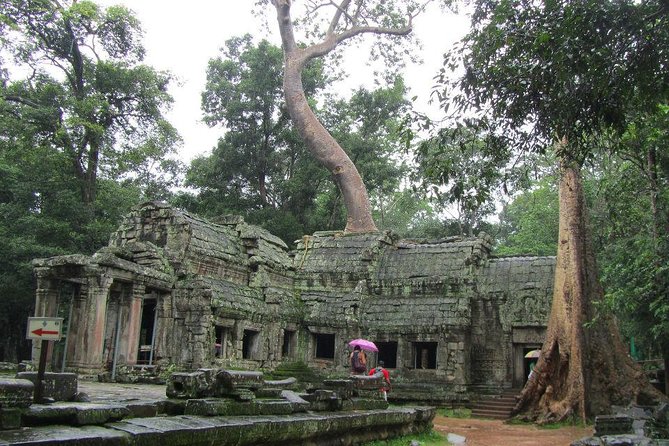
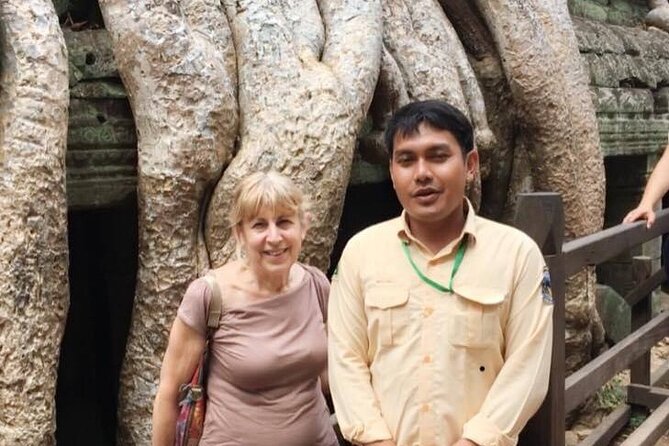
Ta Prohm is the temple many people picture when they think of Angkor ruins. Its galleries and walls are threaded with large tree roots, giving the site a more enclosed and dramatic feel than the open courtyards of Angkor Wat.
The temple was originally called Rajavihara and was built in the late 12th or early 13th century in the Bayon style. Allow about an hour, but expect slow walking in narrow areas. This is a place where your guide can help you understand which details are architectural and which are the result of centuries of weather and plant growth.
The Terrace of the Elephants
The Terrace of the Elephants takes about 30 minutes and sits along the eastern boundary of the former royal palace grounds. Its carved elephant panels face the parade area, where royal processions and public events once took place.
It is less about entering a complete temple and more about reading the old city’s ceremonial scale. You can appreciate the long carved wall after the tighter spaces at Ta Prohm. Since this is a shorter stop, it also gives your legs a small break.
Angkor Wat in the afternoon
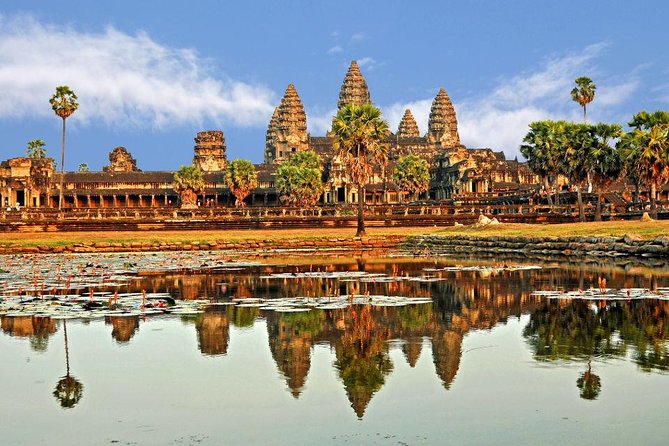
After lunch, the schedule turns to Angkor Wat, with about three hours set aside. That is the right amount of time for a first serious visit. You can approach across the causeway, pass through the outer galleries, study the bas-reliefs, and look up at the central towers.
Angkor Wat began as a Hindu temple dedicated to Vishnu and is now one of the world’s largest religious monuments. Its size can be hard to grasp from photographs. The long galleries and multiple courtyards make the temple feel more like a planned sacred city than a single building.
Three hours is generous, but the heat can make the final portion tiring. I would use the first part for your guide’s explanation, then leave time to walk at your own speed. Bottled water and cold towels are included, but you should still carry what you need for the long stretches between shade.
Phnom Bakheng and a demanding finish
The itinerary allows up to three hours at Phnom Bakheng, a temple mountain built during the reign of King Yasovarman and dedicated to Shiva. It sits on a hill, so reaching it adds another climb after a day already filled with steps.
This stop is best for people who still have energy and want a high position near the end of the day. The schedule does not guarantee a particular sunset arrangement, so think of Phnom Bakheng as a hilltop temple visit rather than a promise of a perfect sunset. If your legs are tired, ask your guide how much time you truly need here.
Day two: Angkor Wat at sunrise
Day two starts early at Angkor Wat for sunrise. The tour then returns you to your hotel for breakfast before heading back toward the more distant temples.
Seeing Angkor Wat on two separate visits is one of the smartest parts of the plan. In the afternoon, you notice scale, carvings, and architecture. At sunrise, you see the temple in a quieter, changing light and have a chance to focus on the famous reflection across the water.
The timing depends on the sunrise schedule and the amount of time needed to reach the viewing area, but the listed stop lasts about three hours. Be prepared for an early departure and a pause before breakfast. This is not a relaxed morning, but it gives you a second chance to understand the monument instead of trying to absorb it all in one visit.
Banteay Srei and Banteay Samre
Banteay Srei’s fine sandstone carvings
Banteay Srei lies about 25 kilometers northeast of the main Angkor group. The 10th-century Hindu temple is dedicated to Shiva and is often called the ladies temple.
Its appeal is detail rather than size. The carvings are especially fine, and the pinkish sandstone gives the monument a distinct look compared with the larger gray stone complexes closer to Siem Reap. You have about two hours here, enough to inspect the carved lintels and pediments without rushing.
The longer drive is part of the value. Banteay Srei breaks up the cluster of central Angkor sites and shows you a smaller temple with a different artistic character. It also adds more time in the vehicle, so the air conditioning is welcome.
Banteay Samre’s Angkor Wat style
Banteay Samre is located east of the East Baray and was built in the early 12th century during the reigns of Suryavarman II and Yasovarman II. It is a Hindu temple in the Angkor Wat style.
The one-hour visit works well after Banteay Srei. You get another example of Khmer design, but without the same scale as Angkor Wat. The stop is useful for comparing layouts, towers, and carved stone with what you saw earlier in the day.
Pre Rup and its brick-and-stone construction
Pre Rup was built in 961 or early 962 as the state temple of King Rajendravarman. Its construction combines brick, laterite, and sandstone, giving it a different surface and color from several of the better-known monuments.
The temple mountain form means more stairs and higher levels. You have about an hour, so spend time looking at how the materials change across the structure, then decide how far you want to climb. This is another site where average fitness helps.
Kompong Phluk by motorized boat
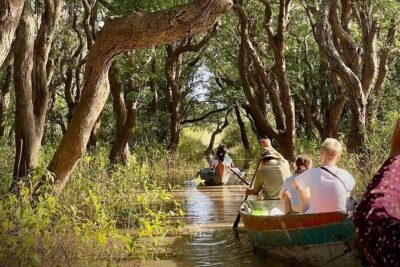
After the temples, the tour continues to Kompong Phluk, a group of villages on Tonle Sap. The name means Harbor of the Tusks, and the community depends heavily on fishing.
The village is largely built on stilts. During Cambodia’s wet season, from May through October, water levels change the appearance of the settlement and the way people move through it. A three-hour visit gives you time for the motorized boat ride and a closer look at a community shaped by the lake.
The boat fee is included, which makes this part easier to budget. It also adds a welcome change from stone steps and temple corridors. You are not simply adding another monument to the day. You are seeing how people live and work in a setting governed by seasonal water.
Conditions at a floating village can vary with water levels, so the exact feel of the ride may depend on the season. Still, Kompong Phluk is a useful counterpoint to the royal temples. It connects the grand buildings of Angkor with present-day Cambodian life.
The alternative temple route
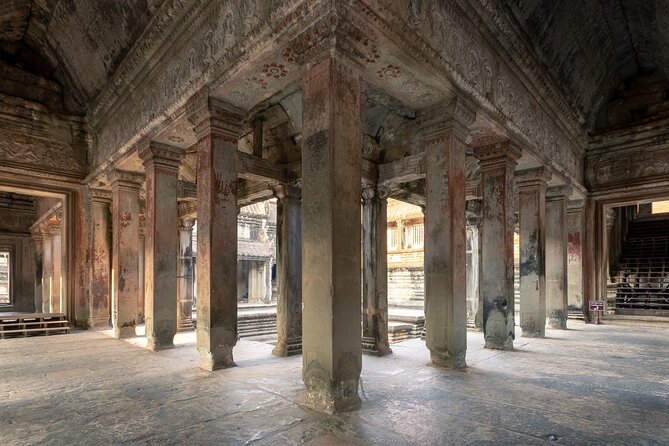
Instead of Kompong Phluk, you can choose an alternative route featuring Preah Khan, Neak Poan, Ta Som, and East Mebon. The stated schedule allows about three hours for this option and returns to town around 5:00 p.m.
This choice suits you if temples are your clear priority. Preah Khan gives you another large complex associated with Jayavarman VII, while Neak Poan, Ta Som, and East Mebon add different settings and architectural details. The choice also avoids the boat ride, which may appeal if you prefer a full archaeological day.
The tradeoff is simple. Kompong Phluk offers a look at life on Tonle Sap, while the alternative gives you more ruins. Ask your guide which route fits your energy and interests before setting out.
Walking, heat, and the real pace
The published timing adds up to long days. You walk through temple courtyards, cross uneven ground, climb stairs, and spend time in open areas with limited shade. One person described the climbing as challenging and said you need to be quite fit for the steps and ruins. Take that seriously.
You do not need to be an athlete, but you should be able to walk normally for extended periods. The tour is not suitable for children under three, and the operator says it is not intended for people with less than average fitness.
Wear sturdy shoes, bring sun protection, and use the water provided. The vehicle, cold towels, and air conditioning make the day more manageable, but they do not remove the physical work. I would also avoid overpacking your schedule after the tour. Two days at Angkor can leave you ready for a quiet evening.
Who should book this private Angkor tour?
I would choose this tour if you want the main Angkor monuments, sunrise, Banteay Srei, and a Tonle Sap village without arranging separate transport and guiding. It is especially good for couples, families with older children, or a small group that wants control over the pace.
The English-speaking guide is another strong reason to book. Seng and Choup are examples of guides associated with especially positive experiences, and the private format means you can ask questions without competing with a large group.
The tour is less suitable if you want slow mornings, long meal breaks, or a light walking schedule. It is also not the cheapest way to see Angkor once you add the pass and meals, though the transport, driver, guide, boat fee, water, and cold towels make the $130 starting price reasonable for a private two-day service.
You receive free cancellation if you cancel at least 24 hours before the start time. Changes or cancellations inside that window are not accepted for a refund. Pickup and drop-off are included from your accommodation, and the vehicle leaves at the stated 8:30 a.m. start time.
Should you book the 2-Day Angkor and Village Tour?
Book it if you want a strong first visit to Angkor with both famous monuments and less polished, more everyday places. The best features are the private vehicle, the guide, Angkor Wat at sunrise and in daylight, and the choice between Kompong Phluk or four more temples.
Skip it if you are not comfortable with early mornings, steep temple steps, or a packed two-day plan. Before booking, confirm the current Angkor pass price and decide whether you prefer the Tonle Sap boat ride or the alternative temple route. For a fit visitor who wants broad coverage with practical transport, this is a well-balanced way to use two days in Siem Reap.
FAQ
What is included in the $130 tour price?
The price includes hotel pickup and drop-off, an air-conditioned vehicle, a professional English-speaking guide, the motorized boat fee, bottled water, and cold towels.
Is the Angkor temple pass included?
No. You must buy the temple pass separately. The supplied details list a two-day pass at $67 per person, while the ticket information also lists three-day and seven-day pass prices. Confirm the current price at Angkor Enterprise.
Does the tour include meals?
No. Meals, soft drinks, and alcohol are not included.
Is this a private tour?
Yes. Only your group participates, and the tour uses a selected air-conditioned vehicle for transportation.
Can I visit Kompong Phluk or more temples on day two?
The listed day-two plan includes Kompong Phluk by motorized boat. As an alternative, you can visit Preah Khan, Neak Poan, Ta Som, and East Mebon instead.
Is the tour suitable for people with limited mobility?
The tour is not suitable for people who cannot walk normally or have less than average fitness. Temple visits involve walking and climbing steps, and the operator says it is not available for children under three.
More 2-Day Experiences in Siem Reap
- Angkor 2-Day Sunset & Sunrise Small-Group Tour
5.0 · 2,567 reviews - 2 Days Exclusive Temple Highlights with Sunset and Sunrise Tour
5.0 · 1,157 reviews - Siem Reap: Angkor Sunrise 1- or 2-Day Guided Temples Tour
4.9 · 1,132 reviews - 2 Days Guided Historical Tour in Angkor
5.0 · 855 reviews
Fresh reviews from around Siem Reap
- Full-Day Tour Preah Vihea & Koh Ker Temple 3.7 · 3 reviews
- Savor the Countryside: Tours with Authentic Cooking Classes” 5.0 · 3 reviews
- Angkor Wat Sunrise TukTuk Tour 5.0 · 3 reviews
- Angkor Grand Circuit Tour & Banteay Srei 5.0 · 3 reviews
- Guided Private Tuk Tuk Tour Angkor Wat and Small Circle and Five Extras 5.0 · 3 reviews
- Siem Reap Temple Tour 2-Day with Sunrise/Sunset 3.7 · 3 reviews
- Bangkok to Angkor Wat 2 Days 1 Night by Flight 4.5 · 3 reviews
- Siem Reap: Prek Toal Tonle Sap Biosphere Reserve Tour 3.1 · 3 reviews
Countryside & Village Tours, compared.
Sunset tour of Kampong Phluk stilts home village on the Tonle Sap
Read our review →
Browse the lists this tour appears in