
Reviewed · COUNTRYSIDE & VILLAGE TOURS
Siem Reap: Guided Countryside Bike Tour
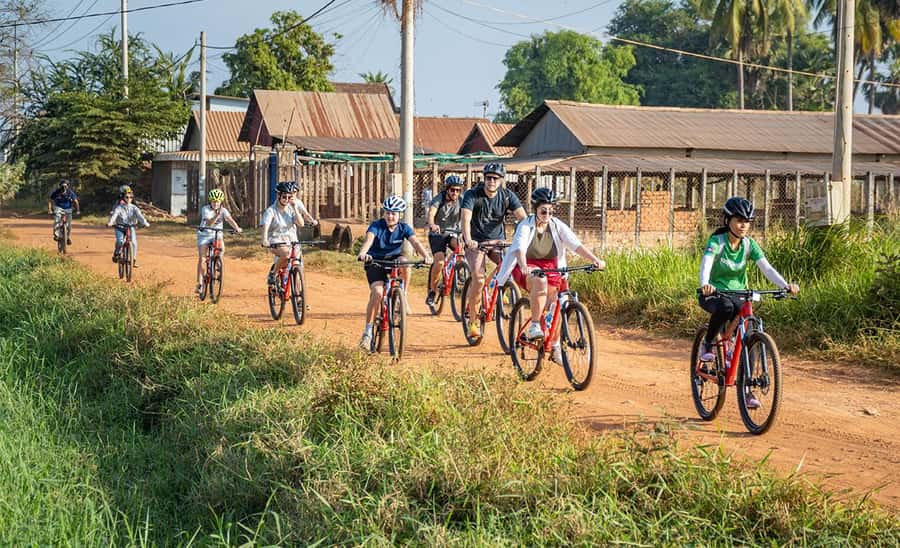
Siem Reap’s temples show Cambodia’s past. This five-hour countryside bike tour shows how much of the country lives today. You pedal beyond the city on quiet roads and rougher farm tracks, stopping at rice fields, village businesses, markets, temples, and family-run farms.
I like the quality Trek bikes and the careful attention to bike sizing. I also like the route’s regular stops, which turn a simple ride into a useful look at rural work and customs. The main drawback is heat, plus a few bumpy kilometers and the possibility of saddle soreness if you are not used to cycling.
In This Review
- Key points at a glance
- Why cycling beyond Siem Reap is worth your morning
- The ride itself: flat roads with a few rough patches
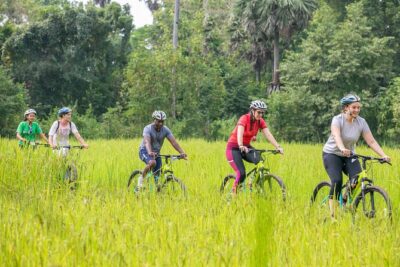
- Rice fields and the working countryside
- Mushroom farms and small-scale production
- A village market, fruit, and local snacks
- Temples and the quieter side of Cambodian culture
- Lotus farms and the changing tour timing
- Guides who make the route work
- Safety, transport, and what is included
- Who should book this ride
- Should you book the Siem Reap countryside bike tour?
- FAQ
- How long is the Siem Reap countryside bike tour?
- How much does the tour cost?
- Is hotel pickup included?
- What places does the tour visit?
- Is the route difficult?
- Are bicycles and helmets provided?
- Is food included?
- What language does the guide speak?
- Who should not take this tour?
Key points at a glance
- A flat 18 to 19 kilometer ride: The route is manageable for regular cyclists, with no major hills and only some rough, unpaved sections.
- Real village stops: See mushroom farms, rice fields, a rice wine distillery, a local market, temples, and lotus farms.
- Strong guide service: Guides including Ron, Vandy, Kanika, Wundee, Jay, and Vandy have been praised for clear explanations, humor, and careful road guidance.
- Good equipment: Trek mountain bikes and helmets are provided, with bike sizing prepared in advance when height information is available.
- Small groups: The tour is limited to 12 people, making it easier to ask questions and stay together on the road.
- Useful extras included: Hotel pickup and drop-off, bottled water, fruit, snacks, and a village donation are covered. Lunch is not.
Why cycling beyond Siem Reap is worth your morning
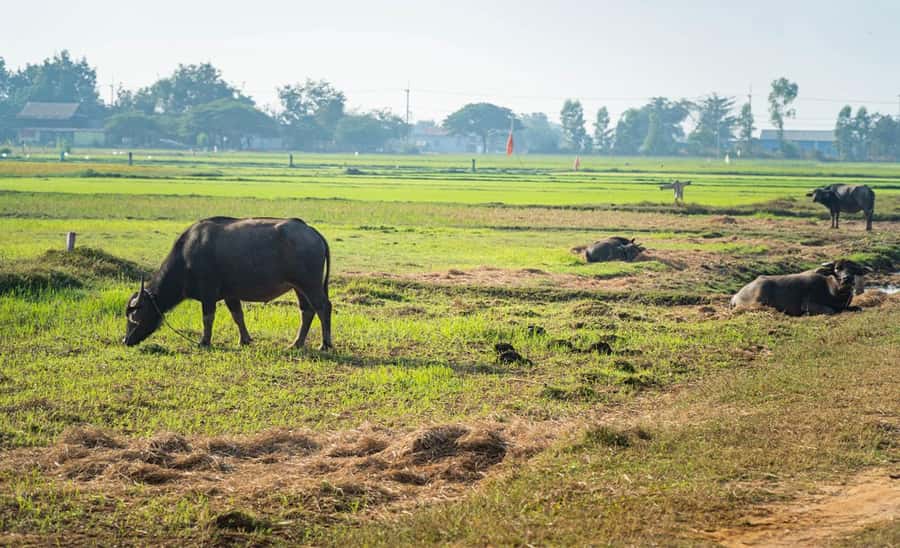
The countryside begins quickly once you leave Siem Reap’s center. Instead of moving from one major sight to another by vehicle, you travel slowly enough to notice rice plots, roadside homes, farm work, animals, and changing road surfaces.
That pace matters. You can stop, ask what a family is producing, and see how a rural business fits into daily life. The tour is not built around grand monuments. Its value comes from ordinary places that most temple-focused itineraries pass by.
I especially like the mix of stops. A rice field explains one part of rural Cambodia’s economy, while a mushroom farm or rice wine distillery shows the practical ways families earn money from local crops. A market adds food and social life, and a Buddhist temple gives you a place to consider the role of religion in the village.
The ride also gives you a break from Siem Reap’s traffic and city noise. You will still encounter some busier junctions, but the route mainly uses smaller roads and back paths. A support team helps guide riders through more active stretches, according to the tour details shared by past participants.
More countryside rides around Siem Reap:
- Sunset tour of Kampong Phluk stilts home village on the Tonle Sap
5.0 · 4,865 reviews - Tonle Sap Lake & Kampong Phluk Village Half-Day Tour
5.0 · 1,045 reviews - Siem Reap Countryside Bike Tour / E-Bike or Tuk Tuk
5.0 · 935 reviews
The ride itself: flat roads with a few rough patches
The total distance is about 18 to 19 kilometers. That sounds substantial if you rarely cycle, but the route is mostly flat, and the riding is broken up by frequent visits and tasting stops.
The smooth sections are described as easy and relaxed. You will also ride several kilometers on gravel or uneven tracks. These roads are part of the appeal, since they take you away from the main tourist routes, but they require a little care. Keep both hands ready, slow down over rough patches, and do not treat the trip like a fast road ride.
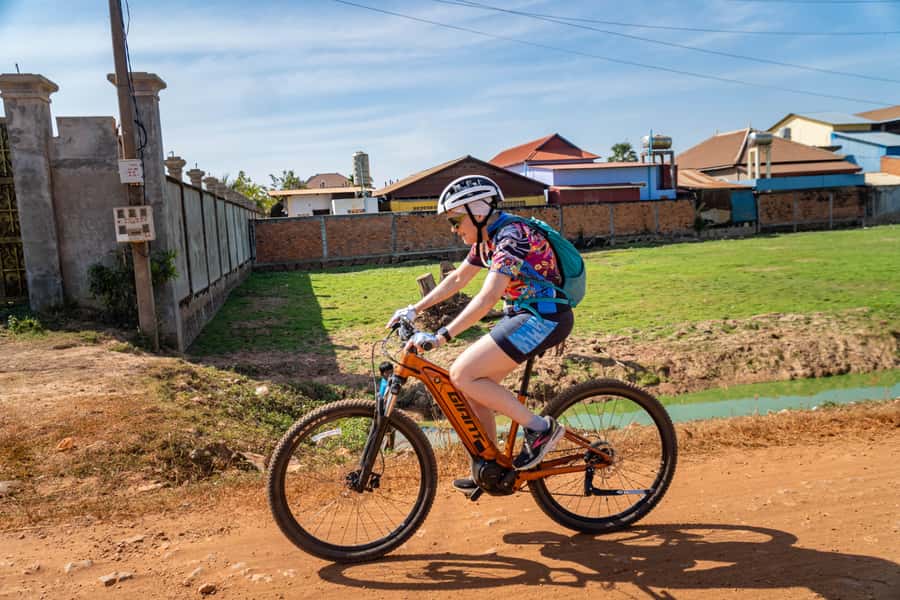
The bikes are a major plus. Trek mountain bikes were repeatedly praised for being sturdy, comfortable, and well maintained. Helmets are included, and the company pays attention to height and fit. If you provide your height when booking, the bikes can be prepared more closely for you.
You should still dress for practical cycling, not a fashion shoot. Wear comfortable cycling clothes, closed-toe shoes, sunglasses, and sunscreen. A padded cycling short can make the final kilometers much more pleasant. One person reported saddle soreness, so this is a small but useful precaution.
The tour is not suitable for anyone who cannot ride a bike, pregnant women, or people with high blood pressure. If you are unsure about your stamina, remember that the ride is long enough to require steady cycling, even though the route has no major climbs.
Rice fields and the working countryside
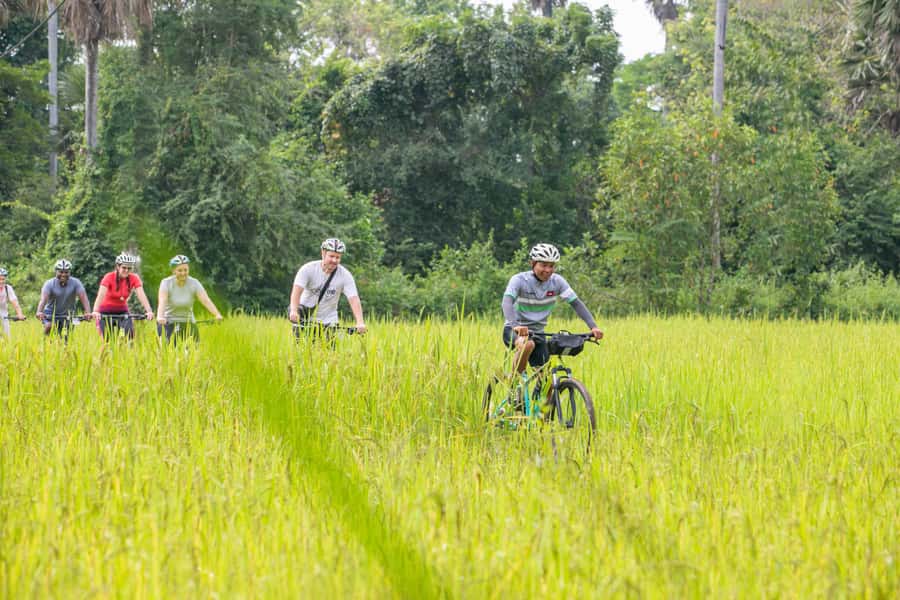
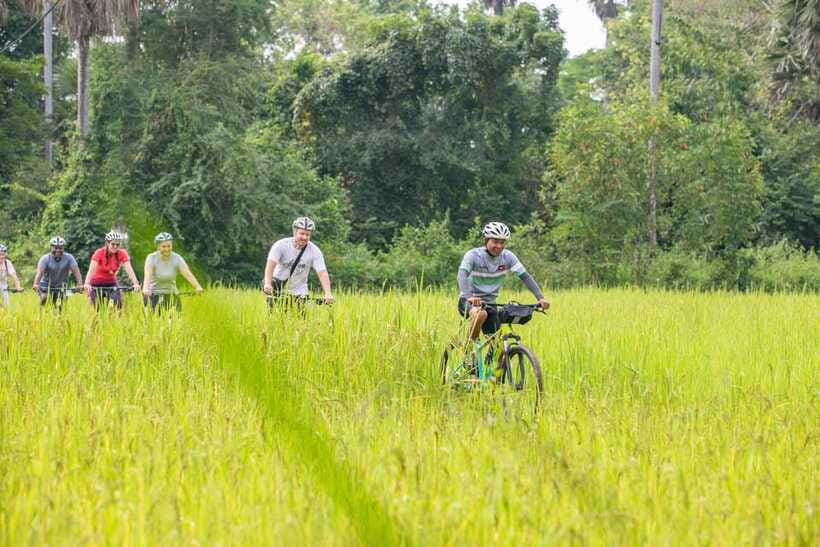
Rice fields are among the first places that help explain rural life around Siem Reap. The tour gives you time to see the fields at close range rather than only from a passing vehicle.
Your guide can explain how rice fits into local livelihoods and seasonal work. The point is not simply to photograph green paddies. It is to connect the fields with the homes, farms, food, and small businesses you see later in the morning.
The countryside can look very different depending on the season. You might find open fields, planted crops, water, or recently worked ground. Since conditions change, it is best to think of this stop as a chance to understand farming rather than a promise of one particular view.
This is also where a bicycle feels most useful. You can pause without arranging a vehicle, and the ride between stops becomes part of the experience. Fresh air and open space provide a welcome change after time in central Siem Reap.
Mushroom farms and small-scale production
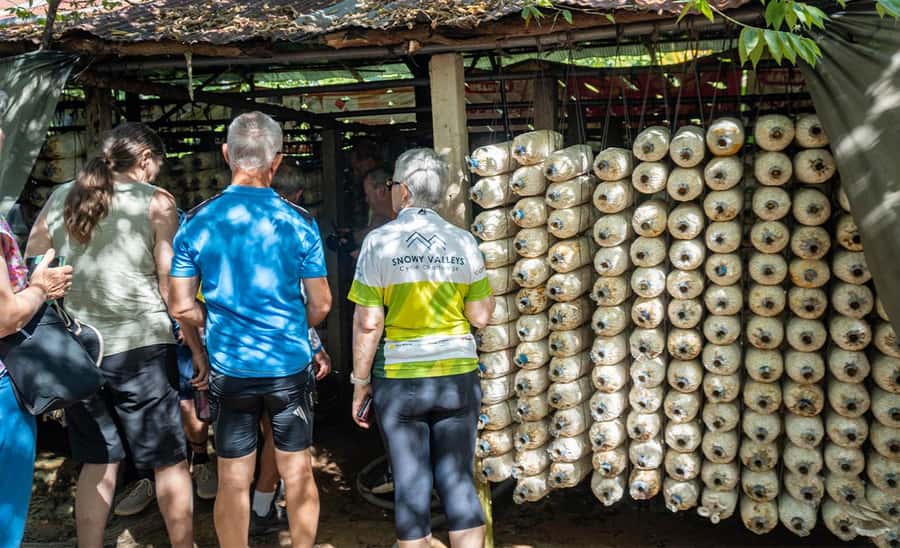
The mushroom farm is one of the more distinctive stops. It shows a form of food production that you are unlikely to encounter at the major temple sites.
A stop like this works well because it is practical. You see how a crop is grown and sold, and you can ask direct questions through the guide. The visit is not just a scenic pause. It helps you notice the range of work taking place beside the rice fields.
The tour also visits a rice wine distillery. This gives you another look at local production, this time connected with fermentation and a familiar Cambodian drink. You may have the chance to try rice wine, depending on the exact stop and the day’s arrangements.
The distillery is a good example of why a guide matters. Without explanation, you might see a few containers and move on. With context, the stop becomes a lesson in how rural households turn local ingredients and traditional methods into income.
More cycling days around Siem Reap:
- Angkor Sunrise Bike Tour / E-Bike or Tuk Tuk
5.0 · 615 reviews - Siem Reap: Bike the Angkor Temples – Full-Day 30km Tour
5.0 · 463 reviews - Siem Reap: Angkor Wat Sunrise Bike Tour & Jungle Breakfast
5.0 · 415 reviews - Siem Reap Countryside Quad Biking Tour
5.0 · 322 reviews
A village market, fruit, and local snacks
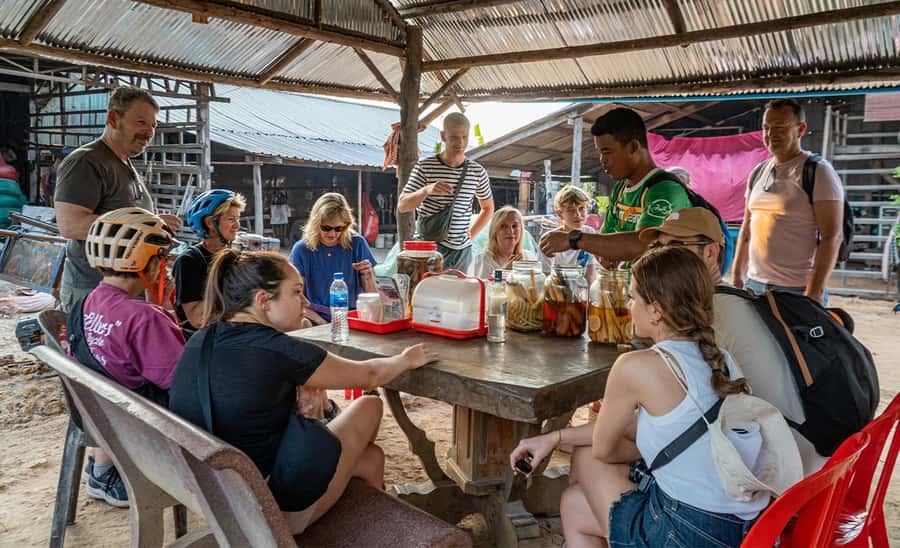
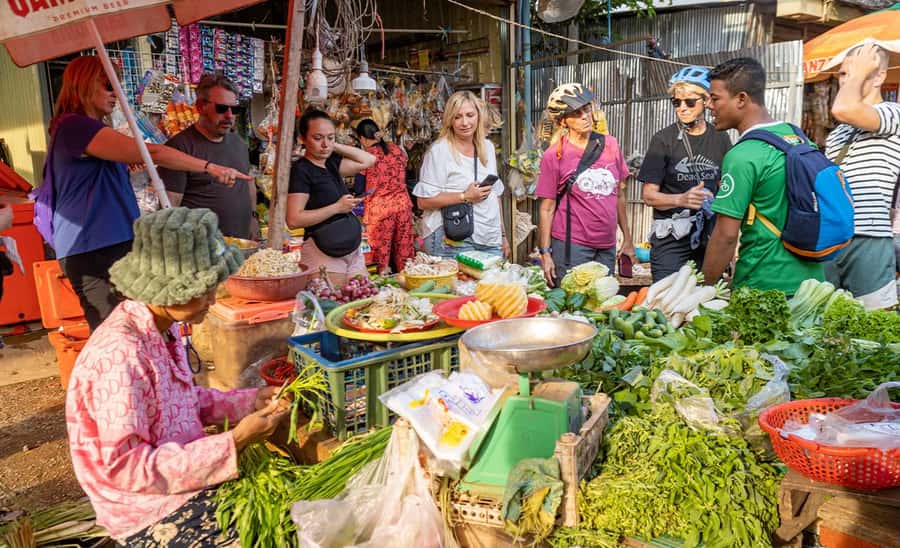
The market stop brings you into a more social part of village life. You can browse local produce, see everyday goods, and get a better sense of what people buy and sell close to home.
This is not presented as a staged shopping stop. Village handicrafts and regional food are part of the route, but there is no indication that you are expected to make purchases. Bring some cash if you want to buy something, though cash is also listed as a useful item to carry.
Fruit and snacks are included, along with bottled water. These small food stops help keep your energy up, especially in warm weather. They also make the ride feel less like exercise and more like a morning spent moving through local communities.
The heat is the main thing to watch. Several accounts describe warm conditions, though the morning timing can help you avoid the strongest midday sun. Drink water regularly rather than waiting until you feel tired. Sunscreen, sunglasses, and light cycling clothing are sensible basics.
Temples and the quieter side of Cambodian culture
The temple visit adds a cultural layer to the ride. You will not be visiting the large Angkor monuments on this tour. Instead, you may stop at smaller Buddhist temples connected to the villages along the route.
That difference is important. Angkor is essential, but its scale can make Cambodia feel like a country of ancient stone alone. A village temple shows a place tied to living community practice, local customs, and everyday religious life.
Dress and behave respectfully at the temple. The supplied information does not set out a formal dress code, but modest clothing and quiet manners are always sensible at active religious sites. Your English-speaking guide can explain what you are seeing and how to act appropriately.
The temple stop also breaks up the ride at the right time. You get a cultural visit without spending the whole morning indoors or inside a vehicle. It is one more reason this tour works well beside, rather than instead of, a dedicated Angkor visit.
Lotus farms and the changing tour timing
Lotus farms are another memorable rural stop. Lotus plants are closely tied to Cambodian food, decoration, and religious life, so the farm gives the ride a visual and cultural finish.
The published format describes a morning departure. Some tour accounts also describe afternoon rides and sunset views from a lotus farm. Starting times vary, so check the available departure when booking if the time of day matters to you.
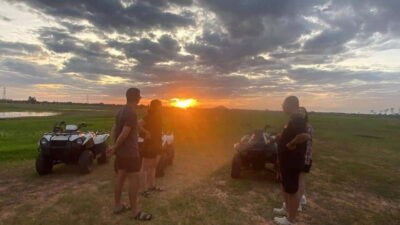
A morning ride is useful if you want to reserve the afternoon for Angkor or rest. An afternoon departure may suit you if you prefer cooler late-day light or want the possibility of seeing the countryside near sunset. Do not assume every departure includes a sunset, though. Confirm the available time and route details before you count on it.
Guides who make the route work
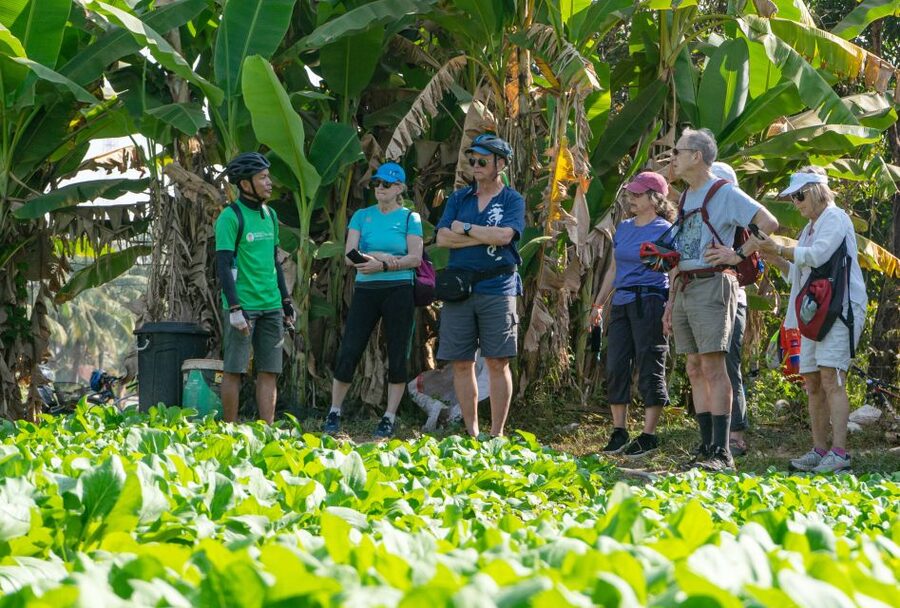
A countryside ride depends heavily on the person leading it. The named guides connected with this experience include Ron, Vandy, Kanika, Wundee, Jay, Handsome, Lina, JR, Miinea, Vingi, and Roem.
The strongest pattern is clear guiding and friendly conversation. Ron is repeatedly described as informative, patient, funny, and attentive to the group. Vandy is praised for explaining stops and guiding riders through traffic. Kanika is noted for her clear explanations, while Wundee is described as friendly and professional.
You should expect the guide to explain how people live and work in the villages, not simply point out sights. Guides also check on riders, give directions, and help keep the group together at junctions.
Group size is capped at 12 people. That is large enough to have company but small enough for questions and regular contact with the guide. If you are hoping for a completely private ride, this is not the format, but the small-group limit is a good compromise.
Safety, transport, and what is included
Hotel pickup and drop-off are included. You are asked to wait in your hotel lobby 15 minutes before the scheduled pickup time, so allow a little margin in the morning.
The ride starts with a bike fitting, helmet handout, safety rules, and an explanation of the route. This preparation is more important than it sounds. Correct sizing helps with comfort, and a clear briefing is useful when the route shifts between paved roads, gravel, and village paths.
The guides and support staff help riders at busier crossings. The route is not traffic-free, so you should remain alert and follow directions. The fact that much of the ride uses smaller roads makes it calmer, but it does not remove the need for normal cycling care.
Included in the $35 price are the guide, bicycle, helmet, hotel transfers, bottled water, fruit, snacks, and a village donation. Lunch is not included. Since the tour lasts five hours and begins or ends around a meal period depending on the departure, plan to eat before or after, or carry a small extra snack if needed.
At $35 per person, I consider the tour good value. You are paying for equipment, transport, a guide, food and water, and access to a full morning of stops rather than only a short city ride. The price is especially fair if you would otherwise need to arrange separate transport to the countryside.
Who should book this ride
I would choose this tour if you want a break from temple touring and enjoy seeing how places work at ground level. It suits cyclists who can manage a flat 18 to 19 kilometer route at an easy pace with stops.
It is also a good fit for curious first-time visitors. You do not need specialist cycling skills, but you do need to be comfortable riding a standard bicycle for several hours. The route is not designed for someone who cannot ride or who needs a fully vehicle-based excursion.
Families and mixed-ability groups should think carefully about the distance, heat, and rough tracks. The included water and regular stops help, but this remains an active outing. An e-bike has been used by at least one rider during a tour, but you should not assume one is included or available unless the operator confirms it directly.
Bring cash, camera, sunscreen, sunglasses, closed-toe shoes, and cycling clothes. Most of all, bring patience. The best parts of this tour come from stopping to listen, look, and ask questions.
Should you book the Siem Reap countryside bike tour?
Yes, if you want to see beyond the temples and are happy to cycle. The flat route, good Trek bikes, small group, hotel transfers, and variety of stops give you plenty for $35.
Book it for the local view: rice fields, village businesses, market stalls, Buddhist temples, fruit, and ordinary roads beyond Siem Reap. Skip it if you cannot ride comfortably, have a medical reason to avoid cycling, or want a polished sightseeing trip with no rough surfaces.
Check the available start time before booking. Choose the morning if you want cooler riding and a free afternoon, or ask about an afternoon option if a later ride and possible sunset matter to you. For most active visitors, this is one of the better ways to spend half a day outside the city.
FAQ
How long is the Siem Reap countryside bike tour?
The tour lasts five hours. The cycling distance is about 18 to 19 kilometers, based on the route details provided by past participants.
How much does the tour cost?
The listed price is $35 per person.
Is hotel pickup included?
Yes. Hotel pickup and drop-off are included. You should wait in your hotel lobby 15 minutes before the scheduled pickup time.
What places does the tour visit?
Stops can include rice fields, a local market, mushroom farms, a rice wine distillery, Buddhist temples, lotus farms, village handicrafts, and other rural sites.
Is the route difficult?
The route is mostly flat and has no major hills. Some sections use gravel or unpaved paths, including a few kilometers of bumpy tracks.
Are bicycles and helmets provided?
Yes. A bicycle and helmet are included. The bikes are described as good-quality Trek mountain bikes, and the company pays attention to sizing.
Is food included?
Bottled water, snacks, and fruits are included. Lunch is not included.
What language does the guide speak?
The live tour guide speaks English.
Who should not take this tour?
The activity is not suitable for pregnant women, people who cannot ride a bike, or people with high blood pressure.
Fresh reviews from around Siem Reap
- Full-Day Tour Preah Vihea & Koh Ker Temple 3.7 · 3 reviews
- Savor the Countryside: Tours with Authentic Cooking Classes” 5.0 · 3 reviews
- Angkor Wat Sunrise TukTuk Tour 5.0 · 3 reviews
- Angkor Grand Circuit Tour & Banteay Srei 5.0 · 3 reviews
- Guided Private Tuk Tuk Tour Angkor Wat and Small Circle and Five Extras 5.0 · 3 reviews
- Siem Reap Temple Tour 2-Day with Sunrise/Sunset 3.7 · 3 reviews
- Bangkok to Angkor Wat 2 Days 1 Night by Flight 4.5 · 3 reviews
- Kompong Pluk Tour 5.0 · 3 reviews
Countryside & Village Tours, compared.
Sunset tour of Kampong Phluk stilts home village on the Tonle Sap
Read our review →
Half Day Kompong Pluck stilt home Village on Tonle Sap & Sunset
Read our review →Browse the lists this tour appears in