
Reviewed · PHNOM KULEN TOURS
2-Day Angkor Wat with Temples On Small Circle & Kulen Waterfall
Angkor Wat is only the beginning here. This two-day private tour pairs the famous temple with quiet Ta Nei, the carved faces of Bayon, a sunset climb at Phnom Bakheng, and a long second day at Kulen Mountain and its waterfall. Guide Chhay is specifically praised for clear explanations, useful facts, and helping solo visitors with photos.
I like the smart mix of famous sights and less-visited corners, especially Ta Nei, where big trees and limited restoration give the ruins a quieter feel. I also like having a private air-conditioned vehicle, cold water, and hotel pickup, since the heat and long drives can wear you down. The tradeoff is the pace: a 5:00am start, a six-hour sightseeing day at Kulen, and many stops in quick succession demand stamina.
In This Review
- Key points to know before booking
- Two days that connect Angkor’s famous temples with Kulen Mountain
- Day 1 begins at Angkor Wat, then moves to Ta Prohm
- Ta Nei gives the small circuit a quieter pause
- Angkor Thom packs royal power into several short stops
- Phnom Bakheng closes the day with a sunset option
- Day 2 starts at 5:00am for Angkor Wat sunrise
- Phnom Kulen brings waterfalls, river carvings, and a reclining Buddha
- Banteay Srei rewards close attention to pink sandstone
- Banteay Samre and Pre Rup finish the temple circuit
- What the private setup adds to the $181.75 price
- Who should book this two-day Angkor plan
- Should you book it?
- FAQ
- Is this tour private or shared?
- What time does the tour start?
- Are temple admission fees included?
- Is lunch included?
- What is included in the transportation package?
- Can I cancel for a full refund?
Key points to know before booking
- Sunrise and sunset in one trip: Start Day 2 at 5:00am for Angkor Wat, then climb Phnom Bakheng near the end of Day 1 for sunset.
- A private tour, not a shared bus: Your group has its own air-conditioned vehicle, driver, and licensed English-speaking guide.
- Kulen adds a major change of scene: The mountain park is more than a temple stop, with 1,000 Lingas carved into a riverbed, a reclining Buddha, and a waterfall.
- The price excludes key admission costs: Add $62 for the Angkor temple pass and $20 for Phnom Kulen, plus lunch.
- Ta Nei offers a quieter temple visit: This small, lightly restored ruin is a useful break from the major monuments.
- Expect long, early days: The tour is best for people happy to trade sleep and leisure time for a full sightseeing schedule.
Two days that connect Angkor’s famous temples with Kulen Mountain
This is a packed private tour based in Siem Reap. Day 1 follows Angkor’s small circuit and continues through Angkor Thom before ending at Phnom Bakheng. Day 2 begins before dawn at Angkor Wat, then heads more than 60 kilometers to Phnom Kulen National Park before returning toward the pink sandstone temples east of the main park.
The structure makes sense if you have limited time. You see the essential Angkor monuments, but you also reach places that many short temple visits skip. The cost is $181.75 per person, before entrance fees and meals. That is not a cheap temple shuttle, but the private vehicle, driver, guide, hotel transfers, and two long touring days give the price some weight.
The tour has a published rating of 4.9 from 11 ratings, with 100 percent recommending it. One detailed rating gave it four out of five, praising Chhay as friendly, informative, and helpful with photographs. That sounds especially useful if you are exploring alone or want more than a driver who simply points toward the gate.
More Phnom Kulen mountain days:
- Kulen Waterfall Join-in Tour (local Picnic lunch)
5.0 · 2,434 reviews - Kulen Mountain: Small-Group Tour and Picnic lunch
4.9 · 1,802 reviews - Siem Reap: Kulen Mountain, Beng Mealea and Tonle Sap Tour
5.0 · 1,483 reviews
Day 1 begins at Angkor Wat, then moves to Ta Prohm
Pickup is scheduled for 8:00am from your hotel or guest house. The first stop is Angkor Wat, with about two and a half hours set aside. The temple pass is not included, and the listed cost for the Angkor and temple admission is $62 per person.
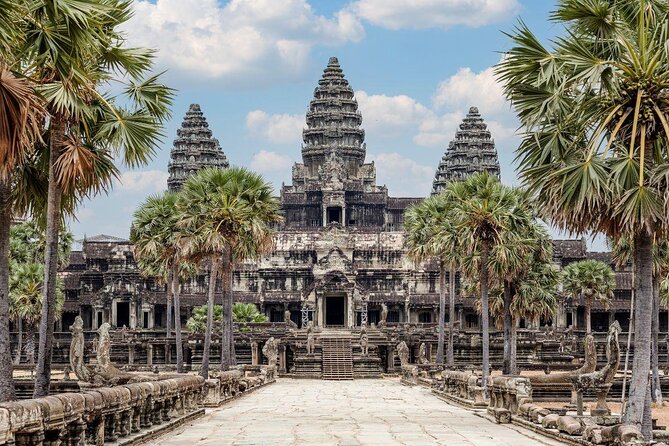
Two and a half hours lets you see much more than the famous front view. You can take in the broad approach, galleries, courtyards, towers, and carved details without treating Angkor Wat as a quick photo stop. Your guide is there to explain what you are seeing, which matters in a place where the scale can make individual features blur together.
Starting Angkor Wat at 8:00am is also easier on the body than the sunrise visit on Day 2. You get a proper breakfast first, then begin with the park’s defining monument. If you want sunrise photographs, resist the temptation to treat this first visit as the only Angkor Wat time. Day 2 returns before dawn for the morning light.
Next comes Ta Prohm for roughly two hours. This is the temple most closely linked with the film Tomb Raider, but the movie connection is only part of its appeal. Giant tree roots have grown across and around the stone buildings, creating the strange, fragile appearance people come to see.
Ta Prohm can feel crowded, and two hours may pass quickly if you stop for photographs at every root-covered doorway. Still, the generous time helps you look beyond the most famous scenes. The contrast with Angkor Wat is useful: Angkor Wat gives you grand scale and order, while Ta Prohm shows how forest growth and time have altered a temple complex.
Ta Nei gives the small circuit a quieter pause
Ta Nei is scheduled for about 45 minutes. It is small, surrounded by large trees, and less restored than the major temples. The tour describes it as a good place to avoid crowds, though quiet conditions can never be guaranteed.
I like this stop because it changes the rhythm. After Angkor Wat and Ta Prohm, Ta Nei asks less of you. You can look at the stonework, the trees, and the unfinished feel of the site without trying to cover another huge complex.
Do not expect the same scale or polished presentation as Angkor Wat. That is the point. If you prefer grand monuments at every stop, Ta Nei may feel modest. If you enjoy a rougher ruin and a shorter visit, it is one of the more appealing choices on the small circuit.
Angkor Thom packs royal power into several short stops
The afternoon continues at Angkor Thom, beginning with the Victory Gate on the eastern side. The stop is only about 10 minutes, so think of it as a photo pause rather than a full site visit. It helps set up the next temple, Bayon, at the center of the old city.
Bayon receives about 45 minutes. Its towers carry the famous serene faces associated with the bodhisattva Avalokitesvara. The tour description counts 49 towers and four faces on each, a total of 196 faces. Numbers aside, the effect comes from seeing those faces appear between towers as you move around the temple.
Bayon is compact but visually busy. Your guide can help you make sense of the carvings and the layout, while the short visit keeps the day moving. You will not have unlimited time for every relief, so decide early if you want to focus on the towers, carved scenes, or photographs.
Baphuon follows for about 15 minutes. This 11th-century Hindu temple predates Angkor Wat, and a large reclining Buddha was added behind it in the 16th century. The stop is brief, so you will likely get an overview and a chance to see the unusual reclining figure rather than a slow examination of every section.
Phimeanakas, a 10th-century pyramid temple, is also allotted 15 minutes. It sits within the former royal palace area of Angkor Thom, along with the ancient Royal Enclosure Wall. These sites are important for understanding that Angkor Thom was not just a collection of temples. It was a royal city with ceremonial and political spaces.
The short timing here is the main limitation. Baphuon, Phimeanakas, and the palace area could each absorb more attention, but the schedule is trying to cover a lot in one day. You get breadth rather than a slow archaeological study.
The Terrace of the Elephants takes about 10 minutes. Its platform was used by kings to view returning armies, and elephant carvings cover parts of the wall. The nearby Terrace of the Leper King gets another 10 minutes. These stops work well as visual links to Angkor Thom’s royal past, but they are quick, open-air visits rather than full temple explorations.
More Angkor temple itineraries:
- Angkor Wat Sunrise or Sunset Tour with Guide from Siem Reap
5.0 · 12,109 reviews - Siem Reap: Angkor Wat: Small-Group Sunrise or Sunset Tour
5.0 · 9,444 reviews - Siem Reap: Angkor Wat 2-Day Tour with Sunrise and Sunset
4.9 · 4,429 reviews - Siem Reap: Full-Day Angkor Wat Guided Tour with Sunset
4.9 · 3,803 reviews
Phnom Bakheng closes the day with a sunset option
The final stop is Phnom Bakheng, where the plan allows about two hours for the climb and sunset wait. The temple sits on a hill, so this is the day’s most obvious physical effort. You can skip the sunset if you do not want to wait.
The view is the reason to make the climb. The schedule gives you time to settle in, but sunset waits can be tiring after a full day in the heat. Carry the water supplied by the tour, wear practical shoes, and decide before you climb how much waiting you are willing to do.
I would treat Phnom Bakheng as an option rather than a duty. If the weather is poor, you are exhausted, or you dislike waiting for a crowded viewpoint, skipping it may make sense. If you want to finish Day 1 with a broad view from above, it gives the day a clear ending.
Day 2 starts at 5:00am for Angkor Wat sunrise
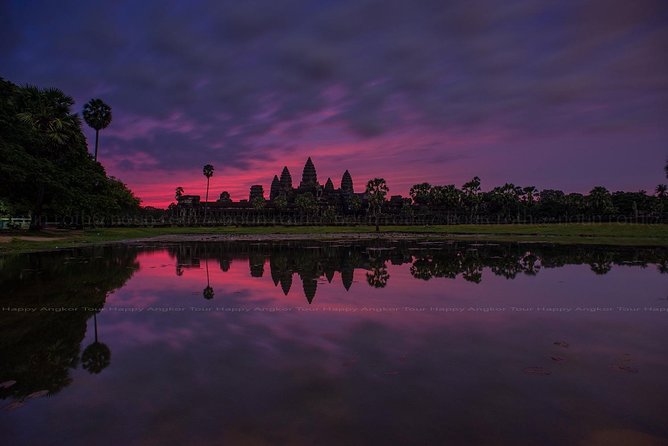
The second morning begins at 5:00am. You return to Angkor Wat for about one hour and 45 minutes to watch sunrise. This is a very early pickup, so the tour suits you best if you are willing to sacrifice sleep for the view.
Sunrise changes the experience from the previous morning. The towers become silhouettes and reflections may form in the pools near the entrance, depending on conditions. The exact quality of the sunrise cannot be promised, so think of this as a chance to see Angkor Wat in a different mood, not a guaranteed perfect photograph.
After sunrise, the day continues to Kulen Mountain. The early start also makes the long drive and five-hour park visit easier to fit into the day. You should plan for a substantial morning and afternoon, not a relaxed temple stroll.
Phnom Kulen brings waterfalls, river carvings, and a reclining Buddha
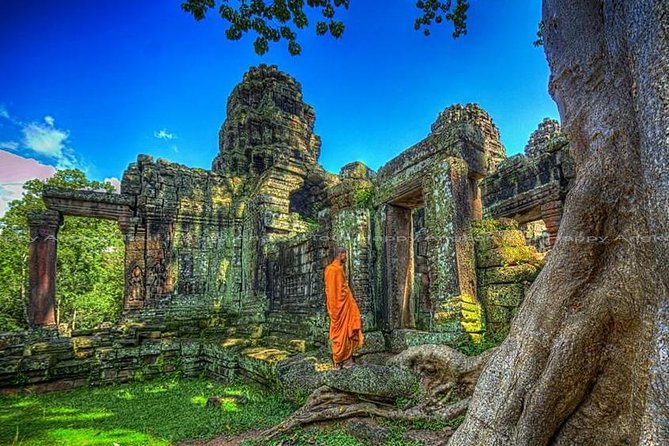
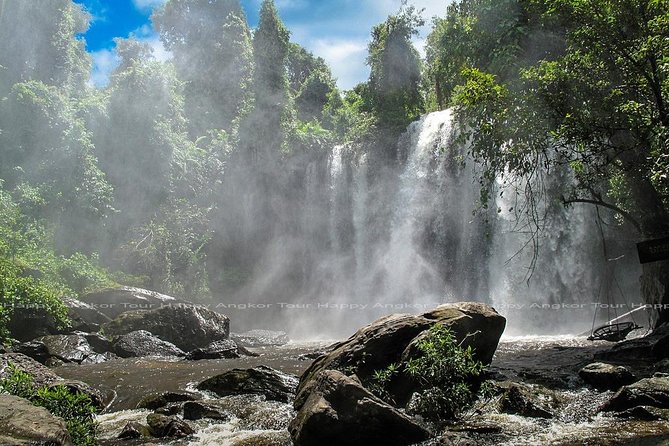
Phnom Kulen National Park is more than 60 kilometers from Angkor Park. The tour allows about five hours there, making it the largest single sightseeing block of Day 2.
The first major feature is the riverbed carved with Lingas, known as the 1,000 Lingas. These carvings represent Shiva’s supreme essence and sit beneath the water along the riverbed. This is a different kind of cultural site from the towering temple sanctuaries around Angkor, and the setting gives the visit a more natural feel.
You will also see a large reclining Buddha carved from a single stone. The stop adds religious and artistic variety to the day. Instead of moving from one sandstone temple to another, you are looking at a sacred river site, a monumental Buddha, and the park’s waterfall.
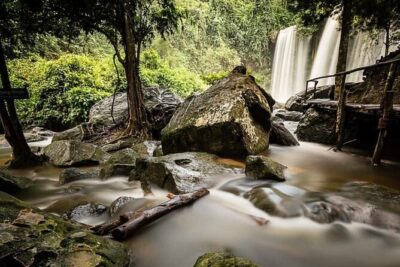
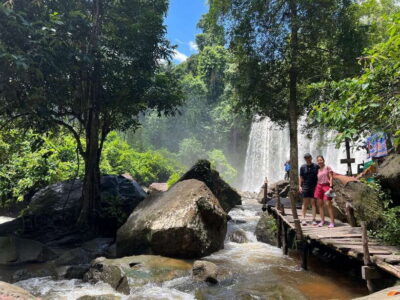
The waterfall is the most obvious change of pace. Five hours gives you time to reach the different features without treating Kulen as a rushed photo stop. Still, the drive from Siem Reap is long, and this outing is not a small side trip. If you want only the classic Angkor temples, Kulen may feel like too much time away from the main park.
Admission to Phnom Kulen is separate and listed at $20 per person. That extra charge is worth factoring into the total before you compare this tour with a shorter Angkor package.
Banteay Srei rewards close attention to pink sandstone
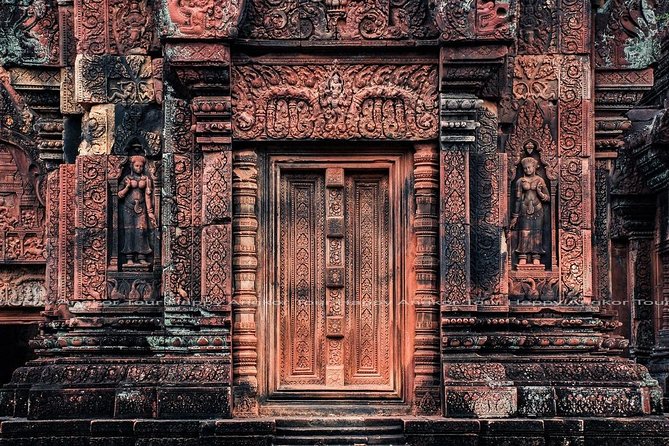
After lunch, the tour continues to Banteay Srei, often called the Lady Temple. The temple was built from pink sandstone in the second half of the 10th century by the Hindu King Rajendravarman II and dedicated mainly to Shiva and the Hindu trinity.
Banteay Srei is smaller than Angkor Wat, but its scale makes the carved decoration easier to appreciate. The pink stone gives it a distinct appearance, especially when the light is favorable. One hour is enough for a focused visit, though you may wish you had longer if detailed carvings are your main interest.
Lunch is not included. The supplied estimate is about $5 per person, depending on the menu. That is a small extra cost, but you should remember that both meals and entrance fees sit outside the headline tour price.
Banteay Samre and Pre Rup finish the temple circuit
Banteay Samre receives about 45 minutes. This 12th-century Hindu temple is considered architecturally similar to Angkor Wat, though the tour notes that firm evidence about its construction is limited. The visit gives you another substantial temple after the smaller, finely carved Banteay Srei.
Pre Rup is the last stop, with about 30 minutes. Built in the late 10th century for Hindu gods, it is associated with the idea of turning the body and with funeral practices. The temple’s design and elevated form make it a fitting final stop, but after sunrise, Kulen, lunch, and several temples, you may be ready to return to Siem Reap.
The schedule is ambitious. You get a strong sample of different temple types, but you do not get long, reflective pauses at every site. That is the central choice this tour asks you to make: broad coverage and private transport instead of a slower, simpler two-day plan.
What the private setup adds to the $181.75 price
The tour includes a private air-conditioned vehicle with driver, a licensed English-speaking guide, parking fees, road tolls, bottled drinking water, wet towels, and pickup and return to your hotel. Only your own group participates.
That arrangement matters here. Day 2 includes a 5:00am departure and a drive of more than 60 kilometers to Kulen. Air conditioning and hotel-to-hotel transport are practical comforts, not luxury decoration. A private vehicle also lets your group move through a demanding schedule without joining a larger bus timetable.
The $181.75 per-person price does not cover the $62 Angkor admission, $20 Kulen admission, or lunch. At minimum, the listed extras bring the known total to $263.75 per person before meals. That is the figure I would use when comparing options.
The value improves for a small private group, since the vehicle and guide serve only your party. For one person, the total is harder to justify, though the personal attention and help with photographs may matter. The published score is 4.9 from 11 ratings, and the specific praise for Chhay’s explanations and friendly help is a useful sign for solo bookers. Still, the sample is small, so judge the tour mainly by its route and schedule.
Who should book this two-day Angkor plan
I would choose this tour if you want the major Angkor temples but also want one day outside the usual circuit. It suits first-time visitors with only two days in Siem Reap, active sightseers who accept early starts, and anyone who prefers a private guide over a shared group.
It is also a good match if you care about photography. You get sunset at Phnom Bakheng, sunrise at Angkor Wat, tree roots at Ta Prohm, faces at Bayon, pink sandstone at Banteay Srei, and a waterfall at Kulen. The guide’s willingness to take photos, noted specifically in connection with Chhay, is a practical bonus.
I would hesitate if you dislike pre-dawn departures, long drives, or full sightseeing days. The tour covers a lot, but it leaves little room for unscheduled wandering. People who want a slow temple study should consider cutting stops rather than trying to give every monument equal attention.
Free cancellation is available until 24 hours before the start time. Changes or cancellations inside that window are not accepted for a refund. Most people can participate, but the climb at Phnom Bakheng and the long day at Kulen are worth considering when judging your own comfort.
Should you book it?
Book this tour if your priority is seeing a wide range of Angkor in two days while adding Kulen’s river carvings and waterfall. The private car, guide, hotel transfers, water, and wet towels help justify the cost, especially for a small group.
Skip it if you want an easy pace or a lower total price. The admissions push the real cost well above $181.75, and the 5:00am start is followed by a demanding day. For an energetic first visit, though, this is a well-planned route with useful variety and a guide setup that can make the monuments easier to understand.
FAQ
Is this tour private or shared?
It is a private tour, and only your group participates. The package includes a private air-conditioned vehicle, driver, and licensed English-speaking guide.
What time does the tour start?
Day 1 pickup is scheduled for 8:00am. Day 2 begins at 5:00am for the Angkor Wat sunrise visit.
Are temple admission fees included?
No. The Angkor and temple admission is listed at $62 per person. Phnom Kulen National Park admission is a separate $20 per person charge.
Is lunch included?
No. Lunch is not included. The listed estimate is about $5 per person, depending on the menu.
What is included in the transportation package?
You receive hotel pickup and return, a private air-conditioned vehicle with driver, parking fees, road tolls, cool drinking water, and wet towels.
Can I cancel for a full refund?
Yes, if you cancel at least 24 hours before the experience start time. Cancellations or changes made less than 24 hours before the start time are not accepted for a refund.
More 2-Day Experiences in Siem Reap
- Angkor 2-Day Sunset & Sunrise Small-Group Tour
5.0 · 2,567 reviews - 2 Days Exclusive Temple Highlights with Sunset and Sunrise Tour
5.0 · 1,157 reviews - Siem Reap: Angkor Sunrise 1- or 2-Day Guided Temples Tour
4.9 · 1,132 reviews - 2 Days Guided Historical Tour in Angkor
5.0 · 855 reviews
Fresh reviews from around Siem Reap
- Full-Day Tour Preah Vihea & Koh Ker Temple 3.7 · 3 reviews
- Savor the Countryside: Tours with Authentic Cooking Classes” 5.0 · 3 reviews
- Angkor Wat Sunrise TukTuk Tour 5.0 · 3 reviews
- Angkor Grand Circuit Tour & Banteay Srei 5.0 · 3 reviews
- Guided Private Tuk Tuk Tour Angkor Wat and Small Circle and Five Extras 5.0 · 3 reviews
- Siem Reap Temple Tour 2-Day with Sunrise/Sunset 3.7 · 3 reviews
- Bangkok to Angkor Wat 2 Days 1 Night by Flight 4.5 · 3 reviews
- Kompong Pluk Tour 5.0 · 3 reviews
Phnom Kulen Tours, compared.
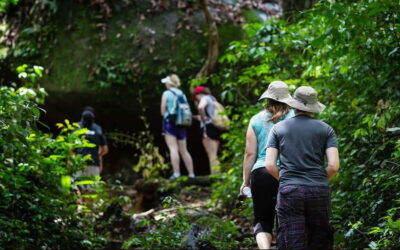
Phnom Kulen Waterfall & the Sacred 1000 Lingas (with Lunch)
Read our review →
Kulen Mountain with Beng Mealea and Tonle Sap Small Group Tour
Read our review →
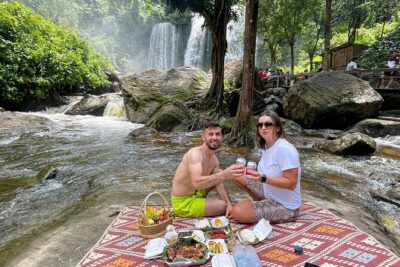
Kulen Mountain Waterfall Tour with Picnic Lunch from Siem Reap
Read our review →
Browse the lists this tour appears in