
Reviewed · BENG MEALEA & KOH KER TOURS
2-Day Angkor Wat, Koh Ker & Beng Mealea Tour
A two-day private trip gives you both sides of Cambodia’s temple country: the famous monuments around Siem Reap and the rougher, quieter ruins farther out. Angkor Wat, Ta Prohm, and Bayon fill day one, while Koh Ker and Beng Mealea bring a wilder feel on day two.
I like two things right away. First, you do not have to arrange a new motorcycle or taxi for every stop. Second, the private format lets you set your own pace, with a guide beside you on both days and cold drinking water provided.
The main drawback is the extra cost and time involved in reaching Koh Ker. You also need to budget for three separate entry charges, and a communication mix-up once caused a late start. That matters on a packed two-day schedule.
In This Review
- Key points at a glance
- Day one starts with Angkor Wat
- Ta Prohm puts the jungle in charge
- Bayon and the faces of Angkor Thom
- Day two trades crowds for Koh Ker
- Beng Mealea shows Angkor Wat’s influence
- What the $147.44 price really covers
- Transport matters more on day two
- A guide can turn stone into a story
- Clothing, tickets, and the pace to expect
- Who should book this two-day route?
- Should you book it?
- FAQ
- How long is the tour?
- Where does the tour start?
- Is this a private tour?
- What sites are visited on day one?
- What sites are visited on day two?
- Are temple passes included?
- Are food and drinks included?
- What should I wear to the temples?
- Can I cancel for a full refund?
Key points at a glance
- Three signature Angkor sites on day one: Angkor Wat, the jungle-covered Ta Prohm, and Bayon’s carved faces make a strong first day.
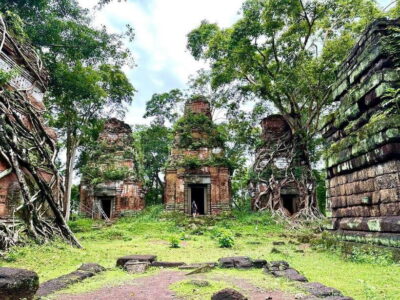
- Koh Ker feels far removed from the crowds: Its seven-tiered pyramid is unlike the usual Angkor temples and sits in a dense jungle setting.
- Beng Mealea adds a rougher ruin experience: The temple has collapsed sections and was designed in a style similar to Angkor Wat.
- Private transport keeps the plan simple: You have suitable transport for your group and do not need to arrange taxis or motorcycles between sites.
- Temple fees are not included: Plan on $37 for a one-day Angkor pass, $10 for Koh Ker, and $5 for Beng Mealea.
- Guide Sam is named for the experience: The guide stays with you for both days and can explain the buildings, carvings, and unanswered questions about the past.
Day one starts with Angkor Wat
Angkor Wat is the reason most people come to Siem Reap, and the tour places it first. That is sensible. This is the largest temple built during the Khmer Empire, and its scale can be hard to grasp until you are standing in front of its towers, galleries, and broad stone structure.
Your guide gives the setting more meaning than a quick photo stop can provide. Angkor Wat is not simply a large old building. It was built as a major religious monument and became the best-known symbol of Cambodia. A guide can help you notice how the site is organized and explain what is known about its purpose and design.
I like having the guide with you from the beginning because the monument can feel overwhelming. There is a lot to look at, and without context, you may spend your time moving from one impressive view to another without understanding what you are seeing.
The practical point is your ticket. The one-day Angkor pass costs $37 per person and is not included in the tour price. Bring extra cash, or at least make sure you have a way to pay for the required passes before the day begins.
You also need to dress for temple entry. Your shoulders and knees must be covered. This is not just a suggestion for comfort or local respect. It is an entry requirement, so choose clothing that works for all three sites.
More Beng Mealea and Koh Ker trips:
- Siem Reap: Kulen Mountain, Beng Mealea and Tonle Sap Tour
5.0 · 1,483 reviews - Kulen Mountain with Beng Mealea and Tonle Sap Small Group Tour
5.0 · 780 reviews - Koh Ker Temple Group & Beng Mealea Full-Day Join-in Tour
5.0 · 710 reviews
Ta Prohm puts the jungle in charge
After Angkor Wat, the tour continues to Ta Prohm, often called the Tomb Raider temple. The movie connection brings many people here, but the real attraction is the uneasy meeting of stone and jungle.
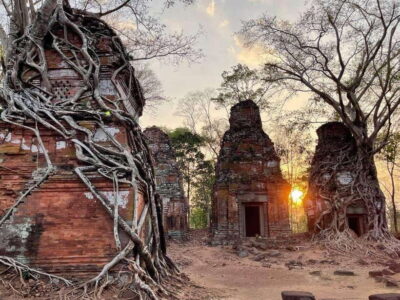
Roots grow through the old structure, and trees press against walls that were built to last for centuries. The effect is dramatic without needing much explanation. You can see how nature has pushed into the temple and changed the way the ruins are experienced.
Ta Prohm is also a useful contrast with Angkor Wat. Angkor Wat feels planned, monumental, and highly ordered. Ta Prohm feels more broken and exposed. I like seeing both on the same day because the comparison helps you understand that the Angkor Archaeological Park is not one single kind of ruin.
The private format should help here. Instead of being tied to a large group’s exact stopping points, you can spend more time on the parts that interest you. The tour description says you can go at your own pace, though the amount of time available will still depend on the day’s schedule and the guide’s plan.
Do not expect Ta Prohm to be an untouched wilderness site. It is one of the best-known temples in the area. Still, the tree-covered stone gives it a very different mood from the grand open spaces of Angkor Wat.
Bayon and the faces of Angkor Thom
The final major stop on day one is Bayon, located in the middle of Angkor Thom. Angkor Thom was an ancient walled city and served as the heart of the Khmer Empire for many centuries.
Bayon is famous for the large carved faces placed on its towers. Their identity and meaning are not completely certain. They may represent a king, a deity, or a combination of both. That uncertainty gives your guide something worthwhile to discuss rather than presenting every interpretation as settled fact.
This is one area where guide Sam’s approach matters. Feedback about Sam describes in-depth explanations and a strong interest in the unknown parts of the past. That is a good fit for Bayon, where the unanswered questions are part of the attraction.
The temple can feel close and intricate after the open scale of Angkor Wat. You will move among towers and carved stone rather than simply looking at one huge facade. Give yourself time to look up, not just ahead. The famous faces are easy to miss if you hurry through the lower sections.
Day one is full, but the three stops make sense together. Angkor Wat shows the empire’s grandest scale. Ta Prohm shows a temple reclaimed by trees. Bayon places you inside the old royal city and surrounds you with a more puzzling kind of sculpture.
Day two trades crowds for Koh Ker
The second day leaves the main Angkor area and heads toward Koh Ker. This is the part of the tour that makes it different from a standard Angkor Wat package.
Koh Ker is known for a seven-tiered pyramid-style temple. Its shape is unlike the more familiar temple designs around Angkor, and the unusual structure has inspired plenty of speculation. You do not need to accept the more fanciful theories about outside help to appreciate the engineering. The pyramid is simply a striking change from the monuments on day one.
The surrounding jungle adds to the sense of distance. Koh Ker is not described as a crowded stop, so you can expect a quieter setting than Angkor Wat, Ta Prohm, or Bayon. That quiet is valuable after the famous sites. It gives you room to study the stonework and form your own impression of the place.
The tour allows a few hours for Koh Ker and its surrounding area. That is useful because a quick stop would not do justice to a pyramid temple with nearby ruins. You have time to look at the structure from different angles instead of taking one photograph and moving on.
Koh Ker does involve another entrance charge, $10 per person, separate from the Angkor pass. It is also the most distant part of the plan, so the day includes more transport than day one. If you want only the major temples close to Siem Reap, this added journey may feel like too much. If you want a less familiar site and a different style of Khmer monument, it is the tour’s strongest reason to book.
More Angkor temple itineraries:
- Angkor Wat Sunrise or Sunset Tour with Guide from Siem Reap
5.0 · 12,109 reviews - Siem Reap: Angkor Wat: Small-Group Sunrise or Sunset Tour
5.0 · 9,444 reviews - Siem Reap: Angkor Wat 2-Day Tour with Sunrise and Sunset
4.9 · 4,429 reviews - Siem Reap: Full-Day Angkor Wat Guided Tour with Sunset
4.9 · 3,803 reviews
Beng Mealea shows Angkor Wat’s influence
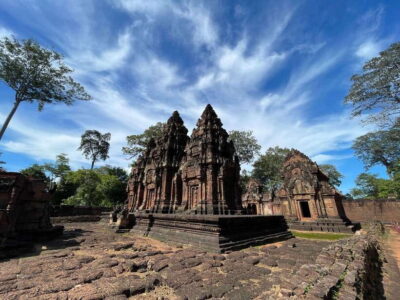
The second stop on day two is Beng Mealea. The temple once sat along an ancient highway linking the main Angkor temples with Preah Khan. Today, you see extensive ruins and a structure designed in a style similar to Angkor Wat.
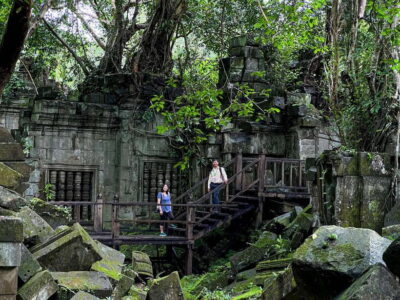
Beng Mealea is large, but it is still smaller than Angkor Wat. Its appeal comes less from size and more from the condition of the remains. Fallen stones and broken sections give the visit a rougher, less polished feel.
I would treat Beng Mealea as a useful bridge between the two days. It has a design related to Angkor Wat, so you can recognize some broad ideas from the first day. At the same time, its ruined state creates a different experience from the better-known monument.
The entrance fee is $5 per person, and it is not covered in the $147.44 tour price. Along with the $37 Angkor pass and $10 Koh Ker ticket, your known admission costs come to $52 per person. That brings the basic cost to $199.44 before food, drinks, personal expenses, and accommodation.
What the $147.44 price really covers
At $147.44 per person, the tour is not an all-inclusive temple holiday. The price covers the guide, cold water, and transport suitable for your group. It does not cover meals, drinks beyond the supplied water, personal spending, accommodation, or entry tickets.
That distinction is important. The listed cost looks modest for two days of private transport and guiding, but the final bill is higher once the $52 in temple passes is added. You should also plan for food and any other personal purchases.
I still see value in the price for the right kind of visitor. Arranging transport to five major sites, especially Koh Ker and Beng Mealea, can be a nuisance if you are doing it alone. Here, the route is organized and one guide stays with you for both days.
The private format adds value in another way. You are not sharing the activity with a large group, and you can go at your own pace. That can mean a slower look at Bayon’s carvings, extra time around Koh Ker, or a shorter stop if you have had enough.
For a solo visitor, the per-person cost may feel high. For a couple, family, or small group, group discounts may make the numbers more attractive. The tour specifically offers group discounts, but the supplied details do not state the discount amount, so check the price for your party before booking.
Transport matters more on day two
Day one keeps you among the principal temples of the Angkor Archaeological Park. Day two requires a longer trip to reach Koh Ker and Beng Mealea. Having suitable transport arranged for your group removes one major source of worry.
You do not need to book motorcycles or find a new taxi between sites. That is especially useful if you are unfamiliar with Siem Reap or do not want to negotiate separate rides.
The trade-off is less independence than hiring your own vehicle. You are following a planned two-day route, and a late start can have a real effect because there are several sites to cover. One communication problem led to a late beginning for a previous booking, so confirm the meeting details and start time clearly before the morning of the tour.
The meeting point is in Siem Reap and is described as easy to find. Bring water-resistant protection for personal items if you are concerned about conditions around old ruins, but the only comfort item specifically supplied is cold drinking water. Food and other drinks are your responsibility.
A guide can turn stone into a story
The tour includes a guide on both days, not just a driver who drops you at the entrance. That makes a difference at places such as Bayon, where the meaning of the faces is open to discussion, and at Koh Ker, where the pyramid design needs some context to make sense.
The guide named for this experience is Sam. A detailed account of the tour describes Sam giving in-depth explanations and showing intellectual curiosity about what remains unknown from the past. That is the kind of guiding I value at archaeological sites. Clear facts matter, but so does being honest about what experts do not know.
You should still ask questions. Why was a temple built in this form? What was the site’s role? Which parts are accepted history, and which are interpretation? A private tour gives you a better setting for those conversations than a large group with one fixed script.
Cold water is a small inclusion, but it is a useful one. Two days of temple visits involve heat, walking, and time outdoors. Since meals and drinks are not included, you should treat the supplied water as a helpful start, not a complete food and drink plan.
Clothing, tickets, and the pace to expect
The tour is listed as suitable for most people, and it is a private activity for your group only. Still, you should think about the physical demands of visiting large ruins over two days. The supplied details do not specify the amount of walking, stair access, or surface conditions, so ask the operator if those points matter to you.
Wear clothing that covers your shoulders and knees. Light, practical clothing is the safest choice because it meets the temple rules and keeps you comfortable during outdoor sightseeing.
Keep your ticket budget separate from the tour price:
- Angkor one-day pass: $37 per person
- Koh Ker admission: $10 per person
- Beng Mealea admission: $5 per person
You need only a one-day Angkor pass for the itinerary as described. The other two charges apply to the day-two sites. Bring extra cash for these costs, since the tour specifically warns you to do so.
The cancellation terms are friendly if your plans change early. You can cancel for a full refund up to 24 hours before the local start time. Changes or cancellations made inside that 24-hour window are not accepted for a refund.
Who should book this two-day route?
I would choose this tour if you want the famous Angkor sites but do not want to stop there. Angkor Wat, Ta Prohm, and Bayon provide the essential first look, while Koh Ker and Beng Mealea make the second day feel like a separate archaeological outing.
It suits you best if you value private transport, a guide who stays with you, and the freedom to adjust your pace. It is also a good match for a small group, since group discounts may improve the per-person price.
I would think twice if your main goal is a relaxed schedule. The route covers several large sites and includes a longer journey on day two. It also does not include meals, accommodation, or temple passes, so the advertised price is only part of your total budget.
Should you book it?
Book this experience if you want a broad two-day look at Cambodia’s temple culture, with famous monuments on the first day and quieter, more unusual ruins on the second. Koh Ker is the key reason to choose it over a standard Angkor circuit, while Beng Mealea adds another atmospheric ruin with links to Angkor Wat’s design.
Skip it if you want to focus slowly on Angkor Wat alone or avoid extra travel outside the main park. For everyone else, the combination of private transport, a two-day guide, cold water, and a flexible pace makes the $147.44 starting price reasonable, provided you add the $52 in required temple fees and plan for food.
FAQ
How long is the tour?
The experience lasts approximately two days.
Where does the tour start?
The meeting point is in Siem Reap, in Siem Reap Province.
Is this a private tour?
Yes. Only your group participates in the activity.
What sites are visited on day one?
Day one includes Angkor Wat, Ta Prohm, and Bayon in Angkor Thom.
What sites are visited on day two?
Day two includes Koh Ker and Beng Mealea.
Are temple passes included?
No. The one-day Angkor pass costs $37 per person, Koh Ker costs $10 per person, and Beng Mealea costs $5 per person.
Are food and drinks included?
Food and drinks are not included. Cold drinking water is provided.
What should I wear to the temples?
You must cover your shoulders and knees to enter the temples.
Can I cancel for a full refund?
Yes, if you cancel at least 24 hours before the experience start time. Cancellations or changes made less than 24 hours before the start are not accepted for a refund.
More 2-Day Experiences in Siem Reap
- Angkor 2-Day Sunset & Sunrise Small-Group Tour
5.0 · 2,567 reviews - 2 Days Exclusive Temple Highlights with Sunset and Sunrise Tour
5.0 · 1,157 reviews - Siem Reap: Angkor Sunrise 1- or 2-Day Guided Temples Tour
4.9 · 1,132 reviews - 2 Days Guided Historical Tour in Angkor
5.0 · 855 reviews
Fresh reviews from around Siem Reap
- Full-Day Tour Preah Vihea & Koh Ker Temple 3.7 · 3 reviews
- Savor the Countryside: Tours with Authentic Cooking Classes” 5.0 · 3 reviews
- Angkor Grand Circuit Tour & Banteay Srei 5.0 · 3 reviews
- Guided Private Tuk Tuk Tour Angkor Wat and Small Circle and Five Extras 5.0 · 3 reviews
- Angkor Wat Sunrise TukTuk Tour 5.0 · 3 reviews
- Siem Reap Temple Tour 2-Day with Sunrise/Sunset 3.7 · 3 reviews
- Bangkok to Angkor Wat 2 Days 1 Night by Flight 4.5 · 3 reviews
- Kompong Pluk Tour 5.0 · 3 reviews
Beng Mealea & Koh Ker Tours, compared.
Kulen Mountain with Beng Mealea and Tonle Sap Small Group Tour
Read our review →
Browse the lists this tour appears in