
Reviewed · FLOATING VILLAGE TOURS
From Siem Reap: Angkor Wat and Floating Village 3-Day Trip
Angkor is too large for a quick photo stop, and this three-day private tour gives you time to see its famous temples without reducing the visit to a rushed circuit. You begin with Angkor Thom and Angkor Wat, travel out to Banteay Srei and Beng Mealea, then finish with a 4:40 am sunrise and a full morning among quieter temples.
I like the mix of major monuments and ordinary Cambodian life, from palm sugar making in Phum Preah Dak to fishing families around Kampong Phluk. I also like the practical care built into the day: private air-conditioned transport, chilled water, cool towels, and guides such as Phanne, Sean, Sam, and Makara who explain both temple art and modern Cambodia. The main drawback is the heat, long days, and early start. The Angkor pass and boat ticket also cost extra, so the final bill is higher than the headline price.
In This Review
- Key points to know before booking
- Why three days works better than one
- Day one: Angkor Thom, Bayon, and Angkor Wat
- Day two: village roads, pink sandstone, and Beng Mealea
- Roluos Group and the changing Tonle Sap
- Day three: sunrise and the quieter temple circuit
- Guides, drivers, and the private format
- What the $180 price really covers
- Heat, clothing, and what to pack
- Who should book this tour
- Should you book it?
- FAQ
- How long is the tour?
- Is hotel pickup included?
- Is the Angkor pass included in the price?
- Does the tour include the Kampong Phluk boat ride?
- What language does the guide speak?
- What clothing is required?
Key points to know before booking
- Angkor Wat at sunrise: You leave your hotel at 4:40 am on the third day for the classic reflection-pool view and an early start inside the temple complex.
- A private car or minivan: You travel with your own English-speaking guide and driver, making it easier to pause, ask questions, or adjust the pace.
- Beng Mealea beyond the main circuit: This overgrown temple has a rougher, more atmospheric feel than the polished central monuments.
- Kampong Phluk by local boat: The cruise shows stilted homes, fishing life, flooded forest, and a Buddhist monastery on an artificial island.
- A strong rural component: The route through villages includes Phum Preah Dak, where you can see palm cake and palm sugar being made.
- Extra costs matter: The three-day Angkor pass costs $62 per person, and the Tonle Sap ticket with private boat cruise costs $15 per person.
Why three days works better than one
The Angkor Archaeological Park is not one temple. It is a broad collection of religious and royal sites spread across a large area, with very different styles and moods. A one-day visit can cover the headline sights, but it leaves little room for the outer temples or Tonle Sap.
This tour uses three days to separate the main Angkor circuit from the farther excursions. You get the grand scale of Angkor Thom and Angkor Wat on day one, the countryside and distant temples on day two, and a sunrise followed by a string of smaller sites on day three.
That structure also gives you time to learn. A good guide can explain why one temple uses sandstone while another uses brick, how Hindu and Buddhist beliefs appear in the carvings, and how royal power shaped the city. Guides including Sean, Phanne, Sam, Seila, and Makara have been praised for clear English, strong storytelling, and useful help with photographs.
You should still expect a full schedule. Temple visits involve walking on uneven ground, climbing steps, and spending time in direct sun. The air-conditioned vehicle is a welcome reset between stops, but it does not remove the physical demands of the day.
More floating village visits:
- From Siem Reap: Kampong Phluk Floating Village Tour by Boat
4.9 · 6,979 reviews - Sunset tour of Kampong Phluk stilts home village on the Tonle Sap
5.0 · 4,865 reviews - Siem Reap: Kampong Phluk Floating Village Tour with Boat
4.9 · 3,843 reviews
Day one: Angkor Thom, Bayon, and Angkor Wat
Pickup begins at 8:00 am from your hotel. Before entering the park, you stop to buy the three-day Angkor pass. Keep this cost in mind when comparing the tour with other packages, since the $180 tour price does not include it.
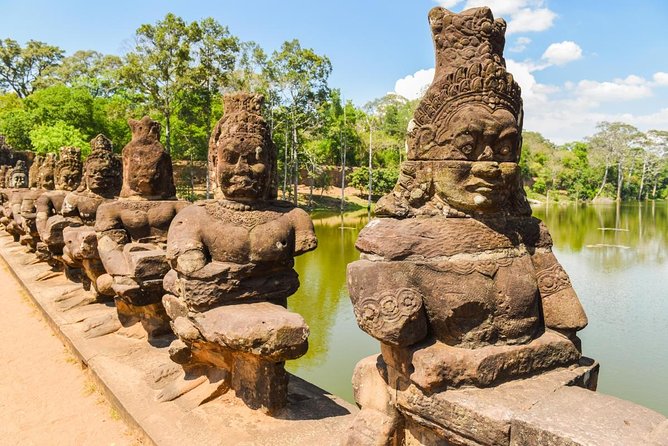
The first major stop is Angkor Thom, the last ancient capital of the Khmer Empire. The entrance itself prepares you for the scale of the site, but the Bayon is the real focus. Its towers carry the famous calm, smiling faces associated with the temple.
Bayon rewards a slow visit. From outside, the towers can look crowded and confusing. Inside, the changing angles bring different faces into view, along with carved scenes of battles, ceremonies, markets, and daily life. Your guide is especially useful here because the structure is less straightforward than Angkor Wat.
The route continues to the Terrace of the Elephants, the Royal Palace area, the Terrace of the Leper King, and Baphoun. The Terrace of the Elephants was linked to royal ceremonies and displays. The Terrace of the Leper King is more compact, with carved figures that become easier to understand when you look closely at the walls.
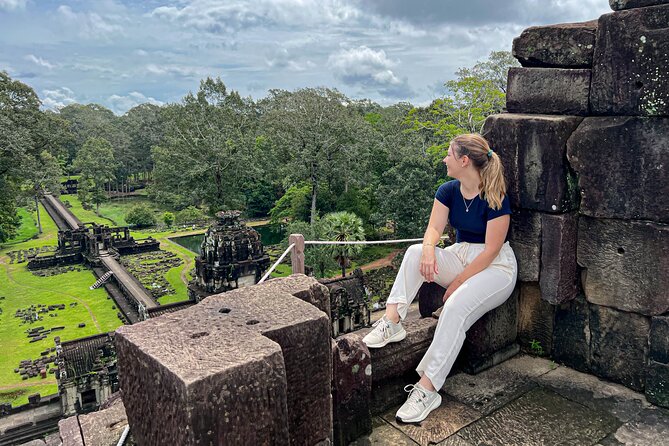
Baphoun is a large Hindu temple within Angkor Thom. Its high stone form gives you a sense of the engineering involved in building these monuments, but uneven steps and hot stone make comfortable footwear important.
Lunch is at a local restaurant opposite Angkor Wat. Food and soft drinks are not included, so check prices before ordering and carry some Cambodian currency or another accepted payment method. The setting is convenient, though a restaurant close to a major monument may not be the cheapest meal of your trip.
After lunch, you explore Angkor Wat itself. This is the architectural centerpiece of the tour, but it deserves more than a quick outside photograph. The galleries, towers, bas-reliefs, and long approach all work together to show how the temple was designed as a sacred royal center.
Your guide can help you read the stories carved into the walls and explain how the temple’s Hindu beginnings connect with later Buddhist use. Plan to walk steadily, and bring water even though the driver supplies chilled bottles during the day.
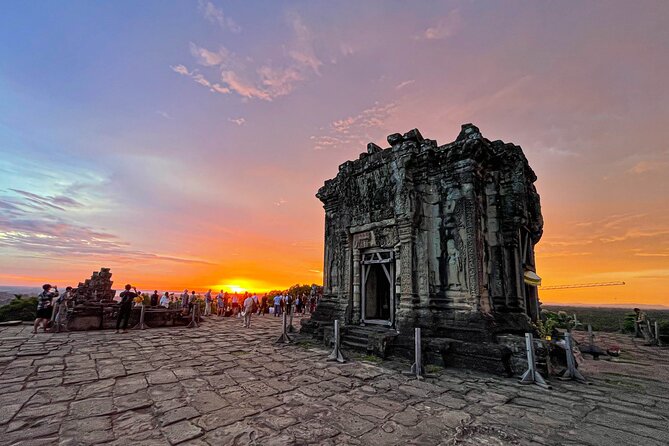
Sunset at Phnom Bakheng is listed as an option. If you want to go, the group should reach the mountain before 4:30 pm. This is not a guaranteed extra stop in the same way as the main itinerary, so confirm the plan with your guide. The climb and the late timing may not appeal after a day of temples, but the hill offers a broad view and a different way to end the first day.
Day two: village roads, pink sandstone, and Beng Mealea
The second day begins at 8:00 am in a private air-conditioned vehicle. The drive to Banteay Srei takes you through rural Siem Reap Province, with rice paddies, traditional homes, and scenes of everyday village life along the road.
The stop at Phum Preah Dak adds substance to the drive. You can see how local people make palm cake and palm sugar, products closely tied to Cambodia’s countryside. This is one of the most useful parts of the itinerary because it connects the famous temples with the work and food traditions of present-day communities.
Banteay Srei is often called the ladies’ temple. It is smaller than Angkor Wat, but its pink sandstone carvings are unusually fine and detailed. The scale encourages close looking. Instead of being overwhelmed by a huge enclosure, you can focus on decorative figures, lintels, and careful stonework.
Banteay Srei is also farther from Siem Reap than the central Angkor temples. The drive takes time, but the route through the countryside helps make the journey part of the day rather than dead travel time.
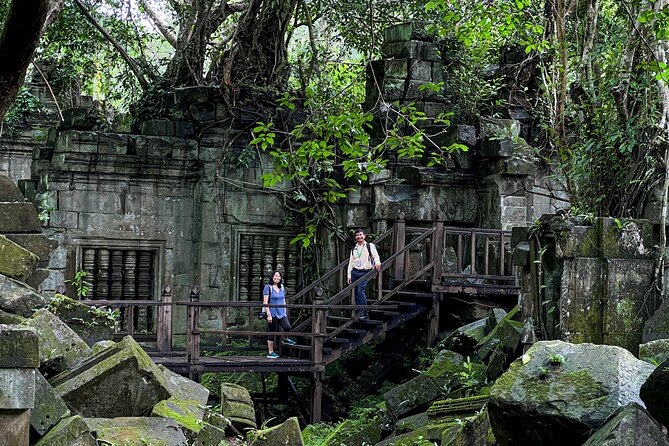
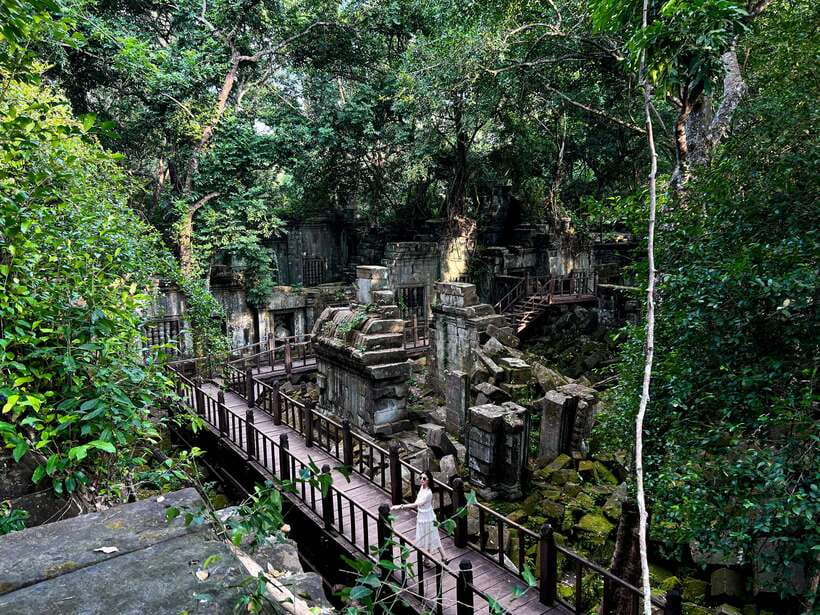
Beng Mealea changes the mood again. This jungle temple is known for its fallen stones, overgrown passages, and rougher condition. It feels less controlled than the restored and heavily visited monuments near Angkor Wat. You may need to crawl or carefully move through sections, so this is not the best stop for anyone seeking easy, level walking.
The temple’s broken state is part of its appeal, but it also means you should watch your footing and follow your guide’s instructions. Comfortable shoes are essential. In wet weather, stones and paths may be slippery, and the heat can make the physical effort feel greater than expected.
After the temple visits, you stop for lunch at a local restaurant. Cambodian food is not included in the price, but the tour allows you to eat during the route instead of returning to town between every sight. That keeps the day moving, though you may want to ask your guide for suggestions if you have dietary needs.
Roluos Group and the changing Tonle Sap
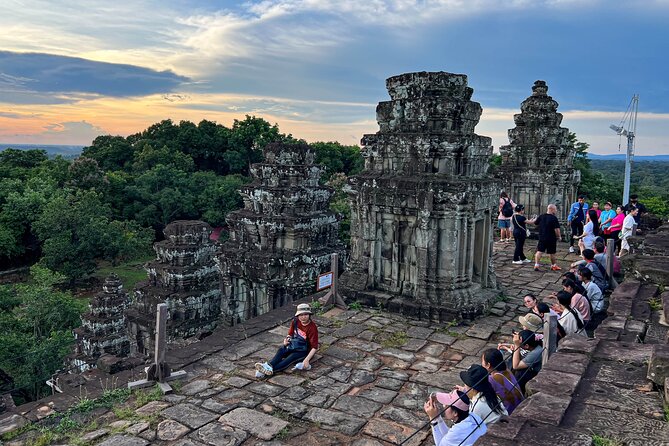
The afternoon includes Bakong and Lolei, two temples of the Roluos Group. Bakong is a substantial early temple with a stepped central form, while Lolei offers a different look at the development of Khmer religious architecture. These sites receive less attention than Angkor Wat, which makes them useful for understanding that the empire’s building story did not begin with the most famous monuments.
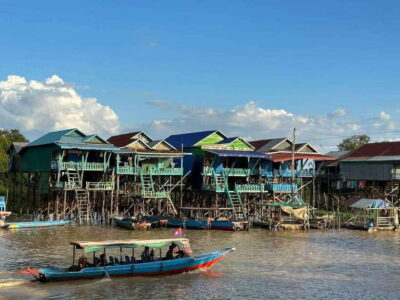
From there, the tour continues to Kampong Phluk, about 21 kilometers from Siem Reap. At the port, you take a local boat onto Tonle Sap Lake. The ticket and private boat cruise cost $15 per person and are not included in the tour price.
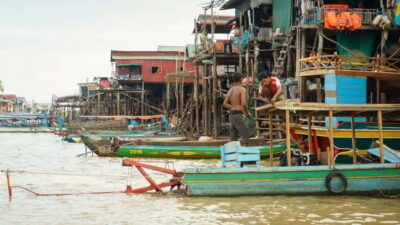
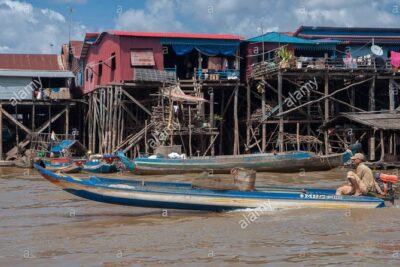
Kampong Phluk is a fishing and flooded village. Many homes stand on long poles, allowing residents to cope with seasonal changes in water level. The boat gives you a view of homes, waterways, and working life from the lake rather than from a road.
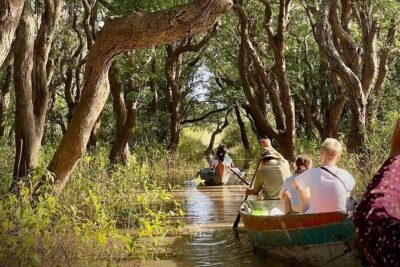
The surrounding flooded mangrove forest is part of the cruise. You might see crab-eating macaques, and the area is home to about 3,000 inhabitants. The water level and scenery vary by season, so the village will not look exactly the same on every visit.
You also visit a Buddhist monastery built on an artificial island. This stop gives the boat trip a cultural focus beyond scenery. I would treat Kampong Phluk as a look at a living community, not as a staged village attraction. Keep your camera respectful around homes and people, and listen to your guide’s explanation of how fishing and seasonal water shape local life.
The boat ride adds variety after two days of stone temples, but it can also make day two feel especially long. You will have spent hours in the vehicle, walked around several monuments, and then boarded a boat. If you tire easily, tell your guide early so the pace can be managed sensibly.
More Angkor temple itineraries:
- Angkor Wat Sunrise or Sunset Tour with Guide from Siem Reap
5.0 · 12,109 reviews - Siem Reap: Angkor Wat: Small-Group Sunrise or Sunset Tour
5.0 · 9,444 reviews - Siem Reap: Angkor Wat 2-Day Tour with Sunrise and Sunset
4.9 · 4,429 reviews - Siem Reap: Full-Day Angkor Wat Guided Tour with Sunset
4.9 · 3,803 reviews
Day three: sunrise and the quieter temple circuit
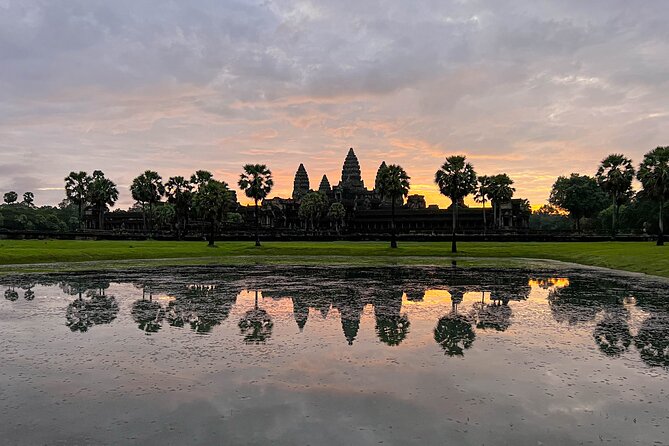
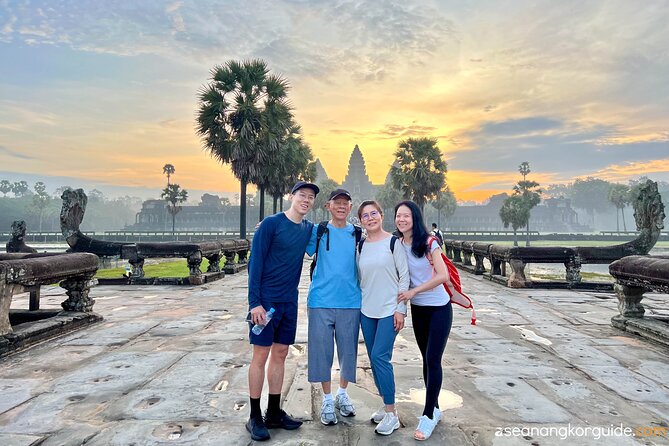
The alarm comes early. You ask your hotel to prepare a takeaway breakfast, then meet the guide and driver at 4:40 am for Angkor Wat at sunrise.
Sunrise is the tour’s most demanding morning, but it also changes how you see the temple. In the dim light, the towers appear gradually, and the morning air is usually more comfortable than the midday heat. You should not expect solitude, since sunrise at Angkor Wat is a popular event, but the early start lets you experience the monument before the day becomes hotter.
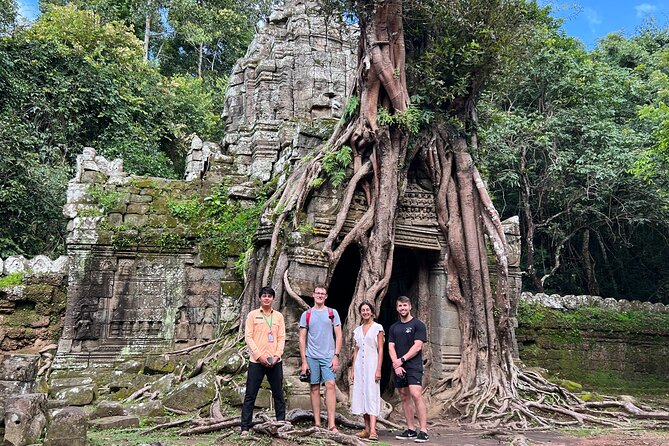
The itinerary then turns to Ta Prohm, the jungle temple often associated with the film Tomb Raider. Tree roots and stone walls create the site’s famous appearance. Ta Prohm is popular, so visiting early helps reduce the worst of the crowds and gives you more time to look at the carved galleries.
Do not rush through Ta Prohm only to photograph the largest roots. The temple’s design, blocked corridors, and sense of age are just as important. Your guide can point out less obvious rooms and details, and several guides on this tour are also happy to take photographs for you.
Next comes Preah Khan, sometimes called the Father temple. It is a long, layered complex with corridors and courtyards that reward patient exploration. Neak Pean offers another change of scale, with a central sanctuary surrounded by water channels. Ta Som, known for tree growth around its structure, provides a smaller and more intimate stop.
East Mebon is a tenth-century brick temple. Its material and design differ from the later sandstone monuments, giving you a chance to compare building methods across different periods. Pre Rup, often described as a royal crematorium temple, closes the temple program with a strong high-level view and a more solemn character.
The sequence is well judged for anyone who wants more than Angkor Wat and Bayon. You see large state temples, jungle ruins, smaller sanctuaries, brick construction, and water-centered design in one morning. The tradeoff is another long stretch of walking after the sunrise start.
Guides, drivers, and the private format
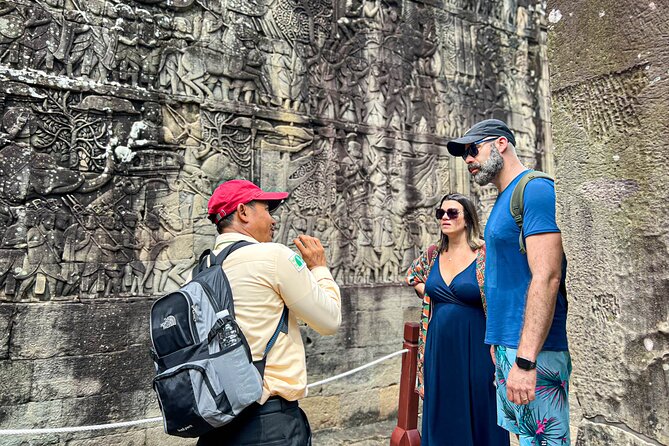
The guide is central to the quality of this experience. Names associated with particularly strong guiding include Phanne, Sean, Sam, Veasna, Seila, Saroun, David, Mony, Raman, and Youk Makara. You may not receive a specific guide unless you request one, but the repeated strengths are clear: good English, detailed explanations, patience with questions, and a friendly manner.
Phanne has been praised for combining temple knowledge with personal insight into Cambodian life. Sean is described as enthusiastic and well spoken, while Seila is noted for finding good photo angles. Makara is especially useful if you want help with photographs as well as explanations of kings, religions, villages, and construction.
The private format matters. You are not waiting for a large group to gather at every doorway, and you can ask for more time when a temple catches your interest. Prior arrangements may also allow changes, such as adding Kulen Mountain and its waterfall for an extra charge, though that is not part of the standard plan.
Drivers are another strong point. Drivers including Tha, Ouk, Kim, Khim, Chantrea, Sky, and Phat have been praised for careful driving, punctual pickups, clean vehicles, and small practical touches. After temple walks, you can return to air conditioning, cold water, and a fresh towel. In Cambodia’s heat, that is not decoration. It helps you keep going.
What the $180 price really covers
The advertised price is $180 per person. It includes private air-conditioned transport, hotel pickup and drop-off, an English-speaking guide, chilled bottled water, and towels.
You must add $62 per person for the three-day Angkor pass and $15 per person for the Tonle Sap ticket with private boat cruise. That brings the known per-person total to $257 before meals, soft drinks, and personal spending.
For three days of private transport and guiding, that can be fair value, especially for two people or a small private group. The price also saves you from arranging separate transport to distant Beng Mealea, Banteay Srei, and Kampong Phluk.
It is not an all-inclusive package. Food is extra, the Angkor pass is a substantial additional cost, and optional additions such as Kulen Mountain cost more. Compare the full figure, not only the starting price.
Heat, clothing, and what to pack
The weather is hot for much of the year, with one review describing temperatures near 40 degrees Celsius. Bring sunscreen, insect repellent, a sun hat, comfortable clothes, and sturdy walking shoes.
Angkor is a religious site, so you need covered shoulders, chest, and knees. Sleeveless shirts are not allowed. Alcohol and drugs are also prohibited.
Hydration deserves serious attention. The driver provides chilled water, and umbrellas are available during the rainy season, but you should still carry what you need between the vehicle and the temples. A small bag, camera, extra sunscreen, and a light change of clothing can make the day easier.
The itinerary includes uneven stones, stairs, temple corridors, and some crawling at Beng Mealea. You should be comfortable walking for several hours across three days. The program is not built around long rest periods, although the private vehicle gives you breaks between sites.
Who should book this tour
I would choose this tour if you want a broad first visit to Siem Reap without organizing several separate day trips. It suits couples, families with older children, solo visitors who value a private guide, and photographers who want time at both famous and less crowded temples.
It is also a good fit if you want cultural context rather than only transport and entrance stops. The village visit, palm sugar demonstration, floating community, and monastery bring Cambodia beyond the stones.
I would think twice if you dislike early mornings, intense heat, long drives, or structured sightseeing. The 4:40 am departure is non-negotiable for the sunrise plan, and day two packs several distant sites into one schedule.
Cancellation is free up to 24 hours before departure, and you can reserve now and pay later. Pickup is from your hotel lobby, where you should wait about 10 minutes before the arranged time. The guide and driver will carry a sign with your last name.
Should you book it?
Book this tour if you want the major Angkor monuments, Beng Mealea, rural Siem Reap, and Kampong Phluk in one private package. The strongest reasons are the thoughtful route, reliable air-conditioned transport, and guides who can explain both the temples and present-day Cambodia.
Before paying, budget for the $62 Angkor pass, $15 boat ticket, meals, and any extras. If you can handle the heat and the early morning, this is a well-rounded three-day introduction to the area. If you prefer a slower holiday, ask in advance about adjusting the pace rather than trying to fit every stop into a shorter visit.
FAQ
How long is the tour?
The experience lasts three days, with daily pickup from your accommodation in Siem Reap.
Is hotel pickup included?
Yes. Private hotel pickup and drop-off are included. You should wait in the hotel lobby about 10 minutes before the scheduled pickup time.
Is the Angkor pass included in the price?
No. The three-day Angkor pass costs $62 per person and must be purchased separately.
Does the tour include the Kampong Phluk boat ride?
No. The Tonle Sap lake ticket and private boat cruise cost $15 per person and are paid separately.
What language does the guide speak?
The live tour guide speaks English.
What clothing is required?
You need clothing that covers your shoulders, chest, and knees. Sleeveless shirts are not allowed. Comfortable shoes, sunscreen, insect repellent, and a sun hat are recommended.
More 3-Day Experiences in Siem Reap
- From Siem Reap: Angkor Wat and Floating Village 3-Day Trip
5.0 · 100 reviews - 3-Day Angkor Wat with All Interesting Major Temples, Banteay Srei & Beng Mealea
5.0 · 70 reviews - 3-Day Angkor Wat & All Interesting Major Temples & Kulen Mount Waterfall
5.0 · 63 reviews - 3 Days Siem Reap Explorer – Small Group
5.0 · 50 reviews
More 1-Day Tours in Siem Reap
- 1-Day Amazing Angkor Wat Tour with Sunset & All Interesting Major Temples
5.0 · 308 reviews - Angkor Wat one Day Private Tour for All Highlight Angkor Temples
5.0 · 199 reviews - 1-Day private Angkor Temple Tour from Siem Reap
4.9 · 178 reviews - 1-Day Angkor Wat Sunrise & All Interesting Temples Private Tour
5.0 · 174 reviews
Fresh reviews from around Siem Reap
- Full-Day Tour Preah Vihea & Koh Ker Temple 3.7 · 3 reviews
- Savor the Countryside: Tours with Authentic Cooking Classes” 5.0 · 3 reviews
- Guided Private Tuk Tuk Tour Angkor Wat and Small Circle and Five Extras 5.0 · 3 reviews
- Angkor Wat Sunrise TukTuk Tour 5.0 · 3 reviews
- Angkor Grand Circuit Tour & Banteay Srei 5.0 · 3 reviews
- Siem Reap Temple Tour 2-Day with Sunrise/Sunset 3.7 · 3 reviews
- Bangkok to Angkor Wat 2 Days 1 Night by Flight 4.5 · 3 reviews
- Kompong Pluk Tour 5.0 · 3 reviews
Floating Village Tours, compared.
Sunset tour of Kampong Phluk stilts home village on the Tonle Sap
Read our review →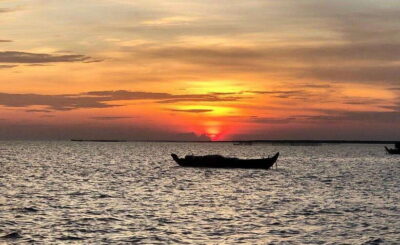
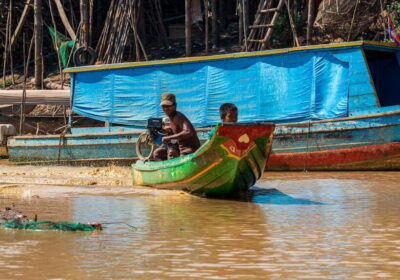
Siem Reap Floating Village Kampong Phluk Sunset with Boat
Read our review →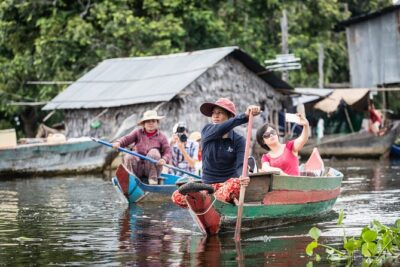
Kompong Phluk Floating Village Half-Day Tour ( Morning / Sunset )
Read our review →
Browse the lists this tour appears in