
Reviewed · ANGKOR TEMPLE TOURS
1-Day private Angkor Temple Tour from Siem Reap
Angkor Wat is only the beginning. This private seven-hour outing takes you from the carved galleries of Angkor Wat to Bayon’s giant stone faces, the royal terraces of Angkor Thom, and Ta Prohm’s tree-covered ruins. A good guide, such as Sim, Som, Arun, Rith, or Reed, turns a huge pile of stones into a readable story about Khmer kings, Hindu and Buddhist beliefs, war, ceremony, and daily life.
I like two things right away: the private format lets you set the pace, and the guide can point out photo spots and details you would likely miss alone. I also like the simple but valuable care from the transport team, with cold bottled water and, in many cases, refreshing towels waiting after each temple.
The catch is that this is a full, hot day with plenty of walking and some climbing. The advertised $34 price also excludes the $37 Angkor pass, and lunch is not listed as included, so your real basic cost is closer to $71 per person before food.
In This Review
- Key things to know before you go
- Why a private Angkor tour makes sense
- Starting at Angkor Wat with two hours for the essentials
- The South Gate and Bayon’s stone faces
- Baphuon, Phimeanakas, and Angkor Thom’s royal terraces
- Ta Prohm, the atmospheric final temple
- Guides who add the most value
- Heat, walking, clothes, and comfort
- Is $34 a good value?
- Who should book this private temple day?
- Should you book it?
- FAQ
- How long does the private Angkor temple tour last?
- Which temples are included?
- Is the Angkor entry ticket included?
- Is transport included?
- Is lunch included?
- Are children under 12 charged for temple entry?
- What should I wear to the temples?
Key things to know before you go
- Eight major stops in about seven hours: You cover Angkor Wat, Angkor Thom, Bayon, Baphuon, Phimeanakas, the royal terraces, and Ta Prohm.
- A private guide changes the experience: Ask questions, pause for shade, skip details you already know, or spend longer at a favorite carving.
- Cold water matters: The driver supplies bottled water, and many tours also include cool hand towels or refreshing wipes.
- The $34 fee is not the full price: The Angkor temple pass costs $37 per person and is paid separately onsite.
- The tour suits photo seekers: Guides such as Rith, Som, San, and Reed are praised for finding good viewpoints and taking photos.
- Wear suitable clothing: Knees must be covered for temple entry, so choose light, comfortable clothes that meet that rule.
Why a private Angkor tour makes sense
Angkor is not one temple. It is a vast archaeological area spread around Siem Reap, with major monuments separated by roads, trees, and open ground. You can walk around parts of a single site for hours and still miss the meaning behind the carvings.
That is where a private guide earns the fee. At Angkor Wat, the bas-reliefs are not just decoration. They show scenes from Hindu epics, royal power, battles, processions, and ordinary life. Without explanation, you see beautifully carved walls. With a guide, you begin to understand what the figures, gestures, and repeated scenes are doing.
The private setup also gives you control. If the heat is wearing you down, you can rest. If you are fascinated by a gallery, you can stay. If you have already seen one part of Angkor on an earlier day, guides such as Mr. Phing Bunna have adjusted the route for returning visitors.
The transport is arranged around your group rather than a large coach. Depending on the vehicle provided, you may ride in a tuk-tuk or an air-conditioned car or minivan. The tuk-tuk gives you an open-air ride between monuments, while an air-conditioned vehicle can be a major comfort in hot weather, especially with children.
More Angkor temple itineraries:
- Angkor Wat Sunrise or Sunset Tour with Guide from Siem Reap
5.0 · 12,109 reviews - Siem Reap: Angkor Wat: Small-Group Sunrise or Sunset Tour
5.0 · 9,444 reviews - Siem Reap: Angkor Wat 2-Day Tour with Sunrise and Sunset
4.9 · 4,429 reviews
Starting at Angkor Wat with two hours for the essentials
The day begins with hotel pickup in Krong Siem Reap. Your guide and driver meet you in the hotel lobby, with the guide holding a card showing the lead guest’s name. Starting times vary, so check availability when booking.
The first major visit is Angkor Wat, the largest religious monument in the world. Give yourself time here. The approach across the causeway builds anticipation, but the real reward comes once you begin studying the galleries, towers, courtyards, and carved walls.
The planned visit lasts about two hours, including walking, photo stops, breaks, and guiding. That is enough for a strong first look, though not enough to examine every section in detail. You will walk on uneven surfaces and may climb steps, so good shoes are more useful than stylish ones.
Your guide explains the temple’s original Hindu purpose, its later Buddhist use, and the stories carved into the stone. The long bas-relief galleries can seem confusing at first. A guide helps you focus on key scenes rather than trying to decode every figure by yourself.
This is also where the photo help becomes useful. Guides such as Som, Rith, San, and Reed are praised for knowing good viewpoints and for taking pictures for their groups. Tell your guide early if photographs matter to you, or if you prefer to spend your time looking rather than posing.
The tour description includes a breakfast pause, and the day also allows time for a lunch break. Food is not included in the stated package, so plan to pay for meals separately. If you are particular about breakfast or need snacks, bring your own food.
The South Gate and Bayon’s stone faces
From Angkor Wat, the route continues to Tonle Om Gate, better known as the South Gate of Angkor Thom. Allow about 20 minutes here for a guided visit and photographs.
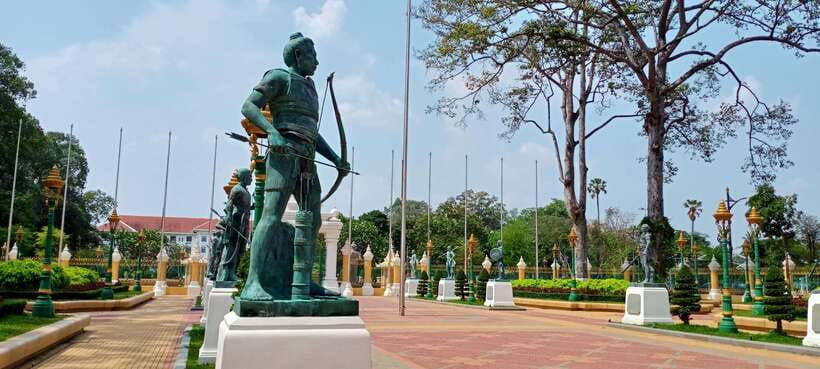
This gate is one of five entrances to Angkor Thom, the ancient capital of the Khmer Empire. The approach gives you a sense of scale: a broad causeway, monumental gate architecture, and rows of figures connected with Khmer religious imagery.
It is a short stop, but it prepares you for the shift from Angkor Wat’s long galleries to Angkor Thom’s royal and civic center. Your guide can also help you find a clear photo position, since the gate and causeway are popular stopping points.
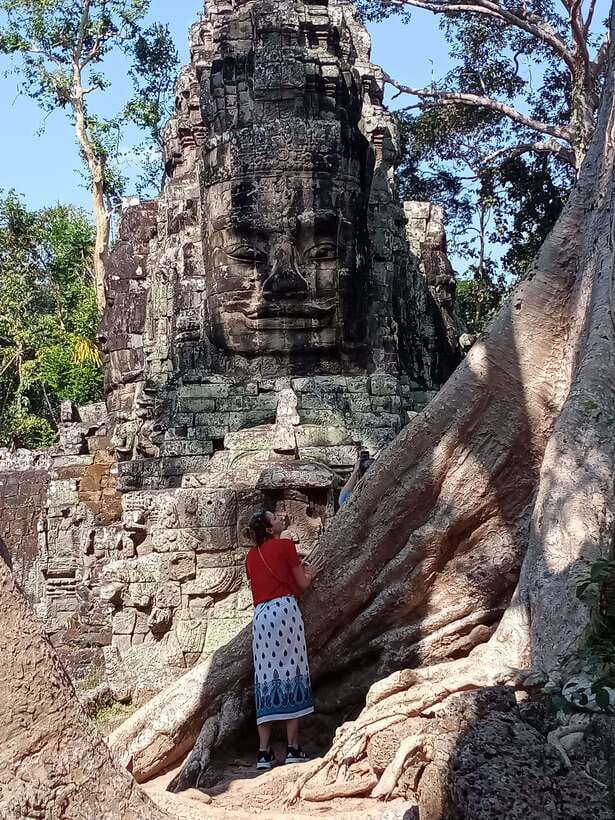
Bayon follows, with around 40 minutes planned. This is one of the most memorable temples in the complex because of the enormous serene faces carved on its towers. More than 200 faces are associated with the temple’s upper levels, creating a strange and powerful feeling as you move through the stone corridors.
Look up often. The faces are easy to spot, but Bayon’s bas-reliefs deserve attention too. They combine mythology, royal events, battles, markets, animals, and scenes from everyday life. This mixture makes Bayon feel more human than a monument devoted only to kings and gods.
Forty minutes gives you a useful introduction, but you may want longer if you enjoy close study of carvings. The private format means you can ask for a little extra time, provided the rest of the day still fits.
Baphuon, Phimeanakas, and Angkor Thom’s royal terraces
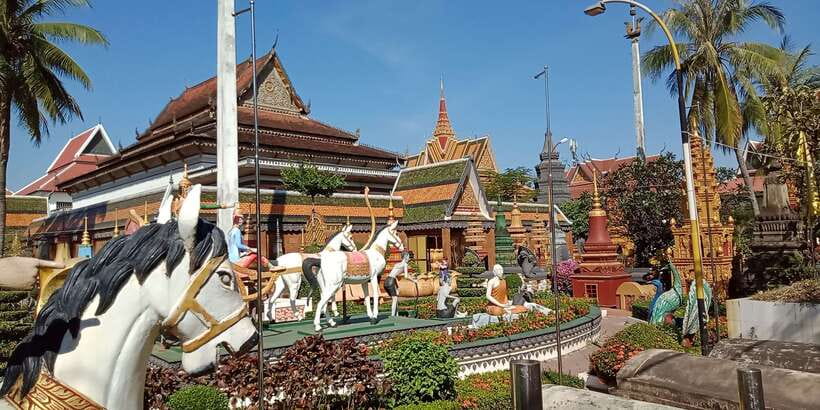
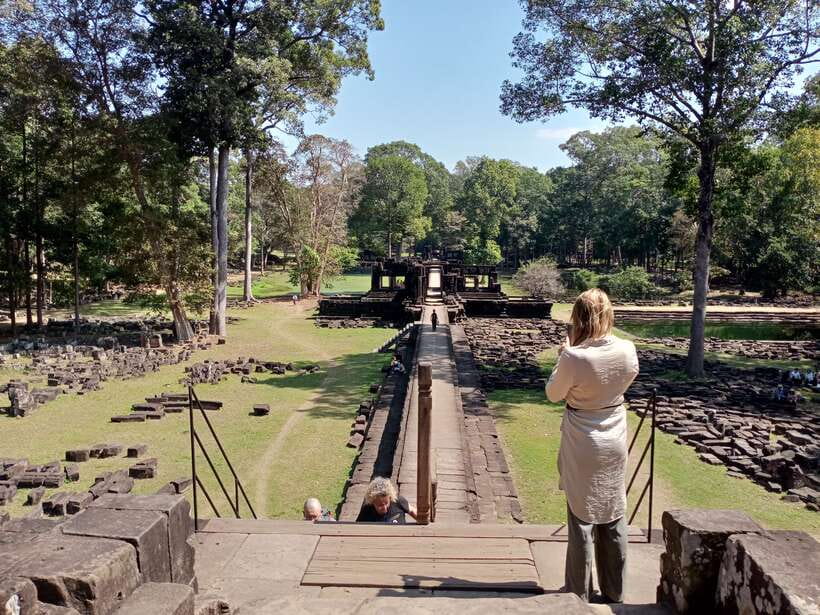
Baphuon is an 11th-century temple mountain built as a state temple. Its three-tiered form gives the site a strong vertical feel, and the walk across its raised approach is part of the experience.
The planned visit is about 40 minutes. Expect steps, uneven footing, and sun exposure. Your guide can explain how temple mountains represented a sacred center and how the structure fitted into the power of the Khmer court.
Next comes a short stop at a less obvious site, followed by Phimeanakas, or the Celestial Temple. Built near the end of the 10th century, it has a three-tier pyramid form. The visit lasts about 30 minutes.
Phimeanakas is not as instantly dramatic as Angkor Wat or Ta Prohm. That is part of its value. It helps you see Angkor Thom as a working royal capital rather than a collection of isolated monuments. Your guide can connect the temple to the court complex around it and explain how sacred buildings supported royal authority.
The Terrace of the Elephants is a 350-meter-long platform used as a giant reviewing stand for public ceremonies. You will spend about 20 minutes here. The long wall is lined with carved elephants and other figures, but the terrace’s position is just as important as its decoration. This was a place for kings to watch ceremonies, processions, and displays of power.
The Terrace of the Leper King takes another 20 minutes. Its U-shaped structure is linked by some interpretations to royal cremation rites. The walls contain layered carvings, including figures that can be missed if you only glance from the outside.
These shorter stops work best as part of the wider story. You are not simply ticking off monuments. You are moving through the ceremonial center of a former empire, from gates and temples to platforms built for public display.
Other Siem Reap experiences to weigh up
- 1-Day Amazing Angkor Wat Tour with Sunset & All Interesting Major Temples
5.0 · 308 reviews - Angkor Wat one Day Private Tour for All Highlight Angkor Temples
5.0 · 199 reviews - 1-Day Angkor Wat Sunrise & All Interesting Temples Private Tour
5.0 · 174 reviews - Angkor Wat Sunrise Small-Group 1-Day Tour from Siem Reap
5.0 · 107 reviews
Ta Prohm, the atmospheric final temple
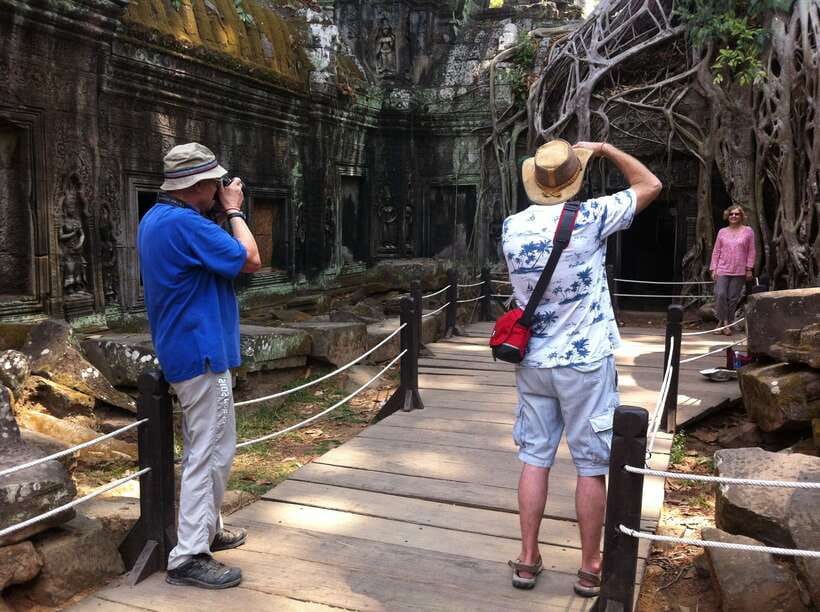
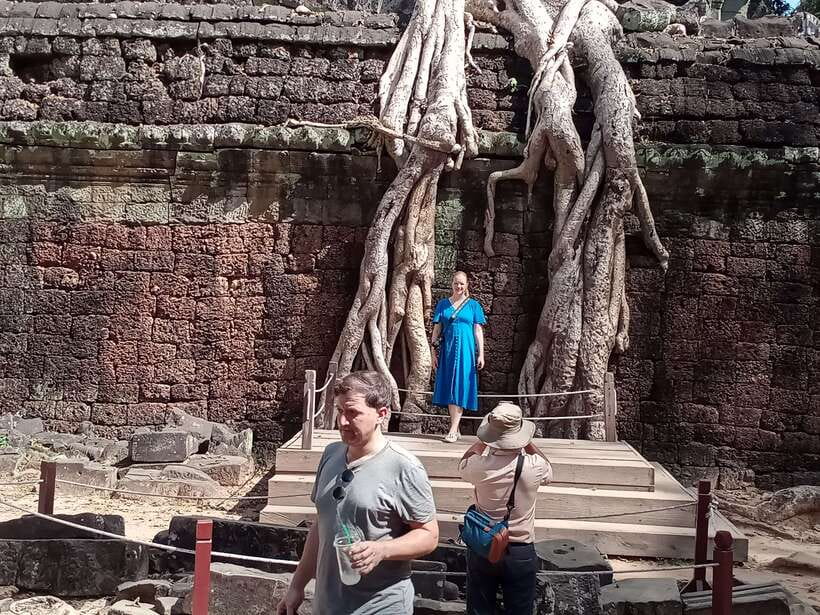
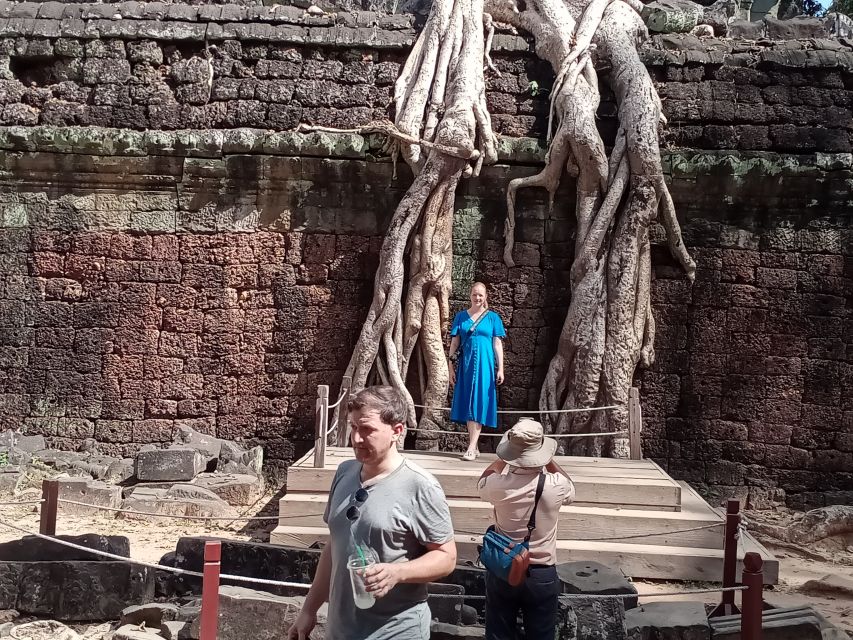
Ta Prohm is saved for the early afternoon and receives about an hour. That longer visit is sensible. This is the temple many people picture when they imagine Angkor: stone corridors partly swallowed by jungle, with large trees growing over walls and among the ruins.
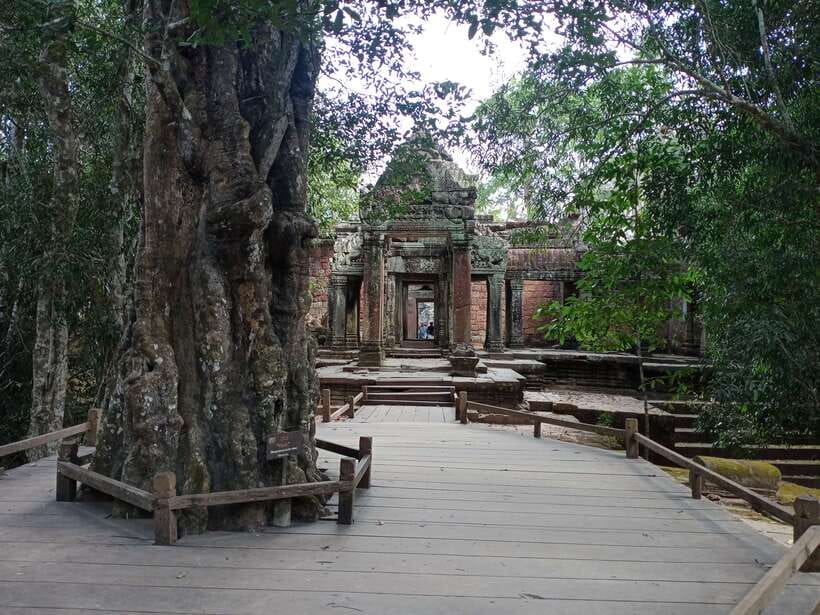
Ta Prohm was built in the 13th century and has been kept in much the same condition in which it was found. The trees and broken galleries create a dramatic setting, but the site is not only a backdrop for photographs. Look at the carved doorways, galleries, and devotional spaces before focusing on the famous tree roots.
The temple can feel crowded, especially around the best-known photo positions. A private guide can help you move through the site in a sensible order and may know quieter corners. Still, no guide can remove the heat, uneven paths, or other people from a popular monument.
An hour is enough to see the key areas without turning Ta Prohm into an exhausting expedition. If you are carrying camera equipment, keep it light. You will already be walking for several kilometers across the day, with climbing at some temples.
After Ta Prohm, you return to Siem Reap. The tour is scheduled for roughly seven hours, but the private format allows some adjustment. One group finished with sunset at Angkor Wat, while others shortened the route because children struggled in the heat. Confirm any special timing request before or at the start of the day.
Guides who add the most value
The strongest part of this experience is the human one. The guide names that appear most often include Sim, Som, Arun, Rith, Reed, San, and Bunna. You are not guaranteed a particular guide unless the operator confirms one, but the pattern is clear: the guide’s ability to explain, adapt, and help with photographs matters more than the vehicle alone.
Sim is described as having more than 30 years of guiding experience in Siem Reap. Arun is praised for his command of temple history and for helping with wider Cambodia plans. Som is frequently noted for clear explanations and a friendly manner.
Rith and Reed are especially useful if you care about photos. They know where to stand, can suggest viewpoints, and may take pictures for you. San is described as engaging and enthusiastic, with strong answers to questions about the temples.
Ask questions. The best use of a private guide is not listening silently to a fixed speech. Ask about the carvings, Cambodian religion, the Khmer Empire, local life, or how the temples were used. The guides are also a useful bridge to present-day Siem Reap and Cambodia, not just the distant past.
Heat, walking, clothes, and comfort
The main physical challenge is the combination of heat, humidity, walking, and stairs. One group estimated about five kilometers of walking, with plenty of climbing. That figure will vary, but it gives you a realistic sense of the day.
Carry a camera if you want one, but also bring sunscreen, comfortable shoes, and clothing that covers your knees. The information says shorts at the knees are allowed, while the general clothing rule says shorts are not allowed, so the safest choice is knee-covering trousers, a skirt, or light long shorts that clearly meet temple requirements.
Cold water is supplied, and drivers often provide cool towels or wipes after each stop. This small service has real value in Cambodia’s heat. You can also request shade breaks and adjust the pace because the group is private.
Families should think about stamina. Children under 12 receive free entry to the temples, but free admission does not make the walk easier. One family ended the full route early when a child found the heat too much. An air-conditioned vehicle may be preferable to a tuk-tuk for families or anyone sensitive to heat.
Is $34 a good value?
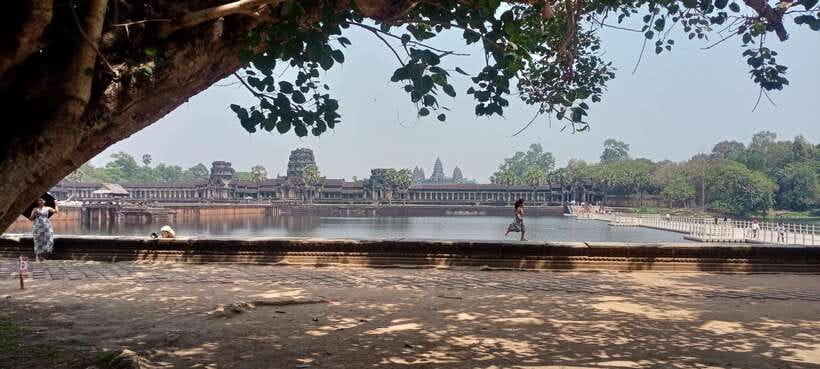
The advertised tour price is $34 per person, but the Angkor entry ticket is extra at $37 per person. That pass covers all the temples on this route and is paid onsite, bringing the basic cost to $71 per person before meals.
At first glance, the entry fee is larger than the tour fee. That is normal for this kind of visit, since the pass is a separate charge for access to the Angkor Archaeological Park. The tour fee then pays for your guide, return transport, and bottled water.
I think the value is good if this is your first visit or if you want context rather than just transport. A private guide can prevent a long day of wandering without understanding what you are seeing. The flexibility also matters: you are not forced to match a large group’s pace.
The value is less clear if you already know Angkor well and prefer to explore alone. You will still need the entry pass, and lunch is extra. But even repeat visitors can benefit from a guide who rearranges the route around temples already seen.
The current rating is 4.9 out of 5 from 178 ratings, with praise centered on guides, flexibility, safe driving, water, towels, and photo assistance. That matches what I would consider the tour’s strongest selling points.
Who should book this private temple day?
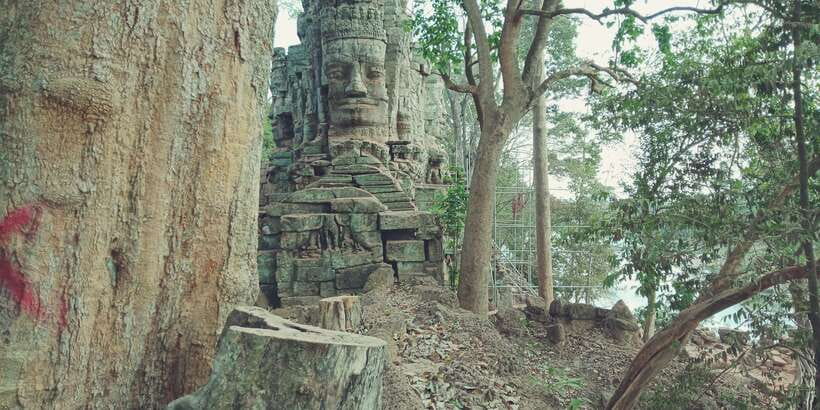
I would choose this tour if you have one main day for Angkor and want to see the essential monuments without organizing transport yourself. It is also a good fit if you want an English-speaking guide who can explain religious imagery and historical scenes in plain language.
It suits couples, families, and small groups who value control over the schedule. You can rest when needed, ask unlimited questions, spend more time at a favorite site, or shorten a stop that does not interest you.
Photographers should also consider it. The guides’ knowledge of viewpoints and willingness to take photos can save time and help you return with better memories.
I would be more cautious if you dislike hot weather, long walks, or temple steps. Seven hours is an ambitious schedule, even though the pace can be adjusted. Bring water, sunscreen, suitable clothes, and snacks, and be realistic about how many sites you can enjoy in one day.
Should you book it?
Yes, if you want a well-organized first look at Angkor with history, transport, and flexibility built in. The route covers the essential temples, but the guide is what makes the day worthwhile: Sim, Som, Arun, Rith, Reed, and San are all associated with the qualities you need here, clear English, strong temple knowledge, patience, and useful photo help.
Book it with two facts in mind: the $37 temple pass is extra, and this is a physically demanding day. If you accept those costs and prepare for the heat, the private format offers excellent control and a much fuller understanding of Angkor than simply hiring a ride between monuments.
FAQ
How long does the private Angkor temple tour last?
The tour lasts about seven hours, including hotel pickup, temple visits, walking, breaks, and the return to Siem Reap.
Which temples are included?
The route includes Angkor Wat, Tonle Om Gate, Bayon, Baphuon, Phimeanakas, the Terrace of the Elephants, the Terrace of the Leper King, Ta Prohm, and additional short stops.
Is the Angkor entry ticket included?
No. The Angkor entry ticket costs $37 per person, covers all the temples, and is paid separately onsite.
Is transport included?
Yes. Return transfers from your hotel in Krong Siem Reap are included. Transport may be by tuk-tuk, car, or minivan, depending on the arrangement.
Is lunch included?
No. The tour allows time for breakfast and lunch breaks, but meals are not listed among the inclusions.
Are children under 12 charged for temple entry?
Children under 12 receive free entry to the temples. The tour price and booking arrangements for children should be confirmed when reserving.
What should I wear to the temples?
Wear comfortable clothing that covers your knees. Bring comfortable shoes and a camera, and prepare for heat, humidity, walking, and some climbing.
Fresh reviews from around Siem Reap
- Full-Day Tour Preah Vihea & Koh Ker Temple 3.7 · 3 reviews
- Savor the Countryside: Tours with Authentic Cooking Classes” 5.0 · 3 reviews
- Angkor Wat Sunrise TukTuk Tour 5.0 · 3 reviews
- Angkor Grand Circuit Tour & Banteay Srei 5.0 · 3 reviews
- Guided Private Tuk Tuk Tour Angkor Wat and Small Circle and Five Extras 5.0 · 3 reviews
- Siem Reap Temple Tour 2-Day with Sunrise/Sunset 3.7 · 3 reviews
- Bangkok to Angkor Wat 2 Days 1 Night by Flight 4.5 · 3 reviews
- Kompong Pluk Tour 5.0 · 3 reviews
Angkor Temple Tours, compared.

Angkor Wat Sunrise or Sunset Tour with Guide from Siem Reap
Read our review →



Angkor Wat Sunrise tour with Small – Group and Guide tours
Read our review →
Angkor Wat Highlights and Sunrise Guided Tour from Siem Reap
Read our review →

Full-Day Angkor Wat Sunrise Private Tour with Guide from Siem Reap
Read our review →Browse the lists this tour appears in