
Reviewed · ANGKOR TEMPLE TOURS
Siem Reap: Full Day Angkor Wat Temple Tour with Sunset
Angkor Wat is only the beginning of this full-day outing. You will also walk beneath the tree-covered ruins of Ta Prohm, meet Bayon’s calm stone faces, and finish with sunset from Phnom Bakheng. I like the small-group format and the practical touches, especially the cold towels after temple walks. The one catch is that your $20 tour price does not include the $37 Angkor pass.
Guide Sela has earned special praise for his clear English, humor, temple knowledge, and knack for taking photographs. You should also expect a long, hot day, plenty of walking, and a sunset climb that can feel tiring after several major temple visits.
In This Review
- Key points at a glance
- Why this $20 Angkor tour offers good value
- Starting the day at 9am in Siem Reap
- Angkor Wat, the day’s grand opening
- Angkor Thom and the southern gate
- Bayon’s smiling stone faces
- The Terrace of the Elephants and Terrace of the Leper King
- Ta Prohm and the jungle path
- The climb to Phnom Bakheng at sunset
- The guide, vehicle, and comfort details
- Who should book this tour?
- Should you book the Angkor sunset tour?
- FAQ
- How long does the Angkor temple tour last?
- What time does pickup begin?
- Is hotel pickup included?
- Is the Angkor temple pass included in the $20 price?
- Can the guide help me buy the temple pass?
- Which temples are included?
- Where does the tour finish?
- Is transportation air-conditioned?
- How large is the group?
- What is included for refreshments?
Key points at a glance
- Four major Angkor stops: Visit Angkor Wat, Angkor Thom, Bayon, and Ta Prohm in one carefully packed day.
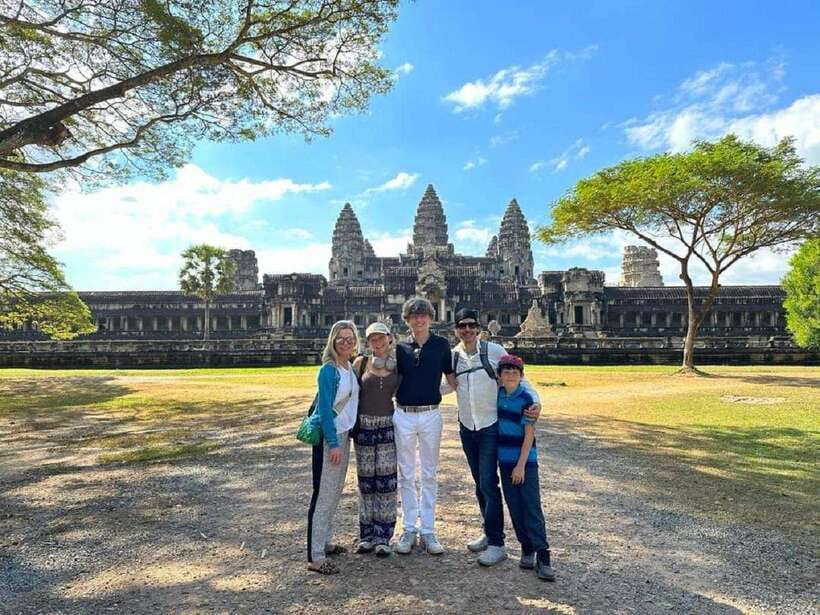
- Sunset at Phnom Bakheng: Finish at the temple mountain linked to the first Khmer capital in the area.
- Local cultural context: A Cambodian guide explains the carvings, buildings, art, and customs so the ruins make sense.
- Small-group transport: Travel by air-conditioned minivan or minibus with hotel pickup and drop-off.
- Useful comfort breaks: Chilled water and cold towels are provided after temple visits.
- Budget-friendly pricing: The tour costs $20 per person, with the required Angkor pass sold separately.
Why this $20 Angkor tour offers good value
At $20 per person, this is a low-cost way to cover the core Angkor circuit with transport and a guide. You are not paying only for a ride to the ruins. The price includes hotel pickup and drop-off, an air-conditioned vehicle, a Cambodian guide, a driver, bottled water, and towels.
The extra cost is the temple pass. You need a one-day or three-day Angkor pass, priced at $37 per person, so your basic admission and tour total comes to $57 before drinks or food. That is still a fair price for a nine-hour day, especially if you value not having to arrange a vehicle or work out the temple route yourself.
I like that the guide adds meaning to the stones. Angkor Wat is huge, and its galleries, towers, bas-reliefs, and courtyards can blur together if you walk through without context. A guide can point out what you are seeing and connect the monuments to Cambodian culture and the Khmer empire.
The tradeoff is simple: this is a highlights tour, not a slow, private study of every carving. You will see several major sites in one day, but the schedule leaves less room for lingering, quiet photography, or wandering off the main route.
More Angkor temple itineraries:
- Angkor Wat Sunrise or Sunset Tour with Guide from Siem Reap
5.0 · 12,109 reviews - Siem Reap: Angkor Wat: Small-Group Sunrise or Sunset Tour
5.0 · 9,444 reviews - Siem Reap: Angkor Wat 2-Day Tour with Sunrise and Sunset
4.9 · 4,429 reviews
Starting the day at 9am in Siem Reap
Pickup begins around 9am, and you are asked to be ready up to 30 minutes before your scheduled pickup. The vehicle is air-conditioned, which matters in Cambodia, where temple paths and open courtyards can become tiring quickly.
You will travel first to the main entrance near the southern gate area. If you have not bought your Angkor pass online, the guide can take you to the ticket office before the temple visits begin. I would handle the pass early so the group can move into the complex without an unnecessary delay.
The tour is advertised as a small group limited to 10 participants. That is a useful middle ground. You get the efficiency of shared transport while keeping the group small enough to hear the guide and stay together at busy temple entrances.
The tour lasts about nine hours. That includes driving, temple walks, rest stops, and the final sunset climb. You should treat this as a full day outdoors rather than a casual sightseeing loop.
Angkor Wat, the day’s grand opening
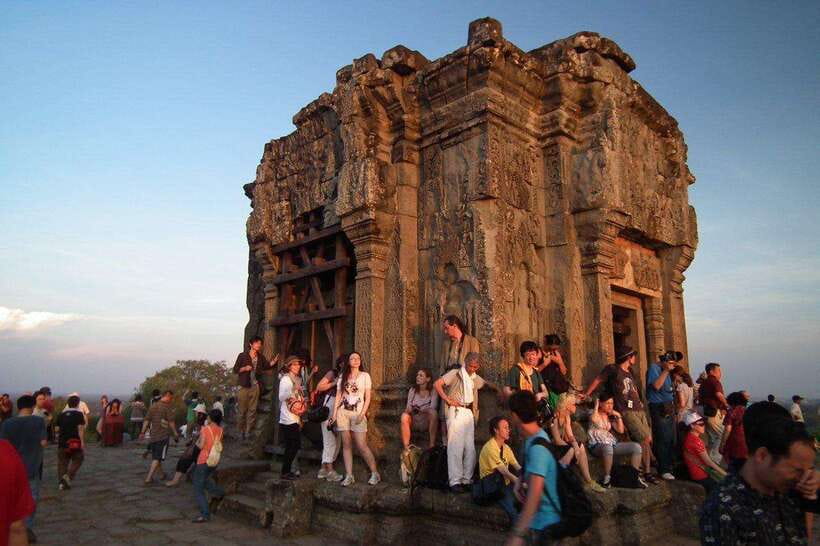
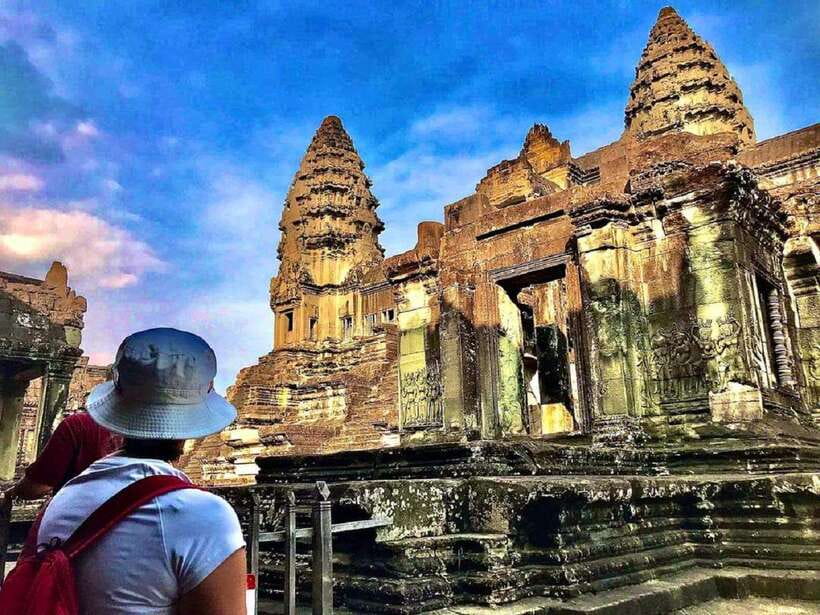
Angkor Wat is the main event for many people, and it deserves time. Built in the 12th century, it is the largest religious structure in the world, with long galleries, carved stone scenes, towers, and broad temple grounds.
Your guide will help you read the site rather than simply circle it. Look for the relationship between the central towers, the galleries, and the reliefs. The scale can be hard to grasp from a photograph, but walking through the complex gives you a better sense of how much labor and planning went into the monument.
I especially like beginning with Angkor Wat because it gives you a reference point for the rest of the day. The site is formal and grand, while Ta Prohm feels tangled and atmospheric. Bayon is more intimate, with its famous carved faces. Each stop has a different mood.
The drawback is that Angkor Wat can be demanding at the start of the day. You will walk over stone and open ground, and the site has many sections rather than one single room. Comfortable shoes and modest clothing are practical choices, since you are visiting religious monuments.
Angkor Thom and the southern gate
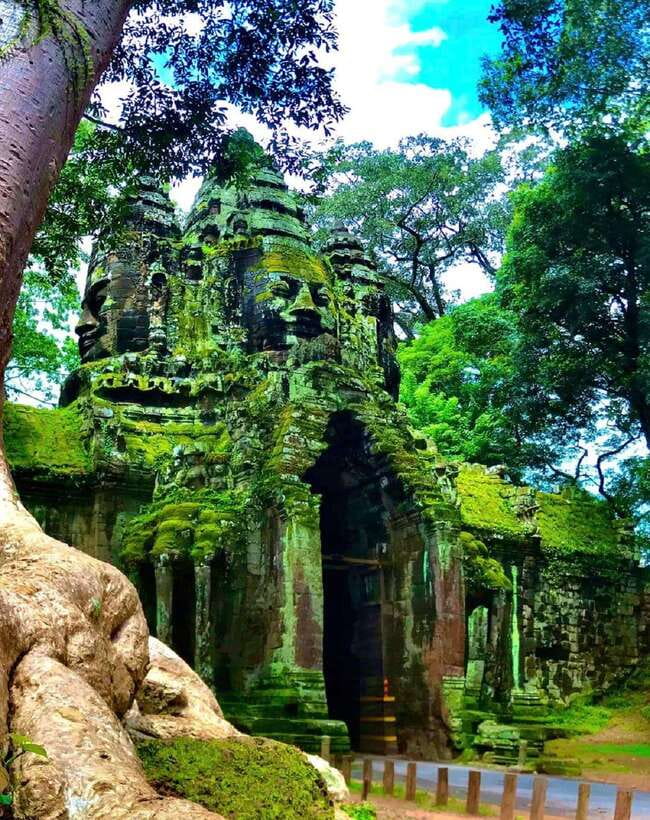
Next comes Angkor Thom, the large walled city that contains Bayon and several other important monuments. The southern gate is one of the memorable approach points, with stone figures lining the route.
The gate gives you a strong first look at Khmer sculpture. On either side, figures appear to pull or hold a long serpent-like form, creating a dramatic entrance into the ancient city. Your guide can explain the meaning and point out details you might miss from the vehicle.
This is also a good moment to understand that Angkor is not one temple. It is a broad complex of monuments, roads, terraces, gates, and former civic spaces. Angkor Thom helps you see the area as a city rather than a single isolated ruin.
You will not spend the whole day at every site, so listen for the guide’s meeting instructions. Shared tours work best when you note where the vehicle is parked and return on time after each walk.
Other Siem Reap experiences to weigh up
- Sunset tour of Kampong Phluk stilts home village on the Tonle Sap
5.0 · 4,865 reviews - Siem Reap: Full-Day Angkor Wat Guided Tour with Sunset
4.9 · 3,803 reviews - Angkor Wat Sunset Small Group Tour with Lunch Included
5.0 · 3,059 reviews - Angkor 2-Day Sunset & Sunrise Small-Group Tour
5.0 · 2,567 reviews
Bayon’s smiling stone faces
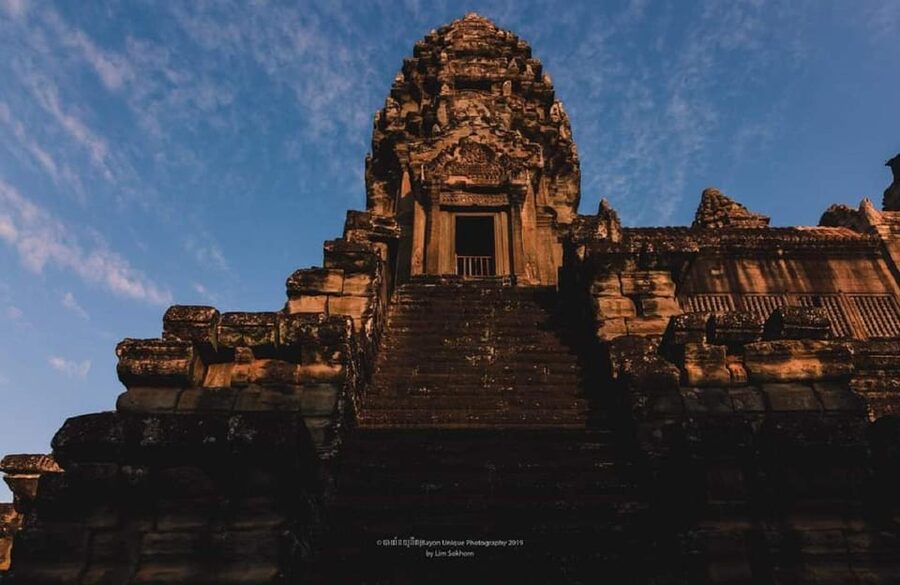
Bayon Temple is the emotional center of the Angkor Thom visit. Its towers carry large carved faces that look outward in several directions, giving the temple its quiet, watchful character.
I like Bayon because it feels less predictable than Angkor Wat. The structure is a maze of towers, passages, and carved surfaces. You can be standing close to a face one moment, then step into a narrow gallery where another appears above you.
The guide’s role is valuable here. Without explanation, you may see only repeated faces and weathered stone. With context, you can pay attention to how the towers were arranged and how the carvings fit the temple’s religious and political purpose.
Take your time when the group pauses. Bayon rewards slow looking, but the stone floor and confined paths can make the site feel crowded. A small group helps, though this remains a popular stop.
The Terrace of the Elephants and Terrace of the Leper King
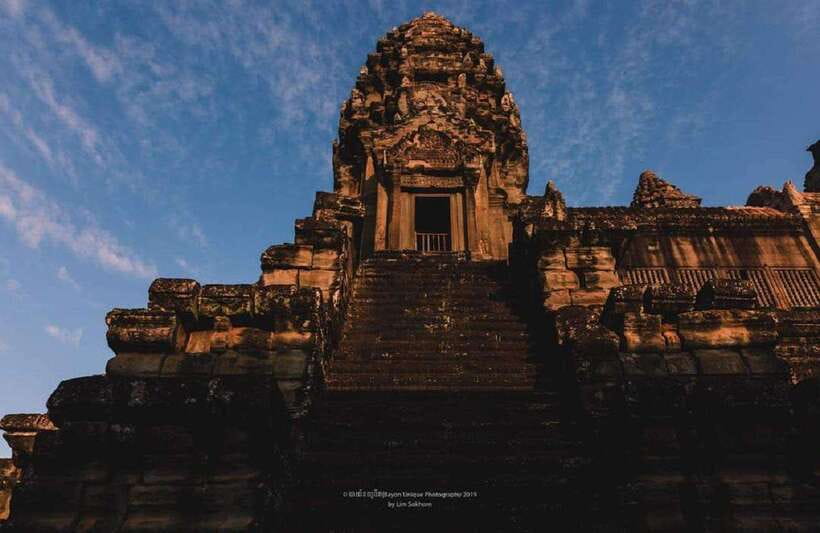
The tour also visits the Terrace of the Elephants and the Terrace of the Leper King. These sites are less enclosed than Bayon, so they offer a useful change of pace after the temple corridors.
The Terrace of the Elephants is known for its long carved frontage and elephant figures. It once formed part of a major ceremonial area, and its scale makes more sense when you imagine public processions and royal events moving through the space.
The Terrace of the Leper King has detailed carvings and layered walls. The outer surface is only part of the story, so your guide can help you understand why looking around the sides and inner sections matters.
These terraces are not likely to deliver the same instant impact as Angkor Wat or Ta Prohm. Their value is in the details and in the wider picture they give you of Angkor Thom. I would pay attention here instead of treating them as quick photo stops.
Ta Prohm and the jungle path
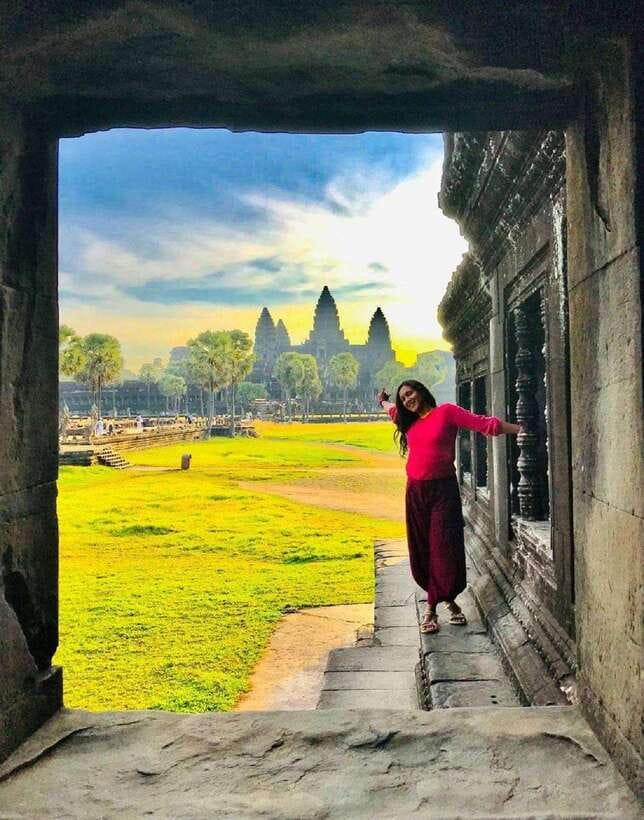
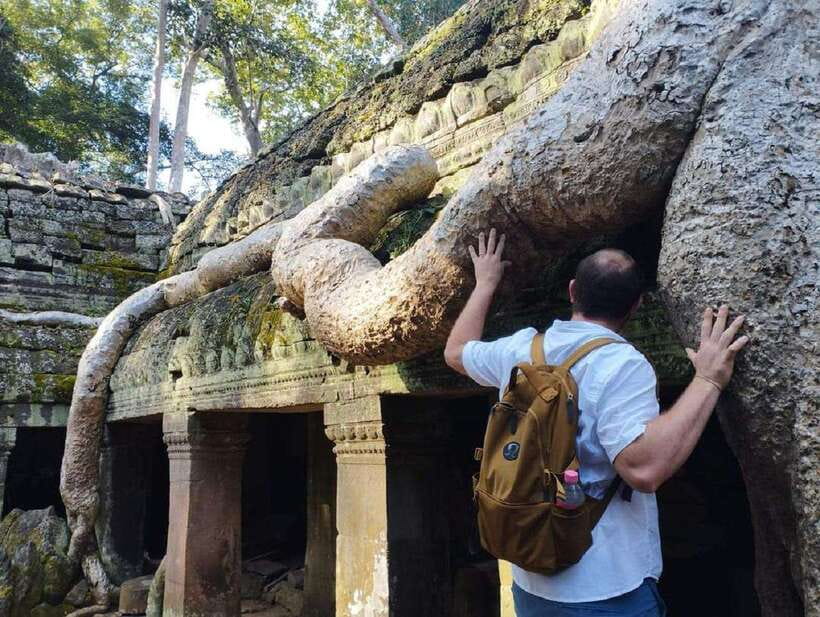
Ta Prohm is the temple most closely linked with trees growing through ruins. You will walk along a path through leafy jungle surroundings before reaching the stone remains, and the change from open courtyards to shaded growth gives this stop a strong sense of place.
The roots and walls create striking photographs, but Ta Prohm is more than a scenic backdrop. The trees show how the site looked after long periods without full maintenance, while the carved galleries and collapsed sections reveal the damage caused by time and nature.
I like the contrast with Angkor Wat. At Angkor Wat, the architecture feels ordered and monumental. At Ta Prohm, you see a rougher meeting between stone and forest. That contrast is one reason the full circuit works better than visiting only one temple.
The paths may be uneven, and the combination of heat, walking, and crowded photo points can wear you down. Wear shoes with a firm sole, keep water with you, and use the rest break before the final climb.
The climb to Phnom Bakheng at sunset
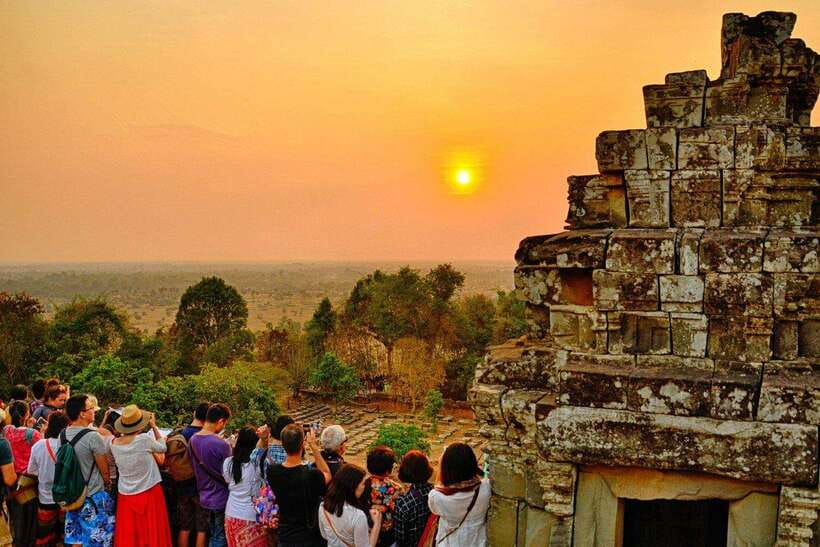
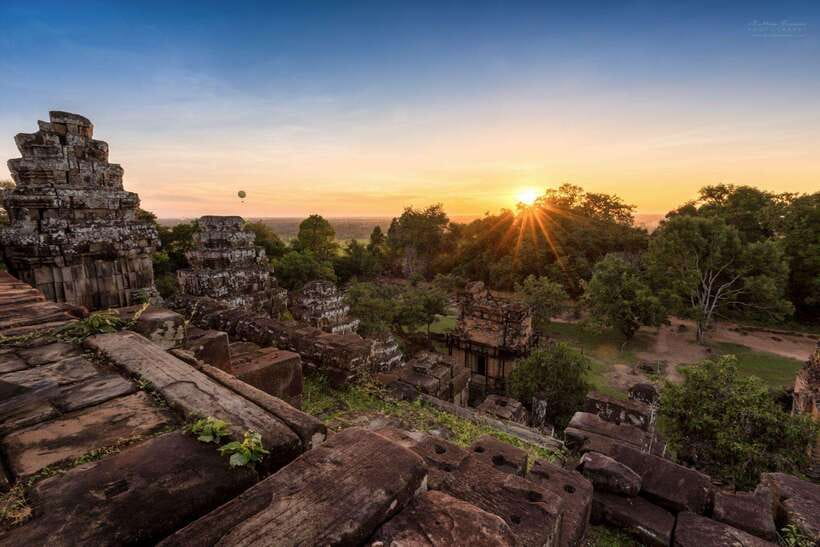
The final major section takes you to Phnom Bakheng, a temple mountain associated with the first Khmer capital in the region. You will climb steps to reach the high point and watch the sun set from the temple area.
This ending gives the day a clear finish. After spending hours studying carved walls and towers at ground level, you gain a wider view from above. Sunset timing depends on the day and the group’s progress, so the tour cannot promise a long, empty viewing period.
The climb is the main physical consideration. You may already be tired from Angkor Wat, Angkor Thom, Bayon, and Ta Prohm, so do not treat Phnom Bakheng as an effortless final stop. Take the ascent at your own pace and keep expectations realistic.
The setting can also be busy. The appeal of sunset means other people may be there, and your view may depend on where the group can stand. Still, ending at Phnom Bakheng is a worthwhile choice because it adds a different perspective to the temple day.
The guide, vehicle, and comfort details
The strongest guide profile attached to this experience is Sela. He is described as having excellent English conversation, a good sense of humor, and the ability to answer questions about both the temples and Cambodia more broadly.
That combination matters. Temple tours can become a list of dates and rulers, but an approachable guide makes it easier for you to ask questions. Sela is also noted for taking photographs, which may be useful if you want a few pictures of yourself rather than another collection of empty doorways.
The transport is an air-conditioned minivan or minibus. The vehicle is especially useful between sites, when you need to cool down instead of walking every stretch under the sun.
Cold water and chilled towels are provided after temple visits. This sounds minor, but it is one of the best practical features of the day. A cool towel can make the next temple feel much more manageable after a hot walk.
The driver handles the route and return to Siem Reap, while the guide explains the monuments. At the end of the sunset visit, you return to your hotel by vehicle.
Who should book this tour?
I would choose this outing if you want to see the main Angkor highlights in one day without hiring a private car or building your own schedule. It fits first-time visitors who want a guide to explain what they are seeing and who appreciate hotel pickup.
It also suits budget-minded visitors. The $20 tour fee is reasonable once you understand that the Angkor pass is separate. The small group keeps the price down while providing more structure than going alone.
This may not suit you if you want to spend an entire day at Angkor Wat, avoid a fixed timetable, or photograph the ruins in near silence. The itinerary covers a lot, and the sunset climb comes after a demanding schedule.
Bring water-friendly, comfortable clothing, sturdy shoes, and patience for heat and crowds. Keep your passport or required details available when purchasing the temple pass, and be ready before pickup time so the group can leave Siem Reap on schedule.
Should you book the Angkor sunset tour?
I would book this tour if your priority is efficient coverage of Angkor Wat, Angkor Thom, Bayon, Ta Prohm, and Phnom Bakheng in one day. The guide support, air-conditioned transport, hotel transfers, water, and cold towels make the $20 price a practical deal, even after adding the $37 temple pass.
The best reason to choose it is the balance of famous monuments and useful interpretation. The main caution is stamina. You will walk, climb, handle the heat, and follow a group timetable for about nine hours.
If that sounds like your kind of sightseeing, this tour gives you a solid first look at Angkor with a memorable sunset finish.
FAQ
How long does the Angkor temple tour last?
The tour lasts about nine hours, including transport, temple visits, breaks, and the sunset stop at Phnom Bakheng.
What time does pickup begin?
Pickup begins at about 9am. You should be ready up to 30 minutes before pickup from your hotel.
Is hotel pickup included?
Yes. Hotel pickup and drop-off in Siem Reap are included.
Is the Angkor temple pass included in the $20 price?
No. The Angkor pass costs $37 per person and is paid separately. You need a one-day or three-day pass.
Can the guide help me buy the temple pass?
Yes. If you have not purchased the pass online, the guide can take you to the ticket office before the tour begins.
Which temples are included?
The route includes Angkor Wat, Angkor Thom, Bayon Temple, Ta Prohm, the Terrace of the Elephants, and the Terrace of the Leper King.
Where does the tour finish?
The tour finishes with sunset at Phnom Bakheng, followed by a return transfer to your hotel in Siem Reap.
Is transportation air-conditioned?
Yes. Transportation is provided by air-conditioned minivan or minibus.
How large is the group?
The activity is described as a small group limited to 10 participants.
What is included for refreshments?
A chilled bottle of water and towels are included. Soft drinks are not included.
More Full-Day in Siem Reap
- Full-Day Angkor Wat Sunrise Private Tour with Guide from Siem Reap
5.0 · 2,920 reviews - Siem Reap: Angkor Wat Sunrise and Full-Day Sightseeing Tour
4.9 · 2,828 reviews - Full-Day Guided Sunset Tour of Angkor Wat
5.0 · 1,507 reviews - Siem Reap: Full Day Angkor Wat Temple Experience with Sunset
4.9 · 1,490 reviews
Fresh reviews from around Siem Reap
- Full-Day Tour Preah Vihea & Koh Ker Temple 3.7 · 3 reviews
- Savor the Countryside: Tours with Authentic Cooking Classes” 5.0 · 3 reviews
- Angkor Wat Sunrise TukTuk Tour 5.0 · 3 reviews
- Angkor Grand Circuit Tour & Banteay Srei 5.0 · 3 reviews
- Guided Private Tuk Tuk Tour Angkor Wat and Small Circle and Five Extras 5.0 · 3 reviews
- Siem Reap Temple Tour 2-Day with Sunrise/Sunset 3.7 · 3 reviews
- Bangkok to Angkor Wat 2 Days 1 Night by Flight 4.5 · 3 reviews
- Siem Reap Countryside Sunset Vespa Tour or Tuk Tuk 4.5 · 3 reviews
Angkor Temple Tours, compared.

Angkor Wat Sunrise or Sunset Tour with Guide from Siem Reap
Read our review →



Angkor Wat Sunrise tour with Small – Group and Guide tours
Read our review →
Angkor Wat Highlights and Sunrise Guided Tour from Siem Reap
Read our review →

Full-Day Angkor Wat Sunrise Private Tour with Guide from Siem Reap
Read our review →Browse the lists this tour appears in