
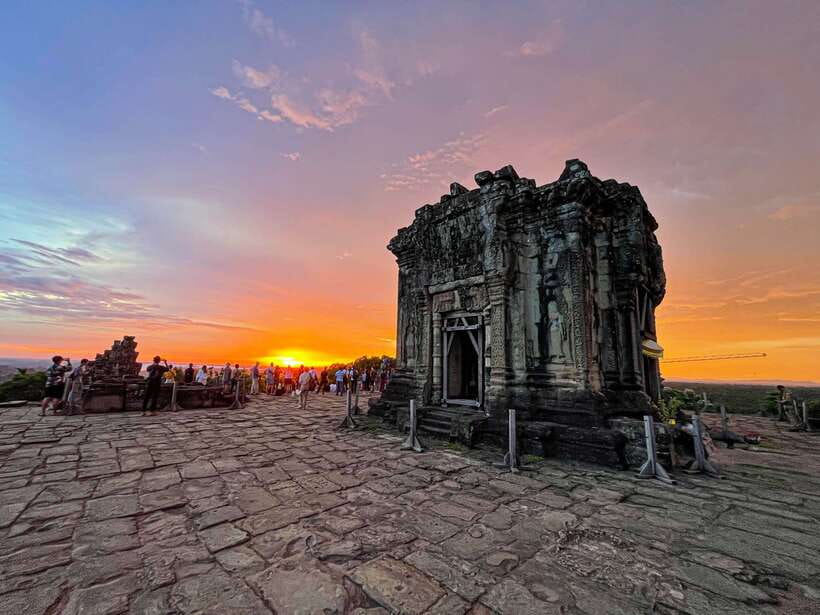
Reviewed · ANGKOR TEMPLE TOURS
Siem Reap: Full Day Angkor Wat Temple Experience with Sunset
Angkor Wat is only one part of this long, rewarding day. You begin at the fortified city of Angkor Thom, meet Bayon’s strange stone faces, walk among the tree roots of Ta Prohm, and save the largest temple for the afternoon. I like that the route gives you both famous sights and smaller corners of the Khmer capital. I also like the steady supply of cold water and towels, which matters greatly after hours in Cambodia’s heat.
The main consideration is stamina. Ten hours, temple stairs, long walks, and a final climb up Phnom Bakheng make this a full day rather than a gentle sightseeing outing. The $25 tour price is good value, but you must add the $37 Angkor pass, and the sunset viewpoint can be crowded.
In This Review
- Key points at a glance
- Why this 10-hour Angkor route works
- Angkor Thom and the South Gate
- Bayon’s stone faces and Baphuon’s climb
- Ta Prohm, where trees take over
- Lunch, Srah Srang, and a taste of village life
- Angkor Wat, the day’s grand finale
- Sunset from Phnom Bakheng
- The $25 price and the real total cost
- What to wear and carry
- Who should choose this tour?
- Should you book it?
- FAQ
- How long does the Angkor temple tour last?
- What time is hotel pickup?
- Is the Angkor temple pass included?
- Is lunch included?
- Is transportation included?
- What language is the tour conducted in?
- What should I wear to the temples?
- Can children join the small-group tour?
Key points at a glance
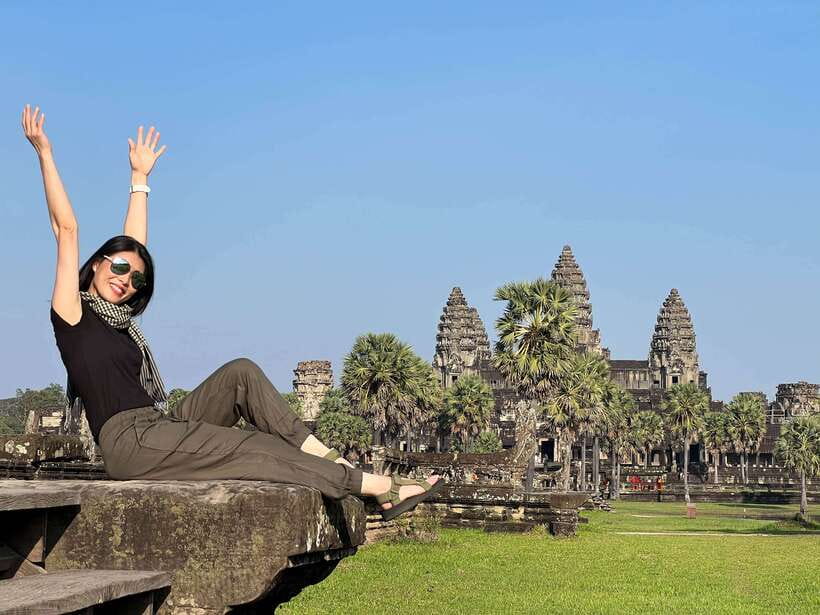
- Angkor Thom comes first, including its South Gate, Bayon, Baphuon, royal terraces, and former palace area.
- Ta Prohm delivers the atmospheric moment, with enormous roots spreading over partly restored ruins.
- Angkor Wat gets two hours, enough for the galleries, carvings, moat, and central towers without reducing the visit to a quick photo stop.
- Phum Preah Dak adds local life, with a look at palm sugar and palm cake production.
- The air-conditioned vehicle is a real comfort, with cold water, cool towels, and USB or USB-C charging reported on some vans.
- Guides make a major difference, with Mony, Raman, Sam, Seila, Jan, Kim, and others praised for clear explanations and photos.
Why this 10-hour Angkor route works
This tour is built for a first visit when you want the main Angkor sights in one day. The order is sensible: Angkor Thom gives you the setting and scale of the old royal city, Ta Prohm provides a change of mood, and Angkor Wat gets the longest and most important temple visit later in the day.
I would not call it a slow, scholarly examination of every ruin. It is a broad route with several stops, so your guide has to keep the group moving. The good news is that the schedule allows breaks, lunch, and time back in the van. Small groups are limited to 14 people, while private tours are also available.
The strongest part of the experience is the guide service. Names frequently praised include Mony, Raman, Sam, Seila, Jan, Kim, Makara, Dara, Chy, and Sa. Their roles go beyond pointing at buildings. A good guide explains why a face appears on a tower, how Hindu and Buddhist ideas shaped the monuments, and where to pause for a better photograph. Several guides are also happy to take pictures for you.
The transport helps keep the day manageable. The vehicle has air conditioning, and the driver waits nearby while you explore. Cold bottles of water and refreshing towels are provided during the day. Some recent departures used vans with Wi-Fi and USB or USB-C charging ports, though you should treat those as vehicle-dependent rather than guaranteed.
More Angkor temple itineraries:
- Angkor Wat Sunrise or Sunset Tour with Guide from Siem Reap
5.0 · 12,109 reviews - Siem Reap: Angkor Wat: Small-Group Sunrise or Sunset Tour
5.0 · 9,444 reviews - Siem Reap: Angkor Wat 2-Day Tour with Sunrise and Sunset
4.9 · 4,429 reviews
Angkor Thom and the South Gate
Your pickup is scheduled between 8:00 and 8:20 a.m., with the broader information also listing 8:00 to 8:30. Wait in your hotel lobby about 15 minutes early. The guide should meet you with a sign carrying your last name, and the vehicle will take you first to arrange or confirm your Angkor pass.
Angkor Thom means Great Royal City, and the name fits. Built in the 12th century under King Jayavarman VII, it was a fortified capital enclosed by walls and a moat. The South Gate gives you an immediate sense of ceremony, with a causeway lined by monumental figures.
The gate’s sculptures include the multi-armed Avalokiteshvara figure, a form of the compassionate Buddhist figure associated with Jayavarman VII’s religious vision. The face is also familiar from Tomb Raider, though the real site feels less like a film set and more like an enormous ceremonial entrance slowly reclaimed by weather and vegetation.
The planned visit here is only about 20 minutes. That is enough for the gate and photographs, but not enough for a long talk or a slow study of every statue. Your guide can help you focus on the important details before the group moves into the city.
Bayon’s stone faces and Baphuon’s climb
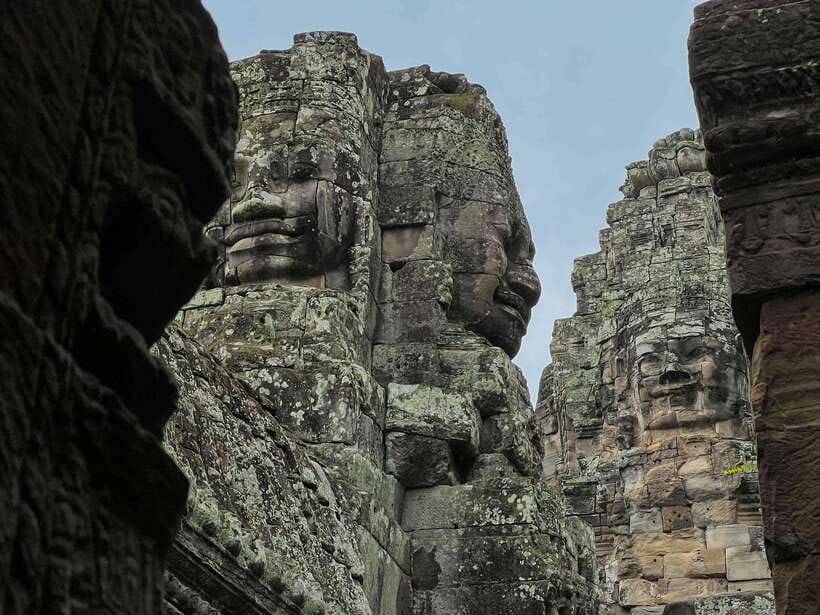
Bayon is the emotional center of Angkor Thom. Its towers carry large carved faces with calm, almost smiling expressions. From a distance the temple looks like a pile of stone towers. Inside, narrow passages and steep steps bring you close to the faces, making the monument feel intimate despite its size.
Allow about an hour here. Listen closely to your guide because the meaning of the faces, the temple’s Buddhist design, and the later changes to the site can be hard to understand from the stones alone. Mony, Seila, and Sam are among the guides praised for making these explanations lively and easy to follow.
Next comes Baphuon, a large Hindu temple within Angkor Thom. The planned visit lasts roughly 30 minutes. You may climb parts of the structure, so shoes with a secure grip are useful. The height adds fine views across the tree-filled grounds, but the steps can be tiring, especially under the midday sun.
The itinerary then strings together several nearby monuments:
- The Terrace of the Elephants, a long royal platform decorated with elephant motifs, takes about 20 minutes.
- Phimeanakas, linked with the former Royal Palace area, takes another 20 minutes.
- The Terrace of the Leper King, also called Preah Ponlea Sdach Komlong, takes about 20 minutes.
These stops are shorter and more interpretive than spectacular. I like them because they show that Angkor Thom was not just one temple, but a working royal center with processional spaces, ceremonial platforms, and palace buildings. Do not expect intact palace rooms. The interest lies in the layout, carvings, and the story your guide builds around the remains.
Ta Prohm, where trees take over
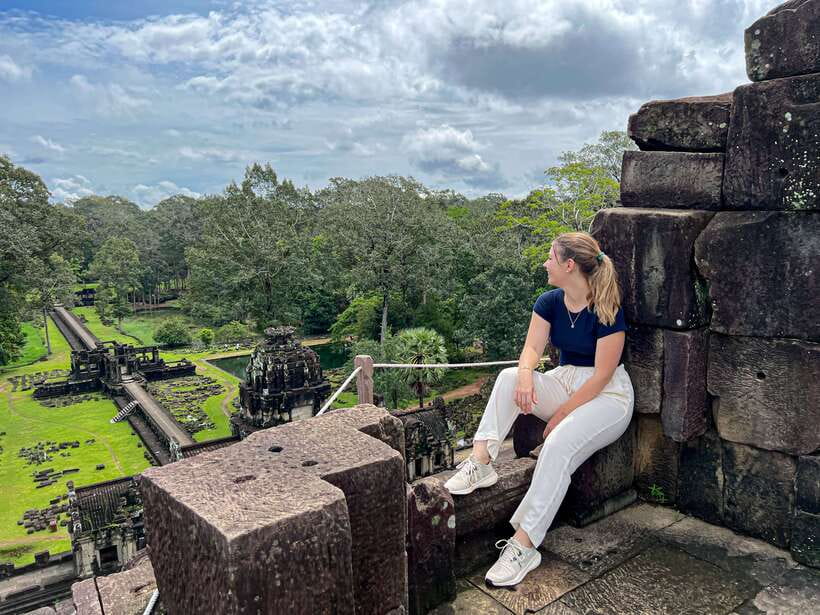
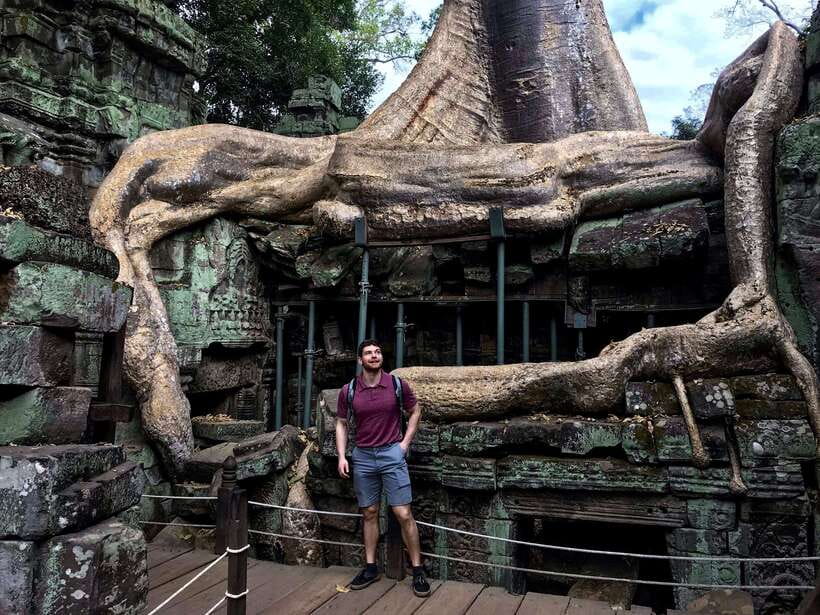
Ta Prohm is the stop most likely to trigger instant recognition. Huge tree roots press over walls, doorways, and galleries, while sections of the temple remain partly overgrown. The effect is dramatic, but it is worth remembering that the site is not simply abandoned. Conservation teams must balance the famous jungle appearance with the need to protect people and ancient stone.
Plan on about an hour here. Ta Prohm was built during Jayavarman VII’s reign and began as a major religious complex. Its fame grew further after appearing in Tomb Raider, yet the temple does not feel like a movie prop. The roots, collapsed galleries, carved doorways, and filtered light create a mood that differs sharply from Bayon’s crowded towers.
This is one of the best places to let your guide point out small details. Mony, Raman, and Makara have been praised for finding good photo positions and giving people time to take pictures. Still, you should be ready for narrow paths and uneven ground. Keep your day bag small, since large bags and luggage are not allowed.
Other Siem Reap experiences to weigh up
- Sunset tour of Kampong Phluk stilts home village on the Tonle Sap
5.0 · 4,865 reviews - Siem Reap: Full-Day Angkor Wat Guided Tour with Sunset
4.9 · 3,803 reviews - Angkor Wat Sunset Small Group Tour with Lunch Included
5.0 · 3,059 reviews - Angkor 2-Day Sunset & Sunrise Small-Group Tour
5.0 · 2,567 reviews
Lunch, Srah Srang, and a taste of village life
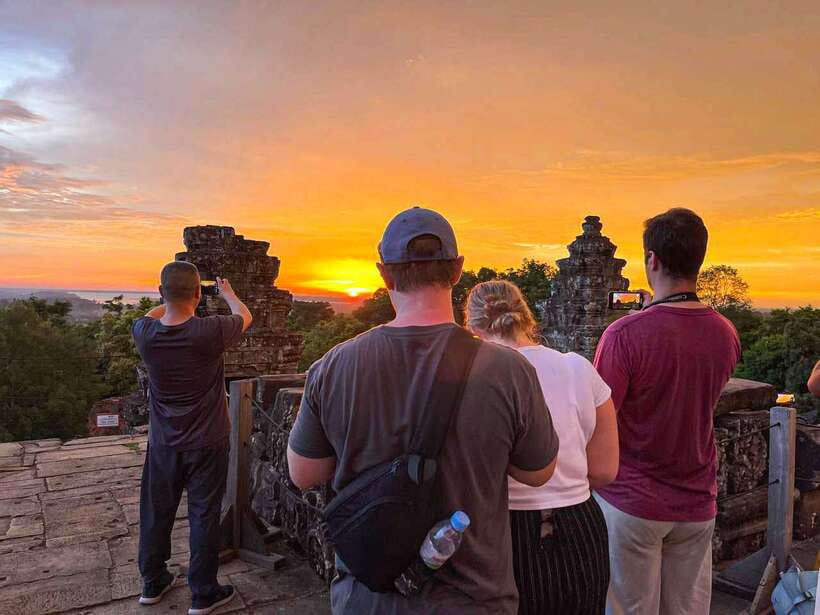
The lunch break lasts about an hour near Srah Srang. It is a useful pause, not just a meal squeezed between monuments. You can sit down, cool off, and choose from a local menu. A vegetarian option is available if you tell the operator ahead of time.
Specific dishes are not guaranteed, but one meal described by a participant singled out fish amok. It is worth asking what is available rather than expecting a fixed menu. The restaurant stop also gives you a chance to buy soft drinks, which are not included.
After lunch, the tour visits Phum Preah Dak, described as an authentic village where you can see how palm sugar and palm cake are made. This is a welcome shift from monumental architecture. Angkor can easily become a day of stone, dates, and royal names. Seeing a local food tradition helps connect the ancient economy of the region with everyday Cambodian life.
The village stop is not the same kind of attraction as Angkor Wat. It is shorter and more modest, and its value depends on how interested you are in local customs. I consider it a worthwhile addition because it breaks up the temple sequence without sending you far from the main route.
Angkor Wat, the day’s grand finale
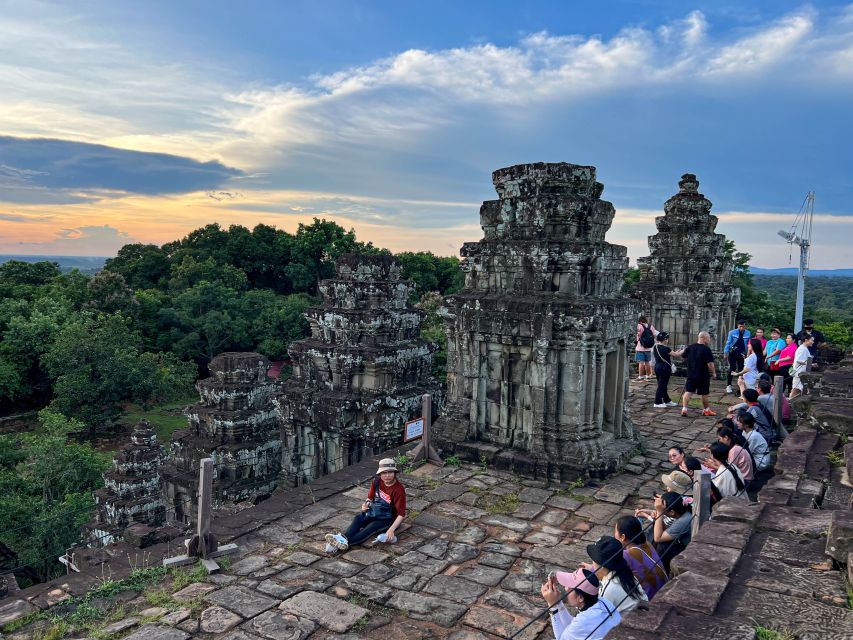
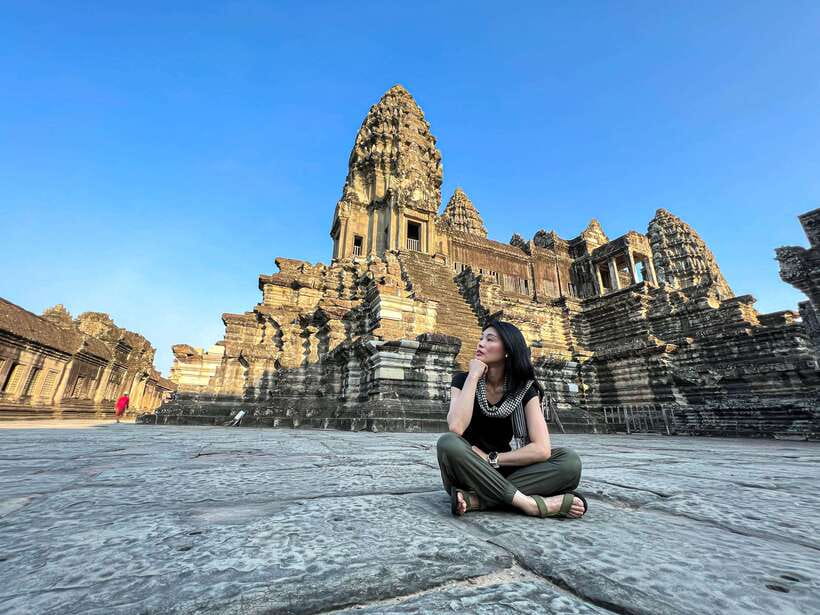
Angkor Wat receives about two hours, which is the right amount of time for a first visit. Built under King Suryavarman II and dedicated to Vishnu, it began as a Hindu temple before later becoming an important Buddhist site. Its five towers appear on Cambodia’s national flag, and the scale is difficult to grasp until you cross the moat and approach the main galleries.
Start by taking in the full composition. The moat, causeway, outer walls, galleries, and towers were designed as one immense sacred plan. Then look closer at the bas-reliefs. The walls carry long narrative carvings, including scenes from Hindu epics and royal imagery.
Your guide should help you avoid rushing straight to the famous central view. Angkor Wat rewards a slower look at the carvings, doorways, columns, and changing levels. Some areas involve stairs, and access may be controlled, so follow the site rules and wear clothing that covers your knees and shoulders.
The afternoon timing has a practical advantage. You avoid the very early start required for sunrise, yet still get good light for the temple. The exact quality of the light depends on the day, of course, but the later visit gives your guide a chance to place Angkor Wat after the smaller temples have built up the story.
The heat may be your biggest challenge here. Carry the supplied water, use the cool towels, and take short pauses in shaded areas. Two hours can feel short if you try to photograph every gallery, so choose a few details and give yourself time to simply look.
Sunset from Phnom Bakheng
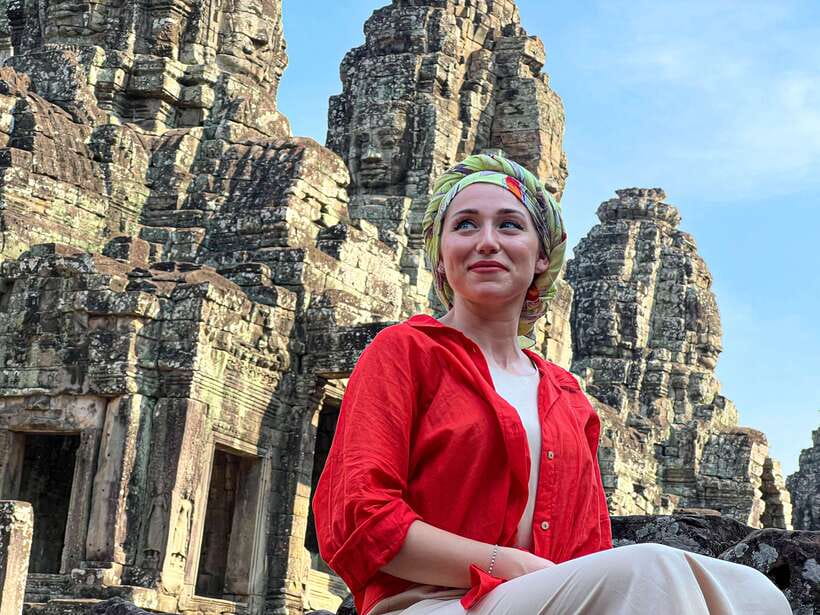
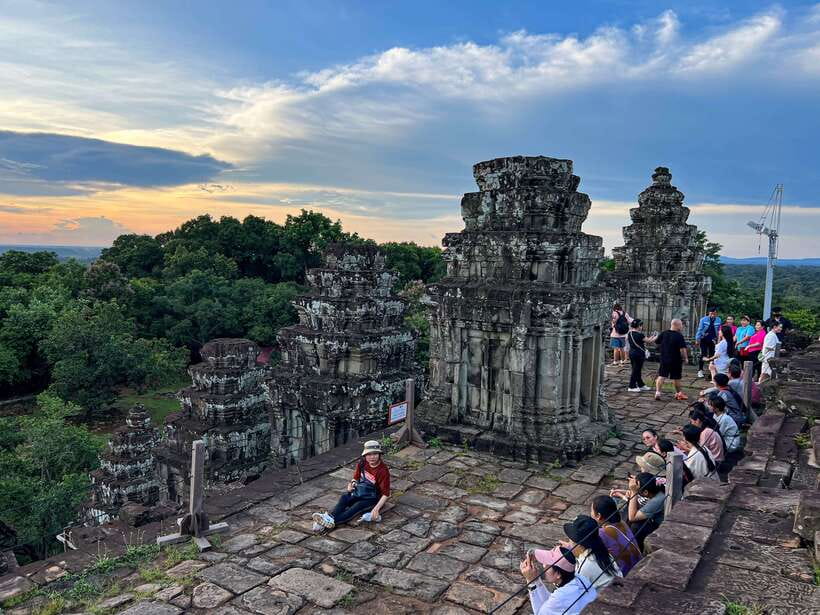
The last major stop is Phnom Bakheng, a hilltop temple reached by walking uphill. The visit is listed at about 90 minutes, including the walk and sunset wait. You should expect a climb rather than a roadside viewpoint.
From the hill, you can look across the forest toward Angkor Wat and the surrounding area. The sunset is a fitting finish because it lets you step back from close-up carvings and see the scale of the ancient complex. Guides such as Raman and Amber’s guide were praised for arriving with enough time to find a good viewing position before the biggest crowds gathered.
There is a tradeoff. Phnom Bakheng is popular, and a sunset stop will not be private or quiet. The climb also comes after a full day on your feet. If you are tired, keep your expectations realistic: this is a scenic ending, not a peaceful solo escape.
After sunset, you return to the vehicle and transfer back to your Siem Reap hotel. The overall day lasts around 10 hours, depending on traffic, walking speed, and the timing of sunset.
The $25 price and the real total cost
At $25 per person, this is a strong price for hotel pickup and drop-off, a guide, transport, lunch, unlimited bottled water, and cool towels. The guide is the part that gives the tour its value. Without explanations, Angkor can look like a series of impressive but confusing ruins.
The required Angkor pass costs an additional $37 per person. That makes the basic combined cost $62 before soft drinks, tips, or any optional personal spending. The pass is not included, and participants must have one before the tour starts. It can be purchased online.
For a private tour, the per-person cost may be higher, but you gain more control over the pace. The small-group option is limited to 14 people, with several recent groups described as around 8 to 10 people. That is small enough to hear the guide and large enough to keep the price down.
What to wear and carry
Dress for heat, sun, dust, and temple rules. Your knees and shoulders must be covered, so leave short skirts, very short shorts, and sleeveless tops at the hotel. Comfortable walking shoes or sturdy sandals are sensible because the route includes uneven stone and stairs.
Pack:
- Sunscreen and sunglasses
- A hat
- Insect repellent
- A camera or phone
- A small backpack or side bag
- Breathable clothing that still meets the dress code
Large bags and luggage are not permitted. Children under 10 are not considered suitable for the small-group option, so families should check the private arrangement before booking.
Free cancellation is available up to 24 hours before departure, and you can reserve now and pay later. These terms are useful if your Siem Reap plans are still shifting, but the temple pass requirement remains separate.
Who should choose this tour?
I would choose this tour if you have one full day for Angkor and want an organized introduction rather than arranging several rides and guides yourself. It suits first-time visitors, couples, solo visitors, and small groups that want history explained in plain English.
It is also a good fit if you want Angkor Wat without a pre-dawn sunrise pickup. You still get a full temple day and a sunset ending, while the air-conditioned breaks make the heat easier to manage.
I would think twice if you dislike fixed schedules, crowds, or long days. You will visit many sites, but you cannot linger indefinitely at each one. Serious photographers may prefer a private tour, and visitors who already know Angkor well may want a slower, more specialized route.
Should you book it?
Book this experience if you want the main Angkor temples, useful historical context, lunch, village scenery, and sunset handled in one day for a modest tour price. The guides and drivers appear to be the strongest part of the service, with repeated praise for clear explanations, friendly care, good timing, photography help, cold water, and towels.
Skip it only if you want complete freedom or a quiet temple visit. For most first-time visitors with limited time in Siem Reap, the route gives you a lot: Angkor Thom’s royal scale, Bayon’s faces, Ta Prohm’s roots, Angkor Wat’s carvings, and Phnom Bakheng at day’s end.
FAQ
How long does the Angkor temple tour last?
The experience lasts about 10 hours, including hotel pickup, temple visits, lunch, the village stop, sunset at Phnom Bakheng, and return to Siem Reap.
What time is hotel pickup?
Pickup is scheduled between 8:00 and 8:20 a.m., with the general description giving a possible window up to 8:30 a.m. You should wait in the hotel lobby about 15 minutes early.
Is the Angkor temple pass included?
No. The Angkor pass costs $37 per person and must be obtained before the tour begins. Online purchase is available.
Is lunch included?
Yes. Lunch at a local restaurant is included, and vegetarian food is available if you notify the operator in advance.
Is transportation included?
Yes. Hotel pickup and drop-off are included, along with an air-conditioned car, minivan, or bus. Water and cool towels are provided during the excursion.
What language is the tour conducted in?
The tour is conducted in English with a live English-speaking guide.
What should I wear to the temples?
Your knees and shoulders must be covered. Bring sunscreen, a hat, sunglasses, insect repellent, and comfortable shoes for walking and stairs.
Can children join the small-group tour?
Children under 10 years old are not considered suitable for the small-group option. A private arrangement may be worth checking for younger children.
More Full-Day in Siem Reap
- Full-Day Angkor Wat Sunrise Private Tour with Guide from Siem Reap
5.0 · 2,920 reviews - Siem Reap: Angkor Wat Sunrise and Full-Day Sightseeing Tour
4.9 · 2,828 reviews - Full-Day Guided Sunset Tour of Angkor Wat
5.0 · 1,507 reviews - Angkor Wat full Day ‘Small Group with sunset & Tour Guide
5.0 · 1,369 reviews
Fresh reviews from around Siem Reap
- Full-Day Tour Preah Vihea & Koh Ker Temple 3.7 · 3 reviews
- Savor the Countryside: Tours with Authentic Cooking Classes” 5.0 · 3 reviews
- Angkor Grand Circuit Tour & Banteay Srei 5.0 · 3 reviews
- Guided Private Tuk Tuk Tour Angkor Wat and Small Circle and Five Extras 5.0 · 3 reviews
- Angkor Wat Sunrise TukTuk Tour 5.0 · 3 reviews
- Siem Reap Temple Tour 2-Day with Sunrise/Sunset 3.7 · 3 reviews
- Bangkok to Angkor Wat 2 Days 1 Night by Flight 4.5 · 3 reviews
- Kompong Pluk Tour 5.0 · 3 reviews
Angkor Temple Tours, compared.

Angkor Wat Sunrise or Sunset Tour with Guide from Siem Reap
Read our review →



Angkor Wat Sunrise tour with Small – Group and Guide tours
Read our review →
Angkor Wat Highlights and Sunrise Guided Tour from Siem Reap
Read our review →

Full-Day Angkor Wat Sunrise Private Tour with Guide from Siem Reap
Read our review →Browse the lists this tour appears in