

Reviewed · CYCLING TOURS
Siem Reap: Angkor Temples Off-Track Bicycle Tour
Angkor’s famous temples are best known for crowds and grand stone gateways, but this small-group bicycle tour takes you onto jungle paths where Ta Nei can feel wonderfully quiet. You ride from Bayon Pastry School at 8:30 am, visit major monuments, and add lesser-seen sites that many day trips skip.
I like two things right away: the route gives you a better feel for the park than a car window does, and your $65 helps fund free education through KKO, Khmer for Khmer Organisation. The main consideration is simple: eight hours on a bicycle in Cambodia’s heat is a full day, and your Angkor Pass is not included.
In This Review
- Key points at a glance
- Why the bicycle route changes Angkor
- Starting at Bayon Pastry School
- Angkor Thom and the South Gate
- Bayon’s stone faces and the quieter temple nearby
- Lunch in the jungle
- Preah Khan, where the route gets quieter
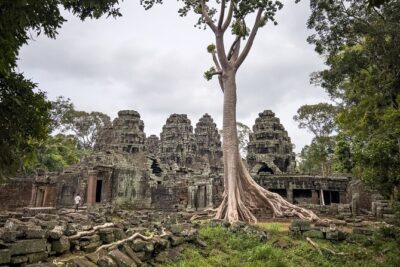
- Ta Nei, the day’s most atmospheric stop
- Ta Keo and the ride back
- What $65 gets you
- Is the ride difficult?
- Who should choose this Angkor tour?
- Should you book it?
- FAQ
- Where does the bicycle tour start?
- How long does the tour last?
- Which temples are included?
- Is lunch included?
- Is the Angkor Pass included?
- What languages are available, and how large is the group?
Key points at a glance
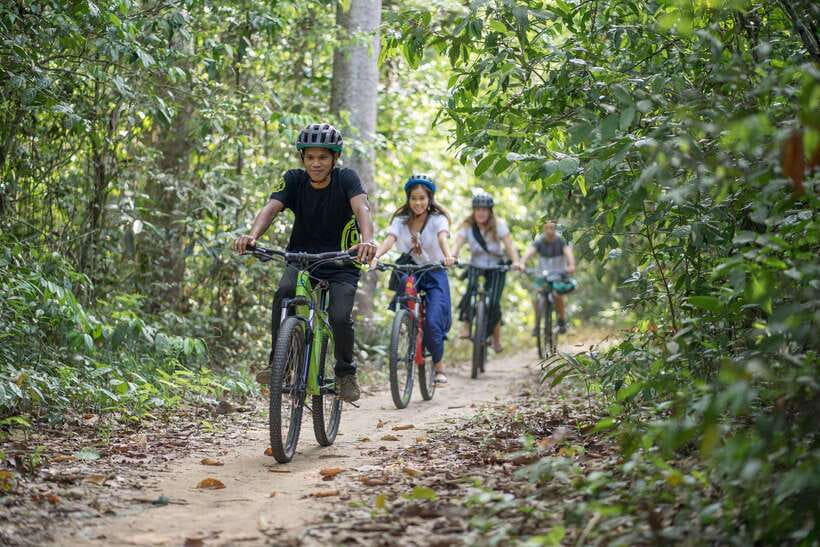
- Ta Nei is the quiet star: This small temple sits deep in the jungle and is rarely visited compared with Bayon.
- A seven-person limit matters: The guide can adjust the pace and route to suit the group.
- Your money has a clear purpose: Profits support KKO’s free education and vocational training for children in Siem Reap.
- The route mixes icons and side roads: You see Angkor Thom and Bayon, then pedal to Preah Palilay, Preah Khan, Ta Nei, and Ta Keo.
- Lunch is local and practical: A meal at a restaurant in the jungle breaks up the riding.
- Bring proper clothing: Shorts, short skirts, and sleeveless shirts are not allowed.
Why the bicycle route changes Angkor
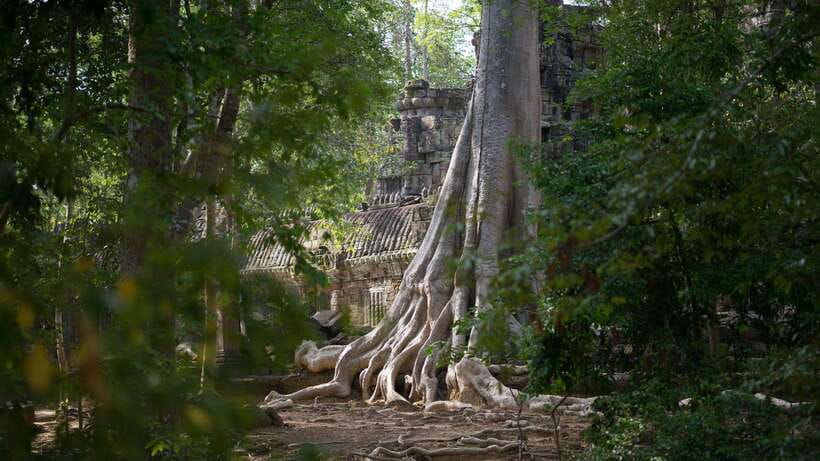
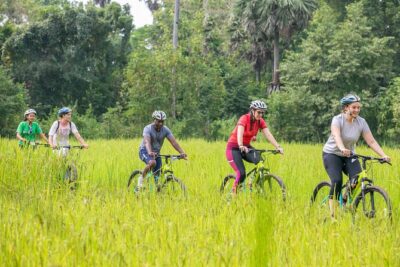
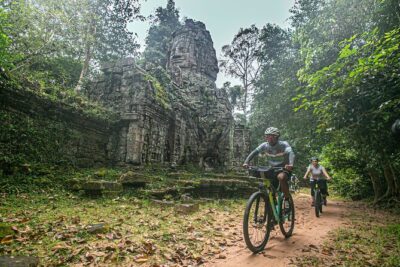
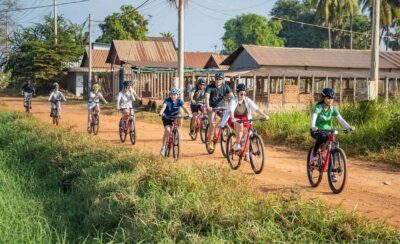
The best reason to choose this outing is not simply that it uses bicycles. It is the way cycling gets you between the temples. You move through smaller paths, jungle, and quieter stretches instead of spending the whole day in a vehicle on the main circuit.
That gives the park a different rhythm. You hear your bike, your guide, and the surrounding forest rather than only following a line of cars and tuk-tuks. You also get a clearer sense of distance between the monuments, which helps explain how large the Angkor complex is.
This is not an all-secret-temples experience. Bayon is a major attraction, and Angkor Thom is a core stop. That is a good balance for a first visit because you see important monuments while still reaching places such as Ta Nei and Preah Palilay.
The group is limited to seven people. That is small enough for questions and easier pace changes. One French-language review specifically praised the guide’s patience and care, noting that the ride was manageable for many people because the guide adapted to the group. I would still treat the tour as active rather than effortless.
More Angkor temple itineraries:
- Angkor Wat Sunrise or Sunset Tour with Guide from Siem Reap
5.0 · 12,109 reviews - Siem Reap: Angkor Wat: Small-Group Sunrise or Sunset Tour
5.0 · 9,444 reviews - Siem Reap: Angkor Wat 2-Day Tour with Sunrise and Sunset
4.9 · 4,429 reviews
Starting at Bayon Pastry School
Your meeting point is Bayon Pastry School in Siem Reap at 8:30 am. The morning begins with a short introduction, an overview of the day, and a chance to get comfortable with the bicycle before heading toward Angkor Park.
The bicycles are described as quality bikes, and the operator carries a first-aid kit and an emergency safety plan. Those details do not remove the normal risks of cycling, but they are reassuring on a route that includes off-road jungle paths.
The tour is offered with an English or Cambodian-speaking guide. No individual guide name is provided, so you should not book this expecting a particular person. What you can expect is a local guide trained to explain Cambodian culture and the Angkorian Empire, while adjusting to the needs of the group.
You should bring sunscreen, insect repellent, and a camera. Dress in clothing that meets the temple rules: no shorts, short skirts, or sleeveless shirts. The clothing requirement is easy to overlook, especially in hot weather, so plan for cool but respectful coverage.
Angkor Thom and the South Gate
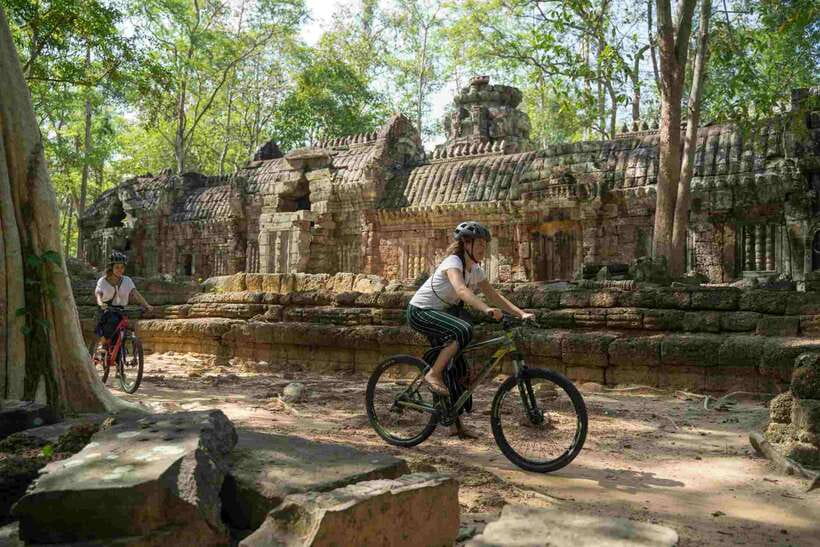
The route heads toward Angkor Thom, including a ride along the wall of Angkor Wat before the temple circuit continues. At the South Gate of Angkor Thom, you get a classic introduction to the scale and style of the ancient city.
Angkor Thom is not a single temple. It was a major walled urban center, and entering through its gate helps you see how the monuments fit into a larger planned setting. Your guide provides context about the Angkorian Empire and Khmer culture, which is especially useful here because the structures can otherwise look like a string of impressive but disconnected ruins.
The bicycle makes this section more engaging than a quick photo stop. You are not only stepping out of transport for ten minutes. You are riding through the park and approaching the monuments as part of a longer route.
The drawback is that Angkor Thom and its South Gate are not quiet secrets. You will likely encounter other people at the best-known viewpoints. The value of the stop comes from combining it with less crowded sites later, not from expecting solitude all day.
Bayon’s stone faces and the quieter temple nearby
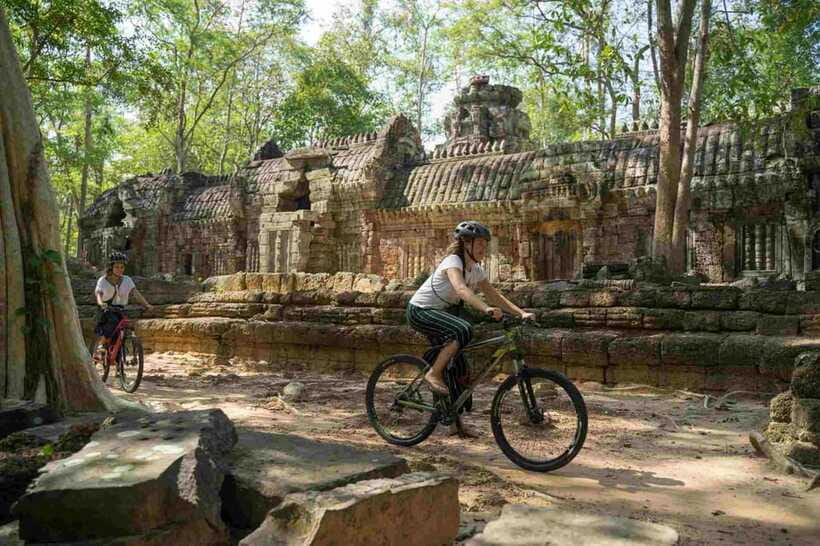
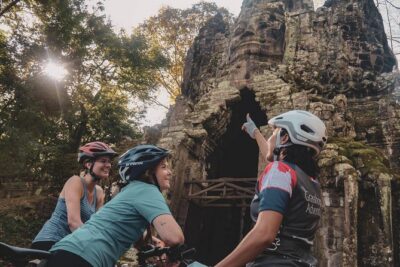
Bayon is the major temple highlight early in the day. Its towers and carved faces make it one of the most memorable places in Angkor, but its popularity also means you should expect more visitors than at Ta Nei or Preah Palilay.
A local guide can make a real difference here. The stonework is dense, and it is easy to spend your time taking photographs without understanding what you are seeing. The tour promises insight into Angkorian history and Khmer culture, so use this stop to ask questions rather than simply circling the towers.
If time allows, the guide may add a smaller temple within Angkor Thom, such as Preah Palilay. This flexible choice is one of the smart features of the outing. The guide can respond to the day’s pace and the group’s energy instead of treating every minute as fixed.
Preah Palilay is useful precisely because it is less famous. It gives you a quieter look at the temple zone and breaks up the grand, busy feel of Bayon. Since the stop depends on available time, you should regard it as a possible bonus rather than a guaranteed long visit.
More cycling days around Siem Reap:
- Siem Reap Countryside Bike Tour / E-Bike or Tuk Tuk
5.0 · 935 reviews - Angkor Sunrise Bike Tour / E-Bike or Tuk Tuk
5.0 · 615 reviews - Siem Reap: Bike the Angkor Temples – Full-Day 30km Tour
5.0 · 463 reviews - Siem Reap: Angkor Wat Sunrise Bike Tour & Jungle Breakfast
5.0 · 415 reviews
Lunch in the jungle
Lunch comes at a local restaurant in the jungle, giving you a proper break after the morning riding. The meal is included, so you do not need to plan a separate restaurant stop or carry the day’s main food with you.
I like the local focus here. The operator says it supports local restaurants, farms, and street vendors, so the meal is part of a wider effort to keep spending in local hands. It also makes practical sense: sitting down for lunch is better than trying to rush through a full day of temples on an empty stomach.
The exact menu is not specified. If you need vegan food, the operator asks you to mention it in advance. You can also ask about changing the length or timing of the outing, including an earlier start if you do not enjoy late mornings.
Do not expect a long, leisurely restaurant afternoon. This is a cycling day, and lunch is the middle pause before more temples. Use it to drink, eat, and cool down.
Preah Khan, where the route gets quieter
After lunch, you continue through the jungle to Preah Khan. This is still a well-known Angkor monument, so it is not completely off the tourist map, but it is described as less crowded than Bayon.
That difference matters. Preah Khan is large enough to reward a slower visit, and the bicycle route gives you time to arrive with the day’s pattern already established. You have seen a major temple, a smaller site, and the gates of Angkor Thom, so you can compare the scale and design of each place.
Your guide’s role is important here because Preah Khan can feel sprawling. Ask about the parts that catch your eye, rather than trying to memorize every detail. The tour is designed to give you a deeper understanding of the Angkorian Empire, not to turn the day into a race through every corridor.
This is also where fatigue may begin to show. You have already been cycling and walking for hours. The small group and adaptable guide help, but the route still asks you to keep moving.
Ta Nei, the day’s most atmospheric stop

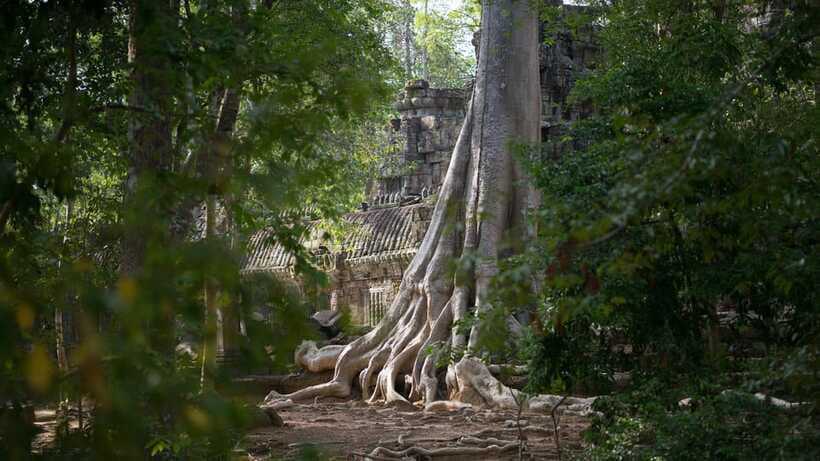
Ta Nei is the stop I would most look forward to. It is also called the Ghost Temple because it is hidden and quiet in the jungle, with far fewer people than the major Angkor sites.
That quiet changes how you experience the stones. At Bayon, you are likely focused on faces, towers, and crowds. At Ta Nei, the setting becomes part of the visit. The route through the forest and the lack of heavy foot traffic give the temple a more remote feel.
It is important to keep expectations sensible. Ta Nei is not presented as a polished, fully serviced attraction, and its appeal is tied to being tucked away. Paths can feel rougher, and the site may offer fewer obvious facilities than the famous temples. That is exactly why it suits people who want a less packaged day.
The bicycle is especially helpful for reaching a place like this. You are not merely being delivered to a viewpoint. You are making your way into the quieter part of the park, then continuing by bike rather than returning to the main road after every stop.
Ta Keo and the ride back
Ta Keo is the final temple stop before you return to Siem Reap. Its position at the end of a long day gives you a final chance to look at Angkor’s architecture, but it also means you may be ready for the ride back.
The schedule lists photo stops, guided visits, and cycling at Ta Keo. The exact amount of time at each monument can vary because the guide adapts to the group. That flexibility is helpful if one temple captures your attention, but it also means the day is not a tightly timed checklist.
You finish back at Bayon Pastry School. The complete experience lasts about eight hours, so this is not a short add-on to a temple morning. It is a full-day outing with repeated cycling, walking, temple visits, and a lunch break.
What $65 gets you
At $65 per person, the price deserves a closer look. You receive the bicycle tour, a local guide, lunch, access to smaller jungle paths, and explanations of Angkorian history and Khmer culture. The group limit of seven adds real value because a guide can answer questions and adjust the pace more easily than on a large bus tour.
The cost also supports a clear social purpose. OFF TRACK Tours sends its profits to KKO, which provides free education to children in Siem Reap and supports vocational training. One person who took the tour also visited the KKO school afterward and found the project worth seeing. If that connection matters to you, this offers more than a standard sightseeing purchase.
The tour also says it supports local restaurants, farms, and street vendors. That does not mean every dollar stays in the village, but it does give you a direct reason to choose this outing if you want your spending to support local services.
Remember the extra costs. The Angkor Pass is not included, and travel insurance is also your responsibility. Compare the full day’s cost, not just the advertised tour price, when setting your budget.
Is the ride difficult?
You need to be able to ride a bicycle. The tour is not suitable for people who cannot cycle, and the eight-hour duration means you should be comfortable with a sustained active day.
At the same time, the pace is not described as a race. The guide can adapt to the group, and a French-language review praised the guide for taking individual needs into account. That makes the tour more approachable than a hard-paced cycling challenge, but it does not turn it into a passive sightseeing trip.
Heat, sun, insects, uneven paths, and temple walking are the main practical concerns supported by the route details. Sunscreen and insect repellent belong in your day bag. Respect the clothing rules even if the temperature makes shorts tempting.
You can ask to shorten or extend the tour, and you can request a different start time. Tell the operator before the day begins so the plan can be adjusted properly.
Who should choose this Angkor tour?
I would choose this tour if you want to combine Angkor’s major sights with quieter places and you like the idea of moving through the park under your own power. It suits people who value local guiding, small groups, and a clear community benefit.
It is also a good fit if you have already seen the standard temple circuit and want a different way to spend a day. Bayon and Angkor Thom keep the route grounded in the essential sights, while Preah Palilay, Ta Nei, and the jungle paths add variety.
I would hesitate if you dislike bicycles, tire quickly in hot weather, or want to spend most of the day indoors or in air-conditioned transport. The route is flexible, but it remains an eight-hour cycling and temple outing.
The social mission may be the deciding point for some people. OFF TRACK Tours says it is Siem Reap’s only non-profit tour operator, with profits going to KKO education programs. You should still judge the tour on its route and pace, but the funding link gives the $65 a useful second purpose.
Should you book it?
Book this bicycle tour if your ideal Angkor day includes Ta Nei’s quiet jungle setting, a local lunch, a small group, and a guide who can adjust the pace. It gives you major temples without limiting the day to the busiest circuit, and it supports free education in Siem Reap.
Skip it if you cannot ride, want a short temple visit, or do not want to pay separately for the Angkor Pass. For an active visitor who wants a more local, less vehicle-bound view of the park, this is a thoughtful and good-value choice.
FAQ
Where does the bicycle tour start?
The tour starts at Bayon Pastry School in Siem Reap. You meet the guide there at 8:30 am.
How long does the tour last?
The experience lasts eight hours and finishes back at Bayon Pastry School.
Which temples are included?
The route includes Angkor Thom and its South Gate, Bayon, Preah Khan, Ta Nei, Ta Keo, and Angkor Wat. If time allows, the guide may also visit a smaller temple within Angkor Thom, such as Preah Palilay.
Is lunch included?
Yes. Lunch at a local restaurant in the jungle is included in the tour price.
Is the Angkor Pass included?
No. You need to arrange and pay for the Angkor Pass separately. Travel insurance is also not included.
What languages are available, and how large is the group?
The tour is available with an English or Cambodian-speaking guide. The group is limited to seven participants.
Fresh reviews from around Siem Reap
- Full-Day Tour Preah Vihea & Koh Ker Temple 3.7 · 3 reviews
- Savor the Countryside: Tours with Authentic Cooking Classes” 5.0 · 3 reviews
- Angkor Wat Sunrise TukTuk Tour 5.0 · 3 reviews
- Angkor Grand Circuit Tour & Banteay Srei 5.0 · 3 reviews
- Guided Private Tuk Tuk Tour Angkor Wat and Small Circle and Five Extras 5.0 · 3 reviews
- Siem Reap Temple Tour 2-Day with Sunrise/Sunset 3.7 · 3 reviews
- Bangkok to Angkor Wat 2 Days 1 Night by Flight 4.5 · 3 reviews
- Kompong Pluk Tour 5.0 · 3 reviews
Cycling Tours, compared.
Siem Reap Countryside Sunset Bike Tour / E-Bike or Tuk Tuk
Read our review →Browse the lists this tour appears in