
Reviewed · CYCLING TOURS
Siem Reap: Bike the Angkor Temples – Full-Day 30km Tour
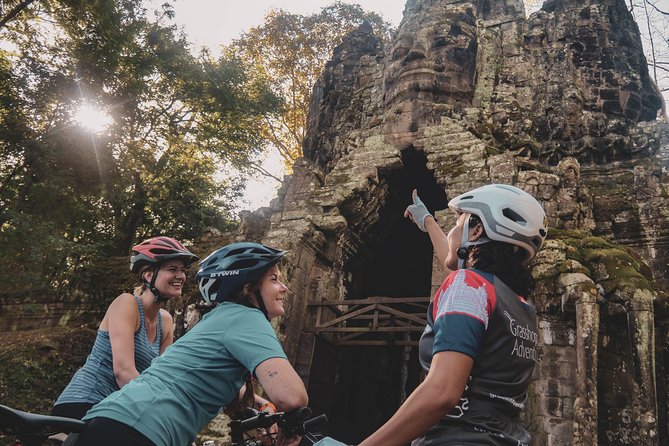
Angkor is far too large to treat as a quick temple hop, and a bicycle lets you feel its scale. This 30-kilometre ride links Angkor Wat, Bayon, Ta Prohm, village roads, and forest trails at a steady pace, so the journey between temples becomes part of the experience.
I like the route’s mix of famous monuments and ordinary Cambodian life. I also like the thoughtful support: well-maintained mountain bikes, helmets, fruit, cold water, a local lunch when selected, and guides such as Chen, Wich, Moon, and Pat who explain more than just the dates carved in stone.
The catch is simple: this is a full day of pedaling in hot weather. The roads are mostly flat, but sandy and bumpy sections can work your knees and legs. You should have moderate fitness and be comfortable riding 15 to 18 miles.
In This Review
- Key points to know before booking
- Why cycling makes Angkor feel different
- Starting at 7:30 am in Siem Reap
- Angkor Wat: begin with the great classic
- Bayon and Angkor Thom’s royal terraces
- Lunch, fruit, and a welcome pause at Srah Srang
- Ta Prohm and the afternoon forest trails
- The ride home through villages
- Fitness, clothing, and road conditions
- Small groups and guide quality
- Is USD 35 a good value?
- Who should book this Angkor bike tour?
- FAQ
- What time does the tour start?
- Where does the tour begin and end?
- How far do you cycle?
- Is the route flat?
- Which temples are included?
- Is lunch included?
- Is the Angkor Pass included?
- What should I wear to enter the temples?
- Can children join the tour?
- Should you book it?
Key points to know before booking
- A full Angkor circuit by bicycle: Cover roughly 25 to 30 kilometres while visiting Angkor Wat, Bayon, Ta Prohm, and other historic sites.
- Back roads add real local life: Ride through wooded paths, villages, farm areas, and countryside that you would miss from a car or tuk-tuk.
- Small groups keep the pace personal: The maximum group size is 10, with a private upgrade available.
- The famous temples are only part of the day: The route includes the Elephant Terrace, Terrace of the Leper King, Royal Enclosure, and lesser-known ruins.
- Food and drinks are handled well: Water, fruit, and snacks are included, with lunch included only if you select that option.
- The Angkor Pass costs extra: A one-day temple pass is not included and costs USD 37.
Why cycling makes Angkor feel different
Angkor Archaeological Park covers a huge area, roughly half the size of New York City. By car, you can move efficiently between the monuments, but you spend much of the day sealed off from the forest and villages around them.
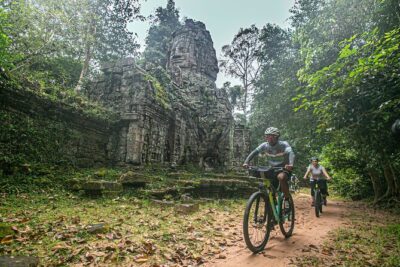
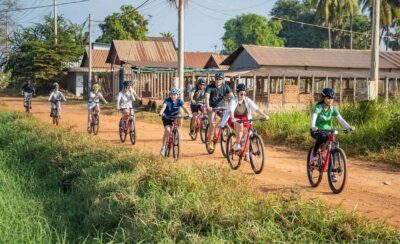
On this tour, the movement matters. You pedal through large entrance gates, ride beneath tall trees, and take small roads away from the main traffic. The route can include asphalt, forest trails, sand, and uneven ground. That variety gives you a better sense of the park as a place rather than a string of isolated photo stops.
You also get time to stop. This is not a race between monuments. The guide sets a manageable pace, watches the road, and gathers the group before busy crossings or rougher sections. One guide may lead while another rides near the back, a useful arrangement on public roads and narrow trails.
The strongest part of the experience is the balance between exercise and explanation. Guides including Chen, Wich, Moon, Pat, Sunchen, and Samnang Chan have been praised for connecting temple stories with Cambodian culture and national history. The exact guide depends on the day, but the format gives you more context than walking through the ruins alone.
More Angkor temple itineraries:
- Angkor Wat Sunrise or Sunset Tour with Guide from Siem Reap
5.0 · 12,109 reviews - Siem Reap: Angkor Wat: Small-Group Sunrise or Sunset Tour
5.0 · 9,444 reviews - Siem Reap: Angkor Wat 2-Day Tour with Sunrise and Sunset
4.9 · 4,429 reviews
Starting at 7:30 am in Siem Reap
You make your own way to ផ្ទះគ្រូ Café, the meeting point at 9VH7+X7G in Siem Reap. The tour begins at 7:30 am and ends back at the same place.
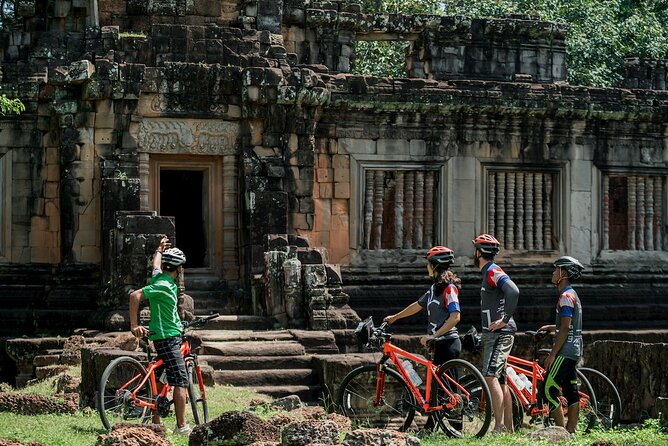
The opening routine is practical. You meet the English-speaking cycling guide, receive a safety briefing, and get fitted with a mountain bike and helmet. The bikes are adjusted to your height, and the tour team checks that you understand the riding pace and basic hand signals before setting out.
This early start is useful in two ways. It gives you a good portion of the day at the temples, and it gets the ride moving before the strongest afternoon heat. Still, Cambodia can be very hot even in the morning, so bring sunscreen, a hat for temple walks, and shoes that can handle both pedals and rough paths.
You will need to buy your own Angkor Pass at the park entrance. A one-day pass costs USD 37, in addition to the USD 35 tour price. That puts the basic total at USD 72 per person before any optional extras, which is fair for a full day of bike use, guiding, drinks, snacks, and the selected lunch option, but you should budget for the pass from the start.
Angkor Wat: begin with the great classic
Angkor Wat is the first major stop, and that is a sensible introduction. Its towers, galleries, carved walls, and broad scale give you an immediate understanding of the ambition behind the Angkor kingdom.
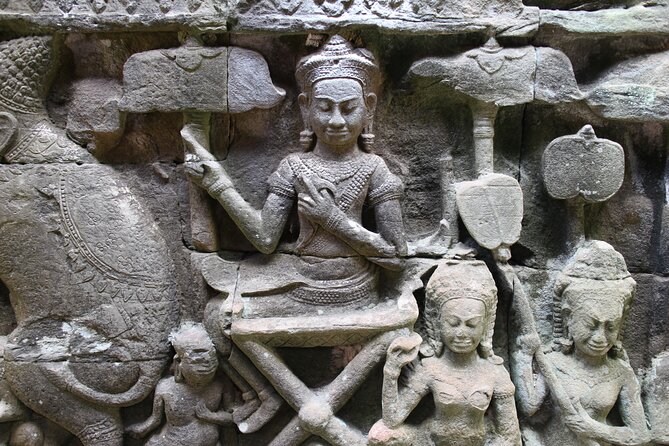
You have about an hour here, including time to walk through the complex and hear the stories behind the carvings. The bas-reliefs include scenes connected with the Ramayana and Hindu traditions, and a good guide can help you read the scenes rather than simply admire the stonework.
Angkor Wat is enormous, so an hour gives you a useful first look but not every corner. If you want a slow architectural study of every gallery, this schedule may feel brisk. The advantage is that the day does not get consumed by one monument. You still have several important temples ahead and many kilometres of countryside riding.
After the temple, you return to the bike and head toward Angkor Thom. The approach itself is memorable, with stone figures of divinities and demons lining the route. Cycling through the monumental gates gives you a physical sense of entering an ancient city, something that can be easy to miss when you arrive by motor vehicle.
Bayon and Angkor Thom’s royal terraces
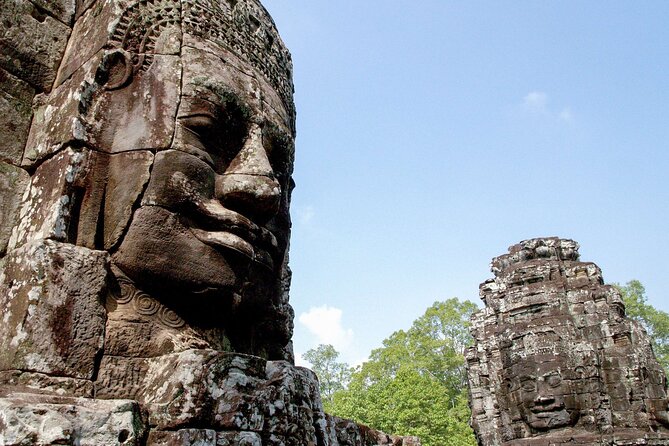
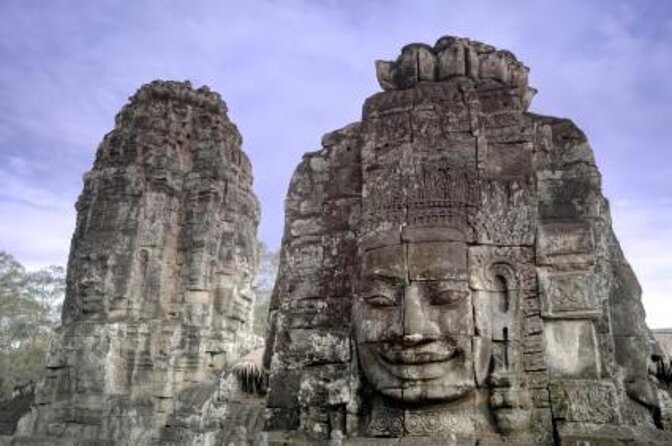
Bayon is famous for its serene stone faces, which look down from the temple’s towers in every direction. The effect changes as you walk around the structure. Faces appear between trees, doorways, and blocks of weathered stone, making this a temple best explored slowly rather than viewed only from the entrance.
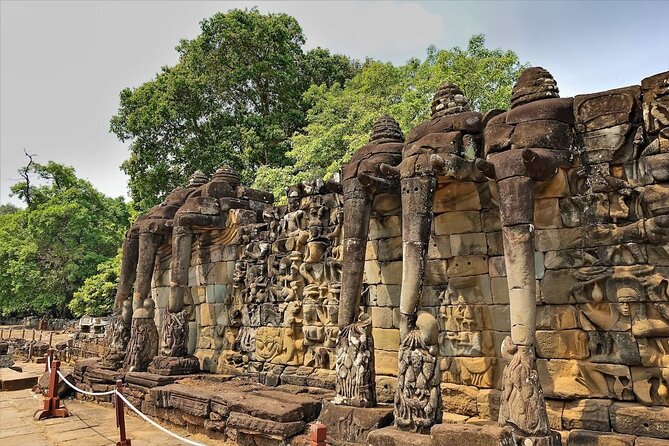
The tour also takes in the Terrace of the Leper King, the Terrace of the Elephants, and the Royal Enclosure. These sites help explain how Angkor Thom functioned as a royal center, not just a collection of religious buildings.
The itinerary allows about an hour for this part of the visit. That is enough to see the key structures and hear the main stories, though the amount of walking and explanation will depend on the guide and the group’s pace.
The ride between Angkor Wat and Angkor Thom is part of the attraction. You follow the main road in places, but the route also uses quieter paths and wooded areas. The surface is not always smooth. Sand and bumps are manageable for a confident rider, but you should not mistake mostly flat terrain for effortless cycling.
More cycling days around Siem Reap:
- Siem Reap Countryside Bike Tour / E-Bike or Tuk Tuk
5.0 · 935 reviews - Angkor Sunrise Bike Tour / E-Bike or Tuk Tuk
5.0 · 615 reviews - Siem Reap: Angkor Wat Sunrise Bike Tour & Jungle Breakfast
5.0 · 415 reviews - Siem Reap Countryside Quad Biking Tour
5.0 · 322 reviews
Lunch, fruit, and a welcome pause at Srah Srang
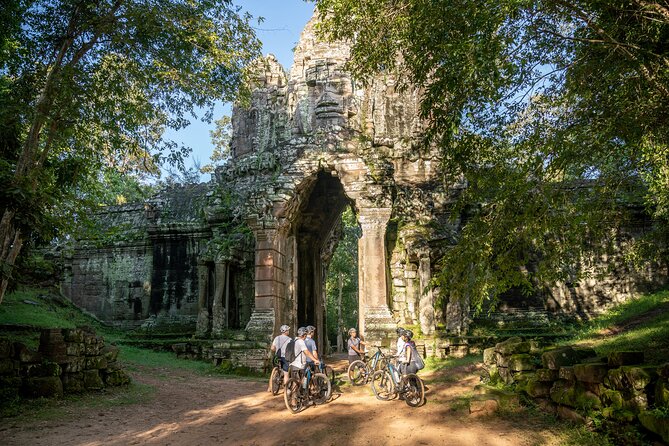
The middle of the day brings a longer break around Srah Srang and the Elephant Terrace area. This is where the practical planning pays off. You receive bottled water, snacks, and fruit during the ride, with lunch included only if you select the with lunch option at booking.
The local Khmer meal has been a strong part of the experience. It is described as generous and tasty, with enough choice to suit different appetites. If you have dietary requirements, tell the operator when booking rather than waiting until lunchtime.
Srah Srang adds a quieter pause after the busier major temples. Its broad reservoir and open setting provide a change from enclosed galleries and tree-covered ruins. The stop is listed at about two hours, allowing time for food, rest, and cultural explanation.
Do not skip the rest simply because you are eager to reach Ta Prohm. On a hot day, the lunch break can be the difference between enjoying the afternoon and merely enduring it. One practical detail repeated through the day is the steady supply of cold water. At the finish, the team may also provide coconut water and a cold towel, a small but welcome touch after the ride.
Ta Prohm and the afternoon forest trails
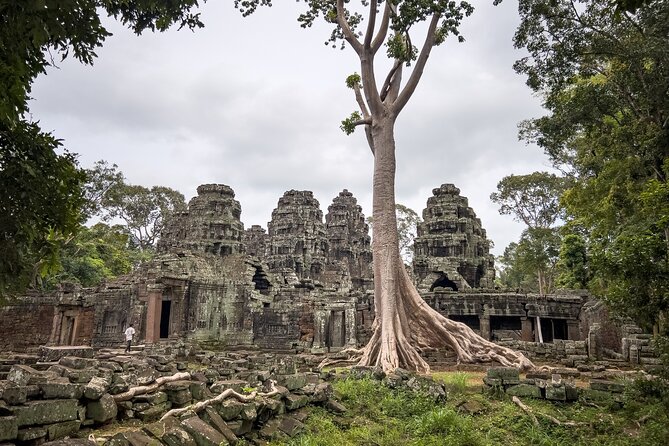
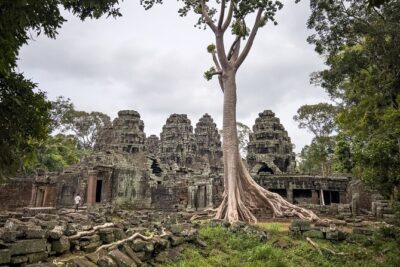
Ta Prohm is the afternoon highlight for many people. Tall trees and spreading roots grow through the temple ruins, wrapping stone walls in a scene that feels almost unreal. The temple’s damaged galleries and moss-covered surfaces make it very different from the ordered scale of Angkor Wat.
You have about an hour here. That gives you time to walk among the roots, take photographs, and listen to the guide explain the temple’s purpose, stories, and symbolism.
The approach is almost as enjoyable as the monument. You continue through forest corridors and quiet trails, often away from the main traffic. Some sections can be sandy or rough, so keep your speed low and leave space between bicycles. The point is to enjoy the route, not set a personal record.
Ta Prohm can also be a busy stop. A cycling guide may know how to approach it with less crowding, but no route can guarantee an empty temple. Your best advantage is the flexible pace and the ability to arrive by a quieter path.
The ride home through villages
After the temple visits, you pedal back toward Siem Reap through small villages and rural areas. This final section gives the tour its strongest local character.
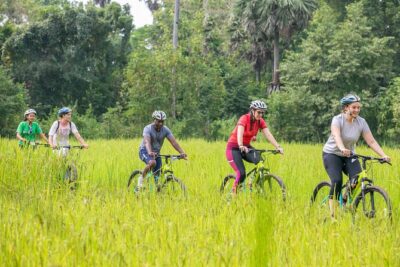
You may pass homes, farm areas, rice fields, and everyday village scenes. The ride is not staged as a cultural performance. You are simply moving through the countryside with a guide who can point out details and answer questions about life in Cambodia.
That contrast is valuable. The temples are grand, but the villages show the living setting around them. You begin to understand that Angkor is not only an archaeological site for sightseeing. It is part of a wider community and countryside.
The return is expected in the mid to late afternoon, with the activity ending back at the café. The published duration is about eight hours and 30 minutes, though exact timing can change with the group, heat, trail conditions, and time spent inside the temples.
Fitness, clothing, and road conditions
You do not need to be a racing cyclist, but you should be comfortable on a bicycle for most of a day. The total distance is about 15 to 18 miles, and some of it may be on dirt, sand, or bumpy trails. Several riders found the route easy enough at a steady pace, while others felt the heat and rough ground by the end.
I would rate it as a moderate active day. Families have completed it with children aged 11 and 13, and child seats are available on request for children up to 14 kilograms. The operator states that most people can participate, but anyone with low cycling fitness, knee trouble, or little comfort on uneven surfaces should think carefully before booking.
Temple clothing rules are strict. Sleeveless or see-through shirts are not allowed, and trousers or shorts must reach at least the knee. Wear practical clothing that can handle cycling and temple walking. One rider even reported tearing thin trousers on the wooded trails, so durable shorts or lightweight long pants are a smart choice.
Pack sunscreen, a hat, and suitable shoes. Water and snacks are supplied, but you should still arrive ready for heat. The bike team provides helmets and mountain bikes, and the bikes have been praised for being well maintained and fitted to riders.
Small groups and guide quality
The group limit is 10 people, which is a good size for a route that moves between public roads, forest tracks, and temple paths. A small group makes it easier to hear the guide, ask questions, and keep a shared pace.
The guide is a major part of the value. Chen has been singled out for explaining both Angkor and Cambodian history. Wich and Moon have been praised for clear commentary and careful attention to the group. Pat has helped riders avoid crowded approaches, while Sunchen has connected the temples with the country’s wider past.
Names and guide assignments can change, so do not book based on one specific person. What you can reasonably expect is an English-speaking cycling guide, safety instruction, historical commentary, and support during the ride. Some departures also include a second guide or mechanic, which is useful when the group spreads out.
Private tours are available if you want undivided attention. The regular small-group format is likely the better value for most people, especially solo riders who want company without paying for a fully private outing.
Is USD 35 a good value?
The tour costs USD 35 per person, with group discounts available. That price covers the bicycle, helmet, English-speaking guide, snacks, fruit, and bottled water. Lunch is covered only when you choose the lunch option.
The Angkor entrance fee is separate at USD 37 for a one-day pass. Add that to the tour price and the core day costs USD 72 per person before lunch or other personal spending.
That is good value if you want an active day with a planned route and historical guidance. You are paying not only for transport between temples, but also for access to quiet roads, route planning, bike fitting, safety support, food, and a local perspective.
A tuk-tuk may give you more shade and less physical effort, while a private car gives you greater comfort. The bicycle tour wins on contact with the countryside and the pleasure of moving through the park under your own power. It is not the cheapest way to see Angkor, but it offers more than simple point-to-point transport.
Free cancellation is available when you cancel at least 24 hours before the start time. Changes or cancellations made within 24 hours are not accepted for a refund.
Who should book this Angkor bike tour?
I would choose this tour if you want the major temples plus a look at the roads and villages around them. It suits first-time Angkor visitors who are active, curious, and happy to trade air-conditioned transport for a closer feel of the park.
It also works well for solo riders, couples, families with older children, and small groups of friends. The steady pace, frequent stops, food breaks, and support vehicles or second guides help keep the day organized.
I would hesitate if you dislike heat, have limited cycling stamina, or want to spend several hours studying one temple in great detail. The day is long, and the ride home still requires effort after Ta Prohm.
FAQ
What time does the tour start?
The tour starts at 7:30 am.
Where does the tour begin and end?
You meet at ផ្ទះគ្រូ Café in Siem Reap, at 9VH7+X7G. The tour ends back at the same meeting point.
How far do you cycle?
The ride covers approximately 15 to 18 miles, or 25 to 30 kilometres.
Is the route flat?
Most of the route is on mostly flat roads and small paths, but some dirt trails, sand, and bumpy surfaces are included.
Which temples are included?
The route includes Angkor Wat, Bayon Temple, Ta Prohm Temple, the Terrace of the Leper King, the Terrace of the Elephants, the Royal Enclosure, and other smaller or lesser-known ruins.
Is lunch included?
Lunch is included only if you choose the with lunch option. Snacks, fruit, and bottled water are included.
Is the Angkor Pass included?
No. The one-day Angkor temple pass costs USD 37 and must be purchased separately.
What should I wear to enter the temples?
Sleeveless and see-through shirts are not allowed. Pants and shorts must be at least knee length.
Can children join the tour?
Most people can participate, and child seats are available on request for children weighing up to 14 kilograms. The tour is limited to a maximum of 10 people.
Should you book it?
Book this tour if you want Angkor to be more than a series of temple photographs. You will see the essential monuments, ride through forest and village roads, eat Khmer food, and get steady commentary from a local guide.
Just prepare for the distance and heat. Bring proper clothing, sunscreen, and a willing pair of legs. If that sounds like a good day out, the bicycle is one of the most rewarding ways to cover this enormous park.
More Full-Day in Siem Reap
- Siem Reap: Full-Day Angkor Wat Guided Tour with Sunset
4.9 · 3,803 reviews - Full-Day Angkor Wat Sunrise Private Tour with Guide from Siem Reap
5.0 · 2,920 reviews - Siem Reap: Angkor Wat Sunrise and Full-Day Sightseeing Tour
4.9 · 2,828 reviews - Full-Day Guided Sunset Tour of Angkor Wat
5.0 · 1,507 reviews
Fresh reviews from around Siem Reap
- Full-Day Tour Preah Vihea & Koh Ker Temple 3.7 · 3 reviews
- Savor the Countryside: Tours with Authentic Cooking Classes” 5.0 · 3 reviews
- Angkor Wat Sunrise TukTuk Tour 5.0 · 3 reviews
- Angkor Grand Circuit Tour & Banteay Srei 5.0 · 3 reviews
- Guided Private Tuk Tuk Tour Angkor Wat and Small Circle and Five Extras 5.0 · 3 reviews
- Bangkok to Angkor Wat 2 Days 1 Night by Flight 4.5 · 3 reviews
- Siem Reap Temple Tour 2-Day with Sunrise/Sunset 3.7 · 3 reviews
- Kompong Pluk Tour 5.0 · 3 reviews
Cycling Tours, compared.
Siem Reap Countryside Sunset Bike Tour / E-Bike or Tuk Tuk
Read our review →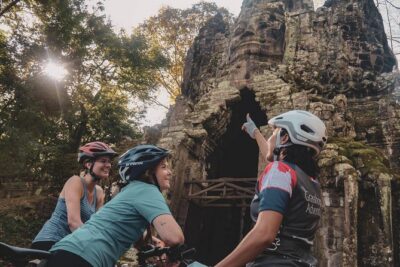
Browse the lists this tour appears in