Reviewed · TUK-TUKS
Full Day Angkor Wat with Sunset by Tuk Tuk
Angkor is at its best when you see more than the postcard temple. This seven-hour private tuk-tuk tour links Angkor Wat, Bayon, Ta Prohm, Banteay Kdei, and sunset at Pre Rup, giving you a broad look at the old Khmer capital without being tied to a large group.
I like the small private format, which lets your group set the pickup point and adjust the start time. I also like the practical care built into the ride: mineral water is included, and one guide, Sokha, was praised for clear English and a steady stream of useful facts. The main drawback is the long, hot day, with temple tickets, lunch, and drinks beyond the included water costing extra.
In This Review
- Key points to know before booking
- Why this Angkor day works well
- Angkor Wat in a two-hour opening visit
- Bayon and the former capital of Angkor Thom
- Ta Prohm, where trees press into the ruins
- Banteay Kdei and the quieter final temple stop
- Sunset at Pre Rup closes the day
- What the tuk-tuk and guide add
- What the $39 price really covers
- Who should book this seven-hour temple route
- Should you book it?
- FAQ
- How long does the Angkor Wat tuk-tuk tour last?
- What time does the tour start?
- Which temples are included?
- Is hotel pickup included?
- Is the tour private?
- Is transportation provided?
- Is an English-speaking guide included?
- Is the temple entrance fee included?
- Are lunch and drinks included?
- Can I cancel for a full refund?
Key points to know before booking
- Sunset at Pre Rup: The day finishes at one of Angkor’s classic sunset viewpoints.
- Private tuk-tuk transport: Your group rides together with hotel pickup and drop-off.
- Four major temple stops: Angkor Wat, Bayon, Ta Prohm, and Banteay Kdei each offer a different view of Khmer architecture.
- Guide support included: A licensed English-speaking guide accompanies the visit, with Sokha specifically praised for his explanations.
- Seven hours on site: The schedule gives each main stop serious time, but you should be ready for heat, walking, and stairs.
- Temple pass not included: Budget separately for admission, food, and lunch.
Why this Angkor day works well
Angkor is not one building. It is a huge former capital spread across a wide area, shaped by roughly six centuries of Khmer civilization from 802 to 1432. Seeing it by tuk-tuk makes sense because you move between the temples in the open air, rather than spending the entire day inside a vehicle.
The motorised trolley also suits Siem Reap. It is simple, exposed, and practical. You can see the road and catch some air between stops, though that breeze will not remove the heat during the middle of the day. A private ride gives you your own space, with no strangers deciding when everyone must leave a temple.
The trip begins around 8am from your hotel. That is early enough to make a useful start, but it is not a pre-dawn tour. You will still spend much of the day in strong sun, so light clothing, a hat, sunscreen, and comfortable shoes matter more than fancy equipment.
A licensed English-speaking guide is included. That changes the day from a sequence of impressive stones into a more readable visit. The guide can explain what you are looking at, point out carvings, and give the temples a place in the story of the Khmer Empire. Sokha is one guide associated with this service, and his clear English and wide store of facts were singled out as strengths.
More Angkor temple itineraries:
- Angkor Wat Sunrise or Sunset Tour with Guide from Siem Reap
5.0 · 12,109 reviews - Siem Reap: Angkor Wat: Small-Group Sunrise or Sunset Tour
5.0 · 9,444 reviews - Siem Reap: Angkor Wat 2-Day Tour with Sunrise and Sunset
4.9 · 4,429 reviews
Angkor Wat in a two-hour opening visit
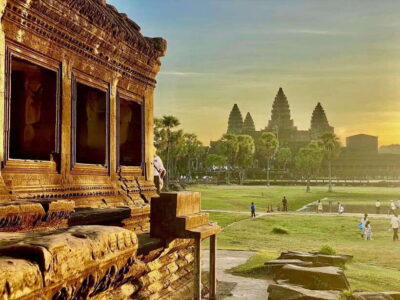
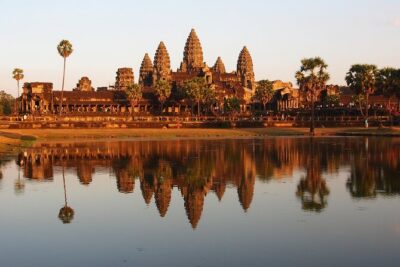
Angkor Wat is the obvious first stop, and for good reason. It is the largest and most famous temple in the Angkor region, with long galleries, towers, courtyards, and a scale that is difficult to grasp from photographs.
Give this stop time. Two hours lets you move beyond the first grand view and look at the details in the stonework. Your guide can help you understand the layout and direct your attention to features you might otherwise pass without noticing.
The appeal is also the sense of arrival. You are not simply checking a famous monument off a list. Angkor Wat sets the scale for the rest of the day and gives you a frame for understanding the other sites.
There is a practical catch: the temple admission fee is not included. You need to arrange and pay for the required temple entry separately. Since the entire route depends on access to the Angkor sites, confirm the current admission arrangements before setting out.
Two hours may feel short if you want to inspect every gallery. It is also enough to leave you with energy for the remaining temples. That balance matters. A full day at Angkor can become tiring if the first stop consumes all your strength.
Bayon and the former capital of Angkor Thom
The route then heads north toward Angkor Thom, the great city that served as the Khmer Empire’s capital. Bayon is the central attraction here, and its character differs sharply from Angkor Wat.
Where Angkor Wat gives you a grand, ordered composition, Bayon feels more enclosed and intricate. Its stone faces and crowded towers create a more intimate visit. You will want to slow down and look up, since the most memorable details are not always at eye level.
The two-hour allocation is generous enough to make this more than a quick photo stop. Your guide’s role is especially useful here because the maze of towers can be hard to read on your own. A good explanation gives you a reason to notice how the temple is arranged, rather than simply walking through a mass of stone.
Angkor Thom also adds useful context. You are not only seeing another temple. You are entering the setting of the old capital, which helps you picture the size and ambition of the civilization that built these monuments.
As with Angkor Wat, admission is not included. The day’s schedule also means you should not expect a long independent pause here. If you like photographing every angle or reading every sign at your own pace, tell your guide early that you need a little breathing room.
Ta Prohm, where trees press into the ruins
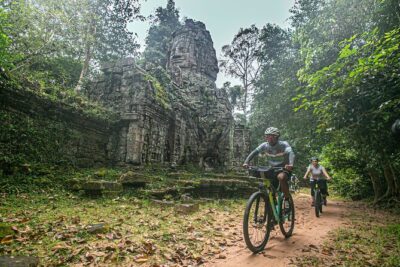
Ta Prohm is the stop most closely linked with jungle ruins. It is partly overgrown, and large fig and cotton trees push their roots through the stone walls. The result is dramatic, but the real interest is the tension between architecture and nature.
You will walk through a maze-like temple with collapsed sections, carved surfaces, and trees that seem to grip the structure. The setting gives Ta Prohm a mood that Angkor Wat and Bayon do not share. It feels less formal and more exposed to time.
The two-hour visit is useful here. Ta Prohm rewards slow movement because the best details can appear around corners. At the same time, uneven ruins and roots require care. Keep your attention on the ground as well as the walls, particularly when you are tired from the morning.
Lunch is at your own expense. The schedule allows for a meal, but the supplied details do not specify a restaurant or a fixed lunch location. Plan to pay separately and keep some flexibility in your timing.
Ta Prohm can be the most visually memorable stop, but it may also be the least comfortable if the heat has built up. The open tuk-tuk ride, supplied water, and any cooling cloths from the driver become practical rather than decorative at this point.
Other Siem Reap experiences to weigh up
- Siem Reap: Angkor Wat Private Tuk-Tuk Tour
4.9 · 2,222 reviews - Siem Reap Countryside Bike Tour / E-Bike or Tuk Tuk
5.0 · 935 reviews - Angkor Sunrise Bike Tour / E-Bike or Tuk Tuk
5.0 · 615 reviews - Angkor Wat Private Tuk-Tuk Tour (sunrise Option) & more
5.0 · 439 reviews
Banteay Kdei and the quieter final temple stop
Banteay Kdei is known as the citadel of monks’ cells. It is another partly overgrown temple, with tall trees and cotton tree roots weaving through the ruined walls.
This one-hour stop is shorter than the morning visits, which makes sense. By now, you will have seen the main architectural styles of the route, and Banteay Kdei gives you a quieter final look at a temple shaped by age, plants, and collapse.
Do not expect Banteay Kdei to match Angkor Wat in scale. Its value is in the texture and atmosphere of the ruins. The trees, broken walls, and less monumental character create a useful contrast with the empire’s grandest buildings.
The shorter visit also helps keep the day manageable. After several hours of walking, a focused hour is easier to enjoy than another oversized temple circuit. If you prefer smaller sites and slower observation, this may be one of your favorite portions of the route.
Sunset at Pre Rup closes the day
The advertised finish is sunset at Pre Rup. This gives the day a clear ending instead of simply returning to Siem Reap after the final temple.
Pre Rup is a temple viewpoint, and sunset adds a change of pace. You have spent the day looking at carved stone, enclosed galleries, and tree-covered ruins. At the end, you can pause and watch the light change across the surroundings.
The exact quality of sunset depends on the weather, and the tour requires good weather to operate. That is worth remembering when you plan around a special evening view. A cloudy day does not erase the value of the temples, but it may affect the final scene.
You should also be ready for a long day overall. The stated duration is about seven hours, while the listed temple visits total seven hours on paper. Actual movement, meal timing, and the sunset stop may require some flexibility. This is not a rushed two-hour highlights trip. It is a full day with several substantial walks.
What the tuk-tuk and guide add
The tuk-tuk is central to the experience, not just a cheap way to get from one gate to another. Between temples, you ride in the open air and avoid arranging separate transport for each stop. Hotel pickup and drop-off remove another layer of planning, especially if you are unfamiliar with Siem Reap.
The vehicle worked well during a very hot day for one guest, and the driver was attentive. Chilled water and ice-cold flannels were supplied during that outing. Mineral water is part of the stated inclusion, while the cooling cloths should be treated as a welcome service rather than something you can assume is guaranteed on every departure.
The private format is the biggest comfort advantage. Only your group takes part, so you can ask questions without holding up a busload of people. You can also discuss the pace with the guide. The tour description says you can customize the start time, pickup location, and number of people, though any changes should be settled before the day begins.
Sokha received particular praise for his English and his ability to keep the group informed. A guide’s quality matters at Angkor because the monuments can blur together after several hours. Clear explanations help you see differences between the temples and understand why each stop was included.
Still, the guide cannot remove every challenge. You will be outside for much of the day, walking around old ruins in warm conditions. If you dislike heat or prefer a short, highly focused visit, this full-day format may feel demanding.
What the $39 price really covers
At $39 per person, the price is attractive for a private day with hotel transport, an English-speaking guide, tuk-tuk service, and water. The value improves if you are sharing the vehicle with several people in your own party, since the cost buys both transport and guiding rather than transport alone.
The important extra is the temple entrance fee. Lunch and drinks are also excluded. That means the advertised price is not the complete cost of the day, so budget for those items before comparing this tour with a more expensive package that may include admission or food.
I see the strongest value in the combination of a private vehicle and a guide. Hiring transport on its own could get you between sites, but it would not necessarily give you the same historical explanation. Booking a guide and tuk-tuk separately might also take more time and coordination.
Group discounts are offered, which may make the price more appealing for a larger party. The tour is also confirmed at booking, according to the supplied details, giving you a clear starting point for planning your Siem Reap days.
Who should book this seven-hour temple route
I would choose this tour if you want the main Angkor sights in one day and prefer private transport over a large group. It suits couples, families, and small groups who want to move at their own pace and ask plenty of questions.
It is also a good fit if sunset matters to you. Pre Rup gives the day a planned finish, rather than leaving you to arrange a separate evening outing.
You may want another option if you need a very relaxed schedule, dislike walking, or want every cost included in advance. The tour is active, and admission, lunch, and drinks are extra. Most people can participate, but the supplied information does not promise special accessibility arrangements.
The free cancellation rule is useful when plans are uncertain. You can cancel for a full refund up to 24 hours before the start time. Poor weather or failure to reach the minimum number of participants can lead to a new date or a refund, though the activity is described as private for your group.
Should you book it?
Book this tour if you want a practical, good-value introduction to Angkor with a private tuk-tuk, a proper English-speaking guide, and a sunset finish. The strongest reasons are the well-chosen temple mix, the personal format, and the small comforts that matter in Cambodia’s heat.
Before paying, make sure you have allowed for the temple pass and lunch. If you do, this is a sensible choice for seeing Angkor Wat, Bayon, Ta Prohm, and Banteay Kdei in one well-planned day without giving up the flexibility of a private outing.
FAQ
How long does the Angkor Wat tuk-tuk tour last?
The tour lasts approximately seven hours.
What time does the tour start?
The standard departure time is about 8am. The start time may be customizable.
Which temples are included?
The route includes Angkor Wat, Bayon Temple, Ta Prohm Temple, and Banteay Kdei. It also finishes with sunset at Pre Rup.
Is hotel pickup included?
Yes. Hotel pickup and drop-off are included.
Is the tour private?
Yes. Only your group participates in the private activity.
Is transportation provided?
Yes. You travel by tuk-tuk, also described as a motorised trolley.
Is an English-speaking guide included?
Yes. A licensed and experienced English-speaking guide is included.
Is the temple entrance fee included?
No. Temple admission is not included in the price.
Are lunch and drinks included?
No. Lunch and food or drinks are not included. Mineral water is included.
Can I cancel for a full refund?
Yes, if you cancel at least 24 hours before the experience start time. Cancellations made less than 24 hours in advance are not refundable.
More Full-Day in Siem Reap
- Full-Day Angkor Wat Sunrise Private Tour with Guide from Siem Reap
5.0 · 2,920 reviews - Siem Reap: Angkor Wat Sunrise and Full-Day Sightseeing Tour
4.9 · 2,828 reviews - Full-Day Guided Sunset Tour of Angkor Wat
5.0 · 1,507 reviews - Siem Reap: Full Day Angkor Wat Temple Experience with Sunset
4.9 · 1,490 reviews
More Evening Experiences in Siem Reap
- Sunset tour of Kampong Phluk stilts home village on the Tonle Sap
5.0 · 4,865 reviews - Siem Reap: Full-Day Angkor Wat Guided Tour with Sunset
4.9 · 3,803 reviews - Angkor Wat Sunset Small Group Tour with Lunch Included
5.0 · 3,059 reviews - Angkor 2-Day Sunset & Sunrise Small-Group Tour
5.0 · 2,567 reviews
Fresh reviews from around Siem Reap
- Savor the Countryside: Tours with Authentic Cooking Classes” 5.0 · 3 reviews
- Full-Day Tour Preah Vihea & Koh Ker Temple 3.7 · 3 reviews
- Angkor Wat Sunrise TukTuk Tour 5.0 · 3 reviews
- Angkor Grand Circuit Tour & Banteay Srei 5.0 · 3 reviews
- Guided Private Tuk Tuk Tour Angkor Wat and Small Circle and Five Extras 5.0 · 3 reviews
- Siem Reap Temple Tour 2-Day with Sunrise/Sunset 3.7 · 3 reviews
- Bangkok to Angkor Wat 2 Days 1 Night by Flight 4.5 · 3 reviews
- Kompong Pluk Tour 5.0 · 3 reviews