
Reviewed · ANGKOR WAT SUNRISE TOURS
From Siem Reap: Angkor Wat Sunrise and Temples E-Bike Tour
Angkor Wat at sunrise is the headline, but the best part of this nine-hour outing comes after the famous photograph. You leave the big tour roads behind on an e-bike, following your guide through forest tracks and lesser-used entrances toward Ta Prohm and Ta Nei.
I like two things in particular. First, the route combines the essential temples with local food, a village, and a market instead of treating Angkor as a string of stone monuments. Second, the tuk-tuk driver stays with the group, carrying bags, supplying cold water and towels, and helping shield riders from traffic on road sections.
The drawback is the early start. Pickup is around 4:40 am, and sunrise may mean waiting in darkness for more than an hour. The ride itself is easy on the electric bikes, but sandy or rocky temple tracks require care, and the $85 price does not include the $37 Angkor pass, lunch, or drinks.
In This Review
- Key points to know before booking
- Why the e-bike route is worth considering
- 4:40 am pickup and the wait for sunrise
- Angkor Wat deserves more than a sunrise photograph
- Breakfast near Preah Dak village
- A local market and Cambodia on the plate
- Ta Prohm, where trees claim the ruins
- Ta Nei offers a quieter change of pace
- Bayon and the Victory Gate of Angkor Thom
- What the guides and driver add
- Is $85 a fair price?
- Who should book this experience?
- Should you book the Angkor e-bike tour?
- FAQ
- What time does the tour begin?
- How long does the experience last?
- Is the Angkor temple pass included?
- What food is included?
- Is lunch included?
- What transport is used?
- Is the tour private?
- What clothing is required?
Key points to know before booking
- Sunrise starts the day: Expect a tuk-tuk pickup around 4:40 am and time beside Angkor Wat’s reflecting pools before entering the temple.
- The e-bike changes the route: You can reach forest paths, alternative temple entrances, and quieter corners that are awkward by large vehicle.
- Breakfast is part of the experience: Stop near Preah Dak village for Khmer rice noodles, fish green curry soup, palm cake, and steamed rice dumplings.
- The classic temples are still included: The route covers Angkor Wat, Ta Prohm, Ta Nei, Bayon, the Victory Gate, and Angkor Thom.
- Guides add real value: Guides including August, Ho, Raman, Sa, Jan, and Makara are praised for temple explanations, local insight, and photography.
- The price needs a proper calculation: At $85 plus the $37 park pass, the basic cost is $122 per person before lunch and any extra drinks.
Why the e-bike route is worth considering
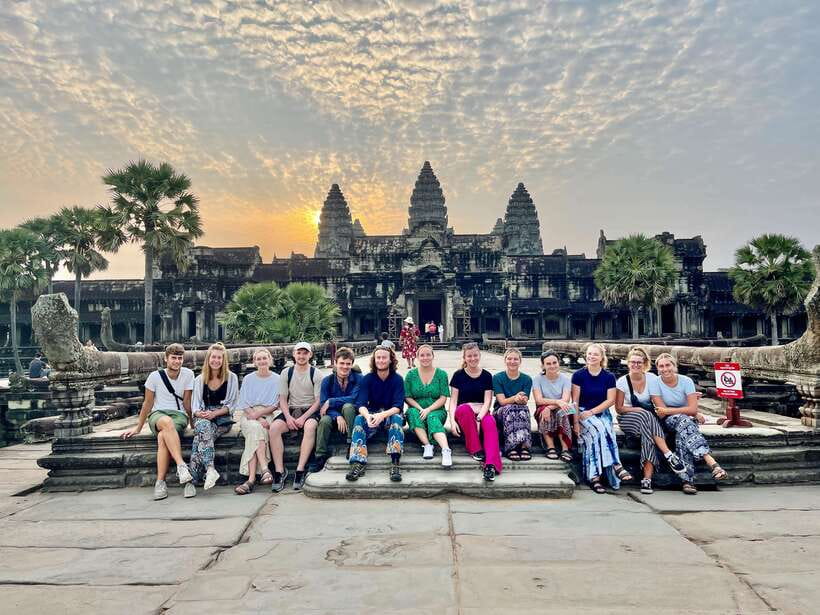
Angkor Archaeological Park is spread over a large area. A standard van or tuk-tuk can take you between major sites, but it cannot always reach the smaller paths and temple approaches that make the park feel less programmed.
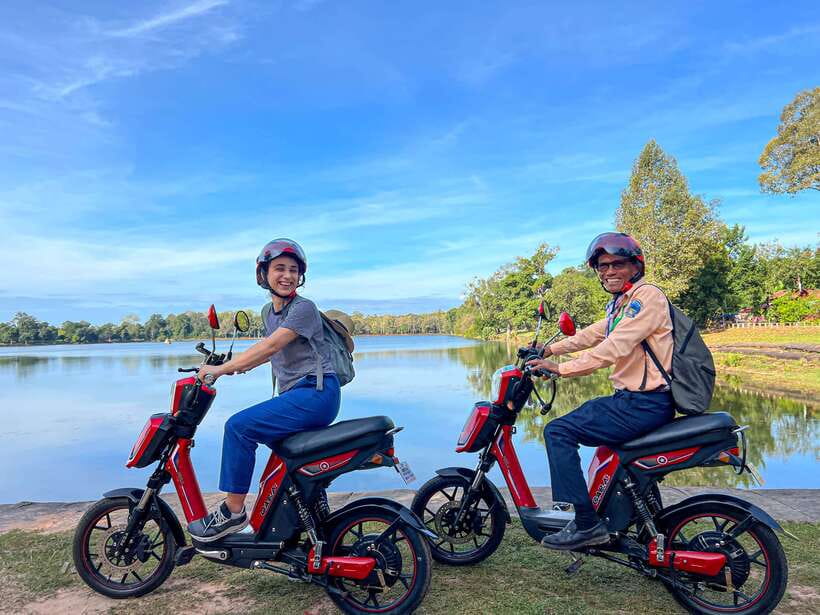
Here, the tour begins by tuk-tuk, then shifts to electric bikes inside the park. The bikes are described as closer to electric scooters than pedal bicycles, with very little effort required. That makes them useful in Cambodia’s heat, especially after the first temple visit.
You still need to be comfortable balancing and steering. Some paths are sandy, rocky, or uneven, and one rider reported falling from an e-bike, though the guide and driver helped. If you ride bicycles regularly, you should find the machines simple. If you are uneasy on two wheels, tell the operator in advance and use the accompanying tuk-tuk as a fallback where possible.
The safety arrangement is one of the tour’s strongest practical features. The tuk-tuk follows on public roads, helps protect the group from passing traffic, and meets you at the next stop when the bikes use routes too narrow for the vehicle. It also gives you somewhere to leave backpacks and a way to rest if the heat catches up with you.
More sunrise departures to Angkor Wat:
- Angkor Wat Sunrise or Sunset Tour with Guide from Siem Reap
5.0 · 12,109 reviews - Siem Reap: Angkor Wat: Small-Group Sunrise or Sunset Tour
5.0 · 9,444 reviews - Siem Reap: Angkor Wat 2-Day Tour with Sunrise and Sunset
4.9 · 4,429 reviews
4:40 am pickup and the wait for sunrise
Your day begins before dawn. The pickup is by tuk-tuk from your hotel in Siem Reap, with the meeting time set around 4:40 am. The ride to Angkor Wat usually takes roughly 20 to 30 minutes, depending on the hotel location and traffic.
At this hour, the city may still be quiet, although the route can pass places such as Pub Street that remain active late into the night. You will need your hotel lobby ready and should wait there about 10 minutes before pickup.
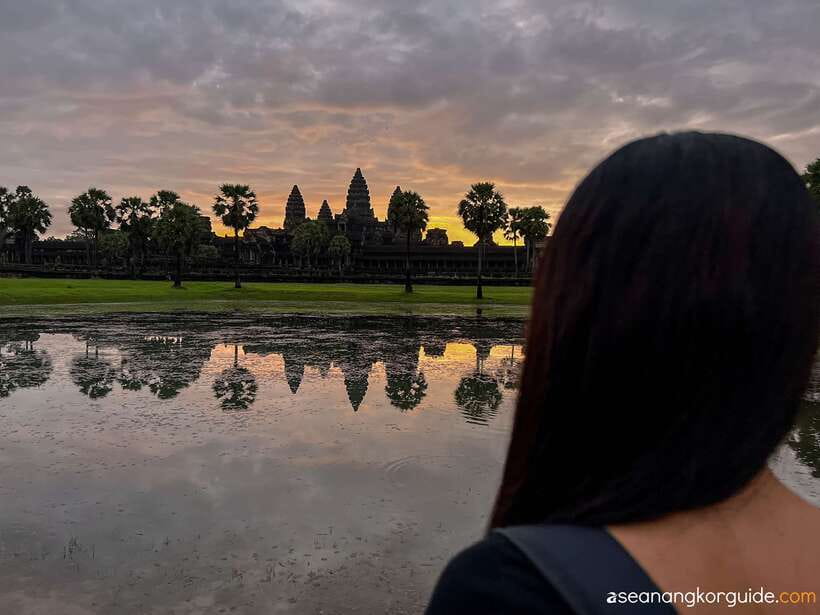
Sunrise at Angkor Wat is beautiful, but it is not a private moment. The reflecting pool area can attract many people, and the sky does not always cooperate. One morning may bring clear colors, while another may be cloudy. The useful point is that the guide knows where to position you and can move you to other views around the temple as the light changes.
Bring patience. The schedule may involve about an hour or more of waiting in low light before the sun rises. A phone flashlight can help, though the guide carries one. Light clothing is useful later, but you must follow the temple dress rule: sleeveless shirts are not allowed.
Angkor Wat deserves more than a sunrise photograph
After the sunrise, allow roughly an hour and a half to explore the main Angkor Wat complex. This is not just a quick stop for the reflection shot.
Your guide can point out the building’s layout, stone carvings, galleries, religious imagery, and the way the temple was planned. Guides such as August, Raman, Ho, and Makara are repeatedly praised for explaining both the carvings and the wider Cambodian story in clear English.
The temple is vast and visually demanding. There are long galleries, stairs, courtyards, and plenty of hard stone underfoot. Take the first part of the morning at a steady pace rather than trying to photograph every wall. The cooler hours help, but you should still carry water and use the supplied towel when the temperature rises.
This is also where a private or small-group format matters. A guide can adjust the pace, spend more time on the sections that interest you, and help with photographs. Several guides are also good photographers, and solo visitors especially may value having someone take more thoughtful pictures than a hurried phone handoff.
Breakfast near Preah Dak village
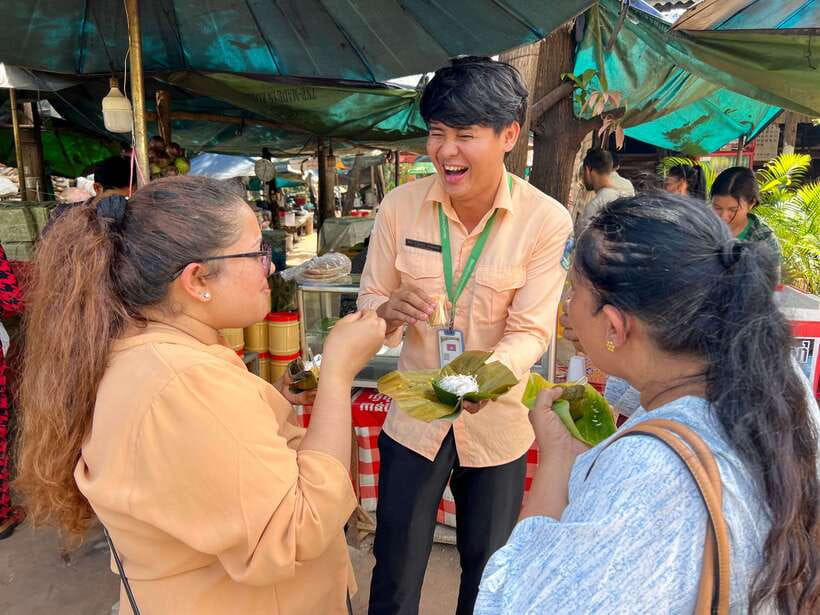
Once Angkor Wat is finished, you begin the e-bike portion and ride toward Preah Dak village for breakfast. The food is local rather than a hotel-style buffet.
The meal includes Khmer rice noodles with fish green curry soup. Traditional sweets may include palm cake and steamed rice dumplings with palm sugar. This is a useful introduction to everyday Cambodian flavors: noodles, fish, coconut or palm-based sweets, and rice preparations that are easy to miss when eating only in the center of Siem Reap.
The setting also changes the rhythm of the day. Instead of moving directly from one ruin to another, you sit down, eat, and see a village area connected to the park. The tour includes home-made dessert, seasonal fruit, and coconut at different points, along with bottled water and cool towels.
Breakfast is included, but lunch is not. The tour lasts about nine hours, so you should plan for a later meal on your own. Drinks beyond the supplied water and coconut are also excluded.
More Angkor temple itineraries:
- Siem Reap: Full-Day Angkor Wat Guided Tour with Sunset
4.9 · 3,803 reviews - Angkor Wat Sunrise tour with Small – Group and Guide tours
5.0 · 3,655 reviews - Angkor Wat Highlights and Sunrise Guided Tour from Siem Reap
5.0 · 3,213 reviews - Angkor Wat Sunset Small Group Tour with Lunch Included
5.0 · 3,059 reviews
A local market and Cambodia on the plate
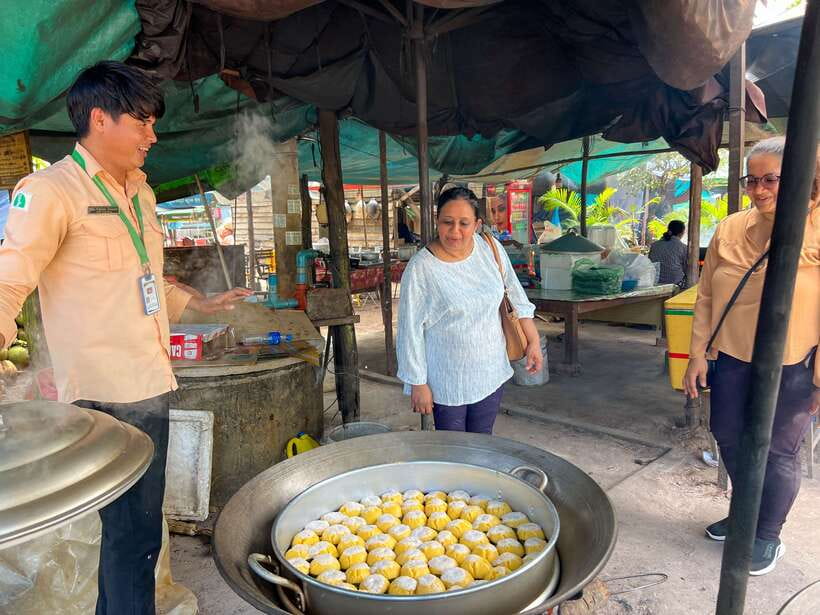
The market stop gives you a chance to walk between food stalls and look at Cambodian specialties. Depending on what is available, you might see sticky rice, cakes, fruit, egg noodles, fried spiders, or scorpions.
You do not have to try anything that makes you uncomfortable. The value of the stop is as much in watching how food is sold and prepared as in tasting the more unusual items. If you do want to sample something, ask your guide what is fresh and how it is normally eaten.
The guides can explain unfamiliar foods and help you avoid a forced tourist performance. Some departures also include a short look at rice-cake making or stops at small local shops. These details make the morning feel connected to present-day Cambodia, not only to royal rulers and ancient stonework.
Ta Prohm, where trees claim the ruins
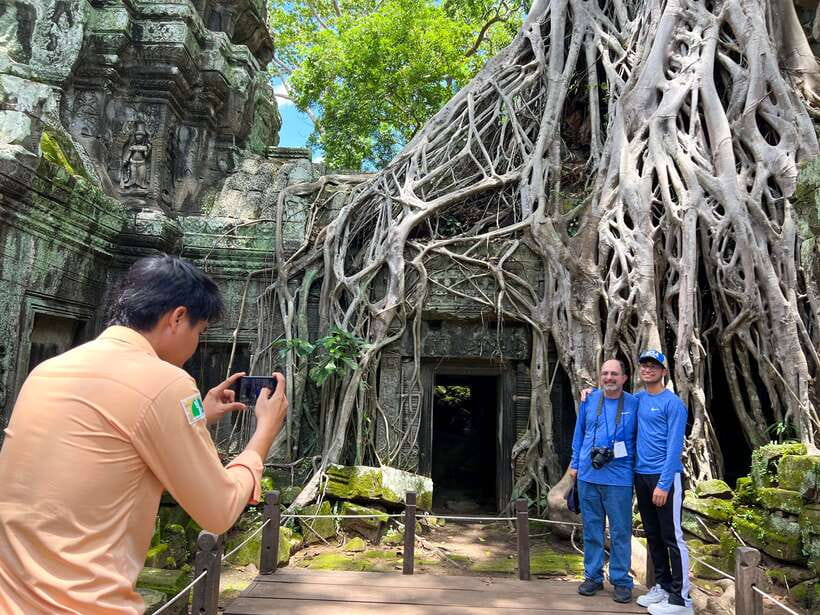
Ta Prohm is one of the park’s most recognizable temples because large trees and roots grow over its galleries and walls. It was left partly in the condition in which it was found, giving you a direct sense of how jungle growth affected the ruins.
The e-bike helps here. You can approach through smaller routes and avoid some of the long walks required when a vehicle drops you at a main entrance. The guide can also point out quieter sides and alternate access points, though the central areas can still be busy.
Ta Prohm is photogenic, but that creates its own problem. The most famous tree-covered views are the places where people naturally gather. Your guide’s timing and knowledge of side routes can help, but you should not expect the entire temple to be empty.
Watch your footing. Roots, broken stone, sand, and uneven surfaces are part of the setting. Wear shoes with a secure sole, and be careful when stepping off or parking the bike.
Ta Nei offers a quieter change of pace
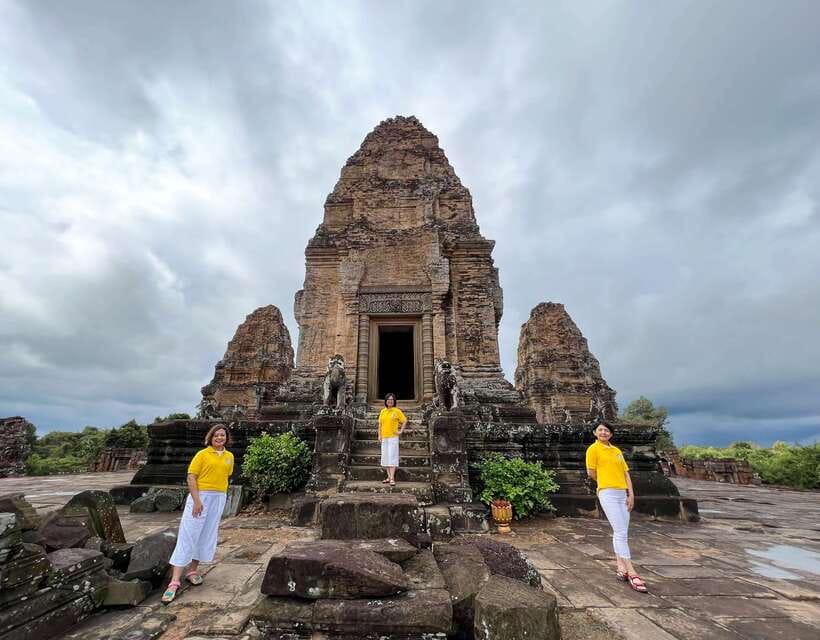
Ta Nei is a smaller jungle temple that has been left in a more original, overgrown state. It does not have the same fame as Ta Prohm, which is precisely why it can feel more atmospheric.
The ride to Ta Nei is one of the clearest reasons to choose this tour instead of a vehicle-only circuit. Forest paths and narrow approaches bring you closer to the surrounding trees and away from the main flow of buses and tuk-tuks.
Do not expect polished walkways or a fully restored monument. Ta Nei is appealing because it feels rougher and less formal. The tradeoff is that access can be more demanding, with uneven ground and fewer obvious facilities. Your guide will be useful here, both for finding the way and for explaining what you are seeing.
Bayon and the Victory Gate of Angkor Thom
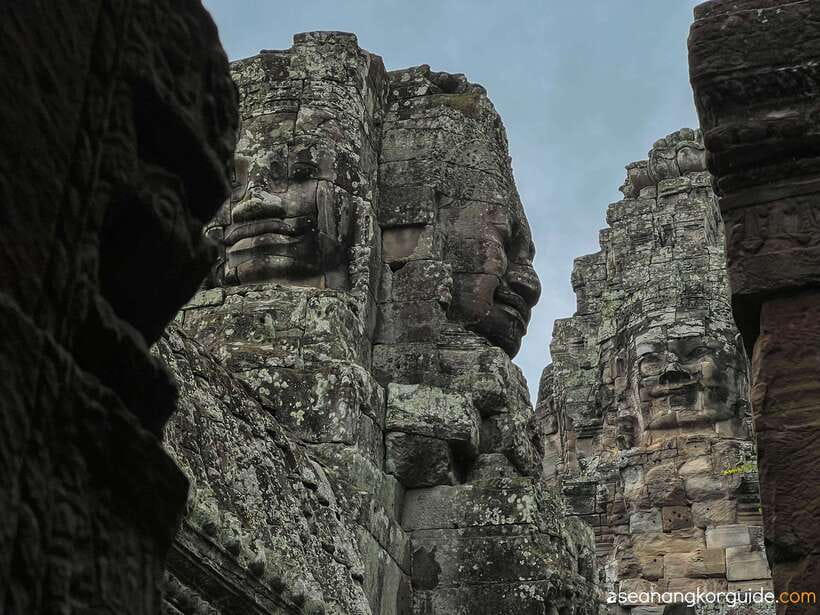
The route then returns to the grand scale at Bayon, the temple famous for its large smiling Buddha faces. These faces appear from towers at different angles, so the temple changes as you walk around it.
Bayon was built under King Jayavarman VII, a Mahayana Buddhist ruler. It functioned as a place of worship, education, and administration, not simply as a monument to look at. That wider purpose helps explain why the site feels like part of a larger royal center rather than an isolated shrine.
Your guide can help separate the popular image of the smiling faces from the actual structure around them. Look closely at the bas-reliefs and the way the towers crowd the central area. Bayon can be confusing without orientation, and a good explanation turns a maze of stone into a readable place.
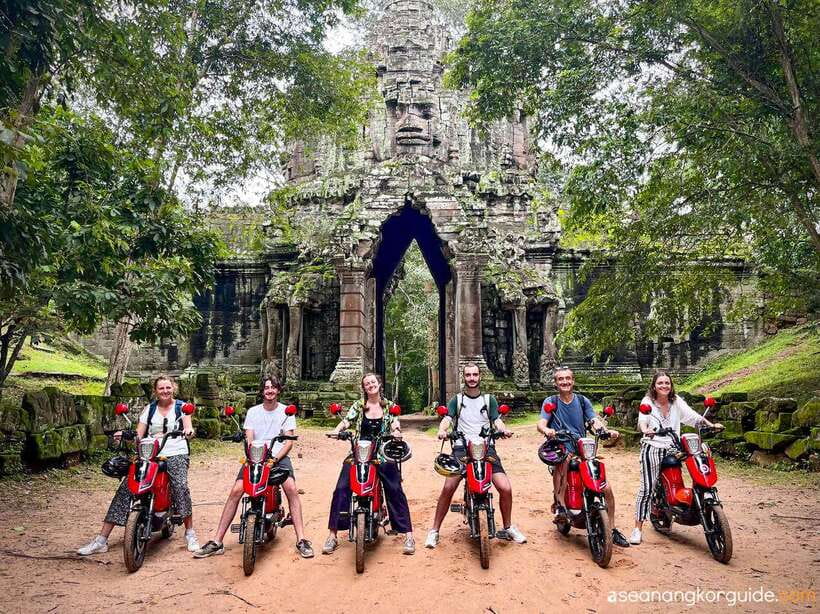
The tour also includes the Victory Gate of Angkor Thom. This is another important photo stop and a reminder of the scale of the old city. You may be arriving after several hours on your feet and on the bike, so use the stop to rest, drink water, and take in the details rather than rushing through.
What the guides and driver add
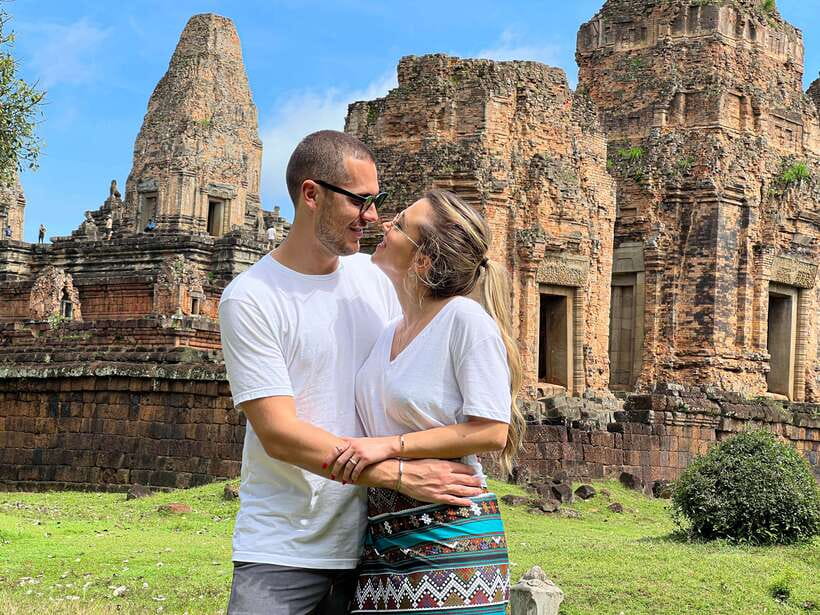
The guide is not just there to lead the bikes. The best parts of this experience depend on the guide’s timing, temple knowledge, local contacts, and ability to read your energy.
August is especially praised for changing the order of stops to reduce crowding, finding alternate approaches, explaining carvings, and taking photographs. Ho, Raman, Sa, Jan, and Makara are also named by past customers as friendly, well informed, helpful, and fluent in English. Your assigned guide may be different, but the service is designed around a professional English-speaking guide.
The driver is equally important. He follows the group on roads, carries backpacks, offers cold bottles of water and chilled towels, and meets you at the next temple when the bike route becomes too narrow for the tuk-tuk. That support makes the cycling feel more secure than riding independently in unfamiliar traffic.
You receive water, seasonal fruit, coconut, and towels. In the heat of Angkor Park, these are not decorative extras. They reduce the need to stop and search for supplies, although you should still bring sunscreen and insect repellent. One rider specifically recommended both.
Is $85 a fair price?
The listed cost is $85 per person. The one-day Angkor pass costs an additional $37, bringing the known total to $122 before lunch and drinks.
That is clearly more than a basic group bus or van tour. You are paying for a private or small-group format, hotel pickup and return, a guide, e-bike use, breakfast, and a support tuk-tuk that stays with you. The route also reaches smaller paths and temples that are harder to include in a standard vehicle circuit.
I would not choose this tour simply to save money. I would choose it if you have one main day for Angkor and want transport, food, explanations, photographs, and a more active route handled for you. The value improves for families or small groups who can share the private experience, and for solo visitors who want a guide and built-in photography help.
The price is harder to justify if you already have several days in Siem Reap, enjoy moving slowly, or prefer to arrange your own temple visits. You may also find a cheaper tour if you are satisfied with the main temples from a vehicle and do not care about forest routes.
Who should book this experience?
This is a strong choice for first-time visitors with one full day available. You see Angkor Wat, Ta Prohm, Ta Nei, Bayon, and Angkor Thom, while breakfast and the market add a useful local dimension.
Families with teenagers may also like it. The electric bikes require attention but not much physical effort, and children aged 14, 15, and 17 have enjoyed the format. You should still judge your own group’s comfort with uneven paths and early mornings.
It suits active adults who want more movement than a van tour, solo visitors who want help with pictures, and anyone interested in Cambodian food and village life alongside temple architecture.
It is not suitable for pregnant women or people over 70 according to the activity restrictions. It may also be a poor fit if you dislike dark early starts, cannot ride safely on loose surfaces, or want a slow, highly detailed study of every temple.
The tour offers free cancellation up to 24 hours before departure, and you can reserve now and pay later. Pickup is included, but remember to wait in your hotel lobby and wear clothing that covers the shoulders.
Should you book the Angkor e-bike tour?
I would book it if you want the major Angkor sights with a little adventure and a more personal Cambodian morning. The combination of sunrise, local breakfast, market food, forest riding, and expert temple guiding gives you more variety than a standard circuit.
Book it especially if August, Ho, Raman, Sa, Jan, or Makara is available, since their strengths include clear explanations, crowd-aware timing, and strong photography. You should also accept the real costs: $85 for the tour, $37 for the pass, no lunch, and a 4:40 am start.
If those conditions work for you, the e-bike is the detail that makes this experience different. You are not just being driven from one famous ruin to the next. You are moving through Angkor at a human pace, with a support tuk-tuk nearby and enough flexibility to notice the quieter parts of the park.
FAQ
What time does the tour begin?
Hotel pickup is scheduled for about 4:40 am. You should wait in your hotel lobby 10 minutes before the arranged pickup time.
How long does the experience last?
The tour duration is nine hours. Starting times may vary, so check availability when booking.
Is the Angkor temple pass included?
No. The one-day Angkor pass costs $37 per person and is paid separately.
What food is included?
Breakfast includes local Khmer food such as rice noodles with fish green curry soup, palm cake, and steamed rice dumplings with palm sugar. Seasonal fruit and coconut are also provided during the day.
Is lunch included?
No. Lunch and additional beverages are not included.
What transport is used?
You begin and end the experience by tuk-tuk. Inside Angkor Park, you ride an e-bike, while the tuk-tuk follows on road sections and meets you at later stops.
Is the tour private?
Private and small-group options are available. The activity includes a live English-speaking guide.
What clothing is required?
Sleeveless shirts are not allowed. Wear clothing that covers your shoulders, along with secure footwear for sandy, rocky, or uneven temple paths.
More E-Bikes in Siem Reap
- Siem Reap Countryside Sunset Bike Tour / E-Bike or Tuk Tuk
5.0 · 173 reviews - Siem Reap Countryside Guided Tour by Bike and E-Bike Private Tour
5.0 · 157 reviews - Cycle the Angkor Backroads with lunch / E-Bike or Tuk Tuk
5.0 · 124 reviews - Floating Village Bike & Boat Sunset / E-Bike Available
5.0 · 78 reviews
More Cycling Tours in Siem Reap
- Siem Reap Countryside Bike Tour / E-Bike or Tuk Tuk
5.0 · 935 reviews - Angkor Sunrise Bike Tour / E-Bike or Tuk Tuk
5.0 · 615 reviews - Siem Reap: Bike the Angkor Temples – Full-Day 30km Tour
5.0 · 463 reviews - Siem Reap: Angkor Wat Sunrise Bike Tour & Jungle Breakfast
5.0 · 415 reviews
Fresh reviews from around Siem Reap
- Full-Day Tour Preah Vihea & Koh Ker Temple 3.7 · 3 reviews
- Savor the Countryside: Tours with Authentic Cooking Classes” 5.0 · 3 reviews
- Angkor Wat Sunrise TukTuk Tour 5.0 · 3 reviews
- Angkor Grand Circuit Tour & Banteay Srei 5.0 · 3 reviews
- Guided Private Tuk Tuk Tour Angkor Wat and Small Circle and Five Extras 5.0 · 3 reviews
- Siem Reap Temple Tour 2-Day with Sunrise/Sunset 3.7 · 3 reviews
- Bangkok to Angkor Wat 2 Days 1 Night by Flight 4.5 · 3 reviews
- Kompong Pluk Tour 5.0 · 3 reviews
Angkor Wat Sunrise Tours, compared.

Angkor Wat Sunrise or Sunset Tour with Guide from Siem Reap
Read our review →


Angkor Wat Sunrise tour with Small – Group and Guide tours
Read our review →
Angkor Wat Highlights and Sunrise Guided Tour from Siem Reap
Read our review →
Full-Day Angkor Wat Sunrise Private Tour with Guide from Siem Reap
Read our review →
Angkor Wat Sunrise & 3 Main Temples with Breakfast – Small Group
Read our review →
Browse the lists this tour appears in