
Reviewed · CYCLING TOURS
Angkor Wat Cycling Tour
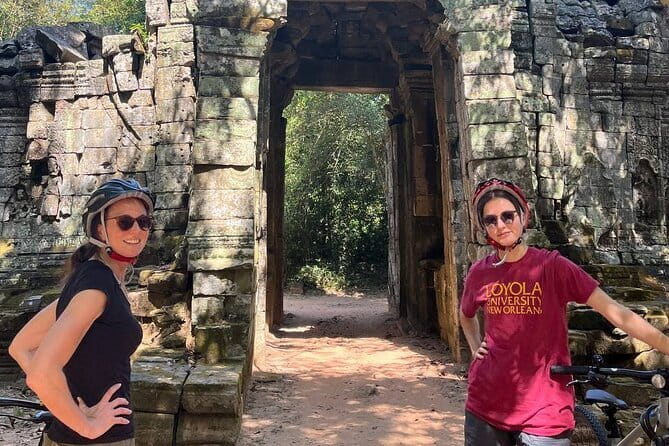
Angkor Wat is usually seen from a tuk-tuk or behind a tour bus. This ride gives you a quieter way in, using forest paths and back roads to link the famous temples with smaller ruins that many visitors skip. You get time at Angkor Wat, Bayon, and Ta Prohm, plus a closer look at the countryside around the temple park.
I like two things right away: the private format lets your group set a comfortable cycling pace, and the route adds lesser-known Ta Nei and Chau Say Tevoda to the main sights. Guides such as Mr K, also called Kosorl in one account, are praised for good bikes, a careful approach, and friendly help along the way.
The main consideration is stamina. This is a full morning and afternoon on a bicycle in Cambodia, with up to eight hours of sightseeing and riding. The Angkor temple pass also costs extra, so the real total is higher than the tour price alone.
In This Review
- Key points to know before booking
- Why cycling Angkor can be better than riding between temples
- A 7:30 am start from your Siem Reap hotel
- Angkor Wat: two hours at Cambodia’s great temple
- Bayon and the stone faces of Angkor Thom
- Chau Say Tevoda, a smaller stop with breathing room
- Ta Prohm, where nature shares the frame
- Ta Nei, the quiet temple reward
- Angkor Thom’s East, or Death, Gate
- What the $45 price really covers
- Who should book this cycling tour
- Should you book the Angkor Wat Cycling Tour?
- FAQ
- How long does the Angkor Wat Cycling Tour last?
- What time does the tour begin?
- Is hotel pickup and drop-off included?
- Is the Angkor Temple Pass included in the price?
- What equipment and refreshments are provided?
- Is this a private tour?
- What is the cancellation policy?
Key points to know before booking
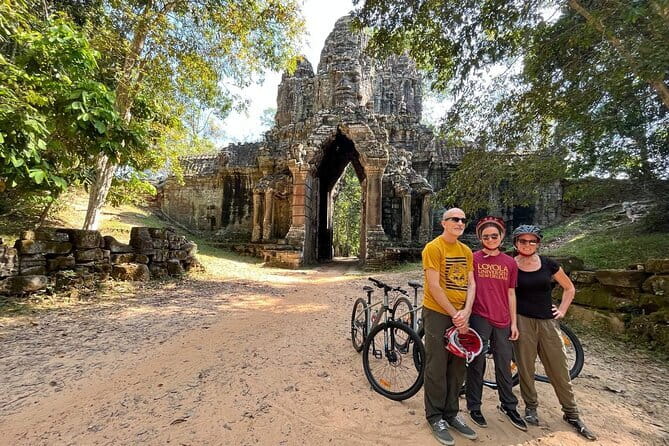
- Forest paths replace much of the usual vehicle sightseeing, giving you a closer look at the trees, ruins, and rural life around Angkor.
- The tour is private, so only your group takes part and the guide can adjust the amount of cycling.
- Mr K is a popular guide choice, especially for visitors who want lesser-known temple routes and a relaxed pace.
- The route combines major temples with smaller ruins, including Ta Nei and Chau Say Tevoda.
- Mountain bikes, helmets, cold drinking water, hotel pickup, and drop-off are included.
- Budget another $37 per person for the Angkor Temple Pass, which is not included in the $45 tour price.
Why cycling Angkor can be better than riding between temples
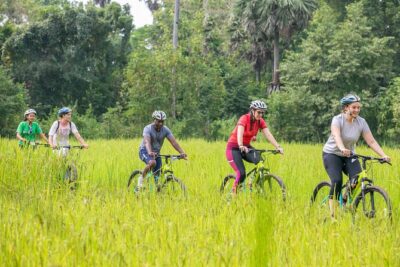
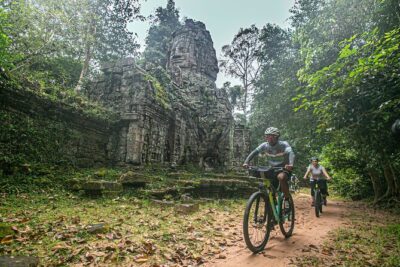
The best reason to choose this tour is not speed. A vehicle gets you from one temple to the next with little effort, but a bicycle lets you notice the spaces between them. You move through tree-lined routes, rural back roads, and sections of the park where the experience feels less like a procession of famous monuments.
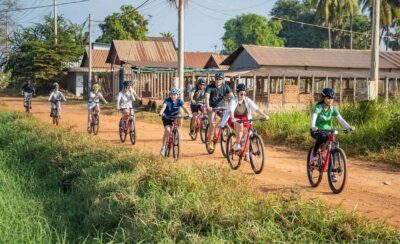
That matters at Angkor. The temples are impressive, but the setting is part of the appeal. Cycling gives you time to watch the road, hear the forest, and see how people live in the area around the ancient city. The route is described as leisurely, not a race, and the private setup means your guide can adapt the ride to your group.
The experience is also a useful break from walking. Angkor Wat, Bayon, and Ta Prohm all require time on foot, often over uneven stone and broad temple grounds. Riding between them helps vary the day. You still need to pedal for several hours, but you are not spending the entire visit walking from gate to gallery.
There is a trade-off. Cycling in warm conditions can be tiring, and the tour may last six to eight hours. If you want the shortest possible temple visit, a car or tuk-tuk will be easier. If you enjoy being outdoors and want the journey between temples to count as part of the day, the bicycle is the better fit.
More Angkor temple itineraries:
- Angkor Wat Sunrise or Sunset Tour with Guide from Siem Reap
5.0 · 12,109 reviews - Siem Reap: Angkor Wat: Small-Group Sunrise or Sunset Tour
5.0 · 9,444 reviews - Siem Reap: Angkor Wat 2-Day Tour with Sunrise and Sunset
4.9 · 4,429 reviews
A 7:30 am start from your Siem Reap hotel
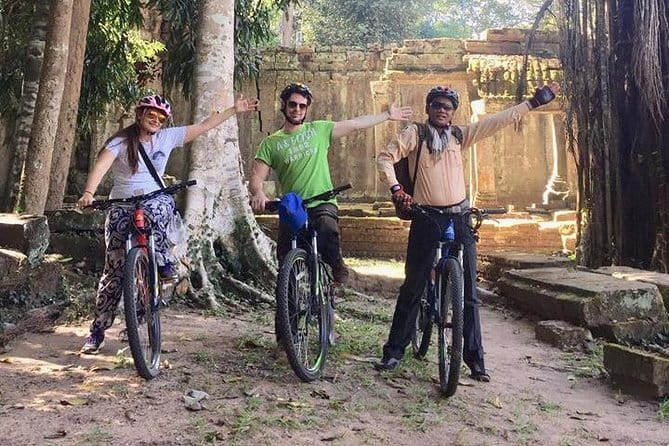
Pickup begins at your hotel at 7:30 am. Starting early gives the day a clear shape and leaves time for the major temples, smaller stops, and the forest routes that make this tour different from a basic Angkor circuit.
The guide supplies a mountain bike and helmet, along with cold drinking water. Those details matter more than they may sound. A properly supplied bike makes a long ride less awkward, while a helmet is a basic safety must for a day on mixed temple roads and paths.
The guide speaks English and leads the route rather than simply handing you a bicycle and a map. That is useful at Angkor, where the paths between ruins can be confusing and the value of the ride depends on reaching more than the three most famous temples.
This is a private activity, so only your group participates. You are not locked into the pace of a large cycling group. The experience is best for people who can manage a leisurely but lengthy ride and who prefer personal attention to a fixed, crowded schedule.
Angkor Wat: two hours at Cambodia’s great temple
Angkor Wat is the first major stop and receives about two hours. Built between 1113 and 1150 under King Suryavarman II, it is the largest and most famous Khmer temple in the complex.
The scale is the first thing to take in. Angkor Wat was designed as a vast religious monument, with long approaches, large galleries, towers, and carefully carved stonework. Two hours gives you enough time to see more than the entrance and central view, though it is still only one portion of the day.
Your bicycle does not replace walking here. You will leave it and explore the temple on foot, so comfortable shoes are important even though they are not listed among the inclusions. The wide grounds can make this stop feel longer than its scheduled time, particularly if you want to study the carvings.
The temple admission ticket is not included. The required Angkor Temple Pass costs $37 per person, so remember to add it to the $45 tour price. That puts the listed cost at $82 per person before any other personal spending.
Bayon and the stone faces of Angkor Thom
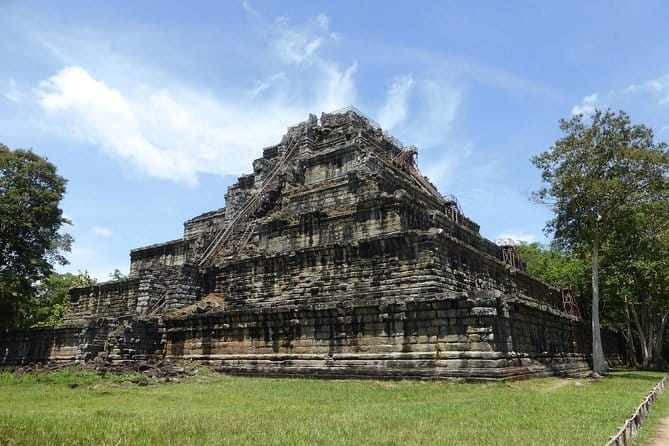
The next major temple is Bayon, with about two hours scheduled. The description identifies it as a Buddhist temple built in the late 12th or early 13th century under Jayavarman VII. Its towers and carved faces give it a very different character from Angkor Wat.
Bayon is not a quick photo stop. The central structure is dense, and the towers, corridors, and carved surfaces reward a slow look. The two-hour allocation makes sense if you want to walk around rather than simply pause at the front.
The route also connects Bayon with Angkor Thom, the ancient city around it. This is one place where the bicycle helps with scale. Angkor Thom was not just one temple, but a large urban and ceremonial center, and riding through its approaches gives you a better sense of the distance between its gates and monuments.
Bayon can be crowded at popular times, so the value of the private cycling route depends partly on how the day unfolds. The guide can help you move through the complex in a more personal way, but the tour cannot guarantee empty temples.
More cycling days around Siem Reap:
- Siem Reap Countryside Bike Tour / E-Bike or Tuk Tuk
5.0 · 935 reviews - Angkor Sunrise Bike Tour / E-Bike or Tuk Tuk
5.0 · 615 reviews - Siem Reap: Bike the Angkor Temples – Full-Day 30km Tour
5.0 · 463 reviews - Siem Reap: Angkor Wat Sunrise Bike Tour & Jungle Breakfast
5.0 · 415 reviews
Chau Say Tevoda, a smaller stop with breathing room
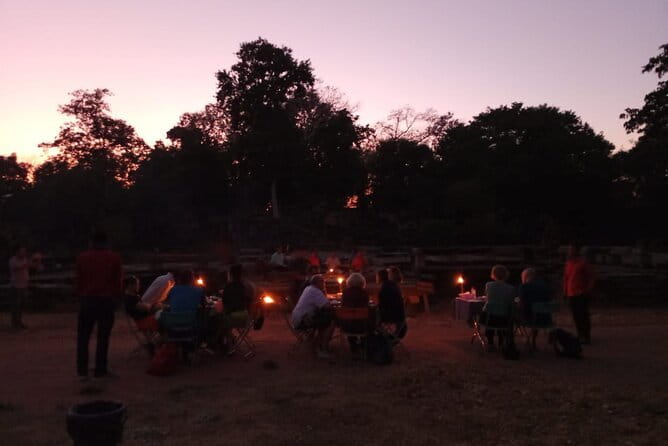
Chau Say Tevoda receives about 30 minutes. It sits east of Angkor Thom, south of Thommanon, and dates from the Angkor Wat period in the mid-12th century. It was built as a Hindu temple.
Half an hour is enough for a focused visit, not a long study. This stop breaks up the major temples and gives you a smaller ruin to examine without committing another large block of the day.
I like this kind of addition because it changes the rhythm. Angkor Wat and Bayon can feel grand and demanding. A smaller temple offers a pause, and cycling between these places keeps the day from becoming a repeated pattern of vehicle, entrance, photographs, and vehicle again.
Do not expect Chau Say Tevoda to rival Angkor Wat in size. Its value is its setting in the wider temple complex and its place in the route, not a long list of major features.
Ta Prohm, where nature shares the frame
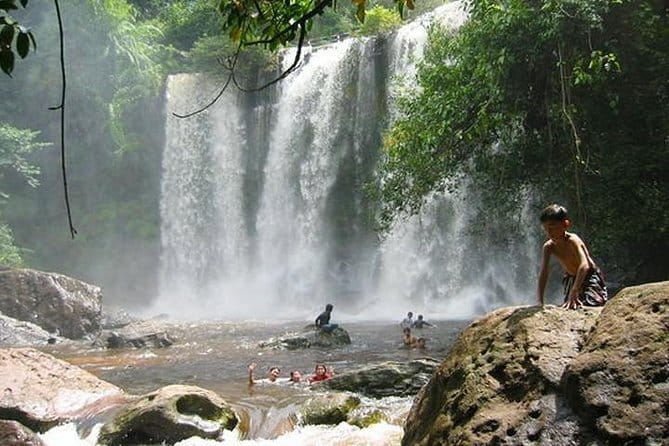
Ta Prohm receives about two hours and is one of the day’s main attractions. Jayavarman VII built it in the late 12th century and dedicated it in 1186 to his mother. It began with a Buddhist purpose and was later changed to Hindu use.
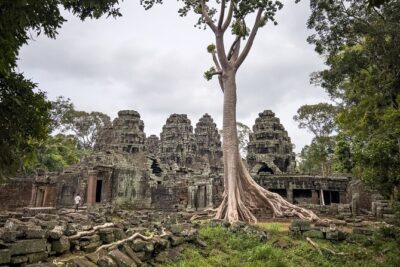
Ta Prohm is famous for the way trees and stone occupy the same space. Roots press against walls, openings lead into shadowed galleries, and the remains feel less formal than Angkor Wat. The setting is a major part of what you come to see.
Two hours gives you time to look beyond the most photographed corners. You can examine the structure, walk through its courtyards, and notice how the forest has shaped the mood of the site. The temple is not easy to appreciate at a sprint.
This is also likely to be one of the busier stops. The bicycle helps you reach Ta Prohm as part of a broader route, but it does not remove the crowds once you enter a famous temple. Keep that distinction in mind if avoiding people is your main reason for booking.
Ta Nei, the quiet temple reward
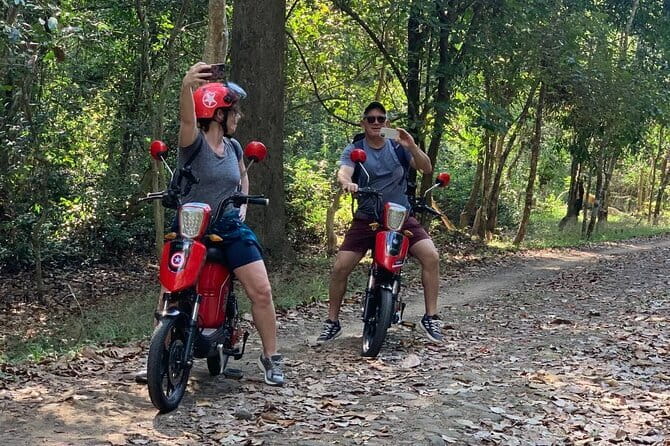
Ta Nei receives about one hour. It is a late 12th-century stone temple built during Jayavarman VII’s reign and dedicated to the Buddha. It lies near the northwest corner of the East Baray, a large sacred reservoir.
This is the stop that best fits the tour’s promise of lesser-known Angkor. Ta Nei is not presented as another grand centerpiece. Its appeal is the quieter setting and the sense that you have reached a smaller, less polished part of the complex.
The ride to places such as Ta Nei is important. You are not only collecting temple names. You are using forest routes and back roads to see a side of Angkor that is easier to miss when every transfer happens by vehicle.
Conditions on less-used paths may feel more adventurous than the main temple roads. The tour is described as leisurely, and past guests have praised the guide for adjusting the amount of cycling. Still, you should be comfortable with a full day outdoors before choosing this route.
Angkor Thom’s East, or Death, Gate
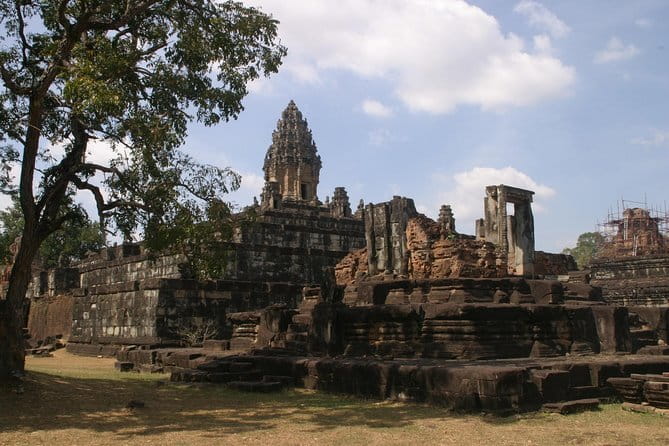
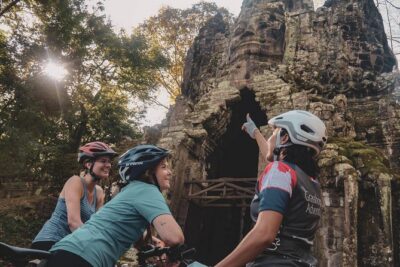
The final listed stop is the East, also called Death, Gate of Angkor Thom, with about 30 minutes. It is one of five gates guarding the ancient city and was built under Jayavarman VII during the late 12th century.
This stop appears in the schedule under Bayon Temple, but it is not another visit to the Bayon sanctuary. It is a gate within Angkor Thom, and the distinction is useful when you picture the day. You will be seeing the wider city complex as well as its best-known temple.
Thirty minutes allows for a look at the gate and its surroundings before the ride back or onward part of the day. A gate may sound less exciting than a major temple, but it helps explain how the old city was organized and defended.
The final stop also shows how this experience differs from a simple Angkor Wat outing. The day includes major monuments, small temples, forest tracks, and city entrances. You get a broader sense of the area rather than only its postcard views.
What the $45 price really covers
At $45 per person, the tour is reasonably priced for a private, guided six to eight-hour outing that includes hotel pickup and drop-off, a mountain bike, helmet, and cold water. The private format is the key value. You are not paying only for transport between monuments, but for a guide-led route built around cycling and less-used paths.
The temple pass changes the calculation. Add $37 per person and the known cost becomes $82. Since the pass is required and not included, compare the full figure rather than the headline tour rate.
The tour also offers group discounts, though no discount amount is provided. Ask for the current group price if you are booking for several people. Since the activity is private, the final value may improve for a small group sharing the same guide and route.
A mobile ticket and confirmation at booking make the practical side simple. Pickup and drop-off are included, so you do not need to arrange separate transport to the start. Cancellation is free if you cancel at least 24 hours before the start time. Inside that window, the payment is not refunded and changes are not accepted.
Who should book this cycling tour
I would choose this experience if you want the temples to feel connected to their surroundings. It suits you if you enjoy cycling, prefer small private outings, and like the idea of seeing Ta Nei and back roads along with Angkor Wat, Bayon, and Ta Prohm.
It is also a good choice for couples, families, and friends who want to set their own rhythm. The guide can adjust how much you cycle, according to the information provided, and the private group avoids the stop-and-go feel of a large organized tour.
The tour is less suitable if you dislike bicycles, tire easily in warm weather, or want a short temple visit. The scheduled stops alone add up to several hours, and the total experience can run to eight hours. The private format brings flexibility, but it does not remove the physical effort.
Most people can take part, according to the tour details, but the activity is still best approached as a full day of riding and walking. Tell the provider about your preferred pace when booking, especially if your group has mixed cycling ability.
Should you book the Angkor Wat Cycling Tour?
Book it if the thought of pedaling through Angkor’s trees and back roads sounds as appealing as seeing the temples themselves. The strongest parts are the private guide, the flexible pace, the good-quality bikes noted by past participants, and access to smaller places such as Ta Nei.
Mr K is a guide worth requesting if available. His praise centers on being on time, friendly, careful, and able to tailor the ride. That personal connection can make a long day much easier.
Skip it if you want air-conditioned transport, a short schedule, or only the headline sights. Also budget properly: the $45 tour does not include the $37 temple pass. For an active visitor who wants a more personal and less vehicle-bound day at Angkor, this is a strong value.
FAQ
How long does the Angkor Wat Cycling Tour last?
The experience lasts approximately 6 to 8 hours.
What time does the tour begin?
Pickup from your hotel is scheduled for 7:30 am.
Is hotel pickup and drop-off included?
Yes. Hotel pickup and drop-off are included in the tour.
Is the Angkor Temple Pass included in the price?
No. The Angkor Temple Pass costs $37 per person and must be paid separately.
What equipment and refreshments are provided?
The tour includes a mountain bike, helmet, and cold drinking water.
Is this a private tour?
Yes. Only your group participates in the activity.
What is the cancellation policy?
You can cancel at least 24 hours before the start time for a full refund. Cancellations or changes made less than 24 hours before the start time are not accepted, and the amount paid is not refunded.
Fresh reviews from around Siem Reap
- Full-Day Tour Preah Vihea & Koh Ker Temple 3.7 · 3 reviews
- Savor the Countryside: Tours with Authentic Cooking Classes” 5.0 · 3 reviews
- Angkor Wat Sunrise TukTuk Tour 5.0 · 3 reviews
- Angkor Grand Circuit Tour & Banteay Srei 5.0 · 3 reviews
- Guided Private Tuk Tuk Tour Angkor Wat and Small Circle and Five Extras 5.0 · 3 reviews
- Siem Reap Temple Tour 2-Day with Sunrise/Sunset 3.7 · 3 reviews
- Bangkok to Angkor Wat 2 Days 1 Night by Flight 4.5 · 3 reviews
- Kompong Pluk Tour 5.0 · 3 reviews
Cycling Tours, compared.
Siem Reap Countryside Sunset Bike Tour / E-Bike or Tuk Tuk
Read our review →Browse the lists this tour appears in