
Reviewed · CYCLING TOURS
Angkor Region & Rainforest Bike Tour
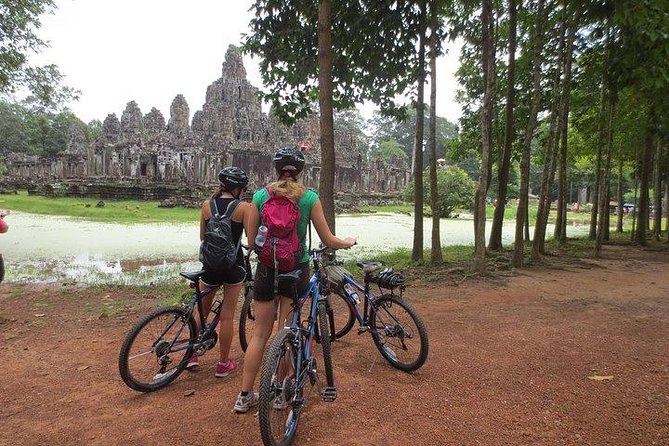
Angkor looks different from a bicycle seat. This eight-hour ride leaves the main tourist routes behind and uses forest paths, temple roads, and the old defensive wall of Angkor Thom to connect five major sites. You get Angkor Wat and Bayon, but also quieter places such as Tanei and Preah Khan.
I like two things right away: the well-maintained TREK bike and helmet are included, and lunch, coconut water, and drinking water are covered too. I also like the small maximum group of 10, which should make it easier to keep a steady pace and hear your English-speaking guide.
The main drawback is cost planning. The $50 tour price does not include the one-day temple pass, listed at $37, or transport to and from the meeting point. You also need to be comfortable cycling for most of a full day, sometimes on wet or muddy forest trails.
In This Review
- Key points to know before you book
- Why a bicycle makes Angkor more rewarding
- Starting at 7:30 am in Siem Reap
- Angkor Wat begins the temple day
- Angkor Thom’s gates and old defensive wall
- Bayon and its 216 smiling faces
- Preah Khan, where the forest meets stone
- Tanei and the quieter side of Angkor
- Taprom and the final temple atmosphere
- Lunch, coconut water, and the real value of $50
- Who should choose this Angkor bike tour?
- Small details that make the day easier
- Should you book it?
- FAQ
- How long does the Angkor Region and Rainforest Bike Tour last?
- What time does the tour start?
- Where does the tour begin and end?
- Which temples are included?
- Is the Angkor temple pass included?
- What equipment and refreshments are provided?
- Is hotel pickup included?
Key points to know before you book
- Ride beyond the main roads: Forest trails offer a quieter way to move between Angkor’s major monuments.
- Five important temple stops: The route includes Angkor Wat, Bayon, Preah Khan, Tanei, and Taprom.
- Small group size: The tour accepts a maximum of 10 people, a useful limit for a guided bike outing.
- Good practical inclusions: A TREK mountain bike, helmet, lunch, coconut water, and pure drinking water are provided.
- Early start: Meet at Angkor Cycling Tour on Taphul Road at 7:30 am.
- Budget for the pass: The $37 one-day temple entry pass is separate from the $50 tour fee.
Why a bicycle makes Angkor more rewarding
Angkor is a huge religious and political complex built during the height of the Khmer Empire, from the ninth through the fifteenth centuries. On a standard road-based visit, you move from one monument to the next by vehicle, often following the same broad routes as large groups.
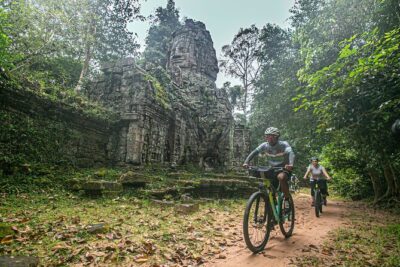
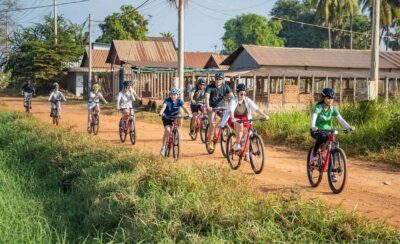
This tour changes the rhythm. You pedal through the forest and make your own way between the sites, with the guide leading you along smaller trails. That matters because the ride is not just transport. The trees, old walls, rough paths, and sudden temple views become part of the day.
You should not expect a gentle city cycle. The experience is an adventure ride through rainforest paths, and one past outing was described as wet and muddy. That may be part of its appeal, but it also means you should arrive ready for changing trail conditions rather than a polished cycling lane.
The group limit of 10 is another useful feature. A small group can stop more easily, stay together on narrow paths, and make questions for the guide more practical. It does not guarantee a private tour, but it is a far more manageable size than a large coach outing.
More Angkor temple itineraries:
- Angkor Wat Sunrise or Sunset Tour with Guide from Siem Reap
5.0 · 12,109 reviews - Siem Reap: Angkor Wat: Small-Group Sunrise or Sunset Tour
5.0 · 9,444 reviews - Siem Reap: Angkor Wat 2-Day Tour with Sunrise and Sunset
4.9 · 4,429 reviews
Starting at 7:30 am in Siem Reap
The meeting point is Angkor Cycling Tour on Taphul Road in Siem Reap. The tour starts at 7:30 am and ends back at the same meeting point. Hotel pickup and drop-off are not included, so you need to arrange your own way there and back.
At the start, the operator provides a premium TREK mountain bike and helmet. You must give each rider’s height when booking, which helps the company prepare a suitable bike. This is a small detail, but it matters on a long ride. An ill-fitting bike can turn a good day into a sore one.
Bring a camera, sunglasses, and sunscreen. You should also wear practical cycling clothes and shoes, while remembering that Angkor is an active spiritual site. Clothing that reveals the shoulders or rises above the knees is prohibited in sacred palaces, so plan for respectful coverage rather than beachwear.
The tour includes pure drinking water and coconut water. That is useful in Cambodia’s heat, especially when you are cycling for hours instead of simply walking between parked vehicles. You should still treat the day as physical activity and arrive ready to drink regularly.
Angkor Wat begins the temple day
Angkor Wat is the obvious headline stop, and it deserves time. The monument is widely described as one of the seven wonders of the ancient world, and its scale is hard to grasp from a quick roadside visit.
Arriving by bicycle gives the approach a different feel. You are not simply stepping out of a vehicle beside the monument. You have spent time moving through the wider Angkor area, so the great temple becomes part of a longer journey through the old capital.
The supplied timing does not give a minute-by-minute schedule for each stop, so you should not assume a fixed amount of time inside Angkor Wat. Your guide leads the day, and the exact pace may depend on trail conditions, the group, and the time needed at the other temples.
This is also where the separate temple pass matters. The tour fee covers the cycling service and listed refreshments, but admission is not included. Add the $37 one-day pass when working out the real price.
Angkor Thom’s gates and old defensive wall
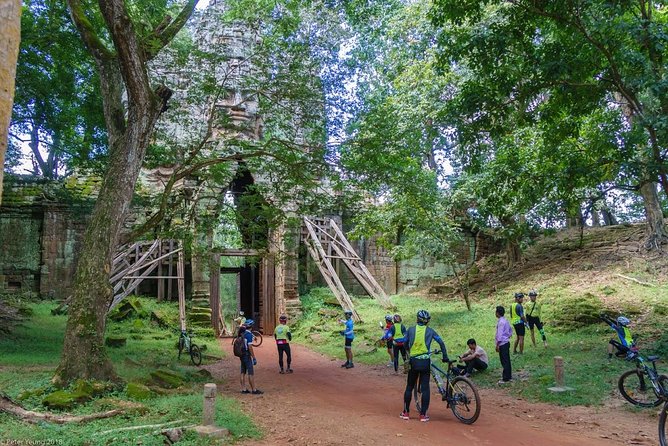
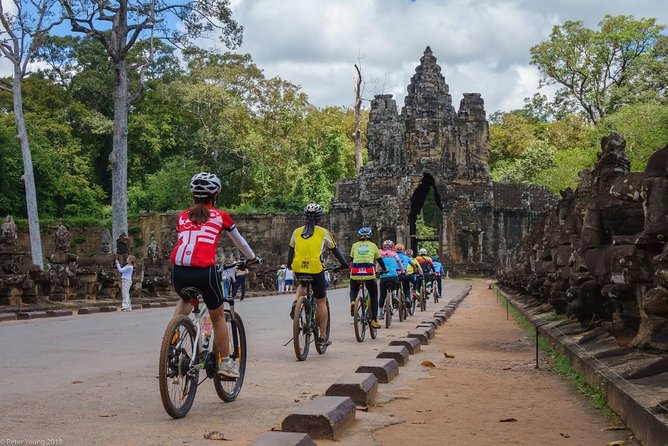
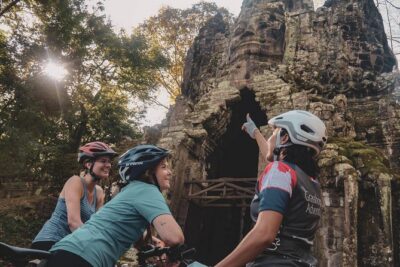
From Angkor Wat, the route continues into Angkor Thom, the great capital area. The South Gate is highlighted as one of the most appealing defensive walls and gateways in the complex, giving you a strong sense of how the city was protected and entered.
The ride also visits the West Gate and North Gate. Seeing several gates helps you understand Angkor Thom as more than a collection of separate temples. It was a planned capital with walls, routes, entrances, and large ceremonial spaces.
A particularly unusual part of the route takes you onto the protection wall of Angkor Thom. From there, you ride toward Prasat Chrung for a broad view. This is one of the tour’s best reasons to choose a bicycle. A vehicle-based visit may show you the gates, but a bike allows the wall itself to become part of the route.
You should expect uneven surfaces and a more adventurous ride here. The itinerary calls this an excursion along the wall, not a simple paved viewpoint stop. If you prefer smooth roads and short walks, this section may feel demanding. If you like movement and old structures in a natural setting, it adds something special.
More cycling days around Siem Reap:
- Siem Reap Countryside Bike Tour / E-Bike or Tuk Tuk
5.0 · 935 reviews - Angkor Sunrise Bike Tour / E-Bike or Tuk Tuk
5.0 · 615 reviews - Siem Reap: Bike the Angkor Temples – Full-Day 30km Tour
5.0 · 463 reviews - Siem Reap: Angkor Wat Sunrise Bike Tour & Jungle Breakfast
5.0 · 415 reviews
Bayon and its 216 smiling faces
Bayon is one of Angkor’s most memorable temples. The monument is described here as having 54 towers and 216 smiling faces, a detail that gives you a useful idea of its visual effect before you arrive.
The towers create a busy vertical scene, with carved faces looking out from different levels. The temple is more enclosed and intricate than Angkor Wat, so the visit feels different even though both are major monuments.
Your guide is important at Bayon because the stonework can seem confusing at first. An English-speaking leader can help you connect the carvings and structure to the larger Angkor Thom setting. The tour is not simply a bike rental with a route map. The guide leads the ride and explains the World Heritage area along the way.
One practical note: a guided day with five temple visits cannot give every monument a full, leisurely examination. Bayon is a major stop, but you should expect the day to balance temple time with cycling time.
Preah Khan, where the forest meets stone
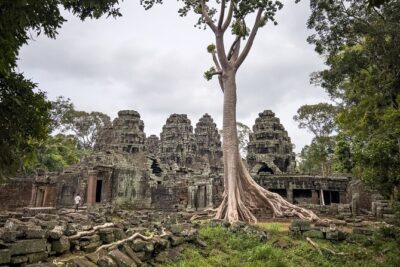
Preah Khan is presented as a temple covered by jungle, and its appeal comes from that meeting of architecture and vegetation. The forest does not feel like a backdrop here. It forms part of the experience of seeing the monument.
This is the kind of stop that suits the tour’s off-road design. The route does not treat Angkor as a row of famous facades. It takes you through the setting around the monuments, where paths and trees help explain why some places feel more secluded than others.
Preah Khan also gives the day a change of pace after the large, highly recognized sites. You get the famous names, but you also spend time in places that feel less like a quick checklist. That balance is one of the strongest parts of the itinerary.
The tradeoff is that forest trails can become wet. A previous outing involved rain and mud, and the rider still described it as a great day. You should read that as a clear practical warning: conditions may be part of the ride, not a minor inconvenience.
Tanei and the quieter side of Angkor
Tanei is described as an ancient hospital that remains untouched by archaeologists and is embraced by the forest. It is a less familiar name than Angkor Wat or Bayon, which is exactly why it adds value to this route.
A stop at Tanei helps break up the famous-monument pattern. You are not spending the entire day at the best-known sites. Instead, the guide takes you to a place where the surrounding trees and the sense of age are central to the experience.
The word untouched should not make you expect a completely inaccessible ruin or a guaranteed private visit. It simply signals that Tanei has a less developed character within the route. The exact state of the trail and the amount of time available will depend on the day.
For me, this is the type of stop that makes a cycling tour worthwhile. You get context and variety, not just a faster way to reach the usual postcard views.
Taprom and the final temple atmosphere
The final temple list includes Taprom, commonly written as Ta Prohm. It is one of the best-known places in the Angkor area for the way forest growth and temple remains appear together.
The tour’s wording places Taprom among the five temple visits, but it does not provide a precise order or exact stop duration. You should follow the guide’s sequence on the day rather than plan around a guaranteed arrival time.
By this stage, the cycling itself becomes part of the memory. You have crossed forest trails, entered Angkor Thom through several gates, ridden the old wall, and visited both major monuments and quieter sites. Taprom gives the day another strong temple finish, while the return ride brings you back to the meeting point in Siem Reap.
The full experience lasts about eight hours. That includes cycling, temple visits, breaks, and lunch, so the day will feel full. You should avoid scheduling another demanding activity immediately afterward.
Lunch, coconut water, and the real value of $50
The $50 price is reasonable if you want a guided ride with equipment and food already arranged. You receive an English-speaking guide, a TREK mountain bike, helmet, lunch, coconut water, and pure drinking water. Hiring a quality bike separately, planning a route, and arranging refreshments would add both cost and effort.
Still, the headline price is not the final price. The one-day temple pass costs $37, bringing the basic combined cost to $87 per person before your own transport to Taphul Road. Hotel pickup and drop-off are also excluded.
That makes this tour best for someone who values the riding experience, not just the temple admission. If your main goal is to see Angkor Wat as cheaply and quickly as possible, a bicycle tour may not be the best fit. If you want a full day outdoors, a smaller group, a guide, and less dependence on the main roads, the extra cost has a clear purpose.
The included lunch is also practical. The supplied details do not specify the menu, so you should report dietary requirements when booking. That is especially important because the day is long and the meal is part of the planned schedule.
Who should choose this Angkor bike tour?
You should consider it if you enjoy active sightseeing and want the journey between temples to matter. It suits people who like forest paths, old walls, smaller sites, and a full day led by bicycle rather than a series of short vehicle stops.
It also works well for repeat visitors. One rider returned for a second tour and brought family along, which points to the route’s value for someone who has already seen the main Angkor circuit and wants a different way to experience it.
Families and mixed groups should think honestly about fitness and comfort. The information says most people can participate, but the day still involves extended cycling. Rain, mud, and uneven trails may make the ride harder than the distance alone suggests.
This is less suitable if you need hotel transfers, want a relaxed schedule, dislike getting dirty, or prefer air-conditioned transport. It is also not the right choice if you plan to wear revealing clothing, since the temples require respectful dress.
Small details that make the day easier
Confirmation is provided at booking, and the activity has free cancellation up to 24 hours before the local start time. Changes or cancellations inside that 24-hour window are not accepted for a refund.
Give the operator every rider’s height when booking. Also provide dietary requirements in advance. Those two details are specifically requested and can help the morning start without avoidable problems.
The tour ends where it begins, at Angkor Cycling Tour on Taphul Road. Since there is no hotel transport, leave enough time to reach the meeting point for the 7:30 am start.
Keep your camera protected if rain is possible. Sunglasses and sunscreen are recommended, and the provided water helps with the heat, but practical clothing remains your responsibility.
Should you book it?
Book this tour if you want Angkor by bicycle rather than Angkor by transfer. The strongest features are the rainforest trails, the ride along Angkor Thom’s wall, the small group cap, and the mix of famous temples with quieter places such as Tanei.
Skip it if you want a short, easy temple outing or if adding the $37 pass and arranging your own transport makes the total feel too high. For an active visitor who sees value in the ride itself, $50 is a fair starting price, provided you budget for admission and arrive ready for a long, sometimes muddy day.
FAQ
How long does the Angkor Region and Rainforest Bike Tour last?
The tour lasts approximately eight hours.
What time does the tour start?
It starts at 7:30 am.
Where does the tour begin and end?
The tour begins at Angkor Cycling Tour on Taphul Road in Krong Siem Reap and ends back at the same meeting point.
Which temples are included?
The five listed temple visits are Angkor Wat, Bayon, Preah Khan, Tanei, and Taprom.
Is the Angkor temple pass included?
No. The one-day temple pass is listed separately at $37.
What equipment and refreshments are provided?
The tour includes a premium TREK mountain bike, helmet, lunch, refreshing coconut water, and pure drinking water.
Is hotel pickup included?
No. Hotel pickup and drop-off are not included, so you must arrange transport to and from the meeting point.
Fresh reviews from around Siem Reap
- Full-Day Tour Preah Vihea & Koh Ker Temple 3.7 · 3 reviews
- Savor the Countryside: Tours with Authentic Cooking Classes” 5.0 · 3 reviews
- Angkor Wat Sunrise TukTuk Tour 5.0 · 3 reviews
- Angkor Grand Circuit Tour & Banteay Srei 5.0 · 3 reviews
- Guided Private Tuk Tuk Tour Angkor Wat and Small Circle and Five Extras 5.0 · 3 reviews
- Siem Reap Temple Tour 2-Day with Sunrise/Sunset 3.7 · 3 reviews
- Bangkok to Angkor Wat 2 Days 1 Night by Flight 4.5 · 3 reviews
- Siem Reap Countryside Sunset Vespa Tour or Tuk Tuk 4.5 · 3 reviews
Cycling Tours, compared.
Siem Reap Countryside Sunset Bike Tour / E-Bike or Tuk Tuk
Read our review →Browse the lists this tour appears in