
Reviewed · CYCLING TOURS
Angkor Cycling Tour
Angkor Cycling Tour is a fine way to see the temple complex without spending the whole day in a vehicle. You pedal beside Angkor Wat’s moat, ride forest tracks near Bakheng Hill, cross the old wall of Angkor Thom, and reach Ta Prohm by bike. About 70 percent of the route is off-road, so the day feels more like an outing than a string of quick temple stops.
I like the quiet canal and jungle paths, which give you a better sense of Cambodia beyond the grand monuments. I also like the mix of riding, temple visits, birdwatching, and a local lunch near the Elephant Terrace. The main consideration is the heat: 35 kilometers and seven hours under the Cambodian sun will feel demanding if you are not used to cycling.
In This Review
- Key points to know before booking
- Why cycling works so well at Angkor
- Starting at 7:45 AM from Siem Reap
- Angkor Wat by bike and on foot
- Bakheng Hill, the South Gate, and Angkor Thom’s wall
- Bayon Temple and the stone faces of Angkor Thom
- Lunch beside the Elephant Terrace
- Ta Nie and the quieter side of Angkor
- Birdwatching at Jayatataka Baray
- Ta Prohm, where the forest takes the stage
- The 12 km ride back to Siem Reap
- Is $65 a good value?
- Who should book this ride?
- Practical preparation for the morning
- Should you book the Angkor Cycling Tour?
- FAQ
- How long is the Angkor Cycling Tour?
- What time does the tour start?
- Is the temple pass included?
- What temples does the tour visit?
- How much of the route is off-road?
- What level of cycling ability is needed?
- Are bikes and helmets provided?
- Is lunch included?
- What languages are available?
- What should I bring and wear?
Key points to know before booking
- A 35 km route with 70 percent off-road riding gives you forest tracks, single paths, and ancient fortifications rather than only paved roads.
- Angkor Wat, Bayon, Ta Nie, and Ta Prohm provide a strong selection of major and quieter temples in one day.
- Jayatataka Baray adds birdwatching and a chance to spot butterflies, monkeys, kingfishers, or freshwater otters.
- The $65 price includes a mountain bike, helmet, guide, lunch, water, snacks, spare parts, first aid, and free tuk tuk transfers.
- The ride is rated medium, though the available feedback describes most of it as easy with a few moderate sections.
- A temple pass is required and costs extra, and modest clothing is needed for temple visits.
Why cycling works so well at Angkor
The Angkor complex is large enough that the way you move between temples shapes the whole day. By car or tuk tuk, you can cover more ground with less effort, but you also spend much of your time sitting between monuments. On this ride, the travel itself becomes part of the visit.
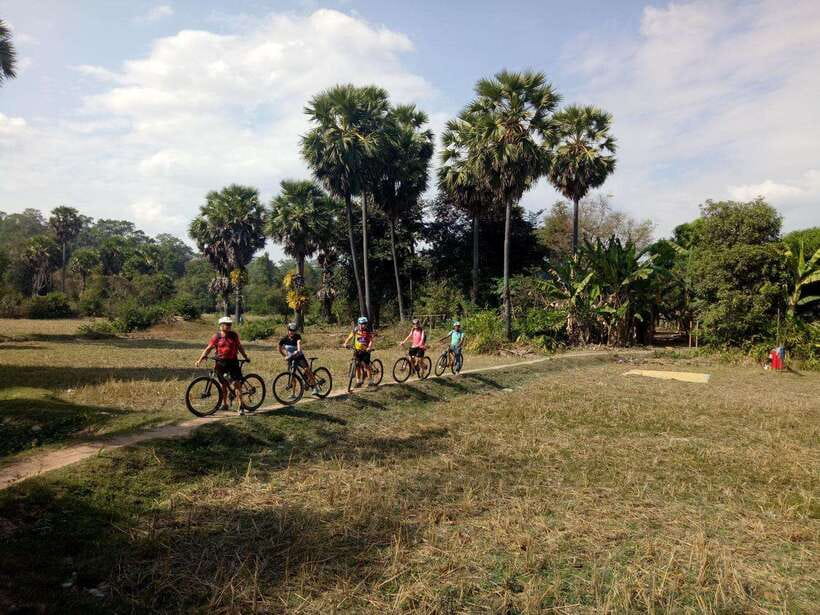
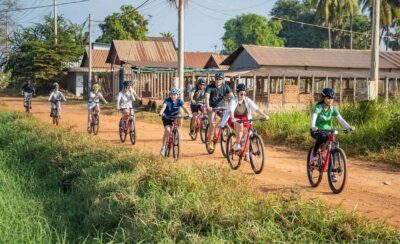
You follow the Siem Reap River toward Angkor, then shift onto rainforest paths and countryside tracks. The paved portion makes up about 30 percent of the route, while the rest uses off-road trails. That balance matters: you get the comfort of smooth cycling in places, but the more memorable sections come when the road narrows and the trees close in.
The route is described as medium level, not an extreme mountain-bike challenge. One available account calls most of the ride easy, with only a few moderate stretches. Still, you should be comfortable riding for several hours, handling uneven ground, and staying out in the heat. This is not a short temple transfer with a few minutes of casual cycling.
More Angkor temple itineraries:
- Angkor Wat Sunrise or Sunset Tour with Guide from Siem Reap
5.0 · 12,109 reviews - Siem Reap: Angkor Wat: Small-Group Sunrise or Sunset Tour
5.0 · 9,444 reviews - Siem Reap: Angkor Wat 2-Day Tour with Sunrise and Sunset
4.9 · 4,429 reviews
Starting at 7:45 AM from Siem Reap
Pickup begins about 15 minutes before the stated start time from hotel, apartment, and Airbnb lobbies in Siem Reap city. Transport is by tuk tuk or minivan, depending on the size of your group. At the shop, you receive a mountain bike, helmet, and a quick fitting before setting off.
Bike sizes are available for all heights, but you need to provide your height in centimeters when booking. That small detail is worth taking seriously. A properly fitted bike will make the longer off-road sections much more pleasant, especially when you are riding for seven hours.
Your English or Spanish-speaking guide leads the route and handles the practical details. The support setup includes spare bike parts and a first aid kit, which is reassuring on a ride that leaves the main roads. Water, snacks, and seasonal fruit are provided during the day, with cold drinks and snacks available at temple stops.
Angkor Wat by bike and on foot
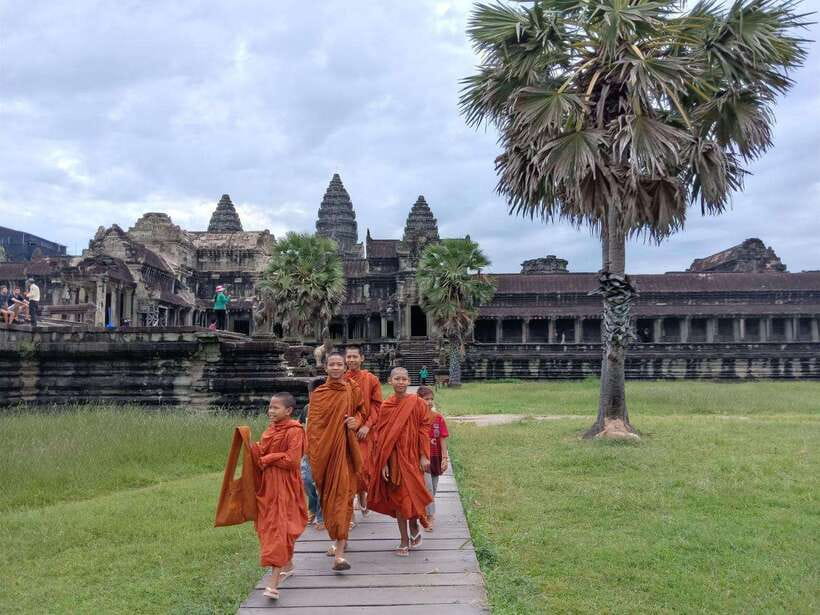
The first major visit is Angkor Wat, where you spend about two hours with your guide. Cycling beside the moat gives you an appealing first view of the temple, with the water and broad stone complex opening up around you.
The guided visit is important here. Angkor Wat is not just a large group of towers and galleries. Its carvings, courtyards, and long approach can blur together if you walk through without a plan. A guide can give shape to the visit and help you use the two-hour stop well.
You will leave the bikes while exploring the temple on foot, so wear shoes that work for both cycling and walking. Closed-toe shoes are required. Light clothing is sensible for riding, but your shoulders and knees need suitable coverage at sacred sites. You may cycle in shorts, but bring spare clothing for the temple visits.
The early start helps you make progress before the hottest part of the day. Even so, Angkor Wat is a substantial stop, and the combination of walking and cycling begins to add up. Keep drinking water instead of waiting until you feel thirsty.
Bakheng Hill, the South Gate, and Angkor Thom’s wall
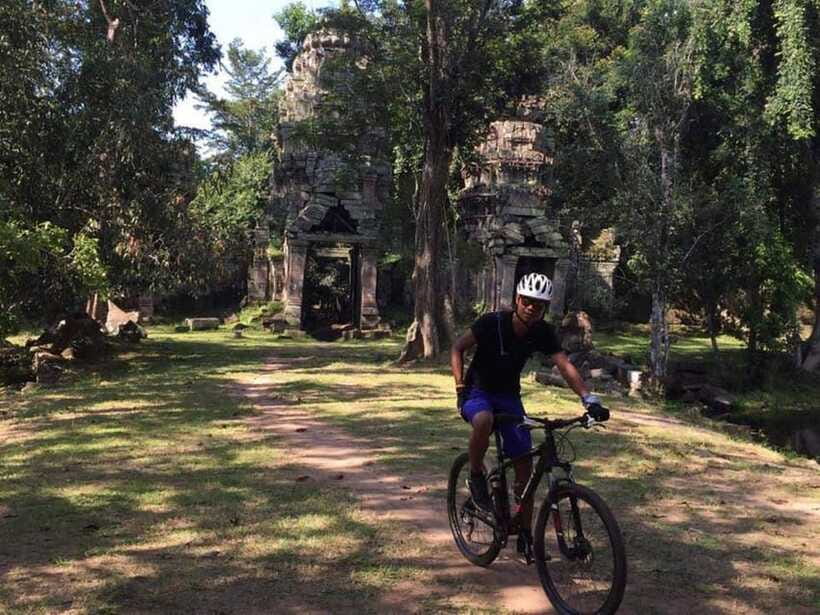
After Angkor Wat, the ride continues along the moat before turning toward the forest trails around Bakheng Hill. This is one of the sections that makes the tour different from a standard circuit. You move away from the most direct routes and ride through tracks shaded by trees.
The route enters Angkor Thom through the South Gate. From there, you reach the old city wall and cycle along its top. That is a memorable use of the bike, but it also calls for care. An ancient wall is not the same as a smooth cycle path, and your guide will set the pace for the group.
The wall offers a stronger sense of Angkor Thom’s scale than a quick gate photograph. You are not simply looking at a fortification from the road. You are moving along part of it, with the forest and old city spread around you.
Next comes the Ghost Gate, a quieter gateway with a more mysterious feel than the main entrance. It is a good place to pause for photographs and hear the stories tied to the old city. The stop is brief compared with Angkor Wat, but the change in mood is part of its appeal.
More cycling days around Siem Reap:
- Siem Reap Countryside Bike Tour / E-Bike or Tuk Tuk
5.0 · 935 reviews - Angkor Sunrise Bike Tour / E-Bike or Tuk Tuk
5.0 · 615 reviews - Siem Reap: Bike the Angkor Temples – Full-Day 30km Tour
5.0 · 463 reviews - Siem Reap: Angkor Wat Sunrise Bike Tour & Jungle Breakfast
5.0 · 415 reviews
Bayon Temple and the stone faces of Angkor Thom
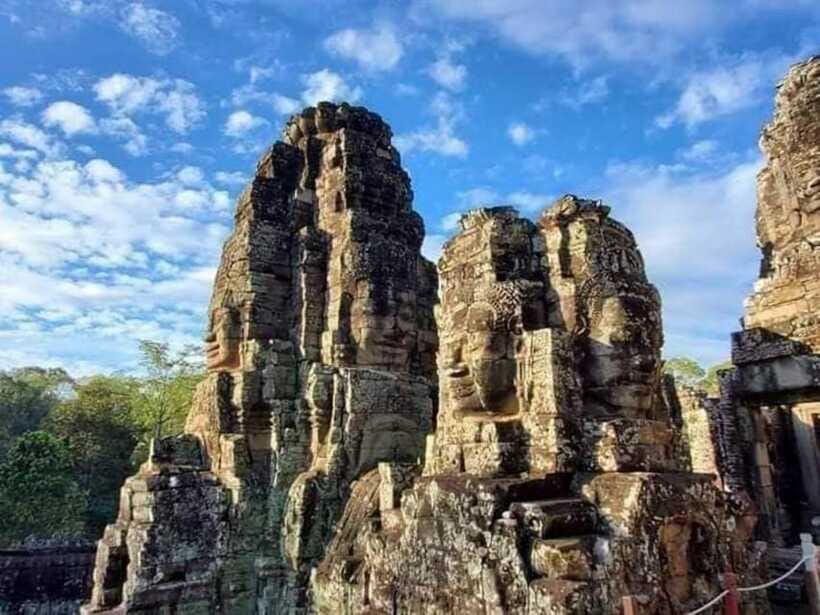
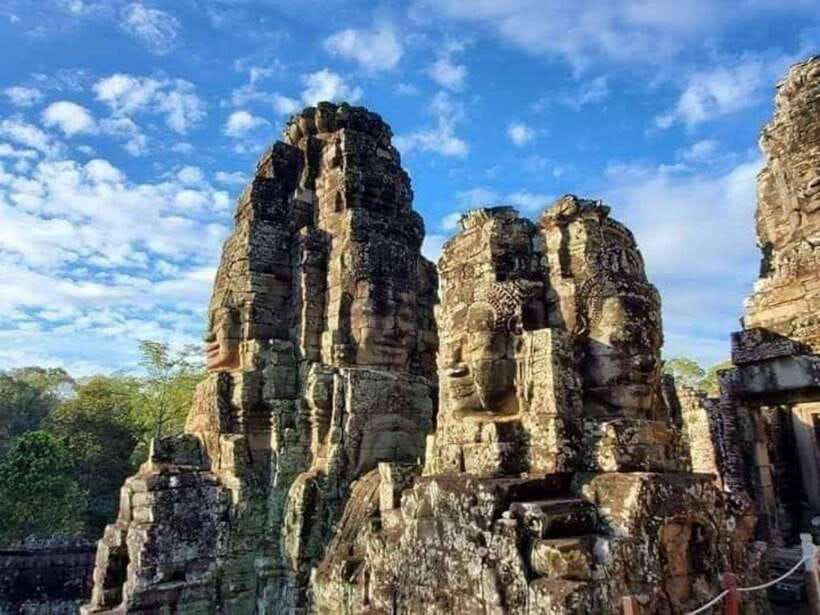
About one kilometer from the Ghost Gate, you reach Bayon Temple. The great stone faces are the reason most people come, but the setting also rewards a slower look. Faces appear high above the galleries, their expressions calm and difficult to read.
Bayon can be busy and visually confusing. The guide helps connect the carvings and corridors so the temple does not become only a hunt for the best face photograph. Since you arrive by bike after riding along the wall, the stop also feels connected to the larger city rather than isolated from it.
This is a good point in the day to judge your energy. The route has already included Angkor Wat, forest riding, a gate, and the city wall. The tour is well organized around regular breaks, but you are still on a full-day schedule. If you need a slower pace, say so early.
Lunch beside the Elephant Terrace
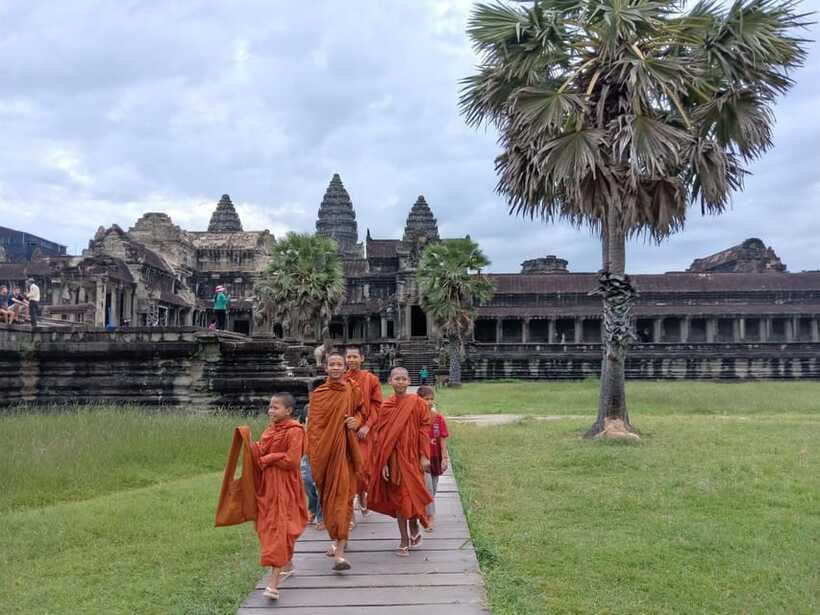
After Bayon, you cycle a short distance to lunch at a local restaurant in front of the Elephant Terrace. Lunch is included, along with a taste of Khmer specialties, and the location gives you a useful break from both riding and temple interiors.
The Elephant Terrace was a ceremonial platform used for royal processions. You do not need to spend the whole lunch stop trying to study every carved detail. It is a chance to rest, eat, refill your water, and take in one of Angkor Thom’s most recognizable public spaces.
The food stop is practical rather than luxurious, which fits the nature of the tour. You are paying for a day of guiding, cycling, support, and access to a local meal, not for a formal restaurant experience. Seasonal fruit and snacks help keep your energy up between the bigger stops.
Ta Nie and the quieter side of Angkor
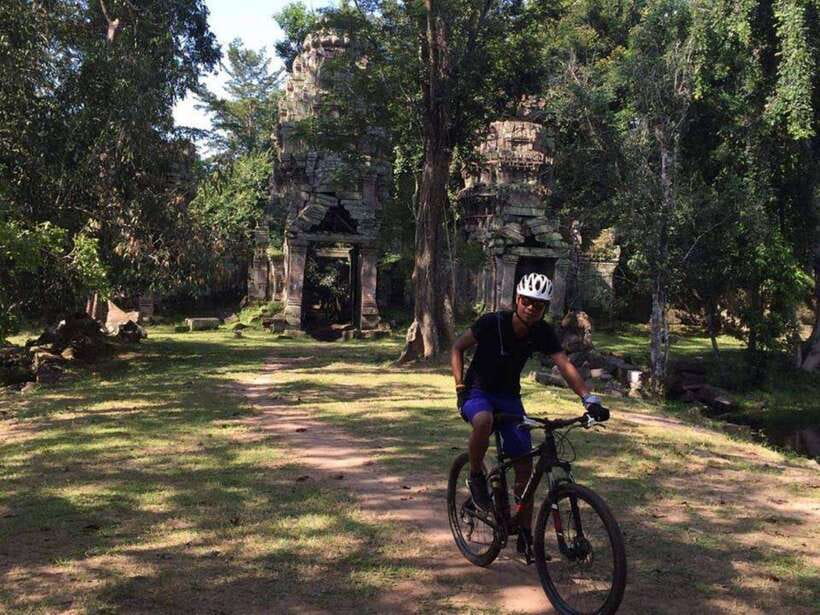
The ride then leaves the main city area for Ta Nie Temple. Ta Nie is a smaller sanctuary surrounded by forest, and its appeal comes from the feeling of discovery. It does not have the same fame as Angkor Wat or Ta Prohm, so the stop gives the day some breathing room.
This is where the off-road design pays off. You reach the temple through forest tracks rather than treating it as another roadside stop. The ruins are less grand, but the setting allows you to focus on broken stone, trees, and the steady return of nature.
The route around Ta Nie is also a reminder that Angkor is not just a handful of famous monuments. The wider complex contains many remains, paths, reservoirs, walls, and sanctuaries. Riding between them helps you understand the area as an old city system, not a row of unrelated sights.
Birdwatching at Jayatataka Baray
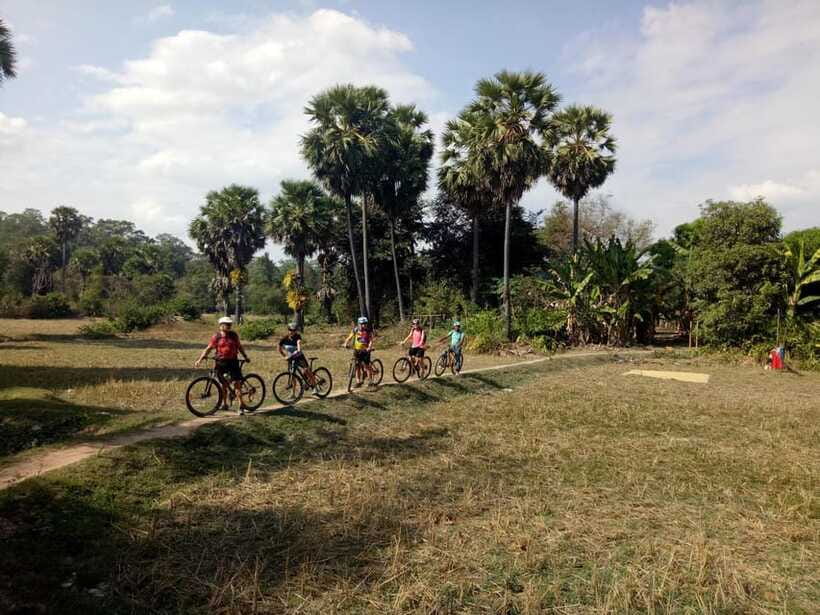
Jayatataka Baray brings a different kind of interest to the day. The stop is set aside for birdwatching and a pause in nature. You might spot cranes, egrets, lesser whistling ducks, or kingfishers, along with butterflies and monkeys.
Freshwater otters are also possible, though wildlife sightings can never be promised. The value of this stop is not only in checking off a species. After several temple visits, the water and trees give your eyes a rest and show how much life remains around the ancient structures.
A peaceful tree nursery garden is included among the photographic highlights. That kind of stop will suit you if you like the quieter parts of a trip, when there is time to notice small details rather than hurry toward the next major monument.
Bring sunscreen and sunglasses. Shade helps on the forest paths, but open sections near the water and roads can be bright and hot.
Ta Prohm, where the forest takes the stage
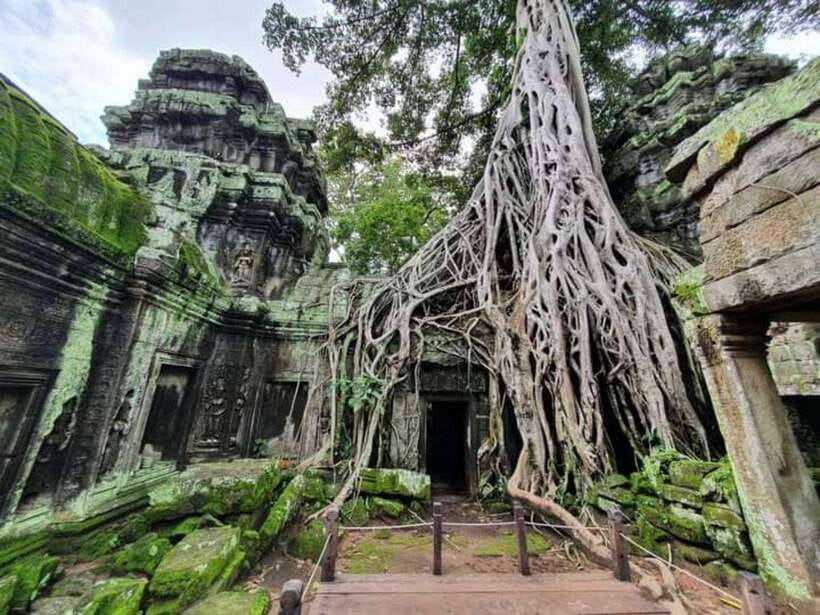
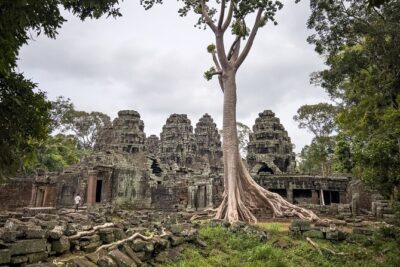
Ta Prohm is the final major temple visit, famous for the huge roots gripping its stone walls. It is the stop most associated with the film Tomb Raider, but the temple is more than a movie backdrop.
The trees and ruins are tightly linked here. Roots press across galleries, stones sit at odd angles, and the forest changes how you read the architecture. The effect is dramatic, though it can also be crowded and uneven underfoot. Take care while walking and keep your temple clothing appropriate.
Arriving by bike gives Ta Prohm a satisfying place in the day’s story. You have moved through forest tracks, ancient gates, Angkor Thom, a small sanctuary, and a reservoir before reaching the best-known jungle temple. The route makes the setting feel earned rather than simply delivered by vehicle.
The 12 km ride back to Siem Reap
The return covers about 12 kilometers through winding single tracks and smoother bike lanes. This final section combines the adventurous feel of the forest with more relaxed riding as you head back toward town.
For some people, the return will be the easiest part because the major temple visits are finished. For others, tired legs and heat will make the distance feel longer. The guide, support parts, water, and regular stops all matter more at this stage than they did in the morning.
A tuk tuk transfer is available as part of the support arrangement, and the tour ends in Siem Reap Province or Krong Siem Reap at one of the stated drop-off points. The exact balance between riding and support can depend on the day and group needs, so ask your operator if you have concerns about completing the full distance.
Is $65 a good value?
At $65 per person, the tour is reasonably priced for a full seven-hour outing. The fee includes the mountain bike, helmet, English or Spanish-speaking guide, lunch, water, snacks, seasonal fruit, free tuk tuk transfers, first aid, and spare bike parts.
The temple pass is not included, and that is the main extra cost to plan for. Personal expenses and travel insurance are also separate. Once you add the required pass, the total price is higher than the advertised tour fee, but the package still covers many of the practical pieces that can add up on an independent day.
I see the best value in the route design and support. You are not only renting a bike and finding your own way around a huge complex. You receive a planned route, temple interpretation, food, refreshments, equipment, and transport backup.
Who should book this ride?
I would choose this for an active visitor who wants a quieter, more physical day at Angkor. It suits you if the thought of forest tracks, ancient walls, wildlife, and lesser-known ruins sounds as appealing as the major temples.
It is also a good fit if you prefer a slower rhythm than a motorized temple circuit. The available feedback points to a patient, attentive guide and a well-organized day, with the ride described as mostly easy and only partly moderate. That makes the tour approachable for many recreational cyclists, but you should still be comfortable with a 35 km route.
I would think twice if you dislike heat, uneven paths, or long days outdoors. Pregnant women should not book this activity. Loose clothing is not allowed, and closed-toe shoes are required.
Practical preparation for the morning
Wear light, breathable clothing for the ride, then carry a spare outfit or temple-appropriate layer. Modest dress is essential inside the temples, and cycling shorts alone may not be suitable for every visit.
Pack sunscreen, sunglasses, and any personal items you need for a full day outside. Water and snacks are supplied, but the heat can be intense, so use every refreshment stop rather than saving your drinking for later.
Give your height in centimeters when booking so the bike fitting is ready. The tour offers free cancellation up to 24 hours before departure, and you can reserve now and pay later. Those policies are useful if your Siem Reap schedule is still shifting.
Should you book the Angkor Cycling Tour?
Book it if you want Angkor to feel like a place you move through, not just a set of monuments viewed from a vehicle. The ride links major temples with forest, waterways, walls, wildlife, and quiet tracks, while the included lunch and support keep the day manageable.
The strongest reasons to go are the 70 percent off-road route, the chance to cycle along Angkor Thom’s wall, and the calm stop at Jayatataka Baray. The main reasons to hesitate are the separate temple pass, the heat, and the commitment of a 35 km ride.
For an active visitor who wants history and nature in the same day, $65 offers a useful package. Bring the right clothes, protect yourself from the sun, and expect a few moderate stretches rather than a completely effortless spin.
FAQ
How long is the Angkor Cycling Tour?
The tour lasts seven hours and covers about 35 kilometers.
What time does the tour start?
The stated start time is 7:45 AM. Pickup is provided about 15 minutes before departure from hotel, apartment, and Airbnb lobbies in Siem Reap city.
Is the temple pass included?
No. You need to purchase the Angkor temple pass separately.
What temples does the tour visit?
The route includes Angkor Wat, Bayon, Ta Nie, and Ta Prohm. It also passes the wall of Angkor Thom, the Ghost Gate, Bakheng Hill, and the Elephant Terrace.
How much of the route is off-road?
About 70 percent of the route uses off-road trails. The remaining 30 percent is on paved roads.
What level of cycling ability is needed?
The route is rated medium. Most of the ride is described as easy, with a few moderate sections, but you should be comfortable cycling for 35 kilometers.
Are bikes and helmets provided?
Yes. A mountain bike in the required size and a helmet are included. You should provide your height in centimeters when booking.
Is lunch included?
Yes. Lunch at a local restaurant near the Elephant Terrace is included, along with water, snacks, seasonal fruit, and Khmer specialties.
What languages are available?
The live guide is available in English or Spanish.
What should I bring and wear?
Bring closed-toe shoes, sunscreen, sunglasses, and spare clothing for temple visits. Wear light, breathable clothing for cycling, but avoid loose clothing. Modest attire is required at the temples.
Fresh reviews from around Siem Reap
- Savor the Countryside: Tours with Authentic Cooking Classes” 5.0 · 3 reviews
- Full-Day Tour Preah Vihea & Koh Ker Temple 3.7 · 3 reviews
- Angkor Wat Sunrise TukTuk Tour 5.0 · 3 reviews
- Angkor Grand Circuit Tour & Banteay Srei 5.0 · 3 reviews
- Guided Private Tuk Tuk Tour Angkor Wat and Small Circle and Five Extras 5.0 · 3 reviews
- Siem Reap Temple Tour 2-Day with Sunrise/Sunset 3.7 · 3 reviews
- Bangkok to Angkor Wat 2 Days 1 Night by Flight 4.5 · 3 reviews
- Kompong Pluk Tour 5.0 · 3 reviews
Cycling Tours, compared.
Siem Reap Countryside Sunset Bike Tour / E-Bike or Tuk Tuk
Read our review →Browse the lists this tour appears in