
Reviewed · COUNTRYSIDE & VILLAGE TOURS
3-Day Angkor, Lake-side Village & Roluos Temples Tour
The best thing about this three-day tour is its range. You get Angkor Wat and Bayon, but also a motorboat through Tonle Sap’s flooded villages and a quieter run through the Roluos temples. It gives you Cambodia’s great stone monuments, village life, and a little mountain view in one well-packed trip.
I like the private air-conditioned transport, since temple days are hot and tiring. I also like the mix of famous and lesser-visited places, from Ta Prohm and Banteay Srei to Preah Ko and Lolei. A possible drawback is the pace: sunrise, long drives, many temples, and a crowded Phnom Bakheng visit demand stamina.
In This Review
- Key points to know before booking
- Three days that connect temples, water, and village life
- Day one: Bayon faces, jungle roots, and Angkor Wat
- Day two: sunrise, remote temples, and the pink sandstone of Banteay Srei
- Day three: Tonle Sap villages and the older Roluos temples
- Transport, comfort, and the real pace of the trip
- Who will get the most from this $148.08 package
- Should you book this Angkor and Tonle Sap tour?
- FAQ
- Is the tour private?
- Are hotel pickup and drop-off included?
- Is the Angkor temple pass included?
- Is food included?
- Is the Tonle Sap boat fee included?
- What time does the sunrise visit begin?
- Can I cancel for a full refund?
Key points to know before booking
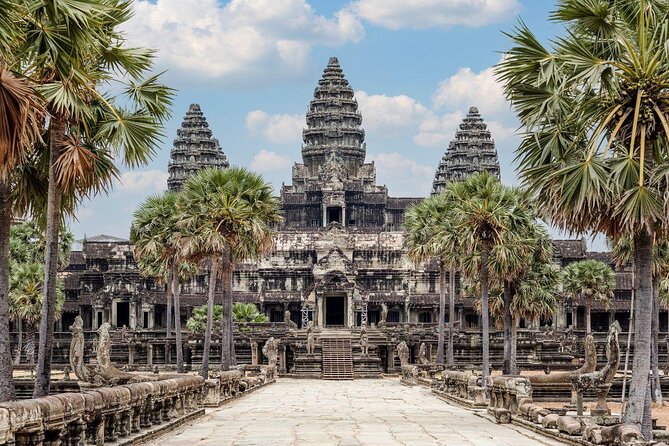
- Angkor’s major sights arrive in one strong first day: Bayon, Baphuon, the terraces, Ta Prohm, Angkor Wat, and Phnom Bakheng.
- The second day goes beyond the standard circuit: Preah Khan, Neak Pean, Ta Som, Eastern Mebon, Banteay Srei, Banteay Samre, and Banteay Kdei are all included.
- Tonle Sap adds a different side of Cambodia: the motorized boat passes flooded villages near Kampong Phluk.
- Private touring gives your group flexibility: hotel pickup and drop-off are included, and the activity is limited to your party.
- The price is not all-inclusive: the $148.08 rate covers transport and the boat, but not the three-day temple pass, food, or drinks.
- The early start is real: day two begins at about 5:00 a.m. for sunrise at Angkor Wat.
Three days that connect temples, water, and village life
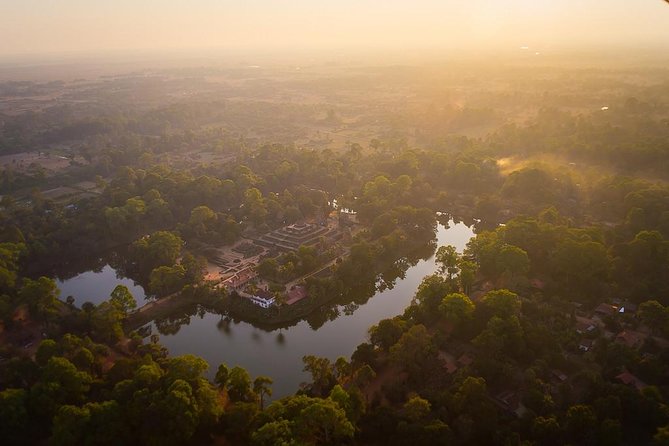
This is a sensible choice if you have a medium-length stay in Siem Reap and want more than a quick Angkor circuit. Rather than spending three days among similar ruins, you move through several kinds of places: royal city walls, large temple compounds, a pink sandstone shrine, a lake-side village, and the early Khmer temples at Roluos.
You travel privately in an air-conditioned vehicle with hotel pickup and drop-off. Cold bottled water and cold towels are included, small comforts that matter after several hours in the Cambodian heat. The vehicle is also useful on day two, when Banteay Srei requires a longer drive beyond the central temple zone.
The price is $148.08 per person. That is a fair value for three days of private transport, a guide, and the included motorized boat fee, especially if you are sharing the vehicle with several people. You still need to budget for the three-day Angkor pass, meals, soft drinks, and alcohol. Since the pass is not included, check its current price before deciding what the total cost will be.
The tour is private, not a shared bus outing. That means only your own group participates, which can make stops less rigid. Still, the schedule covers a lot, so you should not expect long, unplanned pauses at every temple.
More countryside rides around Siem Reap:
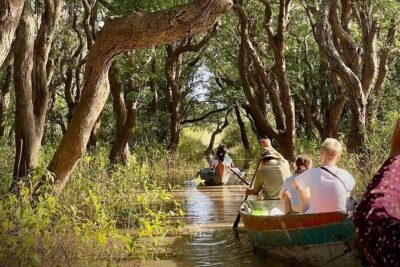
- Sunset tour of Kampong Phluk stilts home village on the Tonle Sap
5.0 · 4,865 reviews - Tonle Sap Lake & Kampong Phluk Village Half-Day Tour
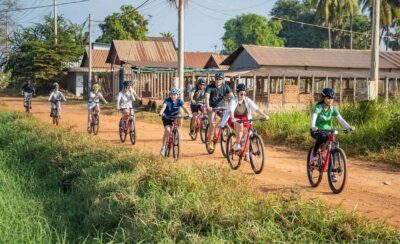
5.0 · 1,045 reviews - Siem Reap Countryside Bike Tour / E-Bike or Tuk Tuk
5.0 · 935 reviews
Day one: Bayon faces, jungle roots, and Angkor Wat
The first day begins with the Angkor Park ticket arrangements, followed by Angkor Thom. This walled royal city is a strong opening because it gathers several major sights in one area. You spend about two hours around Bayon, the temple famous for its huge stone faces.
Bayon rewards close looking. The faces are the obvious draw, but the carvings and stacked towers make the place worth taking slowly. Two hours gives your guide time to explain the site and gives you room to look beyond the first photo stop.
Next comes Baphuon, only a short distance away. The planned visit lasts about 30 minutes, so think of it as a focused stop rather than a full exploration. Its scale and elevated structure provide a useful contrast with Bayon’s crowded towers.
The Terrace of the Elephants and Terrace of the Leper King follow, with about 30 minutes set aside. These are excellent places to understand how Angkor’s ceremonial spaces connected with the royal city. The stop is brief, so pay attention to the carved walls and ask your guide to point out the details before moving on.
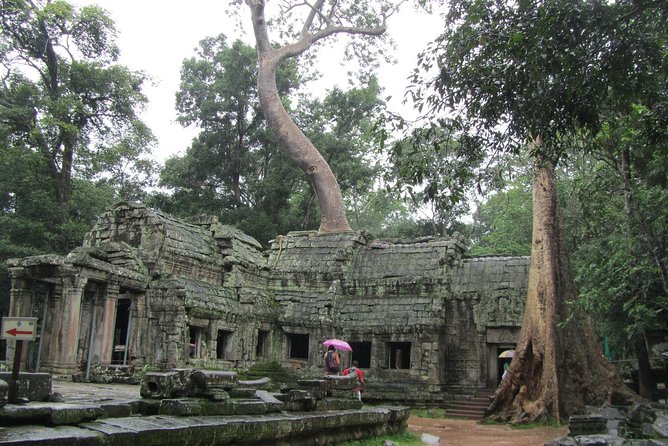
Ta Prohm is the day’s most atmospheric temple. Massive tree roots push over and through the stone buildings, creating the scene that made the temple famous in the film Tomb Raider. You get about an hour here. It is enough to see the best-known sections, though the site can feel busy and the roots attract plenty of cameras.
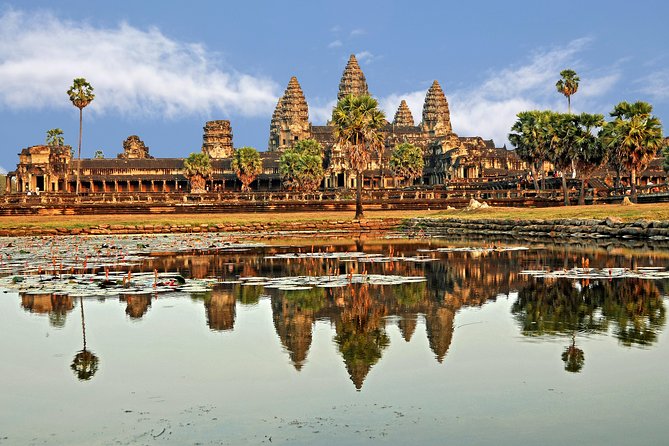
After lunch at a nearby restaurant, you spend about three hours at Angkor Wat. This is the longest temple visit of the day, and rightly so. Angkor Wat is not just a single photo stop. Its galleries, towers, courtyards, and carved walls need time, and three hours lets you take in the structure without rushing from one angle to the next.
Lunch is not included, and the tour uses nearby restaurants rather than providing meals as part of the package. That gives you a break, but you should carry some cash and allow for the extra cost.
The last stop is Phnom Bakheng, where the group may mix with a large crowd at the summit. Access to the top is restricted by visitor numbers, so the plan is to arrive early and wait. This is the least predictable part of the first day. You may value the high viewpoint, but you should not expect a quiet sunset or a quick visit.
Day two: sunrise, remote temples, and the pink sandstone of Banteay Srei
Day two begins very early, usually around 5:00 a.m. or earlier. You go straight to Angkor Wat and wait with the other early risers for sunrise. The view depends on the weather, so keep your expectations sensible. Even with clouds, the dark outline of the temple and the changing morning light make this a memorable start.
After sunrise, you return to your hotel for breakfast if breakfast is part of your room rate. You can also stop at a restaurant instead. This return to town breaks up the long morning and gives you a chance to eat before the second round of temples.
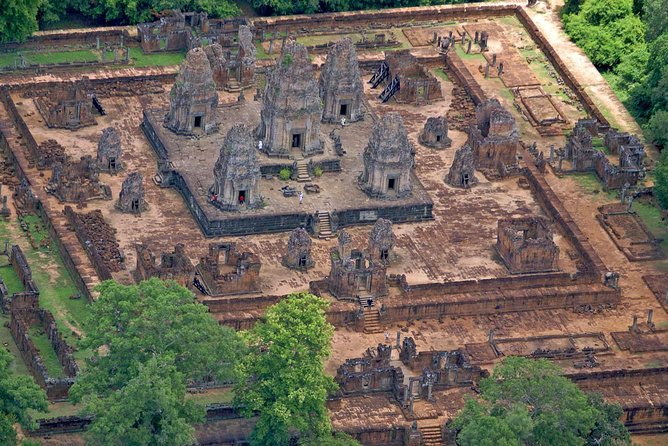
Preah Khan comes next, with about an hour to explore. This broad temple has a more open feel than some of the compact central monuments, and it helps show the size of the Angkor complex. From there, it is a short trip to Neak Pean, a small temple set in the middle of a man-made lake. The walk and setting make this stop feel different from the stone-heavy temples earlier in the trip.
Ta Som follows for about 45 minutes. It is another compact ruin with tree growth and carved stone, but its smaller scale can make it easier to appreciate without the same sense of grandeur as Angkor Wat. The short stop suits the overall pace.
Eastern Mebon is about 1.5 kilometers farther on. You spend around an hour here before taking a lunch break. By this point, you will have seen many temples, so lunch is not just a meal. It is a needed pause before the longest drive of the day.
After lunch, you travel for about three hours to Banteay Srei. The journey is long, but this is one of the tour’s most worthwhile choices. Banteay Srei is known for its pink sandstone and fine carvings, earning it the informal nickname the pink ladies temple. Its details reward a slower look, and the change in color and scale gives day two a fresh lift.
On the return journey, you stop at Banteay Samre for about an hour and a half. Depending on your group’s interest, the route can also include a short look at palm sugar production or the landmine museum. These options are not described as fixed stops, so ask the guide early if you want to include one.
The final temple is Banteay Kdei, with about an hour to explore before returning to Siem Reap. After such a long day, this last stop may feel demanding. It is also useful for people who want one more substantial ruin before ending the temple portion of the tour.
One guide connected with this experience is Mr. Naga. He is described as friendly, flexible, and well informed, with the ability to adjust the program. You should not assume he will be your assigned guide, but his presence shows the kind of guide service the operator aims to provide. The guide’s role matters here because the second day includes long transfers and many sites that can blur together without clear explanations.
Day three: Tonle Sap villages and the older Roluos temples
The final day starts at about 8:30 a.m. with a drive to the boat port near Kampong Phluk, on the edge of Tonle Sap Lake. You board a motorized boat and travel along the waterways through flooded villages for about four hours.
This changes the tone of the trip. Angkor is built in stone and centered on royal power. The Tonle Sap portion shows how homes and daily life adapt to water levels and seasonal flooding. The houses and village setting are the main reason to include this day, though conditions on the water can vary.
The motorized boat fee is included, which is important because it removes one extra charge from the day. Lunch at a floating cafe is not included, so plan for another meal expense. The four-hour water visit may feel long if you mainly came for temples, but it gives the tour a proper cultural counterpoint rather than a quick drive-by view.
After lunch, you return to dry land and visit the Roluos group of temples. Bakong is the main stop, followed by Preah Ko and Lolei. These temples are older than the grand monuments at the center of Angkor, and the group helps you see how Khmer temple design developed before the great Angkor Wat period.
The Roluos temples are also a calmer way to finish. After two demanding days, the smaller group of sites can feel less overwhelming than another full circuit of major monuments. You should still expect several hours of touring, since about five hours is allotted to the Roluos portion and the transfer after the lake.
Back in Siem Reap, the final stop is either Artisans Angkor or the old market downtown. Artisans Angkor focuses on crafts and souvenirs, while the old market offers a more general shopping stop. This is a practical ending if you want to look for gifts, though you do not need to buy anything to enjoy the stop.
More Angkor temple itineraries:
- Angkor Wat Sunrise or Sunset Tour with Guide from Siem Reap
5.0 · 12,109 reviews - Siem Reap: Angkor Wat: Small-Group Sunrise or Sunset Tour
5.0 · 9,444 reviews - Siem Reap: Angkor Wat 2-Day Tour with Sunrise and Sunset
4.9 · 4,429 reviews - Siem Reap: Full-Day Angkor Wat Guided Tour with Sunset
4.9 · 3,803 reviews
Transport, comfort, and the real pace of the trip
The tour uses private transportation in an air-conditioned vehicle, with hotel pickup and drop-off. That is a major advantage in Siem Reap, where temple roads, heat, and repeated short walks can wear you down. The included cold water and towels are simple but useful, especially on day one and day two.
You should have a moderate level of physical fitness. The schedule involves walking through large temple grounds, standing in heat, moving between vehicle and boat, and handling an early morning. The program is not designed for a slow, low-effort holiday.
The private format gives you more control than a large group. You can ask questions, request a restaurant stop, and discuss optional visits such as palm sugar production or the landmine museum. But private does not mean leisurely here. The number of stops is high, and the tour is designed to cover a lot of ground.
Who will get the most from this $148.08 package
I would choose this tour if you want a broad first look at Siem Reap and prefer to have transport and guiding arranged. It suits couples, families, and small groups who value a private vehicle and do not want to organize separate temple days, a lake excursion, and a Roluos visit.
It is also a good fit if you have already seen some of the central Angkor temples and want to add Banteay Srei, Tonle Sap, and the older Roluos group. The range is the main value.
I would think twice if you dislike early mornings, long drives, or tightly filled days. Day two in particular is ambitious. Phnom Bakheng can be crowded, and sunrise is weather dependent. You also need to add the temple pass and meals to the headline price.
Free cancellation is available if you cancel at least 24 hours before the experience begins. Changes or cancellations inside that window are not accepted for a refund.
Should you book this Angkor and Tonle Sap tour?
Book it if you want one private package covering the essential temples and several worthwhile extras. The best features are the air-conditioned vehicle, hotel service, included boat fee, cold towels, and the range of places you see. You get more than the usual Angkor Wat and Ta Prohm pairing.
Before paying, confirm the total cost after adding the three-day temple pass and meals. Also ask which guide will lead your group and discuss the optional palm sugar or landmine museum stop. If you can handle the 5:00 a.m. start and two full temple days, this is a well-rounded way to use three days in Siem Reap.
FAQ
Is the tour private?
Yes. Only your group participates in the activity.
Are hotel pickup and drop-off included?
Yes. Hotel pickup and drop-off are included with the private transportation.
Is the Angkor temple pass included?
No. The three-day temple pass is not included in the tour price.
Is food included?
No. Meals, soft drinks, and alcohol are not included. Day one includes a lunch stop at a nearby restaurant, day two includes a lunch stop, and day three includes lunch at a floating cafe, but you pay for those meals separately.
Is the Tonle Sap boat fee included?
Yes. The fee for the motorized boat is included.
What time does the sunrise visit begin?
The group leaves the hotel at about 5:00 a.m. or earlier on day two to see sunrise at Angkor Wat.
Can I cancel for a full refund?
Yes, if you cancel at least 24 hours before the experience start time. Cancellations or changes made less than 24 hours before the start are not accepted for a refund.
More 3-Day Experiences in Siem Reap
- From Siem Reap: Angkor Wat and Floating Village 3-Day Trip
5.0 · 100 reviews - 3-Day Angkor Wat with All Interesting Major Temples, Banteay Srei & Beng Mealea
5.0 · 70 reviews - 3-Day Angkor Wat & All Interesting Major Temples & Kulen Mount Waterfall
5.0 · 63 reviews - 3 Days Siem Reap Explorer – Small Group
5.0 · 50 reviews
Fresh reviews from around Siem Reap
- Full-Day Tour Preah Vihea & Koh Ker Temple 3.7 · 3 reviews
- Savor the Countryside: Tours with Authentic Cooking Classes” 5.0 · 3 reviews
- Angkor Wat Sunrise TukTuk Tour 5.0 · 3 reviews
- Angkor Grand Circuit Tour & Banteay Srei 5.0 · 3 reviews
- Guided Private Tuk Tuk Tour Angkor Wat and Small Circle and Five Extras 5.0 · 3 reviews
- Siem Reap Temple Tour 2-Day with Sunrise/Sunset 3.7 · 3 reviews
- Bangkok to Angkor Wat 2 Days 1 Night by Flight 4.5 · 3 reviews
- Siem Reap: Prek Toal Tonle Sap Biosphere Reserve Tour 3.1 · 3 reviews
Countryside & Village Tours, compared.
Sunset tour of Kampong Phluk stilts home village on the Tonle Sap
Read our review →
Browse the lists this tour appears in