
Reviewed · FLOATING VILLAGE TOURS
Two-days tour discovering Angkor Wat and Floating Village
The best thing about this two-day tour is its range. You get the grand stone faces of Bayon, the tree-wrapped ruins of Ta Prohm, a sunset at Angkor Wat, and a very different view of Cambodian life at Kompong Phluk floating village. The air-conditioned vehicle matters in Siem Reap’s heat, and having a private guide keeps the days focused on your group.
I like the mix of famous sights and smaller stops. Banteay Kdei gives you breathing room after the busiest temples, while the Angkor National Museum and Artisans Angkor add useful context and a hands-on stone-carving activity. Guide Sen has been especially praised for being positive, upbeat, and easy to communicate with. The main drawback is cost control: the $92 price does not include temple, museum, or village entrance tickets, and meals are also on you.
In This Review
- Key details worth knowing before you book
- Why two days works better than one around Angkor
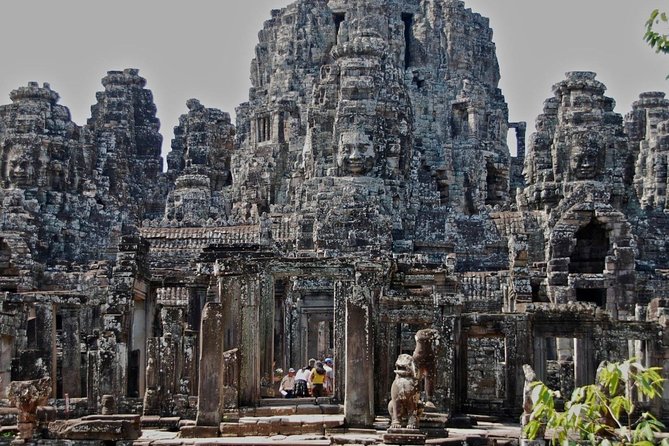
- Bayon and Angkor Thom: faces in the stone
- Ta Prohm: roots, corridors, and a famous mood
- Banteay Kdei: a quieter afternoon temple
- Angkor Wat at sunset: the day’s big finish
- Kompong Phluk: a different side of Siem Reap
- Angkor National Museum: useful context after the ruins
- Artisans Angkor and the stone-carving activity
- What the $92 price really covers
- Timing, comfort, and small practical matters
- Who will get the most from this tour
- Should you book it?
- FAQ
- How long does the tour last?
- What time does the tour start?
- Is this a private tour?
- Is transportation included?
- Is an English-speaking guide included?
- Are entrance tickets included?
- Are meals included?
- Can I cancel for a full refund?
Key details worth knowing before you book
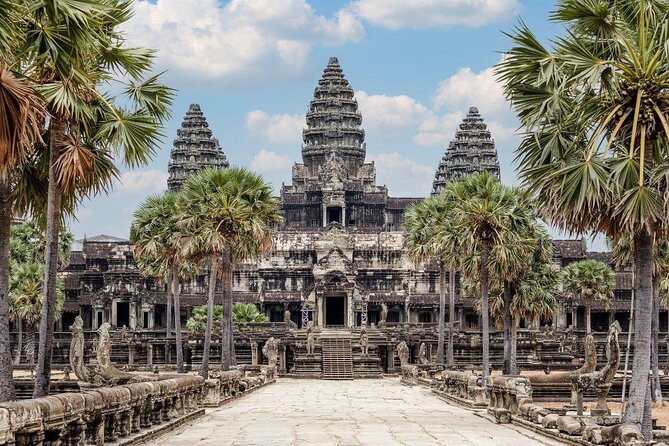
- Sunset at Angkor Wat: Day one ends at Cambodia’s most famous temple, with up to three hours set aside for the visit.
- A private two-day format: Only your group participates, so you are not tied to a large coach schedule.
- Kompong Phluk beyond the temples: Expect tall stilted homes, a floating hospital, fishing life, and a look at communities linked to Tonle Sap.
- Sen may be your guide: He has been praised for clear communication, a cheerful manner, and helpful service.
- Tickets cost extra: Every listed stop shows admission as not included, so budget beyond the advertised price.
- Practical comfort: Air-conditioning, cold water, and cold towels are provided on both days.
Why two days works better than one around Angkor
Angkor is not one temple. It is a huge area of monuments spread around Siem Reap, and the difference between a rushed temple checklist and a satisfying visit often comes down to time.
This plan gives you a full first day for Bayon, Ta Prohm, Banteay Kdei, and Angkor Wat. That is still a busy day, but the stops are grouped into a sensible sequence. You are not spending the whole day trying to arrange transport between ruins or deciding which turn to take next.
Day two changes pace. Kompong Phluk takes about four hours, followed by the Angkor National Museum and Artisans Angkor. This second day gives you more than another round of temples. It connects ancient Khmer art with present-day craft work and life around Tonle Sap, Southeast Asia’s largest freshwater lake.
The private format is useful here. The tour is designed for your group alone, and an English-speaking guide travels with you. Sen is one guide associated with this experience, and the available feedback describes him as easy to reach, upbeat, and accommodating. Your exact guide may differ, but the private setup remains a strong point for couples, families, and small groups.
More floating village visits:
- From Siem Reap: Kampong Phluk Floating Village Tour by Boat
4.9 · 6,979 reviews - Sunset tour of Kampong Phluk stilts home village on the Tonle Sap
5.0 · 4,865 reviews - Siem Reap: Kampong Phluk Floating Village Tour with Boat
4.9 · 3,843 reviews
Bayon and Angkor Thom: faces in the stone
The first stop is the south gate of Angkor Thom, followed by Bayon and Baphuon. Allow about two hours for this section.
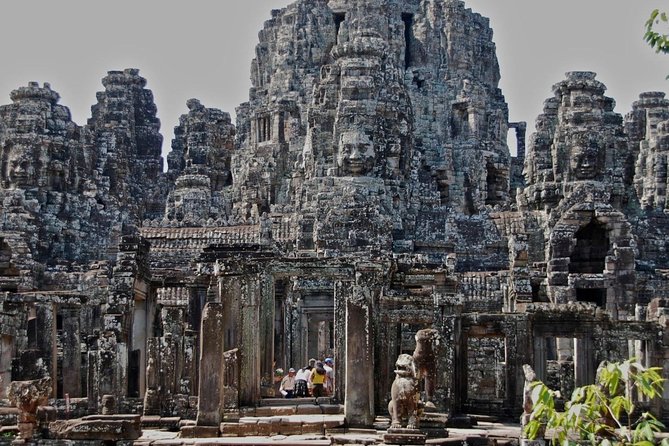
Bayon is famous for its towers carved with large faces traditionally linked with the bodhisattva Avalokitesvara. The plan describes 54 towers and 216 faces, though the number you can clearly identify depends on the condition of the ruins and your position among them. The effect is less about one perfect viewpoint and more about moving through a maze of towers while faces appear above you.
Your guide can help make sense of the site instead of leaving you to see it as a pile of weathered stone. That matters at Bayon because the structure is complex, and the faces can look similar at first glance. Look up often. Some of the most interesting views come when several faces line up at different heights.
Baphuon adds a second kind of temple experience. It is part of the Angkor Thom area, so you can compare its shape and scale with Bayon rather than treating the two as isolated monuments. Two hours gives you enough time to see the major features without letting the opening stop swallow the entire day.
Admission is not included. You should also remember that a temple-focused morning means walking on uneven surfaces and spending time in the open air, even though the vehicle itself is air-conditioned.
Ta Prohm: roots, corridors, and a famous mood
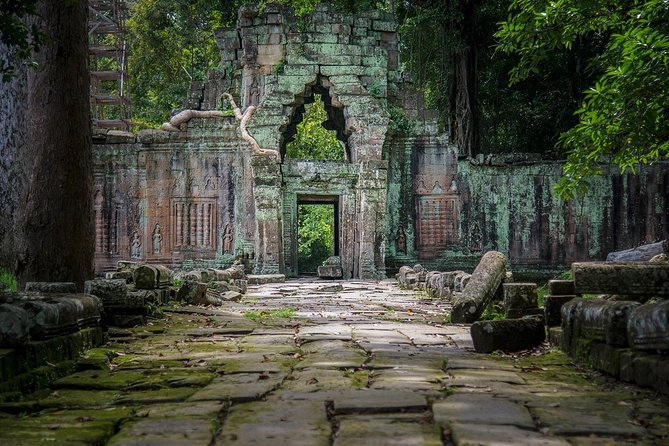
Ta Prohm receives about two hours, and it is easy to see why it earns that time. Trees and enormous roots press against the temple walls, giving the ruins a dramatic appearance that differs sharply from Bayon’s carved faces.
The appeal is not just the trees. Ta Prohm lets you see how stone buildings and plant growth now occupy the same space. Roots wrap over walls, doorways frame broken blocks, and narrow passages make the site feel more intimate than Angkor Wat.
This is also one of the most popular stops around Siem Reap. The tour description emphasizes avoiding busy queues, but no entrance ticket is included, and no guaranteed crowd-free visit is stated. Your guide can help with the order of the day and transport, but you should still expect other people at a temple this well known.
Take your time with the details rather than chasing the most recognizable root-covered view. Ta Prohm is at its best when you notice the smaller doorways, carved stone, and the way the trees change the feel of each courtyard.
Banteay Kdei: a quieter afternoon temple
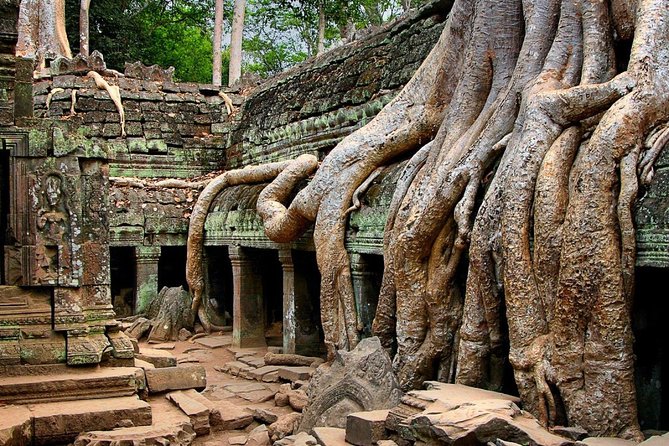
Banteay Kdei gets about an hour. Built by King Jayavarman VII in the late 12th century, it gives the first day a less famous but worthwhile pause.
After Bayon, Ta Prohm, and the scale of Angkor Wat, a smaller temple can be a relief. Banteay Kdei helps you compare another Jayavarman VII-era site without demanding another long visit. The shorter stop also keeps the day moving toward sunset.
I like this kind of inclusion because it prevents the tour from being only a parade of headline monuments. You see a major temple, a famous tree-covered ruin, and then a site where you can pay closer attention to the structure itself.
The tradeoff is simple: an hour is enough for an introduction, not an exhaustive study. If you want long photography sessions at every ruin, this schedule may feel tight. If you want a strong first look at the main temple zone, the timing is more practical.
More Angkor temple itineraries:
- Angkor Wat Sunrise or Sunset Tour with Guide from Siem Reap
5.0 · 12,109 reviews - Siem Reap: Angkor Wat: Small-Group Sunrise or Sunset Tour
5.0 · 9,444 reviews - Siem Reap: Angkor Wat 2-Day Tour with Sunrise and Sunset
4.9 · 4,429 reviews - Siem Reap: Full-Day Angkor Wat Guided Tour with Sunset
4.9 · 3,803 reviews
Angkor Wat at sunset: the day’s big finish
The final temple visit lasts about three hours, making Angkor Wat the anchor of day one. The plan ends with sunset over the UNESCO World Heritage Site, an appealing way to close a long day of ruins.
Angkor Wat is on a different scale from the earlier stops. Its galleries, towers, courtyards, and formal design reward slow looking. Three hours gives you a chance to see more than the familiar front view, though the exact flow will depend on opening conditions, walking pace, and how long the earlier temples take.
The sunset element is attractive, but keep your expectations sensible. A sunset visit does not guarantee dramatic color or an empty viewpoint. It does guarantee that you will see Angkor Wat at a changing time of day, after encountering the more enclosed and tree-filled temples earlier.
A guide is especially useful here because it is easy to spend too long at the first impressive detail and miss the broader arrangement of the temple. Your vehicle also means you can finish the temple circuit without arranging a separate ride back.
Again, the entrance fee is extra. This is the most important budget point on day one because Angkor Wat is not included in the $92 tour price.
Kompong Phluk: a different side of Siem Reap
Day two begins at Kompong Phluk, about 30 kilometers from Siem Reap, with roughly four hours devoted to the visit.
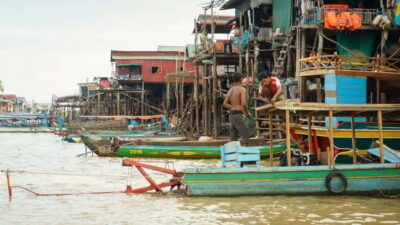
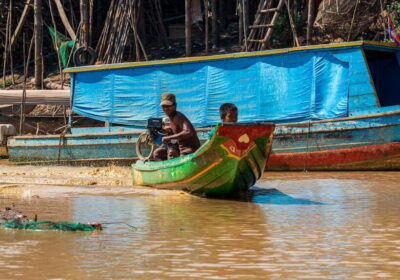
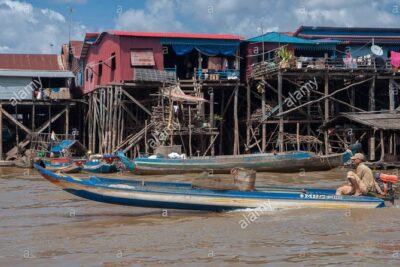
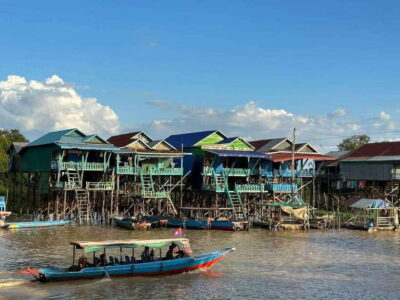
The village is described as a traditional Khmer floating village with tall stilted houses, a floating hospital, fishing activity, and older ways of life shaped by the lake. The houses and community buildings give you a clear sense of how people adapt their daily routines to water levels and fishing work.
This is a useful counterweight to the temples. Angkor shows the power of past Khmer kings and religious architecture. Kompong Phluk focuses on ordinary life, local work, and a community connected to Tonle Sap. If you want more than temple photographs, this is the part of the tour that gives the journey its strongest contrast.
The four-hour visit is longer than a quick photo stop. That allows time to see the village properly, but it also makes day two dependent on conditions at the site. The description does not specify boat arrangements or the exact entrance charge, so confirm the current village cost and what it covers before departure.
The village visit is also not included in the ticket price. Meals are not provided either, so you need to plan for food during the day. The tour does provide cold water and a cold towel, small comforts that become useful in Cambodia’s heat.
Angkor National Museum: useful context after the ruins
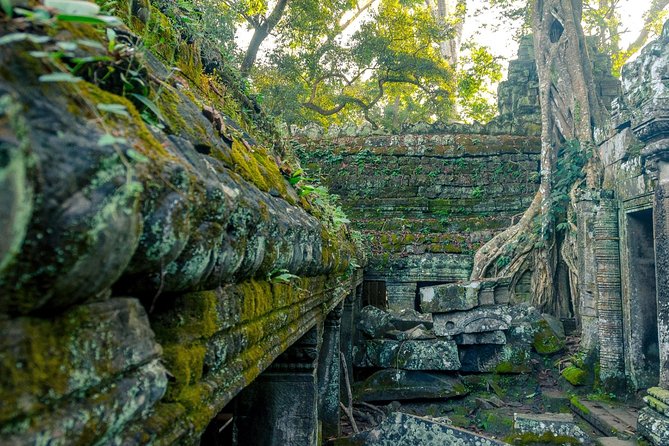
The Angkor National Museum receives about an hour. Its collection includes Buddha statues and other relics, giving you a chance to see Khmer art in a more organized setting after visiting the temple sites.
A museum stop can feel secondary after a morning at Kompong Phluk, but it has real value. At the temples, you see carvings and buildings in their original setting. In the museum, objects are brought together so you can look closely at sculpture and religious imagery without walking across a large ruin complex.
One hour is enough for a focused visit, not every gallery. Ask your guide what to prioritize if you want the stop to connect directly with Bayon, Ta Prohm, or Angkor Wat. The museum admission is not included, so add it to your planning.
The timing also helps break up the second day. After four hours at the village, an indoor museum offers a change from the sun and open air before the final craft visit.
Artisans Angkor and the stone-carving activity
The final listed stop is Artisans Angkor, a local NGO that works to improve the lives of disadvantaged Cambodians from rural areas. You enter its workshop and try your hand at stone carving, with about an hour scheduled.
This is more engaging than a simple stop at a shop. You get to see a craft setting and take part in a small activity rather than only looking at finished objects. The connection to Angkor is clear: after seeing carved faces, lintels, and temple details, you can better appreciate the patience required to shape stone.
The activity is also a practical chance to slow down before the tour ends. You may not produce a polished temple ornament in an hour, but the point is the attempt and the contact with a living craft tradition.
The information provided does not say whether any finished piece, materials, or purchases are included. Ask your guide what the stone-carving session covers before you begin, especially if you hope to take something home.
The broader value is social as well as artistic. Artisans Angkor is presented as an organization supporting rural Cambodians, so this stop gives your spending and attention a different connection than a standard souvenir shop.
What the $92 price really covers
At $92 per person, the tour can be good value for anyone who wants two days of transport and a private English-speaking guide without arranging each stop independently.
You are paying for an air-conditioned vehicle on both days, guide service, cold water, cold towels, and a planned route that combines temples, a village, a museum, and a craft workshop. For a private group, that convenience has real worth. You do not need to negotiate separate rides to the temple area, Tonle Sap, and city stops.
But the advertised price is not your final spend. All entrance tickets are extra, and meals are not included. The tour covers a lot of ground, so budget for those additions before you decide that $92 is the full cost.
I would compare this tour by asking how much you value simplicity. If you already have a driver, know the temple area well, and plan to buy tickets separately, the package may be less attractive. If you want one company to handle transportation across two very different days, the price becomes easier to justify.
Group discounts are available, which may improve the value for a larger private party. The activity is booked about six days ahead on average, so it is sensible to reserve before arrival if your dates are fixed.
Timing, comfort, and small practical matters
The stated start time is 8:30 a.m. Both days are described as approximately two-day experiences, with day one running through the sunset visit. That makes the first day full, especially with four temple stops.
Wear footwear suited to uneven temple ground and plan for heat. The vehicle is air-conditioned, but the stops are outdoor cultural sites. Cold water and a cold towel are included, which is welcome after walking among the ruins.
Children must be accompanied by an adult, and most people can participate. The tour is private, so your group is the only group participating in the activity. The available information does not give a maximum group size, exact hotel pickup details, or a full accessibility description. Confirm those points if they matter to your plans.
Pickup is offered, and mobile tickets are available. Confirmation is received at booking. Free cancellation is available until 24 hours before the local start time, while later cancellations or changes are not accepted.
Who will get the most from this tour
I would choose this tour if you want the essential Angkor temples but also want to see more of Siem Reap than ruins alone. The combination suits first-time visitors who prefer a guide and private transport over building a two-day plan from scratch.
It is also a good fit for families and small groups. A private vehicle gives you more control than a large shared coach, while the museum and stone-carving stop add variety for people who may tire of temples.
The schedule is less ideal if you want slow, scholarly visits at every monument. Bayon and Ta Prohm receive two hours each, Banteay Kdei one hour, and Angkor Wat three hours. That is a strong overview, but photography enthusiasts may want to arrange extra time elsewhere.
You should also reconsider if you want an all-inclusive price. Tickets and meals are separate, and the Kompong Phluk visit has its own admission cost. The package is about guided access and transport, not covering every expense.
Should you book it?
Book this tour if you want a well-rounded first visit to Siem Reap: major temples on day one, Tonle Sap community life on day two, plus museum context and a hands-on craft session. The strongest reasons are the private format, air-conditioned transport, and the clear mix of famous and less obvious sights.
The main question is the extra cost of admissions and food. Add those expenses before booking, then decide if two days of organized transport and a guide are worth the convenience. If the answer is yes, this is a practical choice, especially for a small group that values an upbeat guide such as Sen and a schedule that does not stop at Angkor Wat.
FAQ
How long does the tour last?
The experience lasts approximately two days.
What time does the tour start?
The stated start time is 8:30 a.m.
Is this a private tour?
Yes. Only your group participates in the private tour or activity.
Is transportation included?
Yes. An air-conditioned vehicle is included for both days, and pickup is offered.
Is an English-speaking guide included?
Yes. An English tour guide is included. Sen is one guide associated with the experience.
Are entrance tickets included?
No. All entrance ticket fees are excluded, including the fees for the listed temples and other attractions.
Are meals included?
No. Breakfast, lunch, and dinner are not included.
Can I cancel for a full refund?
Yes. You can cancel at least 24 hours before the local start time for a full refund. Cancellations or changes made less than 24 hours before the start time are not accepted.
Fresh reviews from around Siem Reap
- Full-Day Tour Preah Vihea & Koh Ker Temple 3.7 · 3 reviews
- Savor the Countryside: Tours with Authentic Cooking Classes” 5.0 · 3 reviews
- Angkor Grand Circuit Tour & Banteay Srei 5.0 · 3 reviews
- Guided Private Tuk Tuk Tour Angkor Wat and Small Circle and Five Extras 5.0 · 3 reviews
- Angkor Wat Sunrise TukTuk Tour 5.0 · 3 reviews
- Siem Reap Temple Tour 2-Day with Sunrise/Sunset 3.7 · 3 reviews
- Bangkok to Angkor Wat 2 Days 1 Night by Flight 4.5 · 3 reviews
- Kompong Pluk Tour 5.0 · 3 reviews
Floating Village Tours, compared.
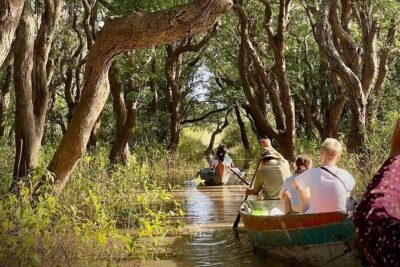
Sunset tour of Kampong Phluk stilts home village on the Tonle Sap
Read our review →
Siem Reap Floating Village Kampong Phluk Sunset with Boat
Read our review →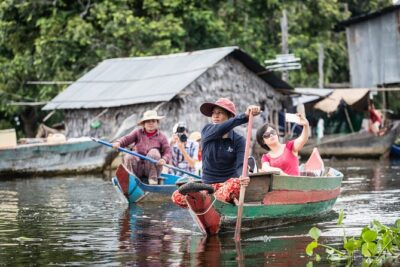
Kompong Phluk Floating Village Half-Day Tour ( Morning / Sunset )
Read our review →
Browse the lists this tour appears in