
Reviewed · ANGKOR WAT SUNRISE TOURS
Sunrise at Angkor Wat and Small Tour with Tours Guide
Angkor Wat at sunrise is the main event here. You leave Siem Reap at 4:30 AM, reach the temple before dawn, and watch the sky brighten behind one of Cambodia’s great ancient monuments. I like the early start because it gives you the best chance to see the temple before the heat takes over, and I like the route because it covers Angkor’s essential sights in one long day.
The guide adds useful context to the carvings, towers, royal terraces, and Khmer kings. Guides such as Ounra have also helped with photographs and quieter viewpoints. The main drawback is the pace: this is an eight-hour temple day, and a shared group can be large, with one group reported at 22 people. You also need to budget separately for the Angkor pass and food.
In This Review
- Key points to know before booking
- Sunrise at Angkor Wat, starting before dawn
- Angkor Wat beyond the sunrise photograph
- South Gate and the road into Angkor Thom
- Bayon’s stone faces and Baphoun’s scale
- The Elephant and Leper King terraces
- Ta Prohm, where trees meet temple stone
- Banteay Kdei and the final temple stop
- What the $6 price really covers
- Shared group or private tour
- Who should book this Angkor day?
- Should you book Sunrise at Angkor Wat and Small Tour?
- FAQ
- What time does hotel pickup begin?
- Is the Angkor admission ticket included?
- Which temples are included?
- Is food included in the tour price?
- Is an English-speaking guide provided?
- Can I cancel or pay later?
Key points to know before booking
- Sunrise begins the day at Angkor Wat: Expect a 4:30 AM hotel pickup and an early walk to the temple viewing area.
- Four major temple areas are covered: The route includes Angkor Wat, Angkor Thom, Bayon, Ta Prohm, and Banteay Kdei.
- A one-day pass costs extra: The tour price is $6 per person, but temple admission is not included. The one-day Angkor pass costs $37.
- The guide is central to the experience: You receive an English-speaking guide who explains Khmer art, culture, temples, and royal history.
- Shared and private options are available: A private group gives you more control over the pace and questions.
- This is a physically demanding morning: Long walks, stairs, heat, and a very early start make it unsuitable for people over 70 according to the tour information.
Sunrise at Angkor Wat, starting before dawn
The day starts with hotel pickup at 4:30 AM in an air-conditioned vehicle. You provide your hotel name and room number when arranging pickup, so this is not a tour where you need to find a distant meeting point in the dark.
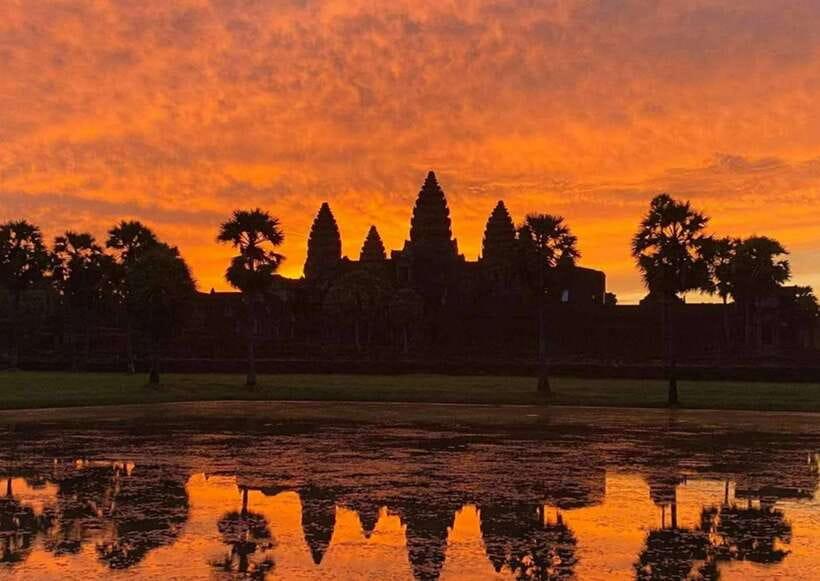
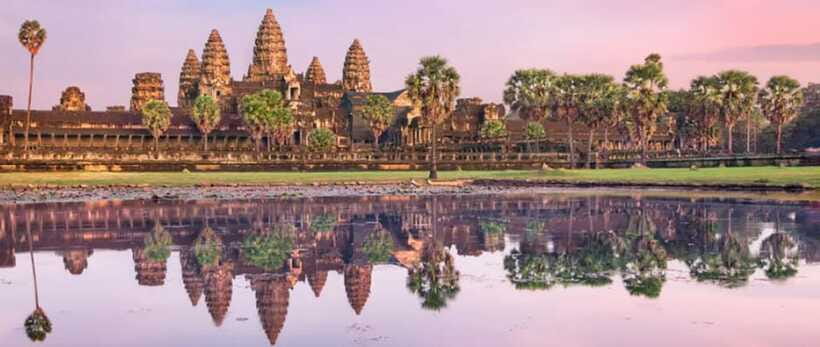
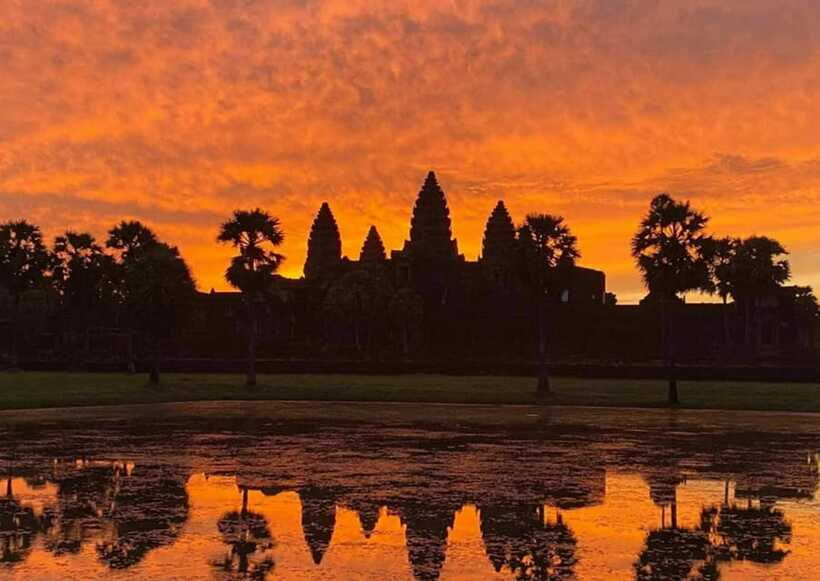
That early departure matters. Angkor Wat is Cambodia’s most famous temple, and sunrise is the most sought-after time to see it. The first part of the visit is mostly about positioning yourself, walking into the complex, and waiting for daylight. The temple’s towers gradually become visible as the sky changes, giving you a calm and memorable beginning before the rest of the morning becomes busier and warmer.
You should keep your expectations realistic. Sunrise depends on clouds and weather, so no tour can promise a perfect red sky. The value is also in seeing Angkor Wat at first light, when the stone towers and reflecting pool take on a softer look than they do under the midday sun.
The Angkor Wat visit is listed as roughly two hours, followed by another guided section of about an hour and a half. That gives you time to see the main features rather than simply stop for a photograph. Your guide can point out architectural details and explain the temple’s place in the Khmer empire, which makes the huge complex easier to understand.
A practical tip: bring a small flashlight or use your phone light for the early walk, and wear shoes you can comfortably use for several hours. You will also want a light layer for the first part of the morning, even though the day will later become hot.
More sunrise departures to Angkor Wat:
- Angkor Wat Sunrise or Sunset Tour with Guide from Siem Reap
5.0 · 12,109 reviews - Siem Reap: Angkor Wat: Small-Group Sunrise or Sunset Tour
5.0 · 9,444 reviews - Siem Reap: Angkor Wat 2-Day Tour with Sunrise and Sunset
4.9 · 4,429 reviews
Angkor Wat beyond the sunrise photograph
Once the sky is light, the visit becomes more than a sunrise stop. Angkor Wat was built as a major religious and royal complex, and its long galleries, towers, and carved surfaces reward a slower look.
The guide’s role is especially useful here. Without explanation, it is easy to see Angkor Wat as a grand set of stones and leave it at that. With context about the Khmer rulers, religious ideas, and temple art, the carvings and layout begin to make more sense.
The tour includes a breakfast break of about 30 minutes, with another short break listed later. Meals are not included, so you should plan to pay for breakfast and drinks yourself. The supplied information refers to lunch after the morning temple visits, but the price does not cover meals or beverages. Ask your guide about the timing and location on the day, and expect food near the temple area to cost more than a meal in central Siem Reap.
Bottled drinking water and a cold towel are included. One visitor reported not receiving either item, so it is sensible to carry your own water as a backup, especially during the hottest part of the day. The cold towel is a nice comfort after walking, but it should not replace sun protection and regular drinking water.
South Gate and the road into Angkor Thom
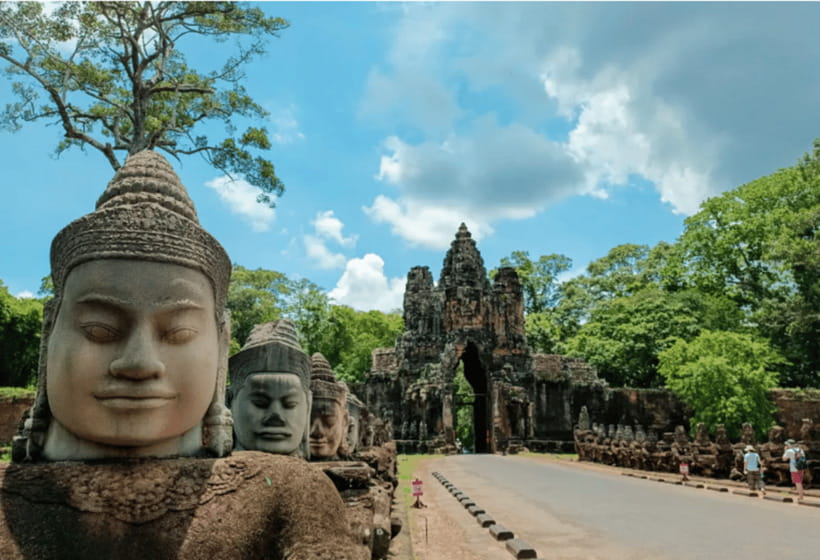
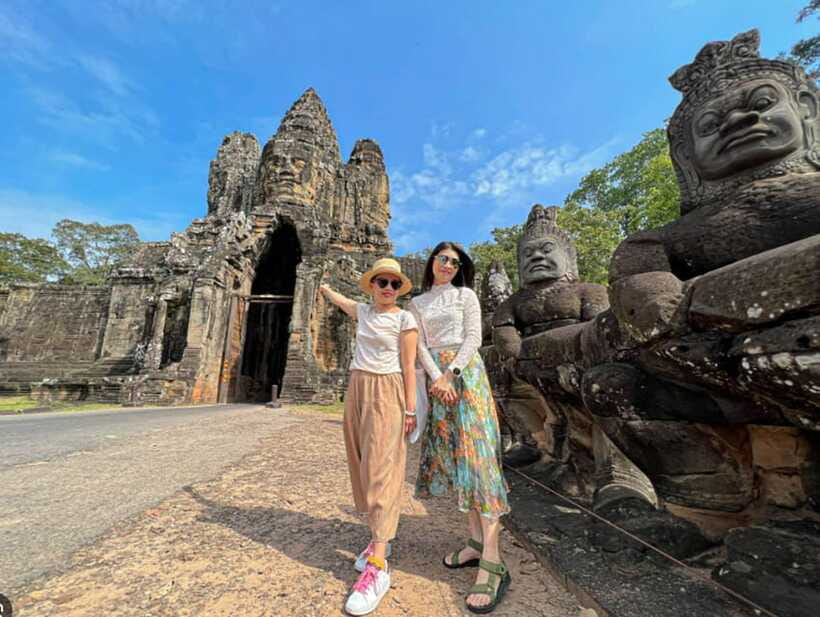
After Angkor Wat, the route moves to the South Gate of Angkor Thom. This is a strong transition because the gate itself introduces the scale and symbolism of the former Khmer capital.
The approach includes scenic views and a photo stop. Your guide explains the figures lining the entrance and the story connected with the gate, helping you read the stonework rather than treating it as a quick drive-by stop.
The schedule allows about an hour at the South Gate, followed by another 45-minute visit and sightseeing period. Exact timing can shift because sunrise crowds, walking speed, and traffic around the temples all affect the day. A private group is the better choice if you want more time for photographs or need to move at a slower pace.
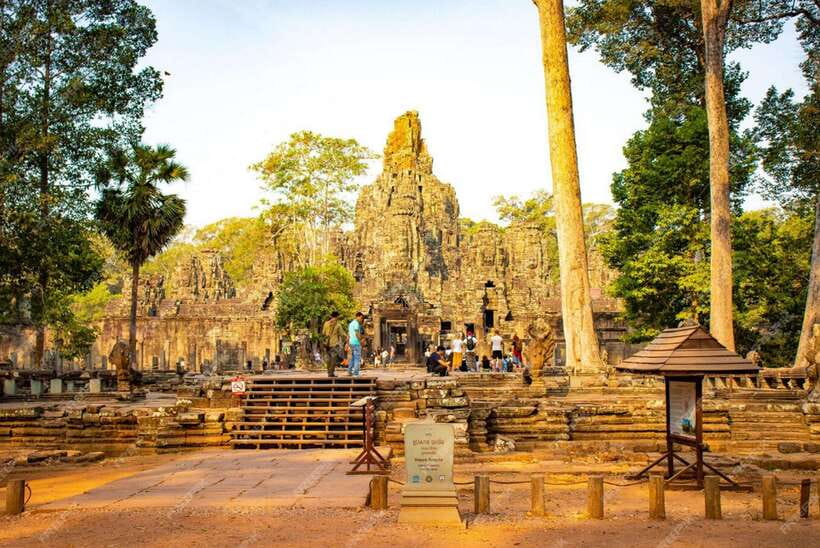
From the gate, you continue to Bayon and Baphoun. These temples are tied to the reign of King Jayavarman VII and the great city of Angkor Thom. The guide points out the famous faces associated with Avalokitesvara, the Buddhist figure whose calm expressions appear on Bayon’s towers.
Bayon’s stone faces and Baphoun’s scale
Bayon is one of the most unusual stops in the Angkor complex. Its towers carry large carved faces, creating a feeling that the temple is watching you from every direction. The tour information describes 54 towers and 216 faces, although the surviving count and condition of features can vary as you move through the monument.
The number matters less than the effect. Bayon is not as instantly tidy or symmetrical as Angkor Wat. Its passages and towers press together, and the faces appear at different heights as you walk. I like this stop because it feels more intimate and mysterious than the broad approach to Angkor Wat.
Baphoun, nearby, gives you a different experience. It is a large temple mountain, and the guide connects it to the political and religious power of the Khmer kings. You will spend about 90 minutes at Bayon according to the schedule, with the South Gate and nearby temples spread across the earlier part of the morning.
This is a place where a guide earns the modest tour fee. Dates, rulers, religious changes, and temple names can blur together after a few hours. A clear explanation helps you remember what you are seeing, especially if this is your first visit to Angkor.
More Angkor temple itineraries:
- Siem Reap: Full-Day Angkor Wat Guided Tour with Sunset
4.9 · 3,803 reviews - Angkor Wat Sunrise tour with Small – Group and Guide tours
5.0 · 3,655 reviews - Angkor Wat Highlights and Sunrise Guided Tour from Siem Reap
5.0 · 3,213 reviews - Angkor Wat Sunset Small Group Tour with Lunch Included
5.0 · 3,059 reviews
The Elephant and Leper King terraces
The route then passes the Terrace of the Elephants and the Terrace of the Leper King. These are not enclosed temples in the same way as Angkor Wat or Ta Prohm. They are ceremonial platforms connected with royal display and public life.
The Terrace of the Elephants served as a royal viewing platform. It is easy to imagine the king watching ceremonies or processions from above, though the surviving stonework gives only part of the story. Carved elephants and other details make this a worthwhile stop for close observation.
The Terrace of the Leper King is associated with the royal audience area. Its carvings and walls offer a different kind of visit from the major temple towers. You get a sense of how Angkor functioned as a royal center, not just a collection of religious monuments.
The schedule places these sites around the middle of the day, after the cooler sunrise hours. That means heat becomes a real factor. Wear a hat, use sunscreen, and take the provided breaks. The air-conditioned vehicle is welcome between stops, but much of the sightseeing is on foot.
Ta Prohm, where trees meet temple stone
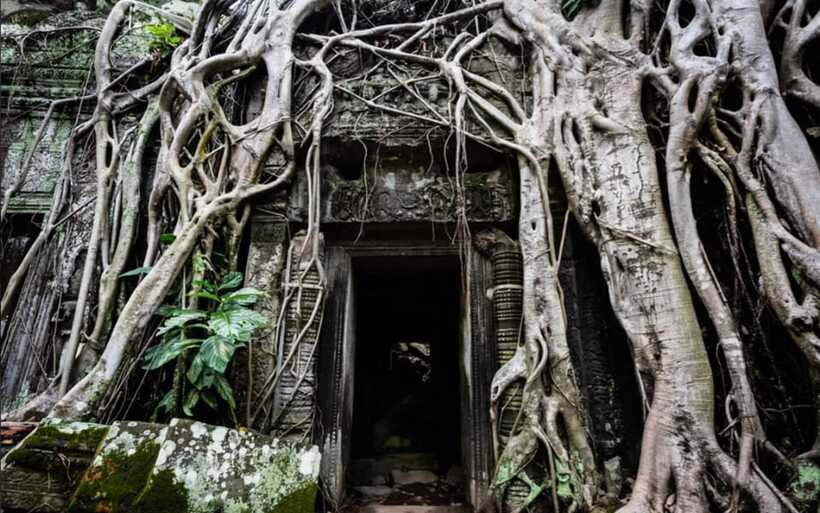
Ta Prohm is the second major visual highlight after sunrise. Trees grow around and over parts of the temple, and roots press against old stone walls. The result is dramatic, but it is worth looking beyond the famous tree photographs.
Ta Prohm was built under King Jayavarman VII and was once a large religious foundation. Its towers, corridors, carved doorways, and damaged galleries show how nature and time have shaped the site. The trees are not simply decoration. They are part of the reason this temple feels so different from the open, ordered approach to Angkor Wat.
The visit is scheduled for about two hours, making it one of the longer stops. That is helpful because Ta Prohm has many passages and details. You can take photographs, listen to the guide, and see how the temple changes as you move from open courtyards into narrower corridors.
It can also be one of the more tiring visits. Uneven ground, stone steps, and heat add up by this point in the day. If you choose a shared group, stay aware of the guide’s meeting instructions so you do not lose time or miss the vehicle.
Banteay Kdei and the final temple stop
Banteay Kdei is the last named temple in the route. King Jayavarman VII built it in the late 12th century, and it shares some of the period’s Buddhist character with Ta Prohm.
It is a useful final stop because it continues the story of Jayavarman VII without simply repeating Ta Prohm. The temple’s worn stone and quieter setting let you finish with another look at the Khmer building style, rather than ending immediately after the most famous site.
The supplied schedule lists Ta Prohm for two hours, but Banteay Kdei is not given a separate time block. That suggests the exact length of the final stop may depend on the day’s pace. If Banteay Kdei is especially important to you, ask the guide early in the day how much time is planned there.
After the temples, the vehicle returns you to your hotel in Siem Reap. The full experience lasts about eight hours, so you should keep the rest of the day light if possible.
What the $6 price really covers
At $6 per person, this is an unusually low tour price, but it is not the total cost of visiting Angkor. Admission is separate:
- One-day Angkor pass: $37
- Three-day Angkor pass: $62
- Seven-day Angkor pass: $72
The passes must be used on consecutive days. For a single day, your basic cost is therefore about $43 before breakfast, lunch, and other drinks. That is still good value if you want transport, a guide, and a planned route without arranging each temple visit yourself.
The low tour price makes more sense when you look at what is included: hotel transfers, an air-conditioned vehicle, an English-speaking guide, bottled water, and a cold towel. You are mainly paying for the service around the temple pass, not the archaeological admission itself.
Food is extra, and a meal close to the temples may be more expensive than one in Siem Reap. Bring enough cash for meals and drinks, or ask about the planned lunch stop before ordering.
Shared group or private tour
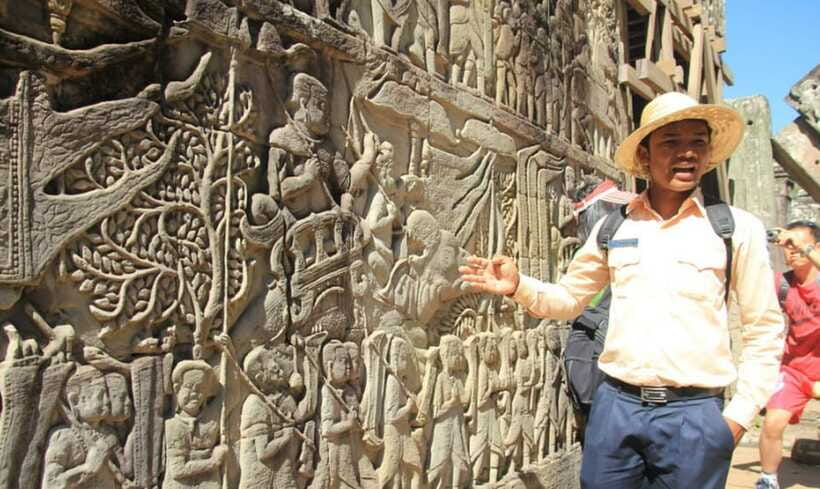
The shared option keeps the price low, but it can affect the feel of the day. One booking had a group of 22 people. A group that size may mean slower movement, less time for individual questions, and a fixed meeting schedule at each temple.
A private group costs more than the headline shared price, but it may be worth considering if you care about photography, want more guide time, or prefer a slower walk. It can also help if you are traveling with family or friends who want to set their own pace.
Guide quality appears to be an important part of the experience. Ounra is specifically praised for knowing good sunrise viewpoints, avoiding some of the crowd, and taking photographs. The driver is also described as punctual, kind, and helpful. English ability can vary by guide, and one person found the explanation difficult to follow at times, so private touring may help if you want more direct communication.
Who should book this Angkor day?
I would choose this tour if you have only one day for Angkor and want the main temples handled in a sensible order. It is also a good fit if you value explanations, need hotel pickup, or do not want to arrange transport before dawn.
You should be comfortable with a very early start and a full day of walking. The experience is not suitable for people over 70 according to the stated restrictions, and anyone with mobility concerns should think carefully about uneven temple paths and stairs.
Photography matters here, and the schedule gives you several strong subjects: sunrise at Angkor Wat, Bayon’s faces, the South Gate, Ta Prohm’s trees, and Banteay Kdei’s old stone corridors. If you want long, quiet visits at every temple, a private option or a multi-day Angkor plan may suit you better.
Book at least a day ahead if your plans may change, since cancellation is free up to 24 hours before departure. You can also reserve now and pay later, which keeps the booking flexible.
Should you book Sunrise at Angkor Wat and Small Tour?
Book it if you want a low-cost introduction to the essential Angkor temples, with a guide and transport already arranged. The strongest reasons are the sunrise start, the broad route, and the chance to hear cultural and historical context rather than simply take photographs.
I would choose the private option for a quieter, more flexible day. I would choose the shared option if price matters most and you can accept a larger group. Remember to add the $37 one-day pass, meals, and drinks to the budget, and carry backup water in case the included supplies are not available.
FAQ
What time does hotel pickup begin?
Pickup begins at about 4:30 AM. You should provide your hotel name and room number by email or WhatsApp when arranging the pickup.
Is the Angkor admission ticket included?
No. The Angkor pass is not included. A one-day pass costs $37, a three-day pass costs $62, and a seven-day pass costs $72. The passes must be used on consecutive days.
Which temples are included?
The route includes Angkor Wat, the South Gate of Angkor Thom, Bayon, Baphoun, the Terrace of the Elephants, the Terrace of the Leper King, Ta Prohm, and Banteay Kdei.
Is food included in the tour price?
No. Meals and beverages are not included. Bottled drinking water and a cold towel are listed as included, but carrying backup water is a sensible precaution.
Is an English-speaking guide provided?
Yes. The tour includes a live English-speaking guide. A private group is available if you prefer a more personal experience.
Can I cancel or pay later?
You can cancel up to 24 hours in advance for a full refund. The reserve-now, pay-later option lets you book without paying on the day of reservation.
More Morning in Siem Reap
- Full-Day Angkor Wat Sunrise Private Tour with Guide from Siem Reap
5.0 · 2,920 reviews - Angkor Wat Sunrise & 3 Main Temples with Breakfast – Small Group
5.0 · 2,857 reviews - Siem Reap: Angkor Wat Sunrise and Full-Day Sightseeing Tour
4.9 · 2,828 reviews - Angkor 2-Day Sunset & Sunrise Small-Group Tour
5.0 · 2,567 reviews
Fresh reviews from around Siem Reap
- Full-Day Tour Preah Vihea & Koh Ker Temple 3.7 · 3 reviews
- Savor the Countryside: Tours with Authentic Cooking Classes” 5.0 · 3 reviews
- Angkor Wat Sunrise TukTuk Tour 5.0 · 3 reviews
- Angkor Grand Circuit Tour & Banteay Srei 5.0 · 3 reviews
- Guided Private Tuk Tuk Tour Angkor Wat and Small Circle and Five Extras 5.0 · 3 reviews
- Siem Reap Temple Tour 2-Day with Sunrise/Sunset 3.7 · 3 reviews
- Bangkok to Angkor Wat 2 Days 1 Night by Flight 4.5 · 3 reviews
- Kompong Pluk Tour 5.0 · 3 reviews
Angkor Wat Sunrise Tours, compared.

Angkor Wat Sunrise or Sunset Tour with Guide from Siem Reap
Read our review →


Angkor Wat Sunrise tour with Small – Group and Guide tours
Read our review →
Angkor Wat Highlights and Sunrise Guided Tour from Siem Reap
Read our review →
Full-Day Angkor Wat Sunrise Private Tour with Guide from Siem Reap
Read our review →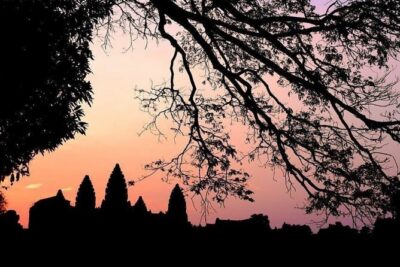
Angkor Wat Sunrise & 3 Main Temples with Breakfast – Small Group
Read our review →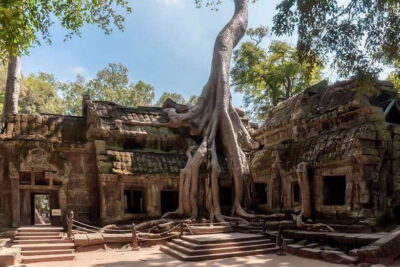
Browse the lists this tour appears in