
Reviewed · ANGKOR WAT SUNRISE TOURS
Siem Reap: Angkor Wat Small-group Sunrise or Sunset Tour
Angkor Wat at first light is the main event here. You arrive before the heat and, ideally, before the biggest crowds, then continue to Bayon’s 200-plus stone faces, Ta Prohm’s tree-covered ruins, and the quieter corridors of Banteay Kdei.
I like the $12 price, which covers hotel pickup, transport, an English-speaking guide, and drinking water. I also like the route’s mix of famous sights and a less-visited temple. The catch is important: your temple ticket costs extra, and the guide can make or break the day. Josepha praised David’s energy, while Josh found Mr Kosal funny, clear, flexible, and good at taking photos. Another visitor had a poor experience with Noon and felt the explanations were too thin.
In This Review
- Key points at a glance
- Angkor Wat before the crowds
- Inside Angkor Wat’s galleries and sanctuary
- Bayon and the faces of Angkor Thom
- A lunch break before Ta Prohm
- Ta Prohm and the jungle-temple effect
- Banteay Kdei, a calmer final temple
- What the $12 price really covers
- The guide can shape your whole day
- Timing, clothing, and what to bring
- Who should book this Angkor route?
- FAQ
- Where does the tour start?
- How long does the activity last?
- Is sunrise included?
- Is the Angkor entrance ticket included?
- What transportation is provided?
- Is a tour guide included?
- Is drinking water provided?
- Which temples are visited?
- Is food included?
- Can I cancel for a refund?
Key points at a glance
- Angkor Wat sunrise: Begin at Cambodia’s best-known temple while the moat and towers catch the morning light.
- Four major temples: See Angkor Wat, Bayon, Ta Prohm, and Banteay Kdei in one eight-hour outing.
- A quieter final stop: Banteay Kdei offers a calmer finish than the headline temples.
- Guide quality matters: David and Mr Kosal received especially warm praise, but the standard of explanation may vary.
- Low tour price, extra admission: The $12 fee does not include your Angkor Archaeological Park ticket.
- Check the start time: The route describes sunrise, but the stated pickup window of 8:15am to 9:00am does not fit a normal sunrise visit. Confirm the exact time before booking.
Angkor Wat before the crowds
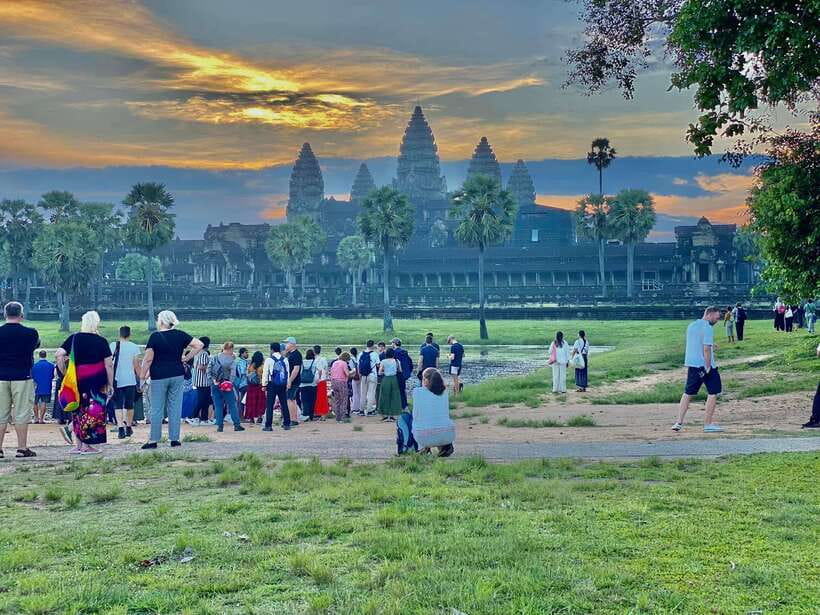
The day begins with pickup from your hotel or accommodation in Siem Reap. You ride in an air-conditioned minibus for about 45 minutes to the Angkor Archaeological Park. That air conditioning matters, since the day includes a good deal of walking in Cambodia’s heat.
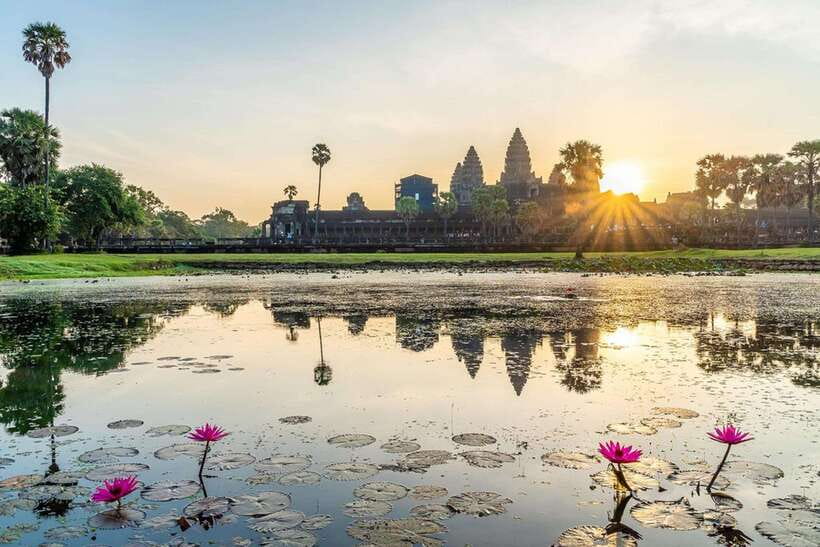
The plan uses the western entrance to Angkor Wat, described as a little-visited approach. You first watch the sunrise, with the temple towers reflected in the moat when conditions cooperate. This is the moment to bring your camera, but do not treat it as only a photo stop. The changing light gives you a useful first look at the temple’s proportions before you head inside.
There is one scheduling point you should settle before paying. The experience is presented as a sunrise tour, yet the stated hotel pickup window is 8:15am to 9:00am. That is too late for sunrise at Angkor Wat on the usual schedule. It may be a general pickup time, an error in the details, or a different departure arrangement. Ask the operator to confirm the real pickup time and whether your booking is definitely for sunrise rather than sunset.
You must buy the Angkor entrance ticket yourself. The tour says you can skip the ticket line, but skip-the-line access does not mean admission is included. Keep the ticket cost in your budget, since it is a major addition to a $12 tour.
More sunrise departures to Angkor Wat:
- Angkor Wat Sunrise or Sunset Tour with Guide from Siem Reap
5.0 · 12,109 reviews - Siem Reap: Angkor Wat: Small-Group Sunrise or Sunset Tour
5.0 · 9,444 reviews - Siem Reap: Angkor Wat 2-Day Tour with Sunrise and Sunset
4.9 · 4,429 reviews
Inside Angkor Wat’s galleries and sanctuary
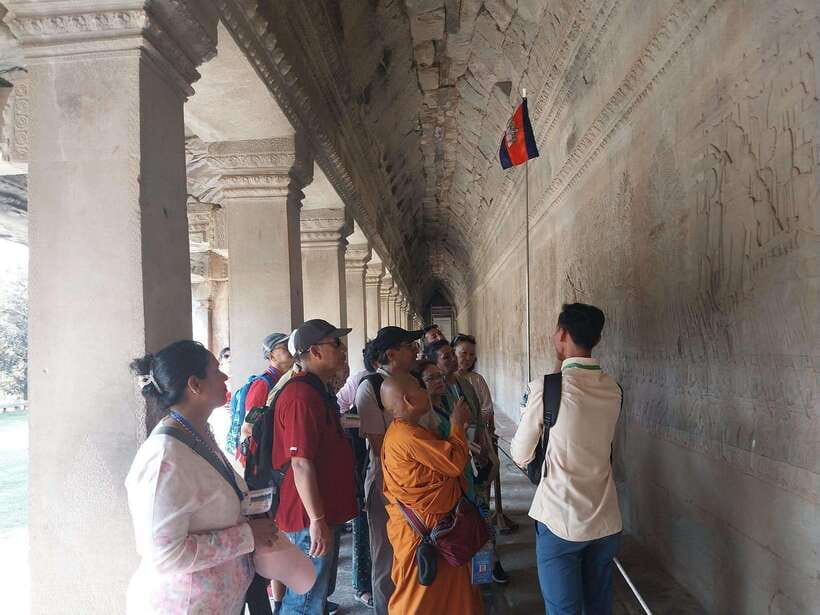
After sunrise, you spend about three hours at Angkor Wat, including the first photo stop and a guided walk through the temple. Originally built as a Hindu temple dedicated to Vishnu, it later became a Buddhist site. That change gives the monument layers of meaning, and a good guide should help you understand what you are seeing rather than simply point out famous walls.
Look for the long bas-reliefs and the carefully planned galleries. The carvings show scenes from Hindu mythology, while the scale of the galleries gives the place a solemn, almost processional feel. The central sanctuary is the visual and spiritual focus, but the outer areas are just as useful for seeing how the temple was planned.
This is where guide quality matters most. Josh had Mr Kosal, who explained religious stories, construction, and historical scenes according to what different people in the group wanted to know. He also knew useful photo spots and took pictures for each group, checking that people were happy with the results. That kind of practical help can save you from leaving with only wide shots of the towers.
The opposite problem is also possible. Noon was described as pleasant but gave too little explanation, with unclear English and information that did not connect well to the temples. At Angkor Wat, a weak guide means you may spend much of the visit looking at carvings without understanding the stories or purpose behind them.
Bayon and the faces of Angkor Thom
The next major stop is Bayon Temple, at the center of Angkor Thom. You have about an hour here, enough time for a guided walk and photos, though the narrow passages and busy upper areas can make the visit feel shorter than the clock suggests.
Bayon is known for its 54 towers, each designed with four large serene faces associated with Avalokiteshvara. The faces appear at different angles as you move around the temple. This is one of the few places in the Angkor Park where the architecture seems to watch you back.
Do not rush past the lower walls. The carvings include scenes of daily life and battles, giving you details beyond royal monuments and religious figures. You might find fishermen, market activity, soldiers, and scenes of ordinary people, depending on which sections your guide chooses to explain.
The temple is less orderly than Angkor Wat, with corridors, stairways, and towers packed close together. Wear shoes with a firm grip and expect regular walking. The tour includes a one-hour visit, but you will not see every corner in depth. If Bayon is especially important to you, tell your guide early so the time is used well.
A lunch break before Ta Prohm
After Bayon, the route includes time for lunch and rest. The schedule lists a 45-minute break and breakfast at Ta Prohm, even though the written program describes lunch after Bayon. This is another detail worth checking with the operator, since the meal timing is not fully consistent.
Food is not listed as included. Drinking water is included, but you should plan to pay for your own meal. The break gives you a chance to cool down before Ta Prohm, which is useful because the second half of the day still involves walking through large temple grounds.
A short meal break also helps with pacing. Angkor tours can become tiring when every stop is treated like a sprint from one doorway to the next. You will get more from Ta Prohm if you arrive rested enough to look at the structure, not only hunt for the most famous tree-root photograph.
More Angkor temple itineraries:
- Siem Reap: Full-Day Angkor Wat Guided Tour with Sunset
4.9 · 3,803 reviews - Angkor Wat Sunrise tour with Small – Group and Guide tours
5.0 · 3,655 reviews - Angkor Wat Highlights and Sunrise Guided Tour from Siem Reap
5.0 · 3,213 reviews - Angkor Wat Sunset Small Group Tour with Lunch Included
5.0 · 3,059 reviews
Ta Prohm and the jungle-temple effect
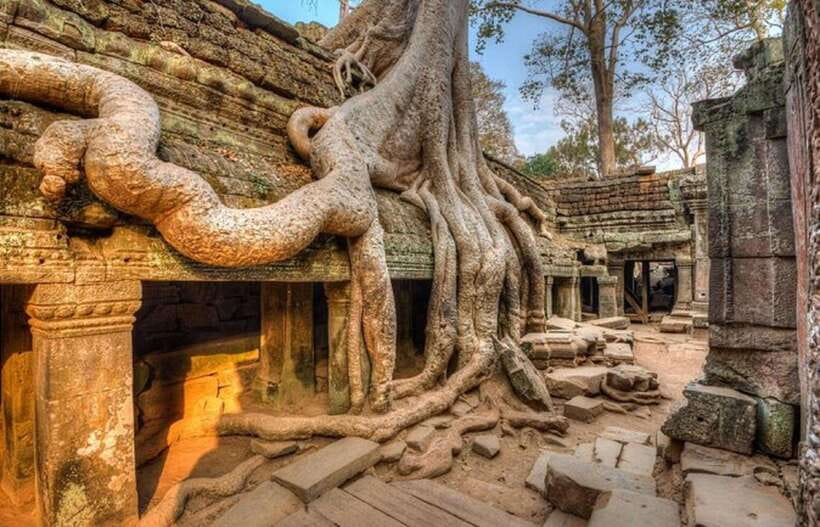
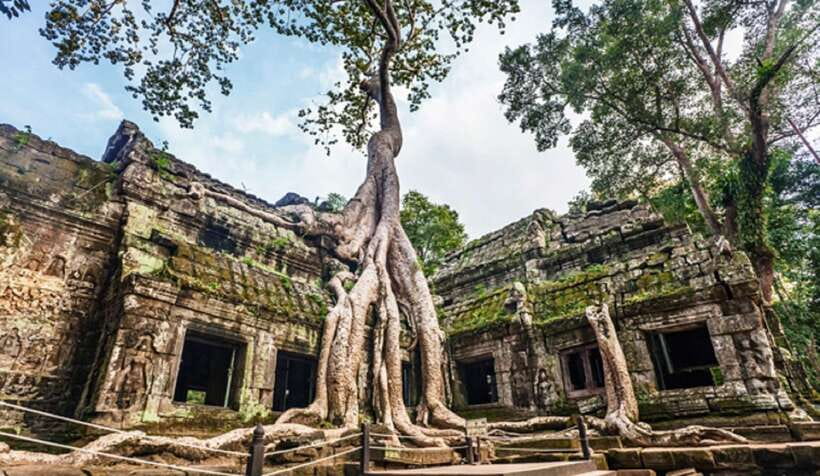
Ta Prohm receives about an hour of guided exploration. It is famous for huge tree roots growing over walls and through the ruins. The temple was built in the 12th century and was left largely unrestored, which gives it the tangled appearance many people picture when they think of Angkor.
The movie Tomb Raider, featuring Angelina Jolie, made Ta Prohm widely known. You will likely recognize some of the visual drama, but the temple is more than a film location. Its half-ruined corridors show the tension between nature and architecture, and the roots make each surviving doorway look different.
Ta Prohm is often the most photogenic stop, but it can also be the hardest to photograph well. The famous root-covered sections attract attention, and the walkways can feel crowded. Follow your guide’s advice on photo spots, and allow time to look away from the best-known view. The broken galleries and partially collapsed areas often explain the site better than one dramatic tree.
The one-hour allowance is sensible for a first visit. You can see the key areas without trying to cover every ruin. If you want a slow, quiet visit with long pauses for sketching or detailed photography, this group schedule may feel brisk.
Banteay Kdei, a calmer final temple
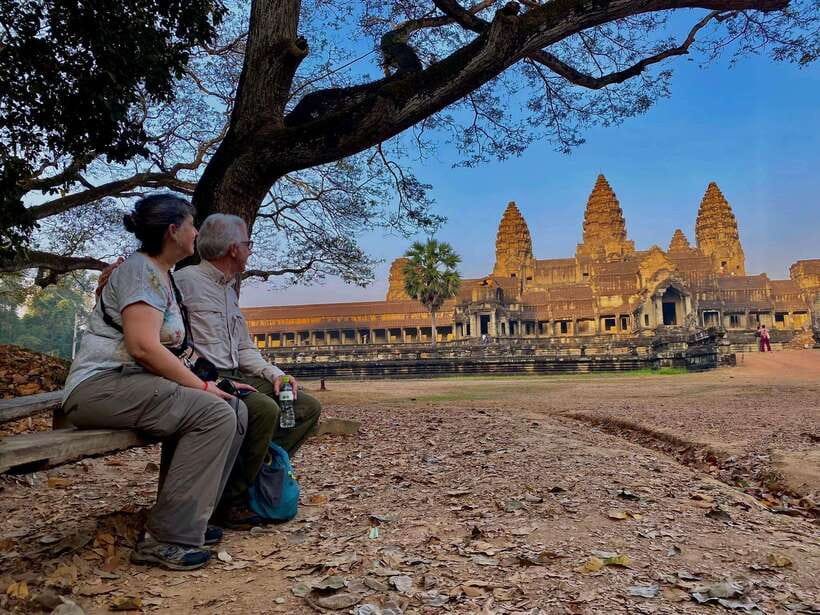
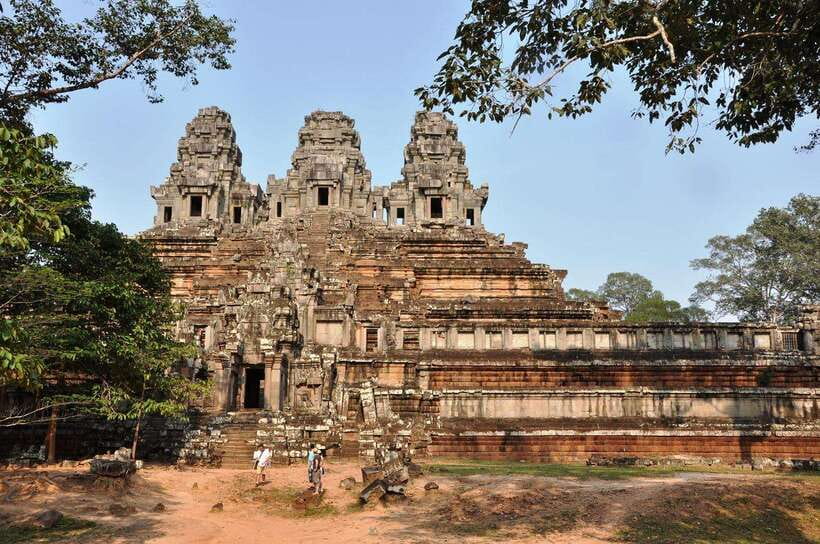
Banteay Kdei follows Ta Prohm, with about 45 minutes for a guided walk and photos. The name means Citadel of Chambers, and the temple was built in the late 12th century as a Buddhist monastery.
Banteay Kdei is partially ruined and less famous than the other stops. That is its strength. You get corridors, carvings, and worn stone without the same pressure to photograph one universally recognized feature. The atmosphere can feel more peaceful and mysterious, especially after the scale of Angkor Wat and the visual drama of Ta Prohm.
Do not expect a fully restored monument. Uneven stone and damaged sections are part of what you are seeing. The guide’s explanation helps here, since it can be hard to tell whether a gap is a missing architectural feature, later damage, or part of the original design.
Forty-five minutes gives you a good introduction, but not a scholarly examination. I see Banteay Kdei as a valuable choice for this route because it adds contrast. Without it, the day would be four headline attractions with little breathing room. Here, you finish with a temple that feels less like a checklist stop.
What the $12 price really covers
At $12 per person, this is a low-cost way to arrange transport and a guided route through the Angkor Park. You receive hotel pickup and drop-off, an air-conditioned minibus, an English-speaking guide, and drinking water. The advertised duration is eight hours, including about 45 minutes each way between Siem Reap and the park.
The low price makes sense for a shared group outing, although the exact group size is not provided. You should expect the pace and stops to follow a common schedule rather than your own private plan. If you want to linger at one temple, your guide may need to keep the wider group moving.
The entrance ticket is not included. That changes the final cost, so compare the total with other options rather than judging the tour by the $12 headline alone. Still, the included transport and guiding can offer good value if you want the four major stops without arranging a vehicle yourself.
The experience has a published rating of 4.3 from three ratings. That is a small sample, so I would treat it as a useful signal, not a guarantee. The strongest praise centers on guides who are lively, clear, adaptable, and willing to help with photos. The main warning is that guide performance may vary widely.
The guide can shape your whole day
The tour is in English, and your guide is meant to lead the visits and explain the temples. The best guide for you will do more than recite names. You want someone who can connect the carvings to Hindu and Buddhist beliefs, explain how the monuments were built, and point out daily-life scenes that you might otherwise miss.
Mr Kosal received especially strong praise for his personality, understandable English, flexibility, and ability to include a mixed group. He adjusted explanations for people interested in religious stories, construction, or historical events. He also helped with group photos, an easy service to overlook until you realize nobody in your party appears in the pictures.
David was praised for his energy and generosity, with Josepha describing the day as unforgettable. Those details suggest the operator has guides who can make the experience personal and warm.
But you should not assume every departure will have the same guide. One account described Noon as nice but hard to understand and too light on temple explanations. Since your entrance ticket is a separate expense, ask at pickup who your guide is and tell that person what interests you. A simple request for more detail on carvings, religion, or construction can improve the visit.
Timing, clothing, and what to bring
The day lasts eight hours, with walking at four temples and two road transfers. Bring water, although some is supplied, and wear comfortable shoes. You will want clothing suitable for visiting sacred sites, especially if you plan to enter the main temple areas.
The tour does not list alcohol or drugs as permitted, and those items are not allowed. Food is not included, so carry money for the meal break. Your temple ticket is also your responsibility.
The most important preparation is confirming the start time. The supplied pickup window says 8:15am to 9:00am, while the route says sunrise at Angkor Wat. Those two details do not align. If you specifically want dawn light and fewer people, do not rely on the general time shown on the booking page. Contact Angkor Wat Combine Tours and get the exact hotel pickup time in writing.
Free cancellation is available up to 24 hours before the activity for a full refund. You can also reserve and pay later, which is useful if your Siem Reap plans may shift.
Who should book this Angkor route?
I would recommend it to a first-time visitor who wants the essential Angkor sights in one day and prefers a low-cost shared tour. The route has a sensible shape: sunrise and the main galleries at Angkor Wat, the faces and carvings of Bayon, the roots of Ta Prohm, and a quieter finish at Banteay Kdei.
It suits you especially well if you value transport, basic guiding, and a clear plan more than complete control over the day. The air-conditioned minibus is helpful, and hotel pickup removes the need to arrange separate transport to the park.
I would hesitate if your priority is a slow photographic visit, a private guide, or detailed archaeological discussion at every stop. I would also wait for confirmation if sunrise is essential, because the stated pickup window needs clarification.
My decision would be simple: book it for the price and route, but treat the guide and timing as the two things to verify. Ask for the actual sunrise departure time, confirm the temple ticket is extra, and tell the guide what you want to learn. With someone like Mr Kosal or David, the day could be a very good introduction to Angkor. With a guide who explains little, the same route may feel like a series of impressive stones without enough meaning.
FAQ
Where does the tour start?
Pickup is provided from your hotel or accommodation in Krong Siem Reap. You are asked to wait in the hotel lobby at the pickup time.
How long does the activity last?
The tour is valid for eight hours, including the trip to the Angkor Archaeological Park and the return to Siem Reap.
Is sunrise included?
The route includes sunrise at Angkor Wat. However, the stated pickup window of 8:15am to 9:00am does not match a normal sunrise schedule, so confirm the exact start time before booking.
Is the Angkor entrance ticket included?
No. The temple ticket or entrance fee is not included and must be paid separately.
What transportation is provided?
You travel in an air-conditioned minibus or coach. Pickup and drop-off are included.
Is a tour guide included?
Yes. An English-speaking live guide is included.
Is drinking water provided?
Yes. Drinking water is included.
Which temples are visited?
The route includes Angkor Wat, Bayon Temple, Ta Prohm, and Banteay Kdei.
Is food included?
No meal is listed as included. The schedule includes a break for breakfast or lunch, but you should plan to pay for your own food.
Can I cancel for a refund?
You can cancel up to 24 hours in advance for a full refund. The activity also offers reserve now and pay later booking.
More Morning in Siem Reap
- Full-Day Angkor Wat Sunrise Private Tour with Guide from Siem Reap
5.0 · 2,920 reviews - Angkor Wat Sunrise & 3 Main Temples with Breakfast – Small Group
5.0 · 2,857 reviews - Siem Reap: Angkor Wat Sunrise and Full-Day Sightseeing Tour
4.9 · 2,828 reviews - Angkor Wat: Highlights and Sunrise Guided Tour
4.9 · 1,586 reviews
More Evening Experiences in Siem Reap
- Sunset tour of Kampong Phluk stilts home village on the Tonle Sap
5.0 · 4,865 reviews - Angkor 2-Day Sunset & Sunrise Small-Group Tour
5.0 · 2,567 reviews - Siem Reap: Angkor Wat Sunrise or Sunset Guided Tour
4.9 · 2,123 reviews - Siem Reap Floating Village Kampong Phluk Sunset with Boat
5.0 · 1,962 reviews
Fresh reviews from around Siem Reap
- Full-Day Tour Preah Vihea & Koh Ker Temple 3.7 · 3 reviews
- Savor the Countryside: Tours with Authentic Cooking Classes” 5.0 · 3 reviews
- Angkor Wat Sunrise TukTuk Tour 5.0 · 3 reviews
- Angkor Grand Circuit Tour & Banteay Srei 5.0 · 3 reviews
- Guided Private Tuk Tuk Tour Angkor Wat and Small Circle and Five Extras 5.0 · 3 reviews
- Siem Reap Temple Tour 2-Day with Sunrise/Sunset 3.7 · 3 reviews
- Bangkok to Angkor Wat 2 Days 1 Night by Flight 4.5 · 3 reviews
- Kompong Pluk Tour 5.0 · 3 reviews
Angkor Wat Sunrise Tours, compared.

Angkor Wat Sunrise or Sunset Tour with Guide from Siem Reap
Read our review →


Angkor Wat Sunrise tour with Small – Group and Guide tours
Read our review →
Angkor Wat Highlights and Sunrise Guided Tour from Siem Reap
Read our review →
Full-Day Angkor Wat Sunrise Private Tour with Guide from Siem Reap
Read our review →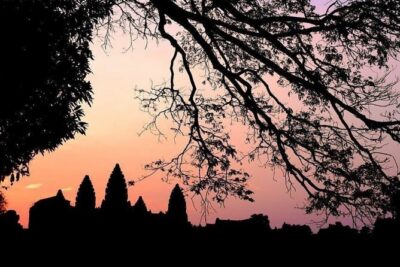
Angkor Wat Sunrise & 3 Main Temples with Breakfast – Small Group
Read our review →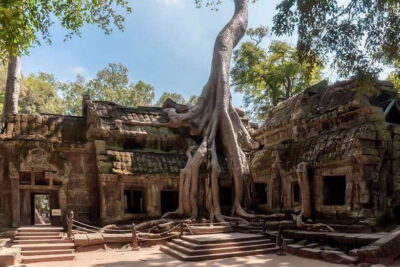
Browse the lists this tour appears in