
Reviewed · COUNTRYSIDE & VILLAGE TOURS
Short Cycling at Countryside
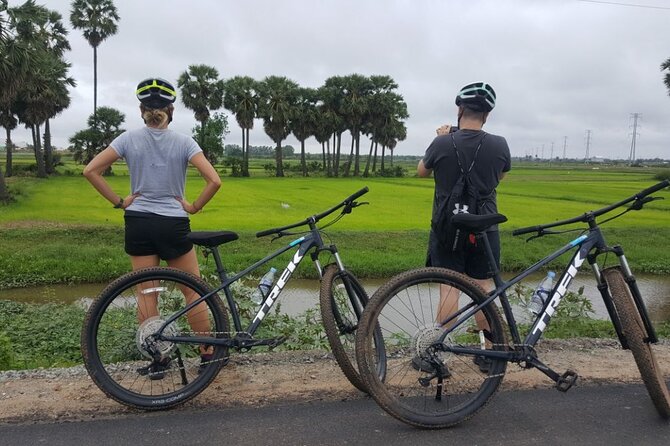
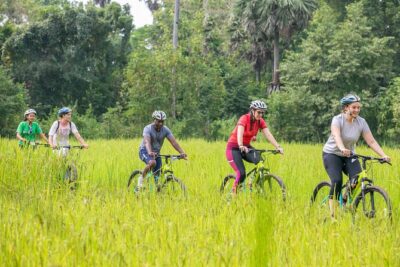
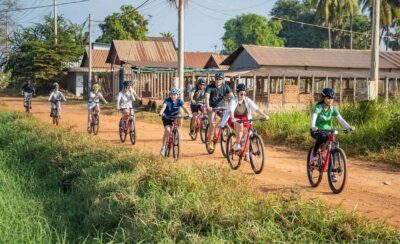
The best part of this four-hour ride is the change of scenery just beyond Siem Reap’s center. You follow the river toward Chreav village, pedal beside rice fields, pass cows and buffaloes, and see daily rural life at a gentle pace. The countryside feels close and real, not staged for sightseeing.
I like the well-kept Trek or Giant bikes and the chance to stop at a local market for Khmer pastries and cookies. I also like the mix of farming scenes, vegetable plots, a quiet ancient pagoda, and a 12th-century temple. The main drawback is the ride through town at the start, where traffic can feel disorderly, especially around major crossroads.
In This Review
- Key points to know before you book
- Leaving central Siem Reap by bicycle
- Rice fields that change with the season
- Meeting village life beside the road
- A local market and Khmer snacks
- Arthvear pagoda and the older temple stop
- The bikes, distance, and road conditions
- How the timing affects the experience
- What the $30 price gives you
- Who will enjoy this ride most
- Simple preparation for a better morning
- Should you book Short Cycling at Countryside?
- FAQ
- How long is the cycling tour?
- How far do you cycle?
- What time does the tour start?
- Where does the tour begin and end?
- Is hotel pickup included?
- What equipment and refreshments are provided?
- Can I cancel for a full refund?
Key points to know before you book
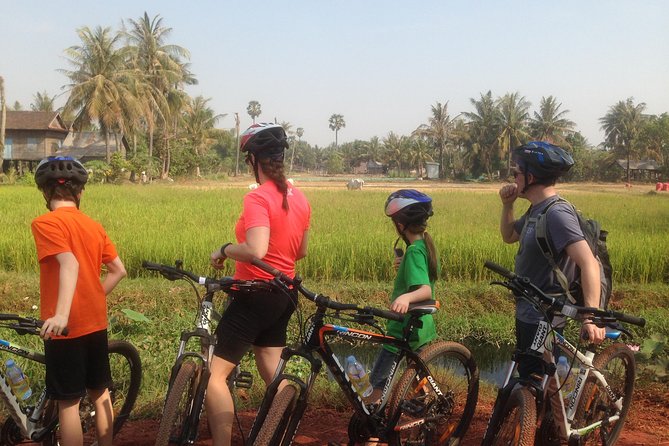
- About 25km on mostly countryside roads: This is a proper morning ride, but the route is generally manageable for anyone comfortable on a bicycle.
- A close look at rural Siem Reap: You pass rice paddies, farms, lotus areas, livestock, village homes, and waterways rather than staying near the main tourist district.
- Strong guides make the difference: Bobo, Vannarath, and Kimmi have been singled out for clear explanations and friendly company on different outings.
- Market tasting is part of the experience: You can try local pastries and cookies while learning how people trade and shop.
- Quality equipment is included: Trek mountain bikes, helmets, drinking water, and fresh coconut water are provided.
- Small groups keep things personal: The maximum group size is 10 people, and the ride starts and ends at the Angkor Cycling Tour office.
Leaving central Siem Reap by bicycle
The morning begins at 7:30 am at the Angkor Cycling Tour office on Taphul Road. After a short orientation, you set off along the Siem Reap River and leave the central streets behind.
That opening section matters. Siem Reap is easy to explore by tuk-tuk, but a bicycle gives you a slower view of the city’s edge. You notice the transition from shops and traffic to open land, narrow roads, garden plots, and village activity. You also get a little exercise before the heat builds.
The route covers about 25km, with most of the riding on countryside roads. The description does not promise a completely traffic-free start, and one account points out that the main crossroads can feel risky because vehicles do not always obey traffic lights. You should be comfortable cycling in town traffic for the first part of the morning.
Once you are beyond the busiest roads, the ride becomes much easier to enjoy. The pace allows time for stops, photographs, and explanations from your guide. Guides named Bobo, Vannarath, and Kimmi have led different departures, and each has been praised for sharing information about Cambodia and making the ride feel relaxed.
More countryside rides around Siem Reap:
- Sunset tour of Kampong Phluk stilts home village on the Tonle Sap
5.0 · 4,865 reviews - Tonle Sap Lake & Kampong Phluk Village Half-Day Tour
5.0 · 1,045 reviews - Siem Reap Countryside Bike Tour / E-Bike or Tuk Tuk
5.0 · 935 reviews
Rice fields that change with the season
The ride toward Chreav village brings you into broad rice-growing country. From May through October, the paddies are usually green. Between November and January, they turn golden. That seasonal change gives you two quite different versions of the same route.
You may see large groups of cows and buffaloes near the fields, ducks around wet areas, and birds flying overhead. These are simple scenes, but they explain more about local life than a quick pass through the city. Rice farming shapes the calendar, the workday, and much of the food culture in Cambodia.
Your guide can explain the farming cycle and how villagers grow vegetables. You may also see hay stacked beside the road and people working in their plots. The value here is not just visual. You get a better sense of how food is produced and how much of village life follows the rhythm of water, planting, harvest, and livestock.
If you enjoy photography, bring your camera. The open fields, animals, farm work, and changing light give you plenty to frame. A phone is enough for casual pictures, but sunglasses and sunscreen are practical additions. The route is exposed in places, and the early start helps only so much once the sun rises.
Meeting village life beside the road
This is not a ride where you simply pass through farmland with no explanation. Stops along the way introduce you to local routines, including vegetable cultivation, rice production, hay stacking, and small-scale trade.
You might speak with farmers who can explain how rice is grown. The exact interaction will depend on who is working and what is happening that morning, so you should see it as an opportunity rather than a guaranteed formal demonstration. That uncertainty is part of what makes the experience feel less rehearsed.
The route also gives you a look at how people use the roads and waterways around the villages. One version of the ride included stops near a local river harbor, lotus farms, and a Buddhist temple and library. The exact sequence can vary, but the broader theme remains the same: this is a tour about the area around Siem Reap, not only its famous monuments.
That makes the ride a useful companion to an Angkor visit. At Angkor, you focus on temples and royal power. Here, you see the farms, markets, animals, and religious places that make up ordinary life in the same wider region.
A local market and Khmer snacks
The market stop adds a welcome human touch. You see how people buy and sell food, and you get an introduction to traditional Khmer flavors through local pastries and cookies.
Do not expect a large food tour. The information describes a tasting stop rather than a long meal, so think of it as a short introduction to local treats during the ride. It is a good fit if you want to sample something unfamiliar without committing to a full street-food excursion.
You should mention dietary requirements when booking. No detailed menu is provided, so anyone with allergies or strict food needs should ask ahead rather than rely on the tasting being suitable.
The market also gives the ride a useful contrast. In the fields, food is being grown. At the market, it is being sold and prepared. That connection makes the stop more meaningful than a quick photo opportunity.
More cycling days around Siem Reap:
- Angkor Sunrise Bike Tour / E-Bike or Tuk Tuk
5.0 · 615 reviews - Siem Reap: Bike the Angkor Temples – Full-Day 30km Tour
5.0 · 463 reviews - Siem Reap: Angkor Wat Sunrise Bike Tour & Jungle Breakfast
5.0 · 415 reviews - Siem Reap Countryside Quad Biking Tour
5.0 · 322 reviews
Arthvear pagoda and the older temple stop
Arthvear pagoda offers a quieter break from the road. You see old stupas and statues in a peaceful religious setting, and the site includes a 12th-century temple.
The pagoda is less prominent than the major temple complexes around Siem Reap, which is part of its appeal. You are not visiting a vast monument with crowds and a long list of rules. Instead, the stop gives you time to notice the atmosphere, the religious details, and the way an older sacred place fits into the surrounding community.
The supplied details describe the 12th-century temple as being inside the pagoda area, while the route also mentions riding past a 12th-century temple on the return to town. The exact arrangement may depend on the day’s route, but ancient religious architecture is clearly one of the main cultural stops.
Your guide’s explanation is important here. Without context, a stupa can look like another old structure. With a guide, you can ask about its purpose, the statues, and the role of Buddhist places in local life. Bobo has been especially noted for answering questions about Cambodia and explaining old royal and temple sites.
The bikes, distance, and road conditions
The equipment is one of the stronger practical features. Premium Trek mountain bikes are provided, along with helmets, water, and coconut water. Another cycling experience from the same company used Giant bikes, and the equipment was adjusted to suit riders’ heights. You should still confirm your preferred bike size when arranging the tour.
The ride is about 25km. That is not an extreme distance, but it is more than a casual spin around the block. You need to be able to pedal for several hours and handle uneven countryside roads. The route has been described as having manageable surfaces, but the supplied details do not promise paved roads throughout.
The guides appear to pay attention to safety and equipment. Clean helmets and well-maintained bikes have been noted, which matters in Siem Reap’s heat and on rural roads. Bring your own confidence and common sense as well: stay alert near traffic, follow the guide’s signals, and do not assume every vehicle will respect road rules.
Water is included, and coconut water provides a useful refreshment during the morning. Still, sunscreen, sunglasses, and a camera belong in your day bag. You will be outside for much of the four hours.
How the timing affects the experience
A 7:30 am departure is a sensible choice. It gives you cooler riding conditions than a late-morning start and leaves much of the afternoon open for rest, lunch, or another activity.
The tour lasts about four hours and finishes back at the meeting point. Hotel pickup and drop-off are not included, so you need to arrange your own way to Taphul Road. The office is near public transportation, but the exact transport arrangement is not specified.
The small maximum group of 10 is another plus. A guide can explain things more easily to a compact group, and short stops at farms or market stalls are less awkward than they would be with a large crowd. It also helps with pacing, though a group ride still means you will follow a shared schedule.
Because the tour starts and ends in the same place, it is easy to fit into a Siem Reap itinerary. You could schedule it on a morning when you do not plan to visit Angkor Wat until later, though cycling and temple touring on the same day may be tiring for some people.
What the $30 price gives you
At $30 per person, the price is reasonable for a four-hour guided ride that includes a quality bike, helmet, drinking water, coconut water, market tasting, and several cultural stops.
The value is strongest if you want more than bike hire. You are paying for route planning, local interpretation, equipment, and access to parts of Siem Reap you might not find easily on your own. The guide also removes the burden of navigating unfamiliar village roads.
If you already have a bicycle and prefer to explore independently, the price may feel less attractive. You would also miss the explanations about farming, markets, and the pagoda. For most people comparing this with a standard city tour, the added value comes from the guide and the countryside access.
Hotel transport costs extra because it is not included. Factor in your trip to and from the office when comparing the total price with tours that collect you at your hotel.
Who will enjoy this ride most
I would recommend this outing to anyone who wants a quieter, more local side of Siem Reap. It suits people who are curious about farming, food, village life, and religious places, and who are happy to spend a morning outdoors.
It is also a good choice if you have already seen the main Angkor temples and want a change of pace. The route gives you open fields, animals, market life, and smaller sacred sites rather than another large monument.
You should think twice if you dislike cycling in traffic, cannot comfortably ride 25km, or want a fully air-conditioned morning. The countryside roads may be easy by cycling standards, but this is still an active outing under the Cambodian sun.
Families and mixed-ability groups should consider the distance carefully. The information says most people can participate, but it does not provide a minimum age, child-bike details, or options for riders who cannot complete the full route. Ask the operator before booking if those points matter to you.
Simple preparation for a better morning
Wear light clothing that protects you from the sun. Apply sunscreen before you arrive, and bring sunglasses and a camera as recommended.
Eat enough beforehand to handle a four-hour ride, especially since the included food is a tasting of local pastries and cookies rather than a full breakfast. Drinking water is supplied, and coconut water is included, but you should still follow your normal hydration needs.
Tell the operator about dietary requirements at the time of booking. Also confirm the meeting point, since there is no hotel pickup or drop-off.
The tour offers free cancellation up to 24 hours before the start time. Cancellations made less than 24 hours before departure are not refunded, and late changes are not accepted.
Should you book Short Cycling at Countryside?
Book it if you want to see how Siem Reap works beyond its central streets and major temples. The combination of rice fields, livestock, farms, market food, Arthvear pagoda, and a 12th-century temple gives the morning real variety.
The best reason to choose it is the guide-led access to ordinary rural life. Bobo, Vannarath, and Kimmi have each been associated with informative, enjoyable rides, and the company provides solid bikes and safety gear. The main caution is the 25km distance and the short stretch of busy city riding at the beginning.
For active visitors who want an authentic half-day outing at a fair price, this is an easy recommendation. For anyone seeking a leisurely sightseeing trip with no traffic or physical effort, choose a tuk-tuk tour instead.
FAQ
How long is the cycling tour?
The tour lasts about four hours, including the ride and stops.
How far do you cycle?
The route covers approximately 25km, mostly on countryside roads.
What time does the tour start?
The tour starts at 7:30 am.
Where does the tour begin and end?
You meet at the Angkor Cycling Tour office on Taphul Road in Siem Reap. The ride ends back at the same meeting point.
Is hotel pickup included?
No. Hotel pickup and drop-off are not included.
What equipment and refreshments are provided?
The tour includes a premium Trek mountain bike, a helmet, pure drinking water, and refreshing coconut water.
Can I cancel for a full refund?
Yes. You can cancel up to 24 hours before the start time for a full refund. Cancellations or changes made less than 24 hours before departure are not accepted for a refund.
Fresh reviews from around Siem Reap
- Full-Day Tour Preah Vihea & Koh Ker Temple 3.7 · 3 reviews
- Savor the Countryside: Tours with Authentic Cooking Classes” 5.0 · 3 reviews
- Angkor Grand Circuit Tour & Banteay Srei 5.0 · 3 reviews
- Guided Private Tuk Tuk Tour Angkor Wat and Small Circle and Five Extras 5.0 · 3 reviews
- Angkor Wat Sunrise TukTuk Tour 5.0 · 3 reviews
- Siem Reap Temple Tour 2-Day with Sunrise/Sunset 3.7 · 3 reviews
- Bangkok to Angkor Wat 2 Days 1 Night by Flight 4.5 · 3 reviews
- Kompong Pluk Tour 5.0 · 3 reviews
Countryside & Village Tours, compared.
Sunset tour of Kampong Phluk stilts home village on the Tonle Sap
Read our review →
Browse the lists this tour appears in