
Reviewed · COUNTRYSIDE & VILLAGE TOURS
Rural Countryside Experience Tour in Siem Reap
The most rewarding part of this Siem Reap tour is the shift from temple corridors to ordinary Cambodian countryside. With local guide Thanut Kean, you visit farms, villages, a rice wine distillery, and a Buddhist temple while water buffalo and cows graze beside the rice fields.
I like the private format, which keeps the day focused on your group of up to four. I also like the practical touches: hotel pickup, bottled water, fresh coconuts, local snacks, and a cold towel. The main consideration is that meals are not included, and the tour depends on good weather.
In This Review
- Key points at a glance
- Leaving Siem Reap’s main tourist route
- Thanut Kean’s role in the experience
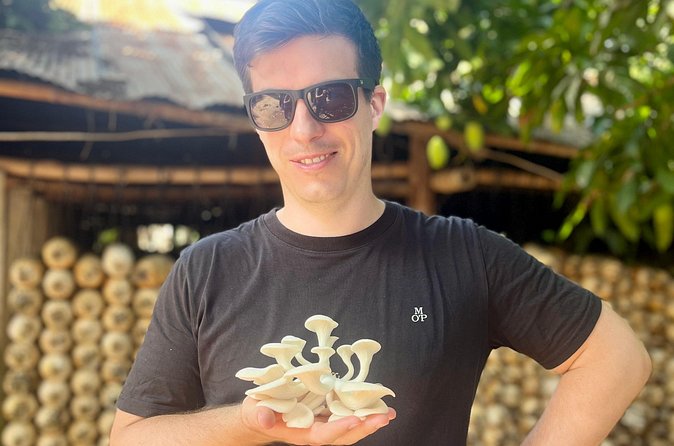
- Mushroom farming in rural Siem Reap
- A vegetable farm with a local focus
- Learning the old craft of rice wine
- A quiet Buddhist temple visit
- Riding through rice fields and villages
- What the $105 group price really buys
- Choosing morning or afternoon
- Who will enjoy this tour most
- Cancellation and weather considerations
- Should you book the Siem Reap countryside tour?
- FAQ
- How long does the rural countryside tour last?
- What time does the morning tour start?
- What time does the afternoon tour start?
- Is hotel pickup included?
- How many people can join the private tour?
- Who guides the tour?
- What food and drinks are included?
- Can I cancel for a full refund?
Key points at a glance
- Thanut Kean leads the tour: He is a Siem Reap local with clear English and a strong focus on local communities.
- Four rural stops tell different stories: You visit a mushroom farm, vegetable farm, rice wine operation, and Buddhist temple.
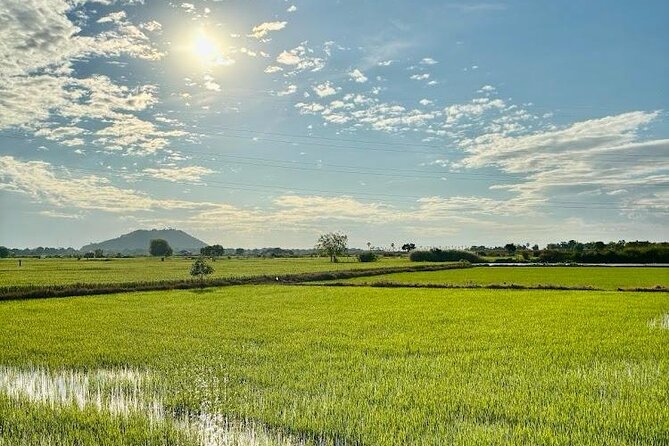
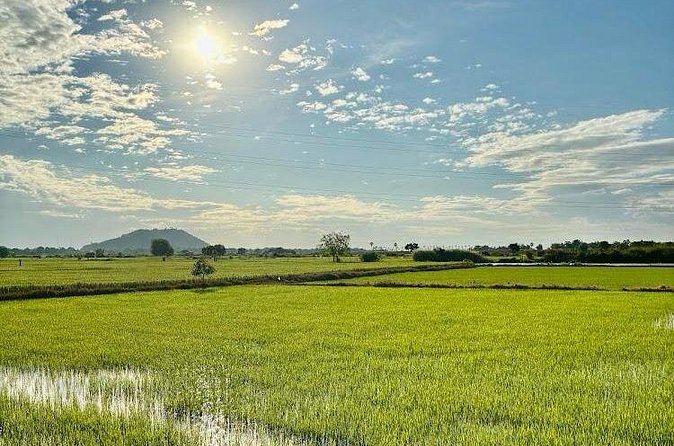
- The countryside ride is part of the experience: Expect rice fields, grazing cows, water buffalo, villages, and open views.
- Private transport keeps the pace personal: Hotel transfers are included, with no other group sharing the activity.
- Two time slots suit different plans: Choose morning from 8:30 am to 1:30 pm or evening from 2:30 pm to 7:30 pm.
- The price works best for a small group: At $105 for up to four people, the cost is much better when shared.
Leaving Siem Reap’s main tourist route
Siem Reap is best known for Angkor, but rural Cambodia begins quickly once you leave the busy hotel and market areas. This tour gives you a way to see that side of the region without arranging separate transport or guessing which villages and farms are appropriate to visit.
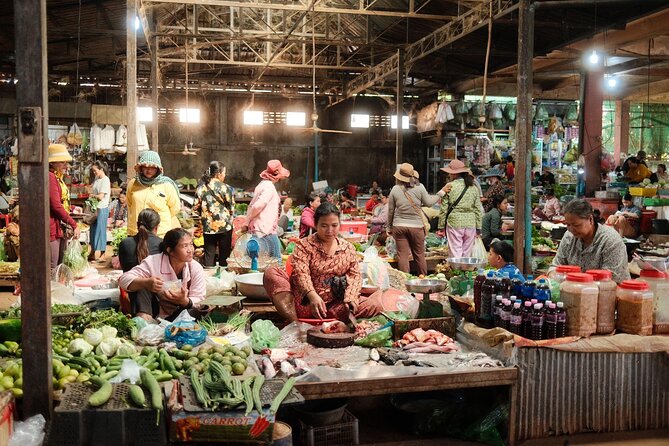
I like that the experience is built around working places rather than staged attractions. A mushroom farm, a vegetable plot, and a rice wine operation show how food and household income are connected to daily life.
You are not simply driven past the countryside. The stops give Thanut Kean a chance to explain what you are seeing, and the private setting lets you ask questions at your own pace. That matters if you want more than a series of photographs.
The tour lasts about four to five hours. That is long enough to make the trip feel substantial, but short enough to fit around other Siem Reap plans. You can book it in the morning or afternoon, depending on whether you want a cooler start or an evening finish.
The one limitation is that the tour does not include a meal. Snacks, local beer or other refreshments, fresh coconut, and drinking water are included, but you should not expect lunch or dinner to be part of the $105 price.
More countryside rides around Siem Reap:
- Sunset tour of Kampong Phluk stilts home village on the Tonle Sap
5.0 · 4,865 reviews - Tonle Sap Lake & Kampong Phluk Village Half-Day Tour
5.0 · 1,045 reviews - Siem Reap Countryside Bike Tour / E-Bike or Tuk Tuk
5.0 · 935 reviews
Thanut Kean’s role in the experience
A countryside tour depends heavily on the guide. Farms and rice fields can look pleasant but feel thin if nobody explains how the places fit into local life. Thanut Kean is described as a Siem Reap local who grew up in the area and speaks clear English.
That local connection is useful. You can ask about the places you pass, village life, farming, and the customs connected with the Buddhist temple. The available feedback also points to quick communication before the tour and a guide who speaks loudly and clearly enough to hear during the ride.
The strongest praise centers on Thanut’s personal approach. His tours focus on local communities, and his wider touring work has included farms, markets, villages, and time with people he knows in the area. That does not mean every booking includes an evening with his friends or a four-day itinerary, so you should judge this particular half-day tour by its stated stops.
For solo visitors, a private guide can be especially useful. You are not trying to keep up with a large group, and a photographer can ask for time at suitable points rather than rushing from one stop to the next. Couples and families of up to four also get a more relaxed setup.
Mushroom farming in rural Siem Reap
The first unusual stop is an enchanting mushroom farm. Mushroom cultivation is a good introduction to rural enterprise because it shows a form of food production that is easy to overlook when you think only of rice farming.
You can expect to see how fungi are cultivated and hear about the process from the guide. This is not a famous monument, and that is the point. It gives you a look at practical work that supports local households and supplies food.
I would approach this stop with curiosity rather than expecting a large attraction. Farm visits are valuable because they show real routines, but they may feel modest if you prefer grand scenery or formal presentations.
It is also a good place to ask questions. Since this is a private activity, you have a better chance to pause and clarify what you see instead of listening to a fixed speech designed for a coachload of people.
A vegetable farm with a local focus
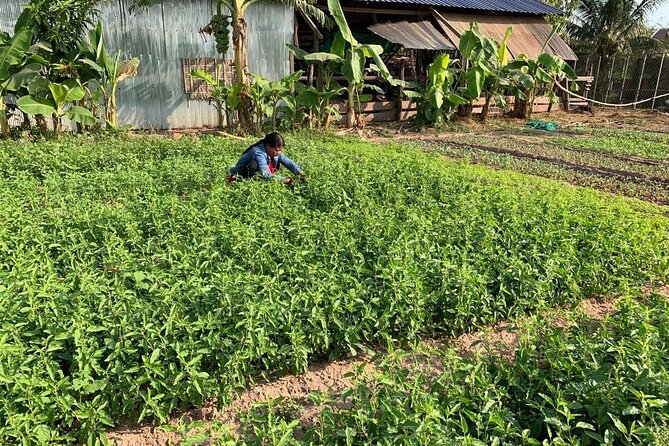
The vegetable farm brings a second angle on rural food production. You see fresh produce growing in the countryside and get a closer sense of how farming shapes the area around Siem Reap.
The two farm visits work well together. The mushroom operation shows one specialized form of cultivation, while the vegetable farm presents a more familiar source of daily food. I like this contrast because it keeps the tour from becoming a generic drive through fields.
The farm is also a useful reminder that the countryside is not just scenery. It is a working place. The rice fields, livestock, gardens, and small-scale food production all connect to local households and markets.
Do not book this outing expecting a hands-on farming class unless that is specifically arranged in advance. The supplied details promise visits and explanations, not a particular activity such as planting, harvesting, or cooking.
A different pace for your next Siem Reap morning:
- Angkor Wat Sunrise or Sunset Tour with Guide from Siem Reap
5.0 · 12,109 reviews - Siem Reap: Angkor Wat: Small-Group Sunrise or Sunset Tour
5.0 · 9,444 reviews - From Siem Reap: Kampong Phluk Floating Village Tour by Boat
4.9 · 6,979 reviews - Siem Reap: Angkor Wat 2-Day Tour with Sunrise and Sunset
4.9 · 4,429 reviews
Learning the old craft of rice wine
Rice wine distillation is one of the tour’s most distinctive stops. You learn how this traditional drink is made and sample the finished flavors.
This part adds a bit of sensory interest to the day. Instead of only looking at fields, you get a chance to understand a local process and taste something connected with Cambodian rural culture.
The stop should appeal to anyone interested in food, drink, and household traditions. It also gives Thanut a chance to explain how rice is used beyond the plate, linking farming to local production.
Sampling is included as part of the experience, but the tour does not promise a full tasting session or a meal. If you do not drink alcohol, confirm what alternatives are available before booking. Bottled water and snacks are included, so you will not be left without refreshments.
A quiet Buddhist temple visit
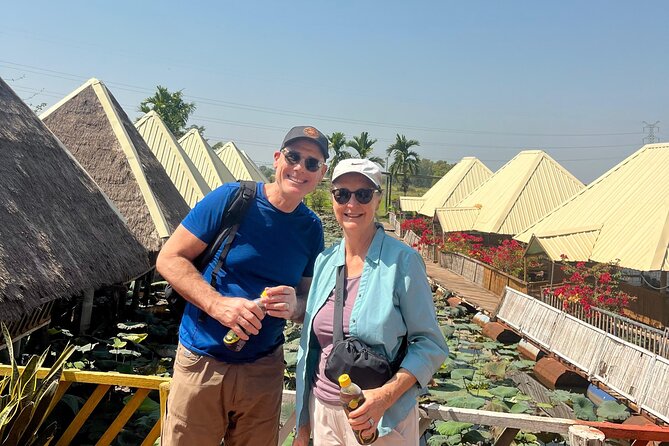
The Buddhist temple provides a change of pace. After the farms and distillery, the setting becomes more reflective and gives you a view of the spiritual side of the area.
You can connect with the religious character of the region while Thanut explains what the temple means locally. The stop is not presented as a major Angkor monument, and it should not be compared with the scale or decoration of the famous temple complex.
That difference is part of its value. You are seeing a place connected to present-day community life rather than visiting only monumental ruins. If you already plan to spend several days at Angkor, this adds a different cultural note to your schedule.
As with any Buddhist site, respectful behavior is sensible. The provided information does not specify a dress code or photography rules, so ask Thanut what is suitable when you arrive.
Riding through rice fields and villages
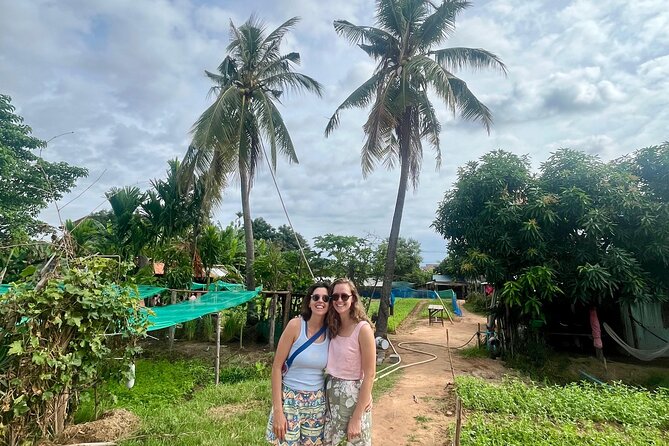
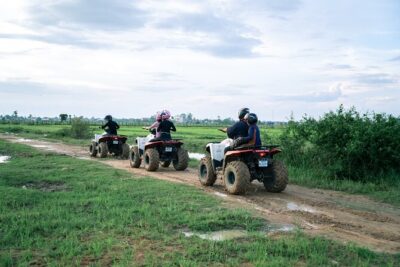
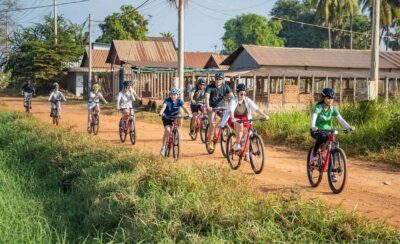
The journey between stops is not wasted transfer time. The route takes you through open rice fields, rural villages, and views of water buffalo and cows grazing.
The scenery changes with the time of day and weather, but both sessions offer something useful. The morning departure runs from 8:30 am to 1:30 pm. The afternoon option runs from 2:30 pm to 7:30 pm, giving you a chance to see the countryside later in the day.
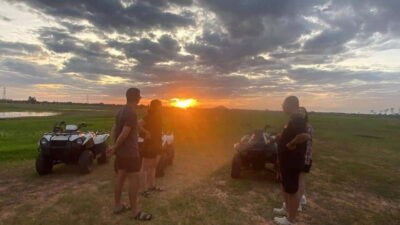
The evening schedule may suit you if you want to visit Angkor or other sights earlier. It also lets the tour finish around 7:30 pm, although the exact quality of the sunset is not promised. The morning option is better if you prefer to finish your countryside visit before the hottest part of the afternoon.
I would keep your camera ready, but avoid treating the villages as a display set up for visitors. The appeal is the chance to observe daily life respectfully, not to collect staged portraits. If photography is important to you, mention it to Thanut at the start so the pace can match your interests.
The road experience itself may be less polished than a city transfer. Rural routes can be uneven, and conditions may change with weather. The tour specifically requires good weather, so flexibility matters.
What the $105 group price really buys
The listed price is $105 per group of up to four people. For four, that works out to $26.25 each. For two people, it is $52.50 each. For a solo visitor, the full group price is the cost of the private outing.
That makes the tour strongest value for a couple or small group. You receive a private guide, round-trip hotel transfer, bottled water, snacks, local beer or refreshments, fresh coconut, and a cold towel. You are also paying for access to several rural stops without having to arrange separate transport.
The cost is less compelling for a solo visitor comparing it with a shared group excursion. Still, a private half-day with a local guide can be worth the difference if you care about questions, photography, or a flexible pace.
No meal is included. Build in money and time for food before or after the tour, particularly if you choose the morning session and finish around 1:30 pm, or the afternoon session and return around 7:30 pm.
Choosing morning or afternoon
The morning session runs from 8:30 am to 1:30 pm. It is the straightforward choice if you want the rest of the day free, and it avoids ending after sunset.
The afternoon session runs from 2:30 pm to 7:30 pm. Choose it if you want your morning open or prefer to see the countryside later in the day. The tour information does not guarantee sunset views, so treat the later schedule as a timing choice rather than a sunset tour.
Both options include hotel pickup and return transfer. Pickup is particularly helpful in Siem Reap because you do not need to locate a rural meeting point or negotiate transport for each stop.
The activity operates seven days a week during the stated operating period, from July 11, 2025, through February 24, 2027. Confirmation is provided at booking, and the tour is available as a mobile ticket.
Who will enjoy this tour most
I would recommend this experience to you if you want to understand Siem Reap beyond its major temples. It suits solo visitors, couples, families, and small groups who prefer local food production, villages, and countryside views to a packed monument schedule.
It is also a good match for photographers. The farms, rice fields, livestock, and village roads offer everyday scenes that differ from the usual temple photographs. Just remember that the tour is private, not a dedicated photography workshop.
This is less suitable if you want a formal historical tour, a full Cambodian cooking class, or a day built around major monuments. It is also not the right pick if you need a meal included or if your schedule cannot handle a weather-related change.
Most people can participate, and the tour is near public transport, though hotel pickup is offered. The information does not give details about wheelchair access, vehicle type, or specific mobility arrangements, so contact Thanut Tours before booking if those points matter to you.
Cancellation and weather considerations
You can cancel up to 24 hours before the start time for a full refund. Changes made within 24 hours are not accepted, and cancellations inside that period are not refunded.
Good weather is required. If poor weather causes the tour to be canceled, you will be offered another date or a full refund. The same applies if the minimum number of participants is not met, with the choice of a different date or experience, or a refund.
That policy is worth noting because rural roads and outdoor stops are central to the day. Keep some flexibility in your Siem Reap plans, especially during unsettled weather.
Should you book the Siem Reap countryside tour?
Book this tour if you want a personal look at rural Cambodia and value a local guide more than a long list of famous sights. Thanut Kean’s local background, clear English, and community-focused approach are the main reasons to choose it.
The price is fair for up to four people, thanks to private transport and included refreshments. It is less of a bargain alone, but the personal format may still suit you if you want to ask questions or take photographs without a large group.
Skip it if your priority is Angkor, included meals, or a tightly scheduled sightseeing program. For everyone else, this is a useful half-day counterpoint to temple touring, with enough variety to make the ride into the countryside worthwhile.
FAQ
How long does the rural countryside tour last?
The experience lasts approximately four to five hours.
What time does the morning tour start?
The morning session runs from 8:30 am to 1:30 pm.
What time does the afternoon tour start?
The afternoon session runs from 2:30 pm to 7:30 pm.
Is hotel pickup included?
Yes. Round-trip transfer from your hotel is included.
How many people can join the private tour?
The price covers one private group of up to four people. Only your group participates.
Who guides the tour?
The tour is led by Thanut Kean, an English-speaking local guide from Siem Reap.
What food and drinks are included?
Bottled drinking water, snacks, fresh coconuts, a cold towel, and local beer or snacks are included. A meal is not included.
Can I cancel for a full refund?
Yes. You must cancel at least 24 hours before the experience start time for a full refund. Cancellations within 24 hours are not refunded.
Fresh reviews from around Siem Reap
- Full-Day Tour Preah Vihea & Koh Ker Temple 3.7 · 3 reviews
- Savor the Countryside: Tours with Authentic Cooking Classes” 5.0 · 3 reviews
- Angkor Wat Sunrise TukTuk Tour 5.0 · 3 reviews
- Angkor Grand Circuit Tour & Banteay Srei 5.0 · 3 reviews
- Guided Private Tuk Tuk Tour Angkor Wat and Small Circle and Five Extras 5.0 · 3 reviews
- Siem Reap Temple Tour 2-Day with Sunrise/Sunset 3.7 · 3 reviews
- Bangkok to Angkor Wat 2 Days 1 Night by Flight 4.5 · 3 reviews
- Kompong Pluk Tour 5.0 · 3 reviews
Countryside & Village Tours, compared.
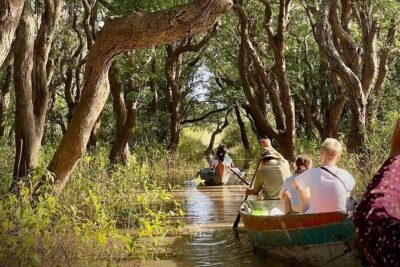
Sunset tour of Kampong Phluk stilts home village on the Tonle Sap
Read our review →
Browse the lists this tour appears in