
Reviewed · ANGKOR TEMPLE TOURS
Private Tours Angkor Wat For 3 Days
Angkor Wat at sunrise is only the opening scene. Over three days, this private tour takes you from the famous temple circuit to quieter ruins, pink sandstone carvings, an old Khmer pyramid, and the stilt houses of Kompong Phluk. The pace gives you room to see more than the usual one-day highlights.
I like the private vehicle and guide, which let you adjust the day instead of moving with a large group. I also like the human touch reported from the guiding team: Rain, Chek, Kheng, Sopheak, and Khan are praised for clear explanations, patience, cold drinks, refreshing towels, and help with changing plans.
The main drawback is cost clarity. The $240 price covers three days, a guide, transport, and bottled water, but not the temple pass, meals, personal spending, or some vehicle-related costs listed in the exclusions. Confirm the final price and pickup time before you go, especially since an 8:00 am start does not match a true sunrise departure.
In This Review
- Key points to know before booking
- A strong three-day introduction to Angkor
- Day one: sunrise, smiling faces, and jungle-covered stone
- Angkor Wat at sunrise
- Angkor Thom South Gate
- Bayon Temple
- Ta Prohm
- Day two: pink sandstone, water, pyramids, and sunset
- Banteay Srei
- Preah Khan
- Neak Pean
- Pre Rup
- Phnom Bakheng at sunset
- Day three: the earliest Khmer temples and Tonle Sap
- Bakong
- Preah Ko
- Kompong Phluk floating village
- Why the private format matters
- What $240 really buys you
- Packing and planning advice for three hot days
- Who should book this Angkor tour?
- FAQ
- Is the temple pass included in the $240 price?
- Does the tour include private transportation?
- Is the tour private?
- What time does the tour start?
- What should I wear and bring?
- Can I cancel for a full refund?
Key points to know before booking
- Sunrise at Angkor Wat begins the three-day plan, but you should confirm the actual pickup hour because the listed start time is 8:00 am.
- Private touring gives you flexibility, with only your own group taking part and room to request changes.
- The two temple days cover both famous and quieter sites, including Bayon, Ta Prohm, Banteay Srei, Preah Khan, Bakong, and Preah Ko.
- The guides are a major part of the value, with Rain, Chek, Kheng, Sopheak, and Khan praised for personal service and cultural explanations.
- Day three adds Tonle Sap, giving you a change from stone temples to stilt houses and lake life at Kompong Phluk.
- The $240 price excludes important extras, especially the temple pass, food, drinks, and personal expenses.
A strong three-day introduction to Angkor
This tour is designed for you if you want Angkor Wat to be more than a quick photo stop. The plan combines the best-known temples with smaller sites that help you understand how the Khmer religious complex developed across the Siem Reap area.
You receive an English-speaking guide, private transportation, and bottled water. Since the tour is private, you do not have to wait for a large group at every doorway. That matters at Angkor, where heat, long walks, early starts, and crowded viewing areas can wear you down.
The schedule is full but sensible in concept. Day one focuses on the classic Angkor circuit. Day two reaches farther out to Banteay Srei and adds a sunset stop. Day three visits the older Roluos temples before heading to a floating village.
The exact order may change. That is not a problem if your guide handles it well. The strongest part of a private tour is the ability to adjust the rhythm, linger at a carving, skip a rushed photo stop, or make room for a requested change.
More Angkor temple itineraries:
- Angkor Wat Sunrise or Sunset Tour with Guide from Siem Reap
5.0 · 12,109 reviews - Siem Reap: Angkor Wat: Small-Group Sunrise or Sunset Tour
5.0 · 9,444 reviews - Siem Reap: Angkor Wat 2-Day Tour with Sunrise and Sunset
4.9 · 4,429 reviews
Day one: sunrise, smiling faces, and jungle-covered stone
Angkor Wat at sunrise
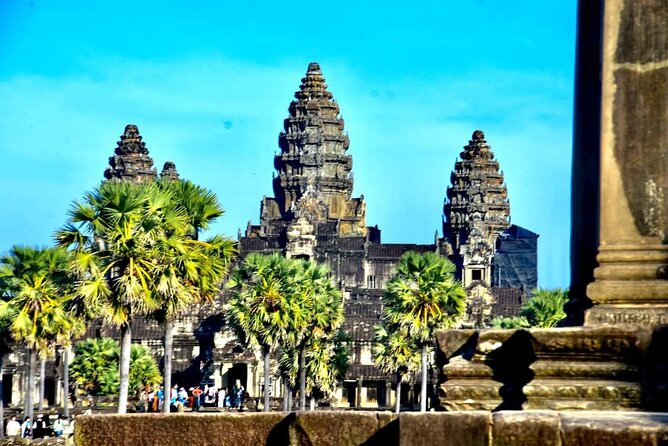
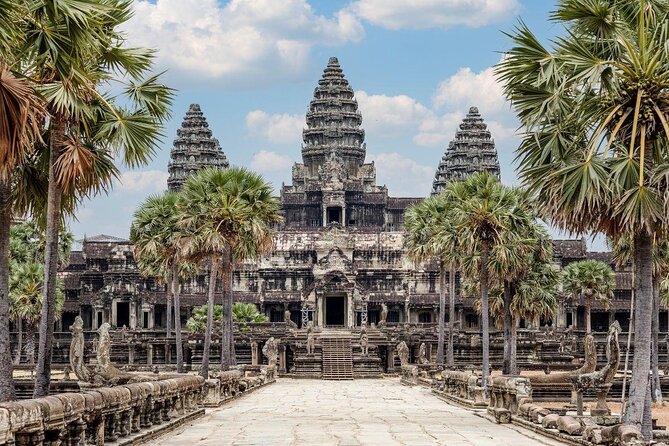
You begin with Angkor Wat, the enormous 12th-century temple complex that gives the area its name. The sunrise is the visual hook: the towers and reflection pool take on changing colors as morning light reaches the stone.
The planned visit allows about two hours, which is enough for an introduction but not enough to inspect every gallery closely. Angkor Wat is vast. You will cross courtyards, climb toward upper levels, and see long bas-reliefs filled with scenes from Khmer mythology and royal power.
The practical issue is timing. The listed start time is 8:00 am, while sunrise requires an earlier departure. Ask the operator to confirm the pickup time before booking or at confirmation. Also remember that the admission ticket is not included, so you must budget separately for the temple pass.
Angkor Thom South Gate
The South Gate is one of the easiest places to understand the scale of Angkor Thom. A causeway crosses the moat, lined with large stone figures holding a serpent. It is a quick stop in the schedule, but it gives you a fine first look at the old city walls and ceremonial approach.
The gate can be crowded, particularly when tour vehicles arrive together. A private guide may help you wait for a clearer view, but no schedule can remove the crowds entirely.
Other Siem Reap experiences to weigh up
- From Siem Reap: Angkor Wat and Floating Village 3-Day Trip
5.0 · 100 reviews - 3-Day Angkor Wat with All Interesting Major Temples, Banteay Srei & Beng Mealea
5.0 · 70 reviews - 3-Day Angkor Wat & All Interesting Major Temples & Kulen Mount Waterfall
5.0 · 63 reviews - 3 Days Siem Reap Explorer – Small Group
5.0 · 50 reviews
Bayon Temple
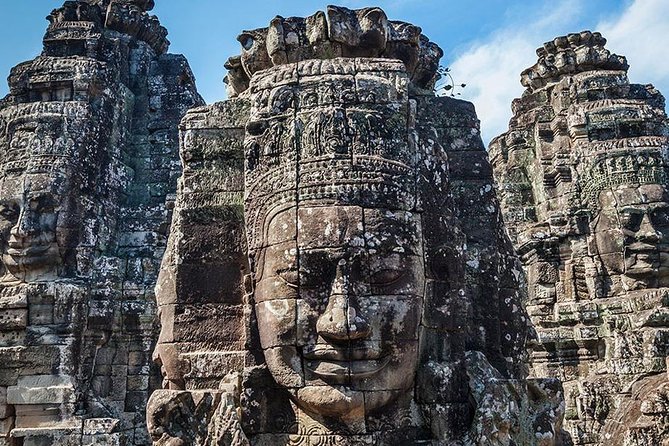
Bayon is the emotional center of Angkor Thom for many people. Its towers carry the calm, broad faces associated with the temple, creating an unusual sense of being watched over from every direction.
The plan gives Bayon about an hour, plus a separate 30-minute listing connected to the South Gate. In practice, allow enough time to study both the faces and the lower reliefs. The carvings show court life, battles, markets, animals, and ordinary scenes, giving you more than a royal monument.
This is where a good guide earns the fee. Without context, Bayon can feel like a maze of stone faces. With clear explanations, you begin to see how the temple worked as both a sacred place and a statement of power.
Ta Prohm
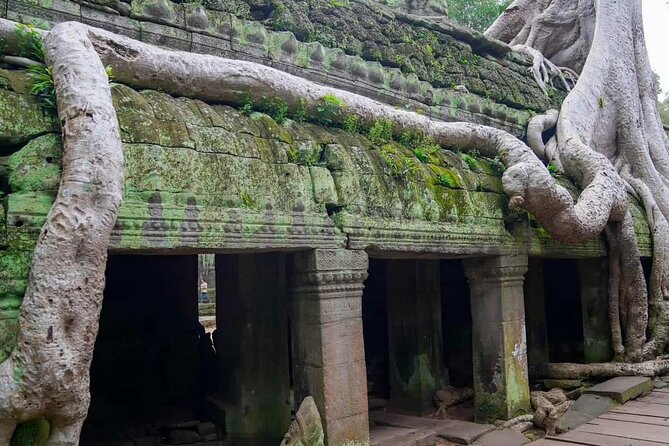
Ta Prohm is the temple most visitors associate with jungle roots and the film Tomb Raider. Trees push over walls and doorways, making the ruins feel less restored and more exposed to time.
You have about an hour here. That is enough to see the best-known areas, though the narrow passages can slow you down. Ta Prohm is popular, so expect people around the famous root-covered sections.
I like the contrast between Ta Prohm and Angkor Wat. Angkor Wat feels ordered and monumental. Ta Prohm feels broken, shaded, and intimate. Seeing both on the same day helps you appreciate the range of Angkor architecture rather than treating every temple as another pile of stones.
Day two: pink sandstone, water, pyramids, and sunset
Banteay Srei
Banteay Srei is one of the finest stops on the entire plan. Its pink sandstone is carved with remarkable precision, and the decoration is smaller and more delicate than at the giant central temples.
The temple is far enough from the main Angkor group to require extra driving, but that distance is part of its appeal. You trade some of the central crowds for a more compact site where the carvings are easy to study.
The scheduled visit lasts about an hour. Bring your camera, but do not rush. The best reason to come is not simply the color of the stone. It is the fine detail around the doorways, lintels, and figures.
Preah Khan
Preah Khan is a large, atmospheric temple with long corridors and a mix of collapsed and standing sections. It gives you a sense of how extensive the Angkor religious city was beyond the famous core.
The combined time for Preah Khan, Neak Pean, and Pre Rup is listed as two hours, followed by separate time blocks for the latter two. The day therefore needs sensible driving and pacing. Ask your guide how long you will spend inside each site.
Preah Khan rewards patient walking. It can feel less polished than Angkor Wat, but that is part of its character. You will see carved doorways, narrow passages, and traces of different religious traditions.
Neak Pean
Neak Pean is a small temple set on an island in a water system. The approach across the raised walkway gives you a good view of the surrounding water and vegetation.
The temple itself is not large, so the attraction is the setting and the idea behind the site. Water played an important religious and practical role in Angkor, and Neak Pean helps you see that connection.
Do not expect another Angkor Wat. This is a short, scenic stop that breaks up the larger temple visits. The path may feel exposed in strong sun, so sunscreen and water matter.
Pre Rup
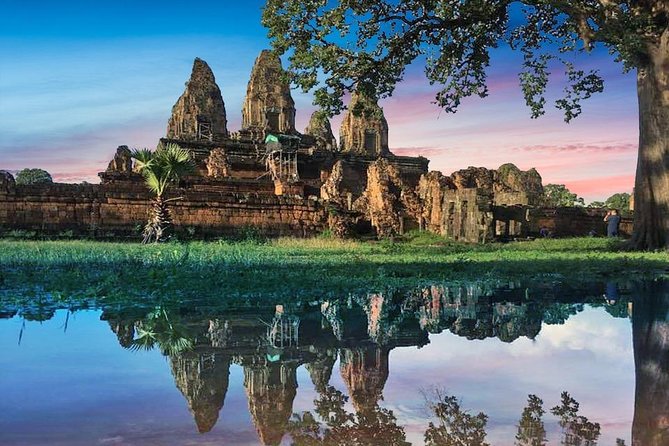
Pre Rup is a brick and laterite pyramid dedicated to Shiva. Its upper levels offer broad views over the surrounding countryside, making it a useful place to see how the temples rise above the flatter terrain.
The steps are steep. Comfortable shoes are not just a polite suggestion here. If you are uneasy on high stairways, tell your guide and take your time.
Pre Rup works well after the lower, corridor-filled temples. You get a more direct sense of the pyramid form and the way Khmer builders used height to create a connection between earth and heaven.
Phnom Bakheng at sunset
The day ends at Phnom Bakheng, a hilltop temple used for sunset views. The schedule allows two hours, which gives you time for the climb and for waiting at the top.
Sunset stops are weather dependent and can become crowded. The view is the main draw, not detailed temple carving. If clouds block the sun, the hill and elevated setting still provide a different angle on the Angkor area, but the timing can feel less rewarding.
Your guide can help with the practical side, including when to leave the vehicle and how much walking remains. Bring water, wear shoes with a firm grip, and avoid treating the sunset stop as a guaranteed spectacle.
Day three: the earliest Khmer temples and Tonle Sap
Bakong
Bakong is one of the oldest temples in the Angkor group and an important stop for understanding the early form of Khmer temple mountains. Its broad pyramid shape feels more direct and less intricate than later monuments.
You have about an hour here. That is enough to walk around the main structure and hear how early Khmer builders established designs that later became more elaborate.
Bakong also provides a welcome change of mood. After two days of famous sites, you may appreciate the quieter setting and the chance to look without constantly searching for a clear photo.
Preah Ko
Preah Ko is another early temple, known for its peaceful atmosphere and carved towers. It is smaller than Angkor Wat and less demanding than the larger complexes, so it works well on the final temple morning.
The one-hour visit lets you focus on the tower details and the layout. I would ask your guide to explain how Preah Ko and Bakong fit together historically, since the two sites are best understood as a pair rather than isolated monuments.
Kompong Phluk floating village
The final major stop takes you away from temple stone and toward Tonle Sap lake life. At Kompong Phluk, you see houses raised on tall stilts and views across the lake area.
The visit lasts about two hours. This is valuable because it adds present-day Cambodia to a tour otherwise centered on ancient monuments. You get a clearer sense of how communities adapt to seasonal water levels and life around the lake.
The description promises a floating village visit, but it does not specify every boat arrangement or seasonal condition. Ask what is operating on your date. Water levels and weather can affect the appearance of the village, so keep your expectations flexible.
Some versions of a three-day plan may include other countryside sights, waterfalls, or mountain views. The published schedule here specifies Bakong, Preah Ko, and Kompong Phluk, so confirm any extra stops rather than assuming they are included.
Why the private format matters
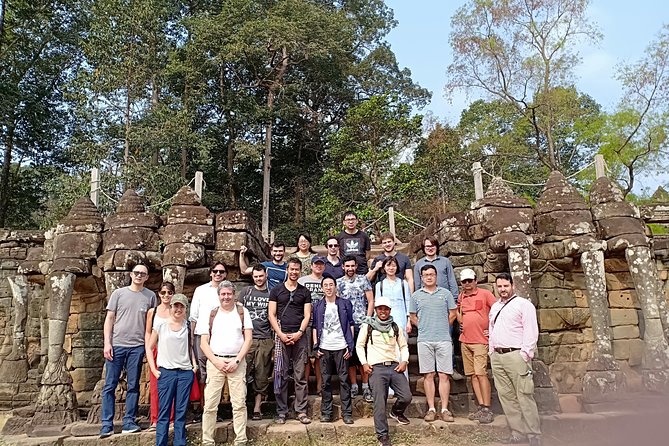
A private tour changes the experience in small but useful ways. You can ask a question when something catches your eye. You can request a slower pace at Banteay Srei, more time at a favorite temple, or a break when the heat becomes tiring.
The guiding team is a key part of this format. Rain is described as professional, friendly, flexible, and attentive to timing. Chek is praised for cultural explanations and a strong command of the sites. Kheng is noted for a pleasant manner and care with children. Drivers Sopheak and Khan are praised for clean vehicles, punctuality, patience, and small comforts such as cold drinks, towels, and snacks.
Confirm who will guide and drive your group. The names above come from the service team, but your assigned staff may differ. The important question is not only who holds the guide license. You want someone who explains the carvings, manages heat and crowds, and listens when you need a change.
What $240 really buys you
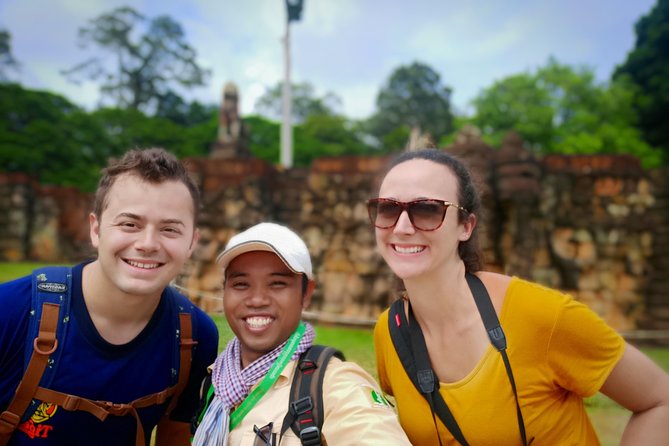
At $240 for three days, the tour can be good value for a private group, especially if two or more people share the cost. You receive a private guide, private transportation, and bottled water across a broad area around Siem Reap.
The price does not include the temple pass, meals, dinner, drinks, or personal expenses. Food is not listed as part of the daily service, so plan for lunch and dinner separately. The exclusions also mention the car, despite private transportation being included, which is a reason to request a written clarification.
The value is strongest if you want interpretation rather than simple transport. Hiring separate tuk-tuks or drivers may cost less, but you would need to arrange explanations, route planning, and timing on your own. This tour’s value depends heavily on the quality of your guide.
Packing and planning advice for three hot days
Wear comfortable shoes with good grip. You will walk across uneven stone, climb temple steps, and use paths that may be dusty or exposed.
Pack sunscreen, light clothing that meets temple dress expectations, and a hat. The additional information asks for proper uniform, so dress respectfully for religious sites rather than relying on beachwear.
Carry some cash for meals and personal expenses, though the tour supplies bottled water. A mobile ticket is offered, and confirmation is received at booking. Pickup is available, the meeting point is listed at 9V7C+4G8 in Siem Reap, and the tour ends back there.
Free cancellation is available if you cancel at least 24 hours before the start time. Poor weather may lead to a new date or a full refund, but the experience requires suitable weather.
Who should book this Angkor tour?
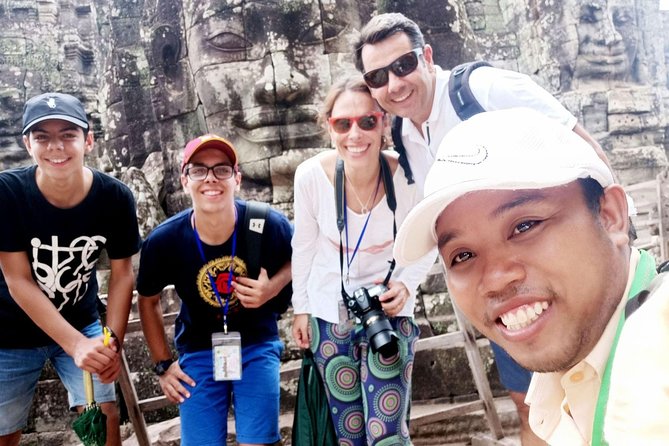
I would choose this tour for a couple, family, or small private group that wants three full days of temples without handling every detail alone. It suits you especially well if you value explanations, flexible timing, and a mix of major monuments and quieter places.
It is less suitable if you want a cheap transport-only visit, dislike early starts, or prefer a loose schedule with long unplanned breaks. The plan covers a lot, and some days will feel warm and busy.
Before paying, confirm three things: the sunrise pickup hour, exactly what vehicle is supplied, and the total cost after the temple pass and meals are added. If those details are clear, the combination of Angkor’s major sights, early temples, sunset, and Tonle Sap makes this a well-rounded three-day choice.
FAQ
Is the temple pass included in the $240 price?
No. The temple pass is not included. Food, drinks, dinner, lunch, personal expenses, and some vehicle-related costs are also excluded.
Does the tour include private transportation?
Yes. Private transportation and bottled water are included. The exclusions also mention the car, so you should confirm the exact vehicle arrangement and final price before booking.
Is the tour private?
Yes. Only your group participates in the activity.
What time does the tour start?
The listed start time is 8:00 am at 9V7C+4G8 in Siem Reap. Since day one includes sunrise at Angkor Wat, confirm the actual pickup time before the tour.
What should I wear and bring?
Comfortable shoes, sunscreen, and proper clothing for temple visits are recommended. You should also plan for food and drinks, which are not included.
Can I cancel for a full refund?
Yes, if you cancel at least 24 hours before the experience start time. Cancellations or changes made less than 24 hours in advance are not refunded, and poor weather may result in a different date or full refund.
Fresh reviews from around Siem Reap
- Full-Day Tour Preah Vihea & Koh Ker Temple 3.7 · 3 reviews
- Savor the Countryside: Tours with Authentic Cooking Classes” 5.0 · 3 reviews
- Angkor Wat Sunrise TukTuk Tour 5.0 · 3 reviews
- Angkor Grand Circuit Tour & Banteay Srei 5.0 · 3 reviews
- Guided Private Tuk Tuk Tour Angkor Wat and Small Circle and Five Extras 5.0 · 3 reviews
- Siem Reap Temple Tour 2-Day with Sunrise/Sunset 3.7 · 3 reviews
- Bangkok to Angkor Wat 2 Days 1 Night by Flight 4.5 · 3 reviews
- Siem Reap: Prek Toal Tonle Sap Biosphere Reserve Tour 3.1 · 3 reviews
Angkor Temple Tours, compared.

Angkor Wat Sunrise or Sunset Tour with Guide from Siem Reap
Read our review →



Angkor Wat Sunrise tour with Small – Group and Guide tours
Read our review →
Angkor Wat Highlights and Sunrise Guided Tour from Siem Reap
Read our review →

Full-Day Angkor Wat Sunrise Private Tour with Guide from Siem Reap
Read our review →Browse the lists this tour appears in