
Reviewed · ANGKOR TEMPLE TOURS
Phnom Bakheng Sunset Tour, Pre Rup, Neak Pean, Preah Khan
Phnom Bakheng gives this afternoon tour its big finish: after several quieter temple stops, you climb about 200 steps for sunset from one of Angkor’s oldest temple mountains. The route also takes you to Pre Rup, Neak Pean, and Preah Khan, so you get four very different views of Khmer architecture in one outing.
I like the thoughtful mix of sites, especially the contrast between Pre Rup’s brick temple mountain and Preah Khan’s long, crumbling corridors. I also like the human touch: guide Son is praised for clear English, safe driving arrangements, and useful explanations of both Hinduism and Buddhism.
The main catch is the Phnom Bakheng climb. Two hundred steps and a late-day hill walk may not suit pregnant visitors or anyone who finds steep temple stairs difficult. The $55 price also excludes the $37 temple ticket, so plan on a total of $92 per person before any personal spending.
In This Review
- Key points at a glance
- Four temples, four different moods
- Pre Rup and the power of a temple mountain
- Neak Pean, a shrine surrounded by water
- Preah Khan and the temple reclaimed by trees
- Phnom Bakheng sunset and the final climb
- What Son adds to the experience
- Tuk tuk or air-conditioned vehicle?
- The real cost of the afternoon
- Who should book this temple route?
- Should you book the Phnom Bakheng Sunset Tour?
- FAQ
- How much does the Phnom Bakheng Sunset Tour cost?
- How long does the tour last?
- Which temples are included?
- Is hotel pickup included?
- What language does the guide speak?
- What type of transport is used?
- Is food included?
- How difficult is the Phnom Bakheng climb?
- Can I cancel the booking?
Key points at a glance
- Four distinct Angkor stops: See a ninth-century temple mountain, a tenth-century state temple, a water temple on an artificial island, and a large royal temple complex.
- Sunset requires a climb: You will walk up about 200 steps to reach the top of Phnom Bakheng.
- Guide Son is a strong asset: He explains Hinduism and Buddhism in clear English and offers practical advice during the visit.
- A useful afternoon schedule: Hotel pickup begins at 12:30 pm, with a return to Siem Reap expected around 7:30 pm.
- Transport depends on group size: One to three people travel by shared tuk tuk, while groups of four or more use an air-conditioned vehicle.
- Budget beyond the tour price: The $55 fee includes transport, guide service, snacks, and water, but not the $37 temple ticket.
Four temples, four different moods
This is not a quick run through four similar ruins. Each stop has its own shape and feel, which makes the route work well for anyone who wants more than the standard Angkor circuit.
You begin with Pre Rup, move to Neak Pean, continue to Preah Khan, and finish at Phnom Bakheng. The order matters. The first three temples give you time to look closely and listen to your guide. The final climb shifts the focus from stonework to open views and evening light.
I would choose this trip if you have already seen Angkor Wat or want a fuller afternoon away from the most familiar route. It also suits families who can manage stairs, since the itinerary includes variety and guide Son has been especially good at keeping children interested.
More Angkor temple itineraries:
- Angkor Wat Sunrise or Sunset Tour with Guide from Siem Reap
5.0 · 12,109 reviews - Siem Reap: Angkor Wat: Small-Group Sunrise or Sunset Tour
5.0 · 9,444 reviews - Siem Reap: Angkor Wat 2-Day Tour with Sunrise and Sunset
4.9 · 4,429 reviews
Pre Rup and the power of a temple mountain
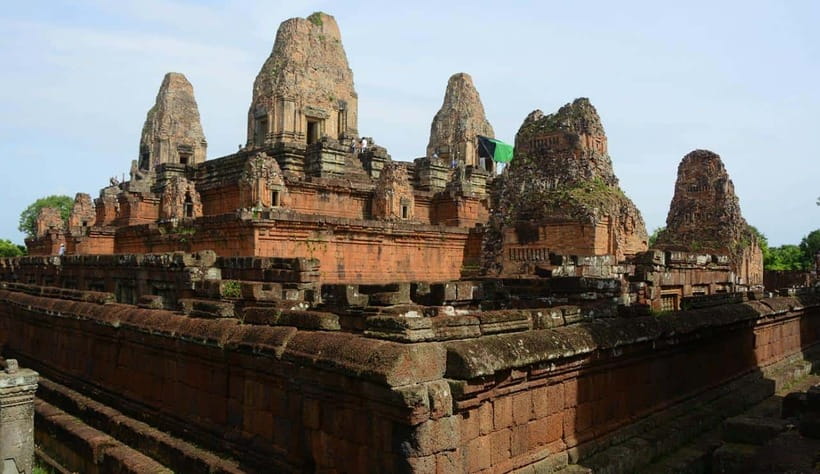
Pre Rup was built in 961 or early 962 during the reign of King Rajendravarman. It served as his state temple and was dedicated to Hindu worship, giving you an early example of the Khmer preference for building sacred structures upward in the form of a temple mountain.
The temple combines brick, laterite, and sandstone. That mixture gives Pre Rup a different look from the later, more elaborate monuments at Angkor. You can pay attention to the warm brick towers, the broad stepped platform, and the way the structure rises in levels toward its central sanctuary.
This is a good first stop because the layout is easy to understand. Your guide can explain how the climb toward the upper level reflected a movement toward the divine. I find that sort of context useful here, since the temple’s design makes more sense when you know it was not simply a royal building but a place tied to Hindu belief and kingship.
You should expect stairs and uneven stone underfoot. The climb at Pre Rup is not described as the main physical test of the day, but comfortable shoes still matter. Take your time, especially if you are saving energy for Phnom Bakheng.
Neak Pean, a shrine surrounded by water
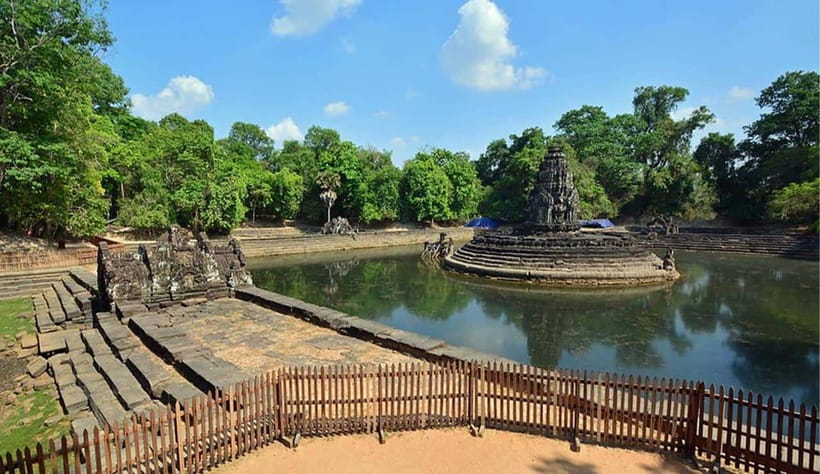
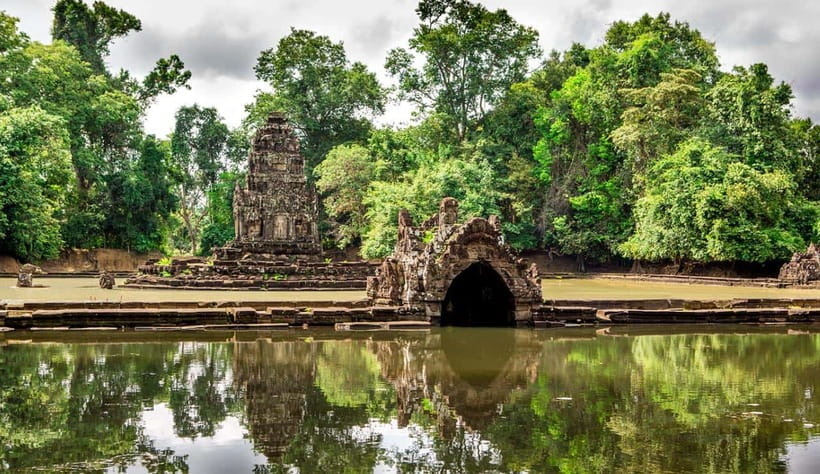
Neak Pean changes the pace. Instead of a broad temple mountain, you reach an artificial island with a Hindu temple in the middle of Jayatataka Baray, a large reservoir built in the 12th century.
The approach over the water helps make this stop feel different from the others. You are not simply walking into another enclosed temple compound. The setting draws attention to the relationship between the shrine and the reservoir around it.
Neak Pean is a place where your guide’s explanation adds real value. Without some context, the small central temple and its island setting may seem less imposing than Pre Rup or Preah Khan. With an explanation of its religious purpose and water setting, the site becomes easier to read.
Do not expect Neak Pean to be the biggest or most dramatic stop. Its appeal is in the design and the change of scenery. I like it as a middle stop because it breaks up the heavier stonework and gives you a quieter point of comparison.
Preah Khan and the temple reclaimed by trees
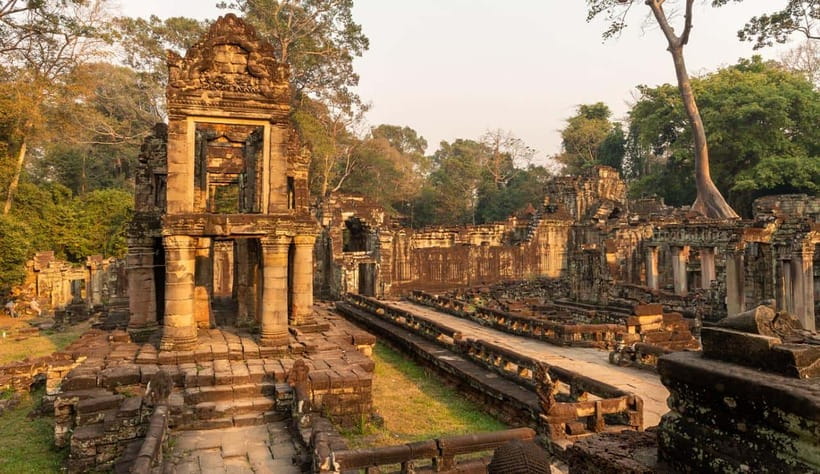
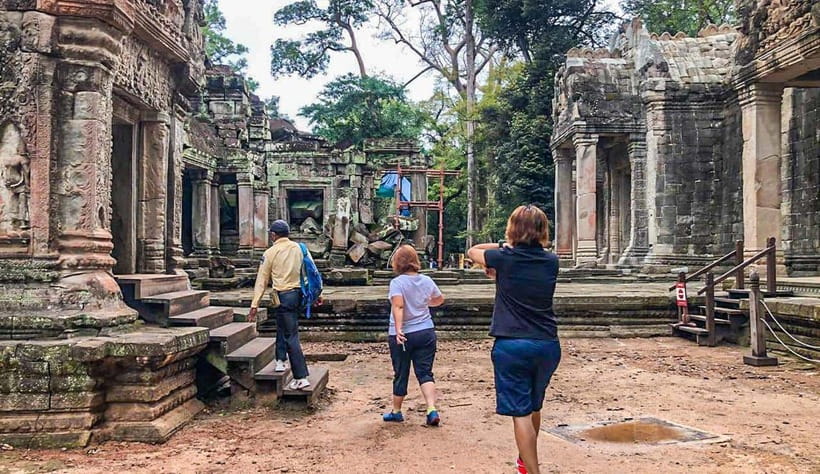
Preah Khan is the largest temple on this route. King Jayavarman VII built it to honor his father, and it lies northeast of Angkor Thom.
This is the stop where you get the strongest sense of a large royal complex. Long passages, courtyards, towers, and carved stone create a more involved visit than the compact plan at Neak Pean. You can spend time noticing how the building unfolds from one section to the next.
The most memorable detail is the meeting of tree roots and crumbling stone. Nature has not erased the temple, but it has become part of how you see it. Roots press against walls and frame sections of the ruins, creating the kind of scene that explains why Preah Khan often stays in people’s memories.
I would give this stop your full attention rather than treating it as a quick photo break. Ask Son about the blend of Hindu and Buddhist ideas, especially because the temple belongs to the reign of Jayavarman VII, whose religious building program shaped much of Angkor.
The size can also be tiring. After Pre Rup and Neak Pean, you may feel ready for a rest, and Preah Khan asks you to keep walking. The reward is a stronger sense of scale and a better chance to see how a major temple complex was organized.
Other Siem Reap experiences to weigh up
- Sunset tour of Kampong Phluk stilts home village on the Tonle Sap
5.0 · 4,865 reviews - Siem Reap: Full-Day Angkor Wat Guided Tour with Sunset
4.9 · 3,803 reviews - Angkor Wat Sunset Small Group Tour with Lunch Included
5.0 · 3,059 reviews - Angkor 2-Day Sunset & Sunrise Small-Group Tour
5.0 · 2,567 reviews
Phnom Bakheng sunset and the final climb
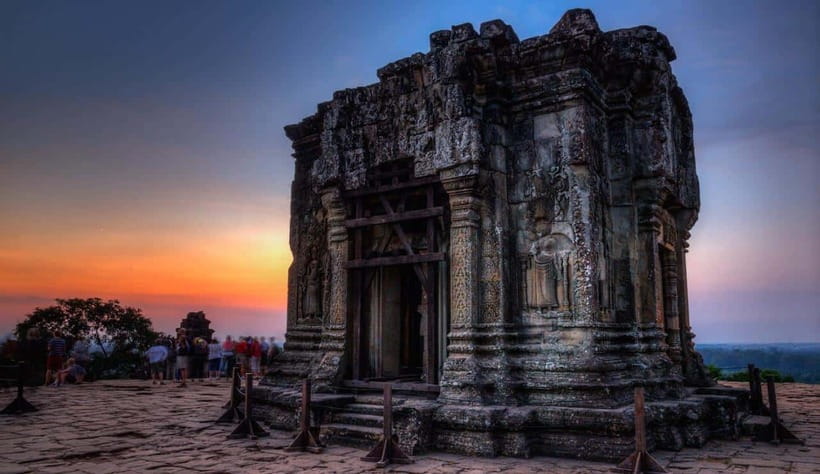
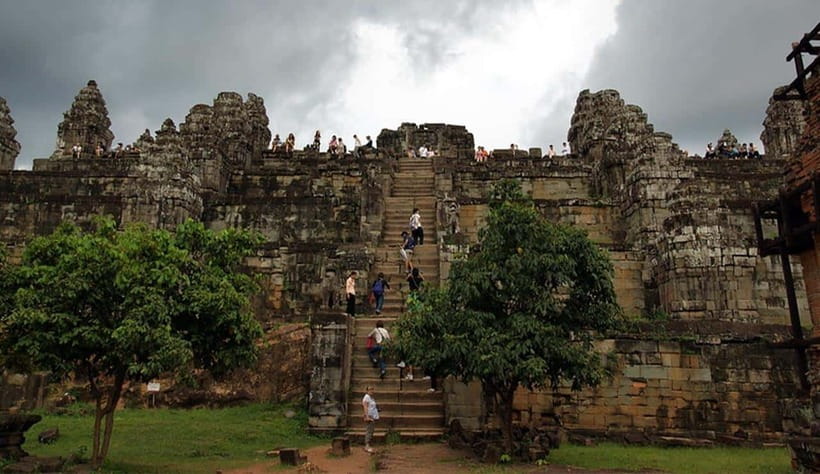
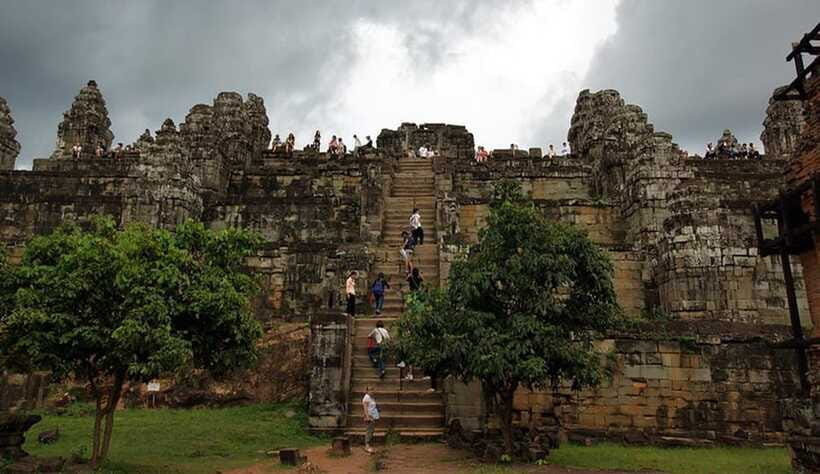
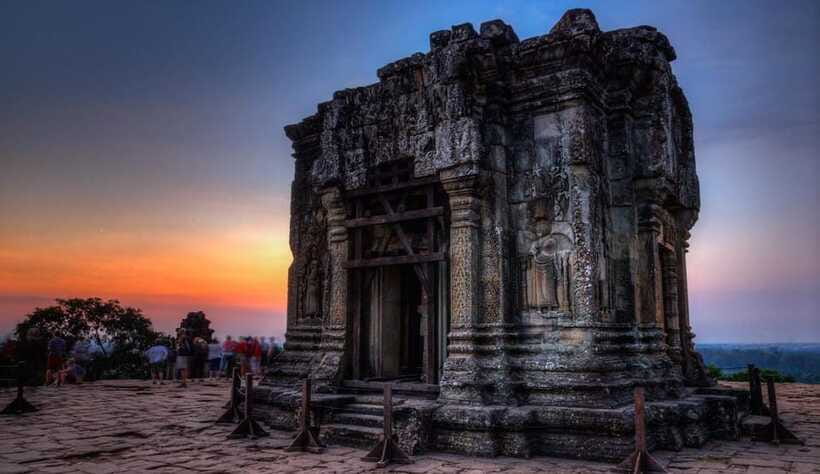
Phnom Bakheng is a Hindu temple mountain dedicated to Shiva. It was built at the end of the ninth century during the reign of King Yasovarman.
The sunset visit is the emotional high point of the day, but it is also the part you should judge most carefully before booking. You will climb about 200 steps to reach the top of the hill. The effort is manageable for many visitors, but the stairs and timing make this more demanding than a flat temple walk.
Wear shoes with a firm grip and keep some water for the climb. Water is supplied as part of the tour, but you still need to pace yourself. The tour includes local snacks as well, which is useful during an afternoon that stretches into the evening, though lunch is not included.
At the top, the attraction is the open sunset view and the old temple setting. After spending the afternoon among enclosed corridors and towers, the wider outlook gives the day a clear finish. The sunset will vary with weather and season, so you should treat it as a worthwhile viewpoint rather than a guaranteed perfect sky.
Pregnant women should not book this activity, according to the tour information. If stairs are a concern for you, Phnom Bakheng is the key issue to consider. The tour does not offer an alternative final stop in the information provided.
What Son adds to the experience
A temple route like this depends heavily on the guide. Stone alone can blur together after several hours, especially when many temples share religious symbols, royal connections, and repeated architectural forms.
Son is the named guide associated with this experience, and his strengths are clear: professional conduct, strong English, kindness, and practical advice. He also explains Hinduism and Buddhism, which helps you understand why the temples differ and why certain symbols appear across the Angkor sites.
That matters most at Pre Rup and Neak Pean. Their importance is not always obvious at first glance, while a good explanation connects the design to royal power, religious practice, and water. At Preah Khan, a guide can also help you see more than the famous roots and broken walls.
The available feedback also points to a friendly driver who drives carefully and helps with the group. That is a small but important part of an afternoon temple tour. You spend time moving between sites, and safe, calm transport makes the day easier.
Tuk tuk or air-conditioned vehicle?
Transport is based on group size. One to three people use a shared tuk tuk, while groups of four or more use an air-conditioned vehicle.
A tuk tuk gives you an open-air ride and a closer feel for the road between temples. It can also be more exposed to heat and dust. The air-conditioned option should be more comfortable for larger groups, particularly after walking through several temple compounds.
Hotel pickup and drop-off are included. You should wait in your hotel lobby 15 minutes before the scheduled pickup time, with the meeting time listed as 12:30 pm.
The advertised duration is six hours, while the schedule says you should return to Siem Reap around 7:30 pm. That means you should set aside most of the afternoon and early evening, including transfers and the sunset stop. It is not a short excursion you can fit between other fixed plans.
The real cost of the afternoon
The tour costs $55 per person. That covers hotel transport, an English-speaking guide, local snacks, cold water, and the vehicle arrangement.
The temple ticket costs an additional $37 per day. Your practical total is therefore $92 per person if you do not already have the required pass. Lunch is also excluded, so eat before pickup or plan to handle food separately.
At first glance, $55 may look high for shared transport. The value comes from the guide, hotel service, and the amount of ground covered. Four temples are spread across different parts of the Angkor area, and arranging the route yourself would still require transport and planning.
The value is strongest if you want explanations rather than only a driver. Son’s language skills and his ability to discuss Hinduism and Buddhism are important parts of what you are paying for. If you only want transport between ruins, a less guided option might cost less, but it would not provide the same level of interpretation.
Who should book this temple route?
I would recommend this tour to you if you want a varied Angkor afternoon with a planned sunset finish. It is especially suitable if you appreciate temple design, religious context, and the contrast between restored-looking structures and ruins shaped by tree growth.
Families may like the mix of stops and the guide’s friendly approach. The itinerary is varied enough to keep the day from feeling repetitive, and the sunset adds a clear goal for children who may tire of temple details.
You should also consider it if you have limited time in Siem Reap. The route covers four important sites in one organized outing, though you will not have the slow, unhurried pace of a full-day visit focused on one or two temples.
I would hesitate if you dislike stairs, have limited mobility, are pregnant, or want a relaxed evening with no fixed schedule. Phnom Bakheng is not a minor add-on. It is the final physical demand and the reason the tour ends after sunset.
Should you book the Phnom Bakheng Sunset Tour?
Book it if you want a well-rounded afternoon that moves beyond the most familiar Angkor stops. Pre Rup gives you early Khmer temple architecture, Neak Pean offers an unusual water setting, Preah Khan brings the strongest tree-and-ruin atmosphere, and Phnom Bakheng closes the day with a climb and sunset.
The best reason to choose it is the combination of route and guide. Son’s clear English, religious insight, and practical manner can turn four separate ruins into a connected story.
Before paying, add the $37 temple ticket to the $55 tour price, confirm that the 200-step climb suits you, and keep the evening free until about 7:30 pm. If those points work for you, this is a sensible and varied way to spend an Angkor afternoon.
FAQ
How much does the Phnom Bakheng Sunset Tour cost?
The tour costs $55 per person. The $37 temple ticket is not included, and lunch is also excluded.
How long does the tour last?
The activity is listed as six hours. Pickup begins at 12:30 pm, and the expected return to Siem Reap is around 7:30 pm.
Which temples are included?
The route includes Pre Rup, Neak Pean, Preah Khan, and Phnom Bakheng for sunset.
Is hotel pickup included?
Yes. Hotel pickup and drop-off are included. You should wait in the hotel lobby 15 minutes before the scheduled pickup time.
What language does the guide speak?
The live tour guide speaks English. Son is the named guide associated with the experience.
What type of transport is used?
One to three people travel by shared tuk tuk. Groups of four or more use an air-conditioned vehicle.
Is food included?
Local snacks and cold water are included. Lunch is not included.
How difficult is the Phnom Bakheng climb?
You will climb about 200 steps to reach the top of Phnom Bakheng. The tour information says the activity is not suitable for pregnant women.
Can I cancel the booking?
You can cancel up to 24 hours in advance for a full refund. The reserve-now, pay-later option lets you hold a place without paying at the time of booking.
Fresh reviews from around Siem Reap
- Full-Day Tour Preah Vihea & Koh Ker Temple 3.7 · 3 reviews
- Savor the Countryside: Tours with Authentic Cooking Classes” 5.0 · 3 reviews
- Angkor Wat Sunrise TukTuk Tour 5.0 · 3 reviews
- Angkor Grand Circuit Tour & Banteay Srei 5.0 · 3 reviews
- Guided Private Tuk Tuk Tour Angkor Wat and Small Circle and Five Extras 5.0 · 3 reviews
- Siem Reap Temple Tour 2-Day with Sunrise/Sunset 3.7 · 3 reviews
- Bangkok to Angkor Wat 2 Days 1 Night by Flight 4.5 · 3 reviews
- Kompong Pluk Tour 5.0 · 3 reviews
Angkor Temple Tours, compared.

Angkor Wat Sunrise or Sunset Tour with Guide from Siem Reap
Read our review →



Angkor Wat Sunrise tour with Small – Group and Guide tours
Read our review →
Angkor Wat Highlights and Sunrise Guided Tour from Siem Reap
Read our review →

Full-Day Angkor Wat Sunrise Private Tour with Guide from Siem Reap
Read our review →Browse the lists this tour appears in