
Reviewed · FLOATING VILLAGE TOURS
Kompong Phluk Floating Village Tour from Siem Reap
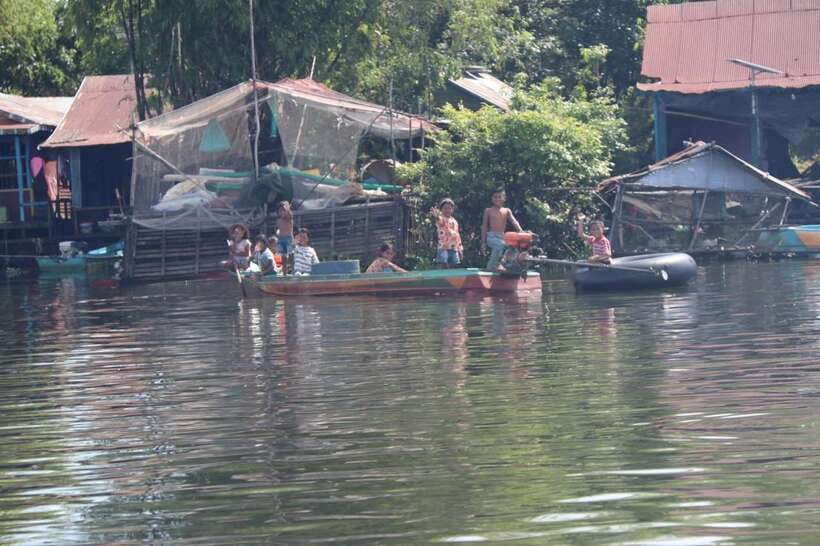
Kompong Phluk is not a polished attraction. It is a working fishing and farming community on Tonlé Sap, where homes rise as high as 10 meters above the ground and the route changes with the water. You’ll see both parts of the village, the pagoda, schools, floating homes, and the great lake beyond.
I like the local guide connection and the peaceful trip through the flooded forest when conditions permit. I also like that the tour reaches both villages, a detail that gives you a fuller picture than a quick boat ride past one row of houses.
The main drawback is value. At $66 for four hours, this is not the cheapest way to see Tonlé Sap, and the experience can feel less dramatic in the dry season when boats cannot reach every section. The village is also a real community, not a theme park, so you should come ready for plain, sometimes confronting scenes.
In This Review
- Key points to know before you book
- Leaving Siem Reap for Tonlé Sap
- Reaching Kompong Phluk by long-tail boat
- Schools, homes, and the pagoda
- Rowing through the flooded forest
- Out onto the great Tonlé Sap
- What the $66 price includes
- Dry season or high water?
- Who will enjoy this half-day outing?
- Should you book Kompong Phluk?
- FAQ
- Where does the Kompong Phluk tour begin?
- How long does the tour last?
- How far is Kompong Phluk from Siem Reap?
- Does the tour visit both Kompong Phluk villages?
- Will I definitely take a small boat through the flooded forest?
- What languages does the guide speak?
- Is hotel transportation included?
- Are boat fees and checkpoint fees included?
- Is food included?
- Can I cancel the tour for a refund?
Key points to know before you book
- Both Kompong Phluk villages: The tour visits the two connected village areas, separated by a large pagoda.
- Water levels shape the day: High water may let you travel along the village waterways, while low water means more walking and smaller boat transfers.
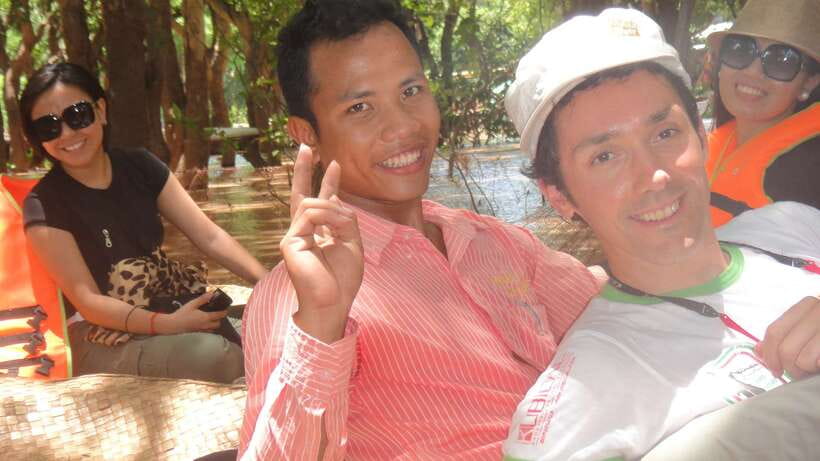
- The flooded forest is the highlight: A local rowboat takes you through the trees when seasonal conditions allow.
- Tonlé Sap is a working ecosystem: Fishing and farming support the community, with the lake providing a major share of Cambodia’s food supply.
- Guides make a big difference: Past guides named Mr Friday, Mr Bean, Mr Wanna, Hoy, and Veel were praised for clear English and friendly explanations.
- Four hours keeps it manageable: Hotel pickup, road travel, village visits, and boating fit into a half-day outing from Siem Reap.
Leaving Siem Reap for Tonlé Sap
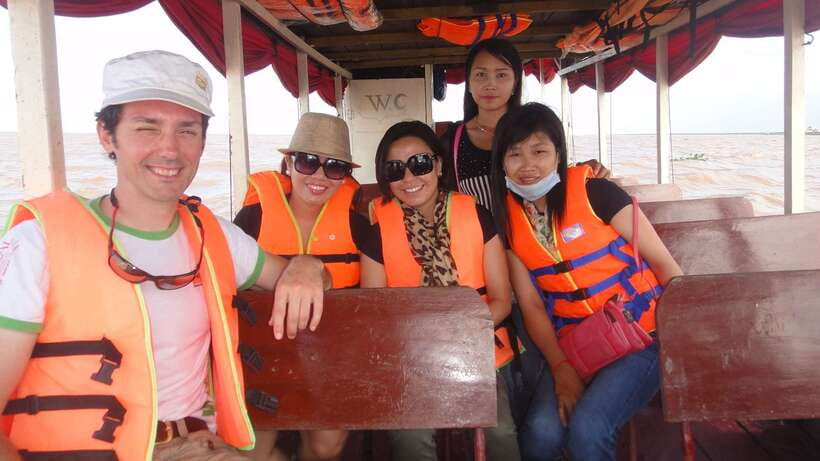
The tour begins with pickup in Siem Reap, usually in a tuk-tuk, car, or air-conditioned minivan. The road heads southeast through rural villages and rice fields, giving you a quick look at the countryside beyond the temple zone.
The ride takes about 30 minutes by tuk-tuk before you reach the lake access area. That short transfer matters because Kompong Phluk is not right beside central Siem Reap. You are moving from a tourist town into a place where fishing, farming, and water levels set the rhythm of daily life.
Depending on the transport assigned to you, the road portion may be open-air or air-conditioned. A tuk-tuk gives you more fresh air and a closer look at roadside life, but a car or minivan is more comfortable in hot weather or rain.
A guide accompanies you, with Cambodian and English spoken on the tour. The strongest part of the experience is often the explanation along the way. Guides such as Mr Friday and Mr Wanna were singled out for their clear English and useful answers, while Mr Bean was praised for his easy humor and personal connection to the village.
Do not expect a long historical lecture. The useful information here is practical: how homes cope with changing water levels, why people fish and farm, and how the village works through wet and dry seasons.
More floating village visits:
- From Siem Reap: Kampong Phluk Floating Village Tour by Boat
4.9 · 6,979 reviews - Sunset tour of Kampong Phluk stilts home village on the Tonle Sap
5.0 · 4,865 reviews - Siem Reap: Kampong Phluk Floating Village Tour with Boat
4.9 · 3,843 reviews
Reaching Kompong Phluk by long-tail boat
At the furthest point accessible by road, you board a long-tail boat and follow the Kompong Phluk River toward the stilted township. This is when the outing begins to feel different from a standard countryside drive.
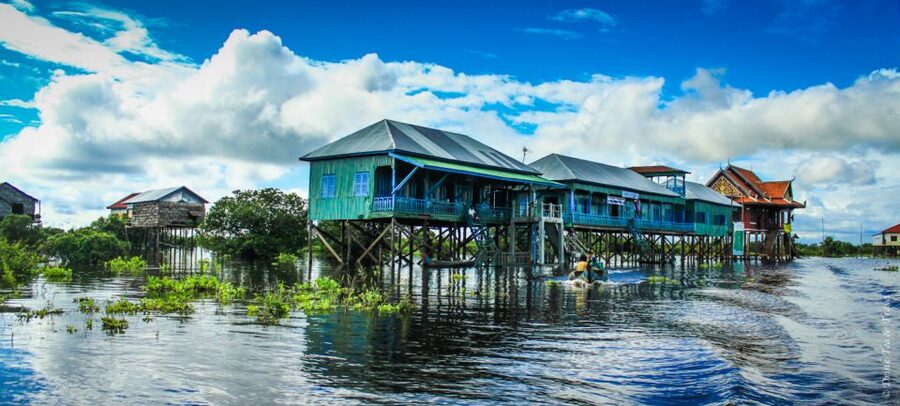
Kompong Phluk has about 3,000 residents. Many families make their living from fishing and farming, and the houses are built high above the ground to cope with the lake’s seasonal rise. Water levels in Tonlé Sap can change by as much as 10 meters, so the same route can look very different at different times of year.
In the wet season, the boat may pass directly along waterways that function like village streets. In the dry season, parts of the route may require walking, and the water can be low enough for a transfer to a smaller boat.
That seasonal change is not a flaw in the tour, but it does affect your expectations. You are not guaranteed one fixed view of Kompong Phluk. A high-water visit gives you the classic image of homes towering above the water, while a low-water visit may show more of the exposed ground, foundations, and everyday movement between the houses.
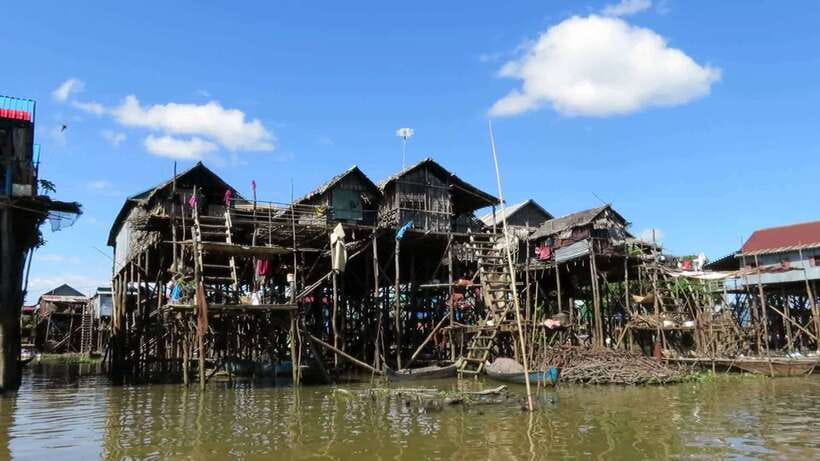
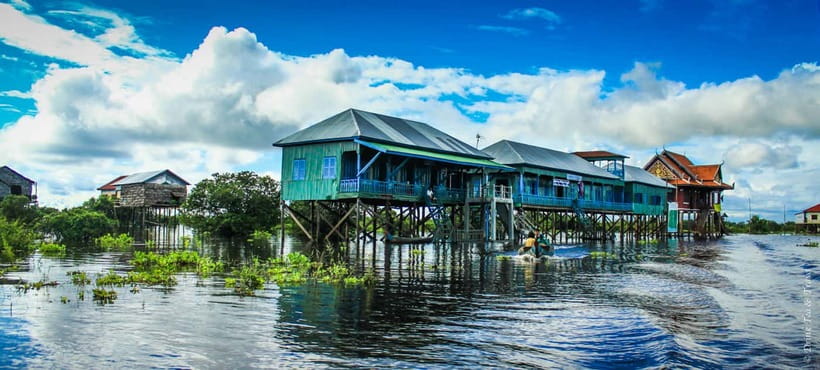
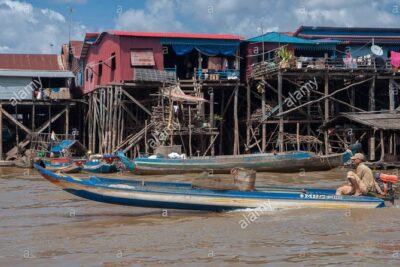
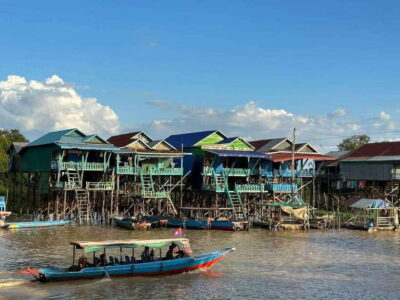
The large stilted homes are the visual centerpiece. Some rise up to 10 meters, supported by tall wooden poles that look almost too slim for the buildings above them. From the boat, you can see how strongly the community is shaped by water rather than roads.
Schools, homes, and the pagoda
The village visit includes schools, the large pagoda temple, and both parts of Kompong Phluk. These stops help keep the trip from becoming only a photo outing.
The schools offer a look at ordinary community life, though you should behave quietly and respectfully. This is a functioning village, not a stage built for visitors. The children may be playful and curious, but they are still going about their day.
The pagoda is another useful stop. It gives you a sense of the spiritual center of the village and helps explain why the two village areas are connected by more than water and housing. The two sections are separated by a large pagoda, and seeing both makes the visit feel more complete.
I like this part of the route because it puts the stilt houses into context. A boat ride can turn a community into scenery. Walking near the schools and temple, with a guide explaining local routines, reminds you that people live, study, worship, and work here.
There is also a small floating village attached to Kompong Phluk. Because fewer tours reach this section, the outing can feel more intimate, although access depends on the day’s water and operating conditions.
Rowing through the flooded forest
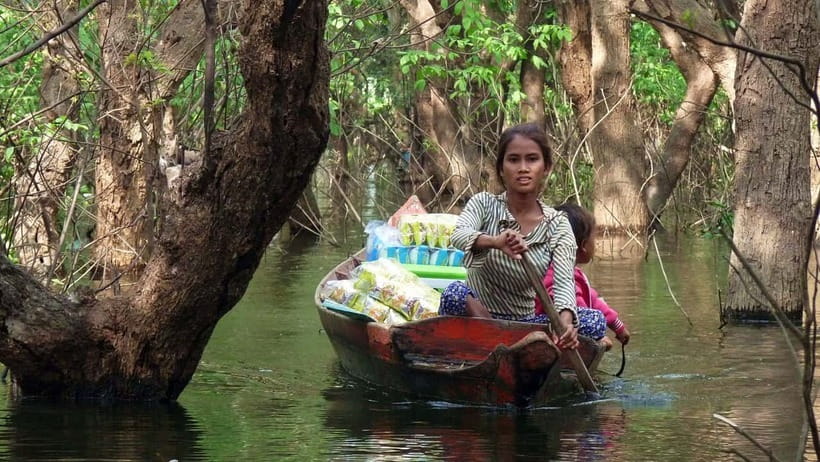
When water levels are high enough, you transfer to a small boat rowed through the flooded forest. This is the quietest and most memorable part of the tour.
The forest is not a dry woodland with a path through it. It is a seasonal waterway where trees stand in the lake’s flooded zone. The small boat moves at a calm pace, giving you time to notice the trunks, reflections, and changing water around you.
The route is dependent on season and tide, so it cannot be promised on every departure. In the dry season, you may need to walk through parts of the village instead. One past visit involved a small boat traveling past the stilted houses and then a stop at a floating restaurant because the river was low.
That variation is worth keeping in mind when you book. If the flooded forest is your main reason for going, ask about current water levels before departure. If it is unavailable, the village visit still includes homes, schools, the pagoda, and the lake, but the outing loses its most peaceful section.
The small boat also makes the experience less hurried. The larger long-tail boat handles the main route, while the rowing boat brings you closer to the seasonal forest. It is a simple change of pace, not a high-adrenaline activity.
A different pace for your next Siem Reap morning:
- Angkor Wat Sunrise or Sunset Tour with Guide from Siem Reap
5.0 · 12,109 reviews - Siem Reap: Angkor Wat: Small-Group Sunrise or Sunset Tour
5.0 · 9,444 reviews - Siem Reap: Angkor Wat 2-Day Tour with Sunrise and Sunset
4.9 · 4,429 reviews - Siem Reap: Full-Day Angkor Wat Guided Tour with Sunset
4.9 · 3,803 reviews
Out onto the great Tonlé Sap
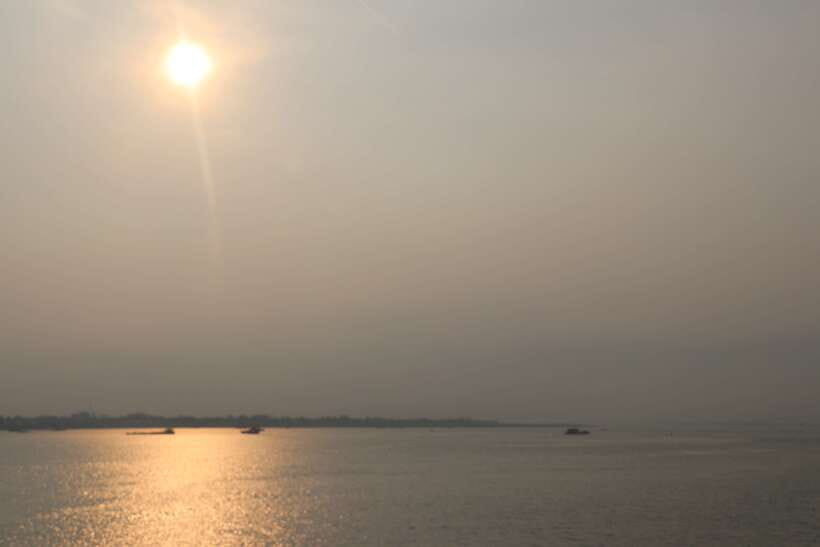
After the village and forest, the boat heads farther out onto Tonlé Sap Lake. This is a broad, open stretch after the tight waterways around the houses.
Tonlé Sap is Southeast Asia’s largest freshwater lake and a UNESCO biosphere reserve, designated in 1997 for the biodiversity of its rivers and lakes. Its connection to the lower Mekong basin creates a highly productive fishing system.
The lake supports fishing on a huge scale, and the tour explains how important it is to Cambodian food and household income. The supplied information describes Tonlé Sap as the richest fishing lake in the world and says that much of Cambodia’s protein comes from farming the lake and its surrounding systems. The exact figures are less important than the central point: this is a working food source, not simply a scenic body of water.
You may also see large water birds, fishermen working in the shallows, or water buffalo cooling in the river systems. These sightings depend on timing and luck, so treat them as possible extras rather than promised attractions.
The open lake can also be exposed to sun and wind. Bring water, use sun protection, and dress for changing weather. The tour operates in all weather conditions, and there is a small amount of walking, so sandals or shoes that cope with wet ground are sensible.
What the $66 price includes
The $66 price covers hotel pickup and drop-off in Siem Reap, road transport, a professional guide, the boat trip, light fruit, water, and checkpoint fees. That is a fair amount of coverage for a private or small-group half-day outing, though the price feels high if you only want a quick view of stilted houses.
The guide is where much of the value lies. Mr Friday was praised for being both friendly and well informed. Mr Bean, also referred to as Crazy Bean in one account, was remembered for teaching visitors about the area while keeping the mood relaxed. Guides named Veel, Hoy, and Mr Wanna also received strong praise for their English and explanations.
Guide quality matters here because the scenery alone can be read in a few minutes. Without context, you see tall homes, boats, muddy water, and a distant lake. With good explanations, you understand why the homes are built so high, why the route shifts with the seasons, and how fishing and farming fit together.
The tour does not include unspecified food and drinks, though light fruit and water are included. A previous dry-season outing stopped at a floating restaurant for refreshments, but you should not treat that as a guaranteed included meal.
The activity is rated 4.8 from 86 reviews, with 86 percent giving transport a perfect score. That points to reliable arrangements, but it does not erase the basic limitation: four hours is a short visit, and the $66 cost may be better suited to people who value a guided, organized experience over the lowest possible price.
Dry season or high water?
Water conditions are the biggest practical factor. During high water, you may travel along the village’s waterways and reach the flooded forest by small boat. The stilted houses can then look especially striking, rising directly from the water.
During the dry season, the river can be too low for the full route. You may walk through the village and use a smaller boat to pass the homes. Several outings have still been worthwhile in dry conditions, but the experience is more about village life and less about a continuous water journey.
The tour runs in all weather, so prepare for rain as well as heat. Pickup times vary, and you need to check availability when booking. Cancellation is flexible up to 24 hours before departure for a full refund, and you can reserve now and pay later.
Children must be accompanied by an adult, and unaccompanied minors are not allowed. The small amount of walking should be manageable for most people, but the information does not promise a fully accessible route.
Who will enjoy this half-day outing?
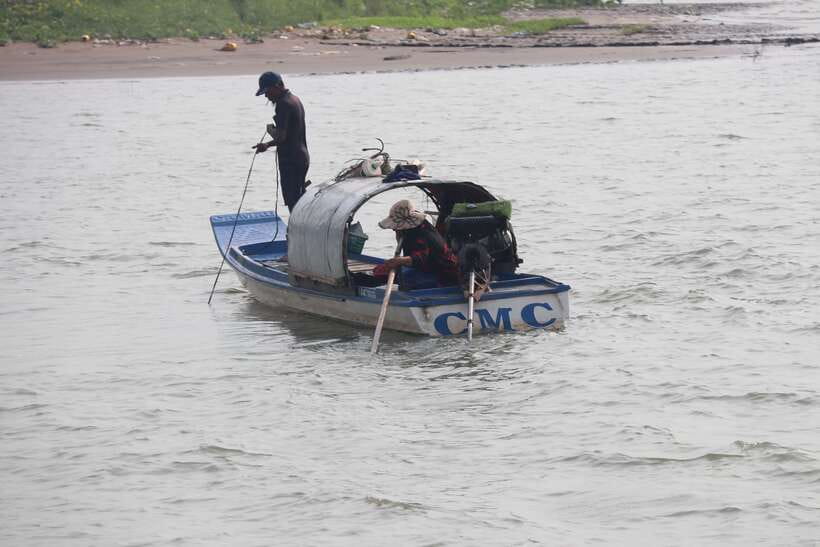
I would choose this tour if you want a break from Siem Reap’s temples and prefer to see how a Cambodian community works. It suits you if you enjoy local transport, open water, simple homes, and a guide who can explain daily life rather than simply point out photo stops.
It is also a good fit if your schedule is tight. The four-hour format leaves room for other plans, and pickup and drop-off remove the hassle of arranging transport to the lake.
You may want to skip it if you expect a polished attraction, a long wildlife cruise, or guaranteed access to the flooded forest. The village includes real poverty, working boats, animals, and conditions that may feel confronting. One account also noted a local market with live fish and crabs in plastic pools, plus a crocodile farm and caged animals. If those scenes would upset you, ask whether the market and crocodile stop are part of your route.
Should you book Kompong Phluk?
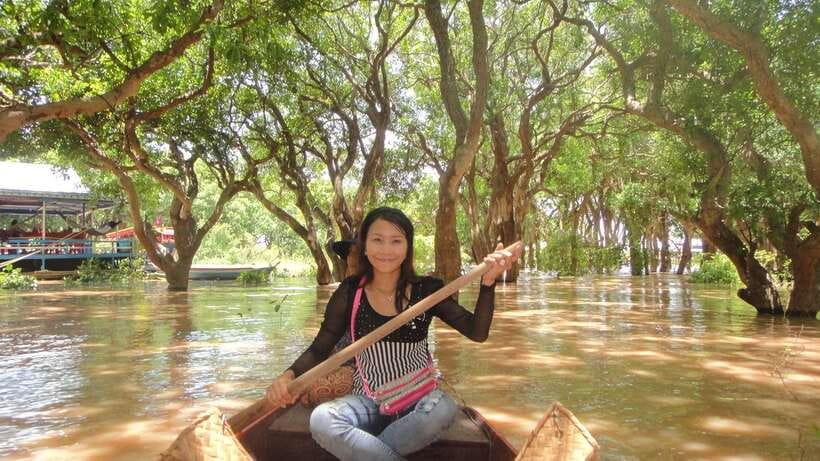
Book it if you want a guided look at Tonlé Sap that includes both Kompong Phluk villages, the pagoda, schools, stilted homes, and a chance to row through the flooded forest. The best guides turn a short boat trip into a useful lesson about water, food, work, and rural Cambodia.
At $66, it is best value for you if transport, guide service, boat fees, and hotel pickup matter. Ask about current water levels before paying, especially if the forest cruise is your priority. If the answer is clear and you are comfortable with a working village rather than a staged attraction, this is a worthwhile half-day away from the temples.
FAQ
Where does the Kompong Phluk tour begin?
Pickup is provided from your hotel or guesthouse in Krong Siem Reap.
How long does the tour last?
The activity lasts about four hours, including transport from Siem Reap, the village visit, and the boat cruise.
How far is Kompong Phluk from Siem Reap?
The tuk-tuk transfer to the Tonlé Sap access area takes about 30 minutes. The full outing also includes the boat journey and village exploration.
Does the tour visit both Kompong Phluk villages?
Yes. The route visits both village areas, which are separated by a large pagoda.
Will I definitely take a small boat through the flooded forest?
No. The flooded forest boat ride depends on water levels and tidal conditions. Low water may require more walking through the village instead.
What languages does the guide speak?
The tour is offered with a Cambodian English-speaking guide.
Is hotel transportation included?
Yes. Hotel pickup and drop-off in Siem Reap are included, with transport by tuk-tuk, air-conditioned car, or minivan.
Are boat fees and checkpoint fees included?
Yes. The boat trip and all checkpoint fees are included in the tour price.
Is food included?
Light fruit and water are included. Other food and drinks are not included unless specifically stated.
Can I cancel the tour for a refund?
You can cancel up to 24 hours in advance for a full refund. You can also reserve the activity and pay later.
Fresh reviews from around Siem Reap
- Full-Day Tour Preah Vihea & Koh Ker Temple 3.7 · 3 reviews
- Savor the Countryside: Tours with Authentic Cooking Classes” 5.0 · 3 reviews
- Angkor Wat Sunrise TukTuk Tour 5.0 · 3 reviews
- Angkor Grand Circuit Tour & Banteay Srei 5.0 · 3 reviews
- Guided Private Tuk Tuk Tour Angkor Wat and Small Circle and Five Extras 5.0 · 3 reviews
- Siem Reap Temple Tour 2-Day with Sunrise/Sunset 3.7 · 3 reviews
- Bangkok to Angkor Wat 2 Days 1 Night by Flight 4.5 · 3 reviews
- Kompong Pluk Tour 5.0 · 3 reviews
Floating Village Tours, compared.
Sunset tour of Kampong Phluk stilts home village on the Tonle Sap
Read our review →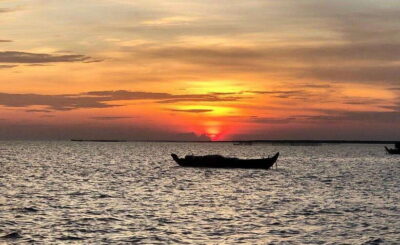
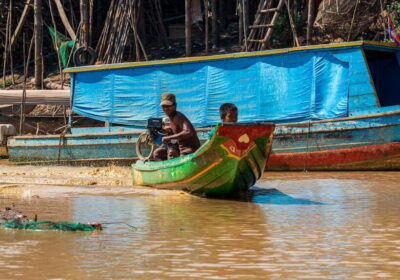
Siem Reap Floating Village Kampong Phluk Sunset with Boat
Read our review →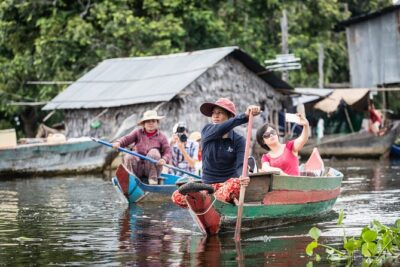
Kompong Phluk Floating Village Half-Day Tour ( Morning / Sunset )
Read our review →
Browse the lists this tour appears in