
Reviewed · ANGKOR TEMPLE TOURS
Explore Angkor Temple Sunset With Tour Guided
Angkor Wat is most impressive when you give it time, and this seven-hour guided tour does more than deliver a quick photo stop. You move from the giant faces of Bayon to the tree-covered ruins of Ta Prohm, then spend a long afternoon at Angkor Wat before a possible sunset at Phnom Bakheng. I like the strong mix of major temples and the chance to learn what you are seeing, not simply wander past old stones.
I also like the flexible group setup. A planned group can become a private outing when numbers are low, as happened for Phill and Daniel, and guides such as Vichu, Thy, and Chaat Long have been praised for detailed explanations, good photo help, and thoughtful service. The catch is stamina: one person found the day very long, and Phnom Bakheng adds a steep uphill walk after hours in the heat.
In This Review
- Key points to know before booking
- Starting at 8am in Siem Reap
- Walking beneath Angkor Thom’s four faces
- Bayon and its famous smiling faces
- The midday break and the heat factor
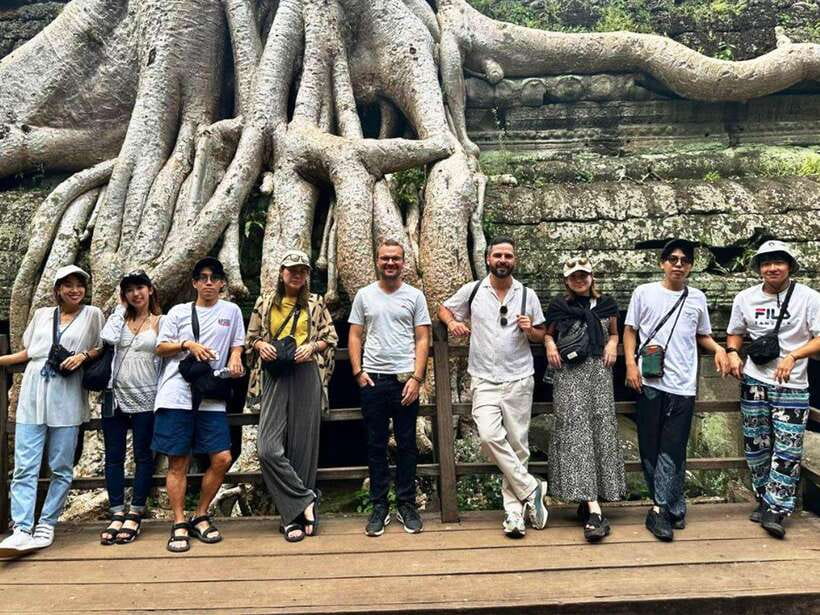
- Ta Prohm, where roots take over the ruins
- Angkor Wat deserves the long afternoon
- Phnom Bakheng and the sunset choice
- What the $25 price really covers
- Who should choose this temple day
- Should you book the Angkor sunset tour?
- FAQ
- What temples are included in the tour?
- Is sunset at Phnom Bakheng included?
- What time does hotel pickup take place?
- Is transportation included?
- Is the Angkor entrance ticket included in the $25 price?
- Can I cancel or pay later?
Key points to know before booking
- Four major temple areas in one day: You visit Angkor Thom, Bayon, Ta Prohm, and Angkor Wat, with smaller Angkor Thom monuments included along the way.
- A guide who explains the meaning: The best part is the context about Khmer rulers, Buddhism, Hinduism, architecture, and carved stories.
- Sunset at Phnom Bakheng is optional: The hill takes about 25 to 30 minutes each way on foot, and it is usually a busy choice.
- The price is $25 per person before the temple pass: Add the $37 Angkor ticket, plus your own meal and drinks.
- Transport is hotel-to-hotel: An air-conditioned car or minivan is included, while a tuk-tuk can be requested.
- Expect a full physical day: You will walk across temple grounds, climb uneven surfaces, and spend much of the day outdoors.
Starting at 8am in Siem Reap

Your guide and driver meet you in your hotel lobby at 8am. You are asked to wait there about 10 minutes early, and the driver carries a sign with your last name. Pickup and return within Krong Siem Reap are included, which keeps the morning simple.
The standard vehicle is an air-conditioned car or minivan. You can request a tuk-tuk instead, a choice that may feel more open and local but gives you less protection from Cambodia’s heat. Mineral water and fresh wet tissues are supplied, useful after dusty paths and sweaty walks.
The tour is offered privately or in a small group. That matters at Angkor. A small party gives you more room to ask questions and makes it easier for the guide to adjust the pace. The group may also become private if too few people book. That happened on the outings led by Thy and Chaat Long, giving those couples extra time with their guides.
The day begins early enough to make use of the cooler morning, but it does not promise a quiet temple complex all day. Angkor Wat is described as a place to see after the main rush has eased, yet the complete program is still long. If you want to cover the headline sites and sunset in one go, this is the tradeoff.
More Angkor temple itineraries:
- Angkor Wat Sunrise or Sunset Tour with Guide from Siem Reap
5.0 · 12,109 reviews - Siem Reap: Angkor Wat: Small-Group Sunrise or Sunset Tour
5.0 · 9,444 reviews - Siem Reap: Angkor Wat 2-Day Tour with Sunrise and Sunset
4.9 · 4,429 reviews
Walking beneath Angkor Thom’s four faces
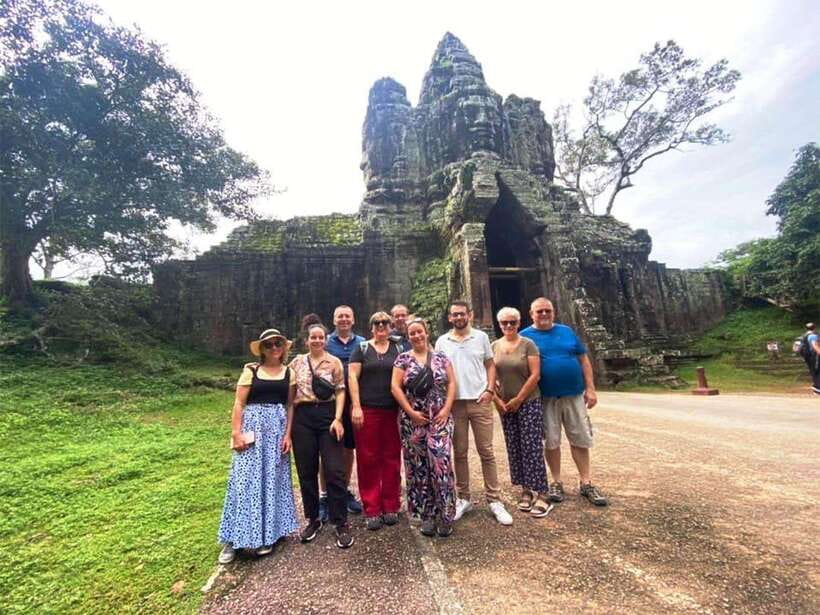
The first main stop is the South Gate of Angkor Thom. The entrance is framed by four enormous faces, presented here as symbols of compassion, sympathy, equanimity, and charity. Even before reaching a temple, you get a clear sense that Angkor was built to express religious ideas through stone.
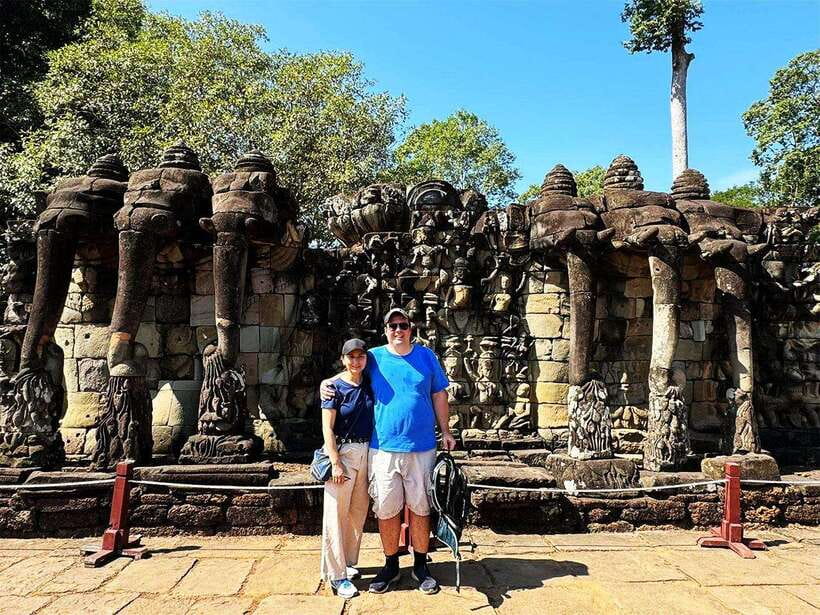
Angkor Thom is not one building. It is a large walled city area containing several important monuments. Your guide leads you through Bayon and points out Baphuon, Phimeanakas, the Terrace of the Leper King, and the Terrace of the Elephants.
This portion can feel like a lot of names at once, so a guide is especially useful. Chaat Long was praised for giving detailed explanations of the temples and their history, while guides on other outings helped visitors understand the wider setting. Ask your guide to slow down if several monuments begin to blur together.
The walk is part of the appeal. You are not simply stepping out of a vehicle, taking one picture, and leaving. You move through the old royal center and see how its religious and civic monuments relate to one another. The drawback is that the surfaces can be uneven, and you should expect a fair amount of walking before lunch.
Bayon and its famous smiling faces
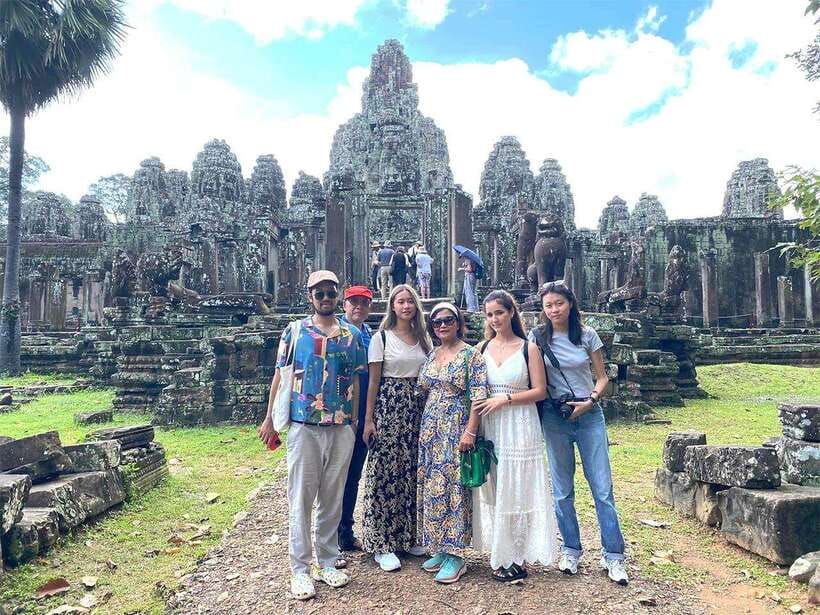
Bayon gets its own hour in the schedule, and it deserves the attention. More than 200 stone faces look out from the temple towers, each with the calm smile that has made this one of Angkor’s most recognizable sights.
The faces are the visual hook, but the building can be confusing without help. Towers, corridors, stairs, and carved walls crowd together. I like having an English-speaking guide here because the experience becomes less about counting faces and more about understanding the temple’s place in Khmer religious and royal life.
Vichu, one of the guides assigned to this experience, was praised for explaining Cambodian history as well as the differences between Buddhism and Hinduism. That kind of comparison is valuable at Angkor, where religious ideas changed and overlapped over the centuries.
You should still allow yourself time to look quietly. A guide can explain the carvings, but Bayon also rewards a slow glance at the expressions and the way the faces appear between the towers. The hour may feel short if you want every corridor and carving, yet it keeps the whole day moving.
The midday break and the heat factor
A one-hour break at a local restaurant is built into the day. Meals and drinks are not included, so you should budget separately. The tour does include bottled water, but that is not a substitute for lunch or other drinks.
This pause is practical rather than decorative. By midday, you will have walked around Angkor Thom and Bayon, and the break gives you time to eat before Ta Prohm and Angkor Wat. It also keeps you from trying to rush through a long temple day without stopping.
The schedule remains demanding. One verified booking described the experience as amazing but very long, a fair warning for anyone who prefers short sightseeing blocks. I would choose this tour if you want a full day of major sites. If you know you tire quickly in heat, consider asking the guide whether Phnom Bakheng should be skipped.
Other Siem Reap experiences to weigh up
- Sunset tour of Kampong Phluk stilts home village on the Tonle Sap
5.0 · 4,865 reviews - Siem Reap: Full-Day Angkor Wat Guided Tour with Sunset
4.9 · 3,803 reviews - Angkor Wat Sunset Small Group Tour with Lunch Included
5.0 · 3,059 reviews - Angkor 2-Day Sunset & Sunrise Small-Group Tour
5.0 · 2,567 reviews
Ta Prohm, where roots take over the ruins
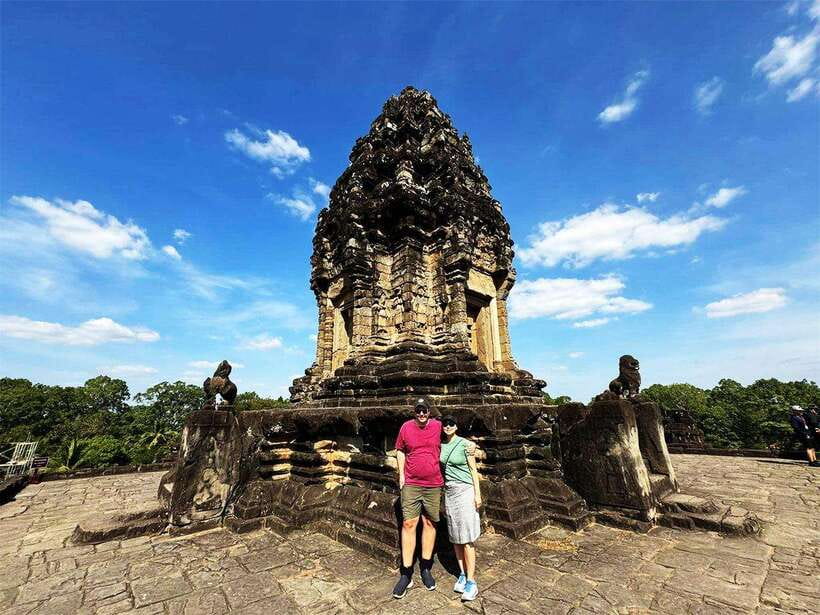
Ta Prohm offers a sharp change from the open stonework of Angkor Wat. Here, large tree roots wrap around walls and towers, creating the famous jungle-temple appearance. The site was used as a filming location for Lara Croft Tomb Raider, which explains why it may look familiar even before you arrive.
The film connection is fun, but it is not the main reason to go. Ta Prohm shows the uneasy meeting of architecture and nature. The roots are visually striking, while the broken galleries and shadowed passages make the temple feel different from the more ordered Angkor Wat.
Your guide can help you separate what is original religious design from later damage and tree growth. You can also ask for help with photographs. Chaat Long was specifically praised for knowing good photo spots and taking plenty of pictures, a useful service when you are traveling as a couple or small group.
Do not expect the trees to make the visit cool and effortless. You still walk through a major temple complex, and the ground can be uneven. The site is worth the effort, but it is another reason to wear practical shoes and keep the pace comfortable.
Angkor Wat deserves the long afternoon
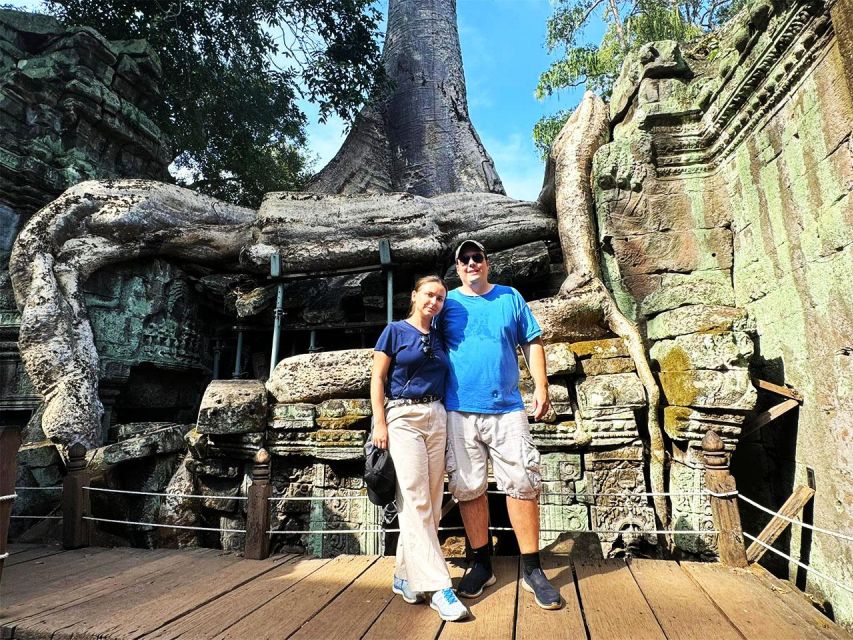
Angkor Wat is the centerpiece of the day. Built by Suryavarman II in the 12th century, it was recognized by UNESCO in 1992 and is widely regarded as one of Asia’s essential sights. The temple’s scale can be hard to grasp from photographs. You need time to walk toward it, enter its galleries, and look closely at the carvings.
The guided visit is scheduled for about two hours. That gives you a useful first encounter with the main causeways, towers, galleries, and carved details, though it will not reveal every corner of the site. A strong guide can make those two hours count by explaining the temple’s role, architecture, and connection to the Khmer Empire.
This is where the tour’s educational side matters most. You hear about Khmer culture, the region’s religious traditions, and the artistic skill behind the carvings. Vichu was praised for covering Cambodia in general as well as Buddhism, Hinduism, and their differences. That wider background helps Angkor Wat feel like more than a monumental backdrop.
The timing is worth checking when you book. The experience is promoted around seeing Angkor Wat after many of the day’s visitors have left, while the schedule also includes a sunset option at Phnom Bakheng. Since exact temple timing can vary, ask the guide in the morning how the afternoon will be arranged.
Phnom Bakheng and the sunset choice
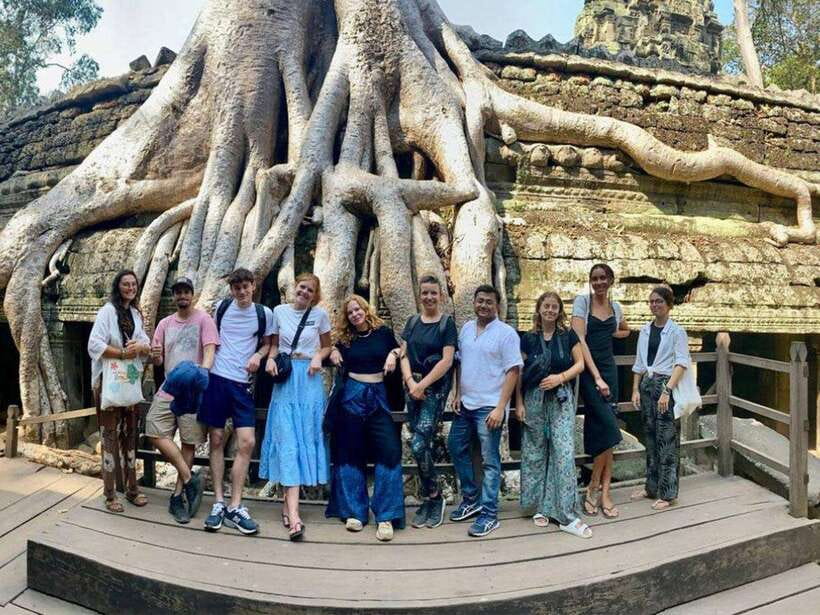
Sunset at Phnom Bakheng costs nothing extra, but it is not an effortless add-on. You hike uphill for about 25 to 30 minutes each way. The location is known for drawing many people, so you should not expect a private viewpoint.
I see Phnom Bakheng as an optional finish, not a required part of the tour. If your legs still feel good and you want a final view from a hill, it can be a satisfying close to the day. If Ta Prohm and Angkor Wat have used up your energy, skipping it is sensible.
The written schedule lists both sunrise and sunset language in different places, so you should confirm the plan with your guide. The activity information specifically says the sunset visit is available at Phnom Bakheng and asks you to speak with the guide to arrange it. That conversation is important because a seven-hour day leaves limited room for delays.
What the $25 price really covers
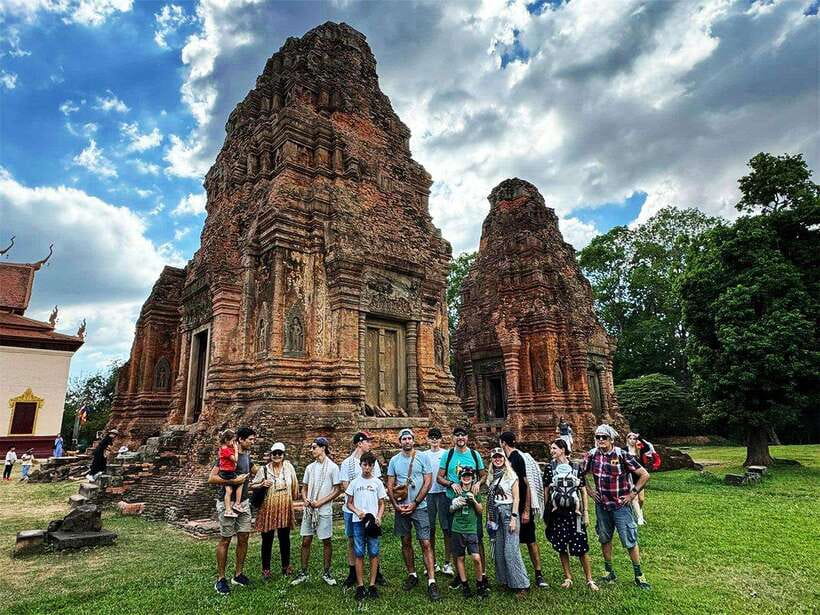
The listed cost is $25 per person, which covers the local English-speaking guide, hotel pickup and return, transportation, sightseeing, bottled water, and wet tissues. It does not cover the Angkor ticket, which costs $37 per person, or meals, drinks, insurance, accommodation, and tips.
That means your basic sightseeing cost is $62 per person before food and gratuity. I consider that fair for a guided private or small-group day with a driver, particularly if you value explanation and door-to-door transport. The price is less attractive if you only want a quick ride between temples and prefer to explore alone.
The guides are the main value here. Thy was praised for being accommodating, and Chaat Long for detailed temple explanations and help with photos. Those names do not guarantee your assigned guide, but they show the sort of service the company can provide. Your guide may be another English-speaking member of the team.
Free cancellation is available up to 24 hours before departure, and you can reserve while paying later. Those terms help if your Siem Reap plans are still shifting. The Angkor ticket remains a separate cost, so include it in your budget from the start.
Who should choose this temple day
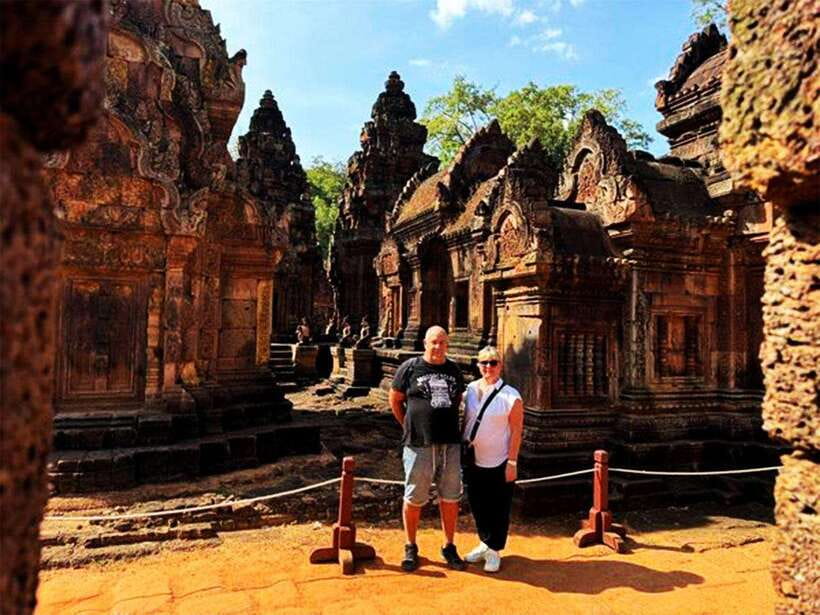
I would recommend this tour to you if it is your first visit to Angkor and you want the main sights explained in one organized day. It suits couples and small groups that prefer a guide who can answer questions, point out photo locations, and connect the temples to Khmer culture.
It also suits you if you like flexibility. A low booking count can turn a small-group plan into a private outing, and the guide can discuss whether you have enough energy for Phnom Bakheng. The included vehicle is useful if you want hotel pickup rather than arranging several separate rides.
I would hesitate if you dislike long days or want to study one temple at a very slow pace. The program covers a lot of ground, and the sunset hike can make the finish tiring. You should also be comfortable paying the $37 temple ticket on top of the tour fee and buying your own lunch and drinks.
Wear shoes suited to walking and bring enough sun protection for a full day outside. The supplied water helps, but it is still wise to plan for the heat. Keep your schedule free afterward if you choose Phnom Bakheng, since the full outing can run you down.
Should you book the Angkor sunset tour?
Book it if you want a well-rounded first day at Angkor, especially with a guide who can explain the difference between Buddhist and Hindu traditions and put the carvings into context. The combination of Angkor Thom, Bayon, Ta Prohm, and Angkor Wat gives you the essential sights, while the possibility of a private group adds real value.
Skip it if seven hours of walking sounds excessive or if your main goal is a short Angkor Wat visit. For everyone else, the sensible approach is to reserve the tour, confirm the afternoon timing, and decide at Phnom Bakheng based on your energy. The $25 guide and transport fee is reasonable once you understand that the temple pass, food, and drinks are separate.
FAQ
What temples are included in the tour?
The tour includes Angkor Wat, Angkor Thom, Bayon Temple, Ta Prohm, and the Angkor Thom monuments of Baphuon, Phimeanakas, the Terrace of the Leper King, and the Terrace of the Elephants.
Is sunset at Phnom Bakheng included?
Yes. Sunset at Phnom Bakheng is available at no additional cost, but you should speak with your guide to arrange it. The walk takes about 25 to 30 minutes each way and the site is usually busy.
What time does hotel pickup take place?
Pickup is scheduled for 8am from your hotel lobby in Krong Siem Reap. You should wait in the lobby 10 minutes before pickup, and the driver will hold a sign with your last name.
Is transportation included?
Yes. Pickup and drop-off at your Siem Reap hotel are included, along with travel in an air-conditioned car or minivan. A tuk-tuk is available upon request.
Is the Angkor entrance ticket included in the $25 price?
No. The Angkor ticket costs $37 per person and must be paid separately. Meals, drinks, travel insurance, accommodation, and tips are also not included.
Can I cancel or pay later?
You can cancel up to 24 hours before the activity for a full refund. You can also reserve now and pay later, keeping your plans flexible.
Fresh reviews from around Siem Reap
- Full-Day Tour Preah Vihea & Koh Ker Temple 3.7 · 3 reviews
- Savor the Countryside: Tours with Authentic Cooking Classes” 5.0 · 3 reviews
- Angkor Wat Sunrise TukTuk Tour 5.0 · 3 reviews
- Angkor Grand Circuit Tour & Banteay Srei 5.0 · 3 reviews
- Guided Private Tuk Tuk Tour Angkor Wat and Small Circle and Five Extras 5.0 · 3 reviews
- Siem Reap Temple Tour 2-Day with Sunrise/Sunset 3.7 · 3 reviews
- Bangkok to Angkor Wat 2 Days 1 Night by Flight 4.5 · 3 reviews
- Kompong Pluk Tour 5.0 · 3 reviews
Angkor Temple Tours, compared.

Angkor Wat Sunrise or Sunset Tour with Guide from Siem Reap
Read our review →



Angkor Wat Sunrise tour with Small – Group and Guide tours
Read our review →
Angkor Wat Highlights and Sunrise Guided Tour from Siem Reap
Read our review →

Full-Day Angkor Wat Sunrise Private Tour with Guide from Siem Reap
Read our review →Browse the lists this tour appears in