
Reviewed · COUNTRYSIDE & VILLAGE TOURS
East Corner of Siem Reap – Roluos Group & Countryside
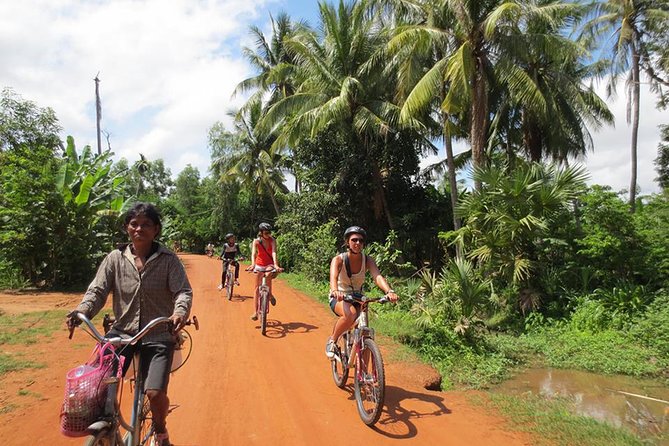
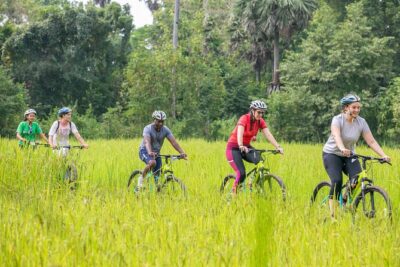
The best part of this outing is the change of pace. You leave Siem Reap by bicycle and reach the Roluos Group, an early Khmer capital, by way of rice fields, village lanes, and a quiet nature reserve. The temples matter, but the ride between them gives the day its character.
I like the small group size, capped at 10 people, and the practical support of a guide plus bike mechanic. I also like that lunch, coconut water, drinking water, a helmet, and a Trek mountain bike are included. The main catch is the extra $37 temple pass, and you must make your own way to the 7:30 a.m. meeting point.
In This Review
- Key points to know before you book
- Why the countryside route changes the temple day
- Starting at 7:30 with the right equipment
- Rice fields, village roads, and a nature reserve
- The local market and Khmer flavors
- Preah Ko, where the Roluos story begins
- Bakong, the first large mountain temple
- Lolei, the island temple of Yasovarman I
- What the $50 price really covers
- Practical details that affect your choice
- Who will enjoy this ride most
- Should you book the Roluos countryside bike tour?
- FAQ
- Where does the tour start?
- What time does the tour begin?
- How long does the experience last?
- Is hotel pickup included?
- Is the temple admission fee included?
- What is included in the $50 price?
- How many people can join the tour?
Key points to know before you book
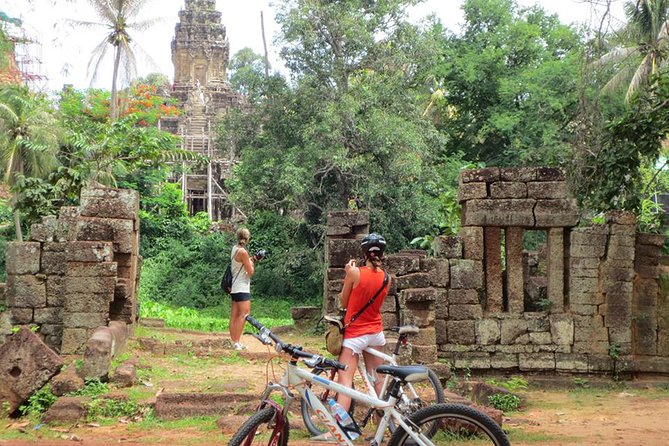
- Roluos by bicycle: Reach Preah Ko, Bakong, and Lolei by riding through the countryside rather than arriving by car.
- Early start, full morning: The seven-hour outing begins at 7:30 a.m. and ends back at the starting point.
- Guide and mechanic included: Seng leads the ride, while Nguey helps with bike setup and roadside support.
- A local view of Siem Reap: Expect village life, rice fields, local flora and fauna, children greeting the group, and a market with fruit and Khmer snacks.
- Food and drinks covered: Lunch, coconut water, and pure drinking water are included.
- Budget carefully: The $50 tour price does not include the one-day temple pass, which costs $37.
Why the countryside route changes the temple day
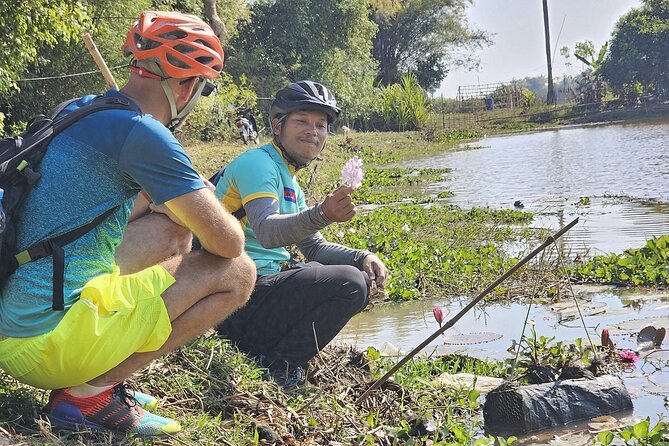
Many Siem Reap temple visits are built around vehicles and long stretches of sitting. This one puts you on a bicycle early in the morning, when the city is easier to leave behind and the rural setting becomes the main event.
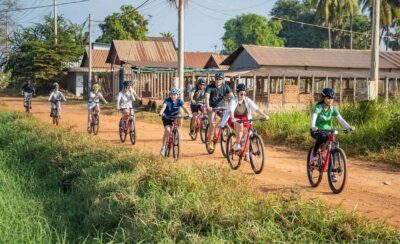
The route heads east toward Hariharalaya, the former capital associated with the Roluos Group. You will ride through open rice fields and village areas, with a nature reserve along the way. The scenery is not just a backdrop. It gives you a better sense of how the temple sites fit into the wider Cambodian countryside.
I like this kind of route because it connects the archaeology to ordinary life. You may pass homes, local activity, children, and farmers rather than seeing only stone monuments behind a vehicle window. The pace also lets you stop for photographs when something catches your eye.
The ride is still a physical activity. Seven hours includes cycling, temple visits, a market stop, lunch, and breaks, but you should be comfortable spending a large part of the morning on a bike. Bring sunscreen, sunglasses, and a camera. The helmet and mountain bike are supplied.
More countryside rides around Siem Reap:
- Sunset tour of Kampong Phluk stilts home village on the Tonle Sap
5.0 · 4,865 reviews - Tonle Sap Lake & Kampong Phluk Village Half-Day Tour
5.0 · 1,045 reviews - Siem Reap Countryside Bike Tour / E-Bike or Tuk Tuk
5.0 · 935 reviews
Starting at 7:30 with the right equipment
You meet at Angkor Cycling Tour on Taphul Road in Siem Reap at 7:30 a.m. Hotel pickup and drop-off are not included, so plan your route to the meeting point before booking. The activity finishes at that same location.
The equipment is one of the stronger points here. You receive a premium Trek mountain bike and helmet, with a bike mechanic included in the group. The available information identifies Nguey as the mechanic and notes that the bikes were prepared to fit riders well and felt new and well maintained.
That detail matters more than it might seem. A poorly adjusted saddle or tired bicycle can turn a pleasant rural ride into a long complaint. Having Nguey along adds a useful layer of support, especially for a small group riding outside the city.
The group limit is 10 people. That is large enough to feel social but small enough for the guide to keep an eye on the riders. The tour is conducted in English, with an English-speaking guide. Seng is identified as one of the guides, and his role includes explaining the sites, helping with photographs, and keeping the ride moving at a comfortable pace.
The tour is listed as suitable for most people, but that does not mean it suits every fitness level. No cycling distance or difficulty rating is provided, so you should ask the operator if you have concerns about stamina, balance, or riding in warm weather.
Rice fields, village roads, and a nature reserve
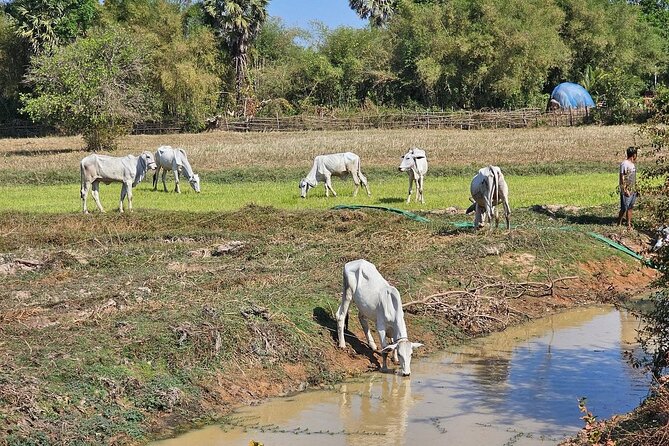
The first section carries you away from Siem Reap through rural scenery. Expect the appeal to come from small details: green or recently worked rice fields, local plants, animals, houses, and people going about daily tasks.
This is the part that makes the tour feel different from a standard temple transfer. You are not simply traveling between monuments. You are moving through the setting that supports them, with time to notice how quickly the urban edge gives way to open countryside.
The route also includes a tranquil nature reserve. The supplied details do not promise particular wildlife sightings, so I would not book this as a dedicated animal-watching trip. Instead, think of the reserve as a quieter stretch of the ride, with local flora and fauna adding interest between the cultural stops.
Interactions with villagers and rural children are part of the planned experience. The description emphasizes a warm welcome and opportunities to connect with local communities. Keep your approach respectful. A smile and a polite greeting are better than treating village life as a photo prop, and you should ask before taking close-up pictures of people.
The local market and Khmer flavors
A local market stop adds a useful break from cycling and temple stone. You can look for exotic fruits, Khmer snacks, and local delicacies, with the guide helping explain what you are seeing.
The market is valuable because it gives you a practical look at food outside hotel restaurants. It also breaks up the morning with color, movement, and tastes that are part of everyday Cambodian life. The tour includes lunch, so this stop is more about discovery and sampling than solving your entire appetite.
Lunch is included along with refreshing coconut water and pure drinking water. You should still tell the operator about dietary requirements when you book. The available information does not specify the exact lunch menu, so do not assume a particular dish or a fully customizable meal.
Water matters on a bicycle outing. Having drinking water and coconut water included means you do not need to depend entirely on finding a shop along the route. Still, Cambodia can feel hot, and sunscreen and sunglasses are specifically recommended.
A different pace for your next Siem Reap morning:
- Angkor Wat Sunrise or Sunset Tour with Guide from Siem Reap
5.0 · 12,109 reviews - Siem Reap: Angkor Wat: Small-Group Sunrise or Sunset Tour
5.0 · 9,444 reviews - From Siem Reap: Kampong Phluk Floating Village Tour by Boat
4.9 · 6,979 reviews - Siem Reap: Angkor Wat 2-Day Tour with Sunrise and Sunset
4.9 · 4,429 reviews
Preah Ko, where the Roluos story begins
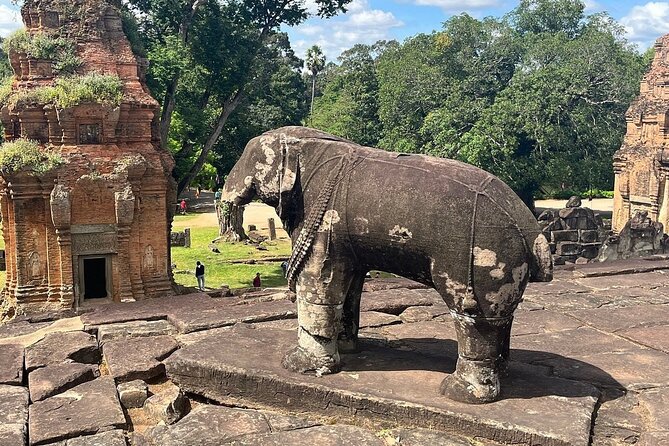
The first named temple is Preah Ko, whose name means sacred bull in Khmer. The temple is dedicated to the Hindu god Shiva, and its identity helps explain the religious world of the early Khmer rulers.
Preah Ko is a good place to begin because it introduces the Roluos Group on a human scale. Rather than starting with the largest structure, you begin with a site where the guide can point out religious symbols and architectural details before the larger temple ahead.
Your guide is there to explain what you are looking at, not just lead you around the ruins. That makes a difference at an early Khmer site, where the meaning of a tower, carving, or layout may not be obvious without context.
Allow time for photographs, but keep the broader setting in mind. The point of reaching Preah Ko by bike is not just to collect another temple picture. It is to understand the site as part of a former capital, reached through the same countryside that still surrounds the monuments.
Bakong, the first large mountain temple
Bakong is the heavyweight stop in the Roluos Group. It is described as the first large mountain temple of Angkor, a design that places the central sanctuary above the surrounding ground and gives the monument a strong upward focus.
Here, the scale changes. After Preah Ko, Bakong offers a clearer sense of royal ambition and temple planning. Your guide can help you read the structure rather than seeing it as a pile of old stones. Look for the way the temple is organized, how the central form rises, and how the grounds shape your view.
Bakong is also likely to be the most physically demanding temple visit of the three if you want to walk around and examine it closely. The tour does not list stair or walking conditions, so use normal care around uneven ancient surfaces. Comfortable clothing and sensible footwear will help once you are off the bike.
I like that Bakong follows the countryside ride. You arrive with a sense of place, then encounter a monument that represents the power and design skill of the early Khmer state. The contrast is the point: village roads lead to a royal religious center.
Lolei, the island temple of Yasovarman I
The final named temple is Lolei, described as an island temple built by King Yasovarman I. Its original setting gives the site a different feel from the other Roluos monuments, even though the three are commonly visited together.
Lolei is useful as the closing historical stop because it rounds out the story of Hariharalaya. Preah Ko introduces the religious purpose, Bakong shows the large mountain-temple form, and Lolei adds the idea of a temple placed within a water setting.
Do not expect three identical temple visits. Each has a separate architectural character, and the guide’s explanations are important in helping you see those differences. You will also have further opportunities for photographs at the historic sites.
The information provided does not give exact visit lengths for each temple. The total tour lasts about seven hours, so the guide will need to balance riding, meals, market time, and temple exploration. If you want a very slow archaeological study of every carving, a private temple-focused visit may suit you better.
What the $50 price really covers
The listed price is $50 per person. That includes the English-speaking guide, Trek mountain bike, helmet, lunch, coconut water, and pure drinking water. For a guided seven-hour ride with equipment and food, that is a reasonable package, especially if you value seeing the countryside without arranging a bike, route, and temple explanations on your own.
The important extra cost is the temple pass. Admission is not included, and the one-day pass is listed at $37. That brings the basic combined cost to $87 per person, before you account for getting to and from the meeting point.
You should compare that total with what you want from the day. If you already plan to buy an Angkor temple pass, the extra cost of this activity is easier to justify because the pass serves the temple visit itself. If you are considering the tour only for a countryside ride, the admission charge is a major part of the budget.
The value is strongest for someone who wants three things in one morning: exercise, local scenery, and early Khmer history. It is less compelling for someone who wants a cheap transfer to the temples or a relaxed day with little physical effort.
Practical details that affect your choice
The start time is 7:30 a.m., and the outing lasts about seven hours. That makes it a substantial morning and early afternoon commitment, not a short add-on before another major activity.
You receive a mobile ticket and booking confirmation at the time of reservation. The cancellation terms are simple: cancel at least 24 hours before the local start time for a full refund. Cancellations or changes made inside that window are not accepted for a refund.
Public transportation is nearby, and most people can participate. Even so, you should be honest about your cycling comfort. The operator does not provide a stated distance or difficulty grade, so anyone with a medical concern or limited cycling experience should ask for more detail before paying.
Dietary requirements should be provided at booking. Also remember that hotel transport is not included. That is easy to overlook in Siem Reap, where many activities do offer pickup.
Who will enjoy this ride most
I would choose this tour if you want to see a less urban side of Siem Reap and do not mind working for the views. It suits active couples, small groups of friends, solo riders who enjoy meeting people, and families with older children who can manage a long cycling day.
It is also a good fit if the main Angkor complex feels too familiar from photographs and you want a quieter historical setting. The Roluos Group does not replace the major Angkor sites, but it gives you an important look at an earlier phase of Khmer architecture.
The tour may not suit you if you dislike early starts, struggle with extended bike rides, or want hotel pickup. It is also not the best choice if your priority is detailed temple photography with no schedule pressure.
One useful advantage is the support team. Seng provides the historical and cultural guidance, while Nguey handles the bikes and rider support. That combination makes the outing more approachable than a self-guided ride, particularly if you are unsure about cycling beyond town.
Should you book the Roluos countryside bike tour?
Book it if you want your temple day to include the road between the ruins. The rice fields, villages, market, nature reserve, local food, and cycling give the Roluos visit a fuller shape than a simple vehicle stop.
The $50 price is fair for the guide, equipment, lunch, and drinks, but remember the $37 temple pass and your own transport to Taphul Road. My advice is to choose this experience when you already plan to visit the temples and want a small-group day with exercise and local contact.
Skip it if you want a slow, vehicle-based temple tour or if a seven-hour bicycle outing sounds tiring. For the right rider, though, this is a practical way to connect Siem Reap’s rural present with Hariharalaya’s early Khmer past.
FAQ
Where does the tour start?
It starts at Angkor Cycling Tour, Taphul Road, Krong Siem Reap 17252, Cambodia.
What time does the tour begin?
The start time is 7:30 a.m.
How long does the experience last?
The tour lasts approximately seven hours and ends back at the meeting point.
Is hotel pickup included?
No. Hotel pickup and drop-off are not included.
Is the temple admission fee included?
No. The temple pass is separate and costs $37 for one day.
What is included in the $50 price?
The price includes an English-speaking guide, a premium Trek mountain bike, helmet, lunch, refreshing coconut water, and pure drinking water.
How many people can join the tour?
The maximum group size is 10 people.
Fresh reviews from around Siem Reap
- Full-Day Tour Preah Vihea & Koh Ker Temple 3.7 · 3 reviews
- Savor the Countryside: Tours with Authentic Cooking Classes” 5.0 · 3 reviews
- Guided Private Tuk Tuk Tour Angkor Wat and Small Circle and Five Extras 5.0 · 3 reviews
- Angkor Wat Sunrise TukTuk Tour 5.0 · 3 reviews
- Angkor Grand Circuit Tour & Banteay Srei 5.0 · 3 reviews
- Siem Reap Temple Tour 2-Day with Sunrise/Sunset 3.7 · 3 reviews
- Bangkok to Angkor Wat 2 Days 1 Night by Flight 4.5 · 3 reviews
- Kompong Pluk Tour 5.0 · 3 reviews
Countryside & Village Tours, compared.
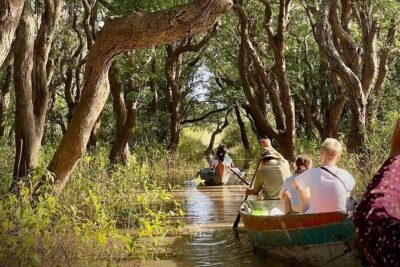
Sunset tour of Kampong Phluk stilts home village on the Tonle Sap
Read our review →
Browse the lists this tour appears in