Reviewed · TOURS
Cambodia Highlight 6 Days Tour from Siem Reap to Phnom Penh
Angkor Wat at sunrise is only the opening act. This six-day private trip takes you from Siem Reap’s ancient temples to Phnom Penh’s royal monuments and sobering Khmer Rouge memorials, with a long overland day linking the two cities. The range is impressive: you see major sights, lesser-visited ruins, markets, bridges, and city landmarks without having to arrange every transfer yourself.
I like two things especially. Your guide and driver stay with your private group, so you can ask questions, adjust the pace when possible, and get help with small matters such as photos, drinking water, and cooling towels. I also like the mix of famous and less familiar stops, from Angkor Wat and Ta Prohm to quiet Ta Nei and the Skun spider market.
The main drawback is the pace. Day 2 covers a remarkable number of Angkor sites after a 4:30 AM start, while Day 5 packs much of Phnom Penh into one long sightseeing day. You will see a lot, but this is not a slow, stay-in-one-place holiday.
In This Review
- Key points to know before booking
- What the six-day route is really like
- Day 1: A smooth arrival in Siem Reap
- Day 2: Angkor Wat, Angkor Thom, and Ta Prohm
- Day 3: The quieter side of Angkor
- Day 4: Leaving Siem Reap by road
- Day 5: Phnom Penh from palace to prison
- Guides, drivers, and the value of a private vehicle
- Who should book this Cambodia tour?
- Should you book it?
- FAQ
- Where does the tour begin?
- Where does the tour finish?
- Is this a private tour?
- Is an English-speaking guide included?
- Are temple and sightseeing entrance fees included?
- What meals are included?
- What hotel categories are available?
- Is there an extra charge for a single room?
Key points to know before booking
- Angkor Wat begins at 4:30 AM: You’ll reach the temple for sunrise, then return to the hotel for breakfast before continuing the day.
- The tour is private: Only your own group takes part, with an English-speaking licensed guide and driver.
- Three hotel levels are offered: Choices range from three-star properties to four- and five-star options, with different hotels used in Siem Reap and Phnom Penh.
- The temple program is broad: The plan includes Angkor Wat, Angkor Thom, Bayon, Ta Prohm, Banteay Srei, Preah Khan, and several smaller monuments.
- Phnom Penh’s difficult past is part of the trip: Tuol Sleng and Choeung Ek are included, giving the tour serious historical weight.
- Small comforts matter here: Bottled water, fresh tissues, breakfast, transport, and entrance fees for listed sights are included.
What the six-day route is really like
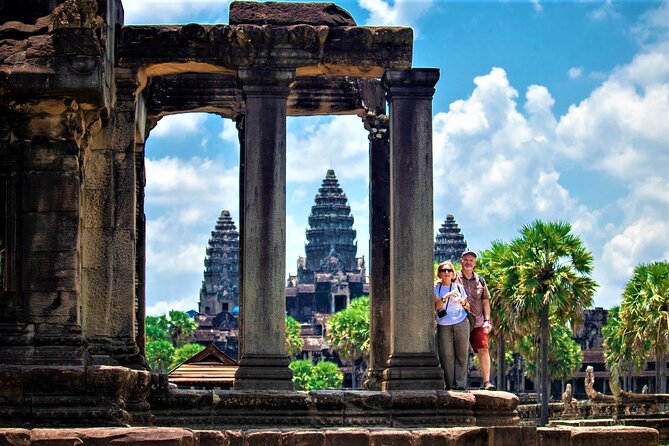
This tour works as a compact Cambodia introduction. You begin in Siem Reap, where the Angkor temples require several days to appreciate, then travel south toward Phnom Penh. The route combines archaeology, present-day city life, royal Cambodia, and the history of the Khmer Rouge period.
You receive five breakfasts, hotel accommodation based on double, twin, or triple occupancy, transport, entrance fees for the listed sights, an English-speaking licensed guide, drinking water, and fresh tissues. A single room costs an additional 40 percent of the adult price.
The listed price is $759.05 per person. That is not a budget independent trip, but the value depends on how much help you want. You are paying for a private vehicle, guide, airport transfers, hotels, entry fees, and a carefully linked route across two cities. If you would rather choose cheap rooms, public transport, and your own temple schedule, you can likely spend less. If you have only six days and want the logistics handled, the price is easier to justify.
Other Siem Reap experiences to weigh up
- Highlight of Angkor Temples 6 Days Cambodia Tour
5.0 · 4 reviews
Day 1: A smooth arrival in Siem Reap
Your guide and driver meet you at Siem Reap Angkor International Airport and take you into the city. The transfer is listed as about two hours, including the welcome and an introduction to local life and the city.
This is a useful first contact rather than a sightseeing day. You can check into your hotel, recover from the flight, and receive information about the next morning. Since Day 2 begins before dawn, use this evening for rest rather than trying to add a busy extra activity.
Hotel choices listed for Siem Reap include Royal Crown Hotel & Spa at the three-star level, Regency Angkor Hotel at the four-star level, and Angkor Paradise Hotel at the five-star level, or similar properties. Confirm the exact property and room category before paying, since the phrase or similar allows the operator to substitute.
Day 2: Angkor Wat, Angkor Thom, and Ta Prohm
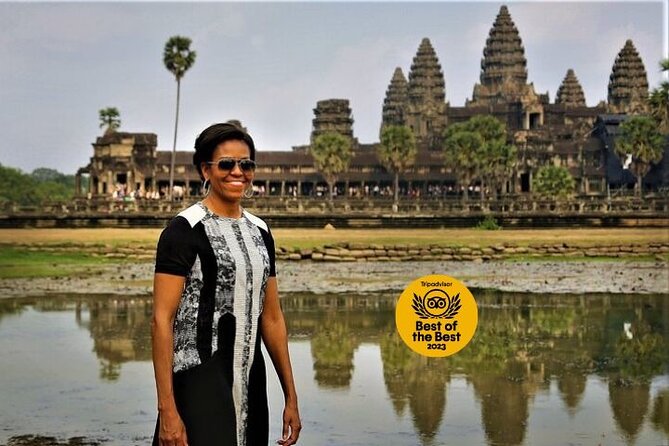
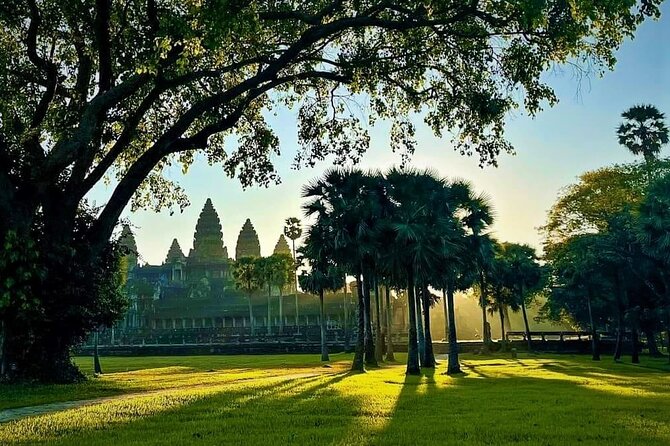
The early start is demanding but worthwhile. At 4:30 AM, you transfer to Angkor Wat for sunrise. The sunrise itself can be crowded, and weather can affect the view, so you should treat it as a chance to see the temple at first light rather than a guaranteed postcard scene.
After sunrise, you explore Angkor Wat before returning to the hotel for breakfast. The three-hour block listed for Angkor Wat includes both the early visit and temple exploration, though the exact timing can change with conditions and the guide’s plan.
Angkor Wat rewards explanation. Its galleries, towers, and carved scenes make far more sense when someone points out the religious ideas and design choices behind them. A good guide can also help you avoid simply rushing from one photo spot to the next.
The South Gate of Angkor Thom follows. Its restored face towers and surviving heads make it one of the easiest entrances to recognize, but the stop is brief at about 35 minutes. From there, Bayon receives about an hour.
Bayon is very different from Angkor Wat. The temple’s famous towers carry large stone faces, and the close, maze-like layout creates a more intimate visit. Your guide’s explanation is useful here because the structure and earliest building phases are not fully clear, while its place at the center of a royal city gives it a strong political role.
You then walk through Angkor Thom, the former Khmer imperial capital. The hour allotted here helps you understand the city as more than a collection of ruins. Baphuon, Phimeanakas, the Terrace of the Elephants, and the Terrace of the Leper King fill out the royal center.
Baphuon rises on a long sandstone base and has a broad, tiered design. Phimeanakas sits within the old Royal Palace area, while the two terraces are best read as ceremonial spaces decorated with carved figures and animals. These stops are less instantly famous than Angkor Wat, but they help explain how the capital functioned.
Ta Nei offers a change of mood. This small temple sits deeper in the forest and sees fewer visitors than the major monuments. It is difficult to find independently, so having a driver and guide adds real value. Allow about 45 minutes.
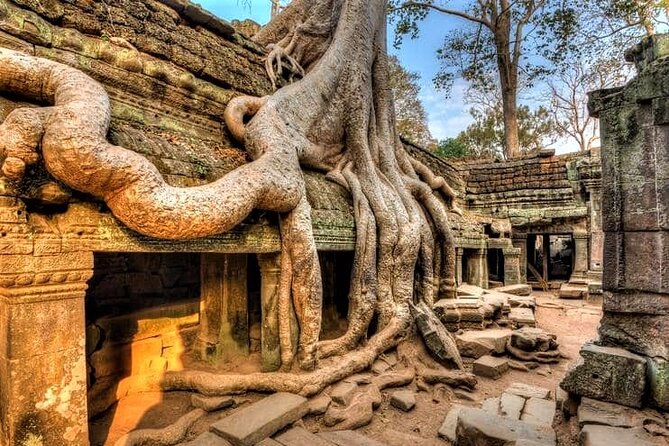
The day ends at Ta Prohm, with 90 minutes scheduled. Trees and roots cover parts of the temple, creating the atmospheric scene many people hope to find at Angkor. The site has been cleared and strengthened for safety, but much of its rough character remains.
This is an ambitious day. You will likely feel tired before Ta Prohm, and the heat can build quickly. The private vehicle helps because you can return to air conditioning between sites, and the guide and driver can keep water and fresh tissues on hand. Past groups have especially appreciated guides such as Mr. Leap and Mr. Sara for explaining the temples in clear English, taking photos, and making the long day easier.
Day 3: The quieter side of Angkor
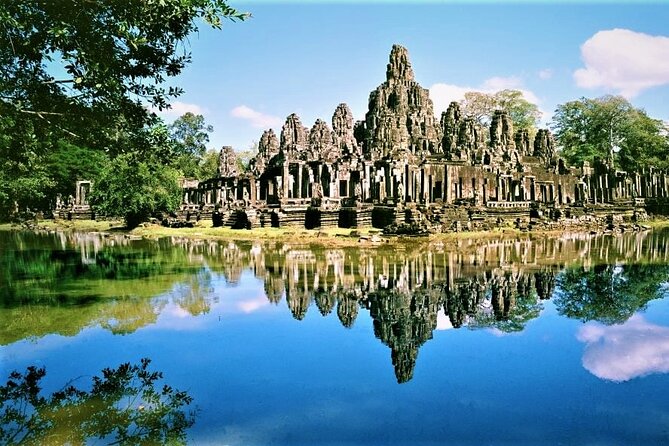
Day 3 covers the Grand Circuit and outlying temples. It is still full, but the rhythm is often calmer than Day 2 because the stops are more spread out.
Banteay Samre begins the day. Its restored complex has a compact, enclosed feel, and the restoration method has helped return much of the structure to view. The condition is not perfect, and signs of limited upkeep may be visible, but that is part of what makes the site different from the polished routes.
Banteay Srei is one of the tour’s strongest inclusions. The temple is smaller than Angkor Wat, yet its fine sandstone carvings are unusually detailed. The stop lasts about an hour. You should pay attention to the lintels and doorways rather than judging the site by size.
Preah Khan is next, with an hour to explore. Built in the late 12th century by Jayavarman VII and dedicated to his father, it combines long galleries, courtyards, and carved stonework. The temple feels more like a broad complex than a single monument, so a guide helps you see how its religious and royal functions fit together.
Neak Pean is reached by a walkway over a man-made pond. The water-centered design gives you a break from climbing and enclosed corridors, though the visit is shorter at about 45 minutes. Ta Som is another compact temple, quiet and partly unrestored, with trees growing around some of its features.
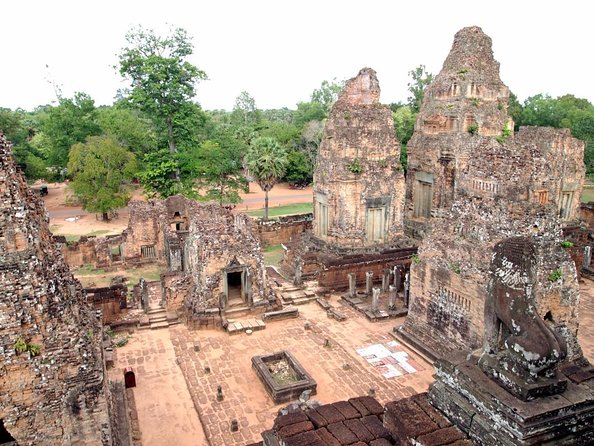
Pre Rup and Eastern Mebon close the temple day. Pre Rup is a strong, balanced brick-and-laterite monument with broad upper levels. Eastern Mebon was built on an artificial island in the old East Baray reservoir, which is now dry. These temples help you compare different periods and building styles instead of treating all Angkor monuments as one repeated scene.
The three-day Siem Reap program is a major strength for anyone who wants more than a quick Angkor Wat visit. The tradeoff is repetition and physical effort. You will spend much of the day walking over uneven stone, climbing steps, and moving in and out of the vehicle.
A different pace for your next Siem Reap morning:
- Angkor Wat Sunrise or Sunset Tour with Guide from Siem Reap
5.0 · 12,109 reviews - Siem Reap: Angkor Wat: Small-Group Sunrise or Sunset Tour
5.0 · 9,444 reviews - From Siem Reap: Kampong Phluk Floating Village Tour by Boat
4.9 · 6,979 reviews - Sunset tour of Kampong Phluk stilts home village on the Tonle Sap
5.0 · 4,865 reviews
Day 4: Leaving Siem Reap by road
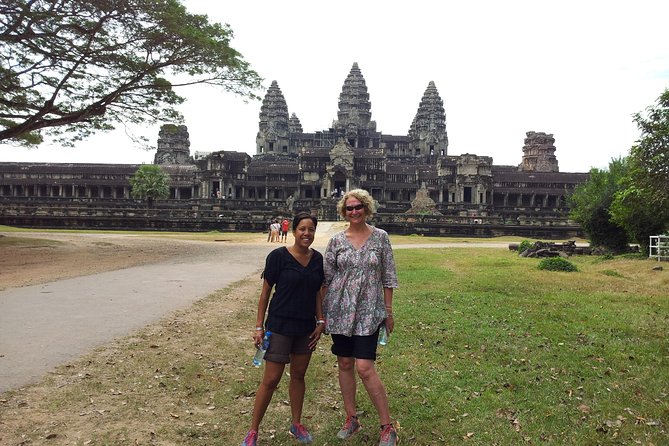
Day 4 changes from temple touring to a road journey toward Phnom Penh. The first stop is Spean Praptos, also called Kampong Kdei Bridge or Dragon Bridge. This ancient laterite bridge is presented as more than 1,000 years old and is a useful reminder that Khmer engineering extended beyond temples.
The Stone Statue Shop Road follows. You will see workshops and shops producing stone statues, including large pieces intended for Buddhist temples. This is a commercial stop, so approach it as a look at local craft and production rather than an essential monument. If you buy something, remember that a heavy stone item may be difficult to carry for the rest of your trip.
Skun is the unusual final stop. Its market is known for fried spiders, an experience that may appeal to curious eaters but can feel uncomfortable if insects are not your thing. You do not need to make this the highlight of your day. It is simply a distinctive roadside stop that breaks up the drive.
The itinerary does not give a total driving time for this day, but moving from Siem Reap to Phnom Penh makes it one of the tour’s longer transport days. Your Phnom Penh hotel options include King Grand Boutique Hotel at three-star level, Sun & Moon Urban Hotel at four-star level, and Sun & Moon Riverside at five-star level, or similar properties.
Day 5: Phnom Penh from palace to prison
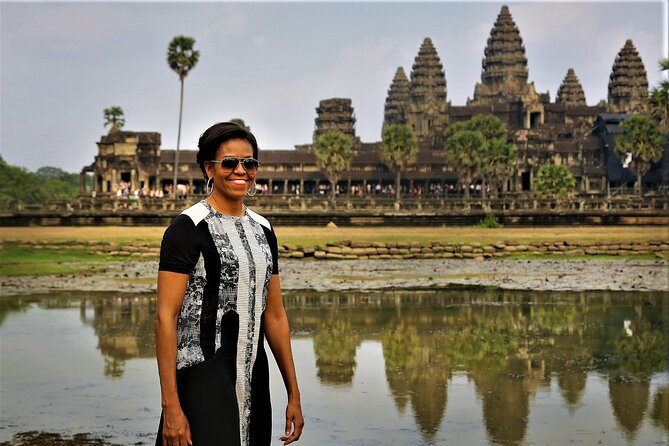
Day 5 is packed with Phnom Penh sights. The city sits where the Mekong and Tonlé Sap rivers meet, and the opening city orientation gives you a sense of its riverfront, parks, restaurants, and urban life.
The Royal Palace and Silver Pagoda receive a combined two and a half hours. The palace began in 1886 after King Norodom moved the royal capital to Phnom Penh. The grounds offer a clear introduction to Cambodia’s modern monarchy and ceremonial architecture.
The Silver Pagoda is next door, set within garden grounds. The name refers to its silver-tiled floor, though the value of the visit lies in the whole setting, not just one feature. Dress and behavior should be respectful because this is an active religious and royal site.
Wat Phnom rises on the city’s only hill, a tree-covered knoll about 27 meters high. It is linked to the legend of Lady Penh and the Buddha images she found. The stop takes about 45 minutes and gives you a brief change from the flat streets and formal palace grounds.
The Independence Monument commemorates independence from France in 1953. Wat Ounalom, one of Phnom Penh’s five original monasteries, adds a religious and institutional layer near the riverfront.
The most serious part of the day comes at Tuol Sleng Genocide Museum and Choeung Ek Genocidal Center. Tuol Sleng was formerly a secondary school used as Security Prison 21 by the Khmer Rouge. Choeung Ek, about 17 kilometers south of Phnom Penh, was an orchard and mass grave site used between 1975 and 1979.
These places are essential for understanding Cambodia, but they are emotionally heavy. Give yourself time to process what you see. The audio material and preserved rooms can be difficult, and the schedule does not offer a separate recovery period before the next city stop.
Central Market follows, with its 1937 domed building and four broad arms of stalls. It is a practical place to see daily commerce and shop for small goods. The day closes at the bronze statue honoring King Father Norodom Sihanouk, a short stop that connects the city’s recent political story with its royal past.
Ten stops in one day is a lot. The benefit is that you cover the main Phnom Penh landmarks without arranging tuk-tuks or taxis. The cost is limited time at each place, especially if traffic slows the group.
Guides, drivers, and the value of a private vehicle
The human side of this tour matters as much as the schedule. Guides named Mr. Leap and Mr. Sara have been especially praised for clear English, humor, temple explanations, cultural context, and a helpful attitude. Those names do not guarantee your assigned guide, but they show the type of service the operator has provided on past departures.
Drivers named Mr. Orr, Mr. Art, Pheap, La, and Mr. Pip have also been singled out for careful driving and attention to comfort. You should expect a separate driver and guide, with water, sanitary wipes or fresh tissues, and cooling towels available during temple days.
A private tour gives you more personal attention than a large coach trip. You can ask why a carving matters, request help with photographs, and avoid sharing the vehicle with strangers. The schedule is still fixed enough that you should not assume every stop can be removed or extended.
Who should book this Cambodia tour?
I would recommend it to a first-time visitor with six days, especially if you want both Angkor and Phnom Penh. It suits couples, families, and small groups who value a private vehicle, hotel choices, included admission fees, and a guide who can explain Cambodia beyond the standard facts.
It is also a good fit if you want the Khmer Rouge sites included but do not want to plan the route yourself. The subject is difficult, yet leaving it out would give you an incomplete picture of the country.
I would hesitate if you dislike early mornings, long driving days, or tightly scheduled sightseeing. Independent visitors who prefer one temple per day, low-cost accommodation, or spontaneous meals may find the $759.05 price too high. Also check the exact hotel level carefully. The program lists three-, four-, and five-star options, so your experience can differ depending on the category selected.
The cancellation terms allow a full refund if you cancel at least six full days before the start time. Cancellation two to six full days ahead receives a 50 percent refund, while cancellation less than two full days ahead is not refunded. The cut-off follows local time.
Should you book it?
Book this tour if your priority is maximum coverage with minimum planning. In six days, you get sunrise at Angkor Wat, a serious three-day temple program, a road journey south, Phnom Penh’s key sights, and the country’s most important genocide memorials.
Skip it if you want a leisurely schedule or plan to spend your whole trip around Siem Reap. The strongest reason to choose it is the combination of private transport and strong guide support. The biggest warning is the pace. If you can handle early starts and full sightseeing days, this is a practical way to get a wide, meaningful introduction to Cambodia.
FAQ
Where does the tour begin?
The tour begins with pickup at Siem Reap Angkor International Airport in Siem Reap, Cambodia.
Where does the tour finish?
The tour ends with a transfer from your Phnom Penh hotel to Techo International Airport. The final airport transfer is provided without a guide.
Is this a private tour?
Yes. Only your own group participates in the private activity.
Is an English-speaking guide included?
Yes. An English-speaking licensed tour guide is included.
Are temple and sightseeing entrance fees included?
Yes. Entrance fees for all sites listed in the tour program are included.
What meals are included?
Five breakfasts are included during the six-day experience. Other meals are not listed as included.
What hotel categories are available?
Siem Reap accommodation options include three-star, four-star, and five-star properties or similar hotels. Phnom Penh also offers three-star, four-star, and five-star options or similar properties.
Is there an extra charge for a single room?
Yes. A single room carries an additional charge of 40 percent of the adult price.
Fresh reviews from around Siem Reap
- Full-Day Tour Preah Vihea & Koh Ker Temple 3.7 · 3 reviews
- Savor the Countryside: Tours with Authentic Cooking Classes” 5.0 · 3 reviews
- Angkor Wat Sunrise TukTuk Tour 5.0 · 3 reviews
- Angkor Grand Circuit Tour & Banteay Srei 5.0 · 3 reviews
- Guided Private Tuk Tuk Tour Angkor Wat and Small Circle and Five Extras 5.0 · 3 reviews
- Siem Reap Temple Tour 2-Day with Sunrise/Sunset 3.7 · 3 reviews
- Bangkok to Angkor Wat 2 Days 1 Night by Flight 4.5 · 3 reviews
- Kompong Pluk Tour 5.0 · 3 reviews
Tours, compared.

Angkor Wat Sunrise or Sunset Tour with Guide from Siem Reap
Read our review →
Sunset tour of Kampong Phluk stilts home village on the Tonle Sap
Read our review →