
Reviewed · ANGKOR TEMPLE TOURS
Angkor Wat Sunset Tour
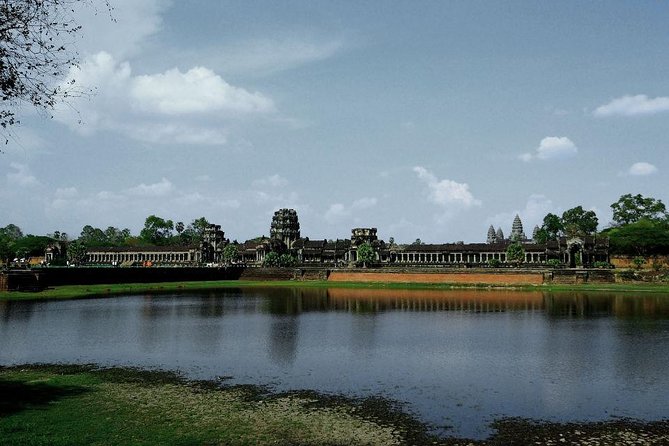
Angkor Wat is only the opening act here. From the great temple, you move through Angkor Thom, the face-covered towers of Bayon, tree-wrapped Ta Prohm, and finish with sunset from Phnom Bakheng. I like the full-day route and the cool water and towels, which matter in Cambodia’s heat.
I also like the private format. Your guide can spend more time on questions, and past guide names include Nary, Kim, and Kea Simon. The main drawback is the long day, with plenty of walking, steep steps, and a sunset stop that can feel crowded.
In This Review
- Key points at a glance
- What this $48.50 Angkor Wat day includes
- Starting at Angkor Wat around 8:00 am
- Entering Angkor Thom through the South Gate
- Reading the faces at Bayon Temple
- Climbing the pyramid at Baphuon
- The Elephants and Leper King terraces
- Ta Prohm, where trees claim the ruins
- Sunset from Phnom Bakheng
- Guides, vehicles, and the private format
- The long day and what to prepare
- Who should book the Angkor Wat Sunset Tour?
- FAQ
- What time does the Angkor Wat Sunset Tour start?
- Is the Angkor Park entrance ticket included?
- Is hotel pickup available?
- Is this a private tour?
- Are meals included?
- What does the cancellation policy allow?
Key points at a glance
- Sunrise is not the plan: Pickup begins at 8:00 am, giving you a full day of temple visits before sunset at Phnom Bakheng.
- Five major temple areas: Angkor Wat, Bayon, Baphuon, Ta Prohm, and the terraces of Angkor Thom form the backbone of the day.
- Private group touring: Only your own group participates, so you can ask questions and set a comfortable pace within the schedule.
- The park ticket costs extra: The tour price is $48.50 per person, but the one-day Angkor Park ticket is listed separately at $37.
- Guiding is a major strength: English-speaking guides such as Mr. Nary, Mr. Kim, and Kea Simon are praised for clear explanations and friendly service.
- Sunset requires stamina: Phnom Bakheng involves a climb and can be popular, so the final stop is rewarding but not quiet or effortless.
What this $48.50 Angkor Wat day includes
The tour costs $48.50 per person and lasts about nine to ten hours. That price covers transport in your chosen vehicle, a professional English-speaking guide, bottled water, and cold towels. Hotel pickup and drop-off are available if requested.
The Angkor Park admission ticket is not included. Budget another $37 for a one-day ticket, bringing the basic total to $85.50 per person before tips, drinks, or food. Lunch and buffet dinner are optional, so check the exact meal arrangement when booking rather than assuming it is part of the base price.
For a private tour covering this much ground, the price can make sense, especially if you value a guide and door-to-door transport. You are not simply paying to be driven between temples. You get help understanding the carvings, religious ideas, royal projects, and changing role of each site.
The value is less clear if you only want a quick visit to Angkor Wat. You will spend most of the day moving through several large temple compounds, and the added park ticket makes this a serious sightseeing expense. I would choose it when you want one organized day that handles the major sights in a logical order.
More Angkor temple itineraries:
- Angkor Wat Sunrise or Sunset Tour with Guide from Siem Reap
5.0 · 12,109 reviews - Siem Reap: Angkor Wat: Small-Group Sunrise or Sunset Tour
5.0 · 9,444 reviews - Siem Reap: Angkor Wat 2-Day Tour with Sunrise and Sunset
4.9 · 4,429 reviews
Starting at Angkor Wat around 8:00 am
Pickup begins at 8:00 am. The first practical stop is the Angkor Enterprise office, where the group purchases the Angkor Park ticket. Since the admission cost is separate, have your budget ready for that purchase.
Angkor Wat receives about two hours. That is enough for a guided introduction to the temple and time to see its main galleries, towers, courtyards, and long approach. The scale is the point here: this is not a small ruin you can understand in ten minutes.
A guide adds real value at Angkor Wat because the site can otherwise become a blur of stone corridors and carved figures. The temple was built as a major religious center, and its layout carries meaning. Ask your guide to explain the carvings and the way the building was planned, not just the names of rooms.
You should expect walking on uneven surfaces and exposure to the sun. The bottled water and cold towels are small inclusions, but they are useful ones. Keep the water with you and take the towel when the heat begins to wear you down.
Entering Angkor Thom through the South Gate
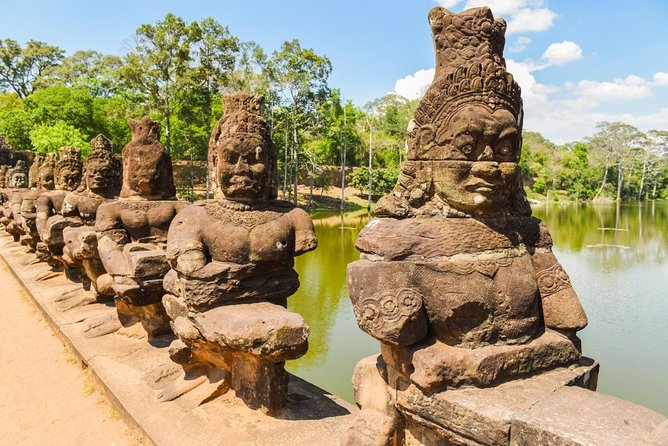
The drive to Angkor Thom’s South Gate is brief, with about 15 minutes set aside for the entrance. This is one of the most photographed parts of the park, thanks to the long approach, guardian figures, and monumental faces that frame the gate.
The South Gate is more than a quick photo stop. It gives you a first sense of Angkor Thom as a planned royal capital rather than a collection of isolated temples. The road and gate create a formal entrance into the former city.
Time here is short, so do not expect a long lesson or a slow architectural study. I would use the stop for photographs, then listen closely as the guide explains how the gate fits into the larger city.
Reading the faces at Bayon Temple
Bayon sits at the center of Angkor Thom and receives about an hour. Its 54 towers, decorated with large faces associated with Avalokiteshvara, create one of the most memorable sights in Cambodia.
The faces seem to watch from different angles as you move through the temple. That changing view is what makes Bayon more than a quick stop for a photograph. You see the temple differently from the outer galleries, inner passages, and raised areas.
Bayon can feel confusing without a guide. Towers overlap, corridors turn sharply, and the carvings compete for attention. An English-speaking guide can give you a path through the building and point out details you might otherwise miss.
The hour should work well for a first visit, though you may wish for more time if you enjoy close study of reliefs. The private format helps here. Guides named in the supplied details, including Nary, Kim, and Kea Simon, are described as clear, friendly, and ready to answer questions. Your assigned guide may differ, but those are useful examples of the service style to expect.
Other Siem Reap experiences to weigh up
- Sunset tour of Kampong Phluk stilts home village on the Tonle Sap
5.0 · 4,865 reviews - Siem Reap: Full-Day Angkor Wat Guided Tour with Sunset
4.9 · 3,803 reviews - Angkor Wat Sunset Small Group Tour with Lunch Included
5.0 · 3,059 reviews - Angkor 2-Day Sunset & Sunrise Small-Group Tour
5.0 · 2,567 reviews
Climbing the pyramid at Baphuon
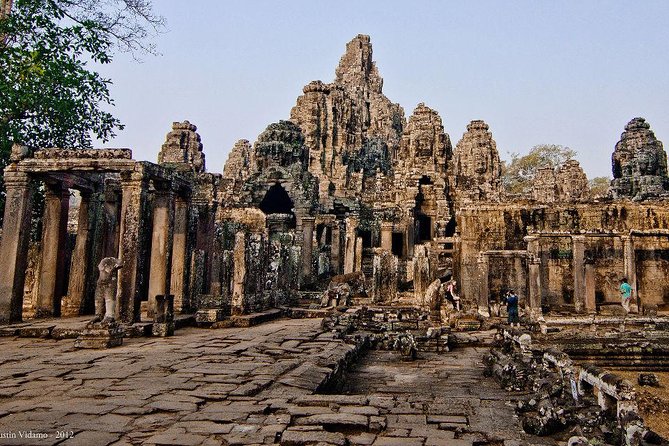
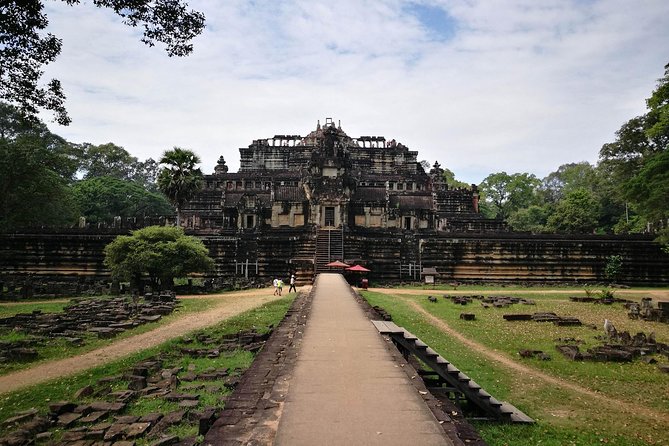
Baphuon sits west of Bayon and gets about an hour. Its pyramid form and steep stairs give it a different character from Bayon’s crowded towers and enclosed galleries.
You climb toward terraces that offer views over Angkor Thom. The steps are part of the experience, but they also make this stop less easy for anyone who dislikes heights or has trouble with stairs. The tour is described as suitable for many visitors, yet that does not remove the physical demands of an ancient temple park.
I like the way Baphuon breaks up the day. After the close corridors at Bayon, you get a more open climb and a sense of the temple as a mountain shrine. Wear footwear that feels secure, and save some energy for Ta Prohm and the evening climb at Phnom Bakheng.
The Elephants and Leper King terraces
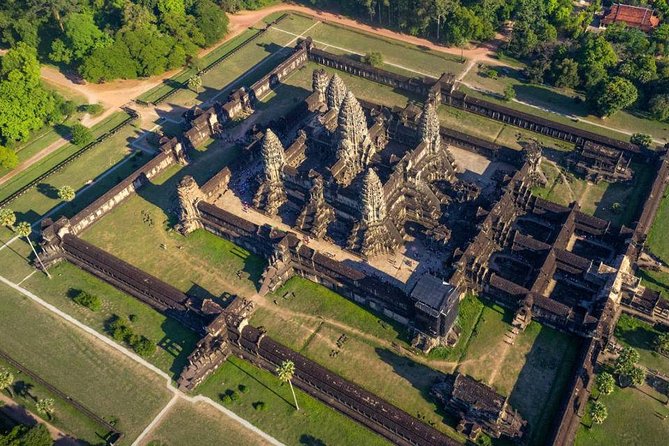
The Terrace of the Elephants and Terrace of the Leper King share about an hour. These long platforms served as places from which King Jayavarman VII could view victorious armies, giving the site a strong connection to royal display and public ceremony.
The carvings are the main reason to stop. Elephant figures and other carved details run along the terraces, while the long platforms help you understand how the royal center was arranged.
This is not a temple visit with a dramatic interior. You will spend more time looking at walls, reliefs, and the relation between the terraces and the former city. A guide is especially useful here because the significance is easy to miss if you only take a few pictures and move on.
An hour allows a steady look without making the stop drag. By this point, however, the day is already busy. If you are tired, ask the guide to focus on the clearest examples rather than trying to inspect every carved section.
Ta Prohm, where trees claim the ruins
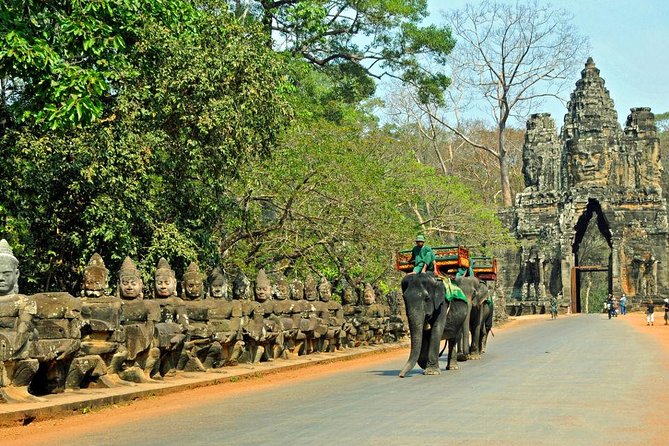
Ta Prohm receives about two hours, making it one of the longest stops of the day. The temple is famous for scenes connected with the film Tomb Raider, but the real draw is the way enormous tree roots wind through the masonry.
Ta Prohm gives you the strongest feeling of an abandoned temple reclaimed by nature. Roots press against walls, doorways frame tangled trunks, and the stonework feels less orderly than at Angkor Wat. It is atmospheric without needing a movie connection.
The fame comes with a trade-off. Ta Prohm is one of the park’s best-known sights, so the most photogenic corners can be busy. The two-hour allowance is helpful because you are not forced to rush through the site. You can wait for a clearer view, listen to the guide, and look beyond the standard tree-root photograph.
The long stop also adds physical strain. You have already walked through Angkor Wat, Bayon, Baphuon, and the terraces. Use the water and cold towel, and treat the shaded sections as a chance to recover.
Sunset from Phnom Bakheng
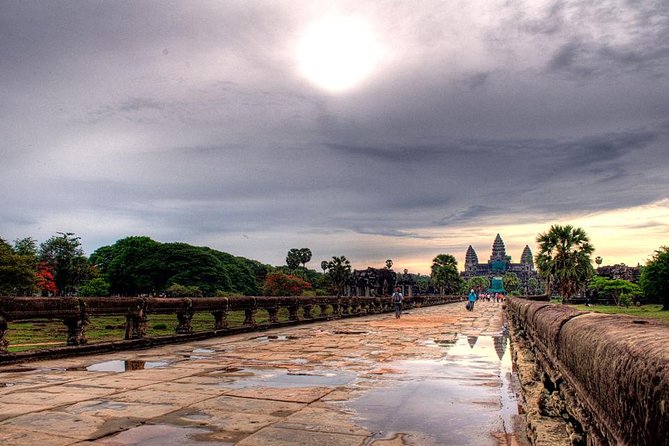
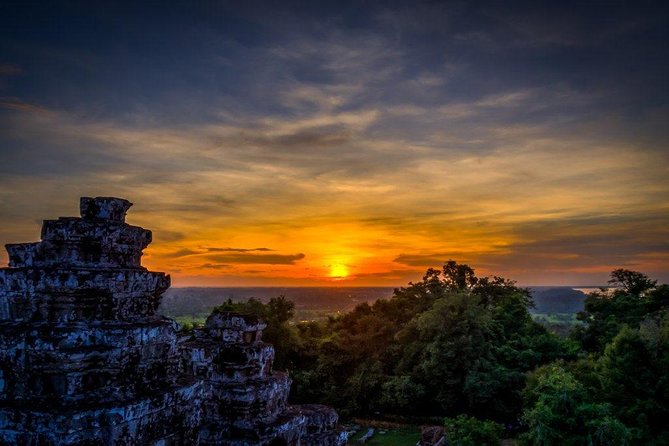
The day ends at Phnom Bakheng, a mountain within the Angkor Archaeological Park. A temple sits on top, and the high point gives views over the ruins and the surrounding area as daylight fades.
About two hours are set aside for this final stop. That includes the climb, time around the temple, and waiting for sunset. The timing is sensible because sunset is not a quick photograph. You need time to reach the top and find a place to watch.
Phnom Bakheng is popular, so do not expect a private sunset. The appeal is the broad view and the changing light over the Angkor area. The experience can be beautiful, but it is also the point in the day when tired legs, heat, and crowds matter most.
The climb makes this a poor fit for anyone seeking a purely gentle temple tour. It is also worth keeping expectations realistic. A sunset depends on weather and visibility, and the tour can offer the viewpoint, not guarantee a perfect sky.
Still, I understand why this is the chosen finish. After a day of close stonework, carved faces, royal terraces, and tree-covered ruins, the view from above gives you a final pause. The sunset is not just another temple stop. It changes the pace and lets you look back at the scale of the park.
Guides, vehicles, and the private format
The tour uses a professional English-speaking guide and transport in your chosen vehicle. Hotel pickup and drop-off are available if requested. A private format means only your group participates, which is useful if you want to ask about religion, royal power, temple construction, or the stories shown in the carvings.
The supplied guide names include Mr. Nary, Mr. Kim, and Kea Simon. Nary is described as strong on Khmer history, while Kea Simon is noted for clear English, patient answers, and allowing enough time at each temple. Kim is paired with a helpful driver in one account, and the driving service is described as clean, friendly, and comfortable.
Do not treat a named guide as guaranteed unless the booking confirmation says so. Guide assignments can vary. The consistent practical pattern is the important part: clear English, friendly service, clean air-conditioned vehicles, bottled water, and cold towels.
The private setup is also good for mixed-energy groups. One person can ask questions while another takes photographs, and you can tell the guide when you need a short pause. The published schedule remains full, so private does not mean unhurried.
The long day and what to prepare
This is a nine to ten-hour experience beginning at 8:00 am. You should plan for a full day outside, with repeated walking, stairs, uneven temple surfaces, and a final uphill section.
The tour is described as suitable for most visitors, but the route is not physically light. Baphuon and Phnom Bakheng involve climbs, and the large temple compounds require steady walking. If you have mobility concerns, ask the provider before booking because the supplied information does not give detailed accessibility guidance.
Lunch and buffet dinner are optional. Since food is not part of the listed inclusions, confirm what you are buying before you pay. Soft drinks and alcohol are excluded, so bring funds for those if you want them.
Tips are recommended but not included. I would consider a tip for a guide who explains the sites well, answers questions, and keeps the day comfortable, as well as for a driver who provides safe, clean transport.
Free cancellation is available up to 24 hours before the start time for a full refund. Changes or cancellations inside that 24-hour window are not accepted for a refund, and the cut-off follows local time.
Who should book the Angkor Wat Sunset Tour?
I would choose this tour if you have one major day for Angkor and want to see more than the main temple. The route combines the essential sights with places that show different sides of Khmer architecture: Angkor Wat’s scale, Bayon’s faces, Baphuon’s pyramid, the royal terraces, Ta Prohm’s roots, and Phnom Bakheng’s sunset view.
It also suits you if you prefer a private guide over joining a large group. The English-language explanations, air-conditioned vehicle, water, and cold towels make the price easier to justify, especially for a small group sharing the experience.
I would hesitate if you dislike long sightseeing days or want a quiet sunset with no waiting. The tour covers a lot of ground, and the $48.50 price does not include the $37 park ticket, meals, drinks, or gratuities.
For most first-time visitors with limited time in Siem Reap, I would book it. Go in knowing that the day is full, the sunset is popular, and the best value comes from using the guide well. Ask questions, pace yourself, and do not judge the experience only by the final sky. The temple route is the real substance of the day.
FAQ
What time does the Angkor Wat Sunset Tour start?
The tour starts at 8:00 am and lasts approximately nine to ten hours.
Is the Angkor Park entrance ticket included?
No. The one-day Angkor Park ticket is listed at $37 and must be paid separately from the $48.50 tour price.
Is hotel pickup available?
Yes. Hotel pickup and drop-off are available if requested.
Is this a private tour?
Yes. Only your own group participates in the activity.
Are meals included?
Lunch and buffet dinner are optional. Bottled water and cold towels are included, while soft drinks and alcohol are not.
What does the cancellation policy allow?
You can cancel at least 24 hours before the local start time for a full refund. Cancellations or changes made less than 24 hours before the start time are not accepted for a refund.
Fresh reviews from around Siem Reap
- Full-Day Tour Preah Vihea & Koh Ker Temple 3.7 · 3 reviews
- Savor the Countryside: Tours with Authentic Cooking Classes” 5.0 · 3 reviews
- Angkor Wat Sunrise TukTuk Tour 5.0 · 3 reviews
- Angkor Grand Circuit Tour & Banteay Srei 5.0 · 3 reviews
- Guided Private Tuk Tuk Tour Angkor Wat and Small Circle and Five Extras 5.0 · 3 reviews
- Siem Reap Temple Tour 2-Day with Sunrise/Sunset 3.7 · 3 reviews
- Bangkok to Angkor Wat 2 Days 1 Night by Flight 4.5 · 3 reviews
- Kompong Pluk Tour 5.0 · 3 reviews
Angkor Temple Tours, compared.

Angkor Wat Sunrise or Sunset Tour with Guide from Siem Reap
Read our review →



Angkor Wat Sunrise tour with Small – Group and Guide tours
Read our review →
Angkor Wat Highlights and Sunrise Guided Tour from Siem Reap
Read our review →

Full-Day Angkor Wat Sunrise Private Tour with Guide from Siem Reap
Read our review →Browse the lists this tour appears in