
Reviewed · ANGKOR WAT SUNRISE TOURS
Angkor Wat Sunrise and Tonle Sap Lake 1.5 Days
Angkor Wat at sunrise is the heart of this two-day Siem Reap tour, but the early start is only half the story. You enter from the quieter eastern side while it is still dark, then spend the day moving through Angkor Thom, Bayon, the terraces, and Ta Prohm before returning to town. The second morning shifts from stone temples to life on Tonle Sap Lake.
I like the way the tour pairs Cambodia’s grandest monuments with Kampong Phluk’s floating village. I also like the small maximum group of 10, air-conditioned transport, hotel pickup, and an English-speaking guide who can explain both temple details and Khmer culture. The main drawback is the $37 temple pass, which is not included, plus a pre-dawn start around 4:10 to 4:30 a.m.
In This Review
- Key points at a glance
- A sunrise start that earns its alarm clock
- Angkor Wat, where the day begins
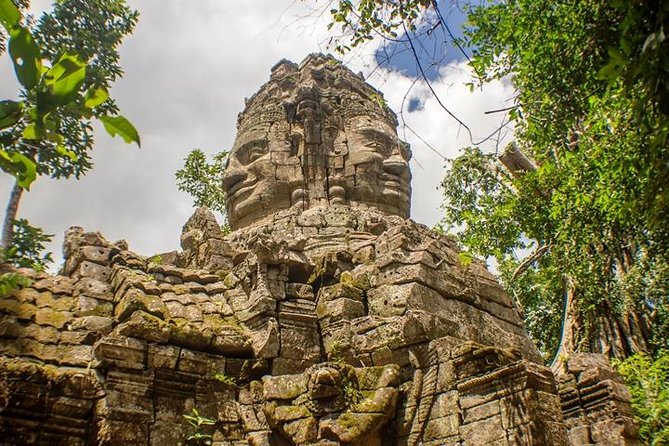
- Angkor Thom and the faces of Bayon
- The Terraces and the long central day
- Ta Prohm and Cambodia’s most atmospheric temple
- The $59 price and what it really covers
- Day two: Rolous Market and the road to Tonle Sap
- Kampong Phluk and the changing water of Tonle Sap
- What the guide and vehicle add
- Who should book this two-day route
- Should you book it?
- FAQ
- What time does the tour start?
- Is the Angkor temple pass included?
- Is the Tonle Sap boat cruise included?
- How large is the group?
- Are meals included?
- What should I wear for the temple visits?
Key points at a glance
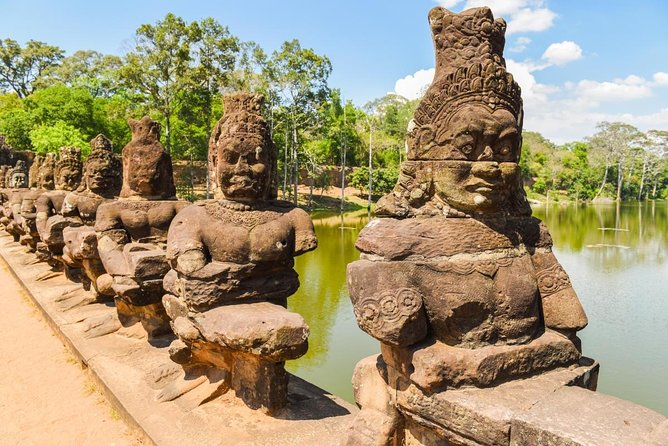
- Angkor Wat from the eastern side: Enter in darkness from a less-used approach for the sunrise visit.
- Four major Angkor stops in one day: Angkor Wat, Angkor Thom, Bayon, the terraces, and Ta Prohm make for a full temple day.
- Tonle Sap is included: The second day covers the lake entrance fee and boat cruise at Kampong Phluk.
- Mr Sokpee may guide your visit: If he is assigned to your group, expect strong explanations of the temples and Cambodian culture.
- Small-group transport: The vehicle is air-conditioned, hotel pickup and drop-off are included, and the group can reach up to 10 people.
- Budget carefully: The $59 tour price becomes $96 per person after adding the required temple pass, before meals.
A sunrise start that earns its alarm clock
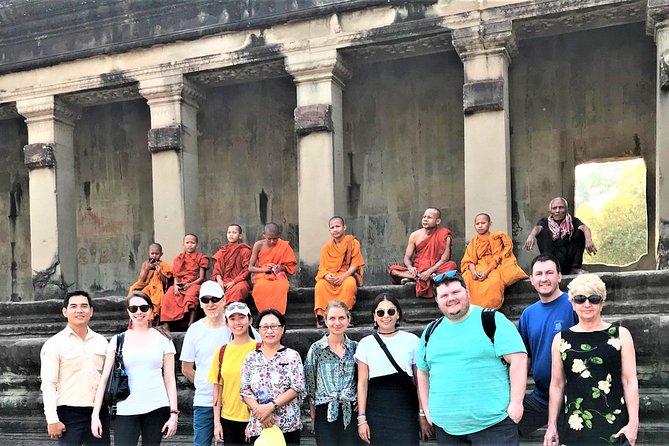
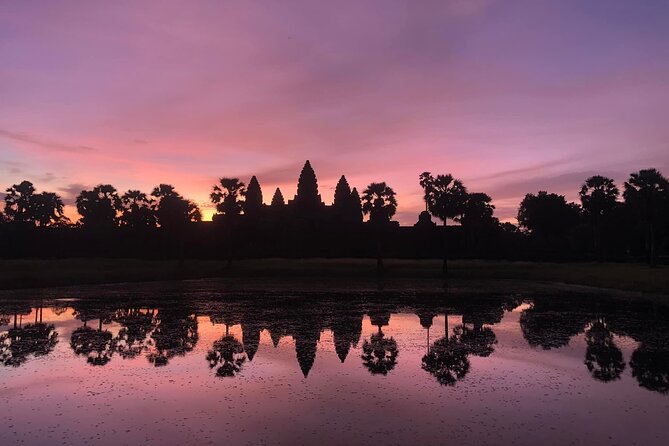
The first morning begins at roughly 4:10 to 4:30 a.m., depending on the season. That is brutally early, but it gives you a chance to reach Angkor Wat before the main daytime heat and to see the temple in a completely different mood.
The entrance from the eastern side is a useful detail. Instead of simply arriving at the most familiar front approach, you enter through a quieter side while the grounds are still dark. You will need comfortable walking shoes, and a small flashlight or phone light may be useful, though the tour information does not promise that one is provided.
Sunrise at Angkor Wat is not a guaranteed postcard every morning. Clouds and weather control the view, and the experience requires good weather to operate. Still, the timing gives the temple visit a clear purpose, rather than treating sunrise as a quick photo stop before a standard circuit.
You should also prepare for a long day on your feet. Angkor Wat alone receives about three hours, and the later stops add several more hours of walking and standing. Cover your knees and shoulders for the temples, and carry the mineral water provided by the tour.
More Tonle Sap lake trips:
- Sunset tour of Kampong Phluk stilts home village on the Tonle Sap
5.0 · 4,865 reviews - Siem Reap: Kulen Mountain, Beng Mealea and Tonle Sap Tour
5.0 · 1,483 reviews - Tonle Sap Lake & Kampong Phluk Village Half-Day Tour
5.0 · 1,045 reviews
Angkor Wat, where the day begins
Angkor Wat is the major event of the first day, and the three-hour stop gives you more than a brief look from outside. You enter the temple complex in darkness, wait for the sky to brighten, and then have time to examine the structure after sunrise.
The early hour changes the practical side of the visit. Cambodia can be hot, so starting before dawn means you handle the largest temple before the strongest heat. It also helps you make use of limited time in Siem Reap, since the tour covers several major sites in one day.
Your English-speaking guide is especially useful here. Angkor Wat is vast, and it is easy to spend your entire visit taking pictures without understanding what you are seeing. A guide can help turn the towers, galleries, carvings, and courtyards into a readable sequence.
One guide named in the tour feedback is Mr Sokpee. If he is leading your group, his explanations cover not only the temples but also Cambodian culture. That wider context matters, since this is not simply a collection of old buildings. The meaning of the site reaches beyond architecture.
The temple pass is not included. You pay the additional $37 directly at the site on the day of the activity. Factor this into your budget before booking, since the advertised $59 price does not cover the main Angkor admission.
Angkor Thom and the faces of Bayon
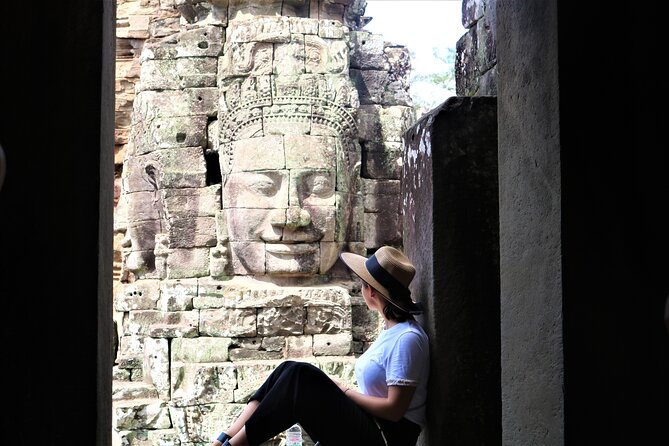
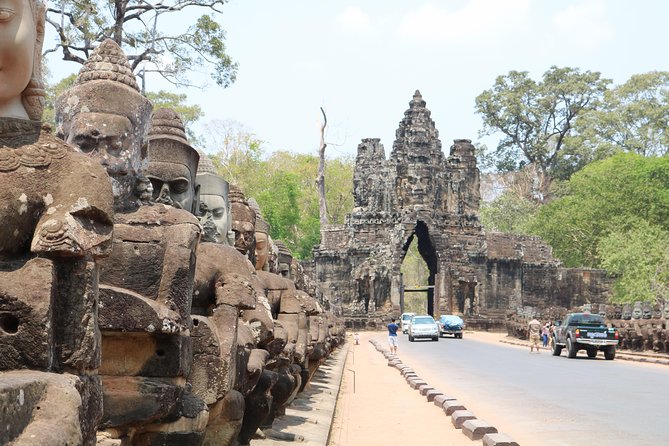
After Angkor Wat, the route continues to Angkor Thom South Gate for about 30 minutes. This was the gateway to the Khmer Empire’s capital, and the stop gives you a sense of the city’s scale before you move farther inside.
The South Gate is a short visit, but it works well as a transition. Angkor Wat can feel like a single monumental temple. Angkor Thom shows something broader: a planned royal city with defensive walls, gates, and major religious buildings.
The next stop at Angkor Thom lasts about an hour and a half. The key attraction is Bayon, the temple known for its large carved faces. This is a place where a guide can save you time and confusion, since the towers and passageways can look similar at first.
You should not expect a quiet, slow inspection of every corner. The itinerary moves at a practical pace because it has several major sites to cover. If you want to study each carving at length, a private or temple-only tour may suit you better.
For most people with only a short stay in Siem Reap, the tradeoff makes sense. You see the city gate, the central temple, and other parts of Angkor Thom without having to arrange your own driver or work out the route.
The Terraces and the long central day
The Terrace of the Elephants and the Terrace of the Leper King are included in a roughly two-hour section of the first day. The route description says you pass by both terraces, so think of this part as a visit along the royal ceremonial area rather than a separate, tightly defined temple stop.
The terraces help connect the grand temples with the daily business of a royal capital. You can pause to look at the stone carvings and the broad ceremonial setting, while your guide explains what made this part of Angkor important.
The two-hour allocation may include movement and time around both terraces, so do not read it as two full hours at each site. The schedule has already included Angkor Wat, Angkor Thom, and Bayon, and Ta Prohm is still ahead.
This is also the point where the day may begin to feel demanding. Bring water, use the transport when the group relocates, and do not wear shoes that are only suitable for photographs. Comfortable walking shoes are specifically recommended, and that advice is worth taking seriously.
More sunrise departures to Angkor Wat:
- Angkor Wat Sunrise or Sunset Tour with Guide from Siem Reap
5.0 · 12,109 reviews - Siem Reap: Angkor Wat: Small-Group Sunrise or Sunset Tour
5.0 · 9,444 reviews - Siem Reap: Angkor Wat 2-Day Tour with Sunrise and Sunset
4.9 · 4,429 reviews - Angkor Wat Sunrise tour with Small – Group and Guide tours
5.0 · 3,655 reviews
Ta Prohm and Cambodia’s most atmospheric temple
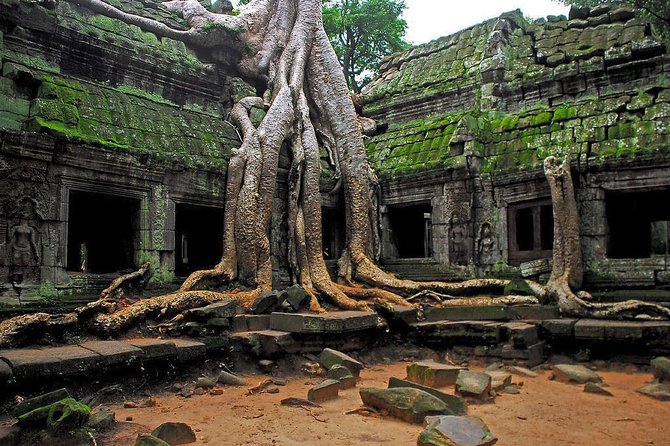
Ta Prohm receives about one hour and is likely to be the emotional high point for many people. It is the temple associated with trees, collapsed stone, and jungle growth, though the tour’s description focuses on its preserved, crumbling appearance.
The site once housed 2,740 monks, and it looked much as it did in the early 1850s when French explorer Henri Mouhot encountered it. Those details help explain why Ta Prohm feels different from Angkor Wat. You are not only looking at a finished monument. You are seeing a place where nature and masonry have remained locked together.
An hour is enough to get a strong impression, but it is not enough for an unhurried study of every passage. The tour’s goal is to give you the main Angkor sights in a single day, not to provide a specialist architectural survey.
By the time Ta Prohm ends, you will have covered a great deal. The advantage is efficiency. The cost is that the first day can feel full, especially after rising before dawn. I would treat the evening as recovery time rather than planning a demanding night out.
The $59 price and what it really covers
At $59 per person, the tour is reasonably priced for a guided two-day program with hotel transport, a vehicle, and a Tonle Sap boat trip. The value improves if you want to see both the Angkor temples and the lake without hiring separate transport or planning your own route.
The required $37 temple pass changes the final calculation. Your practical total is $96 per person before meals, since the pass is paid separately and food is not included.
What you receive for the tour price includes:
- A licensed English-speaking guide
- Air-conditioned transport
- Hotel pickup and drop-off
- Mineral water
- Tonle Sap entrance fee and boat cruise
- A visit to Kampong Phluk fishing village
Meals are available at your own choice, but they are not included. This gives you some control over spending, though you should not assume that food stops are built into the quoted price.
The group size is limited to 10 people, with at least two people required per booking. That is a useful middle ground. You avoid the cost of a fully private tour, while the group should remain small enough for the guide to speak to people without shouting across a large bus.
Day two: Rolous Market and the road to Tonle Sap
The second day starts with hotel pickup and a trip through small communities toward the lake. The first stop is Rolous Market, lasting about 20 minutes.
This is not presented as a major market expedition. It is a short chance to see a local market setting and take photographs before continuing to the village. Keep your expectations in proportion: you have 20 minutes, not half a morning to shop or watch market life unfold.
The route through smaller communities adds a useful change of pace after the grand scale of Angkor. Day one is about empire, temples, and royal power. The second day gives you a look at present-day rural Cambodia and the water-based economy around Tonle Sap.
The contrast is one of the tour’s strongest features. You are not spending two days looking at similar ruins. You move from carved stone to fishing village, from a pre-dawn monument to a working lake environment.
Kampong Phluk and the changing water of Tonle Sap
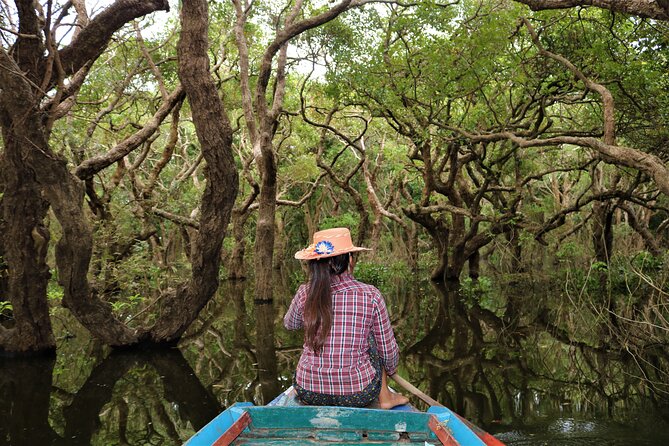
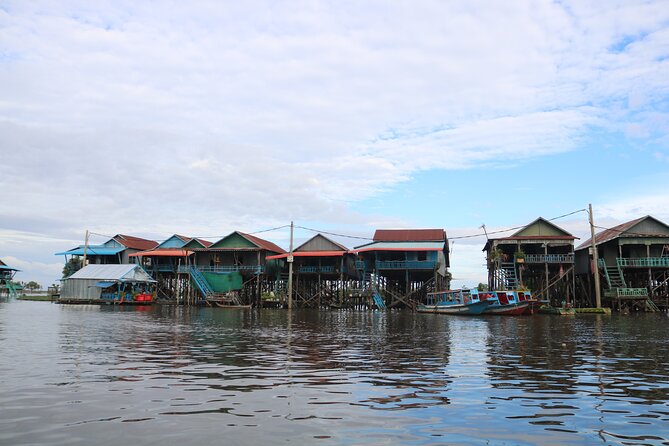
Kampong Phluk is the main event on day two, with about three hours devoted to the village and boat cruise. The Tonle Sap is one of the world’s most productive freshwater bodies, and its size changes sharply during the year.
In the wet season, the lake can expand to about 12,000 square kilometers. During the dry half of the year, it can shrink to around 2,500 square kilometers as water drains away. That seasonal change shapes how the villages look and how boats move through them.
The tour includes the Tonle Sap entrance fee and boat cruise, so you do not need to arrange those separately. The boat gives you a way to see Kampong Phluk from the water, where the relationship between the village and the lake becomes easier to understand.
Conditions will vary by season. A floating village can look and function differently when the lake is high than when water levels are low. That is not a flaw in the tour, but it is important to know that the scenery and boat route may not look identical throughout the year.
Three hours is a useful amount of time for this visit. It gives you room for the road journey, the market stop, and the cruise without reducing the lake visit to a rushed photo break.
What the guide and vehicle add
The air-conditioned vehicle is more than a comfort feature in this setting. The first day begins in the early morning and covers multiple temple areas, while the second day takes you beyond the city toward the lake. Having transport organized keeps you from dealing with directions, parking, and separate fares.
The guide is the part that can most affect the quality of the experience. At Angkor, good explanations help you understand why the gates, faces, terraces, and temples matter. At Kampong Phluk, the guide can connect what you see on the water with the seasonal behavior of Tonle Sap and village life.
The strongest praise connected with this tour focuses on the guide and the learning involved. Mr Sokpee is specifically named, and the feedback describes him as extremely well informed about the temples and Cambodian culture. You cannot guarantee that every departure will have the same guide, but the operator supplies a licensed English-speaking guide.
The maximum of 10 people is another practical advantage. You still have a group experience, not a private one, but it should be easier to hear explanations and stay together than on a large coach tour.
Who should book this two-day route
I would choose this tour if you have limited time in Siem Reap and want the main Angkor sights plus Tonle Sap without assembling separate bookings. It suits first-time visitors who value a guide, included transport, and a clear route.
It is also a good match if you prefer a small group but do not need a private vehicle. The maximum group size of 10 keeps the format social while avoiding the scale of a large sightseeing bus.
You should think twice if you dislike pre-dawn starts or want long, independent visits inside each temple. The first day is full, and the itinerary favors coverage over a slow, detailed study of every building.
Families need to note that children must be accompanied by an adult, and children younger than five are not allowed. Most people can participate, but you should be comfortable with walking and with the early start.
Book at least 24 hours before the start if you want the stated free-cancellation protection. Changes or cancellations inside that period are not accepted for a refund. The tour also requires good weather and a minimum number of bookings, so a cancellation caused by weather or insufficient numbers may lead to another date, another experience, or a full refund.
Should you book it?
Book this tour if you want an efficient introduction to Siem Reap’s two major draws: the Angkor temples and Tonle Sap Lake. The combination is better than spending both days on ruins, and the included boat cruise, hotel transport, water, and guide keep the planning simple.
I would budget the full $96 per person, not just the $59 headline price, and I would accept that day one will be tiring. If you can handle the alarm clock and the temple pass, this is a solid choice for a short stay, especially if Mr Sokpee is assigned to your group and you want cultural explanation rather than a bare sightseeing transfer.
FAQ
What time does the tour start?
The meeting time is around 4:20 a.m. Hotel pickup begins between approximately 4:10 and 4:30 a.m., depending on the time of year.
Is the Angkor temple pass included?
No. The temple pass costs $37 per person and must be paid directly at the site on the day of the activity.
Is the Tonle Sap boat cruise included?
Yes. The Tonle Sap entrance fee and boat cruise at Kampong Phluk are included.
How large is the group?
The tour has a maximum of 10 participants. A minimum of two people is required per booking.
Are meals included?
No. Meals are not included, though they are available at your own choice.
What should I wear for the temple visits?
You need to cover your knees and shoulders. Comfortable walking shoes are recommended.
More Morning in Siem Reap
- Angkor Wat Sunrise & 3 Main Temples with Breakfast – Small Group
5.0 · 2,857 reviews - Siem Reap: Angkor Wat Sunrise and Full-Day Sightseeing Tour
4.9 · 2,828 reviews - Angkor 2-Day Sunset & Sunrise Small-Group Tour
5.0 · 2,567 reviews - Siem Reap: Angkor Wat Sunrise or Sunset Guided Tour
4.9 · 2,123 reviews
More Angkor Temple Itineraries
- Siem Reap: Full-Day Angkor Wat Guided Tour with Sunset
4.9 · 3,803 reviews - Angkor Wat Highlights and Sunrise Guided Tour from Siem Reap
5.0 · 3,213 reviews - Angkor Wat Sunset Small Group Tour with Lunch Included
5.0 · 3,059 reviews - Full-Day Angkor Wat Sunrise Private Tour with Guide from Siem Reap
5.0 · 2,920 reviews
Fresh reviews from around Siem Reap
- Full-Day Tour Preah Vihea & Koh Ker Temple 3.7 · 3 reviews
- Savor the Countryside: Tours with Authentic Cooking Classes” 5.0 · 3 reviews
- Angkor Wat Sunrise TukTuk Tour 5.0 · 3 reviews
- Angkor Grand Circuit Tour & Banteay Srei 5.0 · 3 reviews
- Guided Private Tuk Tuk Tour Angkor Wat and Small Circle and Five Extras 5.0 · 3 reviews
- Siem Reap Temple Tour 2-Day with Sunrise/Sunset 3.7 · 3 reviews
- Bangkok to Angkor Wat 2 Days 1 Night by Flight 4.5 · 3 reviews
- Siem Reap Countryside Sunset Vespa Tour or Tuk Tuk 4.5 · 3 reviews
Angkor Wat Sunrise Tours, compared.

Angkor Wat Sunrise or Sunset Tour with Guide from Siem Reap
Read our review →


Angkor Wat Sunrise tour with Small – Group and Guide tours
Read our review →
Angkor Wat Highlights and Sunrise Guided Tour from Siem Reap
Read our review →
Full-Day Angkor Wat Sunrise Private Tour with Guide from Siem Reap
Read our review →
Angkor Wat Sunrise & 3 Main Temples with Breakfast – Small Group
Read our review →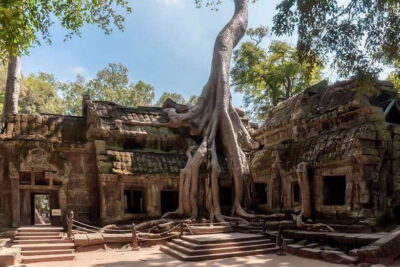
Browse the lists this tour appears in