
Reviewed · ANGKOR TEMPLE TOURS
Angkor Wat Small Group Tour and Sunset with Lunch Included
Angkor Wat is only part of the story. This full-day outing takes you from the smiling stone faces of Bayon to the tree roots of Ta Prohm, then saves Angkor Wat for the afternoon before ending at Phnom Bakheng. Guides such as Dara, Mony, Seila, and Phanne are known for clear explanations, good stories, and helpful photo advice.
I like the air-conditioned transport, cold water, and towels after each temple stop. I also like the local lunch and the visit to Phum Preah Dak, where you can see palm cake and palm sugar being made. The tradeoff is simple: this is a long, hot day with a packed schedule, and the sunset viewpoint can be crowded or clouded over.
In This Review
- Key points to know before booking
- A full Angkor day for $26
- Hotel pickup and a practical start
- Angkor Thom South Gate and the smiling faces of Bayon
- Baphuon and the royal viewing terrace
- Ta Prohm, where trees share the ruins
- Local lunch and palm sugar in Phum Preah Dak
- Angkor Wat in the afternoon
- Phnom Bakheng and the sunset question
- What the guides add
- Is the long schedule worth it?
- Who should book this tour?
- FAQ
- Is hotel pickup included?
- How long does the tour last?
- Which temples are included?
- Is lunch included?
- Is the Angkor Pass included in the price?
- What should I wear and bring?
Key points to know before booking
- Seven major stops in one day: See Angkor Thom, Bayon, Baphuon, the Terrace of the Elephants, Ta Prohm, Angkor Wat, and Phnom Bakheng.
- Cooling breaks matter: The vehicle has air-conditioning, and the driver provides cold water and towels between temple visits.
- Strong guide element: English-speaking guides including Dara, Mony, Seila, Sam, Sotin, Jan, and Raman explain architecture, religion, Cambodian history, and local life.
- Lunch adds real value: A local restaurant meal is included, with a vegetarian option available.
- Sunset is not guaranteed: Phnom Bakheng offers a high view, but clouds can block the sunset and the viewing area may be crowded.
- The temple pass needs checking: The tour information says the Angkor Pass is at your own expense, despite another section saying admission tickets are included.
A full Angkor day for $26
At $26 per person, this is an unusually full package. You get hotel pickup and drop-off in central Siem Reap, an English-speaking guide, an experienced driver, air-conditioned transport, lunch, water, cold towels, and a full day inside the Angkor area.
The price is especially useful if you have only a day or two in Siem Reap. Hiring transport and arranging a guide separately could take more work, and you would lose the benefit of a planned route through the major temples.
Still, I would not treat the low price as a sign that the day will feel relaxed. The plan covers about 10 hours and includes considerable walking, stairs, heat, and repeated stops. You are buying breadth and convenience rather than a slow, private study of every carving.
There is also an important detail to settle before you go. The tour description says your Angkor Pass is at your own expense, while the inclusions list says temple admission tickets are included. Those statements do not match. Ask the provider, Asean Angkor Guide, exactly what the $26 covers and budget separately for the pass unless you receive clear confirmation that it is included.
The group is described as limited to 10 for a more personal service, while the additional information gives a maximum of 14. That is still a modest group, but the exact size may vary. A smaller group makes it easier to hear the guide, ask questions, and keep the walking pace comfortable.
More Angkor temple itineraries:
- Angkor Wat Sunrise or Sunset Tour with Guide from Siem Reap
5.0 · 12,109 reviews - Siem Reap: Angkor Wat: Small-Group Sunrise or Sunset Tour
5.0 · 9,444 reviews - Siem Reap: Angkor Wat 2-Day Tour with Sunrise and Sunset
4.9 · 4,429 reviews
Hotel pickup and a practical start
The day begins with pickup from your downtown hotel or guesthouse. You are asked to wait in the lobby 20 minutes before the scheduled time, which is sensible in Siem Reap, where hotel access and traffic can affect the route.
The transport is an air-conditioned minivan or bus. That matters more than it might sound. Angkor is hot and exposed, and the short rides between temples give you a chance to cool down before walking again.
The driver is not simply behind the wheel. Several guides and drivers are praised for having the van cool on return, with cold water and a fresh towel ready. On a long temple day, these small services can make the difference between staying interested and simply trying to get through the afternoon.
Bring sunscreen, sunglasses, insect repellent, and a camera. Wear clothing that covers your shoulders and knees, since temple dress rules apply. A portable fan is also a sensible extra for hot, humid weather.
Angkor Thom South Gate and the smiling faces of Bayon
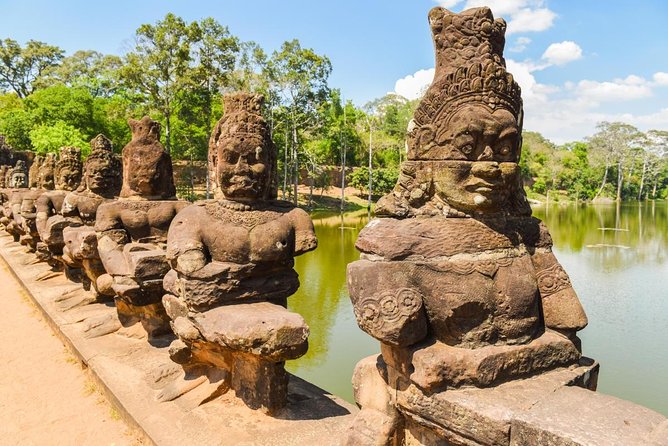
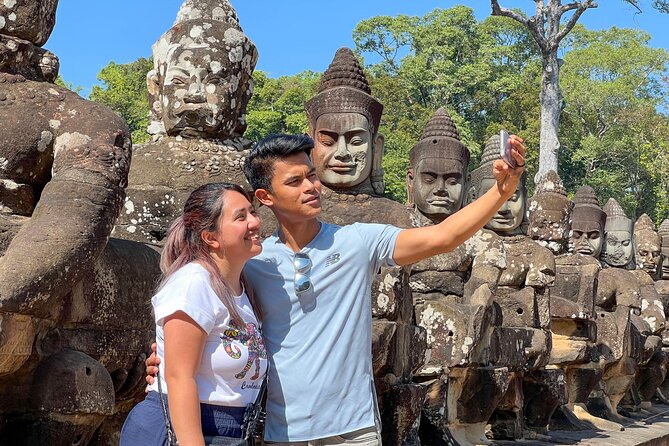
The first major area is Angkor Thom, the old capital enclosed by walls. You enter through the South Gate, also called Tonle Om Gate, where large stone figures line the approach.
The stop is short, around 20 minutes, but it gives you a useful introduction to the scale of the ancient capital. Your guide can explain the gate’s imagery before you move farther inside.
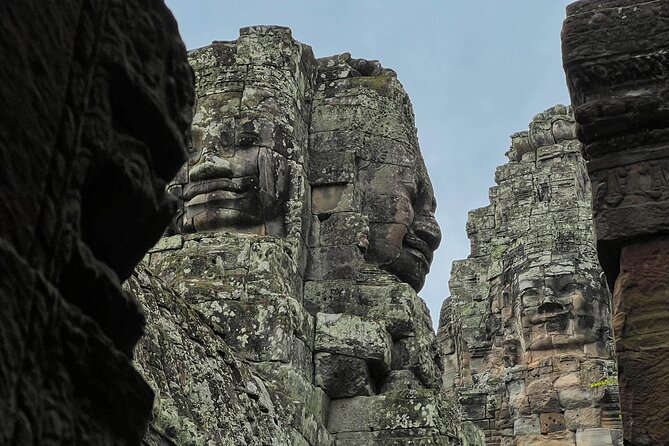
Next comes Bayon, with about 45 minutes to explore. This is one of Angkor’s most memorable temples, thanks to its calm stone faces looking out from the towers. The faces are easy to admire on your own, but the guide adds meaning by explaining the Buddhist setting and the role of the temple as a state center under Jayavarman VII.
I would pay attention to how the temple feels from different angles. Bayon can seem like a maze of towers, galleries, and narrow passages. A good guide helps you understand the plan instead of leaving you with a collection of attractive photographs.
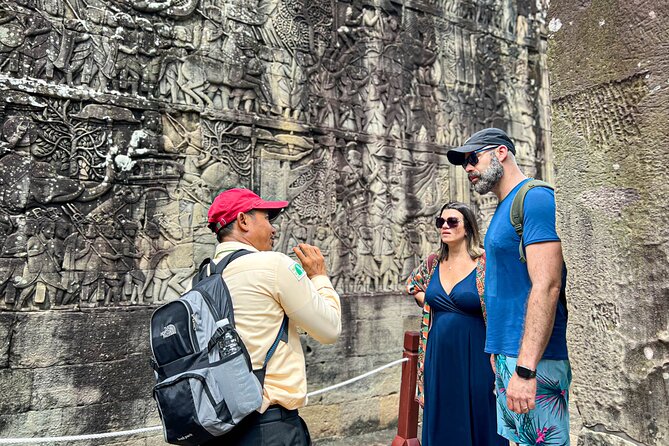
The explanations are adjusted to the group’s level. That is useful if you are new to Khmer temples, but also helpful if you already know something and want more detail about carvings, religion, engineering, or astronomy. Guides named Mony, Raman, Sam, and Phanne receive particular praise for making these subjects understandable and lively.
Baphuon and the royal viewing terrace
Baphuon follows Bayon, with about 30 minutes on site. Built in the mid-11th century, it is a three-tiered temple mountain dedicated to the Hindu god Shiva.
This stop changes the mood. Bayon is dense and enclosed, while Baphuon gives you a stronger sense of height and structure. You will likely use steps and uneven surfaces, so solid footwear is wise.
The Terrace of the Elephants is a shorter 15-minute stop. It formed part of Angkor Thom’s walls and served as a platform from which King Jayavarman VII viewed returning armies.
Do not expect a long exploration here. The value is in the guide’s explanation and in seeing how royal power was displayed through architecture. The carved elephants and long terrace make more sense when you understand their connection to court ceremony and military triumph.
Other Siem Reap experiences to weigh up
- Angkor Wat Sunset Small Group Tour with Lunch Included
5.0 · 3,059 reviews - Kulen Waterfall Join-in Tour (local Picnic lunch)
5.0 · 2,434 reviews - Kulen Mountain: Small-Group Tour and Picnic lunch
4.9 · 1,802 reviews - Phnom Kulen Waterfall & the Sacred 1000 Lingas (with Lunch)
4.8 · 974 reviews
Ta Prohm, where trees share the ruins
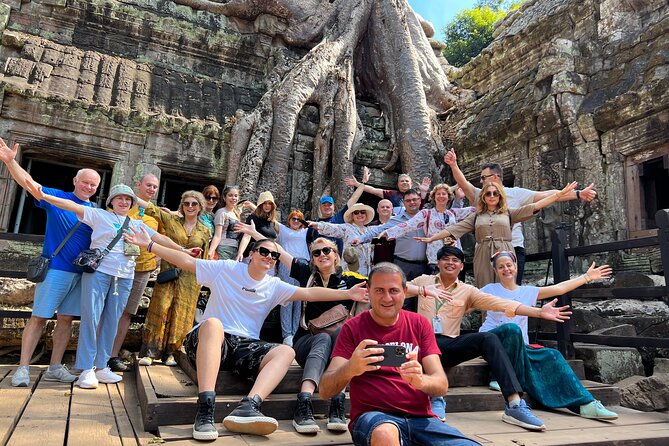
Ta Prohm is given about an hour, and it earns the extra time. The temple was left partly in its original overgrown condition, with enormous roots pressing against stone walls and galleries.
This is the stop most closely tied to the film Tomb Raider, but the movie connection should not be the whole reason you visit. Ta Prohm shows the tension between a built monument and the forest around it. The roots, fallen stones, doorways, and shadowed corridors create some of the day’s strongest images.
It can also be one of the busiest places on the route. Guides such as Sotin and David are praised for choosing visit times that reduce some crowd pressure, and a good guide can point you toward better places for photographs. Do not expect complete solitude, though. Ta Prohm is a famous stop, and its best-known views draw people.
The hour passes quickly. Use some of it to look beyond the famous tree-and-wall photographs. Notice the repeated door frames, galleries, and decorative stonework. Your guide can connect these details to the larger religious and royal purpose of the site.
Local lunch and palm sugar in Phum Preah Dak
After the main morning temples, lunch is served at a local restaurant. The meal is cooked locally, and a vegetarian option is available.
At this price, included lunch is a useful benefit. You do not need to spend time choosing a restaurant in the middle of a busy sightseeing day, and the meal gives you a proper pause before Angkor Wat. The restaurant is described in the tour information as air-conditioned, another welcome break from the heat.
The food is local Cambodian cooking rather than a generic fast meal. If you have dietary concerns beyond vegetarian food, ask in advance, since no further details are provided.
The day also includes a visit to Phum Preah Dak, described as an authentic village. You can see how local people make palm cake and palm sugar. This is a small but worthwhile change of pace. After several monumental temples, you get a glimpse of a food tradition and a working village setting.
I especially like this part because it adds local life to a day that could otherwise focus only on royal stone buildings. The visit is brief, so treat it as an introduction rather than a full cultural program.
Angkor Wat in the afternoon
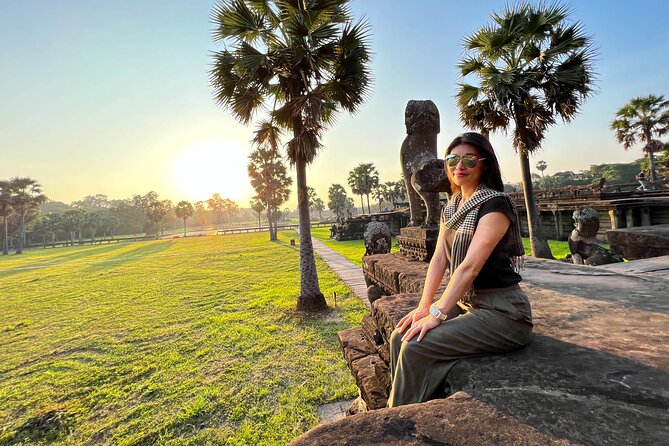
Angkor Wat receives about 90 minutes. Built by King Suryavarman and dedicated to Vishnu, it is the great symbol of Khmer civilization and the largest sacred building described in the tour material.
Saving it for the afternoon has practical advantages. The light changes, and you see the temple after the morning’s smaller, more enclosed sites. By this point, the earlier explanations about Khmer religion, kingship, architecture, and symbolism give you a better frame for what you are seeing.
The central towers and long galleries deserve more than a quick photo stop. Look for the scale of the outer enclosure, the repeated carved details, and the way the temple’s structure draws your eye inward. Your guide can explain the religious layout and point out important scenes and carvings.
Ninety minutes is enough for a solid first visit, but it is not enough for every corner. If Angkor Wat is your main reason for coming to Siem Reap, you may want a separate visit on another day. This tour is designed to give you the major picture, not an exhaustive examination.
That said, the afternoon placement works well for a first-time visit. Guides including Raman, Sam, and Seila are praised for explaining architecture and history while also helping with photographs. Several guides also take pictures for the group, which is useful if you are traveling alone or want more than selfies.
Phnom Bakheng and the sunset question
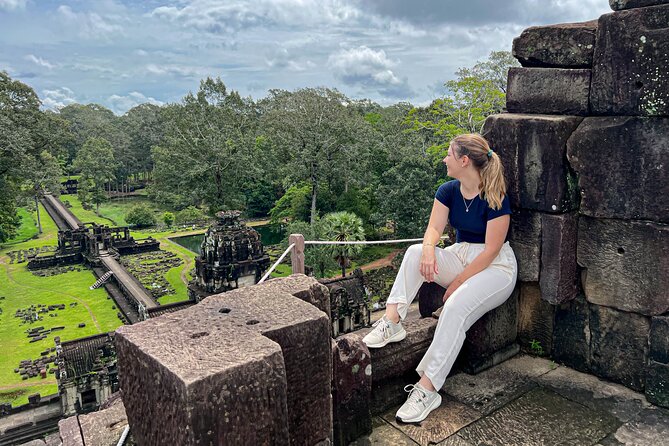
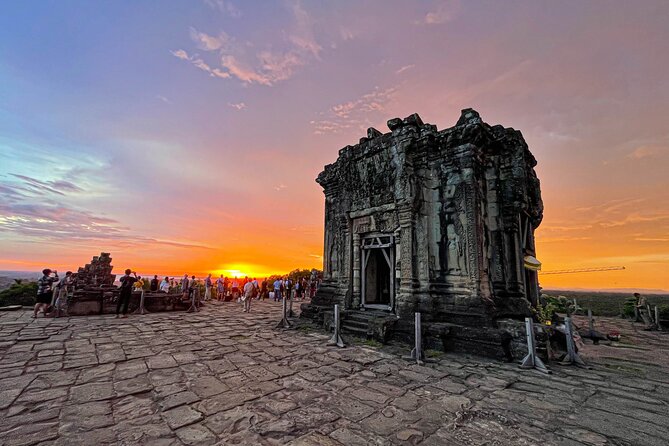
The last major stop is Phnom Bakheng, reached by climbing the hill for a sunset view. The total time here is listed as about two hours, including the climb and transfer afterward.
This is the most physically demanding part of the day. Your legs may already be tired after Ta Prohm and Angkor Wat, and the climb adds heat and uneven footing. Take it slowly, carry water, and do not think of the final viewpoint as a guaranteed grand finale.
The sunset can be beautiful, but weather controls the result. Cloud may block the sun, as happens anywhere. The view from Phnom Bakheng is also popular, so the upper viewing area can feel crowded.
One point deserves clear wording: the sunset is not necessarily directly over Angkor Wat. From the hill, you may see Angkor Wat in the distance, along with the surrounding area, but the sunset itself can appear elsewhere in the sky. Even with clouds, the elevated view can still be worthwhile.
After Phnom Bakheng, the vehicle returns you to your central Siem Reap hotel. The final transfer is listed at about 20 minutes, though actual time can vary with traffic and the number of drop-offs.
What the guides add
The strongest feature of this experience is the guide service. The names attached to especially positive days include Dara, Mony, Seila, Phanne, Jan, Raman, Sam, Samath, Sotin, Chy, and David.
The best use of a guide here is not simply learning dates. You want someone who can explain why the temples were built, how Hindu and Buddhist ideas shaped them, what the carvings show, and how the monuments fit into Cambodian history.
The feedback points to guides who answer questions in detail, bring humor to a long day, suggest good photo locations, and adjust explanations to the group. Phanne is singled out for patient answers, while Samath is praised for turning a group of strangers into friendly companions. Mony and Raman are noted for strong English and broad explanations that include modern Cambodia as well as ancient architecture.
Your exact guide will depend on the date. That means the experience may vary in personality, but the company has a large team of English-speaking guides. If you have a special interest in religion, architecture, photography, or Cambodian history, mention it when booking or at pickup.
Is the long schedule worth it?
For a first visit, I think the schedule makes sense. You see the three essential names, Angkor Wat, Ta Prohm, and Angkor Thom, while also adding Baphuon, the Terrace of the Elephants, a local lunch, a village stop, and Phnom Bakheng.
The route also gives you a useful rhythm: enclosed faces at Bayon, a tall temple mountain at Baphuon, forest-covered ruins at Ta Prohm, a local food stop, the monumental scale of Angkor Wat, and a hilltop finish.
The weakness is time. One hour at Ta Prohm and 90 minutes at Angkor Wat will leave you wanting more. The tour is best for someone who wants an efficient introduction, not for someone who prefers to sit quietly at one temple for half a day.
The group limit helps keep the day more personal than a large coach outing. Still, a group of up to 10 or possibly 14 means you will follow a shared timetable. You will not have complete control over when to stop, eat, or leave.
The listed rating is 5 out of 5 from 398 ratings, with 100 percent recommending it. That supports the tour’s main strengths: guides, organization, transport, cooling supplies, and value. It does not change the practical facts that the day is hot, lengthy, and dependent on sunset weather.
Who should book this tour?
I would choose this tour if you have limited time in Siem Reap, want the main Angkor temples in one day, and prefer not to arrange a guide and vehicle yourself. It is also a good fit if you value clear historical explanations, local lunch, and reliable hotel transfers.
It suits solo visitors because the guide can help with photos and the small group gives you company. It also suits couples and families who want a structured day without public transport.
I would choose a slower or more specialized plan if Angkor Wat is your main focus, if you dislike busy schedules, or if long walks and a hill climb are difficult for you. Ask about the Angkor Pass before paying, and treat sunset as a bonus rather than a promise.
Free cancellation is available up to 24 hours before the start time. Changes or cancellations inside that window are not refunded, and poor weather can lead to a different date or a full refund.
FAQ
Is hotel pickup included?
Yes. Pickup and drop-off are offered at downtown hotels or guesthouses in Siem Reap. You should wait in the hotel lobby 20 minutes before your scheduled pickup.
How long does the tour last?
The experience lasts about 10 hours, including temple visits, lunch, the village stop, sunset at Phnom Bakheng, and the return transfer to Siem Reap.
Which temples are included?
The route includes Angkor Thom South Gate, Bayon, Baphuon, the Terrace of the Elephants, Ta Prohm, Angkor Wat, and Phnom Bakheng.
Is lunch included?
Yes. Lunch is served at a local restaurant, and a vegetarian option is available.
Is the Angkor Pass included in the price?
The tour details give conflicting information. The overview says the Angkor Pass is at your own expense, while the inclusions list says all temple admission tickets are included. Confirm this directly with Asean Angkor Guide before booking.
What should I wear and bring?
Your knees and shoulders must be covered. Bring a camera, sunscreen, sunglasses, and insect repellent. A portable fan may also help in hot, humid weather.
More Evening Experiences in Siem Reap
- Sunset tour of Kampong Phluk stilts home village on the Tonle Sap
5.0 · 4,865 reviews - Siem Reap: Full-Day Angkor Wat Guided Tour with Sunset
4.9 · 3,803 reviews - Angkor 2-Day Sunset & Sunrise Small-Group Tour
5.0 · 2,567 reviews - Siem Reap: Angkor Wat Sunrise or Sunset Guided Tour
4.9 · 2,123 reviews
Fresh reviews from around Siem Reap
- Full-Day Tour Preah Vihea & Koh Ker Temple 3.7 · 3 reviews
- Savor the Countryside: Tours with Authentic Cooking Classes” 5.0 · 3 reviews
- Angkor Wat Sunrise TukTuk Tour 5.0 · 3 reviews
- Angkor Grand Circuit Tour & Banteay Srei 5.0 · 3 reviews
- Guided Private Tuk Tuk Tour Angkor Wat and Small Circle and Five Extras 5.0 · 3 reviews
- Siem Reap Temple Tour 2-Day with Sunrise/Sunset 3.7 · 3 reviews
- Bangkok to Angkor Wat 2 Days 1 Night by Flight 4.5 · 3 reviews
- Kompong Pluk Tour 5.0 · 3 reviews
Angkor Temple Tours, compared.

Angkor Wat Sunrise or Sunset Tour with Guide from Siem Reap
Read our review →



Angkor Wat Sunrise tour with Small – Group and Guide tours
Read our review →
Angkor Wat Highlights and Sunrise Guided Tour from Siem Reap
Read our review →

Full-Day Angkor Wat Sunrise Private Tour with Guide from Siem Reap
Read our review →Browse the lists this tour appears in