
Reviewed · ANGKOR TEMPLE TOURS
Angkor Cab: Siem Reap 3 day private tour: ‘off the beaten track’
Angkor Cab’s three-day route gives you far more than the standard Angkor Wat morning. You’ll see the famous temples, but also reach Beng Mealea, the remote-feeling ruins northeast of Siem Reap, and smaller sites where the pace is calmer.
I like the private format, which lets you adjust start times and stops in advance. I also like the practical comfort: a private vehicle, air-conditioning, bottled water, and an English-speaking temple guide. The main drawback is cost. At $550 for up to three people, it is good value for a small group, but less so for a solo visitor. Temple passes, meals, and other activity fees are extra.
In This Review
- Key points before you book
- Why this three-day plan works well in Siem Reap
- Day 1: Banteay Srei and the quieter eastern temples
- Day 2: Angkor Wat at 5am, Angkor Thom, and Ta Prohm
- Day 3: Beng Mealea and the early Khmer capital
- What the $550 price really covers
- Timing, comfort, and practical limits
- Who should book this Angkor Cab tour?
- Should you book it?
- FAQ
- How much does the three-day private tour cost?
- What is included in the tour price?
- Are temple admission fees included?
- Are meals included?
- What time does the tour start?
- Is this a group tour?
- Can the itinerary or start time be changed?
Key points before you book
- Sunrise at Angkor Wat: Day 2 begins around 5am, giving you time to watch dawn behind Cambodia’s most famous temple.
- A strong mix of major and quieter sites: The route includes Angkor Wat, Angkor Thom, and Ta Prohm, plus Banteay Samre, Preah Ko, and Banteay Srei.
- Beng Mealea adds a real sense of distance: The drive takes about 90 minutes each way, but the temple gives Day 3 a different feel from the central Angkor circuit.
- Private travel keeps the schedule flexible: You can request a different start or finish time, or ask to change the route in advance.
- The price works best for two or three people: The $550 rate covers the group, not each person, with the driver, guide, vehicle, and water included.
- Bring extra money for the basics: Food, drinks, temple admission, and any other activities are not part of the tour price.
Why this three-day plan works well in Siem Reap
The smart part of this tour is its balance. Many first-time visits focus almost entirely on Angkor Wat, Angkor Thom, and Ta Prohm. Those temples deserve their fame, but a three-day schedule lets you add smaller sites, a lake trip, and the distant ruins at Beng Mealea without cramming everything into one exhausting day.
You travel with only your own group, up to three people. That matters in Siem Reap because temple days begin early, involve plenty of walking, and often require pauses for shade, water, and lunch. A private driver also means you are not waiting for strangers who want different photo stops or a longer temple visit.
The company includes a professional English-speaking guide and driver. Panha is the contact name connected with the service, and the arrangement is designed to be personal rather than a large coach outing. One family’s trip used a private Lexus with the air-conditioning running and cold water ready, though you should confirm the exact vehicle when booking.
The route is flexible, but do not treat that as unlimited freedom. The published schedule already fills three days, and the most distant stops involve long drives. If you want to add more temples, tell the operator before the trip so the day can be planned sensibly.
More Angkor temple itineraries:
- Angkor Wat Sunrise or Sunset Tour with Guide from Siem Reap
5.0 · 12,109 reviews - Siem Reap: Angkor Wat: Small-Group Sunrise or Sunset Tour
5.0 · 9,444 reviews - Siem Reap: Angkor Wat 2-Day Tour with Sunrise and Sunset
4.9 · 4,429 reviews
Day 1: Banteay Srei and the quieter eastern temples
Day 1 starts with a drive of about 45 minutes from your hotel to Banteay Srei. The road gives you a look at everyday local activity before the first temple, which helps the morning feel like more than a simple transfer.
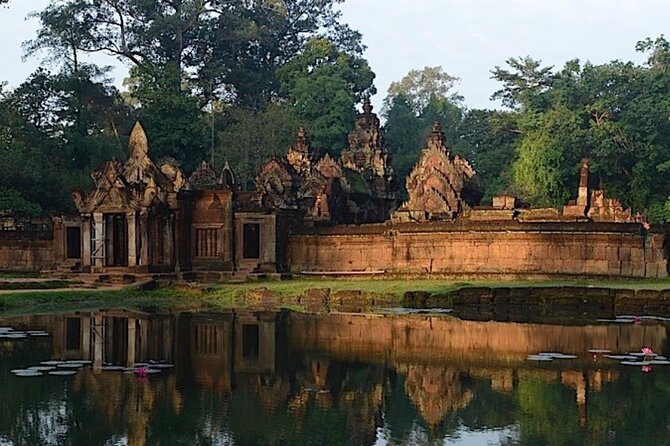
Banteay Srei is famous for its pink sandstone and detailed carvings. Built about ten centuries ago, it is smaller than Angkor Wat but unusually delicate. This is a place where your guide’s explanations add real value, since the carved scenes and temple layout are easy to admire but harder to understand on your own.
You have about an hour here. Wear shoes with a firm grip and expect some walking in the heat. Admission is not included, so keep your temple pass arrangements in mind before the day begins.
Next comes Banteay Samre, a 12th-century temple located east of the East Baray. The visit lasts about 45 minutes. It is a useful contrast with Banteay Srei: less ornate in feel, more compact, and well suited to a shorter guided stop.
The first two temples make good companions. Banteay Srei gives you finely worked stone details, while Banteay Samre gives you another example of Khmer temple planning without asking you to spend half a day at one site.
After a local lunch, the route turns toward Banteay Kdei. Lunch is not included, and the suggested cost is about $5 to $10 per person, depending on what you choose. You can bring your own food, which may help if you prefer a quick meal and want to protect the schedule.
Banteay Kdei means Citadel of Chambers. Built in the mid-12th to early 13th century under King Jayavarman VII, it is a Buddhist temple southeast of Ta Prohm. You have about an hour to walk among its chambers and galleries.
The temple can feel less demanding than Angkor Thom because the visit is shorter and the setting is more contained. Still, the ground is uneven, and three days of temple walking calls for a moderate level of fitness. Take your time rather than trying to inspect every corner.
Srah Srang is directly across from Banteay Kdei, so the next stop requires little driving. This large reservoir was built in the 10th century and later modified under Jayavarman VII. The planned visit lasts about 30 minutes.
Srah Srang is a pause rather than another major temple climb. You can look across the water, rest your legs, and let the guide explain how the reservoir fitted into the wider Angkor system. The description of it as the world’s largest swimming pool is colorful, but you should understand it as a ceremonial reservoir, not a place for a swim.
The final stop is Tonle Sap Lake, with about two hours set aside. It is Southeast Asia’s largest freshwater lake, and its size changes dramatically through the year, from roughly 3,000 square kilometers in the dry season to about 10,000 square kilometers in the wet season.
The lake adds a different side of Cambodia to a temple-heavy itinerary. Instead of carved stone, you see a major water system tied to daily life and the wider region. Any extra activity fee connected with the lake is not included, so ask what your planned visit involves and what it costs before setting off.
Day 1 is varied, but it is also long. You move from temple to temple, stop for lunch, then finish with a lake visit. If you want a gentle opening day, ask for a later start or a shorter version of the route.
Day 2: Angkor Wat at 5am, Angkor Thom, and Ta Prohm
Day 2 is the early one. Pickup is around 5am, and the drive to Angkor Wat takes about 30 minutes from your hotel. The aim is to watch the sunrise behind the temple.
Sunrise at Angkor Wat is one of the busiest moments in the entire temple area. The early start is necessary if you want a good position, but the experience is not quiet or private. You should choose it for the view and atmosphere, not because you expect to have the site to yourself.
After sunrise, you have about three hours at Angkor Wat. That is enough time to see the main approach, galleries, courtyards, and central structure with a guide. A good guide can help you read the bas-reliefs and explain the temple’s design instead of leaving you with a blur of stone towers.
The three-hour block also gives you room to slow down. Angkor Wat is large, and rushing from one photo point to another wastes the best part of the visit. Bring water, cover your shoulders and knees as required at temple areas, and wear practical footwear.
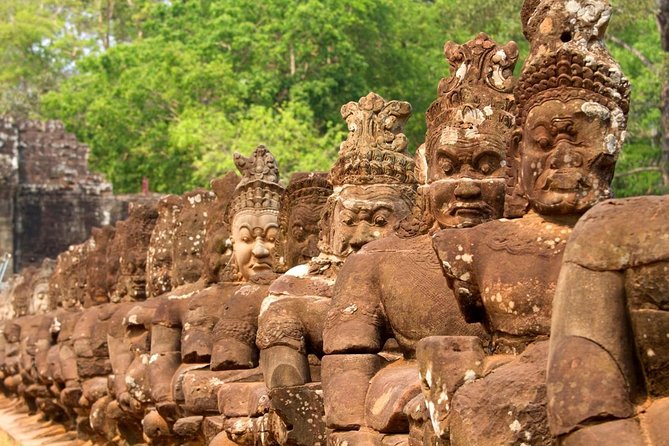
From Angkor Wat, it is about five minutes by car to Angkor Thom. You first stop at the South Gate for photographs, then continue into the ancient capital. The full visit lasts around two hours.
Angkor Thom is not one single temple. It is a large walled city area containing major monuments, with Bayon as its best-known center. The stone faces at Bayon are the feature most people remember, but the surrounding gates, terraces, and civic layout help you understand the scale of the old capital.
The short drive between Angkor Wat and Angkor Thom makes this part of the day efficient. You are not spending your best morning hours in the car. The tradeoff is that both sites can be busy, especially after sunrise, so the private vehicle helps more with timing and comfort than with avoiding every crowd.
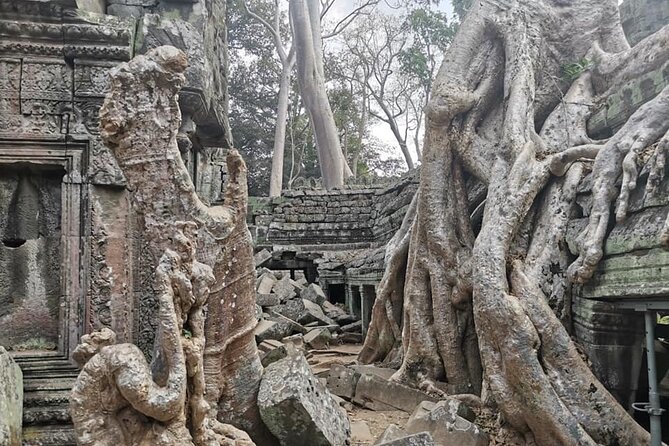
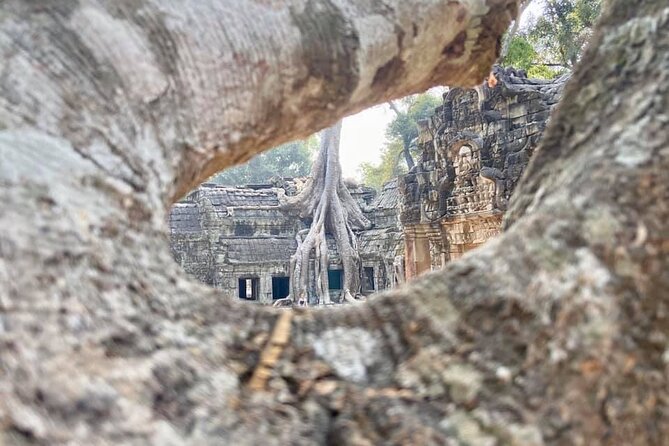
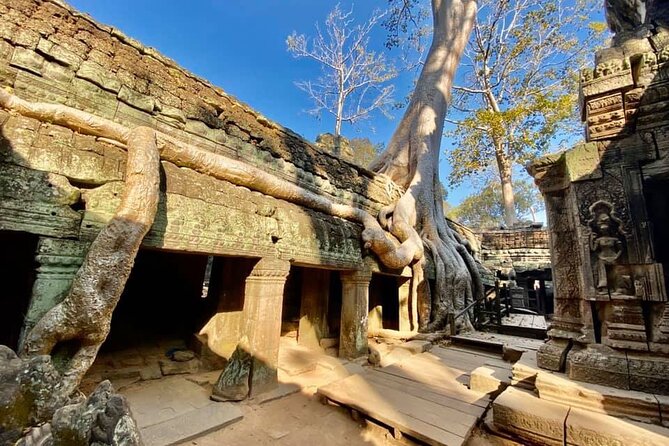
Ta Prohm comes next, after about a 15-minute drive. The visit lasts roughly an hour. The temple is known for trees growing over and around the stonework, including a memorable tree-covered bridge stop along the way.
Ta Prohm has a different mood from Angkor Wat. Its partially overgrown appearance makes the ruins feel less formal, and the roots and collapsed galleries create strong photo opportunities. It can also be crowded, with narrow paths and popular viewpoints. Your guide can help you spend your time well, but the route may still slow down when other groups gather.
Lunch is arranged during the day, but it is not included. You pay according to what you order, or you can bring your own meal. Since Day 2 begins before dawn, do not underestimate the importance of carrying a snack and water, even with bottled water supplied by the tour.
This is the most demanding day physically because of the early start and several hours on foot. It is also the day most likely to satisfy a first-time visitor who wants the classic Angkor experience.
Day 3: Beng Mealea and the early Khmer capital
Day 3 begins around 9am, a much easier start after the sunrise morning. Your guide and driver take you toward Beng Mealea, about 90 minutes from Siem Reap.
The long drive is the main consideration. Beng Mealea is not a quick add-on to the central Angkor circuit, and the round trip uses a good part of the day. In return, you get a temple experience that feels separate from the usual Siem Reap route.
You have about three hours at Beng Mealea. The temple dates from the 12th century and is known for its broken galleries, fallen stone, and trees growing through parts of the ruins. The visit rewards patience. Let your guide point out the structure and carvings, then allow time simply to walk and look.
The site may suit you especially well if you have already seen the headline temples and want something less polished. It is not necessarily easier, though. Uneven ground and ruined sections mean you need moderate fitness and sensible shoes.
After Beng Mealea, the route heads back toward the ancient Khmer capital of Hariharalaya and Bakong Temple. The drive time is not stated, but this is another reason to keep Day 3 focused rather than adding several extra stops.
Bakong was built in the 9th century by King Indravarman I and dedicated to Shiva. It is a pyramid temple, so the form feels different from the long galleries of Angkor Wat or the tangled ruins at Ta Prohm. You have about 40 minutes here.
The shorter visit works well after Beng Mealea. You get the main shape, setting, and explanation without turning the afternoon into another full-scale climb. If you want more time at Bakong, ask in advance, since the itinerary is flexible but the day has several planned elements.
Preah Ko is the final temple, with about 30 minutes scheduled. Its name means Sacred Bull, and it was the first temple built in the ancient Hariharalaya city, in 879, under Hindu King Indravarman I. It was dedicated to Shiva.
Preah Ko is a fitting finish because it takes you back to an earlier period of Khmer temple building. After the grand scale of Angkor Wat and the mature designs of later temples, the early capital sites show how the architectural tradition developed.
Other Siem Reap experiences to weigh up
- From Siem Reap: Angkor Wat and Floating Village 3-Day Trip
5.0 · 100 reviews - 3-Day Angkor Wat with All Interesting Major Temples, Banteay Srei & Beng Mealea
5.0 · 70 reviews - 3-Day Angkor Wat & All Interesting Major Temples & Kulen Mount Waterfall
5.0 · 63 reviews - 3 Days Siem Reap Explorer – Small Group
5.0 · 50 reviews
What the $550 price really covers
The private tour costs $550 per group of up to three people for approximately three days. Split between three people, that is about $183 per person for the tour service. For two people, the individual cost is higher, and a solo booking pays the full group rate.
Included are the private tour, driver, professional guide, and bottled water. The vehicle is important here because several days include early starts, long drives, and hot walks. A private car with air-conditioning can make the difference between finishing the final temple with energy and simply enduring it.
You still need to budget for temple admission, meals, drinks, and other activity fees. Lunch is estimated at $5 to $10 per person, or you can bring your own food. The Angkor Temple Pass is specifically excluded, and no pass price is supplied, so check the current cost before booking.
The value is strongest for a small family or group of friends. You get a dedicated guide, your own transport, and the ability to request changes. If you are comparing it with a large group tour, the extra cost buys privacy and control rather than a longer list of included attractions.
Timing, comfort, and practical limits
The stated meeting time is 9am, but the actual schedule includes a 5am start on Day 2 and a 9am start on Day 3. Confirm each pickup time with Angkor Cab before the trip, especially if your hotel is outside central Siem Reap.
The route requires moderate physical fitness. Expect walking at several temples, uneven surfaces, and warm conditions. Bottled water is included, but you should still bring sun protection, comfortable shoes, and clothing suitable for temple visits.
The private setup is useful if your group has mixed energy levels. You can ask for a different start or finish time, or request another place in advance. Last-minute changes may not be possible, so speak up before the itinerary is finalized.
Free cancellation is available if you cancel at least 24 hours before the experience begins. Changes or cancellations inside that window are not accepted for a refund.
Who should book this Angkor Cab tour?
I would point this tour toward first-time visitors who want the famous temples but do not want to stop there. It also suits families and small groups who value their own car, a steady guide, and a less rigid schedule.
The plan is a good match if you want:
- Angkor Wat sunrise and the major central temples
- Smaller temples with more time for explanation
- A full day at Beng Mealea
- Tonle Sap included in the same trip
- Private transport for up to three people
- The option to customize timing in advance
I would hesitate if you are traveling alone on a tight budget. The $550 group rate is harder to justify when you cannot share it. I would also think twice if you dislike early mornings, long drives, or several hours of walking.
Should you book it?
Book Angkor Cab if you want a well-spread introduction to Siem Reap, with the essential temples balanced by Banteay Srei, Beng Mealea, Tonle Sap, and the early Hariharalaya sites. The private car, cold water, English-speaking guide, and flexible schedule give the tour practical value for a small group.
Before paying, confirm the exact vehicle, guide arrangements, temple pass requirements, lake activity fees, pickup times, and your preferred lunch plan. If you do that, this is a strong three-day choice for seeing both Cambodia’s famous monuments and some of the quieter corners around Siem Reap.
FAQ
How much does the three-day private tour cost?
The tour costs $550 per group of up to three people. The price is for the private service, not per person.
What is included in the tour price?
The price includes bottled water, a driver, a professional guide, private transportation, and the private tour itself.
Are temple admission fees included?
No. The Angkor Temple Pass is not included and must be arranged separately.
Are meals included?
No. Food and drinks are not included. Lunch typically depends on your choice of food, with an indicated cost of about $5 to $10 per person. You may also bring your own food.
What time does the tour start?
The general meeting time is 9am, but Day 2 starts around 5am for the Angkor Wat sunrise. Day 3 begins around 9am. Confirm the exact pickup times in advance.
Is this a group tour?
No. It is a private activity for only your group, with a maximum of three people.
Can the itinerary or start time be changed?
Yes. You can request a different place to visit or a different start and finish time in advance. Changes made less than 24 hours before the start are not accepted under the cancellation terms.
Fresh reviews from around Siem Reap
- Full-Day Tour Preah Vihea & Koh Ker Temple 3.7 · 3 reviews
- Savor the Countryside: Tours with Authentic Cooking Classes” 5.0 · 3 reviews
- Guided Private Tuk Tuk Tour Angkor Wat and Small Circle and Five Extras 5.0 · 3 reviews
- Angkor Wat Sunrise TukTuk Tour 5.0 · 3 reviews
- Angkor Grand Circuit Tour & Banteay Srei 5.0 · 3 reviews
- Siem Reap Temple Tour 2-Day with Sunrise/Sunset 3.7 · 3 reviews
- Bangkok to Angkor Wat 2 Days 1 Night by Flight 4.5 · 3 reviews
- Kompong Pluk Tour 5.0 · 3 reviews
Angkor Temple Tours, compared.

Angkor Wat Sunrise or Sunset Tour with Guide from Siem Reap
Read our review →



Angkor Wat Sunrise tour with Small – Group and Guide tours
Read our review →
Angkor Wat Highlights and Sunrise Guided Tour from Siem Reap
Read our review →

Full-Day Angkor Wat Sunrise Private Tour with Guide from Siem Reap
Read our review →Browse the lists this tour appears in