
Reviewed · ANGKOR WAT SUNRISE TOURS
2 Days Angkor Wat Sunrise and Sunset Private Tour
Angkor Wat is best seen when the light is gentle and the heat has not yet settled in. This private two-day tour pairs sunrise at Angkor Wat with an evening visit to Phnom Bakheng, then works through the major temples of both the Big and Small Circles with your own guide and vehicle.
I like the sensible temple mix and the freedom of a private group. You get the famous faces of Bayon, the tree-covered stones of Ta Prohm, and quieter stops such as Ta Nei, while an English-speaking guide such as Tann can keep the long days organized. The main drawback is that the $134 price does not include the Angkor Pass, meals, drinks, or tips, so your real cost will be higher.
In This Review
- Key points at a glance
- Why two days works well at Angkor
- Sunrise at Angkor Wat, the right way to begin
- Angkor Thom and the many faces of Bayon
- Ta Prohm and the quieter stones of Ta Nei
- Banteay Srei, the detailed morning stop
- Preah Khan and the water temple at Neak Pean
- Ta Som and Eastern Mebon add variety
- Sunset from Phnom Bakheng
- What the private format changes
- The real cost of the $134 price
- Dress, cameras, and small practical details
- Who should book this Angkor tour?
- Should you book it?
- FAQ
- Is the Angkor Pass included in the tour price?
- Can I buy the temple pass on the day of the tour?
- Is hotel pickup included?
- Are meals included?
- What should I wear to the temples?
- Is this a private tour?
Key points at a glance
- Sunrise and sunset are built into the two-day plan: Start with Angkor Wat in the early light and finish with sunset from Phnom Bakheng.
- A private tour keeps the pace flexible: Only your group participates, with hotel pickup and drop-off in an air-conditioned vehicle.
- The temple selection is broad: You see Angkor Wat, Angkor Thom, Bayon, Ta Prohm, Banteay Srei, Preah Khan, Ta Som, Neak Pean, and Eastern Mebon.
- Tann is one guide name to request: A past rating specifically praised Tann’s preparation and service.
- Budget for the required pass: The three-day Angkor Pass costs $62 per person and is not included in the tour price.
- Dress for temple rules: Your shoulders and knees must be covered, and a scarf alone is not accepted as a substitute for proper clothing.
Why two days works well at Angkor
Angkor is too large for a quick visit. The temples are spread across a broad archaeological area, and the strongest stops each need time for walking, looking up, and understanding what you are seeing.
This plan gives you about two days to cover both the headline monuments and several smaller sites. Day 1 focuses on Angkor Wat, Angkor Thom, Ta Prohm, Ta Nei, and the Terrace of the Elephants. Day 2 reaches farther out to Banteay Srei, Preah Khan, Neak Pean, Ta Som, Eastern Mebon, and Phnom Bakheng.
I like that balance. You get the places most visitors expect, but you are not limited to a quick circuit of only Angkor Wat, Bayon, and Ta Prohm. The smaller temples help you see different periods, layouts, and building styles.
The schedule is still full. Most stops involve walking on uneven stone, climbing steps, or standing in open sun. You will want practical shoes, water, and a willingness to start early. Bottled water is included, but breakfast, lunch, and other drinks are not.
More sunrise departures to Angkor Wat:
- Angkor Wat Sunrise or Sunset Tour with Guide from Siem Reap
5.0 · 12,109 reviews - Siem Reap: Angkor Wat: Small-Group Sunrise or Sunset Tour
5.0 · 9,444 reviews - Siem Reap: Angkor Wat 2-Day Tour with Sunrise and Sunset
4.9 · 4,429 reviews
Sunrise at Angkor Wat, the right way to begin
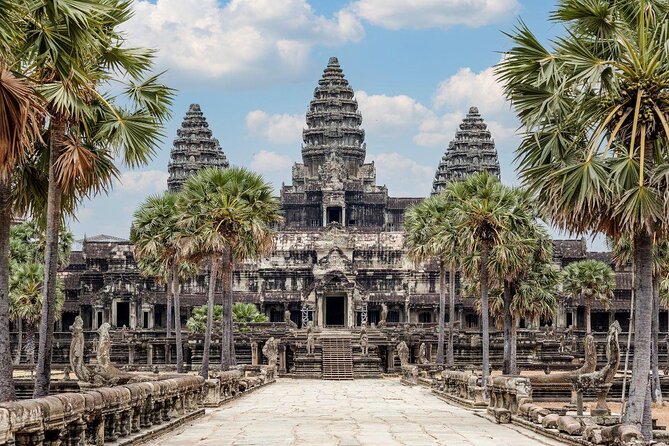
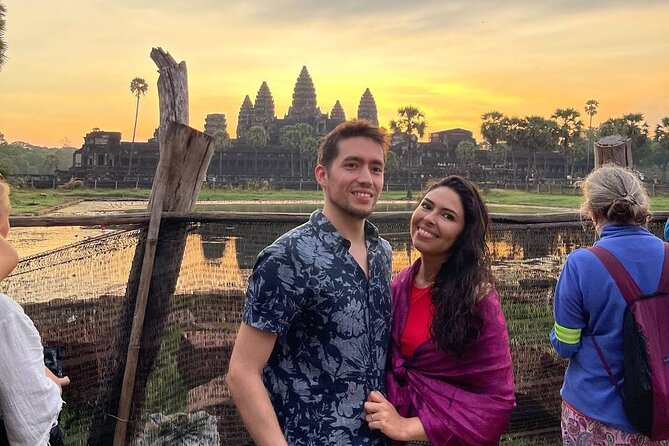
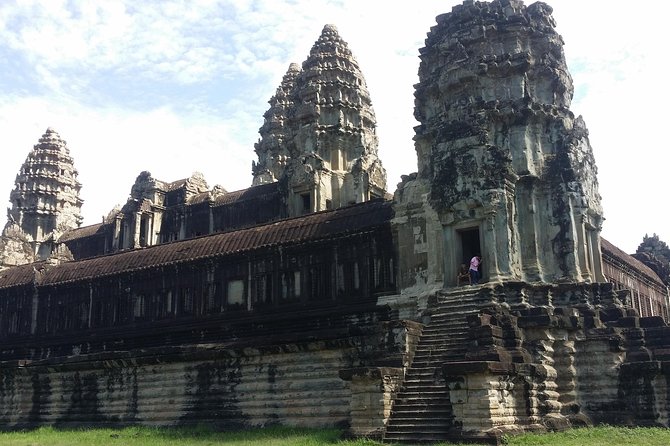
Angkor Wat receives two hours on the first day, enough for a useful visit rather than a hurried photo stop. The temple was built as a Hindu monument dedicated to Vishnu and is the largest religious monument in the world by site area.
Sunrise gives the outer towers and long pools a softer look than the hard midday sun. The early start also helps you see the temple before the day becomes hottest, though the popular viewing area can be busy at sunrise.
The tour information advises asking your hotel for a breakfast pack if breakfast is part of your room booking. You can eat after sunrise at Angkor Wat, which is a smart way to avoid losing time returning to town.
Your pass is not included. The required three-day Angkor Pass costs $62 per person, and it can be purchased on the day of the tour before sunrise. Visa cards are accepted. Since this is a two-day visit, the three-day ticket is still the stated pass option.
Angkor Thom and the many faces of Bayon
After Angkor Wat, the route enters Angkor Thom through the South Gate. The stop lasts about 15 minutes, but it gives you a quick look at one of the great entrances to the last major capital of the Khmer Empire.
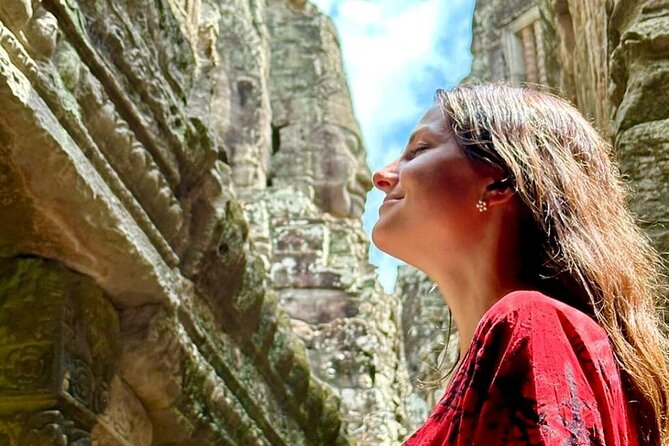
Bayon receives about an hour. This is one of the most rewarding stops for a guide’s explanation because the temple can feel confusing at first. Towers crowd the central area, and huge carved faces appear from different angles as you move through the stone corridors.
I like having a full hour here. Bayon rewards slow looking more than a quick exterior photograph. Your guide can help you notice the layout, carvings, and connection to King Jayavarman VII, who built it as a state temple associated with Mahayana Buddhism.
Angkor Thom itself was established in the late 12th century by Jayavarman VII. The South Gate and Bayon make a strong pair: one introduces the scale of the city, and the other brings you into its religious center.
Ta Prohm and the quieter stones of Ta Nei
Ta Prohm gets about an hour and is likely to be one of the most memorable stops. Built in the late 12th and early 13th centuries, it is known for the way trees and roots have grown around the temple remains.
The appeal is not simply the tree cover. Ta Prohm shows how a major monument looks when stone, forest, damage, and conservation all meet in one place. You can expect uneven paths and plenty of photo pauses, so the hour should feel useful rather than excessive.
Ta Nei follows with about 40 minutes. This smaller late 12th-century temple was built during Jayavarman VII’s reign and dedicated to the Buddha. It is near the northwest corner of the East Baray and offers a different mood from the better-known monuments.
I especially like the inclusion of Ta Nei because it prevents the first day from becoming a parade of only famous names. You still see the major sites, but you also get time with a smaller temple where the structure itself receives more attention.
The Terrace of the Elephants is a brief 15-minute stop in Angkor Thom. Do not expect a long interior visit. It works best as a chance to see the ceremonial terrace and its sculpted elephant designs before moving on.
More Angkor temple itineraries:
- Siem Reap: Full-Day Angkor Wat Guided Tour with Sunset
4.9 · 3,803 reviews - Angkor Wat Sunrise tour with Small – Group and Guide tours
5.0 · 3,655 reviews - Angkor Wat Highlights and Sunrise Guided Tour from Siem Reap
5.0 · 3,213 reviews - Angkor Wat Sunset Small Group Tour with Lunch Included
5.0 · 3,059 reviews
Banteay Srei, the detailed morning stop
Day 2 begins with about two hours at Banteay Srei. This 10th-century temple is dedicated to Shiva and is known for its detailed carving and smaller scale.
Banteay Srei is different from Angkor Wat and Bayon. The focus here is fine stone decoration rather than vast courtyards or towering city gates. Give yourself time to look closely at the carved surfaces instead of treating the stop as another quick temple photograph.
The morning departure matters because this is one of the longer outings in the program. You will also be covering several other sites later, so comfortable clothing and a good breakfast pack are useful.
The price covers transport and a professional English-speaking guide, but not breakfast or lunch. If your hotel offers breakfast with your room, the supplied advice is practical: request a packed breakfast and eat after the sunrise visit rather than waiting until you return to town.
Preah Khan and the water temple at Neak Pean
Preah Khan receives about an hour. King Jayavarman VII built it in the 12th century to honor his father, and it sits northeast of Angkor Thom, near the Jayatataka baray.
The temple gives you another large complex to explore, but its setting and arrangement differ from Angkor Wat. I would use the hour to notice the corridors, courtyards, and changing views through the structure. A guide is useful here because the site can feel like a maze if you only follow the most obvious path.
Neak Pean is a shorter 30-minute stop. It sits on an artificial island in the Jayatataka baray, with a Buddhist temple on a circular island. The approach across the water gives this visit a different rhythm from the enclosed temple interiors.
Because Neak Pean is brief, you should think of it as a focused stop rather than a full exploration. Enjoy the approach, the island setting, and the unusual design, then save your energy for Ta Som and Eastern Mebon.
Ta Som and Eastern Mebon add variety
Ta Som takes about 35 minutes. This smaller temple was built at the end of the 12th century for Jayavarman VII and dedicated to the Buddha.
Its smaller size makes it a good contrast after Preah Khan. You can see another late 12th-century Buddhist site without committing to a long walk through a vast complex. The visit is short, so listen closely to the guide and use your time for the main architectural details.
Eastern Mebon receives about 40 minutes. Built in the 10th century during the reign of King Rajendravarman, it once stood on an artificial island in the now-dry East Baray.
That former island setting is important. It helps you understand that Angkor was not only a collection of stone temples. Waterworks, reservoirs, roads, and royal planning shaped the whole area. Even when the reservoir is dry, the site gives useful context for how the Khmer capital functioned.
The sequence of Preah Khan, Neak Pean, Ta Som, and Eastern Mebon also gives Day 2 a good range of sizes and settings. You are not looking at the same kind of temple all afternoon.
Sunset from Phnom Bakheng
Phnom Bakheng is the final listed stop, with about an hour. This temple mountain was built at the end of the 9th century during the reign of King Yasovarman and was dedicated to Shiva. It later had Buddhist use as well.
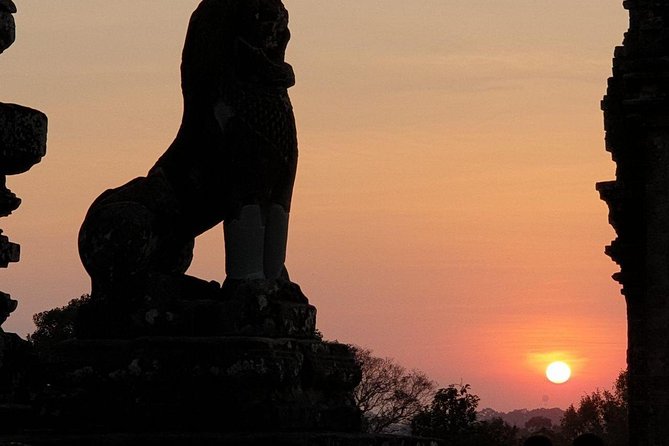
The sunset visit is the scenic finish to the two days. You climb to a temple associated with the earliest period represented on the tour, then look out from the hill as the light changes.
The schedule describes sunrise at Angkor Wat and sunset at Phnom Bakheng, while the stop order places Phnom Bakheng on Day 2. Confirm the exact timing with Angkor Buddy Tour when you book, especially if the sunset hour matters most to you.
Phnom Bakheng is also a place where timing and physical effort matter. You have already spent the day visiting temples, and the final climb may feel tiring. Bring water, wear shoes with a firm grip, and keep your expectations realistic. Sunset conditions can change, and the value is in the setting and final light rather than a guaranteed dramatic sky.
What the private format changes
Only your group takes part, which is a major advantage over a large coach tour. You receive hotel pickup and drop-off in Siem Reap, travel in an air-conditioned vehicle, and have an English-speaking guide with you.
A private format can make a packed schedule less stressful. You can ask questions as they come up, hear explanations without a large crowd around you, and manage short pauses within the day’s plan. The tour is still built around fixed temple stops, so private does not mean an entirely open itinerary.
The guide matters here. One five-star rating specifically praised Tann for being well prepared and providing excellent service. If Tann is available, you can request him, but the supplied information does not guarantee that he will lead every departure.
The tour is described as suitable for most participants and offers free pickup and drop-off at city hotels. It is also near public transportation, though the included hotel transfer is the simpler choice for this schedule.
The real cost of the $134 price
The listed tour price is $134 per person. Add the $62 three-day Angkor Pass, and the known cost reaches $196 per person before meals, drinks, and a recommended tip for the guide and driver.
That is not a budget temple shuttle. It can still be good value if you want two full days, private transport, a guide, and the convenience of covering both major circuits without arranging separate rides.
You are paying for time and organization as much as transportation. Angkor covers a large area, and the route includes a long list of temples. The air-conditioned vehicle is especially useful during the hot parts of the day, while the guide gives the architecture a clear thread.
The value is weaker if you already have your own transport, know the temples well, or prefer to spend a whole day at only one or two sites. In that case, the schedule may feel too broad. If this is your first visit and you want the major monuments plus smaller stops, the two-day structure makes more sense.
Dress, cameras, and small practical details
You must cover your shoulders and knees at the temples. A scarf used as a quick cover-up is not accepted, so arrive in proper clothing rather than hoping to add a loose wrap at the entrance.
Drone use is not allowed at the temples unless you obtain permission from APSARA. Do not plan on aerial filming as part of this experience.
Bottled water is included, but meals and drinks are not. Carry enough practical supplies for the long days, and arrange your hotel breakfast pack in advance if possible.
The tour accepts mobile tickets, confirms bookings at the time of purchase, and offers free cancellation if you cancel at least 24 hours before the experience starts. Changes or cancellations inside that 24-hour period are not accepted for a refund.
Who should book this Angkor tour?
I would choose this tour for a first visit to Siem Reap when you want the major temples handled in a clear two-day plan. It suits couples, families, and small groups who value a private vehicle and do not want to negotiate temple transport each morning.
It is also a good fit if sunrise and sunset are priorities. You get both golden-hour moments, rather than choosing only one. The selection of Ta Nei, Neak Pean, Ta Som, and Eastern Mebon adds variety beyond the standard first-day circuit.
I would think twice if you dislike early starts, long sightseeing days, or fixed routes. You should also budget carefully, since the Angkor Pass is a large extra cost and food is separate.
The experience has a five-star rating from 14 reviews, with 100 percent recommending it. That is a small sample, but the praise for Tann’s preparation and the two-day structure matches the tour’s strongest qualities.
Should you book it?
Book this tour if you want a well-covered first look at Angkor, private transportation, a guide, and both sunrise and sunset without building the route yourself. The $134 price is reasonable for the private service, but only after you add the $62 pass and your food and tipping budget.
Request Tann if possible, wear temple-appropriate clothing from the start, arrange a breakfast pack, and confirm the exact sunrise and sunset order. If those details suit your pace, this is a practical way to see Angkor’s famous monuments without missing its smaller and quieter temples.
FAQ
Is the Angkor Pass included in the tour price?
No. The three-day Angkor Pass costs $62 per person and must be purchased separately.
Can I buy the temple pass on the day of the tour?
Yes. The pass is available to purchase on the day of the tour just before sunrise, and Visa cards are accepted.
Is hotel pickup included?
Yes. Free pickup and drop-off are offered at city hotels in Siem Reap.
Are meals included?
No. Breakfast, lunch, and drinks are not included. If your hotel breakfast is included with your room, you can request a breakfast pack to eat after sunrise at Angkor Wat.
What should I wear to the temples?
You must wear respectful clothing that covers your shoulders and knees. A scarf alone is not accepted as a substitute for proper dress.
Is this a private tour?
Yes. Only your group participates, and transportation is provided in an air-conditioned vehicle with an English-speaking guide.
More Morning in Siem Reap
- Full-Day Angkor Wat Sunrise Private Tour with Guide from Siem Reap
5.0 · 2,920 reviews - Angkor Wat Sunrise & 3 Main Temples with Breakfast – Small Group
5.0 · 2,857 reviews - Siem Reap: Angkor Wat Sunrise and Full-Day Sightseeing Tour
4.9 · 2,828 reviews - Angkor Wat: Highlights and Sunrise Guided Tour
4.9 · 1,586 reviews
More Evening Experiences in Siem Reap
- Sunset tour of Kampong Phluk stilts home village on the Tonle Sap
5.0 · 4,865 reviews - Angkor 2-Day Sunset & Sunrise Small-Group Tour
5.0 · 2,567 reviews - Siem Reap: Angkor Wat Sunrise or Sunset Guided Tour
4.9 · 2,123 reviews - Siem Reap Floating Village Kampong Phluk Sunset with Boat
5.0 · 1,962 reviews
Fresh reviews from around Siem Reap
- Full-Day Tour Preah Vihea & Koh Ker Temple 3.7 · 3 reviews
- Savor the Countryside: Tours with Authentic Cooking Classes” 5.0 · 3 reviews
- Angkor Wat Sunrise TukTuk Tour 5.0 · 3 reviews
- Angkor Grand Circuit Tour & Banteay Srei 5.0 · 3 reviews
- Guided Private Tuk Tuk Tour Angkor Wat and Small Circle and Five Extras 5.0 · 3 reviews
- Siem Reap Temple Tour 2-Day with Sunrise/Sunset 3.7 · 3 reviews
- Bangkok to Angkor Wat 2 Days 1 Night by Flight 4.5 · 3 reviews
- Kompong Pluk Tour 5.0 · 3 reviews
Angkor Wat Sunrise Tours, compared.

Angkor Wat Sunrise or Sunset Tour with Guide from Siem Reap
Read our review →


Angkor Wat Sunrise tour with Small – Group and Guide tours
Read our review →
Angkor Wat Highlights and Sunrise Guided Tour from Siem Reap
Read our review →
Full-Day Angkor Wat Sunrise Private Tour with Guide from Siem Reap
Read our review →
Angkor Wat Sunrise & 3 Main Temples with Breakfast – Small Group
Read our review →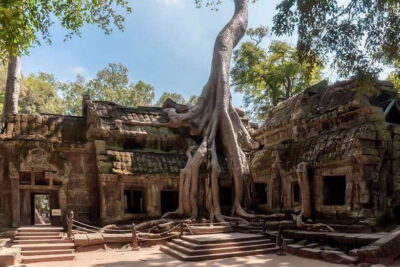
Browse the lists this tour appears in