
Reviewed · ANGKOR WAT SUNRISE TOURS
2 Days Angkor temples with Sunrise & Sunset
The big draw here is the chance to cover Angkor’s headline temples and its quieter corners in just two days, with sunrise at Angkor Wat and a sunset stop built into the plan. I like the private format, which lets your group adjust the pace, and I like that guides such as Bunpheng, Bunphen, and Mr. Pheng are praised for being punctual, friendly, and willing to tailor the route.
I also like the air-conditioned vehicle and steady supply of cold water, both welcome in Cambodia’s heat. The main drawback is the packed schedule: two early starts, many temples, and a long second day can leave you temple-tired. You also need to add the $62 three-day Angkor Pass, meals, and accommodation to the $115 tour price.
In This Review
- Key points to know before booking
- What two days at Angkor really feels like
- Day one, brick temples, jungle ruins, and Angkor Thom
- Day two, sunrise at Angkor Wat and the outer temples
- Why the private vehicle and guide matter
- The real price and the value of two packed days
- Clothing, timing, and practical preparation
- Who should book this Angkor plan?
- FAQ
- How long does the tour last?
- What time does the sunrise portion begin?
- Is the Angkor Pass included?
- Is this a private tour?
- What transportation is provided?
- Is a tour guide included?
- Are food and accommodation included?
- What clothing is required?
Key points to know before booking
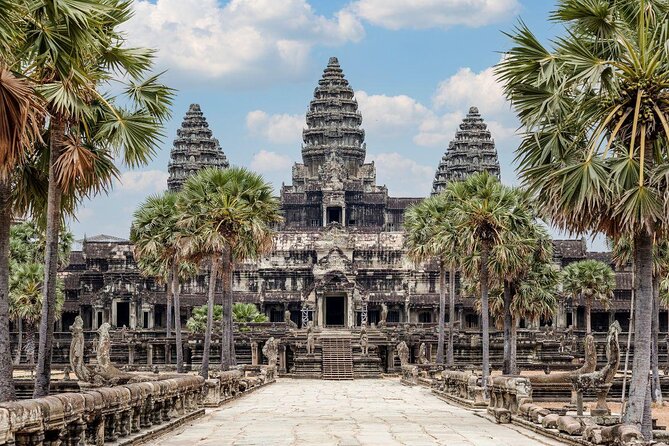
- Sunrise at Angkor Wat: Leave around 4:30 or 5 a.m., depending on the season, then spend about three hours at the temple.
- A genuinely private tour: Only your own group participates, with an English-speaking guide and air-conditioned car, minivan, or minibus.
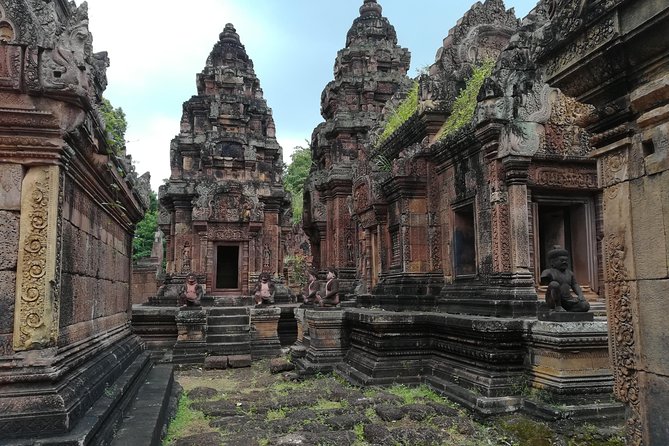
- Banteay Srei adds something different: The small pink sandstone temple is known for finely cut carvings and sits away from the main cluster.
- Two sunset possibilities: The plan includes sunset at Angkor Thom’s South Gate or Phnom Bakheng, with Phnom Bakheng listed as the main sunset stop.
- The $115 price is not the full cost: Add the required $62 three-day Angkor Pass, plus food and drinks.
- A flexible guide matters: Bunpheng and Bunphen are named in the feedback, with particular praise for punctuality, photography, and adapting the route.
What two days at Angkor really feels like
Angkor is too large for a quick photo stop. This two-day plan gives you a useful sweep of the archaeological park, from small brick shrines to giant temple mountains and the famous stone faces of Bayon inside Angkor Thom.
You are not simply visiting Angkor Wat and Ta Prohm. You will also see Banteay Srei, Banteay Samre, Preah Khan, Neak Pean, Ta Som, and several less famous temples. That range helps you understand how Khmer temple design changed across several centuries.
The pace is brisk. Day one includes six stops, ending with sunset. Day two begins before dawn and includes eight stops, with Banteay Srei requiring a longer drive than the central temples. I would choose this tour if you have limited time and want a strong first look at Angkor. If you prefer long, quiet visits with plenty of time for photography, you may find it tiring.
The private setup helps. You can ask your guide to slow down at a favorite temple, shorten a stop that is not holding your interest, or adjust the order when possible. That flexibility is more useful here than on a large bus tour.
More sunrise departures to Angkor Wat:
- Angkor Wat Sunrise or Sunset Tour with Guide from Siem Reap
5.0 · 12,109 reviews - Siem Reap: Angkor Wat: Small-Group Sunrise or Sunset Tour
5.0 · 9,444 reviews - Siem Reap: Angkor Wat 2-Day Tour with Sunrise and Sunset
4.9 · 4,429 reviews
Day one, brick temples, jungle ruins, and Angkor Thom
The first day begins with Prasat Kravan, a small 10th-century temple made of five reddish brick towers on an elevated terrace. It lacks the scale of Angkor Wat, but that is part of its appeal. You get a compact introduction to early Khmer temple building, and the brickwork gives it a warmer color than the later gray sandstone monuments.
The visit lasts about 20 minutes. That is enough for a look and a few photographs, but not a long study of the site. The admission cost is not included, and the Angkor Pass is required.
Next comes Banteay Kdei, whose name means Citadel of Chambers. Built in the late 12th or early 13th century under Jayavarman VII, it is a Buddhist temple with a more open, maze-like feel. Allow 40 minutes here. You will notice the repeated galleries and doorways, along with the worn surfaces that show how much time and weather have passed through the site.
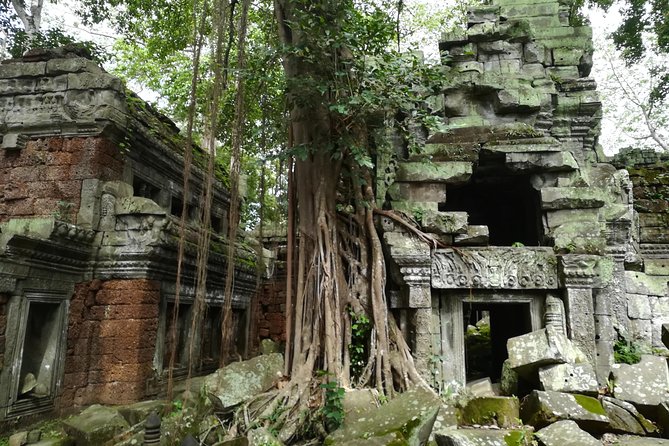
Ta Prohm gets a full hour, and it deserves it. Built in the Bayon style as a Buddhist monastery and university, it is one of Angkor’s most memorable ruins. Trees have grown through parts of the structure, and the roots pressing against the stone create the image many people associate with Angkor.
The jungle setting is dramatic, but it can also make Ta Prohm feel crowded and slow to navigate. Your guide can help you focus on the carvings and layout instead of simply chasing the most photographed doorway. The one-hour stop is a sensible compromise, though you may wish for more time if photography is your main goal.
Ta Keo offers a different mood. This tall temple mountain was begun around 975 AD as the state temple of Jayavarman V, but it was never finished. Its plain, massive surfaces show less decorative carving than many nearby temples. The 30-minute stop is enough to grasp its structure and unusual unfinished character.
Then you reach Angkor Thom, the ancient capital of the Khmer Empire. Two hours are scheduled here, making it the longest stop on day one. The area includes the South Gate, Bayon, the Royal Palace area, the Terrace of the Elephants, and the Terrace of the Leper King.
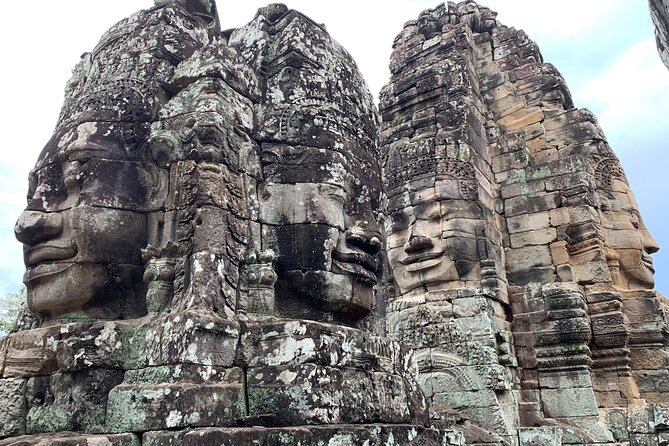
Angkor Thom is not just one temple. It is a large former capital enclosed by walls and gates. At the South Gate, the bridge is lined with figures holding a naga, or serpent. Bayon is the centerpiece, with towers carved with enormous serene faces. The terraces provide a glimpse of royal ceremonies and public display.
Two hours sounds generous, but Angkor Thom can easily absorb much longer. I would ask your guide at the start of the visit how the time will be divided. If Bayon is your priority, say so. If you want the full range of terraces and gates, keep moving and save detailed photography for another stop.
The day ends at Phnom Bakheng, a temple mountain dedicated to Shiva and built by King Yasovarman near the end of the 9th century. Phnom means hill or mountain, and the temple sits high above the surrounding area. It is listed as a 40-minute stop.
The overview also allows sunset at Angkor Thom’s South Gate or Phnom Bakheng. Since the exact sunset choice matters, confirm it with the operator before departure. Phnom Bakheng is the more obvious sunset viewpoint in the schedule, while the South Gate offers a different setting among the stone bridge and gate architecture.
Day two, sunrise at Angkor Wat and the outer temples
Day two begins early, with a departure around 4:30 or 5 a.m., depending on the season. The goal is sunrise at Angkor Wat, followed by entry into the main temple. This is the tour’s most demanding morning, so I would prepare clothing, shoes, and water the night before.
About three hours are allocated to Angkor Wat. That gives you time to see the sunrise, cross into the temple complex, and examine the galleries, towers, courtyards, and reliefs. Angkor Wat was built as a Hindu temple and later used as a Buddhist site. Its vast scale is difficult to take in from one viewpoint, so the long stop is welcome.
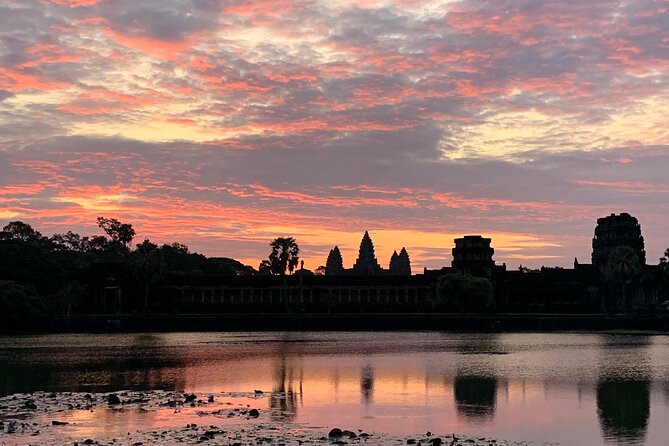
The sunrise itself is not guaranteed to be dramatic. Clouds and haze are part of the morning, and the area can be busy. Still, starting in the dark lets you see Angkor Wat change from silhouette to detailed stone monument. After the sunrise rush, use the remaining time for the temple itself rather than treating the visit as a single photograph.
The itinerary then lists Pre Rup as the next stop, but its description refers to East Mebon. These are separate temples. East Mebon appears later in the schedule, while Pre Rup is named here without a detailed description. Confirm the exact order with Angkor Doors so you know which temple is planned after Angkor Wat.
Banteay Srei is one of the strongest reasons to choose this route. Known as the Citadel of the Women, it is a smaller temple built from pinkish sandstone with exceptionally fine carvings. The delicate work gives the site a different character from the larger, heavier temples around Angkor Wat.
You get about one hour here, and admission is listed as free within the tour details, though the required Angkor Pass still applies to the overall visit. Banteay Srei lies farther from the central temple group, so the drive takes time. I think that trade-off is worthwhile if you want more than the standard Angkor circuit.
Banteay Samre follows, with a 40-minute stop. This early 12th-century Hindu temple was dedicated to Vishnu and is associated with Kings Suryavarman II and Yasovarman II. Its design is often compared to a smaller Angkor Wat, but the site generally feels more compact and easier to read.
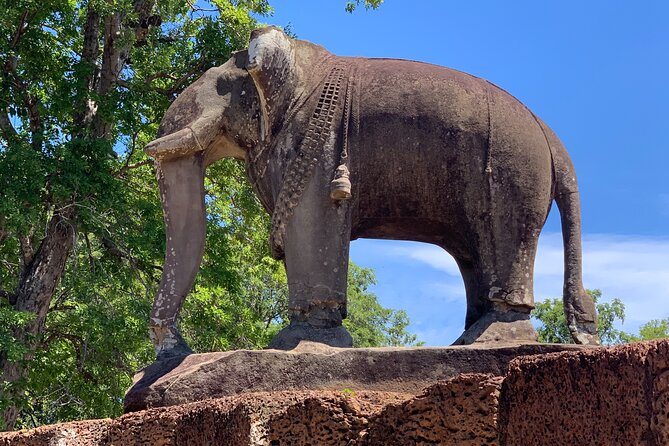
East Mebon receives 20 minutes. Built in the 10th century, it is an example of early Khmer architecture. The short stop gives you a quick look at its layout and stonework. If the preceding schedule really includes Pre Rup as well, you may see two different early temple forms in one morning.
Ta Som is another short visit, lasting about 20 minutes. Built by Jayavarman VII and dedicated to Lokesvara Buddha, it is a Buddhist temple with a quiet, compact design. The visit works well as a contrast to Angkor Wat and Bayon. You are not spending every hour inside giant monuments.
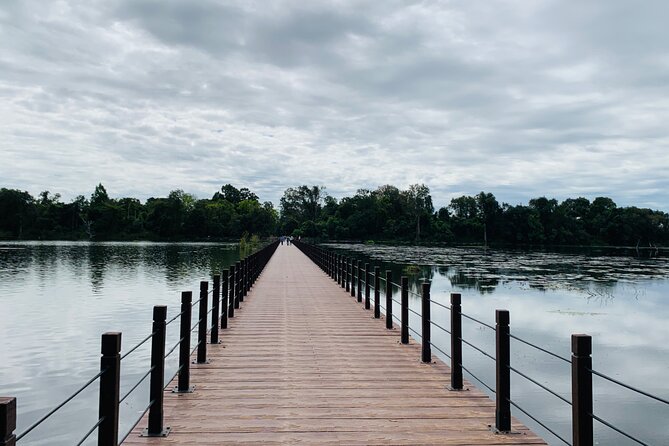
Neak Pean takes about 30 minutes. This 12th-century Buddhist temple sits on a man-made island in a man-made lake. Its name means Entwined Serpents. The water setting gives it a calm, unusual appearance, although the visit is more about the approach and overall setting than a long interior exploration.
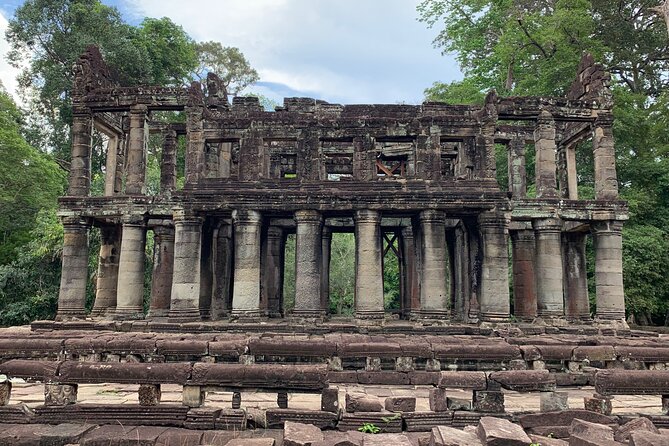
The final stop is Preah Khan, with about 50 minutes. Its name translates as Royal Sword, and Jayavarman VII built it in the 12th century in honor of his late father. Located north of Angkor Thom, it is a broad temple complex with galleries, courtyards, and a sense of scale that rewards a steady walk.
Preah Khan is a fitting end to the second day because it brings together many themes found across Angkor: Buddhist foundations, later changes in use, long galleries, carved stone, and vegetation pressing into old structures. After sunrise and seven additional stops, however, you may be ready for a break before the tour ends.
Why the private vehicle and guide matter
Transportation is provided by air-conditioned car, minivan, or minibus. That detail has real value in Siem Reap. You will move between temples in the heat, and the vehicle gives you a place to cool down between walks.
Cold bottled water is included. Food and other drinks are not, so budget for meals separately. The itinerary does not specify meal stops, so ask your guide about the day’s break plan, especially on the early sunrise morning.
The tour is private, meaning only your own group joins. That is a better match for families, couples, honeymooners, and small groups with different energy levels. One couple used the service for a honeymoon, and the guide was praised for making the experience feel personal and for taking photographs.
Bunpheng is the clearest guide name associated with this experience, also appearing as Bunphen or Mr. Pheng in the supplied information. He is described as punctual, professional, friendly, attentive, and willing to customize the program. One particularly useful detail is his skill with photography, which can matter when you are traveling as a couple or want group pictures without handing your phone to strangers.
The tour also suited one group that had only 48 hours in Siem Reap and needed airport pickup, hotel transfers, and a tailored schedule. Those services are not all listed as standard inclusions here, so you should confirm any airport or hotel transfer request before booking.
More Angkor temple itineraries:
- Siem Reap: Full-Day Angkor Wat Guided Tour with Sunset
4.9 · 3,803 reviews - Angkor Wat Sunrise tour with Small – Group and Guide tours
5.0 · 3,655 reviews - Angkor Wat Highlights and Sunrise Guided Tour from Siem Reap
5.0 · 3,213 reviews - Angkor Wat Sunset Small Group Tour with Lunch Included
5.0 · 3,059 reviews
The real price and the value of two packed days
The tour costs $115 per person. The required three-day Angkor Pass costs another $62 per person, bringing the known combined total to $177 before food, drinks, accommodation, or optional transfers.
That is a fair price if you value private transportation and a guide who can explain what you are seeing. You are covering fourteen listed stops across two days, including the early-morning Angkor Wat departure and the longer drive to Banteay Srei.
The price is less attractive if you only want Angkor Wat, Ta Prohm, and Bayon. In that case, a shorter program could be easier on your body and wallet. This tour earns its value through range and convenience, not through a slow pace.
A three-day pass is required even though the tour lasts two days. The pass fee is not included, and current pricing should be confirmed before booking. The activity also lists a 9 a.m. start time, which does not fit the sunrise departure. Treat the 4:30 or 5 a.m. sunrise timing as the important one and confirm the meeting time directly.
Clothing, timing, and practical preparation
Temple dress rules are strict. You must cover your thighs and shoulders when entering the temple complex. Wear clothing that meets those rules from the start, since incorrect clothing can lead to refused entrance.
Bring comfortable walking shoes, though the tour information does not specify a required footwear type. You will move through courtyards, galleries, terraces, and temple approaches over two long days. A hat, sun protection, and extra water are sensible, but only bottled cold water is specifically included.
The early departure is the main physical challenge. Day two starts before dawn, followed by a full temple circuit. If you need more sleep, ask whether the order can be adjusted, but do not assume every change will be possible because sunrise fixes the first part of the morning.
Most people can participate, according to the activity information. Still, the schedule involves extensive temple walking and early starts, so consider your own stamina when deciding whether to keep every stop.
Free cancellation is available up to 24 hours before the local start time. Cancellations or changes made inside that window are not accepted for a refund.
Who should book this Angkor plan?
I would choose this tour if you have two days in Siem Reap and want both the famous temples and a broader look at Angkor. It suits people who value a private guide, air-conditioning, and the ability to discuss small changes with one person rather than follow a large group.
It is especially useful for a honeymoon, a family group, or anyone visiting Cambodia for the first time. The named guide, Bunpheng, has been praised for punctual service, cultural explanation, flexibility, and taking photographs.
I would hesitate if you dislike early mornings, long touring days, or a schedule with many short stops. You may prefer a slower private itinerary with fewer temples. I would also confirm the sunrise meeting time, the Pre Rup and East Mebon order, and the sunset location before paying.
At $115, the tour is a solid choice for a concentrated two-day visit, provided you add the pass fee and accept the pace. Book it for coverage, guidance, and flexibility, not for a leisurely temple holiday.
FAQ
How long does the tour last?
The experience lasts approximately two days.
What time does the sunrise portion begin?
The sunrise departure is around 4:30 or 5 a.m., depending on the season. The activity also lists a 9 a.m. start time, so confirm the correct pickup time before the tour.
Is the Angkor Pass included?
No. Each visitor needs a three-day Angkor Pass, listed at $62 per person. The tour price does not include the pass.
Is this a private tour?
Yes. Only your own group participates.
What transportation is provided?
Transportation is provided in an air-conditioned car, minivan, or minibus.
Is a tour guide included?
Yes. An English-speaking tour guide is included. Bunpheng, also known as Bunphen or Mr. Pheng in the supplied information, is associated with the tour.
Are food and accommodation included?
No. Food, drinks other than the provided bottled water, and accommodation are not included.
What clothing is required?
You must cover your thighs and shoulders when entering the temple complex. Visitors wearing incorrect clothing may be refused entrance.
More Morning in Siem Reap
- Full-Day Angkor Wat Sunrise Private Tour with Guide from Siem Reap
5.0 · 2,920 reviews - Angkor Wat Sunrise & 3 Main Temples with Breakfast – Small Group
5.0 · 2,857 reviews - Siem Reap: Angkor Wat Sunrise and Full-Day Sightseeing Tour
4.9 · 2,828 reviews - Angkor Wat: Highlights and Sunrise Guided Tour
4.9 · 1,586 reviews
More Evening Experiences in Siem Reap
- Sunset tour of Kampong Phluk stilts home village on the Tonle Sap
5.0 · 4,865 reviews - Angkor 2-Day Sunset & Sunrise Small-Group Tour
5.0 · 2,567 reviews - Siem Reap: Angkor Wat Sunrise or Sunset Guided Tour
4.9 · 2,123 reviews - Siem Reap Floating Village Kampong Phluk Sunset with Boat
5.0 · 1,962 reviews
Fresh reviews from around Siem Reap
- Full-Day Tour Preah Vihea & Koh Ker Temple 3.7 · 3 reviews
- Savor the Countryside: Tours with Authentic Cooking Classes” 5.0 · 3 reviews
- Angkor Wat Sunrise TukTuk Tour 5.0 · 3 reviews
- Angkor Grand Circuit Tour & Banteay Srei 5.0 · 3 reviews
- Guided Private Tuk Tuk Tour Angkor Wat and Small Circle and Five Extras 5.0 · 3 reviews
- Siem Reap Temple Tour 2-Day with Sunrise/Sunset 3.7 · 3 reviews
- Bangkok to Angkor Wat 2 Days 1 Night by Flight 4.5 · 3 reviews
- Kompong Pluk Tour 5.0 · 3 reviews
Angkor Wat Sunrise Tours, compared.

Angkor Wat Sunrise or Sunset Tour with Guide from Siem Reap
Read our review →


Angkor Wat Sunrise tour with Small – Group and Guide tours
Read our review →
Angkor Wat Highlights and Sunrise Guided Tour from Siem Reap
Read our review →
Full-Day Angkor Wat Sunrise Private Tour with Guide from Siem Reap
Read our review →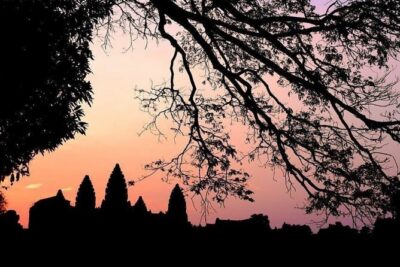
Angkor Wat Sunrise & 3 Main Temples with Breakfast – Small Group
Read our review →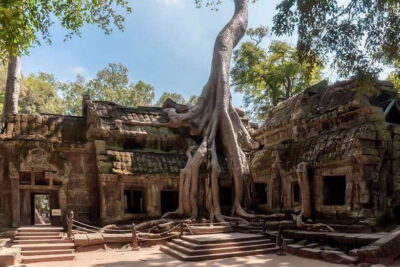
Browse the lists this tour appears in