Reviewed · TUK-TUKS
Siem Reap: Angkor Wat Private Tour by Tuk Tuk
Angkor Wat is only the beginning on this full-day tuk-tuk outing. You’ll move from the vast towers of Angkor Wat to the giant stone faces of Bayon, then into Ta Prohm, where tree roots grip the old walls. I like the private setup and the open-air ride, which lets you feel the forest air between stops.
I also like the practical care: drivers such as Rachou, Sona, and Vannak have been praised for clear meeting instructions, patient waiting, photos, and cold water. The main drawback is that the $13 price excludes your temple ticket and lunch, and the long list of stops makes for a tiring day.
In This Review
- Key points to know before you book
- What this $13 private tour really gives you
- Starting from your hotel in Siem Reap
- Three hours at Angkor Wat
- Entering Angkor Thom through the South Gate
- Bayon and its 216 stone faces
- Baphuon and the restored reclining Buddha
- Phimeanakas and the royal terraces
- Lunch and the afternoon’s smaller temples
- Ta Prohm and the trees over the stones
- What the driver adds to the day
- Who will get the most from this route
- Practical advice for a better temple day
- Should you book this Angkor tuk-tuk tour?
- FAQ
- What temples are included in the tour?
- Is the tuk-tuk private?
- Is hotel pickup included?
- Does the price include the temple ticket?
- Is lunch included?
- Is drinking water provided?
- Does the driver speak English?
- Can I cancel the booking?
Key points to know before you book
- Private tuk-tuk transport: You ride with your own English-speaking driver rather than joining a larger vehicle.
- A full Angkor circuit in one day: The route includes Angkor Wat, Angkor Thom, Bayon, Baphuon, several terraces, and Ta Prohm.
- Flexible pacing: Drivers have waited while people explored, and some have added a requested stop.
- Cold water is supplied: This matters in Cambodia’s heat, especially during long walks over stone and open courtyards.
- Low headline price: At $13 per person, the transport value is strong, but temple admission and food cost extra.
- Best for temple-focused visitors: You get a lot of ruins in one day, with little time spent arranging transport between them.
What this $13 private tour really gives you
The price covers a private tuk-tuk, a licensed private driver, fuel, parking, toll roads, hotel pickup and drop-off, and cold drinking water. You are paying for transport and local assistance, not a full archaeological lecture from a dedicated temple scholar.
That distinction matters. Your English-speaking driver can get you around the site, wait while you walk, and help with the day’s practical details. The supplied information does not promise a separate professional tour guide, so I would book this if you want reliable transport and personal flexibility more than in-depth formal guiding.
At $13 per person, the value is particularly good for two or more people sharing the tuk-tuk. Solo visitors still get the private vehicle, though the per-person value is naturally less impressive. You must also budget separately for the temple ticket and lunch, both excluded from the price.
This is not a short look at Angkor Wat. The planned stops add up to roughly a full day of walking, riding, waiting, and sightseeing. You will see much more than the famous central temple, but you should be ready for heat, uneven ground, steep steps, and a fairly packed route.
More Angkor temple itineraries:
- Angkor Wat Sunrise or Sunset Tour with Guide from Siem Reap
5.0 · 12,109 reviews - Siem Reap: Angkor Wat: Small-Group Sunrise or Sunset Tour
5.0 · 9,444 reviews - Siem Reap: Angkor Wat 2-Day Tour with Sunrise and Sunset
4.9 · 4,429 reviews
Starting from your hotel in Siem Reap
Pickup takes place at your hotel lobby in Krong Siem Reap. Clear communication is one of the useful details here. Sona was praised for explaining where to meet and what to do, while Rachou arrived early and waited until the group was ready.
That does not mean you must rush out at the first minute. The private arrangement gives you some room to set the morning pace, although the route itself is long. Tell your driver what matters most to you at the start. If Angkor Wat and Ta Prohm are your priorities, you may want to spend less time at smaller stops.
A tuk-tuk is a sensible way to cover Angkor. You sit in the open air, see the trees and stone walls pass by, and avoid being sealed inside a car between temples. The tradeoff is exposure to sun, dust, and occasional road bumps. Bring sun protection and wear shoes suited to walking.
Cold water is provided throughout the day. That small service becomes valuable once you have spent several hours crossing courtyards and climbing temple steps.
Three hours at Angkor Wat
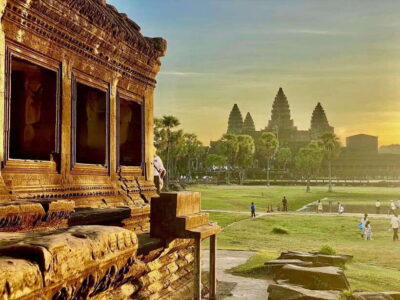
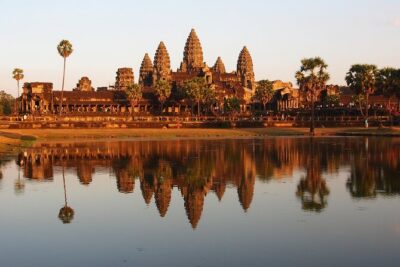
The morning begins at Angkor Wat, Cambodia’s great national symbol and the world’s largest religious monument. Built in the early 12th century by King Suryavarman II, it was first dedicated to Vishnu, then later became a Buddhist religious center.
The scale is what hits you first. Angkor Wat was built as the state temple and eventual mausoleum of its king in Yasodharapura, the capital of the Khmer Empire. Its towers, galleries, bas-reliefs, causeways, and inner levels reward a slow walk.
You have about three hours here, which gives you time to see the main features without treating the temple as a quick photo stop. Look closely at the carved walls and allow time for the approach across the causeway. The site is large, so comfortable footwear matters more than fancy clothes.
The architecture represents the high classical style of the Khmer period. Angkor Wat’s importance is not only visual. Its original Hindu purpose, later Buddhist use, and continued religious role help explain why it feels like more than a ruined palace.
I would use this first major stop to decide how much energy you have for the rest of the day. It is easy to spend too long at the opening temple, then feel rushed later. Your driver can wait outside while you explore, but the route contains many more sites.
Entering Angkor Thom through the South Gate
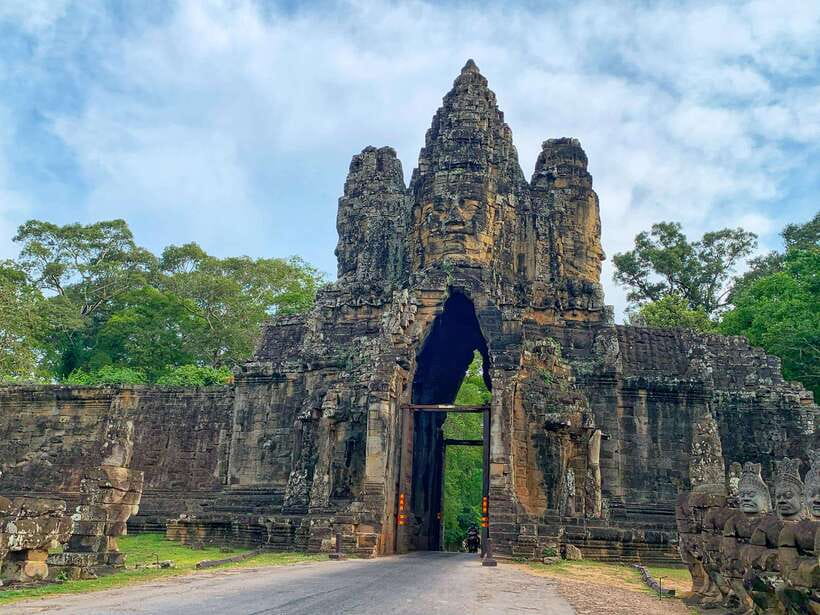
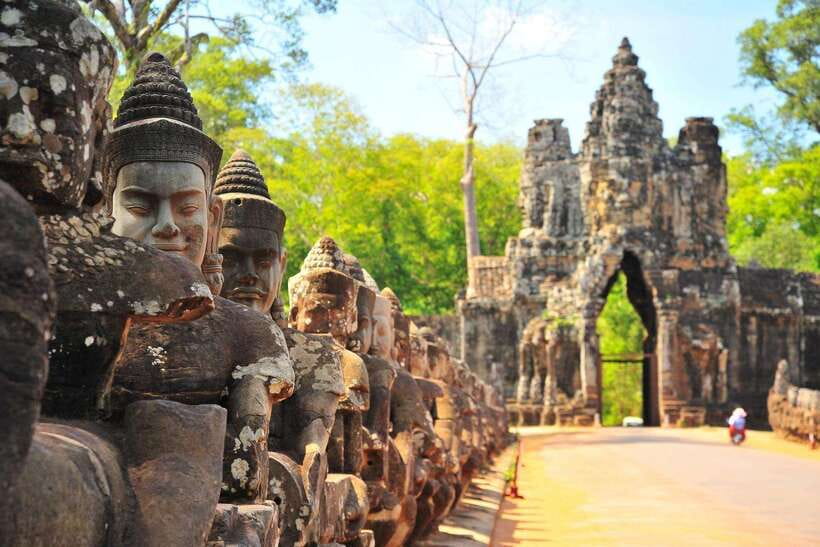
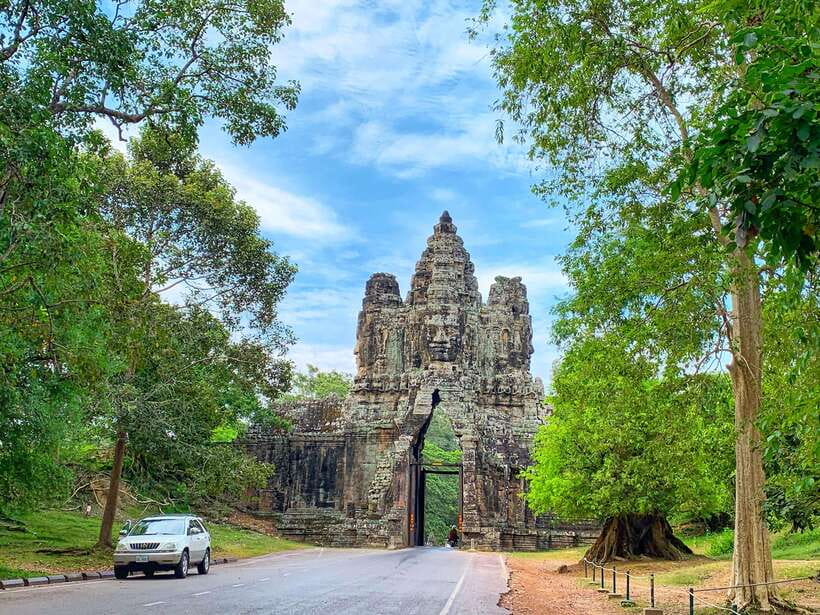
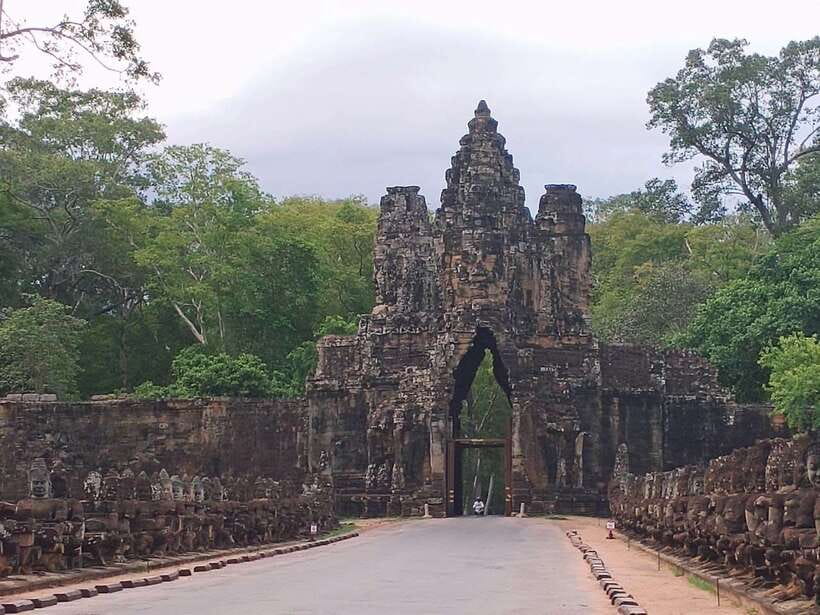
The short ride to Tonle Om Gate, better known as Angkor Thom’s South Gate, shifts the mood from one giant temple to an entire fortified city. The laterite walls rise about eight meters and enclose an area measuring roughly three kilometers by three kilometers. A moat still surrounds the city.
The South Gate makes a strong photo stop. It also gives you a sense of Angkor Thom’s defensive design before you enter its ceremonial center. Allow around 15 minutes here, so this is not a long walking segment.
The gate is one of those places where the tuk-tuk arrangement helps. You can stop, take photos, and move on without arranging another ride or searching for parking. The driver handles the transfer while you focus on the stonework and the route ahead.
Other Siem Reap experiences to weigh up
- Siem Reap: Angkor Wat Private Tuk-Tuk Tour
4.9 · 2,222 reviews - Siem Reap Countryside Bike Tour / E-Bike or Tuk Tuk
5.0 · 935 reviews - Angkor Sunrise Bike Tour / E-Bike or Tuk Tuk
5.0 · 615 reviews - Angkor Wat Private Tuk-Tuk Tour (sunrise Option) & more
5.0 · 439 reviews
Bayon and its 216 stone faces
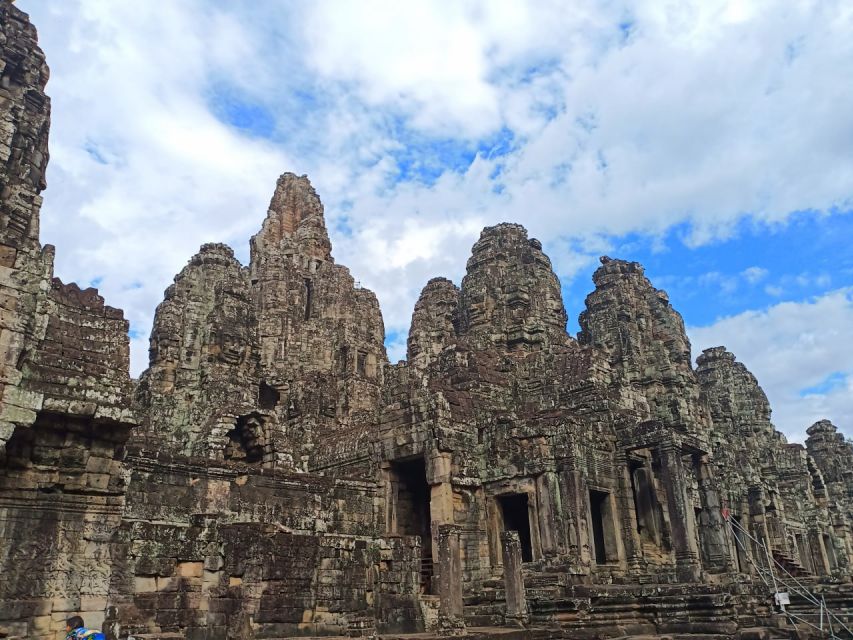
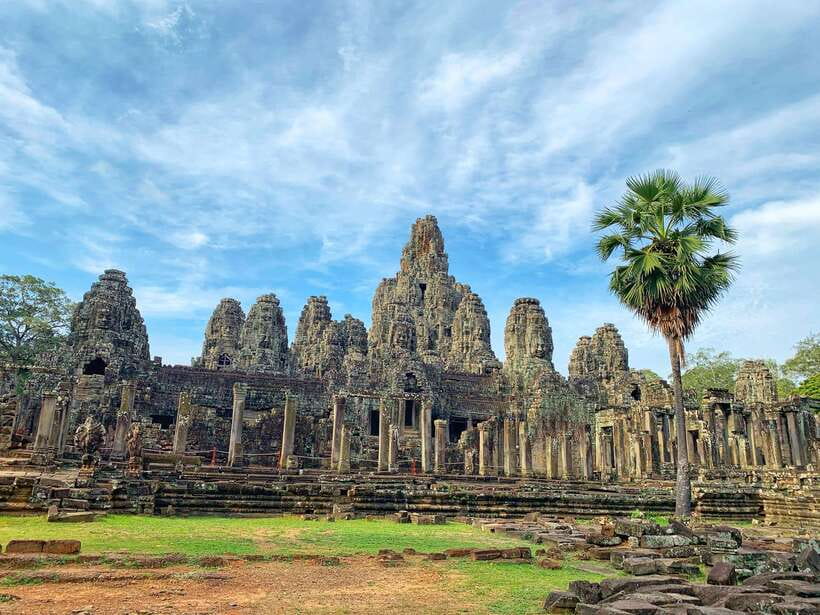
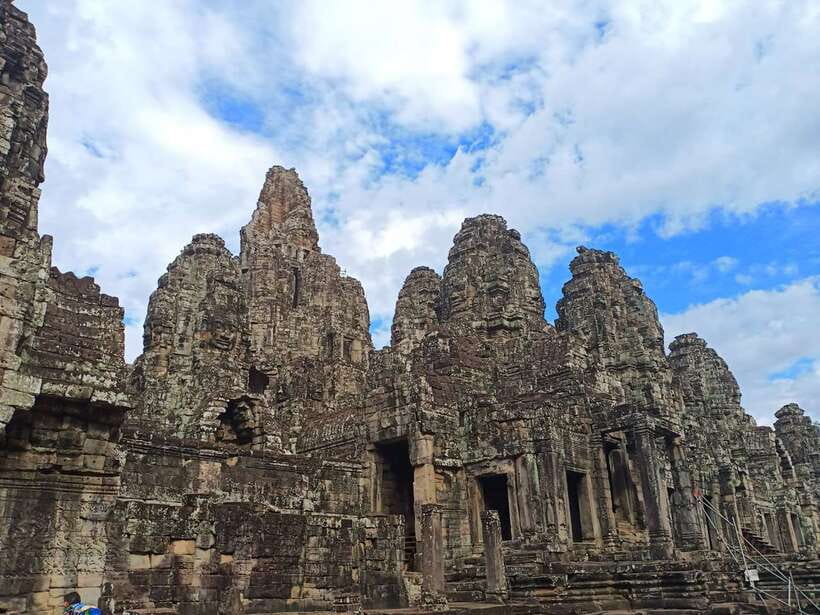
Bayon is the heart of Angkor Thom, and you get about an hour and a half to explore it. Its most famous feature is the group of enigmatic faces carved into the towers. The planned route counts 216 faces gazing over the old city.
Bayon is less orderly than Angkor Wat. Narrow passages, towers, galleries, and changing viewpoints make it a temple you experience from close range. The faces appear and disappear as you walk around the stone structure, so a quick circuit misses much of its character.
I would give Bayon serious attention even if you are starting to tire. Angkor Wat offers grand symmetry, while Bayon feels more intimate and mysterious. The two temples work well together because they show different sides of Khmer design.
The one-hour-and-a-half visit also adds to the physical demand of the day. You will walk over uneven surfaces and may need to pause in the shade. Your driver is not walking every section with you, so keep track of where the tuk-tuk is parked and follow the agreed meeting point.
Baphuon and the restored reclining Buddha
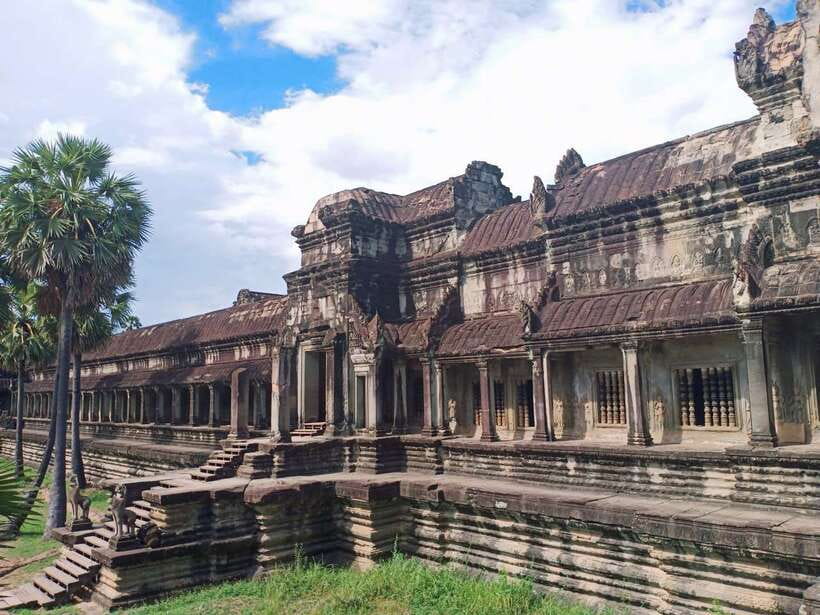
Baphuon receives about 30 minutes. Its long causeway leads you toward a temple that was once a major part of Angkor Thom. The structure also contains an impressive giant reclining Buddha, rebuilt from a vast jigsaw of stones.
The restoration took place after a 37-year disruption caused by war, with the reclining Buddha put back together in 2011. That detail adds a human layer to the visit. You are not only looking at old stones, but also at the long effort required to preserve them.
Baphuon’s causeway gives you a clear approach and a different visual rhythm from Bayon’s crowded towers. Thirty minutes is enough for a first look and photographs, though anyone interested in restoration may wish the schedule allowed longer.
Phimeanakas and the royal terraces
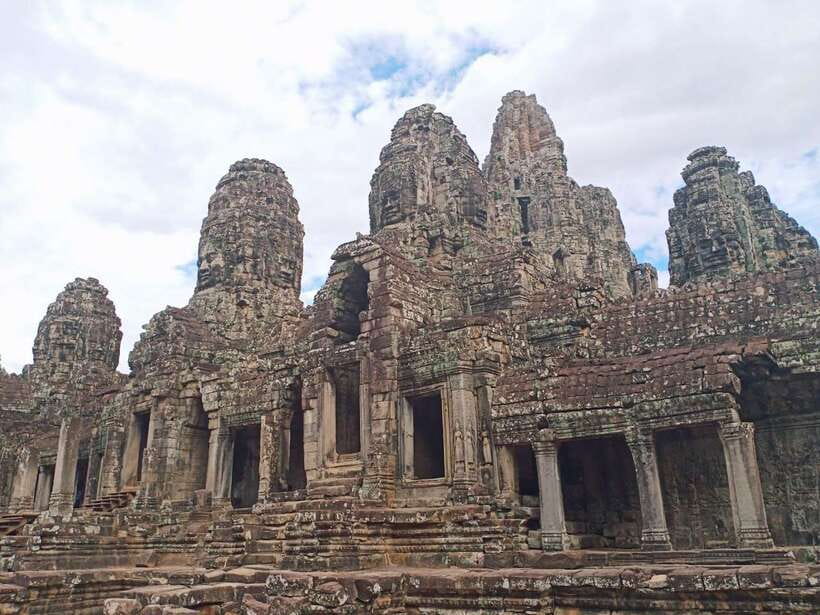
Phimeanakas is a smaller, more shaded temple hidden among trees. The route allows about 30 minutes. Steep steps lead to the top, where you can gain a view over the treetops if you are comfortable with the climb.
This is a place to judge your own energy. The steps can be demanding after Angkor Wat, Bayon, and Baphuon. If you prefer not to climb, the shaded setting still makes a pleasant pause, but you will miss the higher view.
The next stops are the Terrace of the Leper King and the Terrace of the Elephants, each planned for about 30 minutes. The terraces once formed part of the royal area and ceremonial center. Their carved surfaces and long stone fronts are best appreciated at walking speed.
The Terrace of the Elephants is especially useful for understanding the scale of Angkor Thom’s public spaces. It is not another enclosed temple with towers and galleries. Instead, it reads as a broad royal platform, which helps you picture how processions and court life once used the city.
Prasat Preah Palilay follows as a shaded, picturesque stop. It is quieter in feel than the headline monuments and gives you a break from the most crowded sections of the route. Do not expect the same scale as Angkor Wat or Bayon. Its value lies in atmosphere, trees, and the chance to see a less dominant ruin.
Lunch and the afternoon’s smaller temples
Lunch is not included, so you pay for your own meal. The exact restaurant is not specified, though one driver, Rachou, recommended a restaurant that pleased a guest. Treat that as useful local help, not as a fixed part of the package.
A lunch break is important because the morning contains several hours of walking. I would use it to refill water, cool down, and decide if you want to keep every planned stop. Since the tour is private, you can discuss the pace with your driver.
After lunch, Thommanon offers a compact Hindu temple built during the reign of Suryavarman II. Its name comes from Pali words connected with Buddhist teachings and supreme wisdom. The temple is smaller than Angkor Wat, so it works well as a focused stop rather than another long expedition.
Chau Say Tevoda sits east of Angkor Thom, across from Thommanon along Victory Way. Built in the mid-12th century, it is dedicated to Shiva and Vishnu and is noted for its female devata sculptures.
These two sites are close together and help you compare related temple forms without a long transfer. They are not likely to satisfy someone who wants only the largest monuments, but they add context to the afternoon and make the tour feel less like a two-temple checklist.
Ta Prohm and the trees over the stones
Ta Prohm is the afternoon’s major finish, with about an hour to explore. Its 21st-century fame came from the film Tomb Raider, but the temple deserves attention beyond its movie connection.
The defining sight is the relationship between the roots of the spung tree, also known as Tetrameles nudiflora, and the ancient stonework. Roots press over walls, courtyards sit under shade, and moss softens the edges of carved blocks. It is one of the most photogenic places on the route.
The movie has made Ta Prohm a popular stop, so do not expect complete solitude. The private tuk-tuk still helps because you are not tied to a large group’s walking rhythm. You can spend your hour looking for strong angles, studying the stone details, or simply enjoying the cooler shade.
I would save some energy for Ta Prohm rather than treating it as an afterthought. The temple’s uneven paths and tangled spaces feel different from the grand order of Angkor Wat. You get a more immediate sense of nature pressing back against the old city.
What the driver adds to the day
The strongest part of this experience is the private service. Rachou has been praised for being patient, accommodating, and willing to add a requested temple. He also dropped one person at Starbucks after the sightseeing day, which shows the practical flexibility possible with a private driver.
Sona helped a solo passenger with photos, a useful touch if you are traveling alone. Vannak was noted for being helpful, and Pholla was praised for following personal wishes closely. These examples point to the kind of assistance you can reasonably seek: clear meeting instructions, patient waiting, local suggestions, and help with basic logistics.
You should still be clear about your expectations. If you want detailed explanations of Khmer religion, architecture, and chronology at every stop, ask before booking if a dedicated guide can be added. The advertised service centers on a licensed English-speaking driver and private transport.
The tuk-tuk itself is part of the appeal. Riding between ruined temples is more open and local-feeling than sitting in a closed vehicle. It also keeps the day simple: one driver, one vehicle, and your own group.
Who will get the most from this route
I recommend this tour for couples, families, solo visitors, and small groups who want private transport at a very low price. It is especially useful if you want to set your own pace, stop for photos, or ask for a small change to the route.
It suits an active day of sightseeing. You will walk for hours, climb some steep steps, and move through a long list of sites. If you prefer one or two temples at a relaxed pace, this itinerary may feel too full.
The experience also works well for first-time visitors who need the main Angkor circuit arranged without paying for a private car. You get the essential icons, several lesser-known stops, hotel pickup and drop-off, and water without having to negotiate each ride separately.
Solo visitors should consider the price carefully. The vehicle remains private, and Sona’s help with photos shows how useful that can be, but $13 per person is naturally better value when shared by a small group.
Practical advice for a better temple day
Wear walking shoes and bring protection from the sun. The route includes long walks, stone surfaces, open terraces, and steep steps at Phimeanakas.
Set aside money for the temple ticket and lunch. Neither is included in the $13 price, so the low fare should not be mistaken for the full cost of the day.
Tell the driver your priorities early. If you want more time at Angkor Wat or Ta Prohm, ask about trimming one of the shorter stops. The private format gives you a better chance of making that adjustment than a fixed group departure.
Use the supplied cold water, but do not rely on it as your only preparation. The tour is designed to help with dehydration, not to remove the effects of Cambodia’s heat.
Free cancellation is available up to 24 hours before the activity, and you can reserve now and pay later. Starting times depend on availability. The tour uses a separate entrance for skipping the line, according to the activity details.
Should you book this Angkor tuk-tuk tour?
Book it if you want private, affordable transport and a full day covering Angkor’s major temples plus several smaller ruins. The combination of an open-air tuk-tuk, patient local drivers, hotel transfers, and cold water makes the $13 transport cost hard to fault.
Think twice if you want a dedicated guide explaining every carving or if you dislike packed sightseeing days. You will need to pay separately for entry and lunch, and the long route demands stamina.
For most visitors who want to see Angkor Wat, Bayon, and Ta Prohm in one organized day, this is a practical choice. Ask for a driver who can match your preferred pace, confirm the meeting point, and decide in advance which temples matter most to you.
FAQ
What temples are included in the tour?
The route includes Angkor Wat, Angkor Thom’s South Gate, Bayon, Baphuon, Phimeanakas, Prasat Preah Palilay, the Terrace of the Leper King, the Terrace of the Elephants, Thommanon, Chau Say Tevoda, and Ta Prohm.
Is the tuk-tuk private?
Yes. The booking provides a private tuk-tuk for the number of people you book, rather than a shared tour with other groups.
Is hotel pickup included?
Yes. Pickup from and drop-off at your hotel in Krong Siem Reap are included.
Does the price include the temple ticket?
No. The temple ticket is not included in the $13 price.
Is lunch included?
No. Meals are not included, so you pay for lunch separately.
Is drinking water provided?
Yes. Cold drinking water is provided during the tour to help you stay hydrated.
Does the driver speak English?
Yes. The listed driver language is English.
Can I cancel the booking?
You can cancel up to 24 hours in advance for a full refund. You can also reserve now and pay later.
Fresh reviews from around Siem Reap
- Full-Day Tour Preah Vihea & Koh Ker Temple 3.7 · 3 reviews
- Savor the Countryside: Tours with Authentic Cooking Classes” 5.0 · 3 reviews
- Angkor Wat Sunrise TukTuk Tour 5.0 · 3 reviews
- Angkor Grand Circuit Tour & Banteay Srei 5.0 · 3 reviews
- Guided Private Tuk Tuk Tour Angkor Wat and Small Circle and Five Extras 5.0 · 3 reviews
- Siem Reap Temple Tour 2-Day with Sunrise/Sunset 3.7 · 3 reviews
- Bangkok to Angkor Wat 2 Days 1 Night by Flight 4.5 · 3 reviews
- Kompong Pluk Tour 5.0 · 3 reviews