Reviewed · MUSEUMS
Siem Reap: Angkor National Museum Admission Ticket
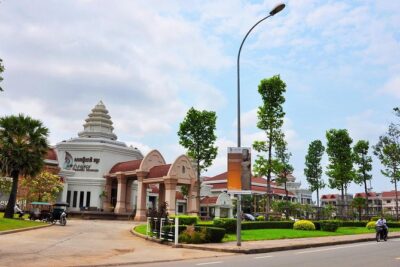
The Angkor National Museum gives you the missing chapter between seeing Angkor Wat and understanding it. Inside, more than 1,000 Buddha statues, inscriptions, and temple artifacts explain the Khmer Empire’s art, religion, and culture in a calm indoor setting.
I like the freedom to visit at my own pace, and I like the eight galleries, which let you build a clearer picture of Khmer civilization rather than simply admire loose stones. The main drawback is that the $15 ticket does not include an audio guide or transport, and your digital ticket may not arrive instantly after booking.
In This Review
- Key points to know before you go
- Why visit the museum before or after Angkor Wat
- Entering the eight galleries
- The Buddha collection and Khmer religious art
- Ancient inscriptions and artifacts from Angkor
- Using the wall panels and optional audio guide
- How the $15 price works for your budget
- Planning your visit in Siem Reap
- A visit that fits different travel styles
- What I like, and what I would plan around
- Should you book the Angkor National Museum ticket?
- FAQ
- How much does admission to the Angkor National Museum cost?
- How long is the ticket valid?
- Is a tour guide included?
- Is an audio guide included?
- Does the ticket include transport to the museum?
- How do I receive the ticket?
- Can I cancel the booking?
Key points to know before you go
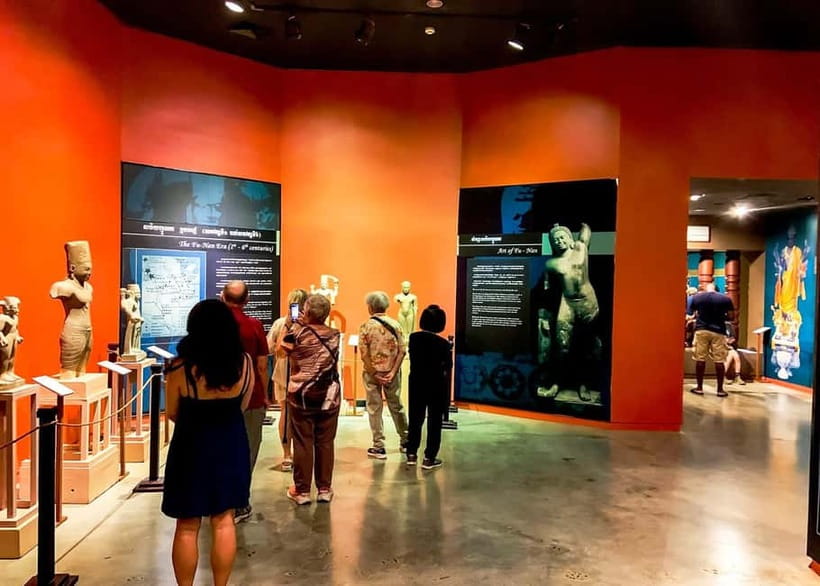
- Eight galleries cover Khmer art, culture, and religion from several angles.
- More than 1,000 Buddha statues form the museum’s most impressive collection.
- Ancient inscriptions and excavated artifacts help explain what you see at Angkor’s temples.
- The $15 ticket is valid for one day and lets you visit independently.
- The optional audio guide costs an extra $5, according to the information provided at the museum.
- You must arrange your own transport and provide a WhatsApp, Telegram, or Viber number to receive the ticket.
Why visit the museum before or after Angkor Wat
Angkor Wat and the surrounding temples can be visually overwhelming. You see towers, carvings, faces, and fallen stones, but the wider story can be hard to follow while walking through a huge archaeological area in the heat.
The Angkor National Museum gives you a useful framework. It brings together statues and artifacts from Angkor’s sites, then places them within the development of Khmer art, religion, and royal culture. I find that especially useful if you are seeing the temples for the first time. A little context can turn a carved figure from an attractive object into a clue about the beliefs of the people who made it.
The museum also works well after a temple visit. Once you have seen Angkor Wat, Bayon, or other archaeological sites, the displays can help you understand details you noticed but could not quite place. One visitor spent between 90 minutes and two hours with the audio guide, while another took more than three hours to work through the museum carefully.
That range is important. You can make this a short, focused stop, or give it a large part of your day. The ticket is valid for one day, so you are not forced into a rushed visit.
More Angkor temple itineraries:
- Angkor Wat Sunrise or Sunset Tour with Guide from Siem Reap
5.0 · 12,109 reviews - Siem Reap: Angkor Wat: Small-Group Sunrise or Sunset Tour
5.0 · 9,444 reviews - Siem Reap: Angkor Wat 2-Day Tour with Sunrise and Sunset
4.9 · 4,429 reviews
Entering the eight galleries
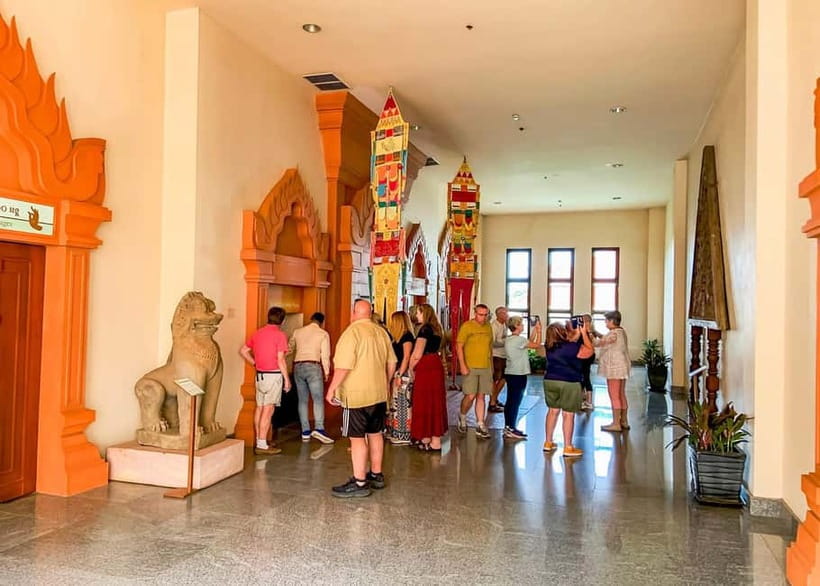
Your admission includes access to the museum’s eight galleries. The exact route through the displays is less important than the way the galleries work together. Rather than presenting one room of unrelated statues after another, the museum covers different parts of Khmer civilization and its changing artistic and religious traditions.
I would allow at least 90 minutes if you want more than a quick look. Give yourself two to three hours if you plan to read the wall panels and use the optional audio guide. The galleries reward patience because the written information helps connect the objects to Angkor’s larger story.
The museum is not a substitute for seeing the temples themselves. It cannot reproduce the scale of Angkor Wat or the atmosphere of a stone tower surrounded by trees. Its value is different. Here, you can focus on the objects, the inscriptions, and the ideas behind the monuments without worrying about heat, distance, or the next temple on your schedule.
The Buddha collection and Khmer religious art
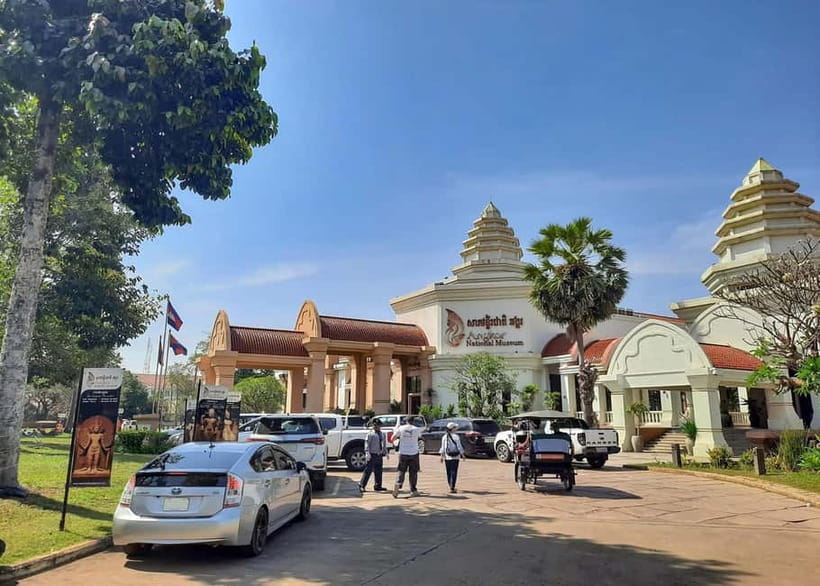
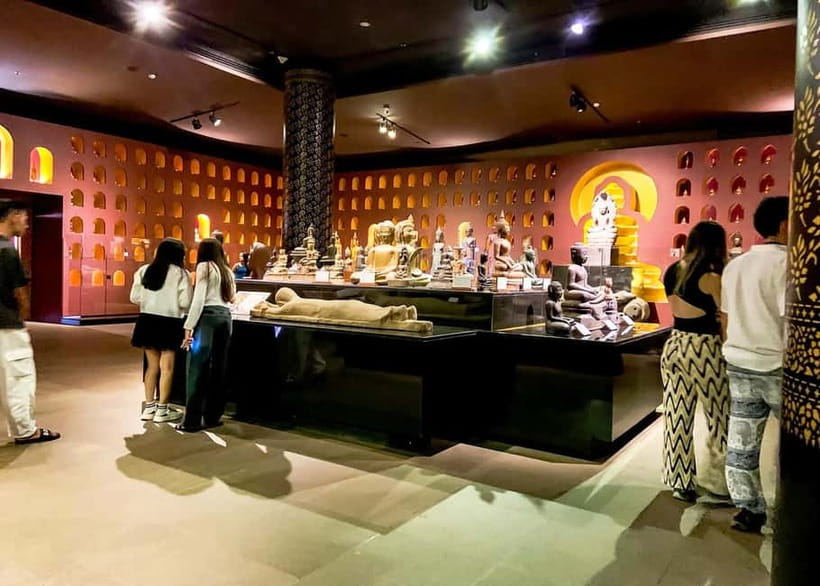
The largest draw is the collection of Buddha statues. More than 1,000 Buddha figures are displayed, making this the part of the museum most likely to hold your attention.
The collection gives you a chance to compare styles and forms side by side. At a temple, a statue may be tucked into a dark corner or partly obscured by the setting. In a museum, you can examine the objects more directly. You might find that repeated forms begin to look less repetitive once you pay attention to posture, expression, clothing, and the way each figure was made.
The collection also helps explain the role of religion in Khmer society. Buddhist and Hindu traditions shaped the art and architecture of Angkor, and the museum’s displays place religious objects within that broader setting. I like this because it keeps the visit from becoming a simple count of statues. The point is not only how many objects you see, but what they reveal about changing beliefs and artistic practice.
If you have a strong interest in sculpture, plan extra time here. If you are mainly visiting to prepare for a day at Angkor, focus on the explanatory panels and use the collection to recognize recurring artistic themes.
Ancient inscriptions and artifacts from Angkor
The museum also displays ancient inscriptions and artifacts excavated from Angkor’s archaeological sites. These objects may not have the instant visual impact of a large statue, but they can provide some of the clearest links to the people and institutions behind the temples.
Inscriptions matter because they preserve written evidence. They can help place religious activity, royal power, and temple building within a wider setting. You do not need to read the ancient language to appreciate their value. The museum’s wall information is there to help you understand why these pieces were preserved and what they add to the story.
The excavated artifacts also give you a sense of how much material exists beyond the famous monuments. Angkor is not only Angkor Wat. The museum helps you see the archaeological area as a large civilization with art, religion, and daily activity spread across many sites.
I recommend slowing down in these rooms. The statues are likely to catch your eye first, but the inscriptions and smaller objects may be what makes your later temple visits more meaningful.
More museums and galleries in Siem Reap:
- Bantey Srei, Kbal Spean and Landmine museum Private Tuk-Tuk
4.7 · 30 reviews - Siem Reap City Tour with War Museum and Killing Field
5.0 · 27 reviews - Private Tour: HERO Rats & Angkor National Museum
4.5 · 16 reviews - War Museum, Killing Field and Floating village ( Chong Kneas) Tour
5.0 · 14 reviews
Using the wall panels and optional audio guide
The information panels are an important part of the visit. One visitor found that the wall text brought the statue collection together, and I agree with that practical point. Without the written explanations, a large display of religious sculpture can blur into one long sequence of similar objects.
An audio guide is not included in the admission price. The additional cost is $5, and the visit information indicates that it can be rented at the museum. You should budget for it if you want more help moving through the collection.
The audio guide may also affect how long you spend inside. A visit of 90 minutes to two hours is possible, but listening carefully and stopping at each numbered section can stretch the experience to three hours or more. If you prefer to move quickly, read only the panels that interest you. If you want a fuller lesson in Khmer art and religion, start at number one and work forward at a steady pace.
There is no tour guide included with this ticket. That keeps the visit independent and usually suits people who want quiet time with the displays. If you prefer a personal explanation or the ability to ask questions, you will need to arrange a separate guide yourself.
How the $15 price works for your budget
At $15 per person, this is not a throwaway museum stop. The value depends on how you use it.
I think the price makes more sense if you spend two or three hours inside, read the information panels, and use the visit to prepare for or reflect on Angkor. A quick walk through the galleries would make the ticket feel less worthwhile. The one-day validity gives you flexibility, but it does not turn the ticket into a multi-day pass.
You should also count the extra costs. Transport to the museum is not included, and you are responsible for arranging your own way there. Food and drinks are not included either. The optional audio guide adds $5.
The skip-the-ticket-line feature can save time at the entrance, but it does not mean every part of the booking is instant. The digital ticket is sent separately after purchase, and it may not arrive immediately. If you are heading straight to the museum, allow time for the operator to send it. A direct message helped one visitor receive the ticket a few minutes later, but I would not leave this until the last moment.
Planning your visit in Siem Reap
The museum does not provide pickup or drop-off service with this ticket. You need to arrange transport independently and make your way to the museum in Siem Reap Province.
Because no meeting transfer is included, check your route before booking. This is a simple point, but it can affect the value of a low-cost admission ticket. If you are already planning transport around Siem Reap, the museum can fit neatly into your day. If you expect a ticket to include a vehicle, guide, or coordinated arrival, this option may not match your needs.
Wear comfortable clothes and shoes. You may spend much longer inside than expected, especially if you rent the audio guide or read the panels carefully. Bring a camera if you want to record details for later, and carry cash for possible extra expenses such as the audio guide.
Pets, alcohol, and drugs are not allowed. The museum is wheelchair accessible, which makes this a practical indoor activity for visitors who need step-free access. Private or small-group options are available, though the ticket itself is designed for self-guided entry.
A visit that fits different travel styles
This experience suits a few types of visitors particularly well.
If you are a first-time visitor to Angkor, go before your temple days. The museum can give you a basic map of Khmer art, culture, and religion before you meet the monuments in person. You will still need a guidebook or temple guide for detailed site information, but the museum is a useful starting point.
If you have already visited Angkor Wat, go afterward. You will recognize more of the religious imagery and have a better sense of why the artifacts matter. The museum can turn a series of impressive temple visits into a more connected experience.
If you enjoy museums and sculpture, give yourself at least two hours. The collection is large, and rushing through more than 1,000 Buddha statues would miss much of its value.
If you are traveling with someone who does not want a full day of temple walking, this is a good indoor alternative. The visit is flexible, wheelchair accessible, and not tied to a group departure time.
It is less suitable if you want a live guide, hotel transfer, or a quick attraction that takes only 30 minutes. Those services are not part of the ticket.
What I like, and what I would plan around
My favorite feature is the control you have over the pace. You can spend extra time with the displays that interest you and move on when your attention fades. That matters in a museum with eight galleries and a very large statue collection.
I also like the way the museum supports the temples without trying to replace them. Angkor gives you scale and atmosphere. The museum gives you close views, written context, and a chance to study objects that are difficult to understand in an outdoor ruin.
The main weakness is the split between the admission ticket and the useful extras. You pay $15, then decide if you want the $5 audio guide, arrange your own transport, and make sure the digital ticket has arrived before you reach the entrance. None of this is difficult, but you need to plan it.
The small number of published ratings gives the experience a 4.5 rating, with especially strong praise for the collection, the clear information panels, and the optional guiding device. I would treat those points as practical advice: the objects are impressive, but the explanations are what make the visit worthwhile.
Should you book the Angkor National Museum ticket?
I would book it if you want a quiet, flexible museum visit that adds context to Angkor. It is particularly useful before or after your temple sightseeing, and the one-day validity lets you fit it around the rest of your plans.
Book with enough time to receive the ticket, use a reachable WhatsApp, Telegram, or Viber number, and arrange transport in advance. Add the audio guide if you want more help, but do not assume it is part of the $15 price.
Skip this option if you are looking for a guided tour with hotel pickup. Choose it if you prefer to set your own pace and want more than photographs from your time in Siem Reap.
FAQ
How much does admission to the Angkor National Museum cost?
The admission ticket costs $15 per person.
How long is the ticket valid?
The ticket is valid for one day. You should check availability for the available starting times.
Is a tour guide included?
No. A tour guide is not included with the admission ticket.
Is an audio guide included?
No. The audio guide is not included. Information provided for the experience indicates an additional cost of $5 at the museum.
Does the ticket include transport to the museum?
No. You must arrange your own transportation. Pickup and drop-off service are not included.
How do I receive the ticket?
You must provide a phone number that can receive WhatsApp, Telegram, or Viber messages. The operator will contact you to reconfirm the booking and send the ticket before your visit.
Can I cancel the booking?
Yes. You can cancel up to 24 hours in advance for a full refund. The activity also offers a reserve-now-and-pay-later option, subject to the booking conditions.
Fresh reviews from around Siem Reap
- Full-Day Tour Preah Vihea & Koh Ker Temple 3.7 · 3 reviews
- Savor the Countryside: Tours with Authentic Cooking Classes” 5.0 · 3 reviews
- Angkor Wat Sunrise TukTuk Tour 5.0 · 3 reviews
- Angkor Grand Circuit Tour & Banteay Srei 5.0 · 3 reviews
- Guided Private Tuk Tuk Tour Angkor Wat and Small Circle and Five Extras 5.0 · 3 reviews
- Siem Reap Temple Tour 2-Day with Sunrise/Sunset 3.7 · 3 reviews
- Bangkok to Angkor Wat 2 Days 1 Night by Flight 4.5 · 3 reviews
- Kompong Pluk Tour 5.0 · 3 reviews