
Reviewed · ANGKOR TEMPLE TOURS
Shared day tour with Spanish-speaking guide at Angkor Temple.
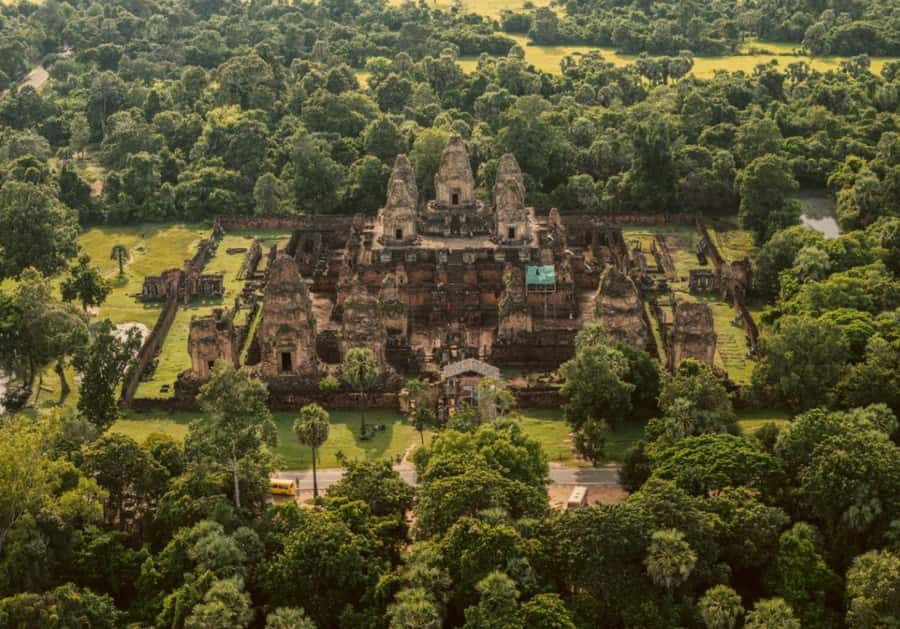
Angkor Wat gets the headlines, but the day begins with the ancient city around it. You enter Angkor Thom through a causeway guarded by rows of gods, demons, and a giant naga, then move through Bayon’s forest of carved faces, Ta Prohm’s jungle setting, and finally the vast main temple. The route gives you a useful picture of Angkor as a city, not just one famous monument.
I like the small group of no more than nine, which should make it easier to hear the Spanish-speaking guide and ask questions. I also like the full eight-hour plan: Angkor Thom and Ta Prohm provide variety before you spend the afternoon at Angkor Wat, where the scale and detail need time.
The main consideration is pace. This is a packed one-day visit with several large sites, walking, heat, and little room for an unplanned detour. The starting time is not stated, so check it before booking, especially if you want a particular light or a slower morning.
In This Review
- Key points about this Angkor temple tour
- Why the eight-hour route works
- Entering Angkor Thom through the South Gate
- Bayon and its enormous stone faces
- The Elephant and Leper King terraces
- Ta Prohm, where the jungle takes part in the view
- An afternoon at Angkor Wat
- Spanish guidance and the small-group setup
- Is $50 good value for one day?
- What to bring and what to expect
- Who should book this tour?
- Should you book this Angkor temple tour?
- FAQ
- Where does the tour take place?
- How long does the tour last?
- Is hotel pickup provided?
- Which temples and sites are included?
- Is the tour available in Spanish?
- How large is the group?
- How much does the tour cost?
- Can I reserve the tour and pay later?
- What is the cancellation policy?
- Are pets allowed on the tour?
- Is the tour suitable for people over 150 kilograms?
- What languages are used during the experience?
Key points about this Angkor temple tour
- A city-first route: Begin at Angkor Thom before seeing Angkor Wat, so the day builds from royal city to temple centerpiece.
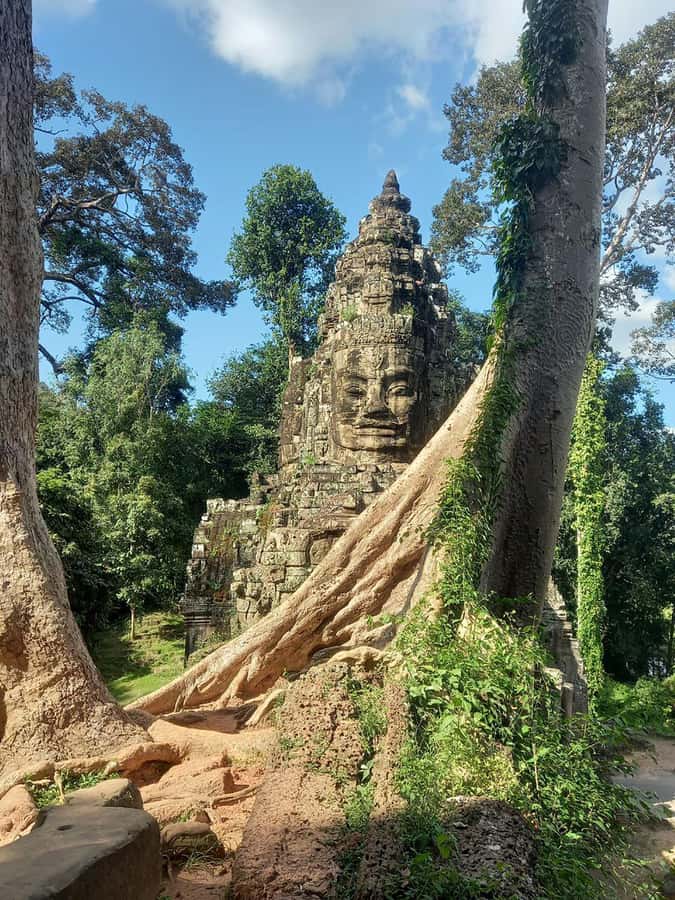
- Bayon’s carved faces: Stop close to the enormous stone faces that make this temple one of Angkor’s most memorable sights.
- Ta Prohm in the jungle: See a temple left relatively untouched after its rediscovery, with trees and stone sharing the scene.
- A genuinely small group: The tour is limited to nine participants, a useful size for a live guide and easier movement.
- Spanish is available: The guide may lead in Spanish, Portuguese, or English, with Sem specifically praised for detailed explanations.
- Flexible booking: You can reserve now and pay later, with free cancellation up to 24 hours before departure.
Why the eight-hour route works
This tour is designed for someone who wants the main Angkor experience in one day without reducing the visit to Angkor Wat alone. The sequence matters. Angkor Thom introduces you to the scale of the old capital, Bayon supplies the most distinctive sculpture, Ta Prohm changes the mood, and Angkor Wat receives the longest and most dramatic part of the afternoon.
You are picked up at your hotel in Siem Reap in the morning. The exact pickup time is not provided, so you should confirm it before setting your alarm or arranging another activity. The day lasts eight hours, which is long enough for a serious first look, though not long enough to study every carving or explore every corner.
I see the route as a practical compromise. A private tour can give you more control, while a two-day plan allows for slower visits and sunrise or sunset options. This shared tour costs $50 per person and keeps the famous core of Angkor within a single day, with a guide who explains what you are seeing instead of leaving you to decode a large archaeological site on your own.
The small group limit is important here. Nine people is still a group, but it is far more manageable than a large coach outing. You should have a better chance of hearing the guide at Bayon, staying together at the gates, and asking about the meaning of a carving without turning the question into a public announcement.
More Angkor temple itineraries:
- Angkor Wat Sunrise or Sunset Tour with Guide from Siem Reap
5.0 · 12,109 reviews - Siem Reap: Angkor Wat: Small-Group Sunrise or Sunset Tour
5.0 · 9,444 reviews - Siem Reap: Angkor Wat 2-Day Tour with Sunrise and Sunset
4.9 · 4,429 reviews
Entering Angkor Thom through the South Gate
The morning begins at Angkor Thom, the fortified ancient capital covering about 10 square kilometers. That figure is useful because it changes your expectations: this is not one temple with a few nearby ruins. It is a large urban area, and the monuments you see are parts of a former capital.
The South Gate provides the first strong visual moment. You cross a causeway lined with statues of demons and gods, each associated with a giant naga. This is more than a grand entrance for photographs. It gives you a clear sense of Khmer design, where sacred ideas, protective figures, and royal power were brought together at the edge of the city.
Take a moment here before moving on. The figures on both sides create a repeated pattern, while the gate ahead gives the causeway a firm focal point. A guide can help you understand the difference between the figures and explain why the naga is so central to the approach.
The practical challenge is that the opening stop can feel brief if the group is keeping to schedule. You may want to look closely at the statues, but the tour still has Bayon, two terraces, Ta Prohm, and Angkor Wat ahead. Have your camera ready, but also listen to the explanation. The value of this stop is not just the gate itself, but the way it frames the rest of Angkor Thom.
Bayon and its enormous stone faces
Next comes Bayon, one of the day’s strongest stops. The temple is known for enormous carved faces that appear from towers and stone passages. From some angles, the faces seem to watch over the site. From others, they blend into a crowded mass of towers and narrow corridors.
This is where a Spanish-speaking guide can make a real difference. Bayon can look like a maze of gray stone if you do not know what to look for. A clear explanation helps you connect the faces, the temple layout, and the wider role of Bayon within Angkor Thom.
The site rewards a slow look upward. The faces are large, but the effect comes from seeing several at once, with towers rising at different distances. You will likely want photos, yet the best way to appreciate Bayon is to pause between shots and compare the expressions and angles.
The stop may be demanding for anyone who dislikes uneven ground or prolonged walking, but the supplied information does not provide a detailed accessibility assessment. The tour is also not suitable for people over 331 pounds, or 150 kilograms. That restriction is stated directly, so check it before booking.
The Elephant and Leper King terraces
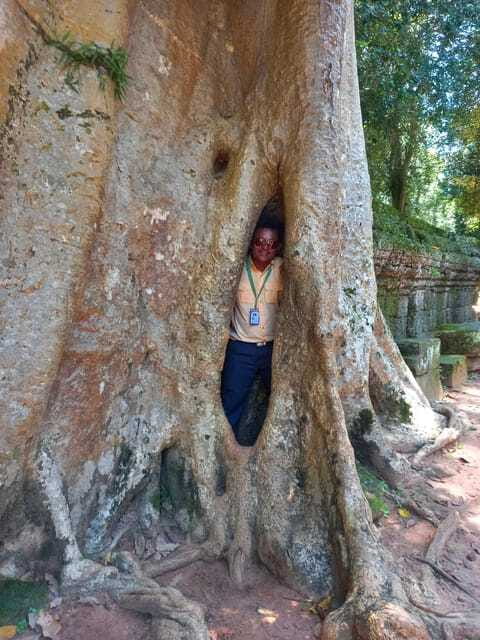
After Bayon, the route continues to the Terrace of the Elephants and the Terrace of the Leper Kings. These are different from Bayon and Ta Prohm because they are closely tied to the grand public spaces of Angkor Thom.
The Elephant Terrace is known for its carved elephant imagery, and its long form helps you picture ceremonies or royal displays along the edge of the ancient city. The Terrace of the Leper Kings adds another layer, with carved figures and walls that reward attention to surface detail.
Do not expect two full temple visits here. These terraces are stops along the wider Angkor Thom route, and the tour must keep moving toward Ta Prohm. Their value is in showing that Angkor was planned around platforms, processional routes, and public spaces, not only enclosed sanctuaries.
I like this middle section because it breaks up the temples. After the vertical towers and close stone corridors of Bayon, the terraces let you read the city on a broader scale. If you are interested in architecture, urban planning, or sculpture, pay attention to how the guide links these places together.
Other Siem Reap experiences to weigh up
- Siem Reap: Full-Day Angkor Wat Guided Tour with Sunset
4.9 · 3,803 reviews - Angkor Wat Sunrise tour with Small – Group and Guide tours
5.0 · 3,655 reviews - Angkor Wat Highlights and Sunrise Guided Tour from Siem Reap
5.0 · 3,213 reviews - Full-Day Angkor Wat Sunrise Private Tour with Guide from Siem Reap
5.0 · 2,920 reviews
Ta Prohm, where the jungle takes part in the view
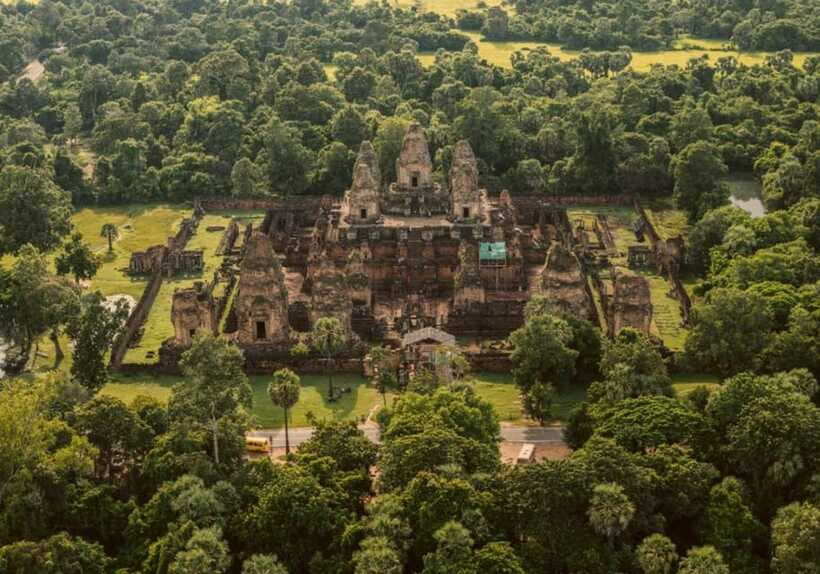
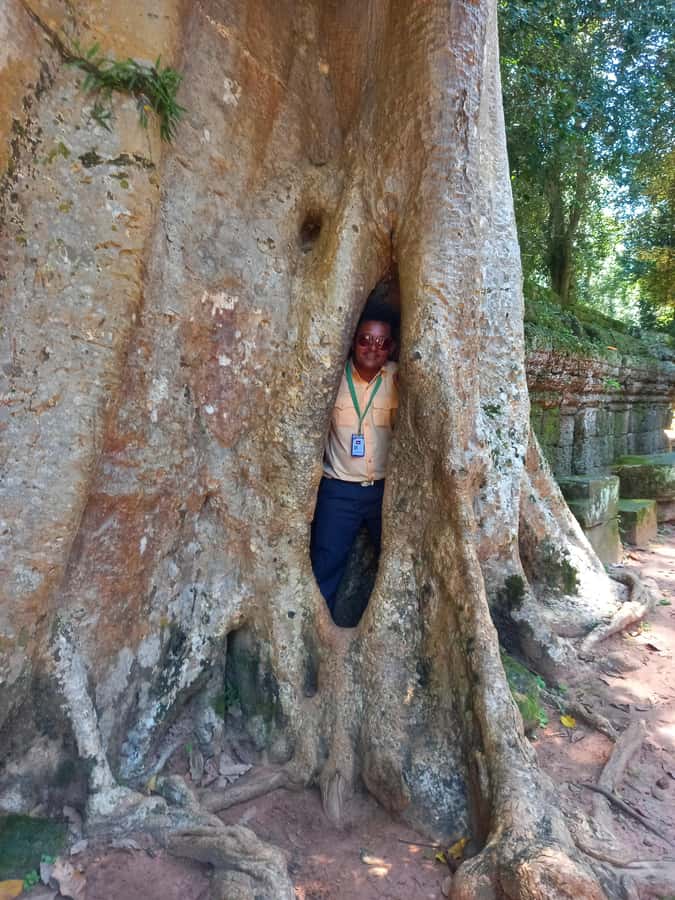
Ta Prohm changes the tone of the day. The temple is set in the jungle and has remained relatively untouched since it was discovered. Stone galleries, trees, and roots share the scene, giving the site a rougher and more atmospheric appearance than the carefully ordered spaces at Angkor Wat.
This is the place where the boundary between building and natural growth becomes part of the experience. The roots and trees are not simply background decoration. They help you understand why Ta Prohm has such a strong sense of age and abandonment.
At the same time, the jungle setting can make it harder to see the structure clearly. Some details disappear into shadow or vegetation, and the most famous views may attract attention from several people at once. Keep your expectations realistic. Ta Prohm is not an untouched wilderness, but it offers a memorable contrast to the more formal monuments on the route.
Your guide’s timing matters here. A useful explanation can point out carvings, entrances, and the parts of the temple that are easy to miss. One verified Spanish-language booking specifically praised a guide named Sem for explaining everything in detail. Sem may be the guide assigned to your departure, but you should not assume that he will lead every date.
An afternoon at Angkor Wat
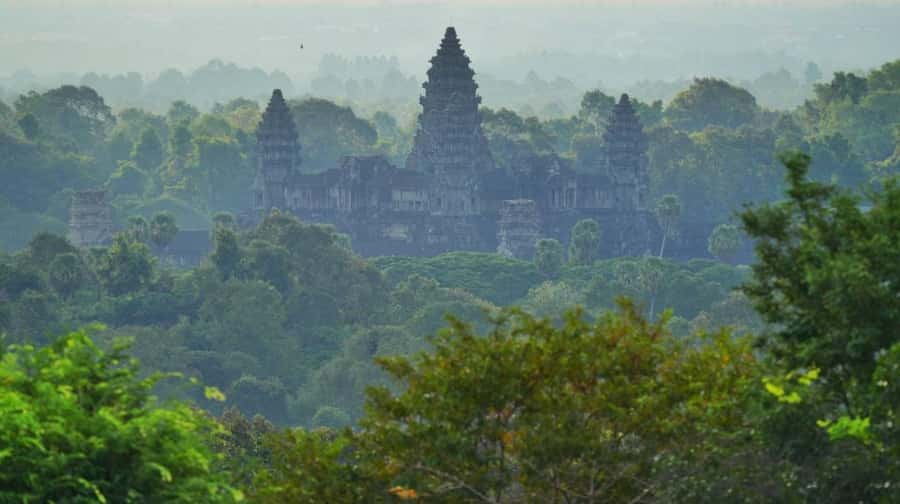
The final major stop is Angkor Wat, the best-known temple on the Angkor plain. By placing it in the afternoon, the tour lets you first understand the surrounding city and smaller temple complexes. You arrive at the centerpiece with some context instead of treating it as an isolated postcard.
The scale is the first thing to absorb. Angkor Wat covers 81 hectares, about the size of the Imperial Palace in Beijing. You will need time simply to move through its spaces and take in the relationship between the galleries, courtyards, towers, and surrounding grounds.
The temple’s appeal is not based on size alone. Its composition, balance, proportions, and carved detail work together in a remarkably controlled design. Look at the whole structure from a distance, then shift your attention to the reliefs and stone surfaces. The more closely you look, the more the monument changes from a grand silhouette into a mass of small decisions.
Plan to pace yourself. After a morning at Angkor Thom, Bayon, the terraces, and Ta Prohm, you may be tired by the time you reach Angkor Wat. Drink regularly and bring a jacket, as both are listed among the recommended items. The information provided does not confirm lunch, food stops, or refreshments, so do not assume a meal is included.
The afternoon timing also means you should not book this tour expecting sunrise at Angkor Wat. Sunrise is not part of the stated plan. If early morning light or sunset photography is your main goal, compare this tour with an option specifically built around those times.
Spanish guidance and the small-group setup
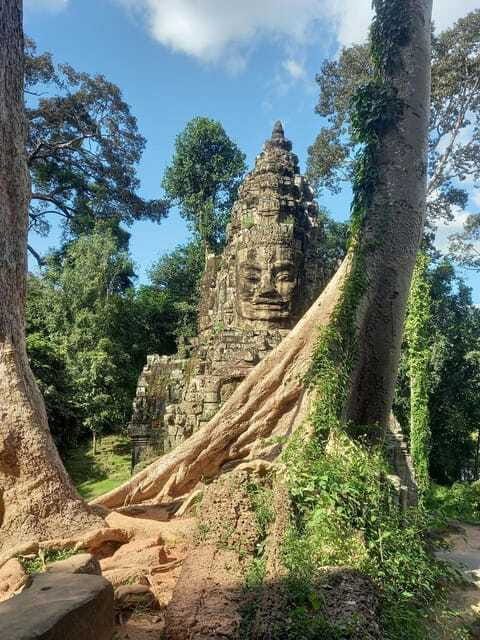
The tour offers live guidance in Spanish, Portuguese, and English. That range is useful for mixed-language bookings, but you should check the language selected when reserving. Some content may appear in its original language, so ask the operator if you need every explanation delivered in Spanish.
The guide is the main reason to choose this over visiting the temples independently. Angkor is visually powerful, but the scale can also overwhelm you. A guide provides a thread through the day, explains why each stop matters, and helps turn walls and statues into a connected story.
The strongest praise available for this experience centers on the guide’s explanations. One Spanish-speaking participant singled out Sem and said his detailed explanations helped make the temple history easier to understand. Another verified booking gave the experience a simple full rating and described everything as going well. The overall score is 4.3 from four reviews, a positive result but a small sample, so I would treat it as encouraging rather than decisive.
A group of up to nine should suit solo visitors, couples, and small parties who want company without a large crowd. It is less ideal if you need to stop whenever you like, avoid group timing, or spend an entire hour studying one relief. For that, a private tour is the better fit.
Is $50 good value for one day?
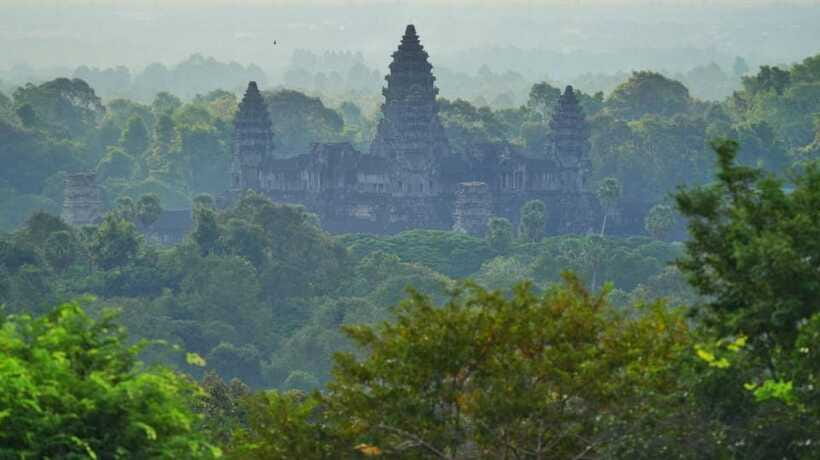
At $50 per person, this tour offers solid value if the price matches what you want: hotel pickup, eight hours, a live guide, and a well-chosen set of major sites. The guide is especially valuable at Bayon, the terraces, and Ta Prohm, where context helps you see more than the most obvious photo angle.
Do check what is included before paying. The supplied details do not state whether the Angkor park entrance fee, meals, drinks, or transportation costs beyond hotel pickup are included. That missing information matters because the final cost can be higher than the advertised tour price.
The reserve-now-and-pay-later option is useful if your Siem Reap schedule is still shifting. You can hold a place without paying today, and cancellation is free up to 24 hours before departure. Those terms reduce the risk of booking early, though you should still read the final booking conditions for your date.
What to bring and what to expect
The recommended items are drinks, a jacket, internet access, GPS or a map, and a pen. Drinks are the most practical item for an eight-hour temple day. A jacket may help during the morning or in changing conditions, while internet access and a map can help you stay oriented around a very large site.
A pen is an unusual recommendation, but it may be useful for notes if you want to record temple names or points from the guide. Pets are not allowed. The experience is not suitable for anyone over 150 kilograms.
Wear clothing suitable for a full day of walking and temple visits, though the exact dress rules are not included in the supplied details. Since Angkor Wat and the other sites are religious monuments, it is sensible to choose respectful clothing and confirm any current entry requirements before you go.
Who should book this tour?
I would choose this for a first visit to Angkor, especially if you want the major temples in one organized day and prefer Spanish-language guidance. The route includes the three names most people hope to see, Angkor Thom, Ta Prohm, and Angkor Wat, while adding Bayon and the two terraces for better context.
It also suits you if you value an explanation more than total independence. The small group keeps the experience more personal than a large bus tour, and the detailed guidance associated with Sem is a useful sign of what a good departure can provide.
I would compare other options if you want sunrise, sunset, a two-day pace, or a private vehicle and flexible schedule. This is a concentrated overview, not a slow archaeological study. You will see a lot, but you will need to keep moving.
Should you book this Angkor temple tour?
Book it if you want a clear, well-rounded introduction to Angkor for $50 per person, with a small group and language choices that include Spanish. The route has strong variety, and Angkor Wat receives enough time to make the final stop feel like the day’s main event.
Before confirming, check the pickup time, selected guide language, entrance fee arrangements, and what transport or meals are included. If those details work for your plans, this is a practical first-day choice. If your priority is sunrise, sunset, private pacing, or a deeper visit, spend more for a tour built around those needs.
FAQ
Where does the tour take place?
The tour takes place in Siem Reap Province, Cambodia, and visits the Angkor temple area.
How long does the tour last?
The tour lasts eight hours.
Is hotel pickup provided?
Yes. You are picked up at your hotel in Siem Reap in the morning.
Which temples and sites are included?
The route includes Angkor Thom, the South Gate, Bayon, the Terrace of the Elephants, the Terrace of the Leper Kings, Ta Prohm, and Angkor Wat.
Is the tour available in Spanish?
Yes. Live guidance is available in Spanish, Portuguese, and English.
How large is the group?
The tour is limited to nine participants.
How much does the tour cost?
The listed price is $50 per person.
Can I reserve the tour and pay later?
Yes. You can reserve your place and pay nothing at the time of booking.
What is the cancellation policy?
You can cancel up to 24 hours in advance for a full refund.
Are pets allowed on the tour?
No. Pets are not allowed.
Is the tour suitable for people over 150 kilograms?
No. The activity is listed as unsuitable for people over 331 pounds, or 150 kilograms.
What languages are used during the experience?
The available guide languages are Spanish, Portuguese, and English. Some content may be shown in its original language.
Fresh reviews from around Siem Reap
- Full-Day Tour Preah Vihea & Koh Ker Temple 3.7 · 3 reviews
- Savor the Countryside: Tours with Authentic Cooking Classes” 5.0 · 3 reviews
- Angkor Wat Sunrise TukTuk Tour 5.0 · 3 reviews
- Angkor Grand Circuit Tour & Banteay Srei 5.0 · 3 reviews
- Guided Private Tuk Tuk Tour Angkor Wat and Small Circle and Five Extras 5.0 · 3 reviews
- Siem Reap Temple Tour 2-Day with Sunrise/Sunset 3.7 · 3 reviews
- Bangkok to Angkor Wat 2 Days 1 Night by Flight 4.5 · 3 reviews
- Kompong Pluk Tour 5.0 · 3 reviews
Angkor Temple Tours, compared.

Angkor Wat Sunrise or Sunset Tour with Guide from Siem Reap
Read our review →



Angkor Wat Sunrise tour with Small – Group and Guide tours
Read our review →
Angkor Wat Highlights and Sunrise Guided Tour from Siem Reap
Read our review →
