
Reviewed · ANGKOR TEMPLE TOURS
Private: Angkor Wat Full Day Guided Visit
Angkor Wat is best seen before the day turns hot, and this private tour gets you there early, then carries on through the ancient capital of Angkor Thom, tree-wrapped Ta Prohm, and quieter Ta Nei. You have your own vehicle and guide, so the day can move at a sensible pace rather than on a rigid group schedule.
I like the early start and the personal attention. Guides including Sam, Tay, Tey, and Kim are praised for clear explanations, patience, good humor, and an ability to answer questions. I also like the mix of famous sights and the less crowded Ta Nei Temple. The main catch is cost: at $113, plus the $37 one-day park ticket, this is not the cheapest way to see Angkor.
In This Review
- Key points at a glance
- Why a private Angkor day works so well
- Angkor Wat: two hours with the masterpiece
- Angkor Thom: a two-hour look at the royal city
- Ta Prohm: roots, ruins, and a famous film setting
- Ta Nei: a quieter final temple
- Guides who shape the day
- Timing, comfort, and the real workload
- Price, park admission, and who gets the best value
- Booking details worth keeping in mind
- Should you book this Angkor tour?
- FAQ
- What is included in the private Angkor Wat tour?
- Is the Angkor entrance ticket included?
- What time does the tour start?
- How long does the experience last?
- Which temples are visited?
- Is this a group tour?
- Can the tour pick me up at my hotel?
- What happens if I need to cancel?
Key points at a glance
- Angkor Wat before the worst heat: Begin at 7:30 am and spend about two hours at Cambodia’s great temple.
- A genuinely private day: Only your own group takes part, with private air-conditioned transport and a licensed guide.
- Five major temple experiences: See Angkor Wat, Angkor Thom, Bayon, Baphuon, Ta Prohm, and Ta Nei.
- A useful blend of famous and quiet: Ta Prohm supplies the jungle atmosphere, while Ta Nei offers a calmer temple stop.
- Lunch and hotel transport included: Pickup, drop-off, bottled water, snacks, refreshments, and lunch are part of the day.
- Budget for the park ticket: The tour price excludes the $37 single-day Angkor Archaeological Park pass.
Why a private Angkor day works so well
Angkor is too large to treat as one quick photo stop. The main temples sit across a broad archaeological park, and each one shows a different side of Khmer architecture. A private guide helps connect those pieces, explaining why Angkor Wat feels so orderly, why Bayon is so expressive, and why Ta Prohm was left with much of its jungle growth.
The private format matters most when your energy drops. You can spend more time at a favorite gallery, ask for another explanation, or move on without waiting for a busload of people. One useful example comes from a day when the guide visited only three temples because the guest had low energy. That flexibility is hard to get on a fixed group tour.
Pickup and drop-off at your hotel also remove a layer of planning. You begin at 7:30 am in an air-conditioned private vehicle, with bottled water, snacks, and refreshments available. Lunch is served during the tour, so you do not need to build a separate midday plan into the day.
The tradeoff is price. The $113 tour fee is for your private group, not each attraction, and the park admission is extra. Add the $37 single-day pass and the basic cost becomes $150 before any other personal spending. For one person, that is a substantial outlay. For a couple, family, or small group sharing the vehicle and guide, the value improves.
More Angkor temple itineraries:
- Angkor Wat Sunrise or Sunset Tour with Guide from Siem Reap
5.0 · 12,109 reviews - Siem Reap: Angkor Wat: Small-Group Sunrise or Sunset Tour
5.0 · 9,444 reviews - Siem Reap: Angkor Wat 2-Day Tour with Sunrise and Sunset
4.9 · 4,429 reviews
Angkor Wat: two hours with the masterpiece
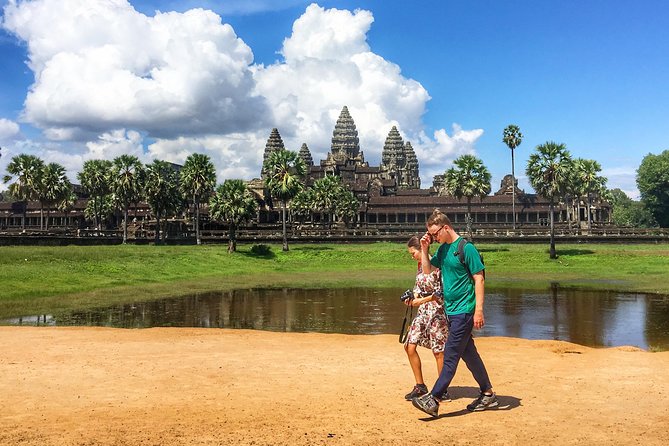
The day opens at Angkor Wat, the monument that gives the entire park its name. Plan on roughly two hours here. That sounds generous, but it is useful because the temple is large and its appeal is not limited to one famous view.
The complex is known as the largest religious monument in the world. Its design is carefully ordered, with galleries, towers, courtyards, and long stone passages arranged as part of a larger religious vision. The bas-reliefs are especially important. They do not simply decorate the walls. They tell stories, and a guide can help you understand what you are looking at instead of passing the carvings as a blur of stone figures.
This is where Sam, Tay, Tey, or Kim can make a real difference, depending on who is assigned to your group. Their role is not only to point out the standard landmarks. You can ask questions about the stories, the architecture, and the purpose of the buildings, then spend time with the details that interest you most.
The early timing is practical, not just poetic. Cambodia is hot, and the tour is designed to reach Angkor Wat early in the day. You still need to expect heat, walking, and uneven surfaces, but starting at 7:30 am gives you a better chance of doing the largest site before the afternoon becomes tiring.
The main limitation is that two hours can feel short if you want to inspect every carving. You will need to let your guide help set priorities. Since this is a private visit, you can also make your own interests clear at the start.
Angkor Thom: a two-hour look at the royal city
Next comes Angkor Thom, the great capital city of the Khmer Empire. This is not just one temple. It is a walled urban area containing several important monuments, including Bayon, Phimeanakas, Baphuon, the Terrace of the Elephants, the Terrace of the Leper King, and other smaller sites.
Allow about two hours here. That gives you time to understand Angkor Thom as a city rather than treating Bayon as an isolated building. The walls and gateways help explain the scale of the capital, while the temples inside show how royal power and religion were arranged within it.
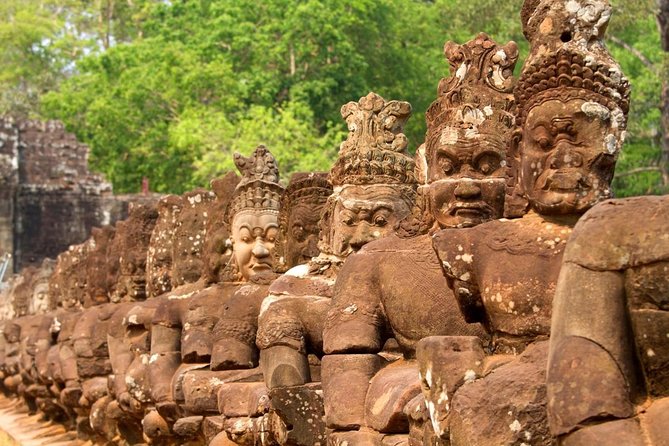
Bayon is the headline stop. Its stone faces and crowded towers create a very different mood from the long, balanced lines of Angkor Wat. The architecture can feel confusing at first, with passages and levels leading into one another. A guide is particularly useful here because the structure rewards explanation and patience.
Baphuon adds another architectural style and another chance to see how grand Khmer building projects could be. The terraces offer a broader sense of the city, while the elephant and leper king terraces show how public and ceremonial spaces were marked.
This part of the day may be the most demanding in terms of walking. Angkor Thom contains several separate sights, and two hours can pass quickly. If you are already tired from Angkor Wat, tell your guide. The private arrangement makes it easier to adjust the emphasis rather than force every listed point at the same speed.
Ta Prohm: roots, ruins, and a famous film setting
Ta Prohm receives about one hour, and its appeal is immediate. Strangler figs and silk-cotton trees grow among the ruins, with roots winding over walls and stones. The result is a romantic, slightly eerie setting that looks very different from the more orderly Angkor Wat.
Ta Prohm is also known for its connection with Tomb Raider. That film link attracts many people, but it should not overshadow the temple itself. The real draw is the uneasy meeting of architecture and forest. You see how the ruins appear when nature is not pushed completely aside.
A guide can help you notice the carved details that remain visible among the trees. The private format is useful here because the best pace is not always fast. You may want to pause for photographs, look closely at a doorway, or simply take in the setting.
There is also a practical downside. Ta Prohm is one of the most popular temples on the route, so the atmosphere can be less quiet than its jungle appearance suggests. The tour does not promise an empty site. What it does offer is a guide who can help you move sensibly and then continue to a quieter stop.
Other Siem Reap experiences to weigh up
- Siem Reap: Full-Day Angkor Wat Guided Tour with Sunset
4.9 · 3,803 reviews - Full-Day Angkor Wat Sunrise Private Tour with Guide from Siem Reap
5.0 · 2,920 reviews - Siem Reap: Angkor Wat Sunrise and Full-Day Sightseeing Tour
4.9 · 2,828 reviews - Full-Day Guided Sunset Tour of Angkor Wat
5.0 · 1,507 reviews
Ta Nei: a quieter final temple
Ta Nei is a Buddhist temple built during the reign of Jayavarman VII in the late 12th century. The stop lasts about 30 minutes and is included as a place to avoid the larger crowds.
That shorter visit works well late in a full day. After the major monuments, Ta Nei gives you a smaller-scale view of Angkor. You can focus on the setting and surviving stonework without needing another long circuit through a huge complex.
Do not expect Ta Nei to offer the same visual impact as Angkor Wat or Ta Prohm. Its value is contrast. It gives you a quieter temple experience and helps show that Angkor is not only a collection of famous postcard sites.
Thirty minutes is enough for an introduction, but not for a detailed archaeological study. If you have a strong interest in smaller temples, ask your guide how much time can be spared. The tour is private, so there is at least room for a conversation about priorities.
Guides who shape the day
The strongest part of this experience is the guide service. Sam is described as warm, professional, and able to bring history and culture to life with stories. Tay is praised for his passion, his command of the temples, and his skill at avoiding the worst crowds. Tey is also singled out for making the day personal and helping with good photo locations.
Kim receives similar praise for being friendly, patient, and able to answer a wide range of questions. One day began with Kim waiting at the hotel with coffee and a cheerful manner, a small detail that says something useful about the level of personal care you can expect from the company. Sam Chhoeun is also described as punctual, kind, humble, and able to give as much or as little detail as the guest wanted.
You cannot choose from these names with certainty unless the company confirms your guide. Still, the pattern is clear: this is a guide-led experience, not merely a private car transfer. If you like asking questions, connecting buildings to Khmer history, or changing the pace as you go, that is where the fee earns its keep.
A private guide is less valuable if you prefer to wander silently and read at your own speed. You are paying for interpretation and flexibility, so make use of both. Tell the guide whether you want architectural detail, religious context, photography help, or a simpler overview.
Timing, comfort, and the real workload
The advertised duration is about 6 to 8 hours. The start time is 7:30 am, and the day includes several temple visits, vehicle transfers, walking, and lunch. It is a full outing, not a light morning excursion.
The air-conditioned private vehicle is important in Siem Reap’s heat. You will have a place to cool down between sites, while bottled water, snacks, and refreshments help with the long morning. Even so, do not confuse air conditioning with a low-effort day. Angkor’s scale and stone surfaces require steady walking.
The schedule has enough variety to prevent every stop from feeling the same. Angkor Wat supplies the grand introduction. Angkor Thom expands the story to a capital city. Ta Prohm changes the mood with trees and ruins, and Ta Nei closes with a quieter Buddhist temple.
Lunch during the tour is another practical advantage. It keeps the day moving and avoids the need to return to the hotel at midday. The supplied information does not specify a restaurant, menu, or exact lunch time, so you should not book this expecting a particular dining style.
Price, park admission, and who gets the best value
At $113, this tour sits in the private day-trip category rather than the budget sightseeing category. The fee covers a professional licensed guide, hotel pickup and drop-off, private transport, fuel surcharge, bottled water, snacks, refreshments, and the private format. Lunch is also served during the tour.
The separate Angkor ticket is the key cost to remember. A single-day pass costs $37, which puts the known total at $150. That price may feel high for a solo visitor, but it becomes more reasonable when two or more people share the private service.
I would compare it with the cost of arranging separate transport and finding explanations at each temple. The tour gives you one organized day, a guide who knows the sites, and the ability to slow down or shorten a stop. The value is strongest for first-time visitors who want the major temples explained without handling every detail themselves.
It is less compelling if you already know Angkor well, plan several park days, or want to spend an entire day at one temple. In those cases, a shorter or more specialized arrangement might suit you better.
Booking details worth keeping in mind
Confirmation is provided at booking, and most people can participate. This is a private activity, so only your own group joins the tour.
The experience offers free cancellation if you cancel at least 24 hours before the local start time. A cancellation made less than 24 hours in advance is not refunded, and changes inside that period are not accepted.
The mobile ticket is convenient, but it does not include the Angkor Archaeological Park admission. Plan on buying or arranging the $37 ticket separately.
Should you book this Angkor tour?
Book it if you want to see the essential Angkor temples in one organized day and care about having a real guide beside you. The combination of early timing, private transport, adjustable pacing, hotel pickup, and quieter Ta Nei makes this more useful than a basic drive-by sightseeing circuit.
I would especially recommend it for first-time visitors, couples, families, and small groups who can share the $113 cost. Sam, Tay, Tey, and Kim are names associated with a warm, patient guiding style, though your assigned guide should be confirmed before booking.
Skip it if your budget is tight, you want to explore entirely alone, or you plan to buy a multi-day park pass and return to the temples at a slower pace. Also remember the $37 entrance ticket. For the right group, though, this is a practical and well-planned introduction to Angkor, with enough flexibility to make the day feel personal rather than processed.
FAQ
What is included in the private Angkor Wat tour?
The tour includes a professional licensed guide, hotel pickup and drop-off, private transport in an air-conditioned vehicle, bottled water, snacks, refreshments, and a fuel surcharge. Lunch is served during the tour.
Is the Angkor entrance ticket included?
No. The one-day Angkor Archaeological Park ticket costs $37 and is separate from the $113 tour price.
What time does the tour start?
The stated start time is 7:30 am.
How long does the experience last?
The tour lasts approximately 6 to 8 hours.
Which temples are visited?
The route includes Angkor Wat, Angkor Thom, Bayon, Baphuon, Ta Prohm, and Ta Nei Temple. Angkor Thom contains several additional monuments, including Phimeanakas, the Terrace of the Elephants, and the Terrace of the Leper King.
Is this a group tour?
No. It is a private activity, and only your own group participates.
Can the tour pick me up at my hotel?
Yes. Hotel pickup and drop-off are included.
What happens if I need to cancel?
You can receive a full refund if you cancel at least 24 hours before the experience start time. Cancellations or changes made less than 24 hours before the local start time are not accepted for a refund.
Fresh reviews from around Siem Reap
- Full-Day Tour Preah Vihea & Koh Ker Temple 3.7 · 3 reviews
- Savor the Countryside: Tours with Authentic Cooking Classes” 5.0 · 3 reviews
- Angkor Wat Sunrise TukTuk Tour 5.0 · 3 reviews
- Angkor Grand Circuit Tour & Banteay Srei 5.0 · 3 reviews
- Guided Private Tuk Tuk Tour Angkor Wat and Small Circle and Five Extras 5.0 · 3 reviews
- Siem Reap Temple Tour 2-Day with Sunrise/Sunset 3.7 · 3 reviews
- Bangkok to Angkor Wat 2 Days 1 Night by Flight 4.5 · 3 reviews
- Kompong Pluk Tour 5.0 · 3 reviews
Angkor Temple Tours, compared.

Angkor Wat Sunrise or Sunset Tour with Guide from Siem Reap
Read our review →



Angkor Wat Sunrise tour with Small – Group and Guide tours
Read our review →
Angkor Wat Highlights and Sunrise Guided Tour from Siem Reap
Read our review →
