
Reviewed · SIEM REAP
Kullen Waterfall Park with Small Group included entrance fee
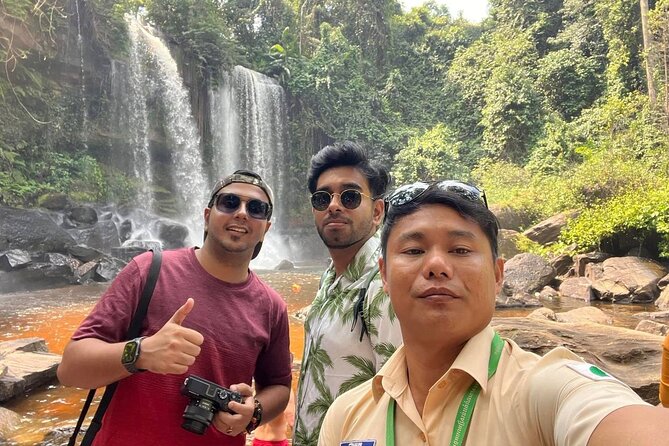
Phnom Kulen gives you a very different day from the temple circuit around Siem Reap. Here, an ancient riverbed carved with One Thousand Lingas leads to a hilltop pagoda, a sacred reclining Buddha, and a waterfall where you can cool off among tropical forest.
I like two things right away: the small group limit of 13 keeps the day more personal, and the $45 price includes the $20 park admission, air-conditioned transport, an English-speaking guide, cold water, and a wet towel. Guides such as Chout and Makara are also praised for history, photography help, and friendly service.
The main caution is timing. Water levels change with the season, and the lingas may be hard to see when the river is low or cloudy. One person also felt the experience worked more like a half-day outing than a full eight-hour day, so set your expectations around the stops rather than the clock.
In This Review
- Key points to know before you book
- Why Phnom Kulen makes a good break from Siem Reap
- The quarry stop explains the mountain’s stone
- One Thousand Lingas: a quiet walk through sacred water
- Preah Ang Thom and Cambodia’s reclining Buddha
- Kulen Waterfall is the day’s cooling reward
- Palm sugar shows you a more local side of the day
- The Landmine Museum requires a separate decision
- What the $45 price really covers
- The guide and driver can shape the whole day
- Timing, comfort, and what to bring
- Who will enjoy this Phnom Kulen outing
- Should you book the Kullen Waterfall Park tour?
- FAQ
- What is included in the $45 tour price?
- Is the Landmine Museum included?
- How long does the Phnom Kulen tour last?
- Where does the tour start?
- How many people can join the tour?
- Can I swim at Kulen Waterfall?
- When might the waterfall and lingas be easiest to see?
- Is food included?
Key points to know before you book
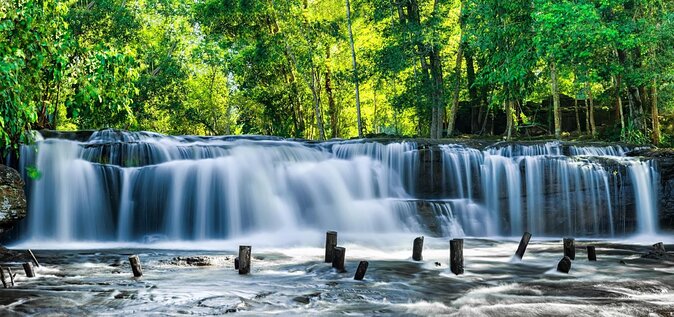
- The waterfall is seasonal: January to March can offer stronger flow, with more of the riverbed carvings visible.
- Park admission is included: The $20 Phnom Kulen entrance fee is covered in the $45 price.
- The sacred riverbed takes time: Expect about two hours at the One Thousand Lingas site, with a calm walk beside the carved stream.
- Preah Ang Thom adds a religious dimension: You can see one of Cambodia’s largest reclining Buddha statues and may receive a blessing from a nun.
- The minivan service is practical: Guides and drivers have been praised for cold water, wet towels, air-conditioning, and a clean vehicle.
- The Landmine Museum costs extra: Allow about 45 minutes and budget the stated $3 entrance fee if you choose to go inside.
Why Phnom Kulen makes a good break from Siem Reap
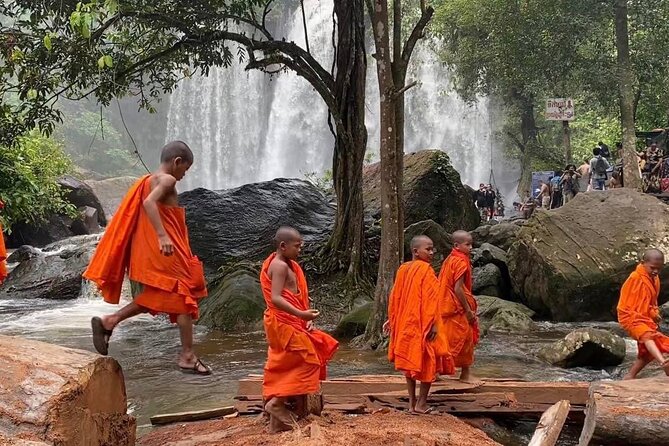
Phnom Kulen is a mountain area south of the Dângrêk Mountains, and the trip feels more rural than a standard Angkor day. You leave Siem Reap behind for forest roads, local palm products, old stonework, and water that has long held religious meaning.
The day begins at 8:30 am from the meeting point behind the Angkor Night Market, near Siem Reap Pub Hostel. Pickup and drop-off are included, though you should confirm the exact pickup details when booking if you are staying somewhere else.
The drive is part of the experience. Along the climb, you stop to see a quarry where stone was cut. This is a useful addition because it connects the mountain to the material used in Khmer monuments. It also gives you a look at the work behind the carved temples, rather than presenting old stone as if it simply appeared.
You travel in an air-conditioned minivan, with a maximum group size of 13. That is small enough for the guide to answer questions and help with photos, but it is not necessarily a private tour. Some departures may be much smaller. One booking had only two people, while another had 11.
Travellers planning Siem Reap days often pair this one with:
- Angkor Wat Sunrise or Sunset Tour with Guide from Siem Reap
5.0 · 12,109 reviews - Siem Reap: Angkor Wat: Small-Group Sunrise or Sunset Tour
5.0 · 9,444 reviews - From Siem Reap: Kampong Phluk Floating Village Tour by Boat
4.9 · 6,979 reviews
The quarry stop explains the mountain’s stone
The first formal stop takes about 1 hour and 15 minutes. As the road climbs through Phnom Kulen National Park, you pause at the quarry area and learn how people cut stone from the mountain.
This stop is less famous than the waterfall or reclining Buddha, but I like its practical value. It gives you a clearer sense of how Khmer builders worked with local materials. If your guide explains the process well, the later monuments become easier to picture as human construction, not just beautiful ruins.
The stop also breaks up the ride before you reach the main religious sites. The mountain road and viewpoints offer a change from Siem Reap’s flat streets, though the exact views depend on weather and where the vehicle pauses.
One Thousand Lingas: a quiet walk through sacred water
The One Thousand Lingas site is the historical heart of the excursion. The carvings date to about 800 AD and sit in the bedrock of a river. Instead of viewing a temple wall from a distance, you walk beside a stream and look down at lingas carved in different sizes.
A linga is a Hindu symbol linked with Shiva. Here, the arrangement in the river gave the water religious importance. The water passed over the carvings before continuing downstream, creating what was seen as purified or blessed water.
Allow about two hours for this stop. That may sound long for a river walk, but the extra time lets your guide explain the carvings, point out details, and let you move at a comfortable pace. You may also see references to water emerging from the ground in several colors, a feature connected with the site’s unusual water and stone formations.
The condition of the river matters greatly. In the wetter part of the year, the water can cover the carvings. When the flow is stronger, the lingas may be easier to see in the moving water, but the current can also make close viewing harder. One especially useful seasonal tip is to consider January through March, when the waterfall is reported to be stronger and more of the lingas may be visible.
Do not treat this as a guaranteed display of a thousand clear carvings. Weather and water levels affect what you can see. If your main reason for booking is photography of the lingas, ask about current conditions before you commit.
Preah Ang Thom and Cambodia’s reclining Buddha
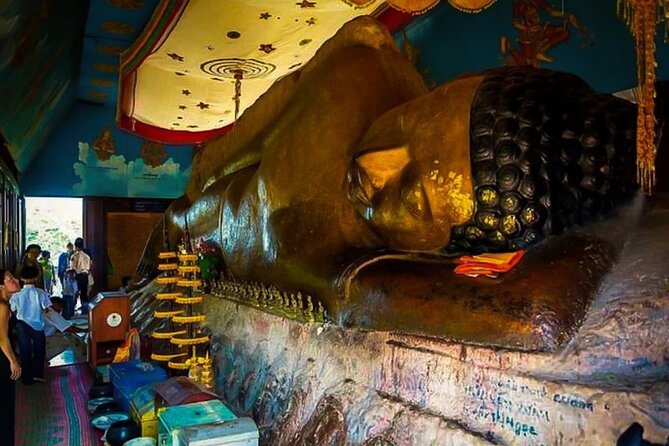
The next stop is Preah Ang Thom pagoda, located near the One Thousand Lingas area on the mountain. You have roughly two hours here, though that time includes the pace of the group and the religious setting rather than two hours of nonstop sightseeing.
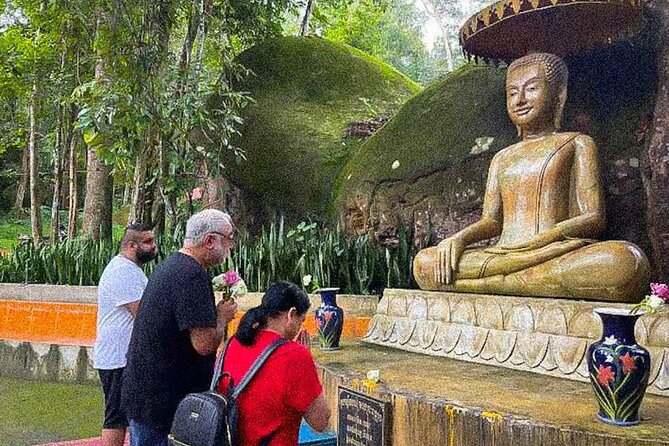
The pagoda is known for a very large reclining Buddha statue, described as one of the largest in Cambodia. It gives the day a strong Buddhist focus after the earlier Hindu symbolism of Shiva and the lingas.
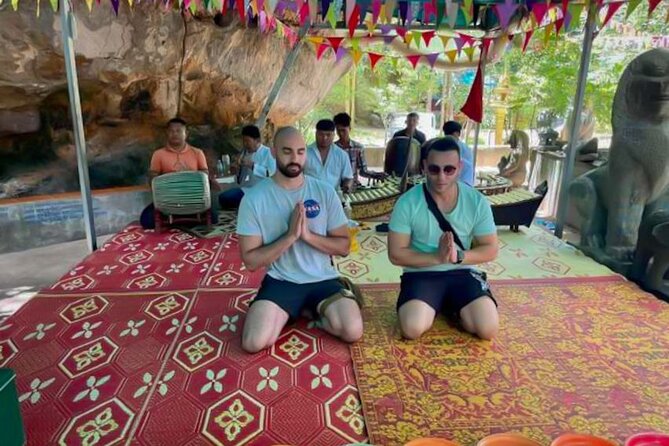
This is an active sacred place, so your visit is not only about looking at an old statue. The setting has a devotional feel, and one account describes receiving a blessing from a nun outside the pagoda. That sort of moment can be meaningful if you approach it respectfully and allow the site to be more than a photo stop.
Your guide can help explain how the Hindu and Buddhist elements fit into Cambodia’s wider religious past and present. Guides Chout, Makara, and Caout have been praised for putting the monuments into context rather than simply naming them.
Dress and behavior should be respectful at the pagoda. The supplied information does not set out a specific dress code, so it is sensible to choose modest clothing and follow instructions at the site.
A different pace for your next Siem Reap morning:
- Sunset tour of Kampong Phluk stilts home village on the Tonle Sap
5.0 · 4,865 reviews - Siem Reap: Angkor Wat 2-Day Tour with Sunrise and Sunset
4.9 · 4,429 reviews - Siem Reap: Kampong Phluk Floating Village Tour with Boat
4.9 · 3,843 reviews - Siem Reap: Full-Day Angkor Wat Guided Tour with Sunset
4.9 · 3,803 reviews
Kulen Waterfall is the day’s cooling reward
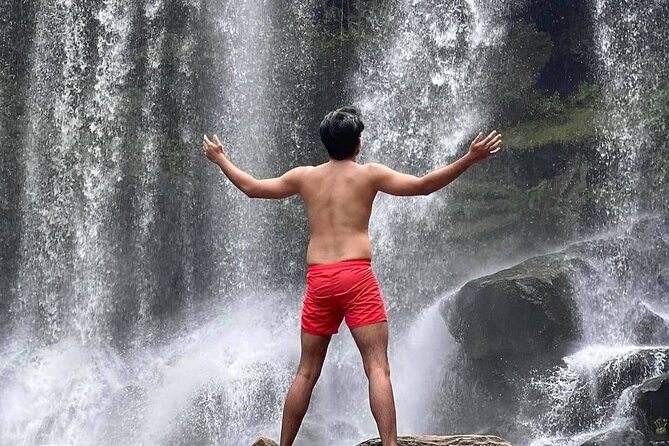
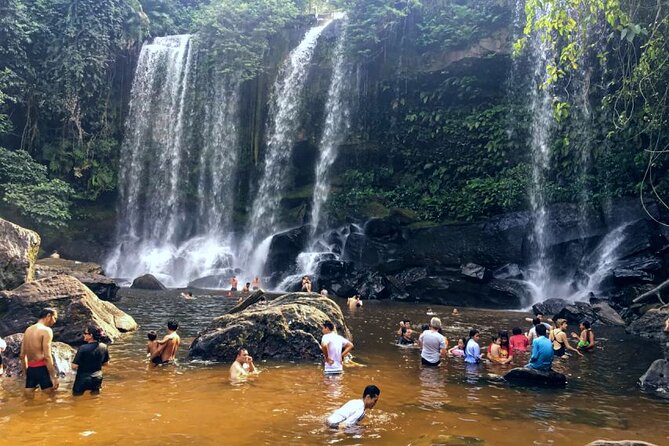
The waterfall receives about two hours, giving you time to relax after the walks and temple visit. The water is regarded as holy water connected with Shiva and the linga carvings, so swimming here is both a refreshing activity and part of the area’s religious meaning.
The swimming experience depends on the season. Stronger water flow can make the falls more impressive, while lower or changing water levels may reduce the appeal. One person found that swimming was not possible during a particular visit, so do not book this day solely for a guaranteed swim.
If conditions allow, this is where the tour shifts from history lesson to simple outdoor pleasure. You can cool off, enjoy the forest setting, and take a break from Siem Reap’s heat. Bring suitable swimwear if you want to enter the water. Food is not included, so you should also plan for the day’s meals rather than assuming lunch comes with the tour.
The waterfall stop is especially useful for people who want variety. You get ancient carvings, a pagoda, countryside, a sacred site, and time beside moving water in a single outing. It is not the wildest nature trip in Cambodia, but it offers a pleasant mix without requiring a separate overnight stay.
Palm sugar shows you a more local side of the day
Before the Landmine Museum, the group spends about an hour at a local palm sugar demonstration. You see traditional hand production and may encounter other local goods such as honey, medicines, or grilled bananas sold by roadside vendors.
This part matters because it connects the excursion to present-day rural life. The mountain’s ancient monuments are impressive, but a short demonstration of how local products are made gives you a better sense of how people in the area work and trade now.
The exact presentation may vary, and it is not described as a full workshop. Think of it as a brief cultural stop, with time to observe and perhaps buy something locally made. If you prefer uninterrupted time at the waterfall, this stop may feel like an addition rather than a highlight. If you enjoy seeing ordinary crafts and food production, it adds welcome balance.
The Landmine Museum requires a separate decision
The final stop is the Cambodia Landmine Museum, where you spend about 45 minutes. It was established by Aki Ra, a former child soldier, and focuses on Cambodia’s landmine legacy and relief work.
This is a serious subject, but it adds important modern context to a day otherwise centered on old religious sites. Cambodia’s past is not limited to Angkor-era stonework, and the museum helps you understand the damage left by later conflict.
The museum entrance is not included. The supplied price is $3, and the tour information treats the visit as optional. Because the provider’s wording has caused some confusion about the separate payment, confirm the current fee and whether you want to enter before the stop.
You can skip the museum if the subject is not right for you, but doing so means losing one of the day’s strongest connections to recent Cambodian history. I would keep it in the plan if you want a broader understanding of the country beyond temples and scenery.
What the $45 price really covers
At $45 per person, this tour offers solid value if you want Phnom Kulen without arranging transport and admission yourself. The package includes:
- Air-conditioned vehicle and minivan transport
- Pickup and drop-off
- English-speaking guide
- Phnom Kulen National Park entrance fee
- All listed taxes and fees
- Cold water
- Wet towel
The $20 park entrance fee is the most important inclusion. It means the advertised price is not merely transport with commentary added later. You are paying for access, a full day of logistics, and a guide who can explain the religious and historical sites.
Food is not included. The Landmine Museum is also separate, with the stated admission of $3. Set aside extra money for both, along with any roadside purchases.
The value is strongest for solo visitors, couples, and small groups who want a guided mountain day. If you already have a private driver and plan to visit only the waterfall, a private arrangement might offer more control. If you want someone to handle the route and explain the sites, $45 is reasonable.
The guide and driver can shape the whole day
Guide quality matters here because several stops need explanation. A riverbed covered with carvings can look like ordinary rocks if nobody points out the symbols and their purpose. A large reclining Buddha also benefits from context, especially when you are moving between Hindu and Buddhist sites.
Chout is praised for friendly explanations about Cambodia and the trip. Makara is praised for explaining each landmark, helping with photos and videos, and keeping the day organized. Caout is also described as adding useful historical context.
The driver is part of the comfort equation. One especially positive account describes Toon keeping the air-conditioning running during the heat. Other feedback notes that the vehicle was cleaned between stops and that cold water and wipes were available. Those details matter in Cambodia’s warm conditions, particularly after walking near the river or pagoda.
The maximum group size is 13. That gives you a better chance of hearing the guide than on a large coach, though you should not assume every departure will feel private.
Timing, comfort, and what to bring
The tour lasts about eight hours, starting at 8:30 am and ending back at the meeting point in Siem Reap. The listed stop times total most of the day, with driving and transitions filling the rest.
You should expect a mix of vehicle time, walking, steps or uneven ground near the river and pagoda, and relaxed time at the waterfall. The tour states that most people can participate, but it does not provide detailed accessibility information. If you have mobility concerns, ask the operator about the quarry, riverbed, pagoda, and waterfall surfaces before booking.
Bring practical clothing and footwear for walking. If you hope to swim, pack suitable swimwear and a way to change, since the provided information does not describe changing facilities. A hat and sun protection are sensible, although the vehicle’s air-conditioning and supplied water make the road portions easier.
Because lunch is not included, arrange your own meal plan with the guide. The information does not specify a restaurant or a fixed lunch stop, so do not assume a meal is built into the $45 fee.
Who will enjoy this Phnom Kulen outing
You should consider booking if you want:
- A full-day escape from Siem Reap
- Ancient Hindu and Buddhist sites in one trip
- A waterfall stop with possible swimming
- A guide who can explain the One Thousand Lingas
- Included transport and park admission
- A small group instead of a large coach
- A short look at rural palm sugar production
- The option to visit a modern museum about landmines
This is less suitable if you want a tightly focused temple day, guaranteed swimming, or complete control over every stop. Seasonal water levels can affect both the waterfall and the visibility of the lingas. The experience also includes several different stops, so people seeking a quiet nature outing may find the pagoda, craft visit, and museum make the day feel busy.
The cancellation terms are useful: you can receive a full refund by canceling at least 24 hours before the start time. Changes or cancellations inside that window are not accepted, and the experience requires a minimum number of people. If the operator cancels for that reason, you are offered another date or experience, or a full refund.
Should you book the Kullen Waterfall Park tour?
I would book this tour if you have already seen some of Siem Reap’s main temples and want a day with more variety. The One Thousand Lingas, Preah Ang Thom, and the waterfall each offer a different reason to make the trip, while the quarry and palm sugar stop help connect the sights to local life.
Book with realistic expectations about water conditions. January through March may be a good period for stronger falls and clearer lingas, but conditions can still vary. If the museum interests you, bring the extra admission fee and treat it as an important optional stop rather than part of the included price.
At $45, with park admission and transport covered, the tour is a practical choice for an organized day outside Siem Reap. It is especially appealing if you value a friendly guide, a small group, and a cool minivan waiting after each stop.
FAQ
What is included in the $45 tour price?
The price includes an air-conditioned minivan, pickup and drop-off, an English-speaking guide, taxes and fees, the $20 Phnom Kulen National Park entrance fee, cold water, and a wet towel.
Is the Landmine Museum included?
No. The Cambodia Landmine Museum is an optional stop and its entrance fee is not included. The stated admission price is $3.
How long does the Phnom Kulen tour last?
The experience lasts about eight hours. It starts at 8:30 am and ends back at the meeting point in Siem Reap.
Where does the tour start?
The listed meeting point is Siem Reap Pub Hostel, behind the Angkor Night Market in Krong Siem Reap. Pickup is offered, so confirm arrangements when booking.
How many people can join the tour?
The tour has a maximum of 13 people.
Can I swim at Kulen Waterfall?
Swimming may be possible at the waterfall, but conditions vary. One account noted that swimming was not possible during a particular visit, so it is not guaranteed.
When might the waterfall and lingas be easiest to see?
January through March is suggested as a useful period because the waterfall may have stronger flow and the lingas may be more visible. Water conditions can still change.
Is food included?
No. Food is not included in the tour price.
Fresh reviews from around Siem Reap
- Full-Day Tour Preah Vihea & Koh Ker Temple 3.7 · 3 reviews
- Savor the Countryside: Tours with Authentic Cooking Classes” 5.0 · 3 reviews
- Angkor Wat Sunrise TukTuk Tour 5.0 · 3 reviews
- Angkor Grand Circuit Tour & Banteay Srei 5.0 · 3 reviews
- Guided Private Tuk Tuk Tour Angkor Wat and Small Circle and Five Extras 5.0 · 3 reviews
- Bangkok to Angkor Wat 2 Days 1 Night by Flight 4.5 · 3 reviews
- Siem Reap Temple Tour 2-Day with Sunrise/Sunset 3.7 · 3 reviews
- Kompong Pluk Tour 5.0 · 3 reviews