
Reviewed · BANTEAY SREI TOURS
Kulen Waterfall and Banteay Srei Off Beaten Track
Phnom Kulen gives this day its real character. You leave Siem Reap behind, pass local villages, and reach the mountain linked to the birth of the Khmer Empire. At Kbal Spean, the River of a Thousand Lingas runs through the forest before reaching a waterfall, while Banteay Srei brings you face to face with some of Angkor’s finest sandstone carving.
I like the private format, since your group can ask questions and set a comfortable pace. I also like the pairing of sacred nature with a small, ornate temple. The main drawback is the distance: roughly three hours of driving in total, plus walking on uneven ground, so this is a full day rather than a quick side trip.
In This Review
- Key points at a glance
- Why Phnom Kulen changes the Angkor story
- Walking to Kbal Spean and the sacred river
- Phnom Kulen’s waterfall and the pace of the visit
- Banteay Srei, the small temple with remarkable detail
- How Panha shapes the experience
- What the eight-hour schedule feels like
- Entry fees, timing, and practical value
- Who should choose this private Kulen and Banteay Srei trip
- Should you book it?
- FAQ
- Where does the tour start?
- Where does the tour end?
- How long does the tour last?
- Are entrance fees included?
- Is lunch included?
- Is this a private tour?
Key points at a glance
- 802 CE at Phnom Kulen: Visit the mountain linked to Jayavarman II’s declaration of Khmer independence from Java.
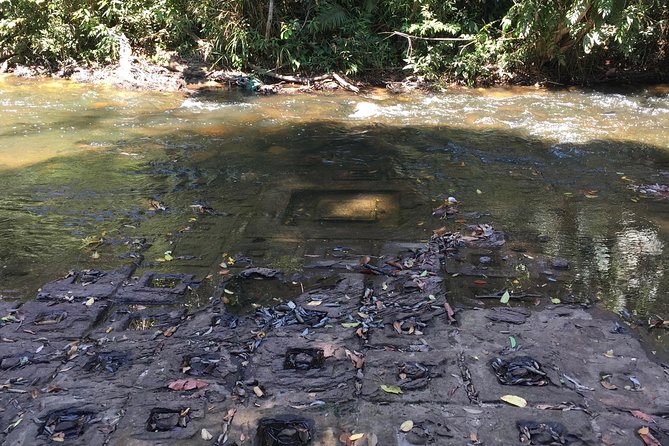
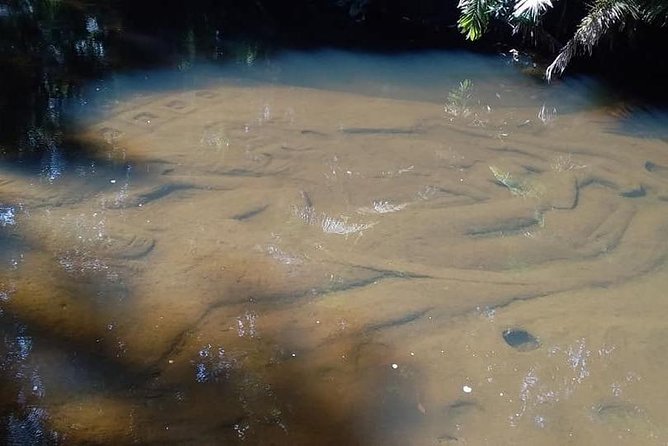
- The River of a Thousand Lingas: See sacred carvings cut into the riverbed at Kbal Spean.
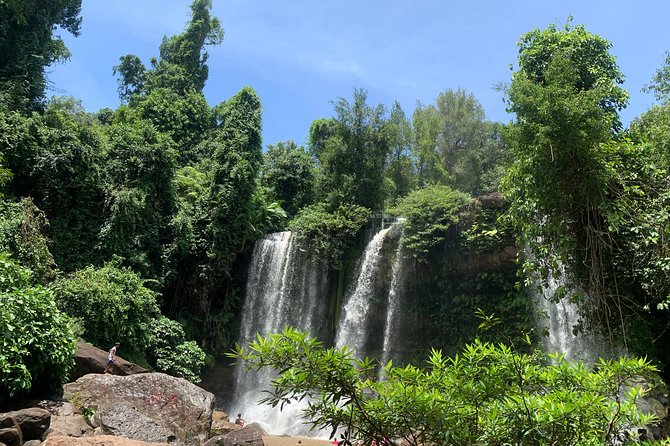
- A waterfall in the forest: Bring suitable clothes if you hope to bathe in the sacred water.
- Banteay Srei’s red sandstone: Study unusually fine carvings at the 10th-century temple.
- Private guiding with Panha: Expect clear English, historical explanation, and a flexible approach to transport.
- $159 per group: The rate can work well for a small party, but entrance tickets and lunch are extra.
Why Phnom Kulen changes the Angkor story
Most visitors first meet the Angkor world through grand temple towers and broad stone avenues. Phnom Kulen shows you something older and more elemental: a mountain, a river, forest paths, and a sacred place tied to the foundation of Khmer rule.
According to the historical account provided for the tour, King Jayavarman II proclaimed independence from Java at Phnom Kulen in 802 CE. He also established the Devaraja tradition, a royal linga cult associated with divine kingship. You do not need to be an expert in Khmer history to grasp the importance of the setting. The mountain is presented not simply as a scenic stop, but as a place where political and religious ideas helped shape an empire.
The drive takes about one and a half hours from Siem Reap. That is a useful part of the day, not just dead time. You pass local villages and see everyday activity beyond the main temple zone. The changing views help you understand that Angkor was not an isolated collection of monuments. It was part of a much larger region, supported by communities, roads, water, farms, and sacred sites.
The tour starts at 8:00 a.m. at Prince Angkor Hotel & Spa on Sivutha Boulevard. The early departure is designed to reach Kulen before larger crowds. That timing matters here because the experience depends partly on the forest setting and the ability to pause without feeling rushed.
More Banteay Srei visits:
- Full-Day Banteay Srei & 4 Temples – Grand Tours Join-in Tour
5.0 · 1,155 reviews - Siem Reap Tour: Angkor Wat Sunrise, Bayon, Ta Prohm, Banteay Srei
5.0 · 931 reviews - 2-Day Angkor Wat With Small, Big Circuit and Banteay Srei Tour
5.0 · 545 reviews
Walking to Kbal Spean and the sacred river
Kbal Spean is known for the River of a Thousand Lingas. The name refers to linga carvings placed in and around the riverbed, linking the moving water with Hindu religious symbolism. The river is not just a pretty natural feature. Its carved stones show how the Khmer used water, faith, and royal power together.
You should expect a walk rather than a roadside temple visit. The tour requires a moderate level of physical fitness, and the combination of forest walking, natural surfaces, and a waterfall makes sensible footwear important. The available information does not give a precise walking distance, so you should allow for a genuine outing on foot rather than a short stroll from the vehicle.
The forest setting is one of the strongest parts of the day. Butterflies, exotic plant life, old stone, and running water create a different mood from the formal temple compounds near Siem Reap. You might find the carvings easier to appreciate with a guide because their meaning is not always obvious at first glance.
Panha is the named guide associated with this experience. His English is described as excellent, and his explanations cover the symbolism of the sacred river and the waterfall. That is valuable at Kbal Spean, where a quick look at the rocks can otherwise leave you wondering what you are meant to see.
The waterfall adds a welcome physical break. One account of the experience describes bathing in the sacred water, so you may wish to bring a change of clothes if you would like that option. The supplied details do not promise swimming conditions or a private changing area, so treat bathing as a possible activity rather than a guaranteed feature.
Phnom Kulen’s waterfall and the pace of the visit
The waterfall is likely to be the most relaxed part of Phnom Kulen. After the walk and the historical explanation, you have a chance to enjoy the sound and movement of the water. It also gives the day variety. You are not spending eight hours moving from one carved doorway to another.
Still, this is not an easy-access resort outing. Phnom Kulen includes walking and natural terrain, and the tour asks for moderate fitness. If you have knee, balance, or mobility concerns, the lack of detailed information about trail conditions means you should contact the operator before booking.
The order of the day is sensible. You visit Kulen first, then return toward Siem Reap for Banteay Srei. That puts the longer, more active stop at the start, when you are fresh, and saves the compact temple for later. The return journey also gives you time to cool down and settle before the next guided visit.
Bottled water is included. That is a small but useful provision on a warm Cambodian day, especially when the mountain visit includes walking. Lunch is not included, so you need to budget for it separately. The information does not specify a restaurant or a set lunch stop, so ask Panha or the operator about the plan when arranging the tour.
Banteay Srei, the small temple with remarkable detail
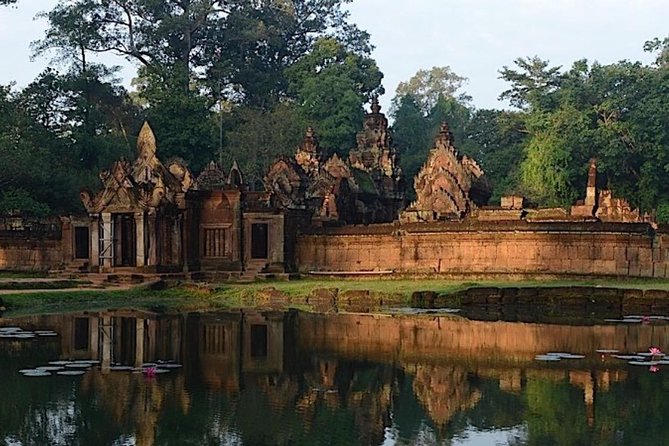
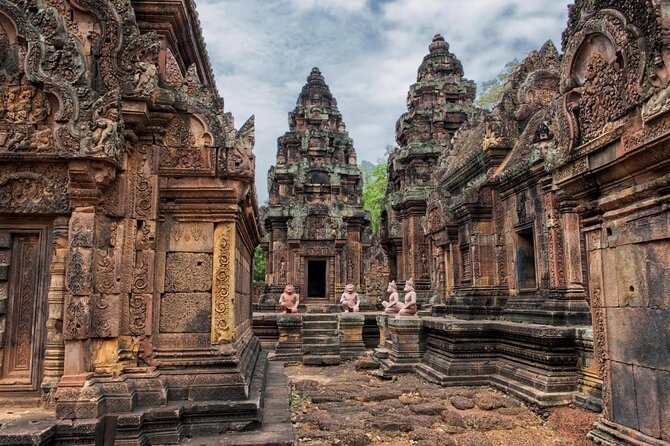
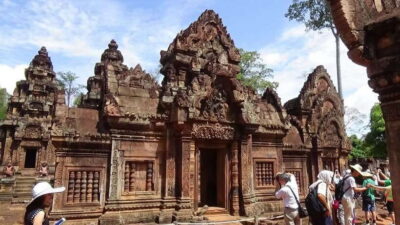
Banteay Srei is the artistic highlight for many people. Consecrated on April 22, 967, it is a 10th-century temple made largely from pinkish-red sandstone. The stone allowed its builders to cut fine details that can be harder to see on the darker, heavier monuments around Angkor.
The temple was not built by a king. Its construction is credited to Yajnavaraha and Vishnukumara, courtiers serving King Rajendravarman II. Yajnavaraha is described as a scholar and philanthropist who helped people facing illness, injustice, or poverty. He also taught the future King Jayavarman V.
That background gives Banteay Srei an unusual place in Angkor’s story. Royal power is usually the main subject at the great temples. Here, the role of highly placed officials and religious scholars comes into view. The temple was originally part of a town called Isvarapura, so you are looking at the center of a former settlement, not a lone building dropped into the countryside.
You have about an hour at Banteay Srei. That is enough time to inspect the carvings and hear the main historical points, but it is not a leisurely half-day study visit. I would use the time carefully: first walk around for the overall design, then slow down at the doorways, pediments, and figures where the sandstone work is most delicate.
Banteay Srei can feel more intimate than the major Angkor temples. Its scale makes the carved surfaces easier to read, but the site can also feel busy because it is one of the best-known stops outside the central temple circuit. Visiting after Phnom Kulen helps the day feel less like a standard temple checklist.
More Phnom Kulen mountain days:
- Kulen Waterfall Join-in Tour (local Picnic lunch)
5.0 · 2,434 reviews - Kulen Mountain: Small-Group Tour and Picnic lunch
4.9 · 1,802 reviews - Siem Reap: Kulen Mountain, Beng Mealea and Tonle Sap Tour
5.0 · 1,483 reviews - Phnom Kulen Waterfall & the Sacred 1000 Lingas (with Lunch)
4.8 · 974 reviews
How Panha shapes the experience
A private tour rises or falls on the guide. Panha receives especially strong praise for his English, historical explanations, friendliness, and willingness to offer practical advice. He is also described as attentive, flexible with transport, and able to add food suggestions to the day.
Those details matter because the route covers two places that need context. At Phnom Kulen, you want more than directions to a river and waterfall. At Banteay Srei, you want help reading a dense set of carvings without turning the visit into a list of dates and names.
The private setup means only your group participates. You can ask for a slower explanation, spend more time at a feature that interests you, or keep moving if you have had enough heat. The tour is advertised at $159 per group for up to seven people, while the descriptive material also refers to groups of up to six. Because of that mismatch, confirm the maximum party size before booking.
For two people, the price is not a budget excursion. For a larger group, it can become good value because the cost is shared. The rate includes a private tour, driver and guide, and bottled water, but not entrance fees, lunch, or anything else not specifically listed. Add those costs before comparing it with a group coach trip.
The vehicle is described as comfortable, which helps on the long road to Kulen and back. A private car also avoids collecting other groups from several hotels. The stated meeting point is Prince Angkor Hotel & Spa, and the activity returns there at the end.
What the eight-hour schedule feels like
An eight-hour estimate sounds generous, but the schedule has several moving parts. The morning begins at 8:00 a.m., followed by the drive to Phnom Kulen, about two hours at the first stop, the return toward Banteay Srei, about an hour at the temple, and the journey back to Siem Reap.
You should think of this as a day of contrasts rather than a slow archaeological study. The mountain gives you nature, sacred water, and a connection with early Khmer statehood. Banteay Srei gives you concentrated craftsmanship and a more familiar temple setting.
The route also has a physical rhythm. You sit in the car, walk through the forest, pause at the waterfall, ride again, and then explore the temple. That variety keeps the day interesting, but it can feel tiring in hot weather. Wear light clothing, use shoes with a good grip, and keep the provided water close.
There is no lunch included and no detailed meal schedule supplied. Plan to ask in advance how much time will be available for food. If you prefer a quiet meal or have dietary needs, make that clear before departure rather than assuming a particular restaurant will be used.
Entry fees, timing, and practical value
Entrance fees are not included. This is the biggest cost detail to keep in mind because the advertised $159 is not the final spend. The price does include private transport, guiding, and bottled water, which makes it easier to judge when you compare the tour with hiring transport separately.
I see the best value for a small family or group of friends. Split among several people, the private rate gives you a personal guide and avoids a fixed large-group schedule. For a solo visitor or couple, the price is harder to justify unless you place high value on private instruction and the convenience of having both remote Kulen and Banteay Srei handled in one day.
The tour has a mobile ticket and booking confirmation is provided at the time of reservation. It allows service animals, according to the available information. The moderate fitness requirement is more important than the ticket format, since walking and uneven outdoor conditions form part of the experience.
Free cancellation is available if you cancel at least 24 hours before the 8:00 a.m. start time. Changes or cancellations made inside that window are not accepted for a refund. Keep the local cut-off time in mind when making plans.
Who should choose this private Kulen and Banteay Srei trip
I would choose this tour if you have already seen, or plan to see, the main Angkor temples and want a day with a different texture. It is also a strong choice if you want a guide who can connect religious symbols, royal history, and daily Cambodian life rather than simply drive you between photo stops.
It suits people who enjoy a moderate walk, forest scenery, and a waterfall as much as carved stone. Families with older children may like the change of pace, though the physical demands and long driving time should be considered. A group of friends can get particularly good value from the private pricing.
I would hesitate if you want an easy morning, a fixed lunch arrangement, or a short temple tour close to town. I would also hesitate if you dislike long drives or need detailed information about trail access before committing. In that case, ask the operator specific questions about walking conditions, bathing arrangements, lunch, and the exact group-size limit.
Should you book it?
Book this tour if you want to connect Cambodia’s Angkor-era story with the place where that story took shape. Phnom Kulen supplies the sacred mountain, carved river, and waterfall. Banteay Srei supplies the fine sandstone work. Together, they offer more range than a day spent only among the famous central temples.
The strongest reason to book is Panha’s role as an English-speaking guide who explains symbolism and history with care. The main caution is practical: $159 covers the private service, not entry tickets or lunch, and the day involves a long drive and moderate walking.
For a group sharing the cost, this is a well-rounded off-route outing with real variety. For a couple, compare the full price with other private options. If the River of a Thousand Lingas, sacred water, and Banteay Srei’s detailed carving appeal to you, the added distance is likely worth the time.
FAQ
Where does the tour start?
It starts at Prince Angkor Hotel & Spa, Sivutha Boulevard B05, Sivatha Boulevard, Siem Reap, at 8:00 a.m.
Where does the tour end?
The activity ends back at the meeting point in Siem Reap.
How long does the tour last?
The tour lasts approximately eight hours.
Are entrance fees included?
No. Entrance fees are not included in the tour price.
Is lunch included?
No. Lunch is not included. Anything not specifically listed as included is also excluded.
Is this a private tour?
Yes. Only your group participates. The price is listed as $159 per group for up to seven people, although other tour information refers to groups of up to six, so confirm the exact limit before booking.
Fresh reviews from around Siem Reap
- Full-Day Tour Preah Vihea & Koh Ker Temple 3.7 · 3 reviews
- Savor the Countryside: Tours with Authentic Cooking Classes” 5.0 · 3 reviews
- Angkor Wat Sunrise TukTuk Tour 5.0 · 3 reviews
- Angkor Grand Circuit Tour & Banteay Srei 5.0 · 3 reviews
- Guided Private Tuk Tuk Tour Angkor Wat and Small Circle and Five Extras 5.0 · 3 reviews
- Siem Reap Temple Tour 2-Day with Sunrise/Sunset 3.7 · 3 reviews
- Bangkok to Angkor Wat 2 Days 1 Night by Flight 4.5 · 3 reviews
- Kompong Pluk Tour 5.0 · 3 reviews
Banteay Srei Tours, compared.
Full-Day Banteay Srei & 4 Temples – Grand Tours Join-in Tour
Read our review →
2-Day Angkor Wat With Small, Big Circuit and Banteay Srei Tour
Read our review →
3-Days Discovery Of Angkor: Waterfalls,Floating Village and Banteay Srei temple
Read our review →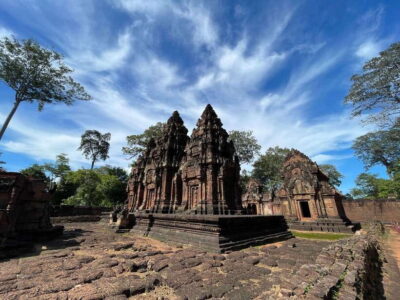
Browse the lists this tour appears in