
Reviewed · COOKING CLASSES
Cambodian Cooking Class from Siem Reap
A tuk tuk ride carries you beyond Siem Reap’s hotel streets to a rural village, where Cambodian food makes sense in its proper setting: herbs in a garden, vegetables in a family kitchen, and curry paste ground by hand. You cook three Khmer dishes at your own station, then eat them beside a pond in an open-air pavilion.
I like two things right away. The class is truly hands-on, not a cooking demonstration where you watch someone else do all the work. I also like the small groups, capped at six, and the village visit, which gives the meal a human setting. The main consideration is heat: the outdoor kitchen can feel warm, especially in the hotter months, so bring a hat, water, and light clothing.
In This Review
- Key points at a glance
- Leaving Siem Reap by tuk tuk
- Meeting a Cambodian family and seeing the ingredients
- Cooking beside the pond
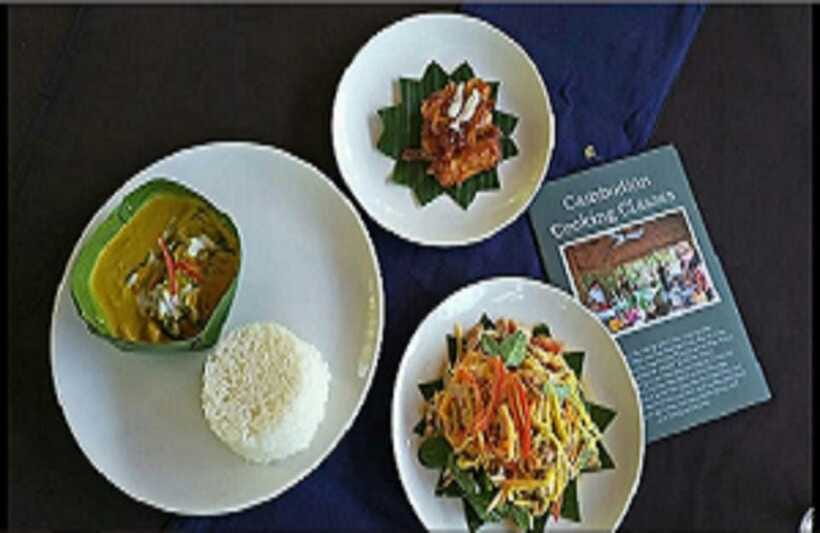
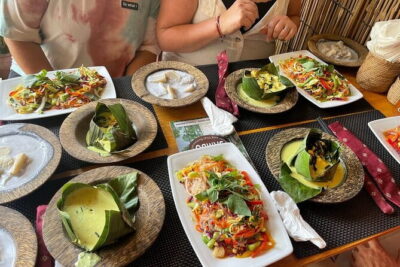
- The morning menu: amok, mango salad, and sticky rice
- The afternoon menu: fish on sugar cane and Khmer sweets
- What makes the teaching useful at home
- Lunch beside the water
- Group size, guides, and the personal feel
- Dietary needs and spice levels
- Is $32 good value?
- Who should book this class?
- Should you book it?
- FAQ
- How long does the Cambodian cooking class last?
- What is the price?
- Is hotel pickup included?
- How many people can join?
- Is the class taught in English?
- What dishes are made in the morning class?
- What dishes are made in the afternoon class?
- Is the cooking fully hands-on?
- Is a drink included?
- Can children join?
Key points at a glance
- A real rural setting: Leave the city by tuk tuk and reach a village cooking school beside a pond.
- Small classes: Groups are limited to six, and solo participants may receive nearly private instruction.
- Market and garden insight: Learn about Cambodian herbs, vegetables, spices, and local produce before cooking.
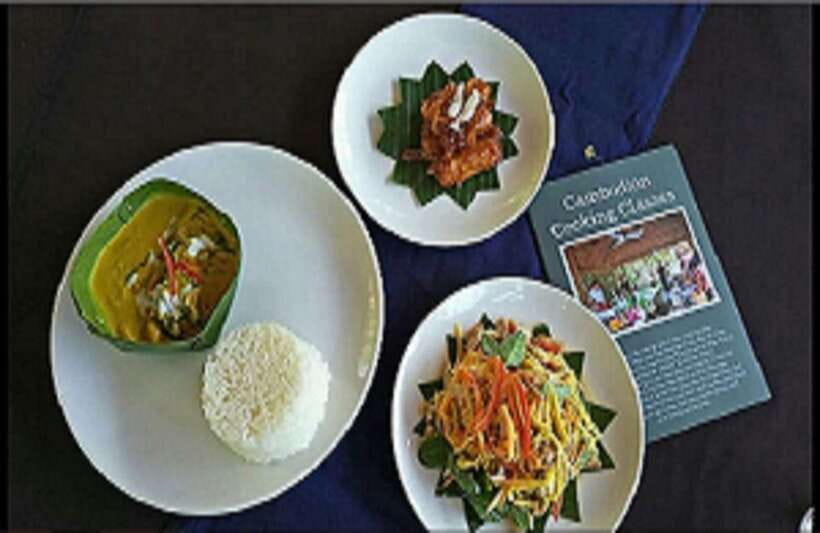
- Three dishes from scratch: Morning classes feature mango salad, fish amok, and a sweet sticky rice dessert. Afternoon classes offer Prahet Chien, Cambodian curry, and Nom Tong Noun.
- Useful instruction: Your chef explains ingredient alternatives, preparation methods, and ways to repeat the recipes at home.
- Meal and recipes included: Eat what you prepare, enjoy a beer, soft drink, or water, and take home a recipe book.
Leaving Siem Reap by tuk tuk
The experience begins with pickup from your hotel in Siem Reap and a tuk tuk ride toward the countryside. The trip is short enough to fit comfortably into a half-day, but long enough to show you a different side of the area. Instead of another temple transfer or city meal, you pass onto quieter roads and reach a village setting.
The tuk tuk is part of the appeal. You get open-air views and a closer feel for the roads than you would from a sealed car. It is also practical: transport to the venue is included, and the tuk tuk returns you to the centrally located Beyond office after the meal.
The exact pickup time depends on the class you choose. The activity lasts about three and a half hours, including transport, the local visit, cooking, and lunch. I would avoid placing a major temple visit or fixed appointment immediately afterward. Cambodian cooking is meant to be enjoyed at an unhurried pace.
More cooking classes in Siem Reap:
- Khmer Cooking Class at a Local’s Home in Krong Siem Reap
5.0 · 2,731 reviews - Siem Reap: Khmer Cooking Class at a Local’s Home
5.0 · 1,108 reviews - Award-Winning Cooking Class Experience with Professional Teacher
5.0 · 745 reviews
Meeting a Cambodian family and seeing the ingredients
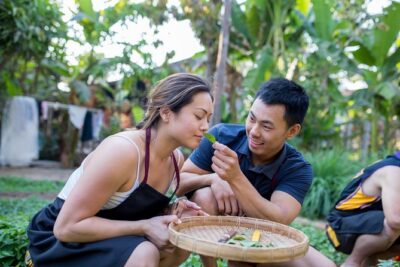
The village visit gives the class its local character. You walk through the area, learn about daily life, and visit a family home, kitchen, and vegetable garden. This matters because Cambodian food is not just a list of sauces and spices. It grows out of what families plant, buy, preserve, and prepare each day.
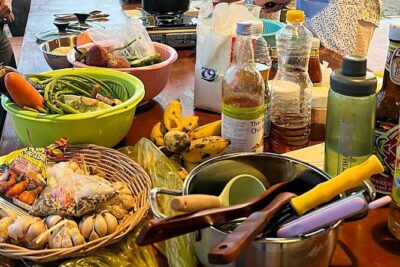
You learn about herbs and vegetables used in Khmer kitchens, and you can see how cooking fits into a rural household. The visit is brief rather than a full village tour, but it adds useful context before you sit down to chop, pound, and cook.
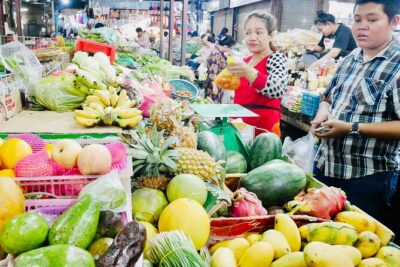
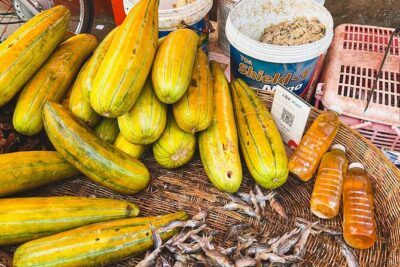
Several class schedules also include a stop at a local market to look at the ingredients before heading to the cooking area. This has been one of the most useful parts for many people booking the morning session. Your guide may explain unfamiliar leaves, roots, spices, fruits, and fish, and you may get to smell or sample local produce.
The market visit is particularly helpful if you are new to Cambodian food. A written recipe can tell you to use an herb, but seeing the fresh ingredient and learning what it smells like gives you a better chance of recognizing it at home. Guides such as Sophia, Sophie, and Sofia Lauren have been praised for clear English and patient explanations.
Cooking beside the pond
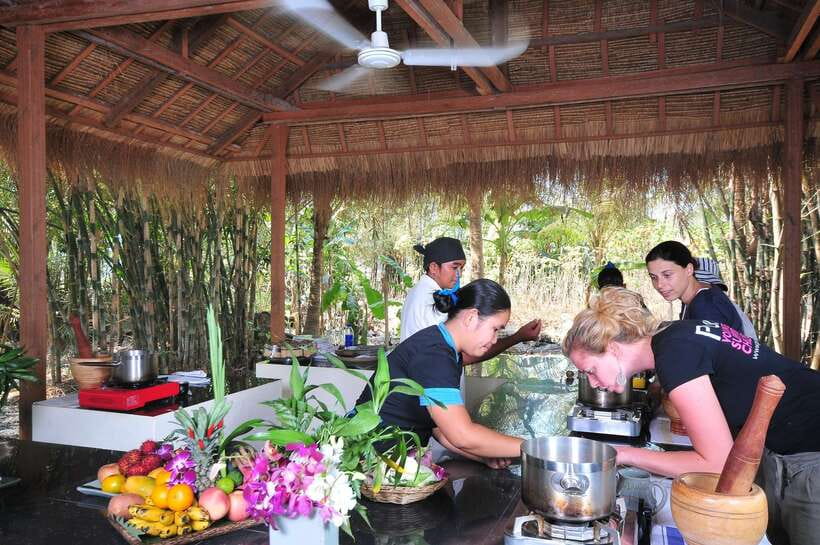
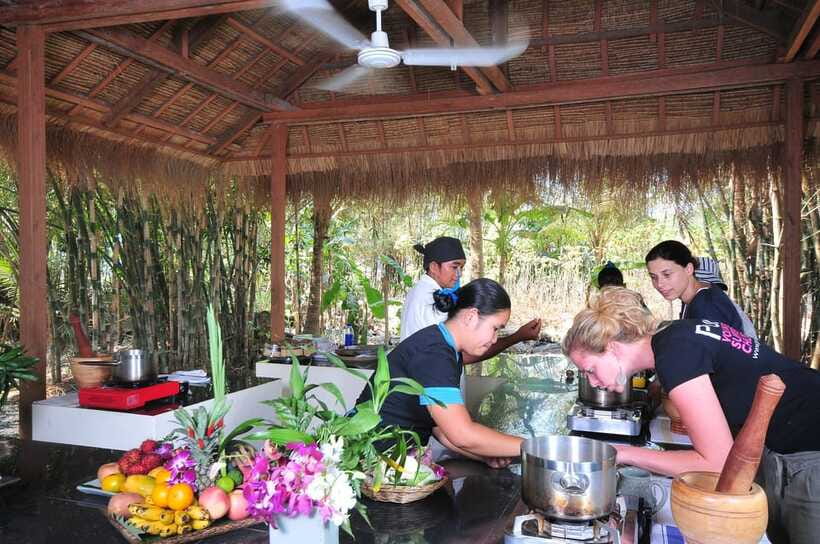
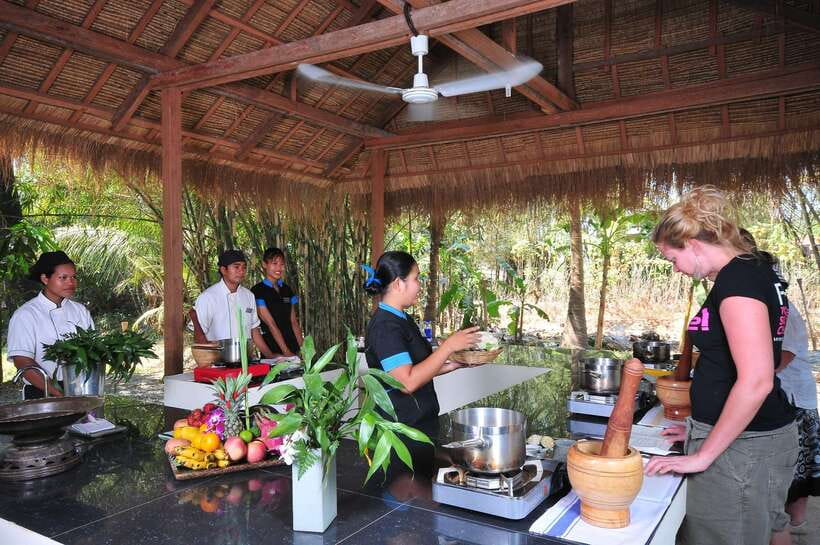
After the village visit, you move to an outdoor pavilion near a pond. The setting is calm and attractive, with the cooking stations arranged under cover. You are not crowded around a single stove. Each participant receives an individual station and equipment, so you can do the work yourself.
That arrangement makes a big difference. You chop your own ingredients, prepare the curry paste, and follow each stage with help from the chef. The instructors keep an eye on the group and step in when needed, but you remain involved from preparation through serving.
The chefs are patient with beginners. You do not need previous cooking experience, and the instructions are designed for people who may never have prepared Cambodian food before. The pace is relaxed, which helps if you want to ask questions or take notes.
Outdoor cooking has a few tradeoffs. It is pleasant in cooler weather, but the covered pavilion is still open to the air. The class can feel hot during warmer months. Wear comfortable shoes, bring a hat for the village walk, and do not expect the polished, air-conditioned feel of a hotel cooking studio.
The morning menu: amok, mango salad, and sticky rice
The morning class focuses on a well-rounded three-course meal.
Cambodian mango salad begins the menu with fresh, light ingredients and a tropical edge. It is a useful introduction to the balance of sweet, sour, salty, and aromatic flavors that appears throughout Khmer cooking. The dish is also relatively approachable for home cooks, since you do not need advanced technique to get a good result.
Next comes fish amok, one of Cambodia’s signature dishes. Amok is a smooth, fragrant curry rather than a hot, aggressive one. It can be made with fish, chicken, or tofu, and the class prepares it in a young coconut.
The amok lesson is likely to be the highlight for anyone curious about Cambodian cuisine. You learn how the curry base is built and how the ingredients combine into a soft, aromatic sauce. The instruction also covers possible substitutions, which is important if you live somewhere without easy access to every Cambodian herb.
Dessert is sticky rice balls with palm sugar and grated young coconut. This gives the meal a sweet finish and introduces ingredients that may be less familiar than mango or coconut milk. Since you eat the full meal after cooking, you can compare how the flavors work together rather than sampling isolated dishes.
Other Siem Reap experiences to weigh up
- Siem Reap: Cambodian Pottery Class
4.9 · 339 reviews - Cambodian Village Cooking Class
5.0 · 265 reviews - Siem Reap Cooking Class
5.0 · 170 reviews - Cambodian Pottery Class in Siem Reap
4.5 · 157 reviews
The afternoon menu: fish on sugar cane and Khmer sweets
The afternoon class follows a different menu.
Prahet Chien features minced fish served on sugar cane. It is a good example of how Cambodian cooking can combine savory food with subtle sweetness and fragrance. The sugar cane adds both flavor and a distinctive way to serve the dish.
The main course is Cambodian curry. Unlike many Thai curries, Khmer curry is generally not built around strong heat. It relies on layers of fragrant spices and a rounded flavor, so you can expect aroma more than burning spice.
That makes this class a good choice for people who want to learn about Southeast Asian curry but do not enjoy very hot food. Still, the recipes contain spices and herbs, so anyone with a sensitive palate should tell the guide before cooking begins.
Dessert is Nom Tong Noun, described as a Khmer version of brandy snaps. It is slightly sweet and crisp, and it gives the afternoon menu a different finish from the sticky rice balls in the morning class.
The menus are not interchangeable details. If you particularly want to learn amok, choose the morning session. If the fish-on-sugar-cane dish and Cambodian curry appeal more, check the afternoon availability instead.
What makes the teaching useful at home
The best cooking classes leave you with skills, not just a full stomach. Here, the chef explains how ingredients are prepared and how you can replace items that may be hard to find outside Cambodia.
That practical help is valuable. Cambodian recipes often call for herbs, leaves, roots, or spice pastes that do not appear in an ordinary supermarket. Learning a sensible substitute is more useful than being told to find an ingredient that is unavailable where you live.
You also receive a recipe book. It includes the dishes prepared in class and additional Cambodian recipes, so you are not limited to recreating only the meal you cooked that day.
The class also gives you a chance to practice the parts that written recipes often gloss over. You can see the texture of the curry paste, ask how finely to chop an ingredient, and learn when a dish is ready by smell or appearance. That kind of guidance is hard to gain from a cookbook alone.
Lunch beside the water
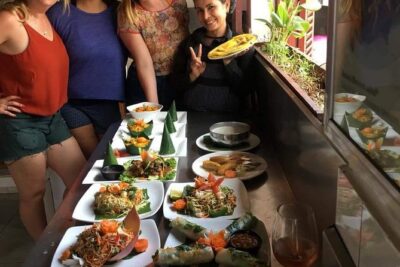
Once the cooking is finished, you sit in the wooden pavilion and your dishes are served one by one. This is more pleasant than eating while standing beside your stove, and it lets you see how the separate dishes work as a meal.
Lunch is included, meaning you eat what you cook. You also receive one complimentary beer, soft drink, or bottled water. A pond sits in front of the pavilion, and it may contain turtles, adding a small bit of life to the peaceful setting.
Portions can be generous. If you cannot finish everything, ask about taking leftovers with you. Containers have been provided for that purpose on some classes, though you should not count on it unless the staff confirms it on the day.
A past booking reported being charged for a beer despite the advertised drink inclusion. The stated arrangement is that one beer, soft drink, or bottled water is included, so confirm any extra drink charges before ordering. It is a minor point, but clear expectations make the meal easier to enjoy.
Group size, guides, and the personal feel
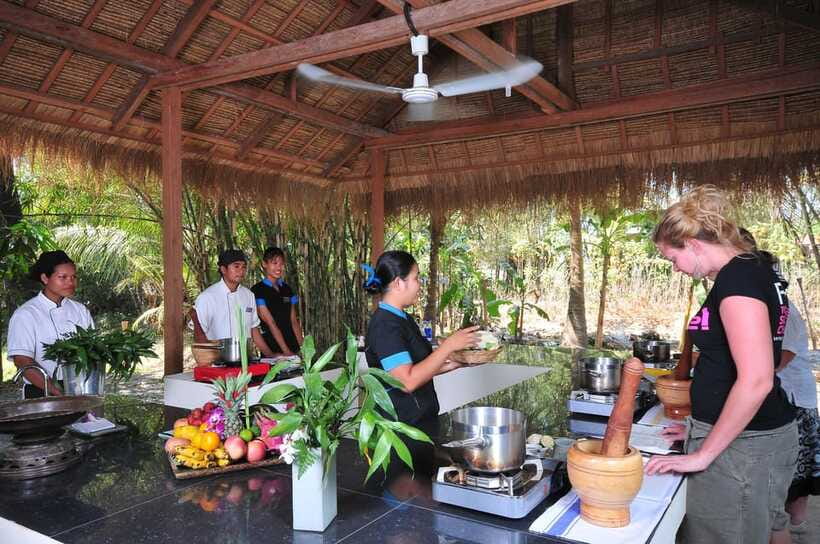
The maximum group size is six. That is small enough for the chef to watch each cooking station and answer questions without rushing from person to person.
Solo participants may find the class especially personal. When fewer people book a session, you can receive close attention and may have more food than you can eat. Couples and small families also fit the format well.
The English-speaking guides are an important part of the experience. Sophia, Sophie, and Sofia Lauren are names associated with especially warm, clear instruction, while chefs such as Prey and Prayer have helped participants through the practical cooking steps. Staff names can vary by departure, but the format remains the same: guide for the village and ingredients, chef for the cooking.
Children must be over 12 to join the regular cooking class. Private family classes can be arranged on request, which is the better option for families with younger children. Do not assume a young child can simply join the standard group.
Dietary needs and spice levels
Cambodian cooking uses plenty of herbs and spices, but it is generally less hot than food in neighboring countries. If you dislike strong spice, tell the guide before you begin so the chef can advise you.
Dietary restrictions have been accommodated on past classes, including special requests involving meat, fish, and other ingredients. You should still communicate your needs when booking and repeat them when you meet the chef. The class is hands-on, so clear information matters before ingredients are prepared.
The morning amok can be made with fish, chicken, or tofu. That gives the chef some flexibility, though the full menu and available substitutions should be confirmed in advance for strict dietary requirements.
Is $32 good value?
At $32 per person, this is not just a cooking lesson. The price covers hotel pickup, tuk tuk transport to the venue, the village and market or family visit, an English-speaking guide and chef, ingredients, the meal, a drink, the recipe book, and return transport to the Beyond office.
I consider that a fair price for a three-and-a-half-hour activity, especially with a maximum of six participants. A cheaper class held in a city restaurant might teach you one dish, but it may not include the village walk, home visit, transport, or market orientation.
The value is strongest if you want contact with everyday Cambodian food culture. If your only goal is to learn a single fast recipe, you could find a shorter demonstration for less money. Here, you are paying for the full setting and the chance to cook several dishes yourself.
The class is also linked with an organization described as helping local people gain skills and improve their economic prospects. If supporting locally run work matters to you, ask the provider for current details about the program.
Who should book this class?
I would recommend it to first-time visitors who want a break from Siem Reap’s main sights and a better understanding of Khmer food. It suits couples, solo participants, small groups, and anyone who likes to learn by doing.
It is also a good choice for people who are nervous about cooking. The chef guides each step, and you do not need special skills. The recipe book and ingredient substitutions make the experience useful after your trip, not just during it.
Families should check the age rule. Children over 12 can join the regular class, while younger children need a private arrangement. People who struggle with heat or long outdoor periods should prepare for warm conditions and ask about spice adjustments.
The main drawback is that the class is less convenient if you want an indoor, air-conditioned venue in central Siem Reap. The rural setting is the reason to book it, but it also means a short tuk tuk ride, an outdoor kitchen, and a little dust or heat.
Should you book it?
Book this class if you want to cook real Cambodian dishes, meet local people, and see where the ingredients fit into daily life. The small group size, patient instruction, included meal, and peaceful pond setting make the $32 price sensible.
Choose the morning class if fish amok is high on your list. Choose the afternoon class for Prahet Chien, Cambodian curry, and Nom Tong Noun. Bring a hat, wear comfortable footwear, mention dietary needs early, and leave enough time afterward to enjoy the meal without rushing.
FAQ
How long does the Cambodian cooking class last?
The experience lasts three and a half hours, including transport, the village visit, cooking, and the meal.
What is the price?
The price is $32 per person.
Is hotel pickup included?
Yes. Tuk tuk pickup from your hotel is included. After the class, the tuk tuk returns you to the centrally located Beyond office.
How many people can join?
Classes are capped at a maximum of six participants.
Is the class taught in English?
Yes. The tour includes a live English-speaking guide and an experienced English-speaking chef.
What dishes are made in the morning class?
The morning menu includes Cambodian mango salad, fish amok, and sticky rice balls with palm sugar and grated young coconut.
What dishes are made in the afternoon class?
The afternoon menu includes Prahet Chien, Cambodian curry, and Nom Tong Noun, a Khmer-style brandy snap.
Is the cooking fully hands-on?
Yes. Each participant has an individual cooking station and equipment, and you prepare the dishes yourself with guidance from the chef.
Is a drink included?
Yes. One complimentary beer, soft drink, or bottled water is included.
Can children join?
Only children over 12 can join the regular cooking class. Private classes for families can be arranged on request.
Fresh reviews from around Siem Reap
- Full-Day Tour Preah Vihea & Koh Ker Temple 3.7 · 3 reviews
- Savor the Countryside: Tours with Authentic Cooking Classes” 5.0 · 3 reviews
- Angkor Wat Sunrise TukTuk Tour 5.0 · 3 reviews
- Angkor Grand Circuit Tour & Banteay Srei 5.0 · 3 reviews
- Guided Private Tuk Tuk Tour Angkor Wat and Small Circle and Five Extras 5.0 · 3 reviews
- Bangkok to Angkor Wat 2 Days 1 Night by Flight 4.5 · 3 reviews
- Siem Reap Temple Tour 2-Day with Sunrise/Sunset 3.7 · 3 reviews
- Kompong Pluk Tour 5.0 · 3 reviews
Cooking Classes, compared.
Khmer Cooking Class at a Local’s Home in Krong Siem Reap
Read our review →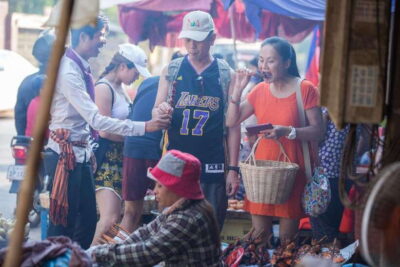
Award-Winning Cooking Class Experience with Professional Teacher
Read our review →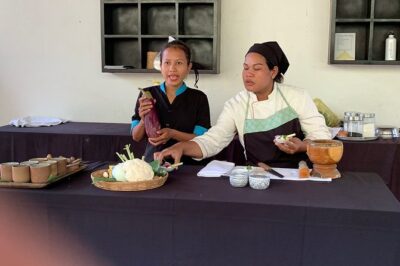
3-Hour Siem Reap Guided Cooking Class and Market with Pick up
Read our review →Browse the lists this tour appears in